

The huge batch of U.S. macroeconomic data released today offers no good news for risk asset markets.
We highlight the most important data and break it down one point at a time.
THE KEY TAKEAWAY: U.S. producer inflation accelerated sharply. Combined with yesterday’s consumer inflation data, this makes the situation worse. Retail sales exceeded forecasts, but that is small consolation. Overall, it’s an uncomfortable combination for the Fed that strengthens the case for further rate hikes.
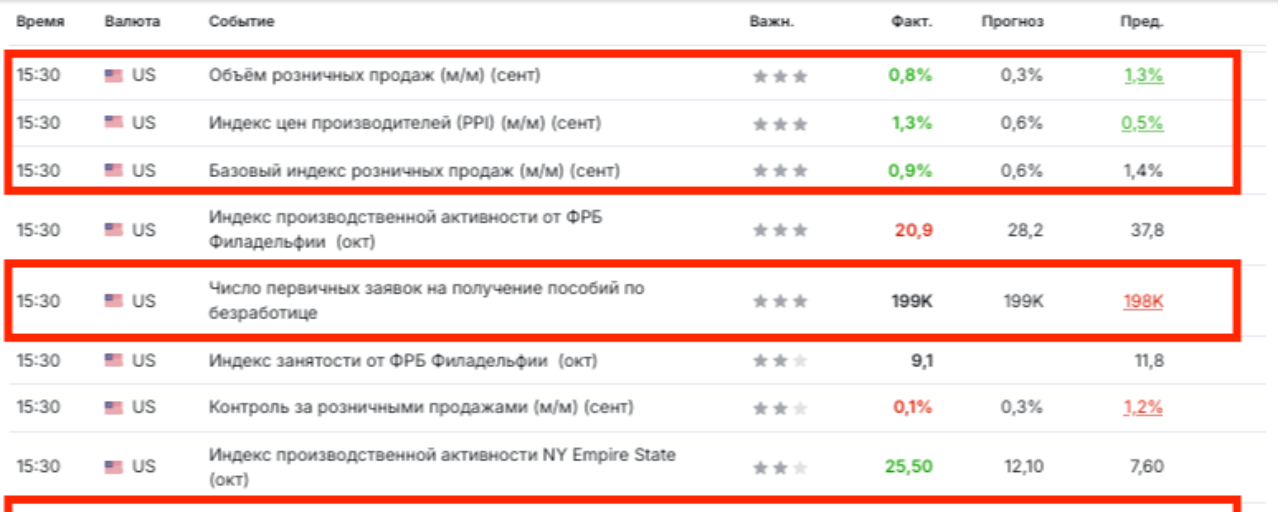
Today, three important sets of economic data were released at once, covering September and the labor market.
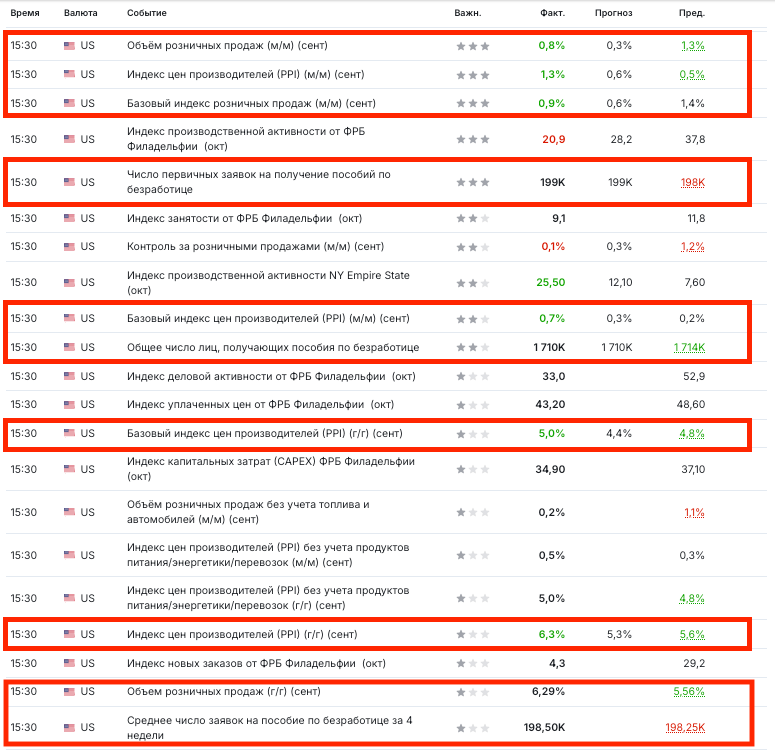
1. Producer Price Index (PPI) — significantly higher than expected.
- Headline producer inflation:
-- Month over month: +1.3% / forecast +0.6% / previous +0.5%.
-- Year over year: +6.3% / forecast +5.3% / previous +5.6%.
- Core producer inflation (excluding food and energy):
-- Month over month: +0.7% / forecast +0.3% / previous +0.2%.
-- Year over year: +5.0% / forecast +4.4% / previous +4.8%.
Headline PPI rose month over month by the most since March 2022! This is very significant.
What does this mean? Producers are facing rapidly rising prices. Energy costs have risen especially sharply, of course, BUT even excluding them, inflation is substantially higher than expected.
This creates a risk of further increases in consumer prices, as companies may pass higher costs on to buyers. However, this is not automatic and depends on demand and businesses’ ability to do so. And, of course, businesses’ ability to absorb higher costs is not unlimited.
2. Retail sales — stronger than forecast.
- Month over month: +0.8% / forecast +0.3% / previous +1.3%.
- Year over year: +6.29% / previous +5.56%.
Americans continue to spend actively, supporting the U.S. economy. BUT monthly sales growth slowed compared with August.
And there’s an important caveat: retail sales are measured in dollars, without adjusting for inflation. So some of the growth is due specifically to higher prices, especially for gasoline, rather than necessarily reflecting an increase in the number of purchases. In other words, sales may be growing even when people aren’t better off.
3. Labor market — layoffs remain low.
- Initial jobless claims: 199K / forecast 199K / previous 198K.
- Continuing claims: 1.71M / forecast 1.71M / previous 1.714M.
There has not yet been a mass increase in layoffs, although previously released data showed a noticeable slowdown in job creation.
What does all this change for the Fed? Following yesterday’s acceleration in consumer inflation to 3.7%, today’s PPI data add to concerns that inflationary pressure is persisting. Meanwhile, consumer spending continues to support the economy, and layoffs remain low. This reduces the need for an urgent easing of monetary policy.
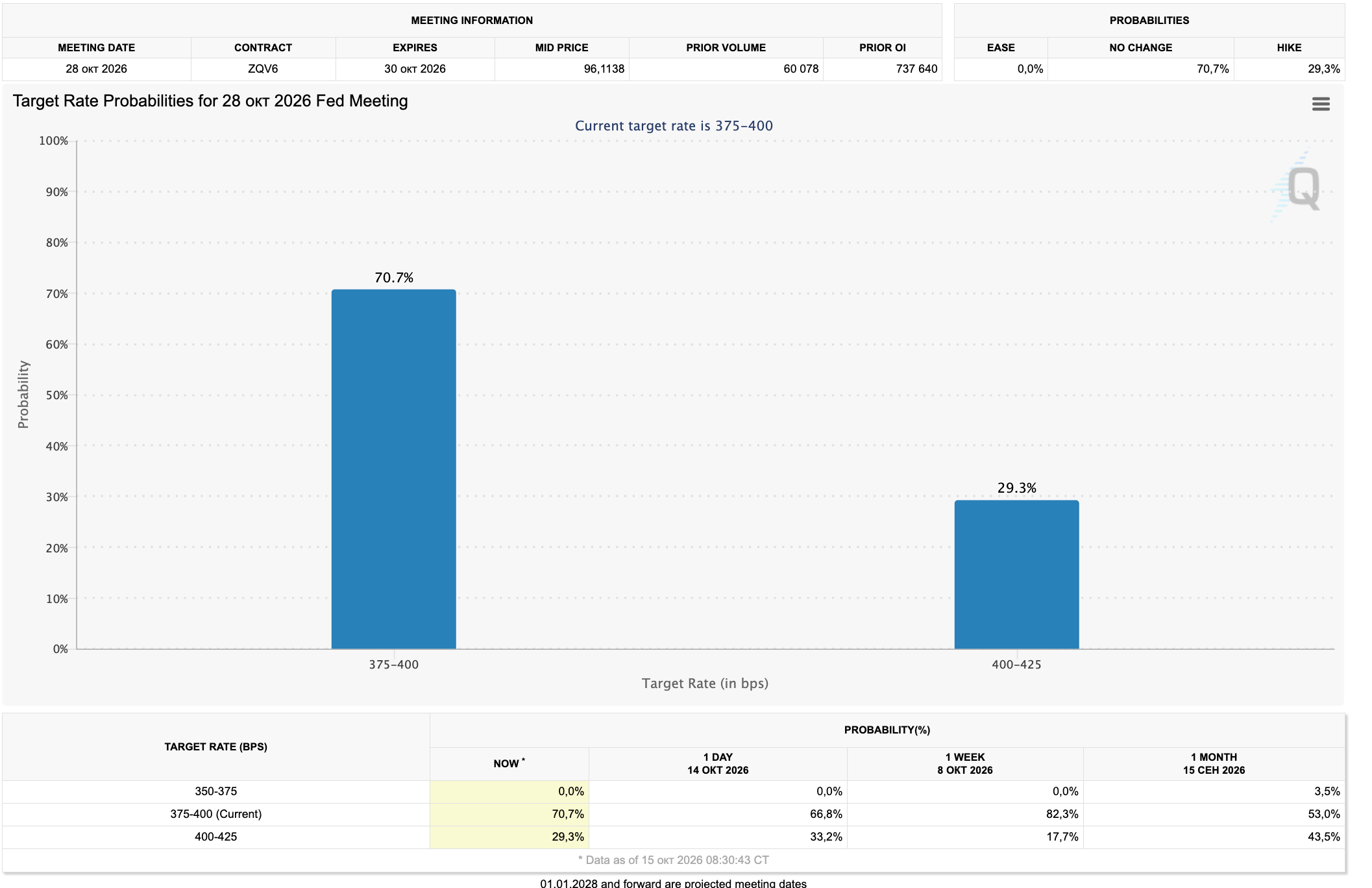
As a result, there are only more arguments in favor of another rate hike. BUT the Fed will also have to take weak employment growth into account, so the decision is not a foregone conclusion. Interestingly, according to #CMEGroup data, the market currently prices in a 29.3% probability of a rate hike at the October 28 meeting. Yesterday, immediately after the consumer inflation data came out, it was 43.7%. The market has calmed down a little and shed some of its pessimism.
BUT overall, this is a negative picture for risk-asset markets, and right now it is VERY important what rhetoric Fed Chair Warsh chooses at tomorrow’s event. Markets are sure to be “rocked” by his remarks.
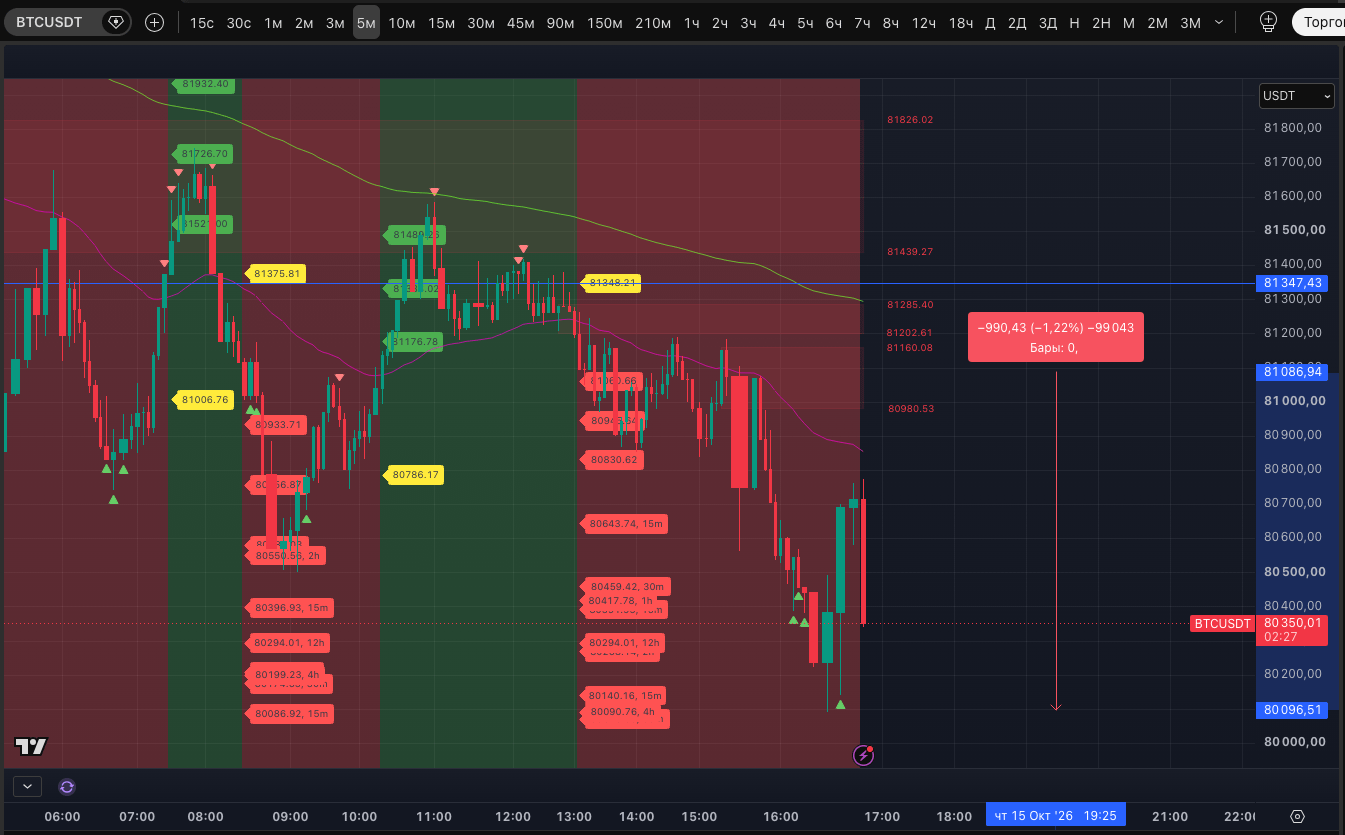
BTC fell after these data came out, almost reaching the psychological $80,000 level. It is now showing a bounce. And, by the way, there are reasons to think this bounce could get even stronger. But we’ll take a separate look at the technical picture for #BTC.