

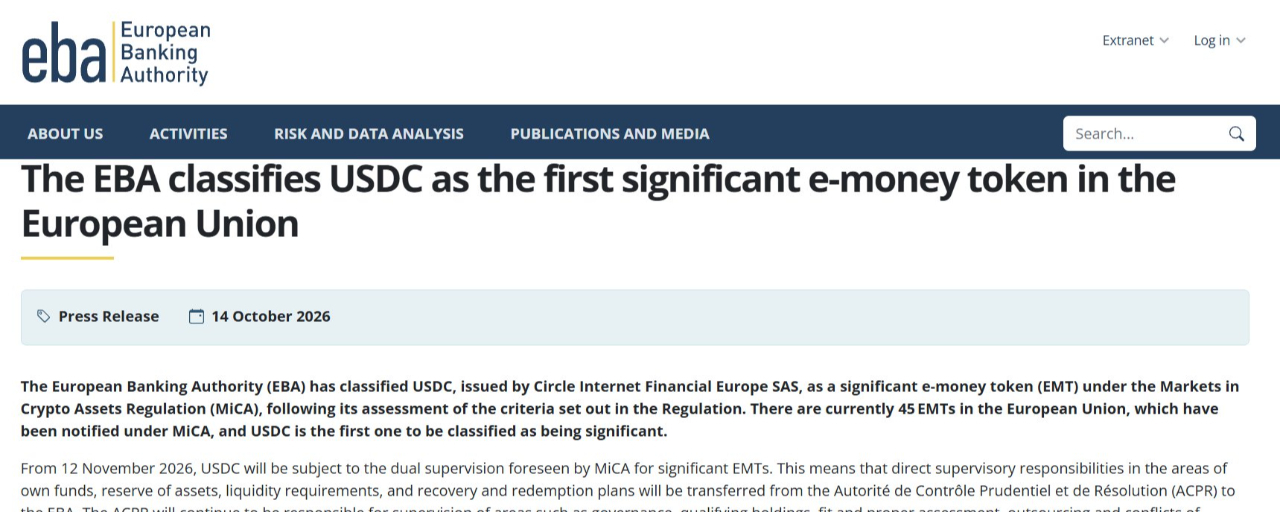

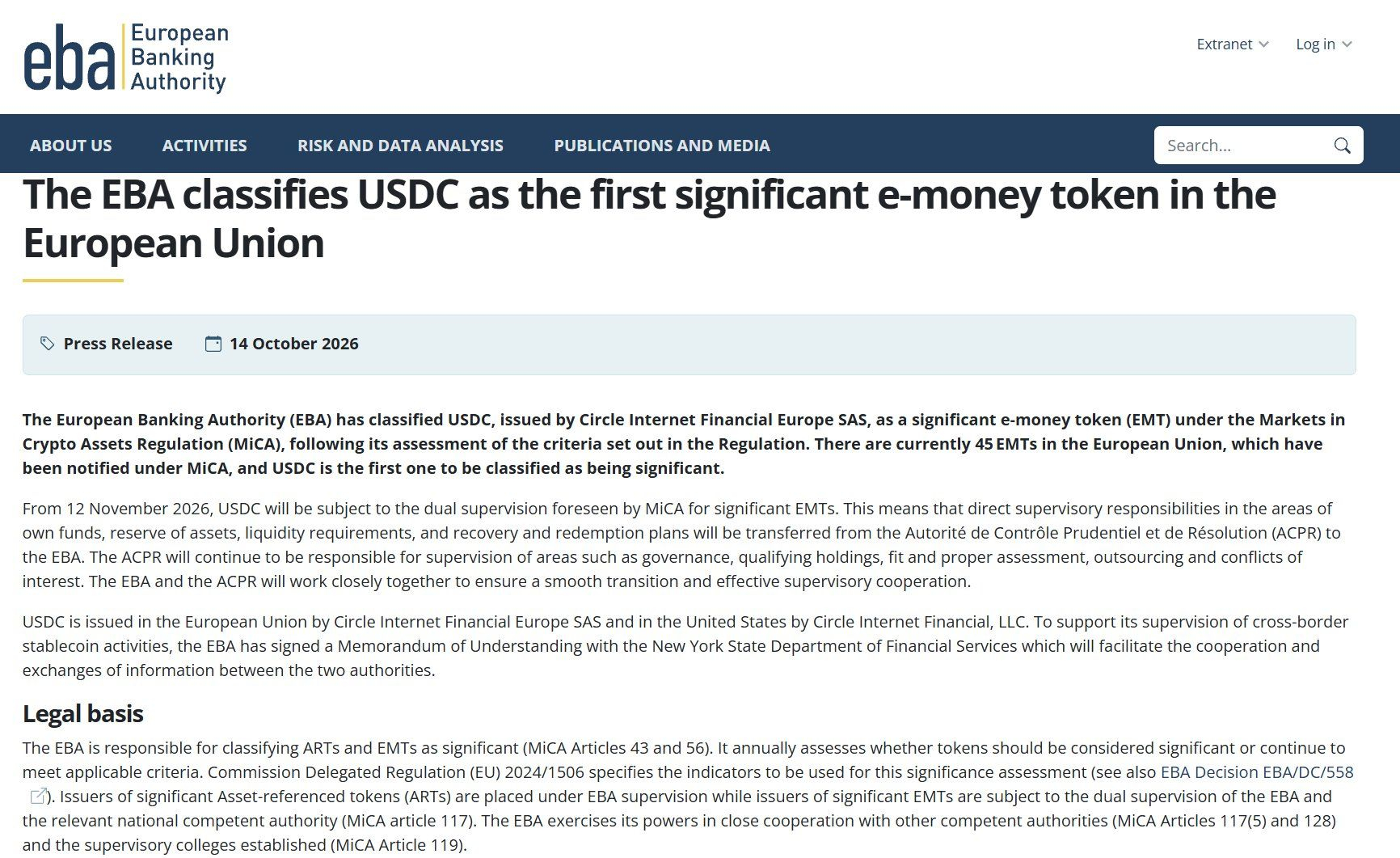
On October 14, 2026, the European Banking Authority (EBA) classified
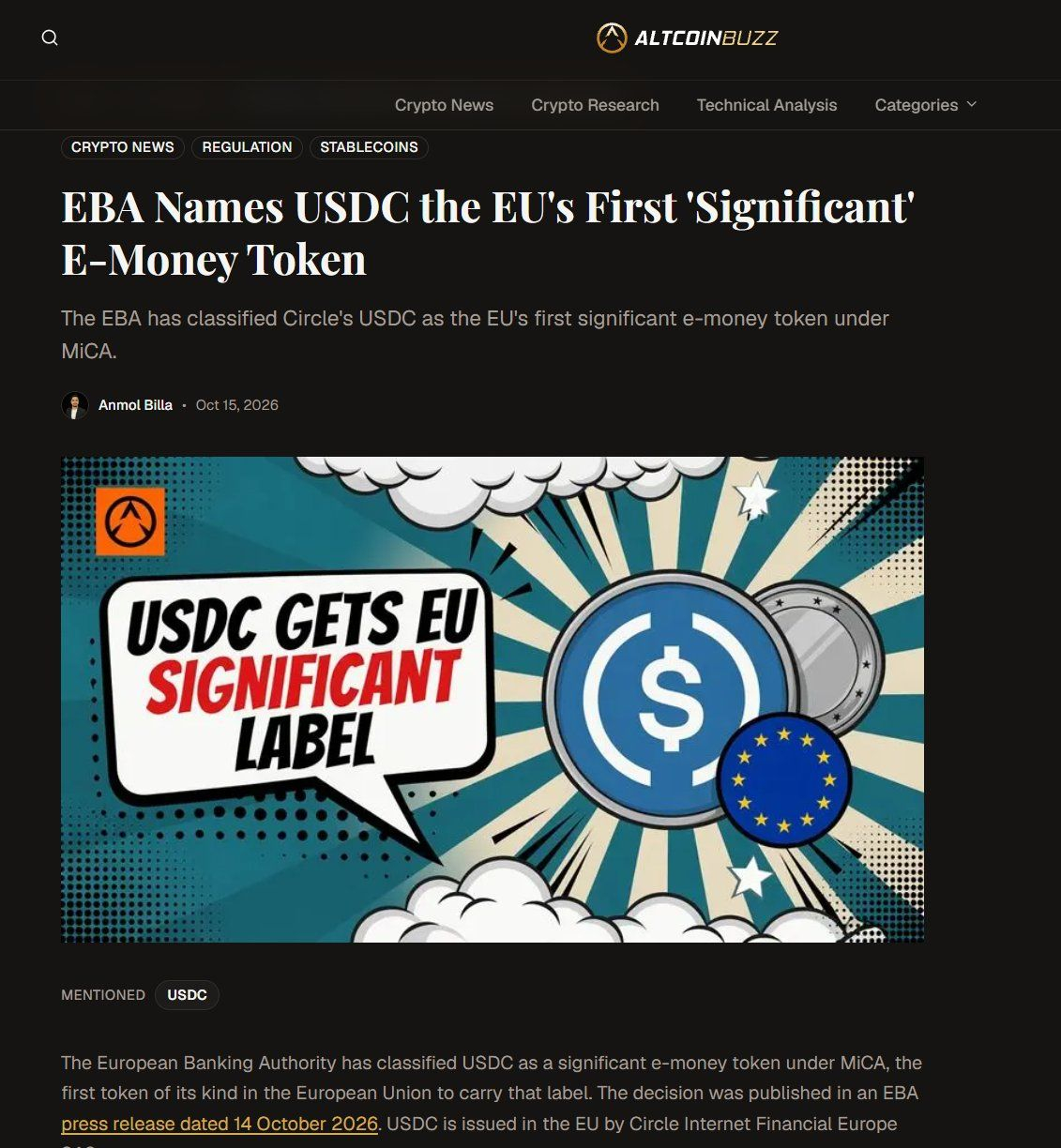
$USDC issued by Circle in the EU is the first Significant E-Money Token (SEMT) under MiCA.
- From November 12, the EBA will directly supervise requirements related to USDC’s capital, reserves, liquidity, and redemption capacity.
1. Why is USDC classified as Significant?
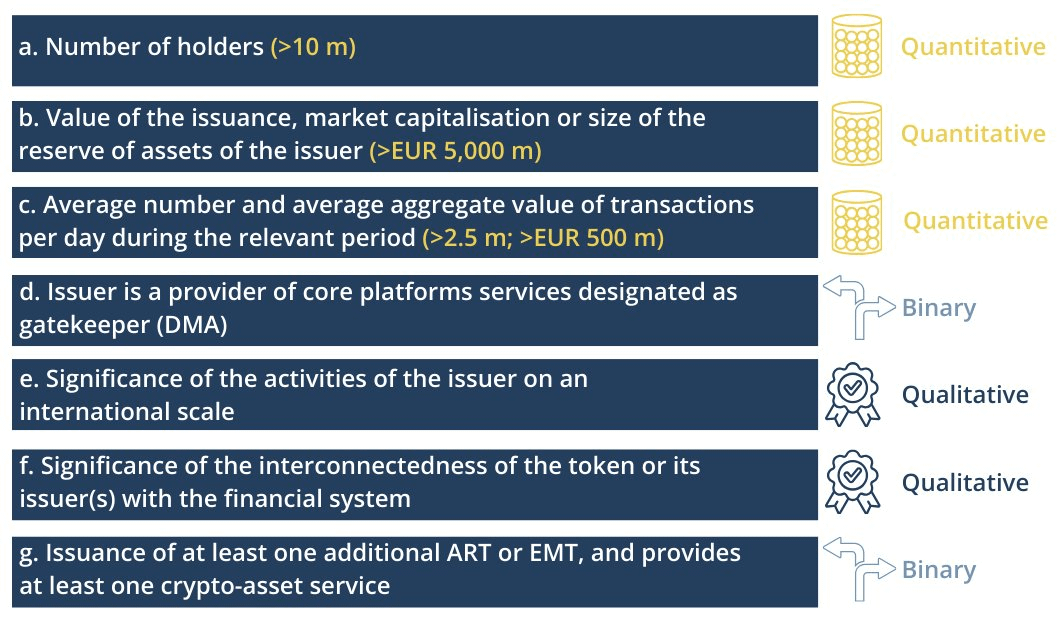
- Under MiCA, Significant is a category for stablecoins that are large in scale and have a substantial impact on the financial system. They are assessed based on criteria such as the number of holders, issuance value, transaction volume, and links to financial institutions.
- USDC’s classification in this category does not mean the EU considers it safer than all other stablecoins. It is primarily a mechanism for enhanced supervision of assets that could have a significant impact on the market.
=> Circle has held an electronic money institution (EMI) license in France since 2024, providing the legal basis for issuing USDC in the EU under MiCA.
2. How could Circle benefit?
- In addition to issuing USDC, Circle is developing an ecosystem that includes Circle Mint, multi-chain stablecoin transfer infrastructure, and payment solutions for financial institutions. The company is also expanding its partnerships with BNY and Standard Chartered for USDC issuance, redemption, and connections to the banking system.
- Direct EBA supervision of USDC could make it easier for banks and businesses to assess the legal risks of using stablecoins. However, Circle will also have to meet higher requirements for governance, liquidity, and reporting.
3. Impact on the Arc blockchain
- Arc is a blockchain developed by Circle. Its public mainnet launched in September 2026, and it uses USDC to pay transaction fees. The network is designed for payments, foreign exchange, and tokenized asset applications.
=> If demand for USDC in institutional payments increases, Arc could have more opportunities to attract financial applications. However, USDC is currently issued on multiple blockchains, so increased capital flows will not necessarily move to Arc.
4. Will CRCL benefit directly?
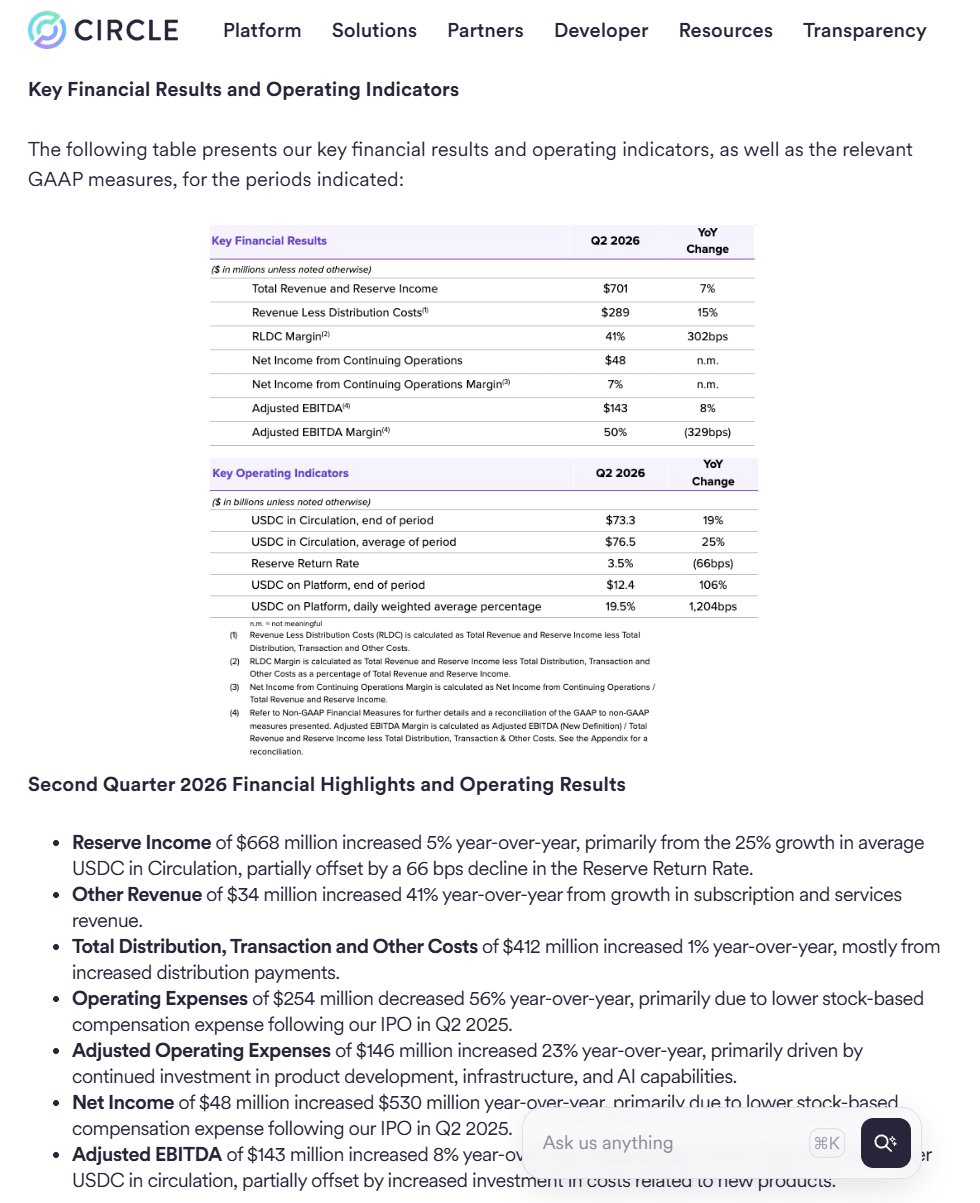
- According to its Q2 2026 report, Circle recorded $701 million in total revenue and reserve income, including $668 million in income from USDC reserves. After expenses, net income was approximately $48 million.
- This shows that Circle’s business remains heavily dependent on the amount of USDC in circulation, the yield on reserve assets, and distribution costs paid to partners.
=> If Circle’s legal standing in the EU helps it expand the amount of USDC in circulation, revenue from reserves and services could increase. However, profits available to CRCL shareholders will also depend on profit margins, operating costs, and the interest rate environment.