


Tokenized assets could reach $10 trillion in the 2030s as Wall Street continues betting on RWA
Wall Street giant Morgan Stanley remains bullish on the long-term prospects for asset tokenization. Amy Oldenburg, the bank’s head of digital asset strategy, said in a recent interview at TOKEN2049 that the global tokenized real-world asset (RWA) market could grow to between $3 trillion and $10 trillion by 2030, and expressed strong confidence that the market would reach this range.
The current scale of on-chain RWAs still has considerable room to grow before reaching this forecast. According to data from RWA.xyz, tokenized real-world assets totaled approximately $39.19 billion as of October 12. If the market grows to $10 trillion, it will need to expand by about 255 times.
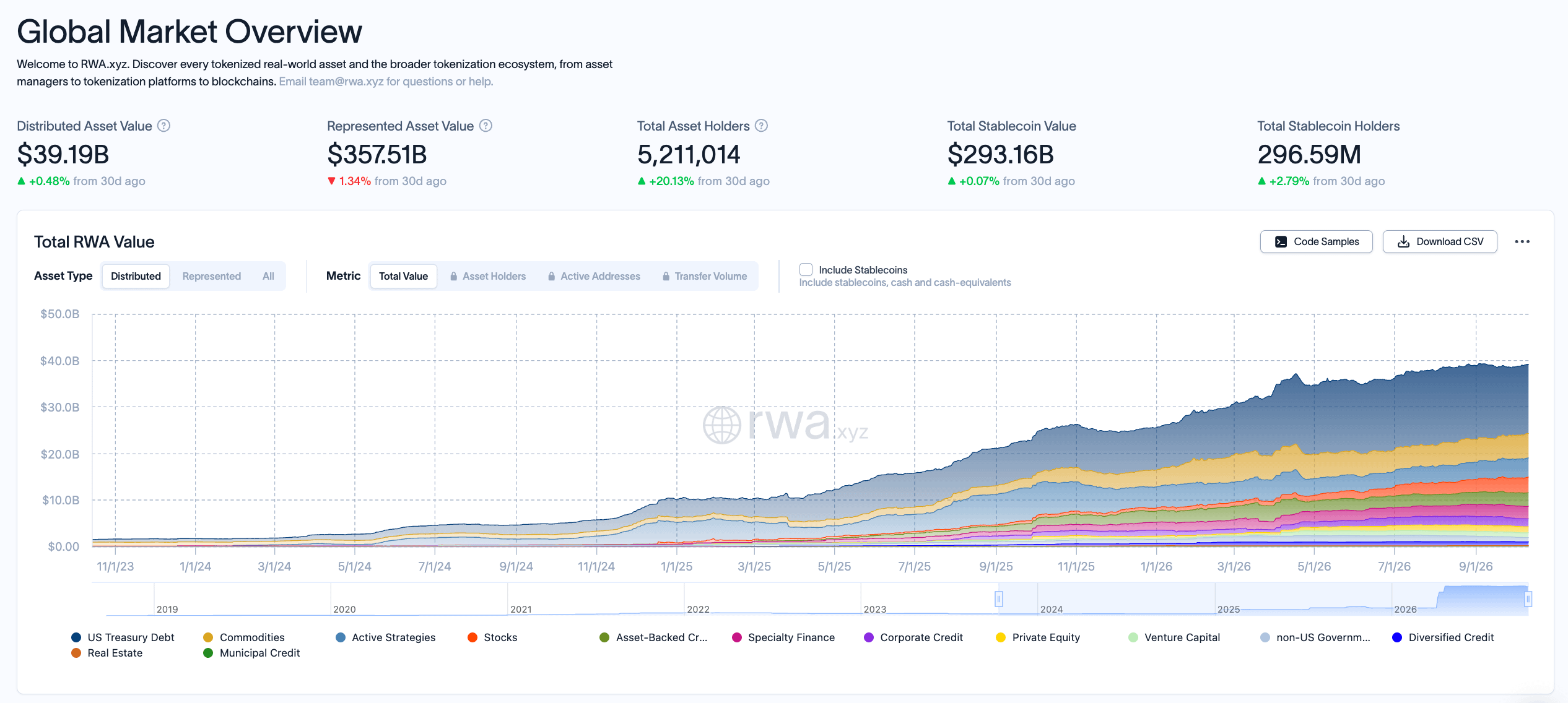 Image source: RWA.xyz
Oldenburg believes that private equity, structured finance products, and private funds could become important use cases for tokenization in the next phase.
These assets currently involve extensive ownership records, investor eligibility checks, transfers, and administrative work. Blockchain can bring some of these processes together on digital infrastructure. As more assets become tokenized, they can also be used for lending, trading, and collateral management.
She described the longer-term vision as the “securitization of everything,” with stocks, funds, private assets, and various financial instruments potentially being issued, traded, or managed in tokenized form over time. The $3 trillion to $10 trillion figure is Oldenburg’s forecast for the market’s future size. Its development will depend on product availability, regulatory frameworks, and the pace of institutional adoption.
On-chain U.S. stock plans delayed from the second half of 2026 to Q1 2027
Morgan Stanley remains positive about the tokenization market, but its own tokenized stock plans need more time to prepare.
Oldenburg said the bank currently expects to begin supporting tokenized stocks through its alternative trading system (ATS) in the first quarter of 2027, later than the second-half-of-2026 target announced in March this year.
The services are expected to be offered through Morgan Stanley’s Trajectory Cross ATS. The platform already supports traditional stocks, ETFs, and American depositary receipts (ADRs), and plans to incorporate blockchain-based securities into its existing trading infrastructure in the future. This initiative extends the firm’s traditional securities business; there are currently no plans to establish a separate cryptocurrency exchange.
Oldenburg also noted that one of the biggest limitations is the lack of sufficient tokenized securities products on the market. Before financial institutions can offer trading services, there need to be assets suitable for clients to buy and sell. Product availability remains limited, meaning that actual demand from institutional clients has yet to fully emerge.
Morgan Stanley has yet to announce the list of stocks it will initially support, which blockchain networks it will use, or which clients will be eligible for the services. The first quarter of 2027 remains a tentative target window, and no official launch date has been confirmed.
Related news: Morgan Stanley makes another move! Launches Digital Asset Lab to test stablecoins, tokenized deposits, and DeFi
DTCC to launch tokenization services at month’s end, bringing traditional securities onto the blockchain
Morgan Stanley is also closely monitoring the tokenization service that the U.S. Depository Trust & Clearing Corporation (DTCC) is expected to launch at the end of October. Oldenburg sees DTCC’s progress as a key piece of infrastructure for the U.S. tokenized securities market, which could also affect how quickly banks roll out their own services.
In July this year, DTCC completed production-environment trading tests for tokenized securities, with more than 30 institutions participating. The tests covered stock transfers, securities lending, collateral pledging, and U.S. Treasury repurchase transactions. The transactions took place on the private Besu network and the public Canton Network.
The service will allow eligible securities held in DTCC custody to be converted between traditional and tokenized forms and transferred to supported digital wallets. DTCC says tokenized assets will retain the ownership, rights, and investor protections of the original securities. Assets under consideration currently include U.S. stocks, U.S. Treasuries, and major ETFs.
For Morgan Stanley, DTCC’s underlying custody and settlement capabilities could enable traditional financial institutions to adopt blockchain records through existing securities infrastructure, reducing the need to rebuild the entire market infrastructure from scratch.
Building its own wallet and Digital Asset Lab, Morgan Stanley rounds out its on-chain finance infrastructure
In addition to tokenized stock trading, Morgan Stanley is also building its own digital wallet infrastructure, which will allow clients to hold digital assets and tokenized financial products through the bank’s existing services in the future. The design will incorporate institutional-grade custody, with the bank handling most underlying blockchain operations and lowering the technical barriers for traditional financial clients to manage on-chain tools directly.
Related news: Buying crypto isn’t enough—Morgan Stanley to launch a wallet in the second half of the year, targeting tokenized private markets
Morgan Stanley recently also established a Digital Asset Lab, where internal teams can test blockchain technology in an environment that does not affect core banking systems. Its current research covers tokenized deposits, digital currencies, money market funds, and DeFi applications. These tests are still at the research stage and do not mean that any products are confirmed for market launch.
On the regulatory front, the U.S. Office of the Comptroller of the Currency (OCC) granted preliminary conditional approval to Morgan Stanley Digital Trust in June this year. The planned national trust bank could engage in digital asset custody, buying and selling, exchange, transfer, fiduciary staking, and collateral management, adding a custody component to Morgan Stanley’s future institutional digital asset services.
From tokenized stocks and digital wallets to custody and internal technology testing, Morgan Stanley is gradually building the infrastructure needed for on-chain finance. The delay of its tokenized U.S. stock service until the first quarter of 2027 also reflects that major financial institutions still need product availability, settlement networks, regulatory rules, and client demand to mature further.
“Tokenized assets once projected to reach $10 trillion! Morgan Stanley’s plan to bring U.S. stocks on-chain pushed back to 2027” was first published on “Crypto City.”