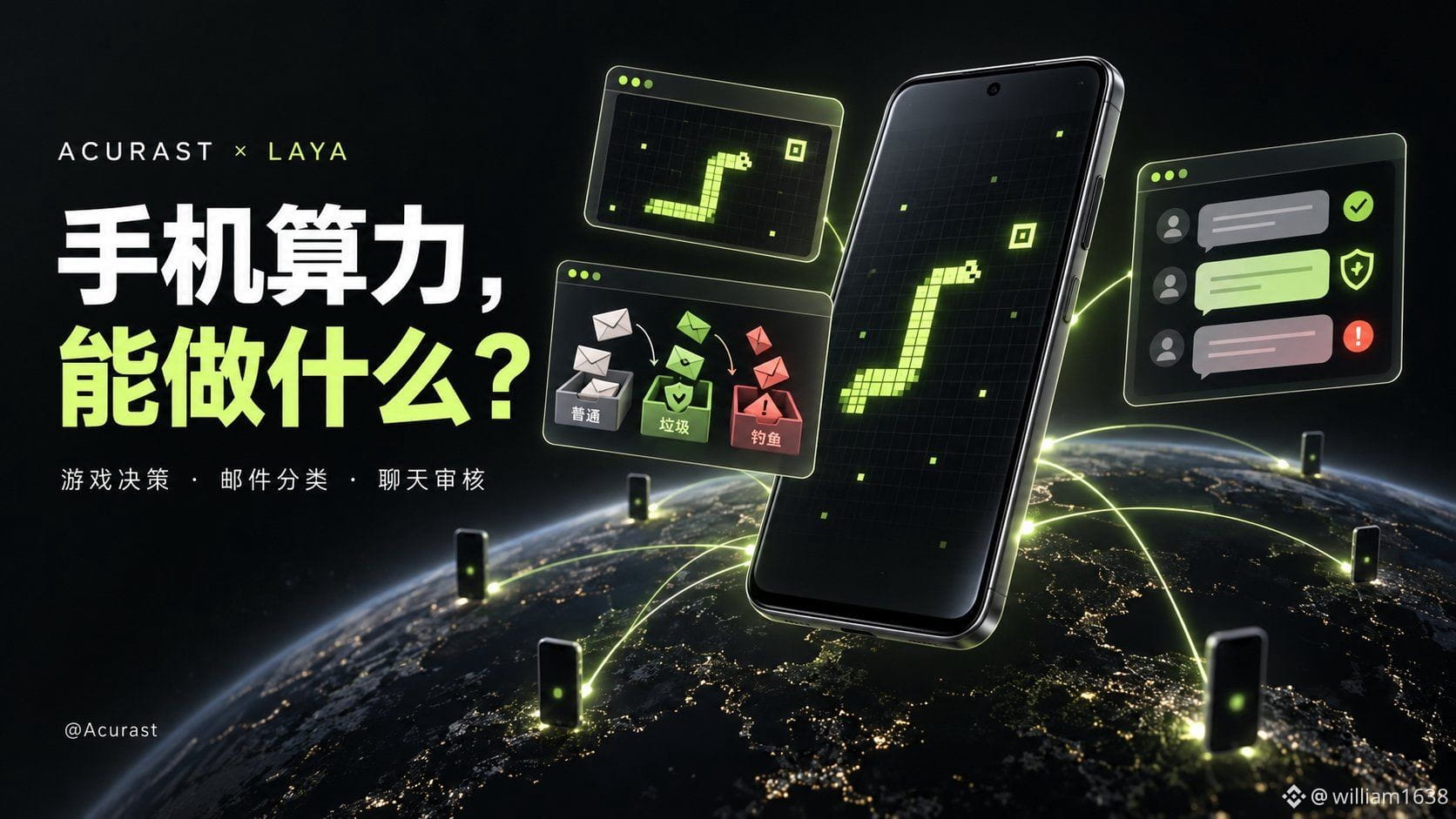
What can a phone actually do when it joins a compute network?
I’ve been looking into Acurast lately, and this is what I’ve been most curious to understand. Just saying “phones can contribute computing power” still feels a bit abstract—you have to see what’s actually running.
The Laya demo they recently shared makes it pretty clear: AI controls when a Snake game turns, sorts emails into normal, spam, or phishing, or checks whether a chat message contains spam. These decisions are handled by Android phones on the Acurast network.
Imagine watching a snake turn on a webpage, while somewhere in another country, a phone has just made that choice behind the scenes. Pretty interesting
😂
The page also shows details about the device doing the work, such as its country and chip, and provides a way to verify the results on-chain.
This has given me a more concrete idea of what phones can do with their computing power. Many apps need to make small decisions over and over. If those tasks can be handled by the right devices, they could become a real use case for phone-based computing.
Of course, the demo has its limits. The team notes that the model can make mistakes, and messages can get queued if they come in too quickly. Before this can be used in a real product, accuracy and stability still need to be assessed.
But at least now there’s something you can open up and try. My interest in Acurast has shifted from “that’s a pretty interesting idea” to “what other tasks would be a good fit to run on it?”