The UNI token itself has no built-in, hard-coded automatic burn mechanism in its base smart contract (unlike ETH, whose Base Fee is automatically burned with every transaction under EIP-1559).
For UNI to generate burns, the following three core conditions must be met:
1. Trigger and activate the “Fee Switch” mechanism (the primary source of ongoing burns)
Trigger condition: UNI holders pass a governance vote to activate the protocol fee switch for Uniswap versions (v2 / v3 / v4) or on specific chains.
How burning works:
1. By default, 100% of Uniswap’s trading fees go to liquidity providers (LPs).
2. Once the fee switch is turned on, the protocol takes a percentage of transaction fees (for example, 10%–25%) as protocol revenue.
3. This protocol revenue automatically goes into a contract (such as TokenJar), which buys back UNI on the open market and sends it to a burn address.
2. Implement a “one-time/treasury burn” through a DAO community governance proposal
Trigger condition: The community submits a clear token-burning proposal (such as a major structural reform or a UNI-fication-type proposal), which is then approved by a large majority in a UNI token vote.
How the burn works: Authorization directly transfers uncirculated UNI held in the Uniswap Community Treasury to a burn address, permanently reducing the total supply.
3. Unichain (L2 application chain) ecosystem fee and MEV revenue capture
Trigger condition: After Uniswap launches its dedicated L2 network (Unichain), governance approves rules for allocating fees or MEV revenue from related validator nodes and the sequencer.
How the burn works: Some of the network revenue generated on Unichain is converted into UNI buybacks and burns, creating deflationary pressure on the token.
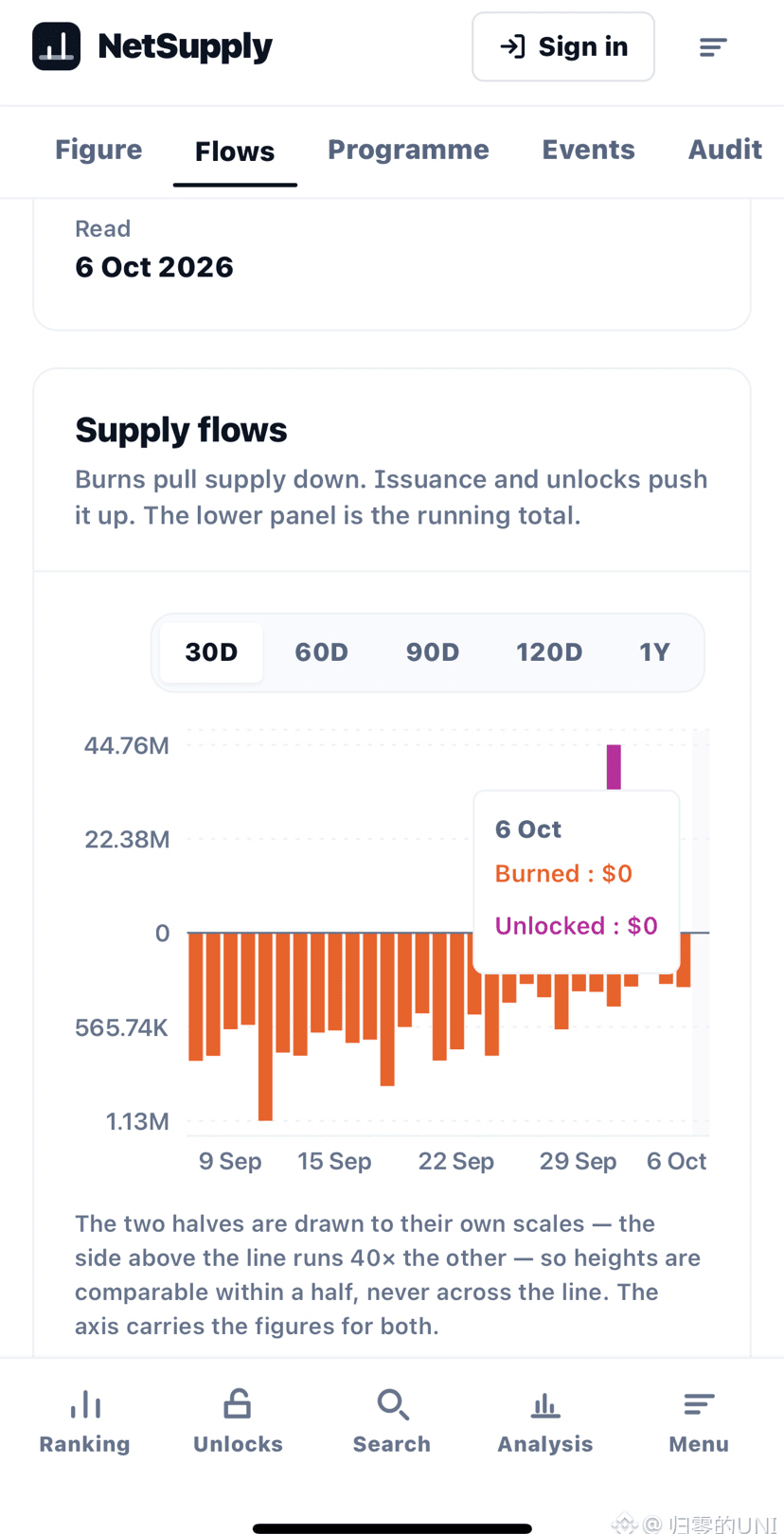
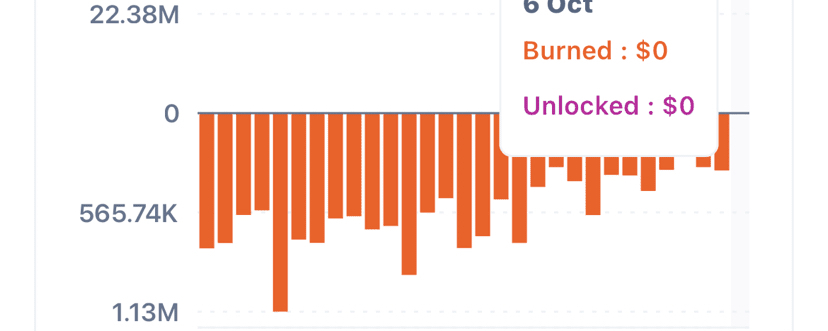
💡 Why does NetSupply in the screenshot show Burned: $0?
In the data chart you provided, the burn amount for that day is $0, mainly because:
Non-continuous burns: UNI burns depend on the specific scope of the protocol fee switch and the triggering schedule of the buyback-and-burn contract (TokenJar/Burn Auction).
If no fee transfers were made that day, or if the fee switch has not yet been fully enabled for certain pools, the tracking dashboard will show $0.