Others keep topping up to use AI, but this project wants you to buy a card that “refills every day” first: What’s behind $VVV rising from $11 to nearly $35?
For people who pay to use AI every day, the biggest headache isn’t the subscription fee. It’s watching the bill keep climbing once a program starts running.
Venice wants to try a different approach: lock up some tokens in exchange for AI credits that refresh daily. Those credits can also be resold.
VVV was around $11 in early August, peaked near $35 in September, and has now fallen back to around $27. How much the market is willing to pay for this model is key to this rally.
Venice is a privacy-focused AI platform that offers services such as chat, coding, and image generation. It makes money from subscriptions and usage credits. VVV is its token.
1️⃣ Why can an AI credit card create demand for the token?
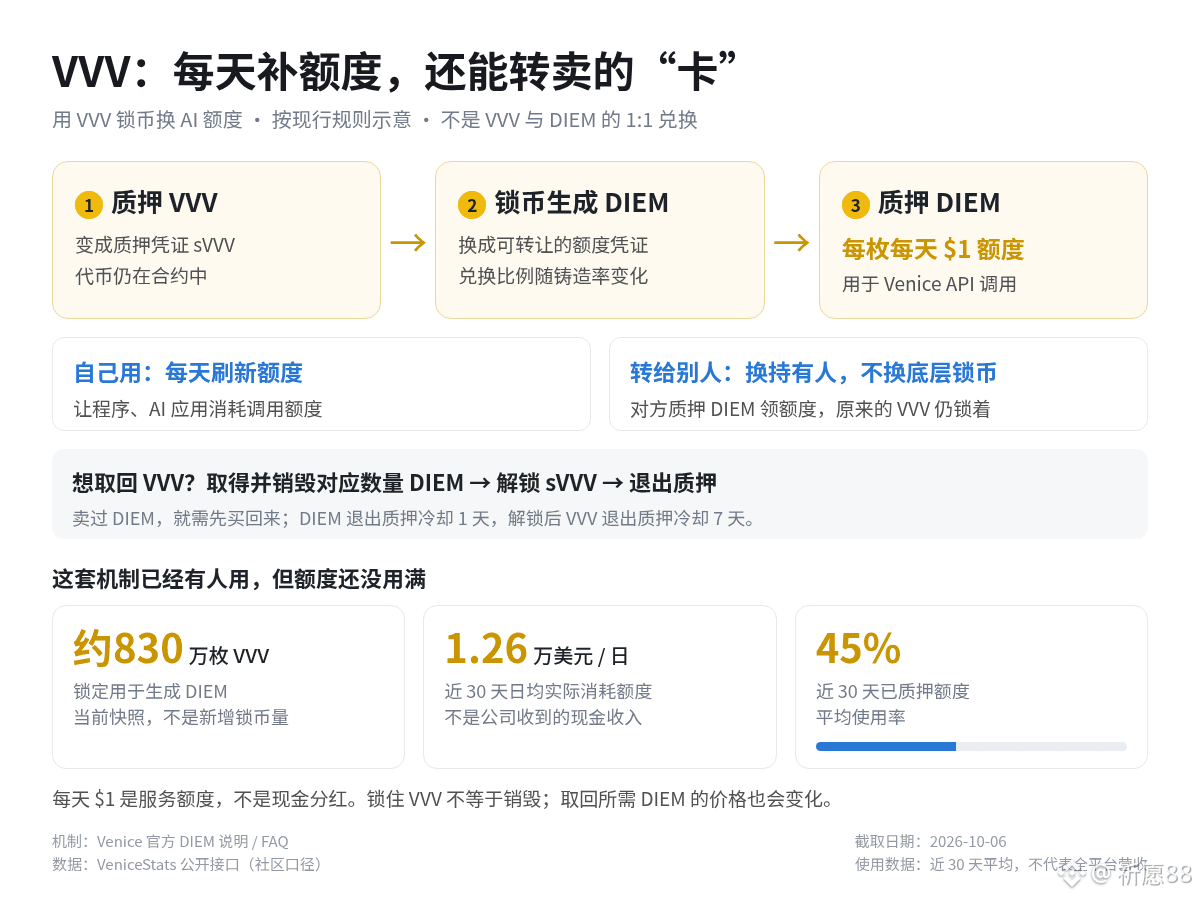
Users first stake VVV, locking up the tokens to generate credit vouchers called DIEM. Under the rules, each staked DIEM provides $1 worth of AI usage credits per day.
If you don’t need the credits yourself, you can sell your DIEM to someone who needs AI, while the VVV remains locked up.
To reclaim your VVV, you first have to burn the corresponding amount of DIEM. If you’ve sold it, you’ll have to buy it back first. After unlocking, withdrawing your VVV from staking requires a seven-day cooldown.
Put simply: someone puts money in to get a card they can use every day; someone else buys the card directly to run programs. As long as the card is still around, the VVV behind it remains locked up.
This mechanism has been around since last year. What’s worth watching now is whether real business can support it.
2️⃣ People are paying and tokens are being locked up, giving the rally a foundation
Investors have disclosed that Venice’s annualized revenue run rate grew from around $14 million in January to more than $100 million in August. That figure is based on the revenue pace at the time; it doesn’t mean the company had already earned that much over a full year.
A community dashboard shows that around 8.3 million VVV are currently locked up to generate DIEM. Over the past 30 days, an average of about $12,600 worth of AI credits from this channel was actually used each day. This isn’t the platform’s total revenue, but it does show that people are using the credits.
Cash payments also affect the token: when users buy usage credits, 5% of the money is used to buy and burn VVV; new subscriptions also trigger buybacks.
On September 8, the team announced a burn of around $391,000 worth of tokens. On the same day, Binance VVV futures rose about 40%.
You can lock up tokens to use AI, and paying to use AI can in turn lead to buybacks. There’s now a visible link between the business and the token.
3️⃣ Why did the price pull back after the positive news came through?
On October 1, annual issuance was cut from 2.5 million to 2 million, but Binance futures fell about 5.5% that day.
The issuance reduction schedule had been announced back in August, and the price had already climbed to nearly $35. The implementation date wasn’t the first time the market had heard about it.
Also, locking up tokens doesn’t mean all the credits will be used. The community dashboard shows that over the past 30 days, the average utilization rate of available credits backed by staked DIEM was about 45%. People are holding the cards, but more than half of the credits available each day are still going unused.
📈 My take
The interesting thing about $VVV is that it turns an AI service people pay for continuously into credits that can be held and transferred. The rally has real business activity behind it, but the price has already priced in a lot of future growth.
Next, I’ll be watching whether actual credit usage grows and whether the amount of VVV locked up keeps increasing—not just whether another model launches. The current pullback hasn’t yet been linked to one definitive piece of bad news, so we can’t treat profit-taking as the confirmed explanation for the entire decline.
If you had to pay AI bills every day, would you lock up some money upfront in exchange for credits, or keep paying as you go?
For people who pay to use AI every day, the biggest headache isn’t the subscription fee. It’s watching the bill keep climbing once a program starts running.
Venice wants to try a different approach: lock up some tokens in exchange for AI credits that refresh daily. Those credits can also be resold.
VVV was around $11 in early August, peaked near $35 in September, and has now fallen back to around $27. How much the market is willing to pay for this model is key to this rally.
Venice is a privacy-focused AI platform that offers services such as chat, coding, and image generation. It makes money from subscriptions and usage credits. VVV is its token.
1️⃣ Why can an AI credit card create demand for the token?
Users first stake VVV, locking up the tokens to generate credit vouchers called DIEM. Under the rules, each staked DIEM provides $1 worth of AI usage credits per day.
If you don’t need the credits yourself, you can sell your DIEM to someone who needs AI, while the VVV remains locked up.
To reclaim your VVV, you first have to burn the corresponding amount of DIEM. If you’ve sold it, you’ll have to buy it back first. After unlocking, withdrawing your VVV from staking requires a seven-day cooldown.
Put simply: someone puts money in to get a card they can use every day; someone else buys the card directly to run programs. As long as the card is still around, the VVV behind it remains locked up.
This mechanism has been around since last year. What’s worth watching now is whether real business can support it.
2️⃣ People are paying and tokens are being locked up, giving the rally a foundation
Investors have disclosed that Venice’s annualized revenue run rate grew from around $14 million in January to more than $100 million in August. That figure is based on the revenue pace at the time; it doesn’t mean the company had already earned that much over a full year.
A community dashboard shows that around 8.3 million VVV are currently locked up to generate DIEM. Over the past 30 days, an average of about $12,600 worth of AI credits from this channel was actually used each day. This isn’t the platform’s total revenue, but it does show that people are using the credits.
Cash payments also affect the token: when users buy usage credits, 5% of the money is used to buy and burn VVV; new subscriptions also trigger buybacks.
On September 8, the team announced a burn of around $391,000 worth of tokens. On the same day, Binance VVV futures rose about 40%.
You can lock up tokens to use AI, and paying to use AI can in turn lead to buybacks. There’s now a visible link between the business and the token.
3️⃣ Why did the price pull back after the positive news came through?
On October 1, annual issuance was cut from 2.5 million to 2 million, but Binance futures fell about 5.5% that day.
The issuance reduction schedule had been announced back in August, and the price had already climbed to nearly $35. The implementation date wasn’t the first time the market had heard about it.
Also, locking up tokens doesn’t mean all the credits will be used. The community dashboard shows that over the past 30 days, the average utilization rate of available credits backed by staked DIEM was about 45%. People are holding the cards, but more than half of the credits available each day are still going unused.
📈 My take
The interesting thing about $VVV is that it turns an AI service people pay for continuously into credits that can be held and transferred. The rally has real business activity behind it, but the price has already priced in a lot of future growth.
Next, I’ll be watching whether actual credit usage grows and whether the amount of VVV locked up keeps increasing—not just whether another model launches. The current pullback hasn’t yet been linked to one definitive piece of bad news, so we can’t treat profit-taking as the confirmed explanation for the entire decline.
If you had to pay AI bills every day, would you lock up some money upfront in exchange for credits, or keep paying as you go?