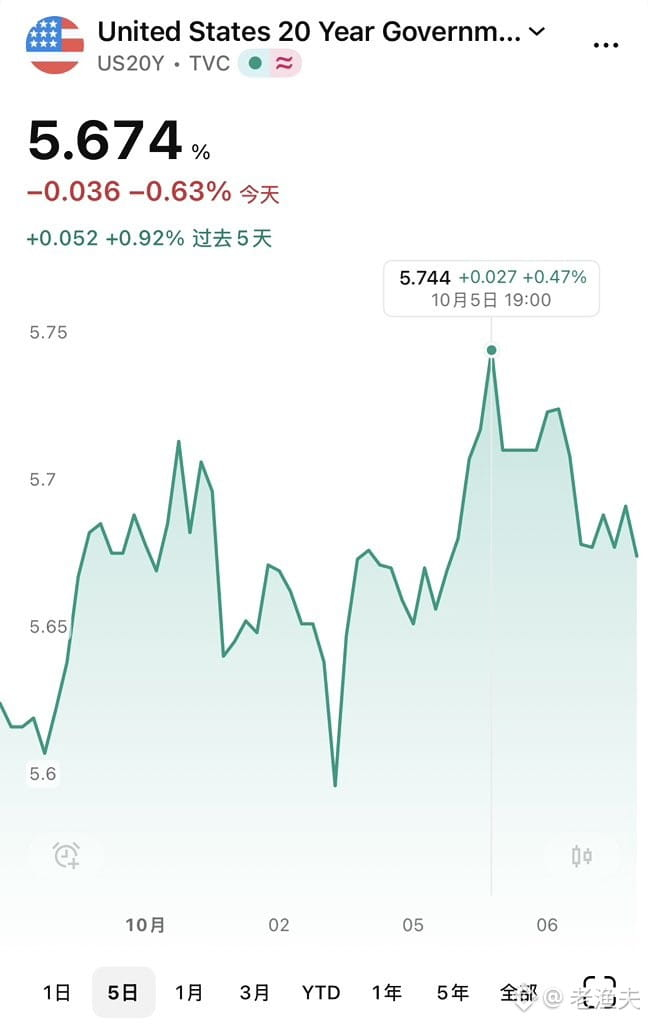
The 10-year U.S. Treasury yield has broken above 5.7%. At this pace, 6% is only a matter of time.
Honestly, this rise has been pretty sharp, but looking back, it’s not exactly surprising. The Fed’s hawkish remarks haven’t been fully priced in yet, the fiscal deficit is still there, and supply pressure has been persistent. Expectations for rate cuts have been pushed back again and again. With real yields this high, of course money is flowing into bonds.
Historically, the move from 5.7% to 6% has often happened faster than people expect. We saw similar accelerations before the dot-com bubble burst in 2000 and during the run-up to the subprime crisis in 2007. Things aren’t exactly the same now, of course, but with the yield curve this steep and the term premium rising, it’s clear the market still has concerns about long-term inflation and fiscal sustainability.
For commodities, a high-rate environment is generally unfavorable: carrying costs rise, and assets with a financial component come under pressure. But if inflation expectations really start to pick up, energy and metals could rebound on supply-side issues. As I always say, it’s about the structure and the timing.
6% isn’t a ceiling, but once yields reach that level, the seesaw effect between stocks and bonds will become more pronounced, and asset allocation strategies will need to be recalculated.
Honestly, this rise has been pretty sharp, but looking back, it’s not exactly surprising. The Fed’s hawkish remarks haven’t been fully priced in yet, the fiscal deficit is still there, and supply pressure has been persistent. Expectations for rate cuts have been pushed back again and again. With real yields this high, of course money is flowing into bonds.
Historically, the move from 5.7% to 6% has often happened faster than people expect. We saw similar accelerations before the dot-com bubble burst in 2000 and during the run-up to the subprime crisis in 2007. Things aren’t exactly the same now, of course, but with the yield curve this steep and the term premium rising, it’s clear the market still has concerns about long-term inflation and fiscal sustainability.
For commodities, a high-rate environment is generally unfavorable: carrying costs rise, and assets with a financial component come under pressure. But if inflation expectations really start to pick up, energy and metals could rebound on supply-side issues. As I always say, it’s about the structure and the timing.
6% isn’t a ceiling, but once yields reach that level, the seesaw effect between stocks and bonds will become more pronounced, and asset allocation strategies will need to be recalculated.