


This article mainly introduces the rates and how to issue invoices for them.
(There are many ways to play with rates. It’s not easy to summarize my personal experience. Please follow and like Uncle Ai. Thank you)
In the past few days, SXP has buried a lot of air force. Some people say it is because of the strong market maker, and some people say that they can't find the target position. In fact, they all make sense. So how can we participate in this kind of currency?
Uncle Ai sorted out the ideas for rate invoicing.
Take SXP as an example
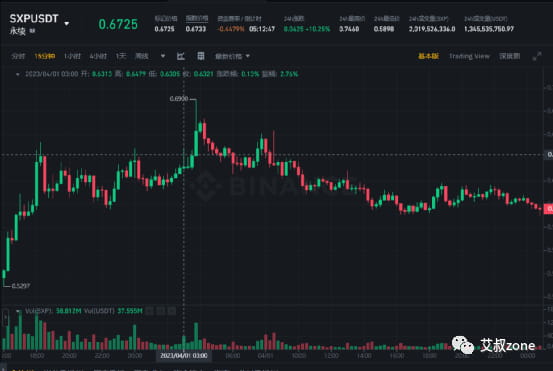
The rate of the previous day flew to -1
This is the place with the most people shorting. Why am I reminding people in the square not to chase the shorts?
First, let’s take a look at what the rates are:
1. What is the funding rate?
Funding rate refers to the funds that are exchanged regularly between longs and shorts. The absolute amount per lot will be based on the difference between the perpetual contract price and the index price. When the market trend is bullish, the funding rate is usually positive and increases over time. At this time, longs will pay the funding rate to shorts. Conversely, when the market is bearish, the funding rate is usually negative, and short traders pay the fees to longs.
2. Why is the funding rate so important?
Unlike traditional contracts, perpetual contracts do not have an expiration date. Therefore, users can hold their positions until they are closed. Perpetual contracts are like regular futures, but without an expiration date. To ensure that the price of a perpetual contract corresponds to its underlying market, cryptocurrency exchanges have created a mechanism called the funding rate. The funding rate is primarily designed to help the price of a perpetual contract converge to the price of the underlying asset. With sufficient liquidity, trading perpetual contracts is very similar to trading spot.
3. How is Binance funding rate calculated?
Funding amount is calculated using the following formula:
Funding amount = Notional value of position * Funding rate
Notional value of position = Mark price * Number of U-denominated contracts held; or
Notional value of position = contract multiplier * number of contracts held / mark price of currency-based contract
4. What determines the funding rate?
The funding rate consists of two parts: interest rate and premium. The premium explains why the price of the perpetual contract will converge with the underlying price trend.
Binance uses a fixed interest rate for funding rates, assuming that the interest earned by holding cash is higher than the interest earned by holding an equivalent amount of BTC. By default, the interest rate is set at 0.03% per day (calculated every 8 hours, with 0.01% per funding rate settlement cycle). Binance reserves the right to adjust the interest rate at any time based on market conditions.
5. Under normal circumstances, the settlement time of funding rate is: 4 8 12 16 20 24 hours
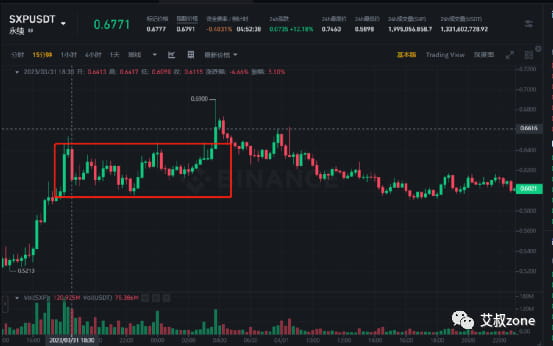
During this period, the rate soared from -0.2 to -1. The introduction of the rate shows that the air force is constantly adding chips. At this time, the high rate is shorting, and the long army is eating and making money. Are you entering the market to be cannon fodder?
Why would I remind everyone not to chase shorts and wait for a rebound before shorting when the fee rate drops the next day?
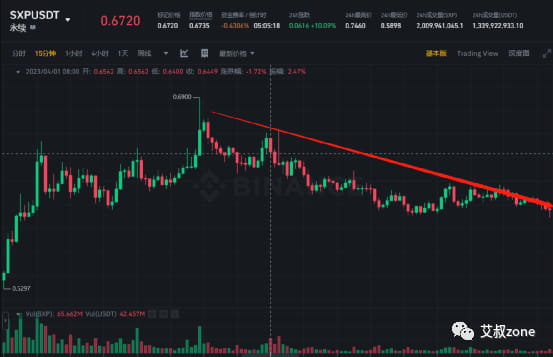
It was during this period that the rate gradually dropped from -1 to -0.08
This involves the withdrawal of orders by empty hands or liquidation of positions. There are also long positions that are constantly leaving the market to take advantage of the funding rate. The profit-taking orders in the market are changing hands. This decline is not caused by the so-called shipment.
We can see that the volume is shrinking and falling, so I remind you not to chase the shorts here, short and wait for a rebound. The next day's market gave verification, and a high point appeared, which is our entry time.
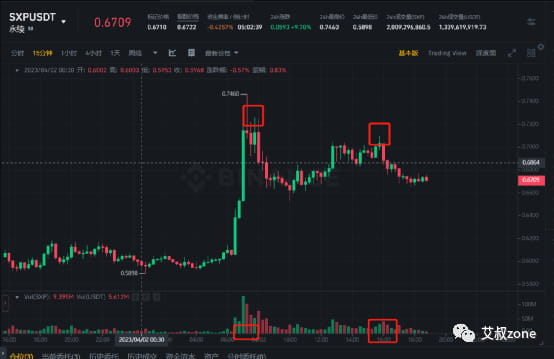
So how should we enter the market?
1. First of all, we understand the rate and how the high negative rate appears, and then we naturally understand the behavior of the short-term and long-term traders after the rate settlement time. At this time, some short-term traders will avoid delivering the rate, and the long-term traders will leave the market after eating the rate. The fluctuation here is our opportunity.
2. The entry signal must be combined with the candlestick chart. You can enter the market when a reversal signal appears. Of course, this approach requires mature verification of the market and technology.
When to leave:
1. I call high-fee coins "demon coins". What is a demon coin? It is a demon coin if it is unusual. To test and feel its market sense, demon coins have their own rhythm. Therefore, when a signal appears, try a light position first, and then add a little position when the reversal occurs.
2. Reduce profits and move stop loss.
3. Reduce positions as you go, and reduce at support levels.
4. And most importantly, pay attention to reducing your position one hour before the rate settlement. You can still enter the market again after the rate settlement is completed.
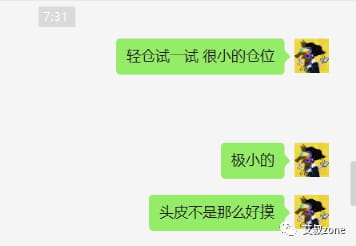
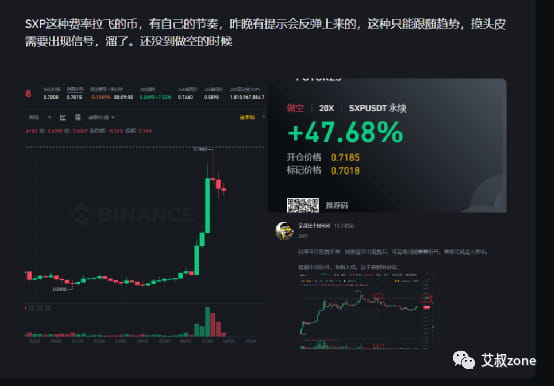
This is the first order this morning. The price rose before seven o'clock and a signal appeared. I held a light position and grasped the rhythm.
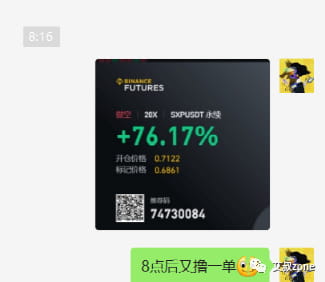
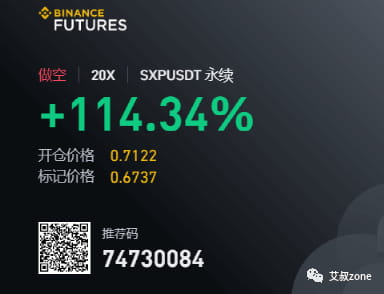
The second order for rate settlement after 8 o'clock.
There are many ways to play with rates. It is not easy to summarize my personal experience. Please follow and like Uncle Ai. Thank you.