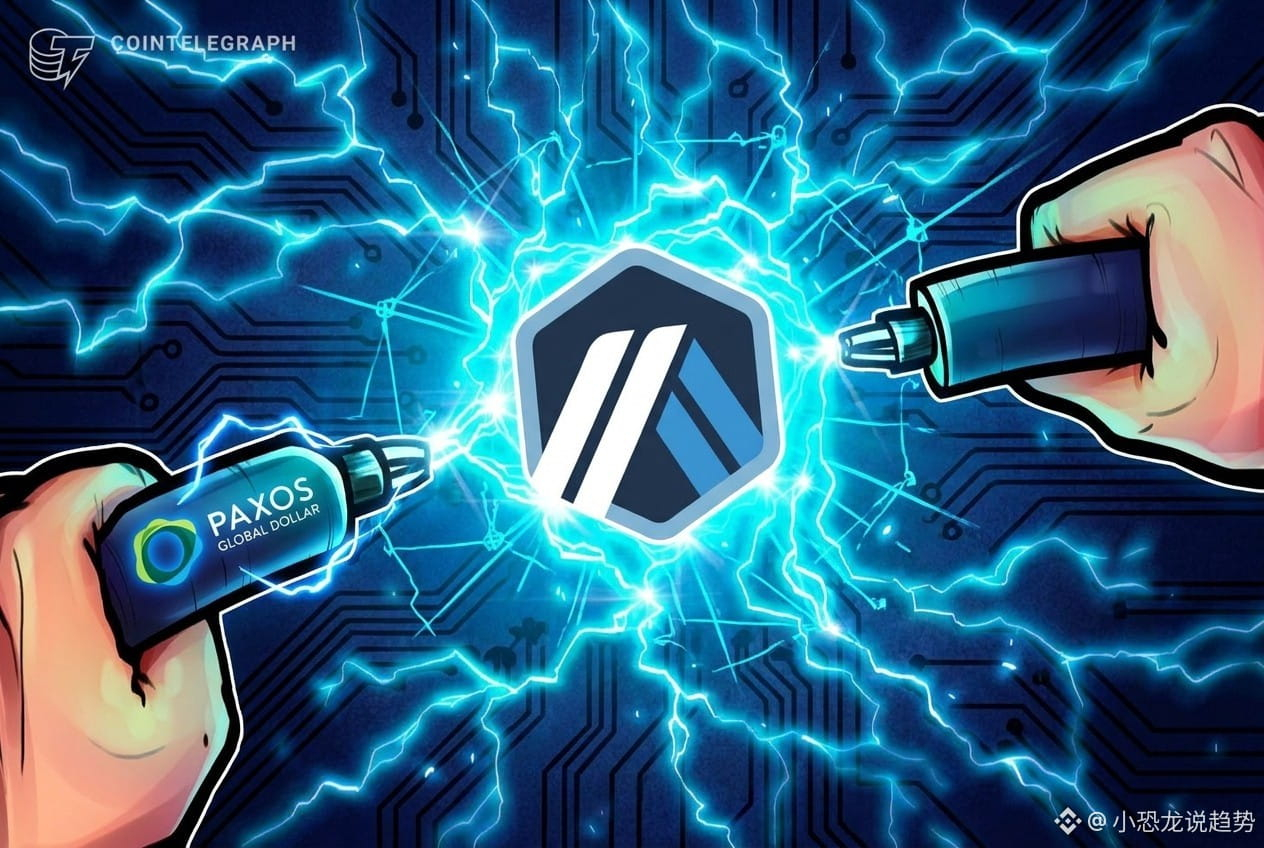
A public blockchain is putting up 100 million tokens just to bring a $3 billion stablecoin into its own ecosystem 🦖
⚡ 有大动静群里说
On October 6, USDG, the stablecoin issued by Paxos, officially launched natively on Arbitrum One. Arbitrum also joined the Global Dollar Network, and a proposal submitted to ArbitrumDAO would set aside another 100 million ARB for incentives. Meanwhile, the Layer 2 chain already has around $4 billion in stablecoins on it.
On one hand, the pool is already full. On the other, they’re still trying to pull in a new one. It’s worth taking a closer look at the numbers.
First, some background on USDG. According to DeFiLlama, it’s the world’s seventh-largest stablecoin, with a circulating supply of around $3.09 billion. Most of that supply is concentrated across X Layer, Robinhood Chain, and Solana. Following its launch on Arbitrum One, DeFi protocols including Fluid, Morpho, GMX, and Maple will integrate it; a certain exchange will support deposits and withdrawals, and Stargate will handle cross-chain transfers.
The real big spend is in the proposal: 100 million ARB will go straight into an incentives program, and Arbitrum Treasury assets will also be deployed to provide liquidity for USDG. Projects that integrate the stablecoin can seek support from the Arbitrum Foundation. As a member of the Global Dollar Network, Arbitrum can also earn a share of the revenue USDG generates on the chain.
Why would a chain spend so much to compete for a stablecoin? The answer is asset tokenization ⚖️ Arbitrum is no longer content with just hosting crypto-native applications. It wants to be the foundation for bringing traditional assets on-chain. Robinhood Chain is the clearest example: built using Arbitrum technology, this Layer 2 network only launched its public mainnet in July this year. It’s designed specifically for tokenized real-world and digital assets, with 24/7 trading, lending, and perpetuals all in the mix.
Institutions are already thinking far ahead. Last month, Standard Chartered said that projects like Robinhood Chain could change Arbitrum’s economic model, with 10% of net protocol revenue from on-chain projects flowing back to the network. It even offered a benchmark: tokenized assets could reach $4 trillion by the end of 2028, and under this thesis, ARB could hit $10 by 2030—around 70 times its price at the time.
My take: this isn’t just a chain trying to attract a stablecoin. It’s a battle to win over existing liquidity 💥 Growth in Layer 2 TVL has long since peaked, and TVL bought with subsidies is both the most transparent and the most fragile. 100 million ARB can bring USDG in, but once the incentives taper off, whether the capital stays will depend on whether there’s real demand for settlement and trading on Arbitrum—not on how long the incentives list is.
Two things are worth watching: first, how the 100 million ARB in incentives is spent and over what period; second, whether real capital on Robinhood Chain actually materializes. If there are incentives but no real business, this battle for users will amount to moving money from one hand to the other.
Do you think this strategy of handing out tokens to attract stablecoins will make the pie bigger, or is it just digging a hole for itself? Let’s talk in the comments.
Tap the profile picture to watch the livestream.
Every day, we bring you the latest crypto headlines—not just what’s happening, but the logic and opportunities behind it 👀🚀
⚡ 有大动静群里说
On October 6, USDG, the stablecoin issued by Paxos, officially launched natively on Arbitrum One. Arbitrum also joined the Global Dollar Network, and a proposal submitted to ArbitrumDAO would set aside another 100 million ARB for incentives. Meanwhile, the Layer 2 chain already has around $4 billion in stablecoins on it.
On one hand, the pool is already full. On the other, they’re still trying to pull in a new one. It’s worth taking a closer look at the numbers.
First, some background on USDG. According to DeFiLlama, it’s the world’s seventh-largest stablecoin, with a circulating supply of around $3.09 billion. Most of that supply is concentrated across X Layer, Robinhood Chain, and Solana. Following its launch on Arbitrum One, DeFi protocols including Fluid, Morpho, GMX, and Maple will integrate it; a certain exchange will support deposits and withdrawals, and Stargate will handle cross-chain transfers.
The real big spend is in the proposal: 100 million ARB will go straight into an incentives program, and Arbitrum Treasury assets will also be deployed to provide liquidity for USDG. Projects that integrate the stablecoin can seek support from the Arbitrum Foundation. As a member of the Global Dollar Network, Arbitrum can also earn a share of the revenue USDG generates on the chain.
Why would a chain spend so much to compete for a stablecoin? The answer is asset tokenization ⚖️ Arbitrum is no longer content with just hosting crypto-native applications. It wants to be the foundation for bringing traditional assets on-chain. Robinhood Chain is the clearest example: built using Arbitrum technology, this Layer 2 network only launched its public mainnet in July this year. It’s designed specifically for tokenized real-world and digital assets, with 24/7 trading, lending, and perpetuals all in the mix.
Institutions are already thinking far ahead. Last month, Standard Chartered said that projects like Robinhood Chain could change Arbitrum’s economic model, with 10% of net protocol revenue from on-chain projects flowing back to the network. It even offered a benchmark: tokenized assets could reach $4 trillion by the end of 2028, and under this thesis, ARB could hit $10 by 2030—around 70 times its price at the time.
My take: this isn’t just a chain trying to attract a stablecoin. It’s a battle to win over existing liquidity 💥 Growth in Layer 2 TVL has long since peaked, and TVL bought with subsidies is both the most transparent and the most fragile. 100 million ARB can bring USDG in, but once the incentives taper off, whether the capital stays will depend on whether there’s real demand for settlement and trading on Arbitrum—not on how long the incentives list is.
Two things are worth watching: first, how the 100 million ARB in incentives is spent and over what period; second, whether real capital on Robinhood Chain actually materializes. If there are incentives but no real business, this battle for users will amount to moving money from one hand to the other.
Do you think this strategy of handing out tokens to attract stablecoins will make the pie bigger, or is it just digging a hole for itself? Let’s talk in the comments.
Tap the profile picture to watch the livestream.
Every day, we bring you the latest crypto headlines—not just what’s happening, but the logic and opportunities behind it 👀🚀