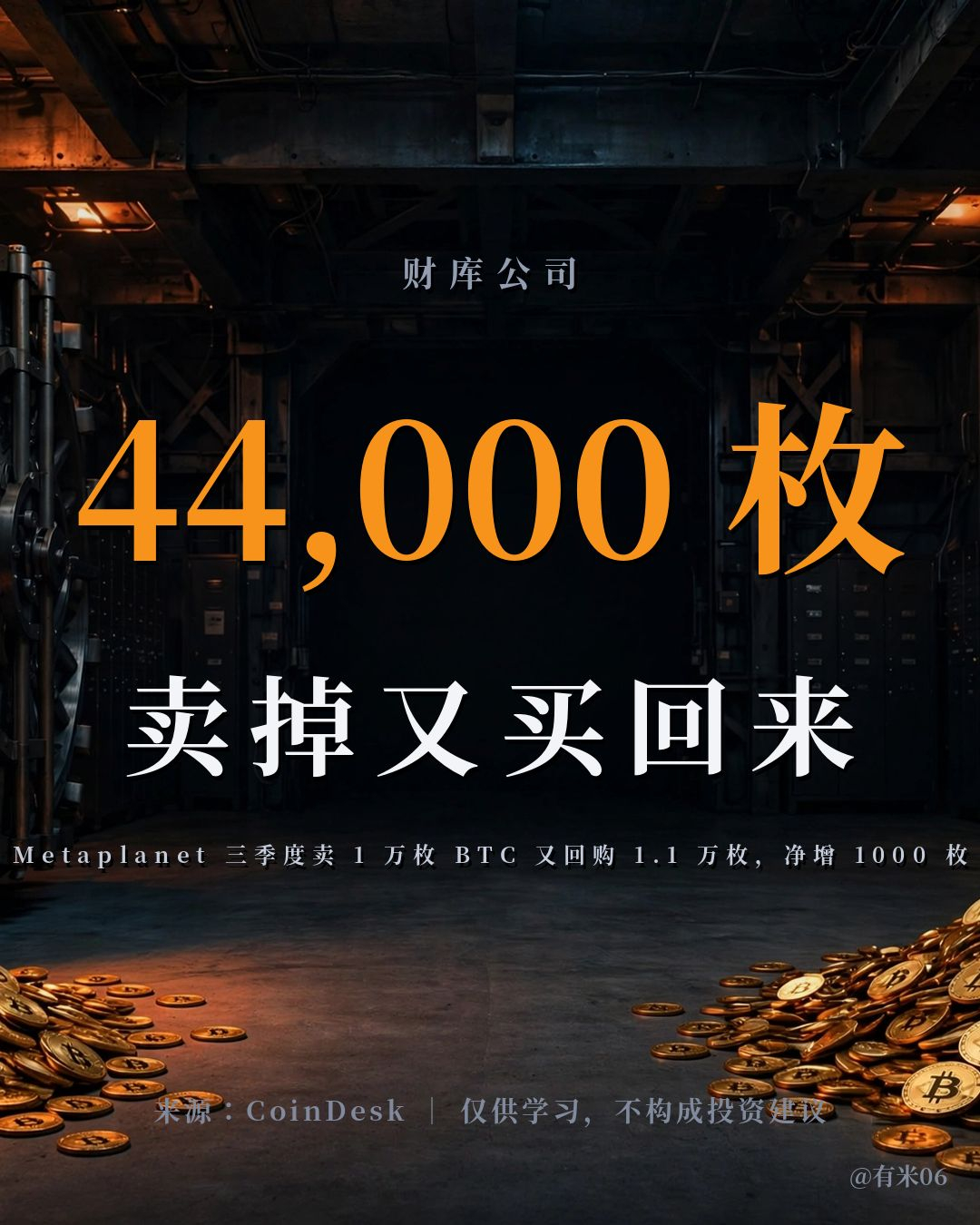
Sold 10,000 Bitcoin, then bought back 11,000—Metaplanet’s third-quarter moves look like “churning,” but behind them is really an effort to reassure creditors.
On October 5, the Japanese publicly listed treasury company disclosed its third-quarter trading details:
1. First, it sold 10,000 BTC for about $789.2 million, at an average price of roughly $78,900
2. It then bought back 11,000 BTC for about $948.7 million, at an average price of roughly $86,200
3. The net increase was 1,000 BTC. As of September 30, total holdings stood at 44,000 BTC, worth about $3.8 billion
The company’s official explanation: converting Bitcoin into cash and temporarily holding the proceeds was meant to demonstrate to rating agencies and bond investors that, if it ever needed to repay debt, the BTC on its books could be liquidated at any time. The debt itself was not actually repaid. As a side note, the sell-and-buyback round lifted the total cost basis of its holdings to about $4.33 billion, or an average of $98,500 per coin—already above the current price.
What should we make of this? The central question hanging over treasury companies for the past two years boils down to this: everyone is happy when prices rise, but if prices fall, can you actually sell—or will you get liquidated and send the market crashing? Metaplanet effectively conducted its own stress test this time. It really did sell 10,000 BTC, so it seems to have passed the liquidity test. But don’t misread this as a bullish signal—it’s a financial maneuver, not a show of conviction. $BTC
The signal worth thinking about is this: institutions are starting to treat Bitcoin as “balance-sheet firepower they can deploy,” rather than a family heirloom they can only look at but never touch. Alongside its newly announced “net interest income strategy” (allocating 10%–15% of total assets to preferred securities issued by treasury companies), the treasury model is shifting from “just hoarding coins” to “earning yield on coins.” One caveat: revenue from its covered-call leasing business was cut in half quarter over quarter, unrealized losses are out in the open, and it remains to be seen whether the interest income can cover the cost of the debt-funded Bitcoin purchases.
Data as of: 2026-10-06 14:00 UTC
Source: CoinDesk; Phemex News Daily
For informational purposes only; not investment advice.
Do you see Bitcoin as a “family heirloom to hold forever” or as “firepower that can be converted into cash when it matters”? I’ll keep following treasury company developments—follow me to stay in the loop.
On October 5, the Japanese publicly listed treasury company disclosed its third-quarter trading details:
1. First, it sold 10,000 BTC for about $789.2 million, at an average price of roughly $78,900
2. It then bought back 11,000 BTC for about $948.7 million, at an average price of roughly $86,200
3. The net increase was 1,000 BTC. As of September 30, total holdings stood at 44,000 BTC, worth about $3.8 billion
The company’s official explanation: converting Bitcoin into cash and temporarily holding the proceeds was meant to demonstrate to rating agencies and bond investors that, if it ever needed to repay debt, the BTC on its books could be liquidated at any time. The debt itself was not actually repaid. As a side note, the sell-and-buyback round lifted the total cost basis of its holdings to about $4.33 billion, or an average of $98,500 per coin—already above the current price.
What should we make of this? The central question hanging over treasury companies for the past two years boils down to this: everyone is happy when prices rise, but if prices fall, can you actually sell—or will you get liquidated and send the market crashing? Metaplanet effectively conducted its own stress test this time. It really did sell 10,000 BTC, so it seems to have passed the liquidity test. But don’t misread this as a bullish signal—it’s a financial maneuver, not a show of conviction. $BTC
The signal worth thinking about is this: institutions are starting to treat Bitcoin as “balance-sheet firepower they can deploy,” rather than a family heirloom they can only look at but never touch. Alongside its newly announced “net interest income strategy” (allocating 10%–15% of total assets to preferred securities issued by treasury companies), the treasury model is shifting from “just hoarding coins” to “earning yield on coins.” One caveat: revenue from its covered-call leasing business was cut in half quarter over quarter, unrealized losses are out in the open, and it remains to be seen whether the interest income can cover the cost of the debt-funded Bitcoin purchases.
Data as of: 2026-10-06 14:00 UTC
Source: CoinDesk; Phemex News Daily
For informational purposes only; not investment advice.
Do you see Bitcoin as a “family heirloom to hold forever” or as “firepower that can be converted into cash when it matters”? I’ll keep following treasury company developments—follow me to stay in the loop.