

币圈小贝贝
204 Posts

币圈小贝贝
Report
Block User
11 Following
1.7K+ Followers
1.1K+ Liked
Posts
All
Live
·
--
Verified
#circle7天在solana铸造27.5亿美元usdc
A report says a public blockchain has won the backing of another top investment bank—but what may really be getting compressed this time is the most expensive toll road in traditional finance..
[📢 今日盘面群里聊](https://app.binance.com/uni-qr/F6dwNqgx)
On Monday, the Solana Foundation released an open-source project called Solana DvP.. It gives financial institutions a standardized interface for delivery versus payment—the simultaneous exchange of assets and money.. The entire project is open source under the MIT license, and JPMorgan Chase contributed practical input on institutional settlement during its design..
In traditional markets, settling a trade requires clearinghouses, depositories, and custodian banks to pass the baton, usually tying up funds for one to two days.. DvP compresses that chain into a single atomic transaction: either both sides go through, or neither does.. It supports SPL Token and Token-2022, including extensions relied on by regulated issuers, such as permanent delegates, pausable tokens, and transfer hooks.. It has also undergone an external security audit, with privacy features planned for a later release..
What really matters is that it was built as a reusable standard, not yet another custom contract.. This shows that institutions don’t just want a faster chain; they want a settlement process their risk departments are willing to approve.. Speed is just the surface—certainty is what gets them through the door..
The list of tokenized assets on-chain has been growing over the past two years.. BlackRock brought a money market fund to Solana, and another exchange is using it for tokenized U.S. stocks.. But the bottleneck keeping capital out has never been whether assets can go on-chain; it’s whether settlement will be accepted by compliance teams.. Once the infrastructure is in place, institutions will have a process-based reason to stay, rather than just a narrative..
So don’t expect this news to move the market: DvP itself won’t drive prices.. The next thing to watch is who will be the first to use it to replace part of their own clearing process—and whether institutions are willing to put real trading volume on-chain before the privacy features launch.. Once the first major player moves its settlement on-chain, this standard will no longer be optional; it will be the default..
#circle7天在solana铸造27.5亿美元usdc
A report says a public blockchain has won the backing of another top investment bank—but what may really be getting compressed this time is the most expensive toll road in traditional finance..
📢 今日盘面群里聊
On Monday, the Solana Foundation released an open-source project called Solana DvP.. It gives financial institutions a standardized interface for delivery versus payment—the simultaneous exchange of assets and money.. The entire project is open source under the MIT license, and JPMorgan Chase contributed practical input on institutional settlement during its design..
In traditional markets, settling a trade requires clearinghouses, depositories, and custodian banks to pass the baton, usually tying up funds for one to two days.. DvP compresses that chain into a single atomic transaction: either both sides go through, or neither does.. It supports SPL Token and Token-2022, including extensions relied on by regulated issuers, such as permanent delegates, pausable tokens, and transfer hooks.. It has also undergone an external security audit, with privacy features planned for a later release..
What really matters is that it was built as a reusable standard, not yet another custom contract.. This shows that institutions don’t just want a faster chain; they want a settlement process their risk departments are willing to approve.. Speed is just the surface—certainty is what gets them through the door..
The list of tokenized assets on-chain has been growing over the past two years.. BlackRock brought a money market fund to Solana, and another exchange is using it for tokenized U.S. stocks.. But the bottleneck keeping capital out has never been whether assets can go on-chain; it’s whether settlement will be accepted by compliance teams.. Once the infrastructure is in place, institutions will have a process-based reason to stay, rather than just a narrative..
So don’t expect this news to move the market: DvP itself won’t drive prices.. The next thing to watch is who will be the first to use it to replace part of their own clearing process—and whether institutions are willing to put real trading volume on-chain before the privacy features launch.. Once the first major player moves its settlement on-chain, this standard will no longer be optional; it will be the default..
A report says a public blockchain has won the backing of another top investment bank—but what may really be getting compressed this time is the most expensive toll road in traditional finance..
📢 今日盘面群里聊
On Monday, the Solana Foundation released an open-source project called Solana DvP.. It gives financial institutions a standardized interface for delivery versus payment—the simultaneous exchange of assets and money.. The entire project is open source under the MIT license, and JPMorgan Chase contributed practical input on institutional settlement during its design..
In traditional markets, settling a trade requires clearinghouses, depositories, and custodian banks to pass the baton, usually tying up funds for one to two days.. DvP compresses that chain into a single atomic transaction: either both sides go through, or neither does.. It supports SPL Token and Token-2022, including extensions relied on by regulated issuers, such as permanent delegates, pausable tokens, and transfer hooks.. It has also undergone an external security audit, with privacy features planned for a later release..
What really matters is that it was built as a reusable standard, not yet another custom contract.. This shows that institutions don’t just want a faster chain; they want a settlement process their risk departments are willing to approve.. Speed is just the surface—certainty is what gets them through the door..
The list of tokenized assets on-chain has been growing over the past two years.. BlackRock brought a money market fund to Solana, and another exchange is using it for tokenized U.S. stocks.. But the bottleneck keeping capital out has never been whether assets can go on-chain; it’s whether settlement will be accepted by compliance teams.. Once the infrastructure is in place, institutions will have a process-based reason to stay, rather than just a narrative..
So don’t expect this news to move the market: DvP itself won’t drive prices.. The next thing to watch is who will be the first to use it to replace part of their own clearing process—and whether institutions are willing to put real trading volume on-chain before the privacy features launch.. Once the first major player moves its settlement on-chain, this standard will no longer be optional; it will be the default..

61
·
--
#全网爆仓6.74亿美元
A company has bought another 2,000 bitcoins. This news will most likely be filed under “institutions are still buying”... But if you zoom out, what really reveals something isn’t how much it bought this time—it’s that you have to go back four months to find the last time it made a purchase this large.
[📊 进群看下一步](https://app.binance.com/uni-qr/F6dwNqgx)
First, the facts. Nasdaq-listed Strive (ASST) bought 2,000 BTC in this latest round, spending about $169 million. It was the company’s biggest purchase since June... After the purchase, its holdings are nearing 30,000 coins, putting it right behind MARA on the list of publicly traded companies with the largest crypto treasuries.
The first reaction, of course, is “corporate crypto hoarding is still going strong”... But the words worth thinking about are “biggest since June”—over the four months from June to early October, it barely made any large purchases. Corporate crypto buying has never been steady; it comes in bursts.
Where the money comes from is what matters. Companies like these don’t fund their crypto purchases with operating cash flow; they rely on the stock market... When the share price is holding up and investors are willing to buy new stock, they have the firepower to snap up coins. When the share price weakens, the buying plans go quiet almost immediately. So the buying rhythm you see is really the rhythm of capital markets opening up—not companies repeatedly changing their views on long-term value.
Seen this way, “closing in on MARA” is the key point. This is a leaderboard game. It’s not about who believes in Bitcoin more, but whose fundraising window stays open longer... Whoever can find buyers for their stock can move up another spot.
What to watch next is straightforward: if crypto prices keep rising, these companies’ windows for issuing new shares will reopen, and marginal buying will return. On the other hand, once those windows close, the names on the leaderboard will all go quiet together—and that’s when the market will realize that some of the buying over this past period was done with borrowed money.
#全网爆仓6.74亿美元
A company has bought another 2,000 bitcoins. This news will most likely be filed under “institutions are still buying”... But if you zoom out, what really reveals something isn’t how much it bought this time—it’s that you have to go back four months to find the last time it made a purchase this large.
📊 进群看下一步
First, the facts. Nasdaq-listed Strive (ASST) bought 2,000 BTC in this latest round, spending about $169 million. It was the company’s biggest purchase since June... After the purchase, its holdings are nearing 30,000 coins, putting it right behind MARA on the list of publicly traded companies with the largest crypto treasuries.
The first reaction, of course, is “corporate crypto hoarding is still going strong”... But the words worth thinking about are “biggest since June”—over the four months from June to early October, it barely made any large purchases. Corporate crypto buying has never been steady; it comes in bursts.
Where the money comes from is what matters. Companies like these don’t fund their crypto purchases with operating cash flow; they rely on the stock market... When the share price is holding up and investors are willing to buy new stock, they have the firepower to snap up coins. When the share price weakens, the buying plans go quiet almost immediately. So the buying rhythm you see is really the rhythm of capital markets opening up—not companies repeatedly changing their views on long-term value.
Seen this way, “closing in on MARA” is the key point. This is a leaderboard game. It’s not about who believes in Bitcoin more, but whose fundraising window stays open longer... Whoever can find buyers for their stock can move up another spot.
What to watch next is straightforward: if crypto prices keep rising, these companies’ windows for issuing new shares will reopen, and marginal buying will return. On the other hand, once those windows close, the names on the leaderboard will all go quiet together—and that’s when the market will realize that some of the buying over this past period was done with borrowed money.
A company has bought another 2,000 bitcoins. This news will most likely be filed under “institutions are still buying”... But if you zoom out, what really reveals something isn’t how much it bought this time—it’s that you have to go back four months to find the last time it made a purchase this large.
📊 进群看下一步
First, the facts. Nasdaq-listed Strive (ASST) bought 2,000 BTC in this latest round, spending about $169 million. It was the company’s biggest purchase since June... After the purchase, its holdings are nearing 30,000 coins, putting it right behind MARA on the list of publicly traded companies with the largest crypto treasuries.
The first reaction, of course, is “corporate crypto hoarding is still going strong”... But the words worth thinking about are “biggest since June”—over the four months from June to early October, it barely made any large purchases. Corporate crypto buying has never been steady; it comes in bursts.
Where the money comes from is what matters. Companies like these don’t fund their crypto purchases with operating cash flow; they rely on the stock market... When the share price is holding up and investors are willing to buy new stock, they have the firepower to snap up coins. When the share price weakens, the buying plans go quiet almost immediately. So the buying rhythm you see is really the rhythm of capital markets opening up—not companies repeatedly changing their views on long-term value.
Seen this way, “closing in on MARA” is the key point. This is a leaderboard game. It’s not about who believes in Bitcoin more, but whose fundraising window stays open longer... Whoever can find buyers for their stock can move up another spot.
What to watch next is straightforward: if crypto prices keep rising, these companies’ windows for issuing new shares will reopen, and marginal buying will return. On the other hand, once those windows close, the names on the leaderboard will all go quiet together—and that’s when the market will realize that some of the buying over this past period was done with borrowed money.
2
277
·
--
#比特币现货etf三季度净流入63.4亿美元
A news story said that a $28 billion bond giant had opened its doors to the blockchain.. But just hours after launch, what was actually inside those doors was probably worth about $48.
[📢 盘面异动群里说](https://app.binance.com/uni-qr/F6dwNqgx)
On Monday, Plume launched a product called nBND, backed by Fidelity’s Total Bond ETF (FBND).. The fund has nearly $28 billion in assets, a duration of about six years, a 30-day SEC yield of 4.74%, and holdings mostly in investment-grade bonds. It’s a very traditional, heavyweight fixed-income asset.
The catch is that Fidelity didn’t move that $28 billion on-chain, and the fund itself wasn’t tokenized.. Plume’s approach was to put shares of the ETF into a vault, then issue investors a receipt token. On-chain data showed that, hours after the announcement, the assets sitting in the vault were worth about $48.
Put those numbers side by side and the contrast is stark. What’s supposedly “bringing $28 billion in bonds on-chain” isn’t the $28 billion itself, but a receipt.. The underlying assets are still sitting quietly in an off-chain custody account, untouched.
I’m not saying this is meaningless. On-chain fixed income has mostly done two things in recent years: short-duration U.S. Treasuries and money market funds—in other words, giving on-chain capital somewhere to park temporarily.. But institutions that actually control the money want duration and active management, not yet another seven-day note. Plume is betting on that gap, bringing duration on-chain.
From that perspective, $48 isn’t a joke; it’s the real starting point for this sector.. It also shows something else: institutional money hasn’t arrived yet. There’s still a long way to go between the asset figures in the press release and the actual on-chain balance.
So when judging whether RWA is really growing, don’t look at the launch-event slides—look at the vault’s balance curve.. What’s worth watching is whether anyone will fill this shell with real money. If the line starts climbing, it means institutions want duration; if it stays flat, then what this sector is mainly selling for now is still just a narrative.
Here’s one more twist: if regulators ever decide that these “receipt tokens” are equivalent to the underlying securities, or require the underlying assets to actually be on-chain for them to count.. The first products to be screened out will be the wrapped ones, not protocols that have issued assets on-chain from the start.
#比特币现货etf三季度净流入63.4亿美元
A news story said that a $28 billion bond giant had opened its doors to the blockchain.. But just hours after launch, what was actually inside those doors was probably worth about $48.
📢 盘面异动群里说
On Monday, Plume launched a product called nBND, backed by Fidelity’s Total Bond ETF (FBND).. The fund has nearly $28 billion in assets, a duration of about six years, a 30-day SEC yield of 4.74%, and holdings mostly in investment-grade bonds. It’s a very traditional, heavyweight fixed-income asset.
The catch is that Fidelity didn’t move that $28 billion on-chain, and the fund itself wasn’t tokenized.. Plume’s approach was to put shares of the ETF into a vault, then issue investors a receipt token. On-chain data showed that, hours after the announcement, the assets sitting in the vault were worth about $48.
Put those numbers side by side and the contrast is stark. What’s supposedly “bringing $28 billion in bonds on-chain” isn’t the $28 billion itself, but a receipt.. The underlying assets are still sitting quietly in an off-chain custody account, untouched.
I’m not saying this is meaningless. On-chain fixed income has mostly done two things in recent years: short-duration U.S. Treasuries and money market funds—in other words, giving on-chain capital somewhere to park temporarily.. But institutions that actually control the money want duration and active management, not yet another seven-day note. Plume is betting on that gap, bringing duration on-chain.
From that perspective, $48 isn’t a joke; it’s the real starting point for this sector.. It also shows something else: institutional money hasn’t arrived yet. There’s still a long way to go between the asset figures in the press release and the actual on-chain balance.
So when judging whether RWA is really growing, don’t look at the launch-event slides—look at the vault’s balance curve.. What’s worth watching is whether anyone will fill this shell with real money. If the line starts climbing, it means institutions want duration; if it stays flat, then what this sector is mainly selling for now is still just a narrative.
Here’s one more twist: if regulators ever decide that these “receipt tokens” are equivalent to the underlying securities, or require the underlying assets to actually be on-chain for them to count.. The first products to be screened out will be the wrapped ones, not protocols that have issued assets on-chain from the start.
A news story said that a $28 billion bond giant had opened its doors to the blockchain.. But just hours after launch, what was actually inside those doors was probably worth about $48.
📢 盘面异动群里说
On Monday, Plume launched a product called nBND, backed by Fidelity’s Total Bond ETF (FBND).. The fund has nearly $28 billion in assets, a duration of about six years, a 30-day SEC yield of 4.74%, and holdings mostly in investment-grade bonds. It’s a very traditional, heavyweight fixed-income asset.
The catch is that Fidelity didn’t move that $28 billion on-chain, and the fund itself wasn’t tokenized.. Plume’s approach was to put shares of the ETF into a vault, then issue investors a receipt token. On-chain data showed that, hours after the announcement, the assets sitting in the vault were worth about $48.
Put those numbers side by side and the contrast is stark. What’s supposedly “bringing $28 billion in bonds on-chain” isn’t the $28 billion itself, but a receipt.. The underlying assets are still sitting quietly in an off-chain custody account, untouched.
I’m not saying this is meaningless. On-chain fixed income has mostly done two things in recent years: short-duration U.S. Treasuries and money market funds—in other words, giving on-chain capital somewhere to park temporarily.. But institutions that actually control the money want duration and active management, not yet another seven-day note. Plume is betting on that gap, bringing duration on-chain.
From that perspective, $48 isn’t a joke; it’s the real starting point for this sector.. It also shows something else: institutional money hasn’t arrived yet. There’s still a long way to go between the asset figures in the press release and the actual on-chain balance.
So when judging whether RWA is really growing, don’t look at the launch-event slides—look at the vault’s balance curve.. What’s worth watching is whether anyone will fill this shell with real money. If the line starts climbing, it means institutions want duration; if it stays flat, then what this sector is mainly selling for now is still just a narrative.
Here’s one more twist: if regulators ever decide that these “receipt tokens” are equivalent to the underlying securities, or require the underlying assets to actually be on-chain for them to count.. The first products to be screened out will be the wrapped ones, not protocols that have issued assets on-chain from the start.

FBNDETF+0.04%
1
154
·
--
#比特币现货etf三季度净流入63.4亿美元
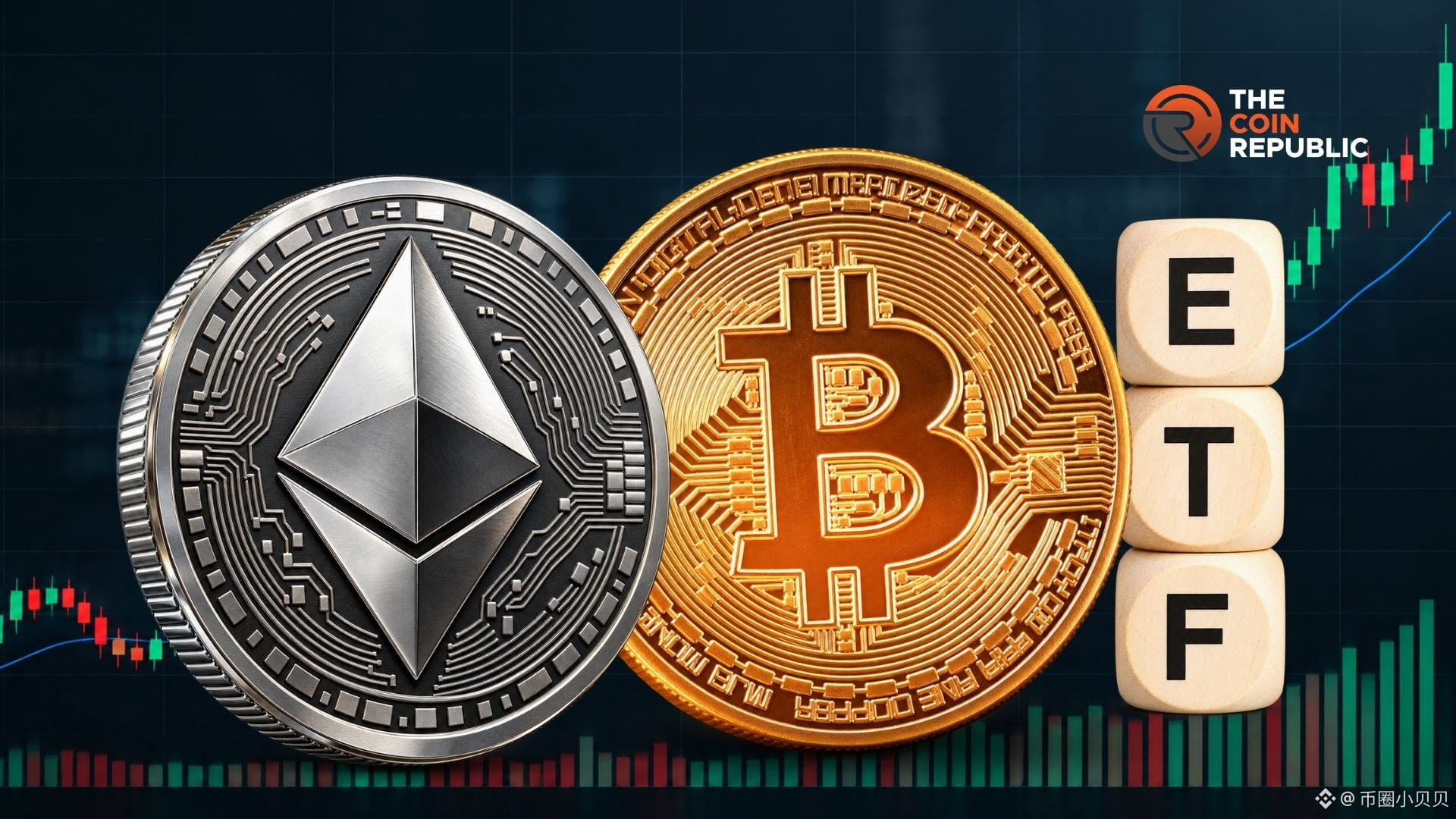
Looking at this week’s ETF data side by side, the picture is split: Bitcoin saw net inflows of $241 million, while Ethereum saw net outflows of $138 million.. But what’s really worth thinking about isn’t which one is stronger or weaker—it’s why money is switching sides right now.
[🔄 进群看风向](https://app.binance.com/uni-qr/F6dwNqgx)
First, let’s lay out the numbers: For the week ending October 2, U.S. spot Bitcoin ETFs recorded net inflows of about $241.1 million, while spot Ethereum ETFs saw net redemptions of about $138 million.. One saw inflows, the other outflows—their directions were completely opposite. Meanwhile, Bitcoin rebounded from its lows to around $86,000.
Most people would read this as “Bitcoin is outperforming Ethereum again”.. But if you focus only on which one is rising or falling, you miss how the money is actually moving.
These two ETFs are essentially two gateways for the same pool of institutional capital.. Over the past few weeks, treasury companies have been continuously buying ETH, supporting its price alongside ETF inflows. Now that this marginal buying has weakened, redemptions have emerged. In other words, money isn’t leaving crypto; it’s moving from the higher-beta asset back to the more resilient one.
And it’s not all new money on the Bitcoin side either.. More likely, after the probability of a rate hike in October fell from 64% to around 20%, institutions shifted their positions away from more volatile assets and back to the one with the deepest liquidity.
So what’s really worth watching isn’t “which one has inflows and which has outflows”.. It’s that ETFs have turned capital rotation into a chart we can read every week. For Ethereum and altcoins to attract buying again, risk appetite needs to warm back up—not simply wait for Bitcoin to climb another leg higher.
Keep an eye on two signals next: Will redemptions from Ethereum ETFs continue for a second week? Can inflows into Bitcoin ETFs grow from $200 million in a single week to an average of more than $500 million per week? If the former stops and the latter grows, that’s a broad-based rally; if only the latter grows, it means capital is huddling for warmth in BTC.
#比特币现货etf三季度净流入63.4亿美元
Looking at this week’s ETF data side by side, the picture is split: Bitcoin saw net inflows of $241 million, while Ethereum saw net outflows of $138 million.. But what’s really worth thinking about isn’t which one is stronger or weaker—it’s why money is switching sides right now.
🔄 进群看风向
First, let’s lay out the numbers: For the week ending October 2, U.S. spot Bitcoin ETFs recorded net inflows of about $241.1 million, while spot Ethereum ETFs saw net redemptions of about $138 million.. One saw inflows, the other outflows—their directions were completely opposite. Meanwhile, Bitcoin rebounded from its lows to around $86,000.
Most people would read this as “Bitcoin is outperforming Ethereum again”.. But if you focus only on which one is rising or falling, you miss how the money is actually moving.
These two ETFs are essentially two gateways for the same pool of institutional capital.. Over the past few weeks, treasury companies have been continuously buying ETH, supporting its price alongside ETF inflows. Now that this marginal buying has weakened, redemptions have emerged. In other words, money isn’t leaving crypto; it’s moving from the higher-beta asset back to the more resilient one.
And it’s not all new money on the Bitcoin side either.. More likely, after the probability of a rate hike in October fell from 64% to around 20%, institutions shifted their positions away from more volatile assets and back to the one with the deepest liquidity.
So what’s really worth watching isn’t “which one has inflows and which has outflows”.. It’s that ETFs have turned capital rotation into a chart we can read every week. For Ethereum and altcoins to attract buying again, risk appetite needs to warm back up—not simply wait for Bitcoin to climb another leg higher.
Keep an eye on two signals next: Will redemptions from Ethereum ETFs continue for a second week? Can inflows into Bitcoin ETFs grow from $200 million in a single week to an average of more than $500 million per week? If the former stops and the latter grows, that’s a broad-based rally; if only the latter grows, it means capital is huddling for warmth in BTC.
Looking at this week’s ETF data side by side, the picture is split: Bitcoin saw net inflows of $241 million, while Ethereum saw net outflows of $138 million.. But what’s really worth thinking about isn’t which one is stronger or weaker—it’s why money is switching sides right now.
🔄 进群看风向
First, let’s lay out the numbers: For the week ending October 2, U.S. spot Bitcoin ETFs recorded net inflows of about $241.1 million, while spot Ethereum ETFs saw net redemptions of about $138 million.. One saw inflows, the other outflows—their directions were completely opposite. Meanwhile, Bitcoin rebounded from its lows to around $86,000.
Most people would read this as “Bitcoin is outperforming Ethereum again”.. But if you focus only on which one is rising or falling, you miss how the money is actually moving.
These two ETFs are essentially two gateways for the same pool of institutional capital.. Over the past few weeks, treasury companies have been continuously buying ETH, supporting its price alongside ETF inflows. Now that this marginal buying has weakened, redemptions have emerged. In other words, money isn’t leaving crypto; it’s moving from the higher-beta asset back to the more resilient one.
And it’s not all new money on the Bitcoin side either.. More likely, after the probability of a rate hike in October fell from 64% to around 20%, institutions shifted their positions away from more volatile assets and back to the one with the deepest liquidity.
So what’s really worth watching isn’t “which one has inflows and which has outflows”.. It’s that ETFs have turned capital rotation into a chart we can read every week. For Ethereum and altcoins to attract buying again, risk appetite needs to warm back up—not simply wait for Bitcoin to climb another leg higher.
Keep an eye on two signals next: Will redemptions from Ethereum ETFs continue for a second week? Can inflows into Bitcoin ETFs grow from $200 million in a single week to an average of more than $500 million per week? If the former stops and the latter grows, that’s a broad-based rally; if only the latter grows, it means capital is huddling for warmth in BTC.
6
2.8k
·
--
#比特币现货etf三季度净流入63.4亿美元
At first glance, this approval looks like another victory for crypto’s regulatory mainstreaming. Look closer, and it’s a little different..
[💥 盘面异动群里说](https://app.binance.com/uni-qr/F6dwNqgx)
On October 2, the SEC approved a rule change by Cboe allowing it to list six triple-leveraged products tracking Bitcoin, Ethereum, gold, silver, crude oil, and natural gas.. Look at that list: crypto accounts for just two spots; the rest are commodities. The issuer, Volatility Shares, is already a veteran of the U.S. leveraged crypto ETF market—it launched the first leveraged Bitcoin product in 2023.
On the surface, retail investors have a new set of tools.. What’s really worth watching is the timeline. Last December, the SEC had just blocked all products with leverage above 2x and sent warning letters to nine issuers; in March this year, it specifically told them to steer clear of 5x products.. Now it has approved 3x products itself. The stance has shifted from “block them all” to “approve selectively,” suggesting that leverage hasn’t been taken off the table—it’s simply been brought within a manageable framework.
There’s also a catch in how these products are structured. These funds track the daily moves of futures and reset every day.. So “3x” only applies for a single day. Over a week or a month, the effects of compounding can gradually eat into returns. The SEC and FINRA have both issued warnings about this. Put simply, these products are designed for short-term traders, not people planning to hold them for three months.
So where will the money flow.. Previously, anyone seeking high-leverage exposure had to turn to offshore platforms or perpetual futures. Now there’s also a way to amplify exposure through regulated channels, giving some speculative capital a reason to stay. And by placing crypto alongside crude oil and gold in the same lineup, the products put crypto on the “major asset classes” shelf—a shift that runs deeper than leverage itself.
Here’s the twist: when volatility picks up, the more popular these products become, the more liquidations cluster around the opening and closing hours of the U.S. stock market.. The higher the leverage, the more often the blowback comes not from the price of crypto, but from everyone making the same move at the same time.
#比特币现货etf三季度净流入63.4亿美元
At first glance, this approval looks like another victory for crypto’s regulatory mainstreaming. Look closer, and it’s a little different..
💥 盘面异动群里说
On October 2, the SEC approved a rule change by Cboe allowing it to list six triple-leveraged products tracking Bitcoin, Ethereum, gold, silver, crude oil, and natural gas.. Look at that list: crypto accounts for just two spots; the rest are commodities. The issuer, Volatility Shares, is already a veteran of the U.S. leveraged crypto ETF market—it launched the first leveraged Bitcoin product in 2023.
On the surface, retail investors have a new set of tools.. What’s really worth watching is the timeline. Last December, the SEC had just blocked all products with leverage above 2x and sent warning letters to nine issuers; in March this year, it specifically told them to steer clear of 5x products.. Now it has approved 3x products itself. The stance has shifted from “block them all” to “approve selectively,” suggesting that leverage hasn’t been taken off the table—it’s simply been brought within a manageable framework.
There’s also a catch in how these products are structured. These funds track the daily moves of futures and reset every day.. So “3x” only applies for a single day. Over a week or a month, the effects of compounding can gradually eat into returns. The SEC and FINRA have both issued warnings about this. Put simply, these products are designed for short-term traders, not people planning to hold them for three months.
So where will the money flow.. Previously, anyone seeking high-leverage exposure had to turn to offshore platforms or perpetual futures. Now there’s also a way to amplify exposure through regulated channels, giving some speculative capital a reason to stay. And by placing crypto alongside crude oil and gold in the same lineup, the products put crypto on the “major asset classes” shelf—a shift that runs deeper than leverage itself.
Here’s the twist: when volatility picks up, the more popular these products become, the more liquidations cluster around the opening and closing hours of the U.S. stock market.. The higher the leverage, the more often the blowback comes not from the price of crypto, but from everyone making the same move at the same time.
At first glance, this approval looks like another victory for crypto’s regulatory mainstreaming. Look closer, and it’s a little different..
💥 盘面异动群里说
On October 2, the SEC approved a rule change by Cboe allowing it to list six triple-leveraged products tracking Bitcoin, Ethereum, gold, silver, crude oil, and natural gas.. Look at that list: crypto accounts for just two spots; the rest are commodities. The issuer, Volatility Shares, is already a veteran of the U.S. leveraged crypto ETF market—it launched the first leveraged Bitcoin product in 2023.
On the surface, retail investors have a new set of tools.. What’s really worth watching is the timeline. Last December, the SEC had just blocked all products with leverage above 2x and sent warning letters to nine issuers; in March this year, it specifically told them to steer clear of 5x products.. Now it has approved 3x products itself. The stance has shifted from “block them all” to “approve selectively,” suggesting that leverage hasn’t been taken off the table—it’s simply been brought within a manageable framework.
There’s also a catch in how these products are structured. These funds track the daily moves of futures and reset every day.. So “3x” only applies for a single day. Over a week or a month, the effects of compounding can gradually eat into returns. The SEC and FINRA have both issued warnings about this. Put simply, these products are designed for short-term traders, not people planning to hold them for three months.
So where will the money flow.. Previously, anyone seeking high-leverage exposure had to turn to offshore platforms or perpetual futures. Now there’s also a way to amplify exposure through regulated channels, giving some speculative capital a reason to stay. And by placing crypto alongside crude oil and gold in the same lineup, the products put crypto on the “major asset classes” shelf—a shift that runs deeper than leverage itself.
Here’s the twist: when volatility picks up, the more popular these products become, the more liquidations cluster around the opening and closing hours of the U.S. stock market.. The higher the leverage, the more often the blowback comes not from the price of crypto, but from everyone making the same move at the same time.
3k
·
--
#solana代币化股票9月交易量破44亿美元
The bottom line: bringing Nvidia and Tesla on-chain may be less about “being able to trade U.S. stocks 24/7 from now on” and more about who gets to set the rules.
[🤖 进群看机构动作](https://app.binance.com/uni-qr/F6dwNqgx)
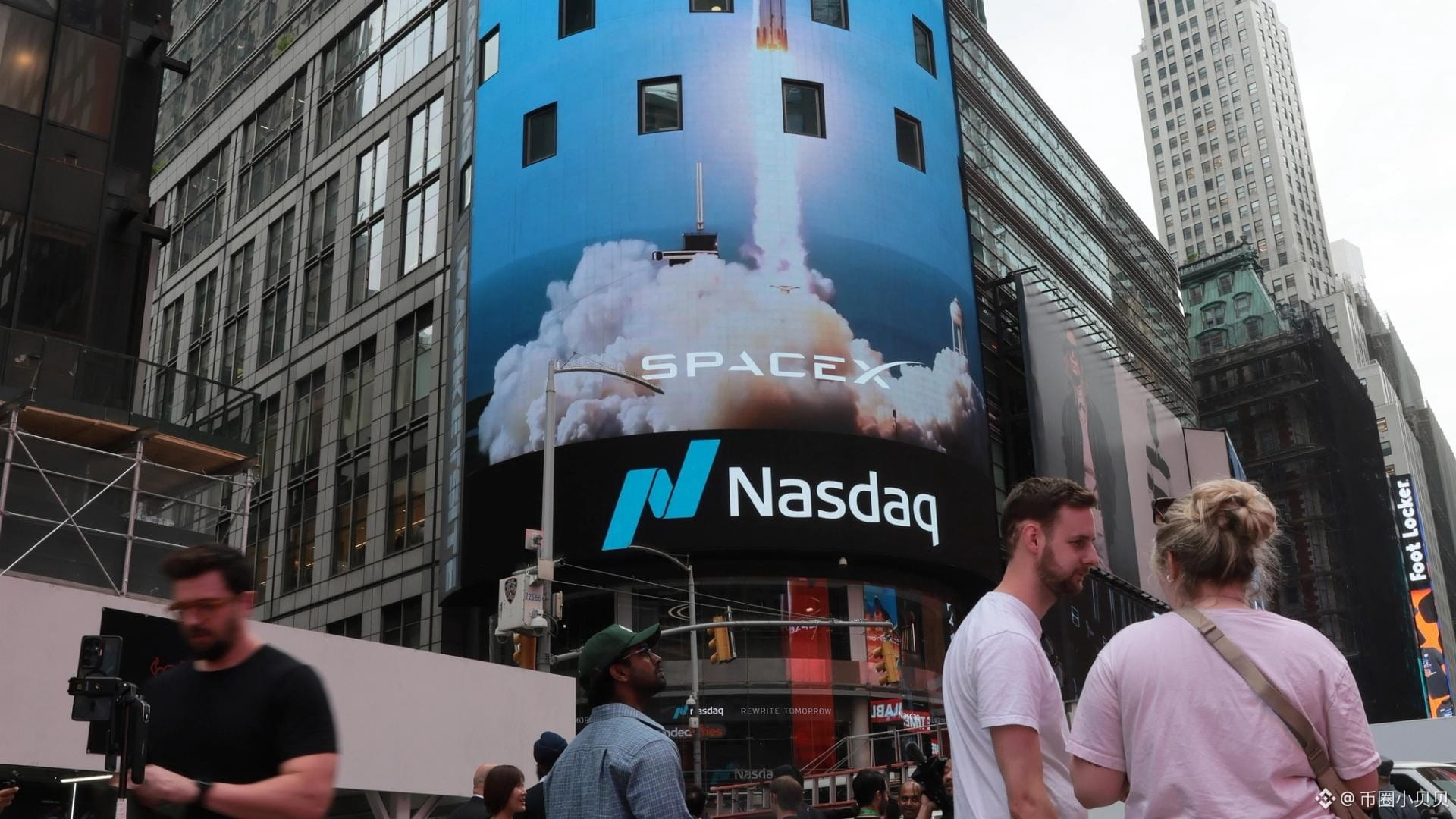
A leading crypto exchange and the parent company of the New York Stock Exchange have just filed regulatory documents for their joint venture. The documents list more than 60 U.S. stocks that are set to be traded on the blockchain as tokens. The list ranges from Nvidia, Tesla, Apple, Microsoft, and Amazon to JPMorgan Chase, Goldman Sachs, Walmart, and Netflix—and even includes a few crypto-related stocks.
Most people see this as “one more way to buy U.S. stocks.” But what’s really worth watching is that the machinery underneath is being replaced.
Each stock token represents one real share, held one-to-one by a registered broker-dealer. Dividends and voting rights remain intact. But trades will no longer be settled in dollars; stablecoins will be used instead. And rather than matching buy and sell orders, the system puts cash and shares into an on-chain liquidity pool, where trades are executed against the pool. The technical foundation is the exchange’s own blockchain, combined with the underlying technology of a decentralized trading protocol.
In other words, trading hours, the matching method, and the settlement currency—the three things Wall Street would normally control—are all being handed over to a crypto-based system. And it never closes: you’ll be able to trade Nvidia on a weekend night, too.
The implications for capital markets go far beyond “one more platform.” For the first time, stablecoins are being positioned as an “intermediary currency for buying stocks.” Until now, their main use cases have been payments and hedging. Now they’re moving into securities settlement. If this model takes off, it will reshape both the drivers of stablecoin demand and the sources of on-chain liquidity.
But the filing also contains a counter-signal. During a 30-day window, companies can object to having their stock brought on-chain, and some have already explicitly refused. TD Securities also sounded a note of caution, saying the initiative has “limited near-term relevance” for institutional investors. After all, U.S. investors can already buy these stocks easily, and the regulatory approval is a five-year exemption—not a permanent rule.
The real thing to watch is the time horizon. Whoever can keep on-chain prices over weekends and late at night close to their Nasdaq prices when the market is closed will capture the market structure for “on-chain U.S. stocks.” If liquidity falls behind, this model will most likely retreat to a niche use case.
So don’t just focus on which big names are on the list. Watch for the first company on that list to say “no”—and for the permanent rule that has yet to materialize.
#solana代币化股票9月交易量破44亿美元
The bottom line: bringing Nvidia and Tesla on-chain may be less about “being able to trade U.S. stocks 24/7 from now on” and more about who gets to set the rules.
🤖 进群看机构动作
A leading crypto exchange and the parent company of the New York Stock Exchange have just filed regulatory documents for their joint venture. The documents list more than 60 U.S. stocks that are set to be traded on the blockchain as tokens. The list ranges from Nvidia, Tesla, Apple, Microsoft, and Amazon to JPMorgan Chase, Goldman Sachs, Walmart, and Netflix—and even includes a few crypto-related stocks.
Most people see this as “one more way to buy U.S. stocks.” But what’s really worth watching is that the machinery underneath is being replaced.
Each stock token represents one real share, held one-to-one by a registered broker-dealer. Dividends and voting rights remain intact. But trades will no longer be settled in dollars; stablecoins will be used instead. And rather than matching buy and sell orders, the system puts cash and shares into an on-chain liquidity pool, where trades are executed against the pool. The technical foundation is the exchange’s own blockchain, combined with the underlying technology of a decentralized trading protocol.
In other words, trading hours, the matching method, and the settlement currency—the three things Wall Street would normally control—are all being handed over to a crypto-based system. And it never closes: you’ll be able to trade Nvidia on a weekend night, too.
The implications for capital markets go far beyond “one more platform.” For the first time, stablecoins are being positioned as an “intermediary currency for buying stocks.” Until now, their main use cases have been payments and hedging. Now they’re moving into securities settlement. If this model takes off, it will reshape both the drivers of stablecoin demand and the sources of on-chain liquidity.
But the filing also contains a counter-signal. During a 30-day window, companies can object to having their stock brought on-chain, and some have already explicitly refused. TD Securities also sounded a note of caution, saying the initiative has “limited near-term relevance” for institutional investors. After all, U.S. investors can already buy these stocks easily, and the regulatory approval is a five-year exemption—not a permanent rule.
The real thing to watch is the time horizon. Whoever can keep on-chain prices over weekends and late at night close to their Nasdaq prices when the market is closed will capture the market structure for “on-chain U.S. stocks.” If liquidity falls behind, this model will most likely retreat to a niche use case.
So don’t just focus on which big names are on the list. Watch for the first company on that list to say “no”—and for the permanent rule that has yet to materialize.
The bottom line: bringing Nvidia and Tesla on-chain may be less about “being able to trade U.S. stocks 24/7 from now on” and more about who gets to set the rules.
🤖 进群看机构动作
A leading crypto exchange and the parent company of the New York Stock Exchange have just filed regulatory documents for their joint venture. The documents list more than 60 U.S. stocks that are set to be traded on the blockchain as tokens. The list ranges from Nvidia, Tesla, Apple, Microsoft, and Amazon to JPMorgan Chase, Goldman Sachs, Walmart, and Netflix—and even includes a few crypto-related stocks.
Most people see this as “one more way to buy U.S. stocks.” But what’s really worth watching is that the machinery underneath is being replaced.
Each stock token represents one real share, held one-to-one by a registered broker-dealer. Dividends and voting rights remain intact. But trades will no longer be settled in dollars; stablecoins will be used instead. And rather than matching buy and sell orders, the system puts cash and shares into an on-chain liquidity pool, where trades are executed against the pool. The technical foundation is the exchange’s own blockchain, combined with the underlying technology of a decentralized trading protocol.
In other words, trading hours, the matching method, and the settlement currency—the three things Wall Street would normally control—are all being handed over to a crypto-based system. And it never closes: you’ll be able to trade Nvidia on a weekend night, too.
The implications for capital markets go far beyond “one more platform.” For the first time, stablecoins are being positioned as an “intermediary currency for buying stocks.” Until now, their main use cases have been payments and hedging. Now they’re moving into securities settlement. If this model takes off, it will reshape both the drivers of stablecoin demand and the sources of on-chain liquidity.
But the filing also contains a counter-signal. During a 30-day window, companies can object to having their stock brought on-chain, and some have already explicitly refused. TD Securities also sounded a note of caution, saying the initiative has “limited near-term relevance” for institutional investors. After all, U.S. investors can already buy these stocks easily, and the regulatory approval is a five-year exemption—not a permanent rule.
The real thing to watch is the time horizon. Whoever can keep on-chain prices over weekends and late at night close to their Nasdaq prices when the market is closed will capture the market structure for “on-chain U.S. stocks.” If liquidity falls behind, this model will most likely retreat to a niche use case.
So don’t just focus on which big names are on the list. Watch for the first company on that list to say “no”—and for the permanent rule that has yet to materialize.
1.6k
·
--
#美联储10月维持利率概率升至82.3%
Last Friday’s jobs report was one of the ugliest of the year.. But Bitcoin needed just one weekend to read it as good news for itself.
[🔄 进群看叙事](https://app.binance.com/uni-qr/F6dwNqgx)
The U.S. added just 29,000 jobs in September, about a third of what the market expected, and the unemployment rate rose to 4.2%.. Even more striking were the revisions: July’s figure was flipped from a gain of 21,000 to a loss of 10,000, August’s was revised down from 162,000 to 133,000, and wage growth also slowed to 3.0%. By the usual economic measures, this was a grim report.
But the market runs on a different calculation.. Before the data came out, bond traders put the odds of a rate hike in October at 64%; afterward, that figure fell to around 16% to 22%. That shift lifted the ceiling for risk assets.
Keep in mind, the Fed had just raised rates by 25 basis points on September 16, bringing them to 3.75%–4%.. And in early September, an overheated jobs report was enough to knock Bitcoin down 2% in a day, to around $79,300. Now it’s hovering near $86,100, about 8% above that low. The same jobs report, read in two completely opposite ways.
So what’s driving Bitcoin’s price this time isn’t “how well the economy is doing,” but “how expensive money is”.. As the economy cools and rate-hike expectations fade, the denominator loosens—and these non-yielding assets are among the first to move. The market sentiment index is back at 68, still in “Greed” territory, but not as extreme as last month.
The technical picture is also lining up.. On the daily chart, Bitcoin has just formed a stronger “golden cross.” This confirms a trend; it isn’t a forecasting tool. It shows that the direction of the recent move has taken shape, but doesn’t guarantee the next leg will accelerate.
The flow of funds is even more telling.. U.S. spot Bitcoin ETFs saw about $190 million in net inflows in a single day. Altcoins rose across the board, but almost none gained more than 1%—only one token in the on-chain perpetuals sector rose nearly 3.7% in a day. The major players are steady, while money at the margins is beginning to test the higher-volatility end of the market.
The real thing to watch is the Fed’s October 28 meeting.. If the Fed really does pause, this “bad data equals good assets” trend could continue. But if inflation data or long-term yields start climbing again, this whole calculation could reverse immediately—and the assets that tend to get hit hardest are often the ones currently rising most smoothly.
#美联储10月维持利率概率升至82.3%
Last Friday’s jobs report was one of the ugliest of the year.. But Bitcoin needed just one weekend to read it as good news for itself.
🔄 进群看叙事
The U.S. added just 29,000 jobs in September, about a third of what the market expected, and the unemployment rate rose to 4.2%.. Even more striking were the revisions: July’s figure was flipped from a gain of 21,000 to a loss of 10,000, August’s was revised down from 162,000 to 133,000, and wage growth also slowed to 3.0%. By the usual economic measures, this was a grim report.
But the market runs on a different calculation.. Before the data came out, bond traders put the odds of a rate hike in October at 64%; afterward, that figure fell to around 16% to 22%. That shift lifted the ceiling for risk assets.
Keep in mind, the Fed had just raised rates by 25 basis points on September 16, bringing them to 3.75%–4%.. And in early September, an overheated jobs report was enough to knock Bitcoin down 2% in a day, to around $79,300. Now it’s hovering near $86,100, about 8% above that low. The same jobs report, read in two completely opposite ways.
So what’s driving Bitcoin’s price this time isn’t “how well the economy is doing,” but “how expensive money is”.. As the economy cools and rate-hike expectations fade, the denominator loosens—and these non-yielding assets are among the first to move. The market sentiment index is back at 68, still in “Greed” territory, but not as extreme as last month.
The technical picture is also lining up.. On the daily chart, Bitcoin has just formed a stronger “golden cross.” This confirms a trend; it isn’t a forecasting tool. It shows that the direction of the recent move has taken shape, but doesn’t guarantee the next leg will accelerate.
The flow of funds is even more telling.. U.S. spot Bitcoin ETFs saw about $190 million in net inflows in a single day. Altcoins rose across the board, but almost none gained more than 1%—only one token in the on-chain perpetuals sector rose nearly 3.7% in a day. The major players are steady, while money at the margins is beginning to test the higher-volatility end of the market.
The real thing to watch is the Fed’s October 28 meeting.. If the Fed really does pause, this “bad data equals good assets” trend could continue. But if inflation data or long-term yields start climbing again, this whole calculation could reverse immediately—and the assets that tend to get hit hardest are often the ones currently rising most smoothly.
Last Friday’s jobs report was one of the ugliest of the year.. But Bitcoin needed just one weekend to read it as good news for itself.
🔄 进群看叙事
The U.S. added just 29,000 jobs in September, about a third of what the market expected, and the unemployment rate rose to 4.2%.. Even more striking were the revisions: July’s figure was flipped from a gain of 21,000 to a loss of 10,000, August’s was revised down from 162,000 to 133,000, and wage growth also slowed to 3.0%. By the usual economic measures, this was a grim report.
But the market runs on a different calculation.. Before the data came out, bond traders put the odds of a rate hike in October at 64%; afterward, that figure fell to around 16% to 22%. That shift lifted the ceiling for risk assets.
Keep in mind, the Fed had just raised rates by 25 basis points on September 16, bringing them to 3.75%–4%.. And in early September, an overheated jobs report was enough to knock Bitcoin down 2% in a day, to around $79,300. Now it’s hovering near $86,100, about 8% above that low. The same jobs report, read in two completely opposite ways.
So what’s driving Bitcoin’s price this time isn’t “how well the economy is doing,” but “how expensive money is”.. As the economy cools and rate-hike expectations fade, the denominator loosens—and these non-yielding assets are among the first to move. The market sentiment index is back at 68, still in “Greed” territory, but not as extreme as last month.
The technical picture is also lining up.. On the daily chart, Bitcoin has just formed a stronger “golden cross.” This confirms a trend; it isn’t a forecasting tool. It shows that the direction of the recent move has taken shape, but doesn’t guarantee the next leg will accelerate.
The flow of funds is even more telling.. U.S. spot Bitcoin ETFs saw about $190 million in net inflows in a single day. Altcoins rose across the board, but almost none gained more than 1%—only one token in the on-chain perpetuals sector rose nearly 3.7% in a day. The major players are steady, while money at the margins is beginning to test the higher-volatility end of the market.
The real thing to watch is the Fed’s October 28 meeting.. If the Fed really does pause, this “bad data equals good assets” trend could continue. But if inflation data or long-term yields start climbing again, this whole calculation could reverse immediately—and the assets that tend to get hit hardest are often the ones currently rising most smoothly.
4
5.9k
·
--
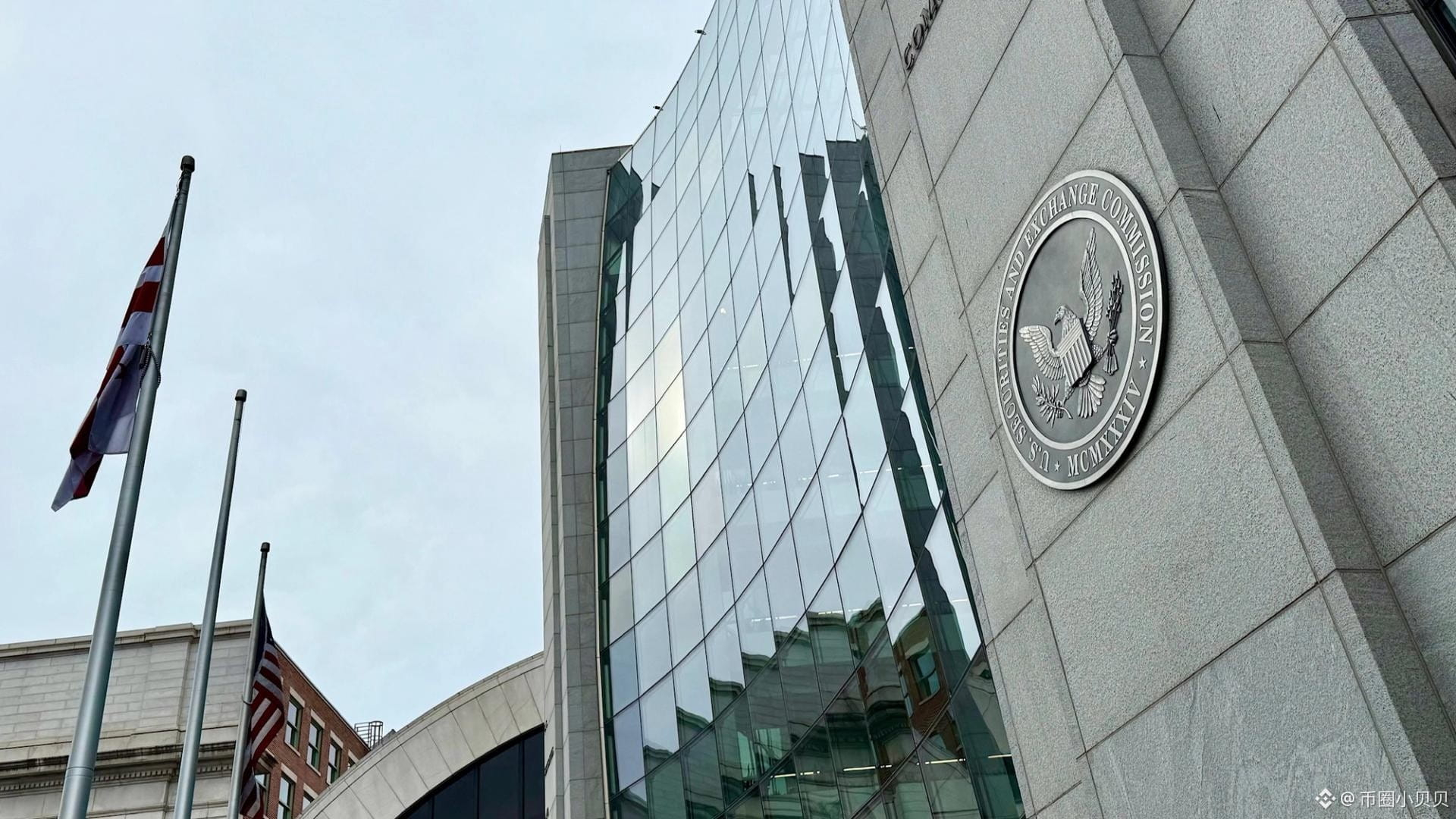
What the SEC approved this time looks at first glance like a second chance for people who missed the boat... But break down the product structure, and it looks more like packaging up “volatility” itself and selling it—while buyers have to bear the slow bleed themselves..
[💰 爆点新闻](https://app.binance.com/uni-qr/F6dwNqgx)
On October 2, the SEC approved a rule change by Cboe BZX, clearing the way for Volatility Shares to issue six 3x leveraged ETFs.. Their underlying assets include not only Bitcoin and Ethereum, but also gold, silver, crude oil, and natural gas.. This is the first time U.S. crypto funds have been allowed to offer 3x leverage; until now, the ceiling had remained stuck at 2x..
One detail is easy to miss: these products don’t hold spot assets. They use regulated Bitcoin and Ethereum futures.. And they still can’t be traded yet—the issuer must wait for the SEC to declare the registration statement effective, and the approval didn’t even include a deadline..
What’s really worth looking at is how these products work.. To keep leverage firmly pegged at 3x, they have to rebalance every day: add futures positions when prices rise, and cut them when prices fall.. This mechanical buying and selling typically happens near the close, and the larger the fund, the more pronounced its pull on intraday prices..
Even more troublesome is volatility decay.. Suppose Bitcoin rises 10% on day one and falls 10% on day two: spot ends down 1%.. Over that same stretch, a 3x product first rises 30% and then falls 30%, for a net loss of 9%.. The longer the market keeps swinging back and forth without a clear trend, the faster these products bleed value.. Blockstream’s Adam Back puts it more bluntly: automated re-leveraging strategies bleed continuously in sideways, choppy markets..
So it’s actually quite clear who these products are for.. Bloomberg ETF analyst Eric Balchunas summed it up in one line: leveraged ETFs are for trading, not holding.. The issuers themselves also state in their prospectuses that these products are suitable only for people who can withstand a total loss..
That’s the real signal here.. Crypto is being slotted into the same shelves as traditional assets, with the same packaging, the same exposure, and the same erosion built into the structure.. For short-term traders, it’s a new tool; for people looking to hold, spot ETFs may still be the more cost-effective option..
The next thing to watch is whether the mechanical flows around the close become a new source of intraday noise once these products start trading.. If one day a 3x fund grows large enough to move futures basis, volatility itself will have become the thing being traded.. By then, what people are making up for may not be a missed trade, but tuition..
What the SEC approved this time looks at first glance like a second chance for people who missed the boat... But break down the product structure, and it looks more like packaging up “volatility” itself and selling it—while buyers have to bear the slow bleed themselves..
💰 爆点新闻
On October 2, the SEC approved a rule change by Cboe BZX, clearing the way for Volatility Shares to issue six 3x leveraged ETFs.. Their underlying assets include not only Bitcoin and Ethereum, but also gold, silver, crude oil, and natural gas.. This is the first time U.S. crypto funds have been allowed to offer 3x leverage; until now, the ceiling had remained stuck at 2x..
One detail is easy to miss: these products don’t hold spot assets. They use regulated Bitcoin and Ethereum futures.. And they still can’t be traded yet—the issuer must wait for the SEC to declare the registration statement effective, and the approval didn’t even include a deadline..
What’s really worth looking at is how these products work.. To keep leverage firmly pegged at 3x, they have to rebalance every day: add futures positions when prices rise, and cut them when prices fall.. This mechanical buying and selling typically happens near the close, and the larger the fund, the more pronounced its pull on intraday prices..
Even more troublesome is volatility decay.. Suppose Bitcoin rises 10% on day one and falls 10% on day two: spot ends down 1%.. Over that same stretch, a 3x product first rises 30% and then falls 30%, for a net loss of 9%.. The longer the market keeps swinging back and forth without a clear trend, the faster these products bleed value.. Blockstream’s Adam Back puts it more bluntly: automated re-leveraging strategies bleed continuously in sideways, choppy markets..
So it’s actually quite clear who these products are for.. Bloomberg ETF analyst Eric Balchunas summed it up in one line: leveraged ETFs are for trading, not holding.. The issuers themselves also state in their prospectuses that these products are suitable only for people who can withstand a total loss..
That’s the real signal here.. Crypto is being slotted into the same shelves as traditional assets, with the same packaging, the same exposure, and the same erosion built into the structure.. For short-term traders, it’s a new tool; for people looking to hold, spot ETFs may still be the more cost-effective option..
The next thing to watch is whether the mechanical flows around the close become a new source of intraday noise once these products start trading.. If one day a 3x fund grows large enough to move futures basis, volatility itself will have become the thing being traded.. By then, what people are making up for may not be a missed trade, but tuition..
💰 爆点新闻
On October 2, the SEC approved a rule change by Cboe BZX, clearing the way for Volatility Shares to issue six 3x leveraged ETFs.. Their underlying assets include not only Bitcoin and Ethereum, but also gold, silver, crude oil, and natural gas.. This is the first time U.S. crypto funds have been allowed to offer 3x leverage; until now, the ceiling had remained stuck at 2x..
One detail is easy to miss: these products don’t hold spot assets. They use regulated Bitcoin and Ethereum futures.. And they still can’t be traded yet—the issuer must wait for the SEC to declare the registration statement effective, and the approval didn’t even include a deadline..
What’s really worth looking at is how these products work.. To keep leverage firmly pegged at 3x, they have to rebalance every day: add futures positions when prices rise, and cut them when prices fall.. This mechanical buying and selling typically happens near the close, and the larger the fund, the more pronounced its pull on intraday prices..
Even more troublesome is volatility decay.. Suppose Bitcoin rises 10% on day one and falls 10% on day two: spot ends down 1%.. Over that same stretch, a 3x product first rises 30% and then falls 30%, for a net loss of 9%.. The longer the market keeps swinging back and forth without a clear trend, the faster these products bleed value.. Blockstream’s Adam Back puts it more bluntly: automated re-leveraging strategies bleed continuously in sideways, choppy markets..
So it’s actually quite clear who these products are for.. Bloomberg ETF analyst Eric Balchunas summed it up in one line: leveraged ETFs are for trading, not holding.. The issuers themselves also state in their prospectuses that these products are suitable only for people who can withstand a total loss..
That’s the real signal here.. Crypto is being slotted into the same shelves as traditional assets, with the same packaging, the same exposure, and the same erosion built into the structure.. For short-term traders, it’s a new tool; for people looking to hold, spot ETFs may still be the more cost-effective option..
The next thing to watch is whether the mechanical flows around the close become a new source of intraday noise once these products start trading.. If one day a 3x fund grows large enough to move futures basis, volatility itself will have become the thing being traded.. By then, what people are making up for may not be a missed trade, but tuition..
2
463
·
--
#比特币冲击8.7万美元遇阻回落
Markets are watching to see whether Bitcoin can reclaim $87,000, but the interesting part is elsewhere..
[🏛️ 进群蹲一手消息](https://app.binance.com/uni-qr/F6dwNqgx)
Many people see crypto grinding sideways these past few days. What’s really worth watching is that money itself is getting more expensive..
On Monday, the U.S. Dollar Index (DXY) surged to around 102.5, its highest level in nearly 18 months. It has climbed steadily from 99 in early September and is now firmly above its 200-day moving average (around 99). The last time it was at this level was in the spring of last year..
A strong dollar has always been a headwind for risk assets. Dollar-denominated debt costs more outside the U.S., and overseas buyers’ purchasing power is eroded. Add to that U.S. Treasury yields returning to levels last seen more than two decades ago, and cash and Treasuries are competing for capital. Non-yielding assets are often the first to come under pressure..
But Bitcoin hasn’t collapsed along with them; it has held around $86,000. The denominator is rising, but the numerator hasn’t fallen—that’s what really matters in this news..
The main driver of this dollar strength isn’t actually the U.S.; it’s Europe. The euro makes up 57.6% of the DXY basket, and it has now fallen to a 17-month low of 1.12. France’s deficit and the pressure of next year’s election, along with Spain’s announcement of an early election on November 29, have directly priced a political premium into the exchange rate. The dollar is strengthening to some extent by default..
Meanwhile, the Fed raised rates by 25 basis points in September, to 3.75%–4%. Markets expect a further increase to 4.5%–4.75% by June 2027..
If the dollar keeps strengthening while Bitcoin holds at $86,000, that suggests the support isn’t coming from leveraged traders, but from money allocated as part of a portfolio. This kind of capital is less sensitive to short-term interest rates and doesn’t leave easily once it comes in. Conversely, if the dollar peaks, the assets with the most upside are often the high-beta names that have been hit hardest..
The two signals to watch are whether DXY can hold above 102.5, and whether Bitcoin falls behind while the dollar is strengthening. If it does, that suggests the buyers are still fast money; if it doesn’t, it suggests a different group of investors is behind this wave of capital..
#比特币冲击8.7万美元遇阻回落
Markets are watching to see whether Bitcoin can reclaim $87,000, but the interesting part is elsewhere..
🏛️ 进群蹲一手消息
Many people see crypto grinding sideways these past few days. What’s really worth watching is that money itself is getting more expensive..
On Monday, the U.S. Dollar Index (DXY) surged to around 102.5, its highest level in nearly 18 months. It has climbed steadily from 99 in early September and is now firmly above its 200-day moving average (around 99). The last time it was at this level was in the spring of last year..
A strong dollar has always been a headwind for risk assets. Dollar-denominated debt costs more outside the U.S., and overseas buyers’ purchasing power is eroded. Add to that U.S. Treasury yields returning to levels last seen more than two decades ago, and cash and Treasuries are competing for capital. Non-yielding assets are often the first to come under pressure..
But Bitcoin hasn’t collapsed along with them; it has held around $86,000. The denominator is rising, but the numerator hasn’t fallen—that’s what really matters in this news..
The main driver of this dollar strength isn’t actually the U.S.; it’s Europe. The euro makes up 57.6% of the DXY basket, and it has now fallen to a 17-month low of 1.12. France’s deficit and the pressure of next year’s election, along with Spain’s announcement of an early election on November 29, have directly priced a political premium into the exchange rate. The dollar is strengthening to some extent by default..
Meanwhile, the Fed raised rates by 25 basis points in September, to 3.75%–4%. Markets expect a further increase to 4.5%–4.75% by June 2027..
If the dollar keeps strengthening while Bitcoin holds at $86,000, that suggests the support isn’t coming from leveraged traders, but from money allocated as part of a portfolio. This kind of capital is less sensitive to short-term interest rates and doesn’t leave easily once it comes in. Conversely, if the dollar peaks, the assets with the most upside are often the high-beta names that have been hit hardest..
The two signals to watch are whether DXY can hold above 102.5, and whether Bitcoin falls behind while the dollar is strengthening. If it does, that suggests the buyers are still fast money; if it doesn’t, it suggests a different group of investors is behind this wave of capital..
Markets are watching to see whether Bitcoin can reclaim $87,000, but the interesting part is elsewhere..
🏛️ 进群蹲一手消息
Many people see crypto grinding sideways these past few days. What’s really worth watching is that money itself is getting more expensive..
On Monday, the U.S. Dollar Index (DXY) surged to around 102.5, its highest level in nearly 18 months. It has climbed steadily from 99 in early September and is now firmly above its 200-day moving average (around 99). The last time it was at this level was in the spring of last year..
A strong dollar has always been a headwind for risk assets. Dollar-denominated debt costs more outside the U.S., and overseas buyers’ purchasing power is eroded. Add to that U.S. Treasury yields returning to levels last seen more than two decades ago, and cash and Treasuries are competing for capital. Non-yielding assets are often the first to come under pressure..
But Bitcoin hasn’t collapsed along with them; it has held around $86,000. The denominator is rising, but the numerator hasn’t fallen—that’s what really matters in this news..
The main driver of this dollar strength isn’t actually the U.S.; it’s Europe. The euro makes up 57.6% of the DXY basket, and it has now fallen to a 17-month low of 1.12. France’s deficit and the pressure of next year’s election, along with Spain’s announcement of an early election on November 29, have directly priced a political premium into the exchange rate. The dollar is strengthening to some extent by default..
Meanwhile, the Fed raised rates by 25 basis points in September, to 3.75%–4%. Markets expect a further increase to 4.5%–4.75% by June 2027..
If the dollar keeps strengthening while Bitcoin holds at $86,000, that suggests the support isn’t coming from leveraged traders, but from money allocated as part of a portfolio. This kind of capital is less sensitive to short-term interest rates and doesn’t leave easily once it comes in. Conversely, if the dollar peaks, the assets with the most upside are often the high-beta names that have been hit hardest..
The two signals to watch are whether DXY can hold above 102.5, and whether Bitcoin falls behind while the dollar is strengthening. If it does, that suggests the buyers are still fast money; if it doesn’t, it suggests a different group of investors is behind this wave of capital..
2
3k
·
--
First the conclusion: the point of this exchange filing with the SEC is probably not “it wants to enter the US,” but rather “it needs to go back and改 (revise) its product.”..
[📢 盘面异动群里说](https://app.binance.com/uni-qr/F6dwNqgx)
Bloomberg reported that this exchange has already filed an application with the U.S. SEC, looking to bring its tokenized stock business to the U.S. market.. But what’s truly worth looking at is whether what it’s selling now actually matches the new rules..
It launched its tokenized stocks line in July, starting with 40-plus U.S. stocks and ETFs, then expanding to more than 70 by September.. Trading is 24/7, priced in USDT, settlement runs on-chain, and the underlying stocks are held by a third party with 1:1 backing, while the platform itself only handles distribution.. It sounds like “stocks on-chain,” but the details hinge on two issues: these products are only available outside the U.S. under Regulation S—so neither U.S. users nor EU users can access them; and they’re classified as “synthetic instruments”—you have price exposure, but no dividends and no voting rights..
Most people will read this news as “yet another exchange is rushing into the U.S.”.. But if you put it through the doorway of September 17, the logic flips.. On that day, the SEC granted a five-year innovation exemption that allows qualified tokenized securities trading venues to move exchange-listed stocks of the NYSE/Nasdaq type onto the blockchain for trading using AMMs and liquidity pools, with eligibility running all the way through September 2031.. The conditions are written very strictly: the tokens must retain real shareholder rights—dividends and voting, both can’t be missing..
So the question isn’t “can it enter the U.S.,” but “before it enters, it needs to convert the synthetic instrument into real equity tokenization”.. Simply opening a loophole isn’t enough—if the structure doesn’t change, the filing won’t pass that requirement.. That’s also why it’s pursuing another path at the same time—forming a joint venture in June with NYSE’s parent company ICE to specifically do tokenized U.S. stocks..
The rotation of capital is already leaning toward this track.. In the first half of RWA, you bring bonds and funds onto-chain; in the second half, it’s about equity: whoever can truly embed shareholder rights into the token will be the one that can obtain the U.S. license.. The hard part isn’t the technology—it’s custody, rights mapping, and how brokerage and the on-chain order book are integrated..
The twist is this: this current batch of products is still “synthetic,” and once real equity tokens work end-to-end, on-chain trading and traditional brokerage may end up using the same order book.. But the exemption is time-limited: if by before 2031 no one produces a replicable compliant template, this wave will end up stuck at the application and press release..
First the conclusion: the point of this exchange filing with the SEC is probably not “it wants to enter the US,” but rather “it needs to go back and改 (revise) its product.”..
📢 盘面异动群里说
Bloomberg reported that this exchange has already filed an application with the U.S. SEC, looking to bring its tokenized stock business to the U.S. market.. But what’s truly worth looking at is whether what it’s selling now actually matches the new rules..
It launched its tokenized stocks line in July, starting with 40-plus U.S. stocks and ETFs, then expanding to more than 70 by September.. Trading is 24/7, priced in USDT, settlement runs on-chain, and the underlying stocks are held by a third party with 1:1 backing, while the platform itself only handles distribution.. It sounds like “stocks on-chain,” but the details hinge on two issues: these products are only available outside the U.S. under Regulation S—so neither U.S. users nor EU users can access them; and they’re classified as “synthetic instruments”—you have price exposure, but no dividends and no voting rights..
Most people will read this news as “yet another exchange is rushing into the U.S.”.. But if you put it through the doorway of September 17, the logic flips.. On that day, the SEC granted a five-year innovation exemption that allows qualified tokenized securities trading venues to move exchange-listed stocks of the NYSE/Nasdaq type onto the blockchain for trading using AMMs and liquidity pools, with eligibility running all the way through September 2031.. The conditions are written very strictly: the tokens must retain real shareholder rights—dividends and voting, both can’t be missing..
So the question isn’t “can it enter the U.S.,” but “before it enters, it needs to convert the synthetic instrument into real equity tokenization”.. Simply opening a loophole isn’t enough—if the structure doesn’t change, the filing won’t pass that requirement.. That’s also why it’s pursuing another path at the same time—forming a joint venture in June with NYSE’s parent company ICE to specifically do tokenized U.S. stocks..
The rotation of capital is already leaning toward this track.. In the first half of RWA, you bring bonds and funds onto-chain; in the second half, it’s about equity: whoever can truly embed shareholder rights into the token will be the one that can obtain the U.S. license.. The hard part isn’t the technology—it’s custody, rights mapping, and how brokerage and the on-chain order book are integrated..
The twist is this: this current batch of products is still “synthetic,” and once real equity tokens work end-to-end, on-chain trading and traditional brokerage may end up using the same order book.. But the exemption is time-limited: if by before 2031 no one produces a replicable compliant template, this wave will end up stuck at the application and press release..
📢 盘面异动群里说
Bloomberg reported that this exchange has already filed an application with the U.S. SEC, looking to bring its tokenized stock business to the U.S. market.. But what’s truly worth looking at is whether what it’s selling now actually matches the new rules..
It launched its tokenized stocks line in July, starting with 40-plus U.S. stocks and ETFs, then expanding to more than 70 by September.. Trading is 24/7, priced in USDT, settlement runs on-chain, and the underlying stocks are held by a third party with 1:1 backing, while the platform itself only handles distribution.. It sounds like “stocks on-chain,” but the details hinge on two issues: these products are only available outside the U.S. under Regulation S—so neither U.S. users nor EU users can access them; and they’re classified as “synthetic instruments”—you have price exposure, but no dividends and no voting rights..
Most people will read this news as “yet another exchange is rushing into the U.S.”.. But if you put it through the doorway of September 17, the logic flips.. On that day, the SEC granted a five-year innovation exemption that allows qualified tokenized securities trading venues to move exchange-listed stocks of the NYSE/Nasdaq type onto the blockchain for trading using AMMs and liquidity pools, with eligibility running all the way through September 2031.. The conditions are written very strictly: the tokens must retain real shareholder rights—dividends and voting, both can’t be missing..
So the question isn’t “can it enter the U.S.,” but “before it enters, it needs to convert the synthetic instrument into real equity tokenization”.. Simply opening a loophole isn’t enough—if the structure doesn’t change, the filing won’t pass that requirement.. That’s also why it’s pursuing another path at the same time—forming a joint venture in June with NYSE’s parent company ICE to specifically do tokenized U.S. stocks..
The rotation of capital is already leaning toward this track.. In the first half of RWA, you bring bonds and funds onto-chain; in the second half, it’s about equity: whoever can truly embed shareholder rights into the token will be the one that can obtain the U.S. license.. The hard part isn’t the technology—it’s custody, rights mapping, and how brokerage and the on-chain order book are integrated..
The twist is this: this current batch of products is still “synthetic,” and once real equity tokens work end-to-end, on-chain trading and traditional brokerage may end up using the same order book.. But the exemption is time-limited: if by before 2031 no one produces a replicable compliant template, this wave will end up stuck at the application and press release..
3
4.4k
·
--
#比特币冲击8.7万美元遇阻回落
Everyone keeps saying Bitcoin has surged back to 86,000—but the real question isn’t that move onto the level itself. It has happened more than once in the past few days.
[📢 进群蹲一手消息](https://app.binance.com/uni-qr/F6dwNqgx)
According to data from Sina Finance, Bitcoin is up 1.49% intraday, having risen back above $86,000. Put that alongside the official line in the topic—“The attempt to break through $87,000 meets resistance and pulls back”—and the picture becomes clear: it isn’t making new highs; it’s repeatedly looking up under the same ceiling again and again.
Most people interpret this as “the bull market is back.” But if you extend the timeline a bit: in the range from 85,000 to 87,400, it has already gone back and forth several times. Last Friday it surged to 87,173, only about 200 points shy of the September high of 87,354—then it was pushed back down. A 1.49% rise intraday, put inside the trading box, really explains very little.
What’s truly worth watching is why this ceiling is so “hard.” 87,000 is the spot where every upward attempt since September has failed. Above it sit both the earlier trapped positions and the supply of coins from people trying to break even and leave. Repeated probing and repeated pullbacks are, by themselves, a signal that a dispute hasn’t been resolved—both bulls and bears actually agree that things are expensive right here.
Even capital rotation is getting stuck behind this ceiling… As long as BTC can’t break through the upper edge of the box, money won’t dare to truly move into ETH, XRP, and altcoins. Today’s +1.49% is Bitcoin’s move, not theirs—and that detail tells more than the percentage increase itself: this is a “repair,” not a spread.
Looking at it in a broader sense, this round seems more like macro pricing than anything driven by crypto’s own fundamentals… The probability of a Fed rate hike in October has fallen to 17%, and risk assets overall can breathe a little easier—BTC benefits along with them. But this kind of money arrives quickly and leaves quickly too; it doesn’t look at on-chain activity, it only looks at data.
The turning point is here: the real breakout is when, above 87.4万, it surges with volume and holds—turning the top of the box from resistance into support. Before that, every time it “stands at 86,000” is just a turnaround within the box. So going forward, don’t just watch how much it rose today—watch whether it can truly punch through that ceiling once, for real..
#比特币冲击8.7万美元遇阻回落
Everyone keeps saying Bitcoin has surged back to 86,000—but the real question isn’t that move onto the level itself. It has happened more than once in the past few days.
📢 进群蹲一手消息
According to data from Sina Finance, Bitcoin is up 1.49% intraday, having risen back above $86,000. Put that alongside the official line in the topic—“The attempt to break through $87,000 meets resistance and pulls back”—and the picture becomes clear: it isn’t making new highs; it’s repeatedly looking up under the same ceiling again and again.
Most people interpret this as “the bull market is back.” But if you extend the timeline a bit: in the range from 85,000 to 87,400, it has already gone back and forth several times. Last Friday it surged to 87,173, only about 200 points shy of the September high of 87,354—then it was pushed back down. A 1.49% rise intraday, put inside the trading box, really explains very little.
What’s truly worth watching is why this ceiling is so “hard.” 87,000 is the spot where every upward attempt since September has failed. Above it sit both the earlier trapped positions and the supply of coins from people trying to break even and leave. Repeated probing and repeated pullbacks are, by themselves, a signal that a dispute hasn’t been resolved—both bulls and bears actually agree that things are expensive right here.
Even capital rotation is getting stuck behind this ceiling… As long as BTC can’t break through the upper edge of the box, money won’t dare to truly move into ETH, XRP, and altcoins. Today’s +1.49% is Bitcoin’s move, not theirs—and that detail tells more than the percentage increase itself: this is a “repair,” not a spread.
Looking at it in a broader sense, this round seems more like macro pricing than anything driven by crypto’s own fundamentals… The probability of a Fed rate hike in October has fallen to 17%, and risk assets overall can breathe a little easier—BTC benefits along with them. But this kind of money arrives quickly and leaves quickly too; it doesn’t look at on-chain activity, it only looks at data.
The turning point is here: the real breakout is when, above 87.4万, it surges with volume and holds—turning the top of the box from resistance into support. Before that, every time it “stands at 86,000” is just a turnaround within the box. So going forward, don’t just watch how much it rose today—watch whether it can truly punch through that ceiling once, for real..
Everyone keeps saying Bitcoin has surged back to 86,000—but the real question isn’t that move onto the level itself. It has happened more than once in the past few days.
📢 进群蹲一手消息
According to data from Sina Finance, Bitcoin is up 1.49% intraday, having risen back above $86,000. Put that alongside the official line in the topic—“The attempt to break through $87,000 meets resistance and pulls back”—and the picture becomes clear: it isn’t making new highs; it’s repeatedly looking up under the same ceiling again and again.
Most people interpret this as “the bull market is back.” But if you extend the timeline a bit: in the range from 85,000 to 87,400, it has already gone back and forth several times. Last Friday it surged to 87,173, only about 200 points shy of the September high of 87,354—then it was pushed back down. A 1.49% rise intraday, put inside the trading box, really explains very little.
What’s truly worth watching is why this ceiling is so “hard.” 87,000 is the spot where every upward attempt since September has failed. Above it sit both the earlier trapped positions and the supply of coins from people trying to break even and leave. Repeated probing and repeated pullbacks are, by themselves, a signal that a dispute hasn’t been resolved—both bulls and bears actually agree that things are expensive right here.
Even capital rotation is getting stuck behind this ceiling… As long as BTC can’t break through the upper edge of the box, money won’t dare to truly move into ETH, XRP, and altcoins. Today’s +1.49% is Bitcoin’s move, not theirs—and that detail tells more than the percentage increase itself: this is a “repair,” not a spread.
Looking at it in a broader sense, this round seems more like macro pricing than anything driven by crypto’s own fundamentals… The probability of a Fed rate hike in October has fallen to 17%, and risk assets overall can breathe a little easier—BTC benefits along with them. But this kind of money arrives quickly and leaves quickly too; it doesn’t look at on-chain activity, it only looks at data.
The turning point is here: the real breakout is when, above 87.4万, it surges with volume and holds—turning the top of the box from resistance into support. Before that, every time it “stands at 86,000” is just a turnaround within the box. So going forward, don’t just watch how much it rose today—watch whether it can truly punch through that ceiling once, for real..
2
6
9k
·
--
At first glance, it looks like a niche digital niche on Solana—but underneath, it may be a different story..
[🤖 进群看风向](https://app.binance.com/uni-qr/F6dwNqgx)
According to data from Blockworks, in September 2026, the monthly trading volume of on-chain tokenized stocks on the Solana network surpassed $4.4 billion, setting a new all-time high.. The core driving this surge is the two DEXs Raydium and Orca. In the charts, you can see that since June 2025, this kind of trading has been trending upward—only this month has it truly come into view.
Most people see $4.4 billion and think, “Oh, here’s another pretty number from the Solana ecosystem,” and swipe past.. But if you place it within the broader RWA narrative, its position changes: tokenized stocks don’t just tell a story about a new coin—they move real-world stocks onto the blockchain for trading, directly connecting to assets in traditional finance.
What’s really worth watching is who is doing this.. Not some new protocol, but the DEX infrastructure on Solana that has already been battle-tested. Raydium and Orca originally focused on memes and various fringe assets; now, among their trades, “serious assets” like stocks are starting to appear. This suggests that the structure of on-chain traded assets is shifting—from pure speculation toward something with real utility.
The rotation of capital points the same way.. Over the past year, money has flowed from BTC ETFs to AI compute, and then spillover from AI narratives into RWA. Tokenized stocks are the hardest-to-digest segment within RWA, but also the part most closely connected to traditional capital. It doesn’t require new participants to open new accounts—only that they know how to use wallets.
The twist here: $4.4 billion sounds big, but put it in the context of the global stock market and it’s not even a rounding error.. Plus, it is highly concentrated among just a few DEXs, and liquidity is relatively thin—so a large buy or sell could easily skew prices. Right now, it looks more like a demonstration than a mature market.
What to keep an eye on next: if, in the coming months, the trading volume of tokenized stocks continues to rise—and institutional market makers start showing up—then Solana’s $4.4 billion may only be the starting point.. Conversely, if it keeps staying at the scale of “retail doing it for fun,” the ceiling for this track could be much lower than people might imagine.
At first glance, it looks like a niche digital niche on Solana—but underneath, it may be a different story..
🤖 进群看风向
According to data from Blockworks, in September 2026, the monthly trading volume of on-chain tokenized stocks on the Solana network surpassed $4.4 billion, setting a new all-time high.. The core driving this surge is the two DEXs Raydium and Orca. In the charts, you can see that since June 2025, this kind of trading has been trending upward—only this month has it truly come into view.
Most people see $4.4 billion and think, “Oh, here’s another pretty number from the Solana ecosystem,” and swipe past.. But if you place it within the broader RWA narrative, its position changes: tokenized stocks don’t just tell a story about a new coin—they move real-world stocks onto the blockchain for trading, directly connecting to assets in traditional finance.
What’s really worth watching is who is doing this.. Not some new protocol, but the DEX infrastructure on Solana that has already been battle-tested. Raydium and Orca originally focused on memes and various fringe assets; now, among their trades, “serious assets” like stocks are starting to appear. This suggests that the structure of on-chain traded assets is shifting—from pure speculation toward something with real utility.
The rotation of capital points the same way.. Over the past year, money has flowed from BTC ETFs to AI compute, and then spillover from AI narratives into RWA. Tokenized stocks are the hardest-to-digest segment within RWA, but also the part most closely connected to traditional capital. It doesn’t require new participants to open new accounts—only that they know how to use wallets.
The twist here: $4.4 billion sounds big, but put it in the context of the global stock market and it’s not even a rounding error.. Plus, it is highly concentrated among just a few DEXs, and liquidity is relatively thin—so a large buy or sell could easily skew prices. Right now, it looks more like a demonstration than a mature market.
What to keep an eye on next: if, in the coming months, the trading volume of tokenized stocks continues to rise—and institutional market makers start showing up—then Solana’s $4.4 billion may only be the starting point.. Conversely, if it keeps staying at the scale of “retail doing it for fun,” the ceiling for this track could be much lower than people might imagine.
🤖 进群看风向
According to data from Blockworks, in September 2026, the monthly trading volume of on-chain tokenized stocks on the Solana network surpassed $4.4 billion, setting a new all-time high.. The core driving this surge is the two DEXs Raydium and Orca. In the charts, you can see that since June 2025, this kind of trading has been trending upward—only this month has it truly come into view.
Most people see $4.4 billion and think, “Oh, here’s another pretty number from the Solana ecosystem,” and swipe past.. But if you place it within the broader RWA narrative, its position changes: tokenized stocks don’t just tell a story about a new coin—they move real-world stocks onto the blockchain for trading, directly connecting to assets in traditional finance.
What’s really worth watching is who is doing this.. Not some new protocol, but the DEX infrastructure on Solana that has already been battle-tested. Raydium and Orca originally focused on memes and various fringe assets; now, among their trades, “serious assets” like stocks are starting to appear. This suggests that the structure of on-chain traded assets is shifting—from pure speculation toward something with real utility.
The rotation of capital points the same way.. Over the past year, money has flowed from BTC ETFs to AI compute, and then spillover from AI narratives into RWA. Tokenized stocks are the hardest-to-digest segment within RWA, but also the part most closely connected to traditional capital. It doesn’t require new participants to open new accounts—only that they know how to use wallets.
The twist here: $4.4 billion sounds big, but put it in the context of the global stock market and it’s not even a rounding error.. Plus, it is highly concentrated among just a few DEXs, and liquidity is relatively thin—so a large buy or sell could easily skew prices. Right now, it looks more like a demonstration than a mature market.
What to keep an eye on next: if, in the coming months, the trading volume of tokenized stocks continues to rise—and institutional market makers start showing up—then Solana’s $4.4 billion may only be the starting point.. Conversely, if it keeps staying at the scale of “retail doing it for fun,” the ceiling for this track could be much lower than people might imagine.
2.6k
·
--
This message looks like routine Washington personnel shuffling, but given how the past two years in crypto have played out, it reads quite differently..
[🤖 进群看机构动作](https://app.binance.com/uni-qr/F6dwNqgx)
On Sunday, Trump announced on his social platform the formation of a small group called “Super Intelligent Force,” tasked specifically with coordinating how the federal government can stay ahead in AI. At the top of the list is the current Director of National Intelligence, Jay Clayton.. For the crypto world, this name is anything but unfamiliar.
Clayton is one of the architects of the “regulation as enforcement” playbook, and he served as SEC Chair during Trump’s first term. His final move before leaving—one that has been repeatedly cited since—came in December 2020: the SEC sued Ripple, accusing it of selling XRP as unregistered securities for $1.3 billion.. That case later became a template for a string of lawsuits in the Gensler era. During his tenure, he pushed 57 cases against crypto companies.
His path afterward has been a bit of a swing.. After leaving the SEC, he worked as a crypto advisor at One River, and also joined the advisory board of custodian Fireblocks. Later, he acted as the acting U.S. Attorney for the Southern District of New York, pushing the prosecution of Roman Storm, a developer of Tornado Cash. Same person—he’s fought XRP, stood on the podium for crypto institutions, and even sued privacy tools.
Now he’s been sent to oversee AI..
Most people, seeing this appointment, will treat it as just another ordinary personnel adjustment. But if you extend the timeline, the signal may be hiding elsewhere: Washington’s policy attention comes with quotas. Over the past two years, crypto and AI have been competing for the same pool of officials, the same budget, and the same cohort of lawmakers’ calendars.
When someone who previously took Ripple to court is reassigned to oversee AI, it suggests—at least to some extent—that in the U.S. policy agenda, crypto has shifted from “a new thing that needs to be targeted” to “old accounts that have already been handled.” Attention is moving.
The money follows the same logic.. Over the past year, hot money has rotated back and forth among segments like BTC ETFs, AI compute, and electricity. Where policy attention goes often leads capital by half a step. If federal money and personnel begin to systematically shift toward AI, then what comes next may not be how much any one chain is up—it may be how much policy bandwidth crypto can still receive that originally belonged to it.
The real twist is here: Clayton’s resume is a double-sided card—“prosecutor + advisor.” Putting him in an AI role doesn’t necessarily mean looser crypto regulation; it may simply be transplanting the same enforcement mindset directly into the AI domain. Today it looks like a personnel arrangement, but down the road, it could signal an entire shift in the direction of technology regulation.
What’s worth watching is the next step: when the scope of this group’s mandate and its budget actually get implemented. Once federal resources start tilting toward AI, the amount crypto can get will very likely be recalculated..
This message looks like routine Washington personnel shuffling, but given how the past two years in crypto have played out, it reads quite differently..
🤖 进群看机构动作
On Sunday, Trump announced on his social platform the formation of a small group called “Super Intelligent Force,” tasked specifically with coordinating how the federal government can stay ahead in AI. At the top of the list is the current Director of National Intelligence, Jay Clayton.. For the crypto world, this name is anything but unfamiliar.
Clayton is one of the architects of the “regulation as enforcement” playbook, and he served as SEC Chair during Trump’s first term. His final move before leaving—one that has been repeatedly cited since—came in December 2020: the SEC sued Ripple, accusing it of selling XRP as unregistered securities for $1.3 billion.. That case later became a template for a string of lawsuits in the Gensler era. During his tenure, he pushed 57 cases against crypto companies.
His path afterward has been a bit of a swing.. After leaving the SEC, he worked as a crypto advisor at One River, and also joined the advisory board of custodian Fireblocks. Later, he acted as the acting U.S. Attorney for the Southern District of New York, pushing the prosecution of Roman Storm, a developer of Tornado Cash. Same person—he’s fought XRP, stood on the podium for crypto institutions, and even sued privacy tools.
Now he’s been sent to oversee AI..
Most people, seeing this appointment, will treat it as just another ordinary personnel adjustment. But if you extend the timeline, the signal may be hiding elsewhere: Washington’s policy attention comes with quotas. Over the past two years, crypto and AI have been competing for the same pool of officials, the same budget, and the same cohort of lawmakers’ calendars.
When someone who previously took Ripple to court is reassigned to oversee AI, it suggests—at least to some extent—that in the U.S. policy agenda, crypto has shifted from “a new thing that needs to be targeted” to “old accounts that have already been handled.” Attention is moving.
The money follows the same logic.. Over the past year, hot money has rotated back and forth among segments like BTC ETFs, AI compute, and electricity. Where policy attention goes often leads capital by half a step. If federal money and personnel begin to systematically shift toward AI, then what comes next may not be how much any one chain is up—it may be how much policy bandwidth crypto can still receive that originally belonged to it.
The real twist is here: Clayton’s resume is a double-sided card—“prosecutor + advisor.” Putting him in an AI role doesn’t necessarily mean looser crypto regulation; it may simply be transplanting the same enforcement mindset directly into the AI domain. Today it looks like a personnel arrangement, but down the road, it could signal an entire shift in the direction of technology regulation.
What’s worth watching is the next step: when the scope of this group’s mandate and its budget actually get implemented. Once federal resources start tilting toward AI, the amount crypto can get will very likely be recalculated..
🤖 进群看机构动作
On Sunday, Trump announced on his social platform the formation of a small group called “Super Intelligent Force,” tasked specifically with coordinating how the federal government can stay ahead in AI. At the top of the list is the current Director of National Intelligence, Jay Clayton.. For the crypto world, this name is anything but unfamiliar.
Clayton is one of the architects of the “regulation as enforcement” playbook, and he served as SEC Chair during Trump’s first term. His final move before leaving—one that has been repeatedly cited since—came in December 2020: the SEC sued Ripple, accusing it of selling XRP as unregistered securities for $1.3 billion.. That case later became a template for a string of lawsuits in the Gensler era. During his tenure, he pushed 57 cases against crypto companies.
His path afterward has been a bit of a swing.. After leaving the SEC, he worked as a crypto advisor at One River, and also joined the advisory board of custodian Fireblocks. Later, he acted as the acting U.S. Attorney for the Southern District of New York, pushing the prosecution of Roman Storm, a developer of Tornado Cash. Same person—he’s fought XRP, stood on the podium for crypto institutions, and even sued privacy tools.
Now he’s been sent to oversee AI..
Most people, seeing this appointment, will treat it as just another ordinary personnel adjustment. But if you extend the timeline, the signal may be hiding elsewhere: Washington’s policy attention comes with quotas. Over the past two years, crypto and AI have been competing for the same pool of officials, the same budget, and the same cohort of lawmakers’ calendars.
When someone who previously took Ripple to court is reassigned to oversee AI, it suggests—at least to some extent—that in the U.S. policy agenda, crypto has shifted from “a new thing that needs to be targeted” to “old accounts that have already been handled.” Attention is moving.
The money follows the same logic.. Over the past year, hot money has rotated back and forth among segments like BTC ETFs, AI compute, and electricity. Where policy attention goes often leads capital by half a step. If federal money and personnel begin to systematically shift toward AI, then what comes next may not be how much any one chain is up—it may be how much policy bandwidth crypto can still receive that originally belonged to it.
The real twist is here: Clayton’s resume is a double-sided card—“prosecutor + advisor.” Putting him in an AI role doesn’t necessarily mean looser crypto regulation; it may simply be transplanting the same enforcement mindset directly into the AI domain. Today it looks like a personnel arrangement, but down the road, it could signal an entire shift in the direction of technology regulation.
What’s worth watching is the next step: when the scope of this group’s mandate and its budget actually get implemented. Once federal resources start tilting toward AI, the amount crypto can get will very likely be recalculated..

3
3.6k
·
--
#zcash现货etf首现周度净流出9360万美元
On the surface, this is just a piece of news about “a hacker stole money, and the team got it back.” But what’s really worth watching may not be the $3.8 million itself.
[📢 消息第一时间](https://app.binance.com/uni-qr/F6dwNqgx)
On Thursday, the cross-chain swap service Near Intents was exploited via a contract vulnerability, and about $3.8 million was transferred out. Team lead Alex Shevchenko didn’t stay silent; he publicly called out: “We have identified you, sir,” essentially naming the person already identified and issuing a 48-hour final warning. The next day, the money was fully returned. The team then announced that it would stop investigating. On-chain, a message was also left that appears to be from the hacker: “We’re sorry, everything will be returned. And we advise others to take the bug bounty path instead.”
What most people see is “another security incident.” But the unusual part is that the stolen funds were actually able to come back in full—and it only took 48 hours.
In recent years, the recovery rate for stolen funds has generally been painfully low. Most often, it requires law enforcement involvement, an exchange freezing assets, or post-incident tracking via on-chain analysis. This time, it relied on something else: not the police, but the reputation deterrence created by “I already know who you are.” In a decentralized world, recovering stolen assets is increasingly like a negotiation—whoever holds identity clues has the bargaining power.
Zoom out a bit further, and this event is tied to another thread. Just two days earlier, Near Intents blocked a $50 million swap. The one who made the move was the same hacker behind Bitget’s roughly $387.5 million theft case—industry consensus has widely pointed to North Korea. The same service, on one side, was being robbed, and on the other, it intercepted the robbery. And next to it, Bitwise’s NEAR spot ETF had only just launched a few days earlier.
So what’s worth looking at is the next link in the chain: when a cross-chain service plays both roles—“victim” and “interceptor”—what it accumulates isn’t just a security reputation, but also the trust of institutional capital that’s willing to entrust it.
If this trend continues, whether stolen money can be recovered in the future may depend more and more on whether the project team can “turn the hacker into a negotiation partner.” What’s truly worth keeping an eye on is the on-chain bargaining-and-haggling mechanism—whether more people will replicate it..
Once the next case of full recovery appears, the market’s pricing of the two words “stolen” may have to be recalculated.
#zcash现货etf首现周度净流出9360万美元
On the surface, this is just a piece of news about “a hacker stole money, and the team got it back.” But what’s really worth watching may not be the $3.8 million itself.
📢 消息第一时间
On Thursday, the cross-chain swap service Near Intents was exploited via a contract vulnerability, and about $3.8 million was transferred out. Team lead Alex Shevchenko didn’t stay silent; he publicly called out: “We have identified you, sir,” essentially naming the person already identified and issuing a 48-hour final warning. The next day, the money was fully returned. The team then announced that it would stop investigating. On-chain, a message was also left that appears to be from the hacker: “We’re sorry, everything will be returned. And we advise others to take the bug bounty path instead.”
What most people see is “another security incident.” But the unusual part is that the stolen funds were actually able to come back in full—and it only took 48 hours.
In recent years, the recovery rate for stolen funds has generally been painfully low. Most often, it requires law enforcement involvement, an exchange freezing assets, or post-incident tracking via on-chain analysis. This time, it relied on something else: not the police, but the reputation deterrence created by “I already know who you are.” In a decentralized world, recovering stolen assets is increasingly like a negotiation—whoever holds identity clues has the bargaining power.
Zoom out a bit further, and this event is tied to another thread. Just two days earlier, Near Intents blocked a $50 million swap. The one who made the move was the same hacker behind Bitget’s roughly $387.5 million theft case—industry consensus has widely pointed to North Korea. The same service, on one side, was being robbed, and on the other, it intercepted the robbery. And next to it, Bitwise’s NEAR spot ETF had only just launched a few days earlier.
So what’s worth looking at is the next link in the chain: when a cross-chain service plays both roles—“victim” and “interceptor”—what it accumulates isn’t just a security reputation, but also the trust of institutional capital that’s willing to entrust it.
If this trend continues, whether stolen money can be recovered in the future may depend more and more on whether the project team can “turn the hacker into a negotiation partner.” What’s truly worth keeping an eye on is the on-chain bargaining-and-haggling mechanism—whether more people will replicate it..
Once the next case of full recovery appears, the market’s pricing of the two words “stolen” may have to be recalculated.
On the surface, this is just a piece of news about “a hacker stole money, and the team got it back.” But what’s really worth watching may not be the $3.8 million itself.
📢 消息第一时间
On Thursday, the cross-chain swap service Near Intents was exploited via a contract vulnerability, and about $3.8 million was transferred out. Team lead Alex Shevchenko didn’t stay silent; he publicly called out: “We have identified you, sir,” essentially naming the person already identified and issuing a 48-hour final warning. The next day, the money was fully returned. The team then announced that it would stop investigating. On-chain, a message was also left that appears to be from the hacker: “We’re sorry, everything will be returned. And we advise others to take the bug bounty path instead.”
What most people see is “another security incident.” But the unusual part is that the stolen funds were actually able to come back in full—and it only took 48 hours.
In recent years, the recovery rate for stolen funds has generally been painfully low. Most often, it requires law enforcement involvement, an exchange freezing assets, or post-incident tracking via on-chain analysis. This time, it relied on something else: not the police, but the reputation deterrence created by “I already know who you are.” In a decentralized world, recovering stolen assets is increasingly like a negotiation—whoever holds identity clues has the bargaining power.
Zoom out a bit further, and this event is tied to another thread. Just two days earlier, Near Intents blocked a $50 million swap. The one who made the move was the same hacker behind Bitget’s roughly $387.5 million theft case—industry consensus has widely pointed to North Korea. The same service, on one side, was being robbed, and on the other, it intercepted the robbery. And next to it, Bitwise’s NEAR spot ETF had only just launched a few days earlier.
So what’s worth looking at is the next link in the chain: when a cross-chain service plays both roles—“victim” and “interceptor”—what it accumulates isn’t just a security reputation, but also the trust of institutional capital that’s willing to entrust it.
If this trend continues, whether stolen money can be recovered in the future may depend more and more on whether the project team can “turn the hacker into a negotiation partner.” What’s truly worth keeping an eye on is the on-chain bargaining-and-haggling mechanism—whether more people will replicate it..
Once the next case of full recovery appears, the market’s pricing of the two words “stolen” may have to be recalculated.

2k
·
--
#比特币冲击8.7万美元遇阻回落
First, the conclusion: whether Bitcoin this week can reach 98,000 may not be decided solely by the crypto market itself..
[🔄 进群聊市场](https://app.binance.com/uni-qr/F6dwNqgx)
Over the past five weeks, BTC has been moving sideways around 85,000, while weekly candles have kept printing higher highs. The most recent weekly candle’s upper wick even touched 87,000. According to October’s seasonality, historically this month’s average return is close to 18%. As long as the pattern doesn’t break, a push to 98,000 within the month is not impossible.. This is the version most people see..
What’s truly worth watching is another asset moving up at the same time—U.S. Treasury yields.. The 30-year mortgage rate has already surged to 7.6%, and the 10-year and 30-year government bond yields are also hitting multi-month highs.. The subtext behind this is that the market is again pricing in the idea that “inflation won’t come down obediently.”
When yields rise, it is never good news for BTC.. The higher the rates, the less appetite capital has for high-volatility assets. And this week happens to be a macro data week: ISM services, ADP employment, FOMC minutes, initial jobless claims, and the University of Michigan inflation expectations (one-year prior had once reached 4.6%).. As long as any one of them comes in above expectations, it could be enough to flip those small technical advantages first.
So this looks more like a “who lets go first” game, not simply a straightforward bull trend.. On-chain data shows that recently, a whale placed an order: a $13.25 million buy order at 82,500, and another $15.52 million sell order at 84,800—big funds are adding liquidity on both sides at the same time, aiming to amplify volatility, not to choose direction.. In the liquidation heatmap, the magnitude of long liquidations clearly outweighs short liquidations. Once the upper structure loosens, the sell-off could accelerate.
There’s also a line that’s easy to overlook: the premium indicator measuring U.S. spot buy pressure has recently been recovering.. A common interpretation is “U.S. demand is back.” But given the backdrop of rising yields and the whale’s two-way positioning, this recovery looks more like a false start—first lure the chasing-buy crowd back in, then wash them out.
From the perspective of capital rotation, this week’s seesaw is “bond market vs. crypto.” As long as yields don’t turn back down, the money entering is more likely to be a quick trade rather than a long-term allocation. The two real things to watch are: one, whether that 84,800 sell wall can be eaten through; and two, whether the long-short liquidation wave comes first.
On the other hand, stay alert.. If this week’s data is soft and yields top out and roll over, the risk appetite that’s been suppressed could be released all at once—and 98,000 might actually arrive sooner.. Don’t rush to pick a side yet—wait for the bond market to make the first move..
#比特币冲击8.7万美元遇阻回落
First, the conclusion: whether Bitcoin this week can reach 98,000 may not be decided solely by the crypto market itself..
🔄 进群聊市场
Over the past five weeks, BTC has been moving sideways around 85,000, while weekly candles have kept printing higher highs. The most recent weekly candle’s upper wick even touched 87,000. According to October’s seasonality, historically this month’s average return is close to 18%. As long as the pattern doesn’t break, a push to 98,000 within the month is not impossible.. This is the version most people see..
What’s truly worth watching is another asset moving up at the same time—U.S. Treasury yields.. The 30-year mortgage rate has already surged to 7.6%, and the 10-year and 30-year government bond yields are also hitting multi-month highs.. The subtext behind this is that the market is again pricing in the idea that “inflation won’t come down obediently.”
When yields rise, it is never good news for BTC.. The higher the rates, the less appetite capital has for high-volatility assets. And this week happens to be a macro data week: ISM services, ADP employment, FOMC minutes, initial jobless claims, and the University of Michigan inflation expectations (one-year prior had once reached 4.6%).. As long as any one of them comes in above expectations, it could be enough to flip those small technical advantages first.
So this looks more like a “who lets go first” game, not simply a straightforward bull trend.. On-chain data shows that recently, a whale placed an order: a $13.25 million buy order at 82,500, and another $15.52 million sell order at 84,800—big funds are adding liquidity on both sides at the same time, aiming to amplify volatility, not to choose direction.. In the liquidation heatmap, the magnitude of long liquidations clearly outweighs short liquidations. Once the upper structure loosens, the sell-off could accelerate.
There’s also a line that’s easy to overlook: the premium indicator measuring U.S. spot buy pressure has recently been recovering.. A common interpretation is “U.S. demand is back.” But given the backdrop of rising yields and the whale’s two-way positioning, this recovery looks more like a false start—first lure the chasing-buy crowd back in, then wash them out.
From the perspective of capital rotation, this week’s seesaw is “bond market vs. crypto.” As long as yields don’t turn back down, the money entering is more likely to be a quick trade rather than a long-term allocation. The two real things to watch are: one, whether that 84,800 sell wall can be eaten through; and two, whether the long-short liquidation wave comes first.
On the other hand, stay alert.. If this week’s data is soft and yields top out and roll over, the risk appetite that’s been suppressed could be released all at once—and 98,000 might actually arrive sooner.. Don’t rush to pick a side yet—wait for the bond market to make the first move..
First, the conclusion: whether Bitcoin this week can reach 98,000 may not be decided solely by the crypto market itself..
🔄 进群聊市场
Over the past five weeks, BTC has been moving sideways around 85,000, while weekly candles have kept printing higher highs. The most recent weekly candle’s upper wick even touched 87,000. According to October’s seasonality, historically this month’s average return is close to 18%. As long as the pattern doesn’t break, a push to 98,000 within the month is not impossible.. This is the version most people see..
What’s truly worth watching is another asset moving up at the same time—U.S. Treasury yields.. The 30-year mortgage rate has already surged to 7.6%, and the 10-year and 30-year government bond yields are also hitting multi-month highs.. The subtext behind this is that the market is again pricing in the idea that “inflation won’t come down obediently.”
When yields rise, it is never good news for BTC.. The higher the rates, the less appetite capital has for high-volatility assets. And this week happens to be a macro data week: ISM services, ADP employment, FOMC minutes, initial jobless claims, and the University of Michigan inflation expectations (one-year prior had once reached 4.6%).. As long as any one of them comes in above expectations, it could be enough to flip those small technical advantages first.
So this looks more like a “who lets go first” game, not simply a straightforward bull trend.. On-chain data shows that recently, a whale placed an order: a $13.25 million buy order at 82,500, and another $15.52 million sell order at 84,800—big funds are adding liquidity on both sides at the same time, aiming to amplify volatility, not to choose direction.. In the liquidation heatmap, the magnitude of long liquidations clearly outweighs short liquidations. Once the upper structure loosens, the sell-off could accelerate.
There’s also a line that’s easy to overlook: the premium indicator measuring U.S. spot buy pressure has recently been recovering.. A common interpretation is “U.S. demand is back.” But given the backdrop of rising yields and the whale’s two-way positioning, this recovery looks more like a false start—first lure the chasing-buy crowd back in, then wash them out.
From the perspective of capital rotation, this week’s seesaw is “bond market vs. crypto.” As long as yields don’t turn back down, the money entering is more likely to be a quick trade rather than a long-term allocation. The two real things to watch are: one, whether that 84,800 sell wall can be eaten through; and two, whether the long-short liquidation wave comes first.
On the other hand, stay alert.. If this week’s data is soft and yields top out and roll over, the risk appetite that’s been suppressed could be released all at once—and 98,000 might actually arrive sooner.. Don’t rush to pick a side yet—wait for the bond market to make the first move..

6
4.1k
·
--
Verified
#zcash现货etf首现周度净流出9360万美元
Zcash, this drop—on the surface it looks like ETF money is withdrawing. But if you line up the timeline, causality might be the other way around..
[💰 交易计划](https://app.binance.com/uni-qr/F6dwNqgx)
Grayscale’s spot Zcash ETF (ZCSH) saw net outflows of $93.56 million last week, the first weekly net outflow since late August.. Of that, Sept 30 had a single-day redemption of $30.25 million, and on Oct 2 another $26.93 million left.. During the same period, ZEC fell from 1653 on Sept 26 to 1301 on Oct 2. It closed around 1304 on Oct 3—down about 20% over two weeks..
Most people connect these two events into a causal chain: ETF outflows, then the price drops.. But what’s really worth looking at is the order.. The open interest of ZEC perpetual contracts: on Sept 18 it was still $237 million, but by Sept 28 it was down to $165 million.. That means leveraged capital was already pulling out before the price peaked.. ETF redemptions are a lagging action—it follows price, not the other way around.. What people call “ETF selling pressure” is more like an outcome than a cause..
One level higher, this Zcash rally itself already had clear “fast money” characteristics.. In September alone, ZEC nearly doubled. The privacy narrative, tightening supply, and expectations of technical upgrades all crowded into the same window.. For an asset with that structure, once leverage unwinds, the drawdown can be faster than anyone’s, and it’s also harder to explain with fundamentals..
On the flip side, the flow picture isn’t actually that bad.. Total fund assets fell to about $750 million, but cumulative net inflows are still positive, around $213 million.. DCG also put roughly $100 million into ZCSH in early September.. The first weekly outflow since late August—right after a month that had just doubled—looks more like profit-taking than a systemic exit.. By the way, Grayscale completed a 3-for-1 share split on Sept 30, which increased the number of shares and lowered the unit price, and in the short term can easily be misread as selling pressure..
So what’s really worth watching.. Not the weekly ETF cashflow, but NU7—the technical upgrade. Faster block times, testing network first, and the mainnet won’t be fastest until November.. If the upgrade is delivered on schedule, this pullback may just be a prelude to narrative repricing; conversely, if the 1300 area can’t be held, leverage will likely unwind again—that would be the real test..
A twist to leave you with: the market always likes to treat “ETF outflows” as a bearish signal, but Zcash is a privacy coin. The most essential part of its demand isn’t actually on the ETF’s whitelist.. What enters and exits are mostly compliant funds; what ultimately determines how far it can go long term is the portion of demand that compliance channels can’t control..
#zcash现货etf首现周度净流出9360万美元
Zcash, this drop—on the surface it looks like ETF money is withdrawing. But if you line up the timeline, causality might be the other way around..
💰 交易计划
Grayscale’s spot Zcash ETF (ZCSH) saw net outflows of $93.56 million last week, the first weekly net outflow since late August.. Of that, Sept 30 had a single-day redemption of $30.25 million, and on Oct 2 another $26.93 million left.. During the same period, ZEC fell from 1653 on Sept 26 to 1301 on Oct 2. It closed around 1304 on Oct 3—down about 20% over two weeks..
Most people connect these two events into a causal chain: ETF outflows, then the price drops.. But what’s really worth looking at is the order.. The open interest of ZEC perpetual contracts: on Sept 18 it was still $237 million, but by Sept 28 it was down to $165 million.. That means leveraged capital was already pulling out before the price peaked.. ETF redemptions are a lagging action—it follows price, not the other way around.. What people call “ETF selling pressure” is more like an outcome than a cause..
One level higher, this Zcash rally itself already had clear “fast money” characteristics.. In September alone, ZEC nearly doubled. The privacy narrative, tightening supply, and expectations of technical upgrades all crowded into the same window.. For an asset with that structure, once leverage unwinds, the drawdown can be faster than anyone’s, and it’s also harder to explain with fundamentals..
On the flip side, the flow picture isn’t actually that bad.. Total fund assets fell to about $750 million, but cumulative net inflows are still positive, around $213 million.. DCG also put roughly $100 million into ZCSH in early September.. The first weekly outflow since late August—right after a month that had just doubled—looks more like profit-taking than a systemic exit.. By the way, Grayscale completed a 3-for-1 share split on Sept 30, which increased the number of shares and lowered the unit price, and in the short term can easily be misread as selling pressure..
So what’s really worth watching.. Not the weekly ETF cashflow, but NU7—the technical upgrade. Faster block times, testing network first, and the mainnet won’t be fastest until November.. If the upgrade is delivered on schedule, this pullback may just be a prelude to narrative repricing; conversely, if the 1300 area can’t be held, leverage will likely unwind again—that would be the real test..
A twist to leave you with: the market always likes to treat “ETF outflows” as a bearish signal, but Zcash is a privacy coin. The most essential part of its demand isn’t actually on the ETF’s whitelist.. What enters and exits are mostly compliant funds; what ultimately determines how far it can go long term is the portion of demand that compliance channels can’t control..
Zcash, this drop—on the surface it looks like ETF money is withdrawing. But if you line up the timeline, causality might be the other way around..
💰 交易计划
Grayscale’s spot Zcash ETF (ZCSH) saw net outflows of $93.56 million last week, the first weekly net outflow since late August.. Of that, Sept 30 had a single-day redemption of $30.25 million, and on Oct 2 another $26.93 million left.. During the same period, ZEC fell from 1653 on Sept 26 to 1301 on Oct 2. It closed around 1304 on Oct 3—down about 20% over two weeks..
Most people connect these two events into a causal chain: ETF outflows, then the price drops.. But what’s really worth looking at is the order.. The open interest of ZEC perpetual contracts: on Sept 18 it was still $237 million, but by Sept 28 it was down to $165 million.. That means leveraged capital was already pulling out before the price peaked.. ETF redemptions are a lagging action—it follows price, not the other way around.. What people call “ETF selling pressure” is more like an outcome than a cause..
One level higher, this Zcash rally itself already had clear “fast money” characteristics.. In September alone, ZEC nearly doubled. The privacy narrative, tightening supply, and expectations of technical upgrades all crowded into the same window.. For an asset with that structure, once leverage unwinds, the drawdown can be faster than anyone’s, and it’s also harder to explain with fundamentals..
On the flip side, the flow picture isn’t actually that bad.. Total fund assets fell to about $750 million, but cumulative net inflows are still positive, around $213 million.. DCG also put roughly $100 million into ZCSH in early September.. The first weekly outflow since late August—right after a month that had just doubled—looks more like profit-taking than a systemic exit.. By the way, Grayscale completed a 3-for-1 share split on Sept 30, which increased the number of shares and lowered the unit price, and in the short term can easily be misread as selling pressure..
So what’s really worth watching.. Not the weekly ETF cashflow, but NU7—the technical upgrade. Faster block times, testing network first, and the mainnet won’t be fastest until November.. If the upgrade is delivered on schedule, this pullback may just be a prelude to narrative repricing; conversely, if the 1300 area can’t be held, leverage will likely unwind again—that would be the real test..
A twist to leave you with: the market always likes to treat “ETF outflows” as a bearish signal, but Zcash is a privacy coin. The most essential part of its demand isn’t actually on the ETF’s whitelist.. What enters and exits are mostly compliant funds; what ultimately determines how far it can go long term is the portion of demand that compliance channels can’t control..
1
2
6.4k
·
--
#美联储10月加息概率降至17%
When people first heard that the plan was to send every adult $5,000, almost everyone’s first reaction was, “Bitcoin is about to go up”.. But when the last round’s check actually hit people’s accounts, Bitcoin only moved 0.6%..
[🏛️ 今日盘面群里聊](https://app.binance.com/uni-qr/F6dwNqgx)
Let’s lay out the facts clearly.. Trump tied this $5,000-per-adult “Trump dividend” directly to the midterm elections: on November 3, if Republicans hold the House and the Senate, every adult citizen would receive.. Based on roughly 245 million adults, the bill comes to nearly $1.23 trillion—then it still needs Congress to approve..
It’s even clearer in comparison.. At the same time, another $90 federal rebate was already sitting in accounts. Around October 8, it would be deposited into the accounts of more than 20 million people, at a total cost of under $2 billion.. One is money already written into the checks book; the other is money promised from the campaign podium—there’s a difference of a trillion dollars between the two..
Most people see it as “more liquidity, money will eventually flow into the crypto market”.. But what’s truly worth looking at is the old ledger from 2020..
That round: Washington sent 476 million payments totaling $814 billion.. Data from a certain exchange shows that when the first $1,200 landed, the amount was exactly equal to the number of $1,200 transactions; the share jumped from daily 0.1% to nearly 0.4%.. But later, academic research estimated that the first round of checks increased the trading volume of “U.S. dollars buying Bitcoin” by 3.8%, pushing the coin price up by 0.6%.. The actual buy orders directly induced by those checks accounted for only 0.02% of the total paid amount..
It wasn’t the checks book itself that drove the money—it was the entire set of things next to the checks.. The Fed kept interest rates near zero; its balance sheet expanded from roughly $4 trillion before the pandemic to nearly $9 trillion by early 2022; M2 grew by about 25% in a little over a year.. Bitcoin went from the March 2020 low to the November 2021 high—about 18x..
So the pricing logic this time has never been “sending money equals Bitcoin going up.” It’s “liquidity equals Bitcoin going up.” The checks were just the most camera-ready prop in that liquidity story.. And that also explains why even though $5,000 has no sign of arriving yet, the market is already reacting early—because what everyone is buying isn’t the check itself, but expectations of continued money-printing..
The reversal is for the end.. If it really comes on the day the money is sent, it may not be a “buy-the-news” moment—instead it could be buy the expectation, sell the reality: if the macro environment has already turned toward tightening by then, the price support that a $5,000 check can provide might not be as strong as what the current expectations are providing.. Besides, the $5,000 “DOGE dividend” and the $2,000 tariff dividend he mentioned before also never got delivered.. What you should truly watch isn’t which day the money goes out, but when the Fed’s balance sheet and the direction of interest rates turn again..
#美联储10月加息概率降至17%
When people first heard that the plan was to send every adult $5,000, almost everyone’s first reaction was, “Bitcoin is about to go up”.. But when the last round’s check actually hit people’s accounts, Bitcoin only moved 0.6%..
🏛️ 今日盘面群里聊
Let’s lay out the facts clearly.. Trump tied this $5,000-per-adult “Trump dividend” directly to the midterm elections: on November 3, if Republicans hold the House and the Senate, every adult citizen would receive.. Based on roughly 245 million adults, the bill comes to nearly $1.23 trillion—then it still needs Congress to approve..
It’s even clearer in comparison.. At the same time, another $90 federal rebate was already sitting in accounts. Around October 8, it would be deposited into the accounts of more than 20 million people, at a total cost of under $2 billion.. One is money already written into the checks book; the other is money promised from the campaign podium—there’s a difference of a trillion dollars between the two..
Most people see it as “more liquidity, money will eventually flow into the crypto market”.. But what’s truly worth looking at is the old ledger from 2020..
That round: Washington sent 476 million payments totaling $814 billion.. Data from a certain exchange shows that when the first $1,200 landed, the amount was exactly equal to the number of $1,200 transactions; the share jumped from daily 0.1% to nearly 0.4%.. But later, academic research estimated that the first round of checks increased the trading volume of “U.S. dollars buying Bitcoin” by 3.8%, pushing the coin price up by 0.6%.. The actual buy orders directly induced by those checks accounted for only 0.02% of the total paid amount..
It wasn’t the checks book itself that drove the money—it was the entire set of things next to the checks.. The Fed kept interest rates near zero; its balance sheet expanded from roughly $4 trillion before the pandemic to nearly $9 trillion by early 2022; M2 grew by about 25% in a little over a year.. Bitcoin went from the March 2020 low to the November 2021 high—about 18x..
So the pricing logic this time has never been “sending money equals Bitcoin going up.” It’s “liquidity equals Bitcoin going up.” The checks were just the most camera-ready prop in that liquidity story.. And that also explains why even though $5,000 has no sign of arriving yet, the market is already reacting early—because what everyone is buying isn’t the check itself, but expectations of continued money-printing..
The reversal is for the end.. If it really comes on the day the money is sent, it may not be a “buy-the-news” moment—instead it could be buy the expectation, sell the reality: if the macro environment has already turned toward tightening by then, the price support that a $5,000 check can provide might not be as strong as what the current expectations are providing.. Besides, the $5,000 “DOGE dividend” and the $2,000 tariff dividend he mentioned before also never got delivered.. What you should truly watch isn’t which day the money goes out, but when the Fed’s balance sheet and the direction of interest rates turn again..
When people first heard that the plan was to send every adult $5,000, almost everyone’s first reaction was, “Bitcoin is about to go up”.. But when the last round’s check actually hit people’s accounts, Bitcoin only moved 0.6%..
🏛️ 今日盘面群里聊
Let’s lay out the facts clearly.. Trump tied this $5,000-per-adult “Trump dividend” directly to the midterm elections: on November 3, if Republicans hold the House and the Senate, every adult citizen would receive.. Based on roughly 245 million adults, the bill comes to nearly $1.23 trillion—then it still needs Congress to approve..
It’s even clearer in comparison.. At the same time, another $90 federal rebate was already sitting in accounts. Around October 8, it would be deposited into the accounts of more than 20 million people, at a total cost of under $2 billion.. One is money already written into the checks book; the other is money promised from the campaign podium—there’s a difference of a trillion dollars between the two..
Most people see it as “more liquidity, money will eventually flow into the crypto market”.. But what’s truly worth looking at is the old ledger from 2020..
That round: Washington sent 476 million payments totaling $814 billion.. Data from a certain exchange shows that when the first $1,200 landed, the amount was exactly equal to the number of $1,200 transactions; the share jumped from daily 0.1% to nearly 0.4%.. But later, academic research estimated that the first round of checks increased the trading volume of “U.S. dollars buying Bitcoin” by 3.8%, pushing the coin price up by 0.6%.. The actual buy orders directly induced by those checks accounted for only 0.02% of the total paid amount..
It wasn’t the checks book itself that drove the money—it was the entire set of things next to the checks.. The Fed kept interest rates near zero; its balance sheet expanded from roughly $4 trillion before the pandemic to nearly $9 trillion by early 2022; M2 grew by about 25% in a little over a year.. Bitcoin went from the March 2020 low to the November 2021 high—about 18x..
So the pricing logic this time has never been “sending money equals Bitcoin going up.” It’s “liquidity equals Bitcoin going up.” The checks were just the most camera-ready prop in that liquidity story.. And that also explains why even though $5,000 has no sign of arriving yet, the market is already reacting early—because what everyone is buying isn’t the check itself, but expectations of continued money-printing..
The reversal is for the end.. If it really comes on the day the money is sent, it may not be a “buy-the-news” moment—instead it could be buy the expectation, sell the reality: if the macro environment has already turned toward tightening by then, the price support that a $5,000 check can provide might not be as strong as what the current expectations are providing.. Besides, the $5,000 “DOGE dividend” and the $2,000 tariff dividend he mentioned before also never got delivered.. What you should truly watch isn’t which day the money goes out, but when the Fed’s balance sheet and the direction of interest rates turn again..
2
537
·
--
Verified
#美联储10月加息概率降至17%
The queue on Ethereum is not for buying—it's for the teams exiting..
[📢 进群蹲一手消息](https://app.binance.com/uni-qr/F6dwNqgx)
October is just getting started. When Ethereum validators exit the queue, they surge to the longest waits of the year: by October 2, about 850,000 ETH are waiting to leave staking, and the queue’s waiting time stretches to roughly 14.77 days.. At the end of September, this queue was still on the order of a few hundred thousand ETH; in a few days it jumped 392%..
Most people glance and jump to a conclusion: with so many people rushing to exit, won’t this crash the market?.. But first, you have to break down what’s actually in this queue..
Of these 850,000, about 523,000 ETH come from the same place—MetaMask’s staking service.. On September 30, it disclosed that part of its infrastructure was compromised; across 18 blocks, about 0.36 ETH in block rewards was temporarily rerouted. The official statement said users’ wallets and data were unaffected.. Shortly after, it exited nearly 17,000 validators in one go, with a large portion still sitting on Lido.. In plain terms, this isn’t “bearish flight to safety”—it’s more like a preventive withdrawal done for security, expected to be fully cleared by around October 7..
What’s truly worth watching is the shape of this exit.. Ethereum’s staking pool totals about 43.6 million ETH, with 878,000 active validators. This 850,000 is about 2% of the total staked amount.. Because exits have to queue—released slowly one by one—even if people really sell, it would be spread out over more than a couple of weeks, not dumped all at once in a single morning..
Look at it another way: if it were panic selling, the price should move first.. But from September 30 to October 2, ETH just traded sideways in a tight band of $2,686 to $2,725, without breaking down.. That suggests another possibility: some people are taking profits at the current price, converting gains into a form that’s easier to secure..
Hidden in this is the layer that’s easiest to overlook: a decision by one infrastructure partner can ripple through the entire staking pool.. When MetaMask alone exits, the exit queue across the network multiplies several times—this indicates that Ethereum staking “pipelines” are more concentrated and interconnected than many people think..
So going forward, don’t just watch ETH’s price moves today—watch three things instead: after the MetaMask batch finishes clearing by October 7, will the queue noticeably drop; will any new exits move up into the queue; and whether reduced staking supply in the near term tightens ETH.. If the queue is only being temporarily propped up by one party, then this “sell pressure” story will fade on its own in a few days..
#美联储10月加息概率降至17%
The queue on Ethereum is not for buying—it's for the teams exiting..
📢 进群蹲一手消息
October is just getting started. When Ethereum validators exit the queue, they surge to the longest waits of the year: by October 2, about 850,000 ETH are waiting to leave staking, and the queue’s waiting time stretches to roughly 14.77 days.. At the end of September, this queue was still on the order of a few hundred thousand ETH; in a few days it jumped 392%..
Most people glance and jump to a conclusion: with so many people rushing to exit, won’t this crash the market?.. But first, you have to break down what’s actually in this queue..
Of these 850,000, about 523,000 ETH come from the same place—MetaMask’s staking service.. On September 30, it disclosed that part of its infrastructure was compromised; across 18 blocks, about 0.36 ETH in block rewards was temporarily rerouted. The official statement said users’ wallets and data were unaffected.. Shortly after, it exited nearly 17,000 validators in one go, with a large portion still sitting on Lido.. In plain terms, this isn’t “bearish flight to safety”—it’s more like a preventive withdrawal done for security, expected to be fully cleared by around October 7..
What’s truly worth watching is the shape of this exit.. Ethereum’s staking pool totals about 43.6 million ETH, with 878,000 active validators. This 850,000 is about 2% of the total staked amount.. Because exits have to queue—released slowly one by one—even if people really sell, it would be spread out over more than a couple of weeks, not dumped all at once in a single morning..
Look at it another way: if it were panic selling, the price should move first.. But from September 30 to October 2, ETH just traded sideways in a tight band of $2,686 to $2,725, without breaking down.. That suggests another possibility: some people are taking profits at the current price, converting gains into a form that’s easier to secure..
Hidden in this is the layer that’s easiest to overlook: a decision by one infrastructure partner can ripple through the entire staking pool.. When MetaMask alone exits, the exit queue across the network multiplies several times—this indicates that Ethereum staking “pipelines” are more concentrated and interconnected than many people think..
So going forward, don’t just watch ETH’s price moves today—watch three things instead: after the MetaMask batch finishes clearing by October 7, will the queue noticeably drop; will any new exits move up into the queue; and whether reduced staking supply in the near term tightens ETH.. If the queue is only being temporarily propped up by one party, then this “sell pressure” story will fade on its own in a few days..
The queue on Ethereum is not for buying—it's for the teams exiting..
📢 进群蹲一手消息
October is just getting started. When Ethereum validators exit the queue, they surge to the longest waits of the year: by October 2, about 850,000 ETH are waiting to leave staking, and the queue’s waiting time stretches to roughly 14.77 days.. At the end of September, this queue was still on the order of a few hundred thousand ETH; in a few days it jumped 392%..
Most people glance and jump to a conclusion: with so many people rushing to exit, won’t this crash the market?.. But first, you have to break down what’s actually in this queue..
Of these 850,000, about 523,000 ETH come from the same place—MetaMask’s staking service.. On September 30, it disclosed that part of its infrastructure was compromised; across 18 blocks, about 0.36 ETH in block rewards was temporarily rerouted. The official statement said users’ wallets and data were unaffected.. Shortly after, it exited nearly 17,000 validators in one go, with a large portion still sitting on Lido.. In plain terms, this isn’t “bearish flight to safety”—it’s more like a preventive withdrawal done for security, expected to be fully cleared by around October 7..
What’s truly worth watching is the shape of this exit.. Ethereum’s staking pool totals about 43.6 million ETH, with 878,000 active validators. This 850,000 is about 2% of the total staked amount.. Because exits have to queue—released slowly one by one—even if people really sell, it would be spread out over more than a couple of weeks, not dumped all at once in a single morning..
Look at it another way: if it were panic selling, the price should move first.. But from September 30 to October 2, ETH just traded sideways in a tight band of $2,686 to $2,725, without breaking down.. That suggests another possibility: some people are taking profits at the current price, converting gains into a form that’s easier to secure..
Hidden in this is the layer that’s easiest to overlook: a decision by one infrastructure partner can ripple through the entire staking pool.. When MetaMask alone exits, the exit queue across the network multiplies several times—this indicates that Ethereum staking “pipelines” are more concentrated and interconnected than many people think..
So going forward, don’t just watch ETH’s price moves today—watch three things instead: after the MetaMask batch finishes clearing by October 7, will the queue noticeably drop; will any new exits move up into the queue; and whether reduced staking supply in the near term tightens ETH.. If the queue is only being temporarily propped up by one party, then this “sell pressure” story will fade on its own in a few days..
7
1.5k
·
--
#美联储10月加息概率降至17%
First, the conclusion: what’s really being fought over in this round of encryption may not be coins—it could be licenses..
[📢 最新消息群里说](https://app.binance.com/uni-qr/F6dwNqgx)
On October 2, the Independent Community Bankers Association of the United States (ICBA) sued the Office of the Comptroller of the Currency (OCC) in a federal court in Washington, seeking to overturn the OCC’s “national trust bank” license rules and the explanatory letter numbered 1176..
At first glance, this doesn’t look like big news—there’s no price and no K-line—but when you break it down, it’s moving one of the most fundamental pillars underlying this round of crypto..
The background is this: to date, the OCC has approved or conditionally approved 21 national trust bank licenses, 13 of which are directly related to crypto.. From BitGo, Fidelity Digital Assets, and Paxos in December 2025, to the institutions that were gradually cleared in February, April, and May of this year, and then to the three—Agora, Catena, and Bastion—approved all at once on September 18..
Most people see this as “crypto once again pulling against regulation,” but what’s really worth watching is: this time, the banking industry isn’t targeting applicants one by one. Instead, it’s suing the entire set of rules directly.. If you block individual applicants, it’s costly and still may not be effective; if you sue the rules, then once you win, every license that relies on it to stand can be re-examined..
Their rationale isn’t without basis: in February, the OCC changed the wording in the rules from “fiduciary activities” to the broader “trust company operations and related activities.” ICBA says this turns a limited license that should only be used for custody into a big pocket that can supposedly hold crypto business, without having to bear the same constraints as depositary banks..
More importantly, the OCC anticipated this move early.. In the rules, it had already cited the U.S. Supreme Court case Loper Bright—meaning it’s pretty clear that, in the end, it will come down to how the judge independently interprets the matter..
So next, the focus shouldn’t be whether any single license gets approved, but how this case will be decided.. If ICBA wins, this round’s “banking-style” push for crypto could be effectively paused, and many of the 13 crypto-related licenses that are subject to conditions could be pulled out for re-review in the first batch.. But if the OCC wins, it’s essentially like crypto gets a long-term meal ticket within the federal banking system—the logic of routing funds through the underlying channels of custody, trust, and settlement would be much more firmly justified than it is now..
The real problem isn’t Bitcoin itself: the market is calculating whether this round can stand its ground at 100,000, but what determines how far this round can go may be a court ruling itself..
#美联储10月加息概率降至17%
First, the conclusion: what’s really being fought over in this round of encryption may not be coins—it could be licenses..
📢 最新消息群里说
On October 2, the Independent Community Bankers Association of the United States (ICBA) sued the Office of the Comptroller of the Currency (OCC) in a federal court in Washington, seeking to overturn the OCC’s “national trust bank” license rules and the explanatory letter numbered 1176..
At first glance, this doesn’t look like big news—there’s no price and no K-line—but when you break it down, it’s moving one of the most fundamental pillars underlying this round of crypto..
The background is this: to date, the OCC has approved or conditionally approved 21 national trust bank licenses, 13 of which are directly related to crypto.. From BitGo, Fidelity Digital Assets, and Paxos in December 2025, to the institutions that were gradually cleared in February, April, and May of this year, and then to the three—Agora, Catena, and Bastion—approved all at once on September 18..
Most people see this as “crypto once again pulling against regulation,” but what’s really worth watching is: this time, the banking industry isn’t targeting applicants one by one. Instead, it’s suing the entire set of rules directly.. If you block individual applicants, it’s costly and still may not be effective; if you sue the rules, then once you win, every license that relies on it to stand can be re-examined..
Their rationale isn’t without basis: in February, the OCC changed the wording in the rules from “fiduciary activities” to the broader “trust company operations and related activities.” ICBA says this turns a limited license that should only be used for custody into a big pocket that can supposedly hold crypto business, without having to bear the same constraints as depositary banks..
More importantly, the OCC anticipated this move early.. In the rules, it had already cited the U.S. Supreme Court case Loper Bright—meaning it’s pretty clear that, in the end, it will come down to how the judge independently interprets the matter..
So next, the focus shouldn’t be whether any single license gets approved, but how this case will be decided.. If ICBA wins, this round’s “banking-style” push for crypto could be effectively paused, and many of the 13 crypto-related licenses that are subject to conditions could be pulled out for re-review in the first batch.. But if the OCC wins, it’s essentially like crypto gets a long-term meal ticket within the federal banking system—the logic of routing funds through the underlying channels of custody, trust, and settlement would be much more firmly justified than it is now..
The real problem isn’t Bitcoin itself: the market is calculating whether this round can stand its ground at 100,000, but what determines how far this round can go may be a court ruling itself..
First, the conclusion: what’s really being fought over in this round of encryption may not be coins—it could be licenses..
📢 最新消息群里说
On October 2, the Independent Community Bankers Association of the United States (ICBA) sued the Office of the Comptroller of the Currency (OCC) in a federal court in Washington, seeking to overturn the OCC’s “national trust bank” license rules and the explanatory letter numbered 1176..
At first glance, this doesn’t look like big news—there’s no price and no K-line—but when you break it down, it’s moving one of the most fundamental pillars underlying this round of crypto..
The background is this: to date, the OCC has approved or conditionally approved 21 national trust bank licenses, 13 of which are directly related to crypto.. From BitGo, Fidelity Digital Assets, and Paxos in December 2025, to the institutions that were gradually cleared in February, April, and May of this year, and then to the three—Agora, Catena, and Bastion—approved all at once on September 18..
Most people see this as “crypto once again pulling against regulation,” but what’s really worth watching is: this time, the banking industry isn’t targeting applicants one by one. Instead, it’s suing the entire set of rules directly.. If you block individual applicants, it’s costly and still may not be effective; if you sue the rules, then once you win, every license that relies on it to stand can be re-examined..
Their rationale isn’t without basis: in February, the OCC changed the wording in the rules from “fiduciary activities” to the broader “trust company operations and related activities.” ICBA says this turns a limited license that should only be used for custody into a big pocket that can supposedly hold crypto business, without having to bear the same constraints as depositary banks..
More importantly, the OCC anticipated this move early.. In the rules, it had already cited the U.S. Supreme Court case Loper Bright—meaning it’s pretty clear that, in the end, it will come down to how the judge independently interprets the matter..
So next, the focus shouldn’t be whether any single license gets approved, but how this case will be decided.. If ICBA wins, this round’s “banking-style” push for crypto could be effectively paused, and many of the 13 crypto-related licenses that are subject to conditions could be pulled out for re-review in the first batch.. But if the OCC wins, it’s essentially like crypto gets a long-term meal ticket within the federal banking system—the logic of routing funds through the underlying channels of custody, trust, and settlement would be much more firmly justified than it is now..
The real problem isn’t Bitcoin itself: the market is calculating whether this round can stand its ground at 100,000, but what determines how far this round can go may be a court ruling itself..
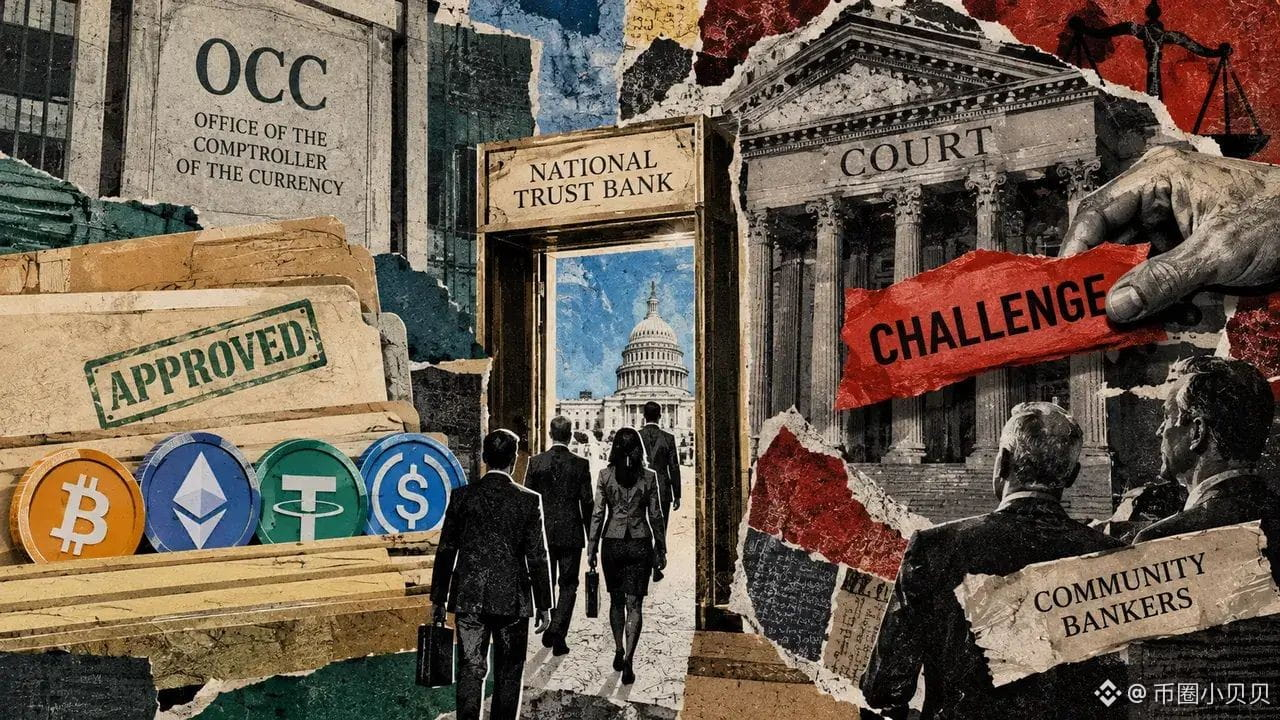
2
6.6k
·
--
#比特币冲击8.7万美元遇阻回落
An old-school meme coin, in the quarter when it shouldn’t have risen, ran the strongest stretch of the year..
[💰 进群看下一步](https://app.binance.com/uni-qr/F6dwNqgx)
In Q3, SHIB rose by about 44%, its strongest Q3 in history.. For it, September is usually an ugly month; this year, however, September alone is close to 19%.. But the increase is only the surface—the real question is where the chips are moving..
On-chain signals are more direct: over the past week, more than 74 billion SHIB have net flowed out of exchanges..
Most people read “withdrawals” as simply people hoarding and shouting “up,” but you should be careful here—withdrawals and buys are two different things.. One side is supply being moved out of trading venues, thinning spot sell pressure; the other side could also be big holders reorganizing positions, moving coins into cold wallets, then waiting for a more suitable price before acting.. So these 74 billion coins look more like “temporarily stepping away,” not “disappearing forever”..
What’s truly worth watching is why money is looking back at it now..
This week, Bitcoin has again been pushed back at the 87,000 mark, getting stuck and grinding back and forth within the 83,000 to 87,000 range.. When the biggest asset loses direction, some money looks for work in places with higher elasticity.. Ethereum, Solana, and XRP have all been running faster than Bitcoin lately, and memes and smaller-cap names are being rekindled at the end of the chain.. This looks more like existing capital rotating seats internally, rather than brand-new money rushing in aggressively..
Layer on another narrative: meme coins are trying to take off the hat of “pure emotion”.. From PEPE’s spot ETF filings to the ETF idea the SHIB community has been talking about for a long time, the market is pushing them toward being “packaged in a way institutions can buy”.. Once this line works, their pricing logic will slowly shift from community sentiment to liquidity and compliance costs..
The reversal is embedded too: these assets naturally have thinner depth than Bitcoin—when the broader market turns, they don’t just fall; they fall faster and deeper.. Withdrawals reduce “supply,” which is fuel during rallies, but it becomes instantly ineffective during pullbacks, because the money that moves the fastest is often the same batch that just transferred coins out..
So going forward, don’t just watch how many percentage points SHIB is up—focus on three things: can Bitcoin reclaim 87,000, will exchange outflows keep going, and will the meme ETF story turn from a filing into a real listing.. If BTC breaks down first, all of the above has to be overturned and redone..
#比特币冲击8.7万美元遇阻回落
An old-school meme coin, in the quarter when it shouldn’t have risen, ran the strongest stretch of the year..
💰 进群看下一步
In Q3, SHIB rose by about 44%, its strongest Q3 in history.. For it, September is usually an ugly month; this year, however, September alone is close to 19%.. But the increase is only the surface—the real question is where the chips are moving..
On-chain signals are more direct: over the past week, more than 74 billion SHIB have net flowed out of exchanges..
Most people read “withdrawals” as simply people hoarding and shouting “up,” but you should be careful here—withdrawals and buys are two different things.. One side is supply being moved out of trading venues, thinning spot sell pressure; the other side could also be big holders reorganizing positions, moving coins into cold wallets, then waiting for a more suitable price before acting.. So these 74 billion coins look more like “temporarily stepping away,” not “disappearing forever”..
What’s truly worth watching is why money is looking back at it now..
This week, Bitcoin has again been pushed back at the 87,000 mark, getting stuck and grinding back and forth within the 83,000 to 87,000 range.. When the biggest asset loses direction, some money looks for work in places with higher elasticity.. Ethereum, Solana, and XRP have all been running faster than Bitcoin lately, and memes and smaller-cap names are being rekindled at the end of the chain.. This looks more like existing capital rotating seats internally, rather than brand-new money rushing in aggressively..
Layer on another narrative: meme coins are trying to take off the hat of “pure emotion”.. From PEPE’s spot ETF filings to the ETF idea the SHIB community has been talking about for a long time, the market is pushing them toward being “packaged in a way institutions can buy”.. Once this line works, their pricing logic will slowly shift from community sentiment to liquidity and compliance costs..
The reversal is embedded too: these assets naturally have thinner depth than Bitcoin—when the broader market turns, they don’t just fall; they fall faster and deeper.. Withdrawals reduce “supply,” which is fuel during rallies, but it becomes instantly ineffective during pullbacks, because the money that moves the fastest is often the same batch that just transferred coins out..
So going forward, don’t just watch how many percentage points SHIB is up—focus on three things: can Bitcoin reclaim 87,000, will exchange outflows keep going, and will the meme ETF story turn from a filing into a real listing.. If BTC breaks down first, all of the above has to be overturned and redone..
An old-school meme coin, in the quarter when it shouldn’t have risen, ran the strongest stretch of the year..
💰 进群看下一步
In Q3, SHIB rose by about 44%, its strongest Q3 in history.. For it, September is usually an ugly month; this year, however, September alone is close to 19%.. But the increase is only the surface—the real question is where the chips are moving..
On-chain signals are more direct: over the past week, more than 74 billion SHIB have net flowed out of exchanges..
Most people read “withdrawals” as simply people hoarding and shouting “up,” but you should be careful here—withdrawals and buys are two different things.. One side is supply being moved out of trading venues, thinning spot sell pressure; the other side could also be big holders reorganizing positions, moving coins into cold wallets, then waiting for a more suitable price before acting.. So these 74 billion coins look more like “temporarily stepping away,” not “disappearing forever”..
What’s truly worth watching is why money is looking back at it now..
This week, Bitcoin has again been pushed back at the 87,000 mark, getting stuck and grinding back and forth within the 83,000 to 87,000 range.. When the biggest asset loses direction, some money looks for work in places with higher elasticity.. Ethereum, Solana, and XRP have all been running faster than Bitcoin lately, and memes and smaller-cap names are being rekindled at the end of the chain.. This looks more like existing capital rotating seats internally, rather than brand-new money rushing in aggressively..
Layer on another narrative: meme coins are trying to take off the hat of “pure emotion”.. From PEPE’s spot ETF filings to the ETF idea the SHIB community has been talking about for a long time, the market is pushing them toward being “packaged in a way institutions can buy”.. Once this line works, their pricing logic will slowly shift from community sentiment to liquidity and compliance costs..
The reversal is embedded too: these assets naturally have thinner depth than Bitcoin—when the broader market turns, they don’t just fall; they fall faster and deeper.. Withdrawals reduce “supply,” which is fuel during rallies, but it becomes instantly ineffective during pullbacks, because the money that moves the fastest is often the same batch that just transferred coins out..
So going forward, don’t just watch how many percentage points SHIB is up—focus on three things: can Bitcoin reclaim 87,000, will exchange outflows keep going, and will the meme ETF story turn from a filing into a real listing.. If BTC breaks down first, all of the above has to be overturned and redone..

577
Log in to explore more content
Join global crypto users on Binance Square
⚡️ Get latest and useful information about crypto.
💬 Trusted by the world’s largest crypto exchange.
👍 Discover real insights from verified creators.
Email / Phone number
Trending Topics
BinanceLaunchesBinanceIntelligence
468 views
59 Discussing
🚨 BINANCE JUST PUT AI DIRECTLY INSIDE THE EXCHANGE — AND THIS COULD CHANGE HOW RETAIL TRADES.
Binance has officially launched Binance Intelligence, a new AI layer built into the Binance ecosystem. It combines three products:
Binance AI for everyday users,
Binance AI Pro for automated trading workflows,
and Agent OS for developers building financial agents.
The part traders should care about?
Binance AI can surface market briefs, smart alerts, PnL recaps and personalized information, while AI Pro is designed to turn a plain-English trading idea into a visual strategy workflow.
That means the next phase of exchange competition may not be:
lowest fees vs deepest liquidity.
It could be:
who gives traders the best AI execution layer.
If Binance Intelligence actually drives heavier user activity, automated strategies and higher trading frequency, watch $BNB first.
AI adoption ↑
→ Binance engagement ↑
→ trading activity ↑
→ ecosystem narrative strengthens.
The catalyst I’d watch now:
global rollout + AI Pro launch + measurable user adoption.
Because once AI stops just telling you what the market is doing…
…and starts helping build the trade itself?
That’s when this gets much bigger than another chatbot. 👀
#binancelaunchesbinanceintelligence #EvernorthXRPTreasuryCompletesSPACMerger #ADAGains10%Above$0.27 #ETHUp70%InQ3ButLiquidityFalls #EthStakingExitQueueHits2026High
KimHotbae
·0 Likes
·694 views
EvernorthXRPTreasuryCompletesSPACMerger
2,235 views
76 Discussing
ADAGains10%Above$0.27
16,912 views
189 Discussing