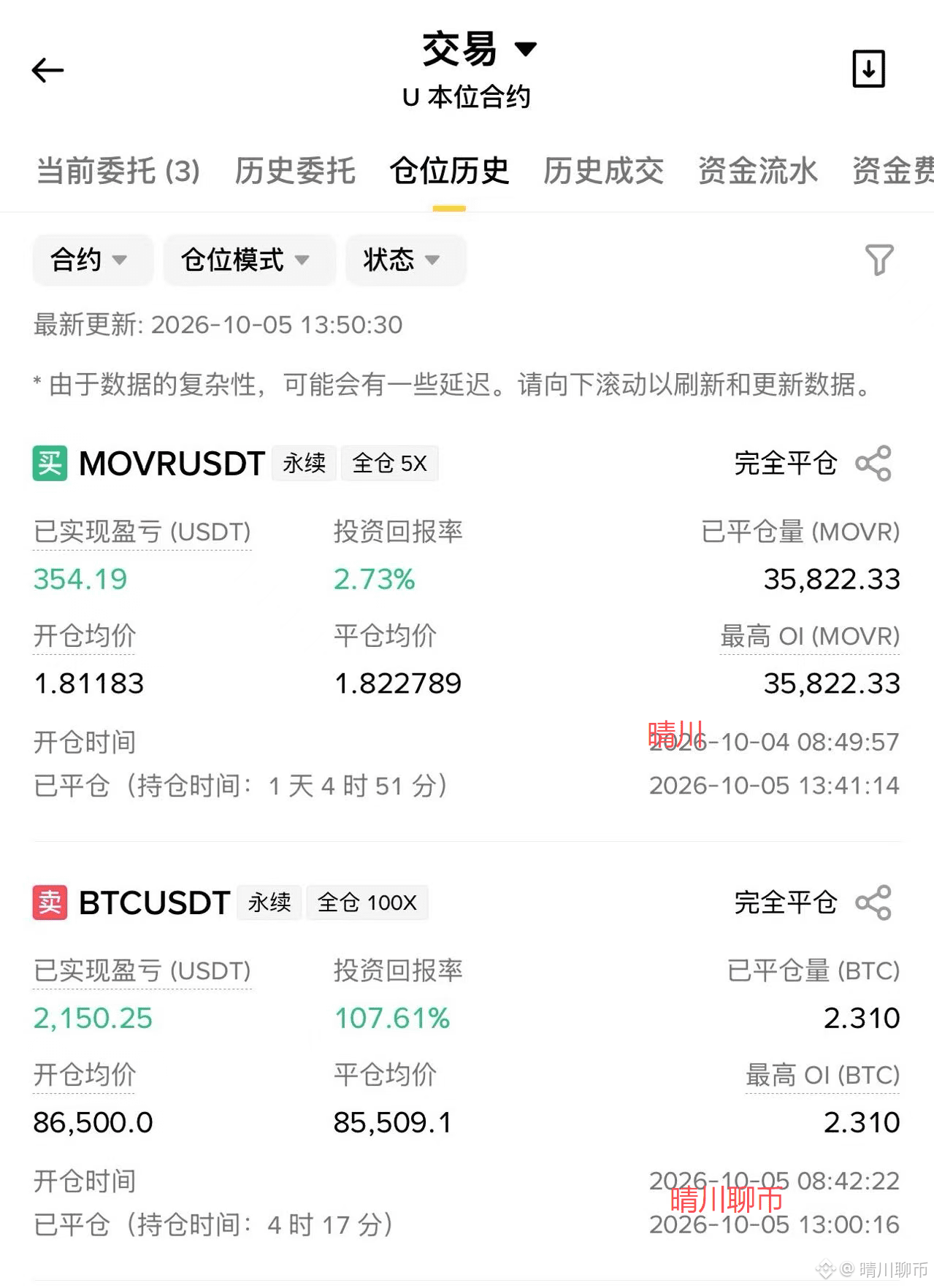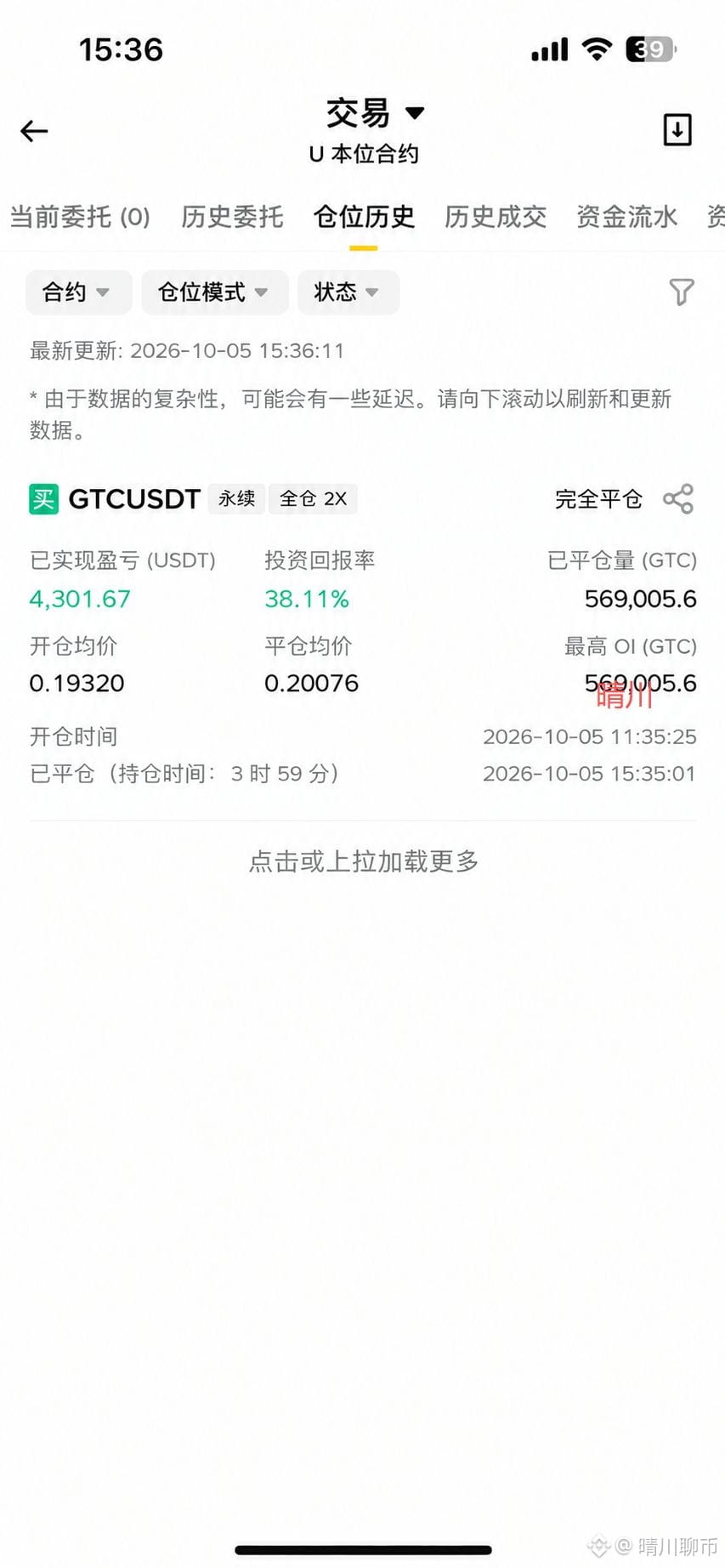
If you’re trying to turn things around with a small bankroll, you really don’t need flashy strategies. Stick to these three ironclad rules for protecting your capital, and time will give you the answer. Money made through luck will eventually be lost through poor judgment. The money that lasts is always earned through a system.
Rule 1: Split up your capital and always keep some in reserve.
A lot of people think there’s no point diversifying when you have little capital, so they go all in: double your money if you win, lose it all if you don’t. But think it through. Going all in can pay off quickly if you get the direction right—but what if you get it wrong? A few thousand U can be gone in one trade, and you won’t even have a chance to make it back. If you trade in smaller portions, you can cut a small loss and walk away when you’re wrong, then gradually add to your position with profits when you’re right. People who go all in eventually get wiped out and leave the game. Those who split up their capital can at least stay at the table. As long as you have capital, you have opportunities. Many people don’t lose because of the market; they lose because they convince themselves this time will be different and that they can ride it out—until they get liquidated.
Rule 2: Only trade markets you understand.
No signal, no trade. Stay out of sideways markets. If you don’t understand it, don’t touch it. The market spends most of its time moving aimlessly. If you insist on trading every day, you’re only exhausting yourself and losing your own money. People who truly make money wait for opportunities; they don’t go looking for them. A market you can’t understand isn’t yours to trade. Forcing a trade is just giving your money away. Take a look at the accounts of those people who post trade calls and analysis in group chats every day six months later—most of them will have been replaced by someone else. If you can’t keep your hands off the keyboard, the market will teach you to stop by making you lose money.
Rule 3: Make stop-loss and take-profit levels non-negotiable.
When your stop-loss is hit, get out—no hesitation. When you hit your profit target, take it—don’t get greedy for one last bite. Don’t add to losing positions, and don’t get greedy when you’re winning. Small losses are a cost; big losses knock you out. Holding onto a losing trade is the stupidest thing you can do. You get away with it once and think you can do it again, then one bad trade wipes you out. The essence of making money is letting rules govern your trading, not letting a hot head wreck your account. Unrealized gains are just numbers; they become money only when you put them in your pocket.
These three rules look simple, but few people can follow them.
I’ve seen far too many people constantly searching for new strategies and learning new indicators while their accounts get smaller and smaller. Meanwhile, the people who stick to these old rules slowly build their money. It’s not that their methods are brilliant—they execute them consistently. What you’re missing isn’t a strategy; it’s the patience to keep doing simple things over and over.
If you’re still charging in blindly, come talk to me. I’ll help you find a steadier pace. It’s not about telling you to stop working hard; it’s about making sure you’re not putting your effort in the wrong direction. Get the direction right, and you have a chance to turn things around. Follow me, and let’s make it through together.
Rule 1: Split up your capital and always keep some in reserve.
A lot of people think there’s no point diversifying when you have little capital, so they go all in: double your money if you win, lose it all if you don’t. But think it through. Going all in can pay off quickly if you get the direction right—but what if you get it wrong? A few thousand U can be gone in one trade, and you won’t even have a chance to make it back. If you trade in smaller portions, you can cut a small loss and walk away when you’re wrong, then gradually add to your position with profits when you’re right. People who go all in eventually get wiped out and leave the game. Those who split up their capital can at least stay at the table. As long as you have capital, you have opportunities. Many people don’t lose because of the market; they lose because they convince themselves this time will be different and that they can ride it out—until they get liquidated.
Rule 2: Only trade markets you understand.
No signal, no trade. Stay out of sideways markets. If you don’t understand it, don’t touch it. The market spends most of its time moving aimlessly. If you insist on trading every day, you’re only exhausting yourself and losing your own money. People who truly make money wait for opportunities; they don’t go looking for them. A market you can’t understand isn’t yours to trade. Forcing a trade is just giving your money away. Take a look at the accounts of those people who post trade calls and analysis in group chats every day six months later—most of them will have been replaced by someone else. If you can’t keep your hands off the keyboard, the market will teach you to stop by making you lose money.
Rule 3: Make stop-loss and take-profit levels non-negotiable.
When your stop-loss is hit, get out—no hesitation. When you hit your profit target, take it—don’t get greedy for one last bite. Don’t add to losing positions, and don’t get greedy when you’re winning. Small losses are a cost; big losses knock you out. Holding onto a losing trade is the stupidest thing you can do. You get away with it once and think you can do it again, then one bad trade wipes you out. The essence of making money is letting rules govern your trading, not letting a hot head wreck your account. Unrealized gains are just numbers; they become money only when you put them in your pocket.
These three rules look simple, but few people can follow them.
I’ve seen far too many people constantly searching for new strategies and learning new indicators while their accounts get smaller and smaller. Meanwhile, the people who stick to these old rules slowly build their money. It’s not that their methods are brilliant—they execute them consistently. What you’re missing isn’t a strategy; it’s the patience to keep doing simple things over and over.
If you’re still charging in blindly, come talk to me. I’ll help you find a steadier pace. It’s not about telling you to stop working hard; it’s about making sure you’re not putting your effort in the wrong direction. Get the direction right, and you have a chance to turn things around. Follow me, and let’s make it through together.