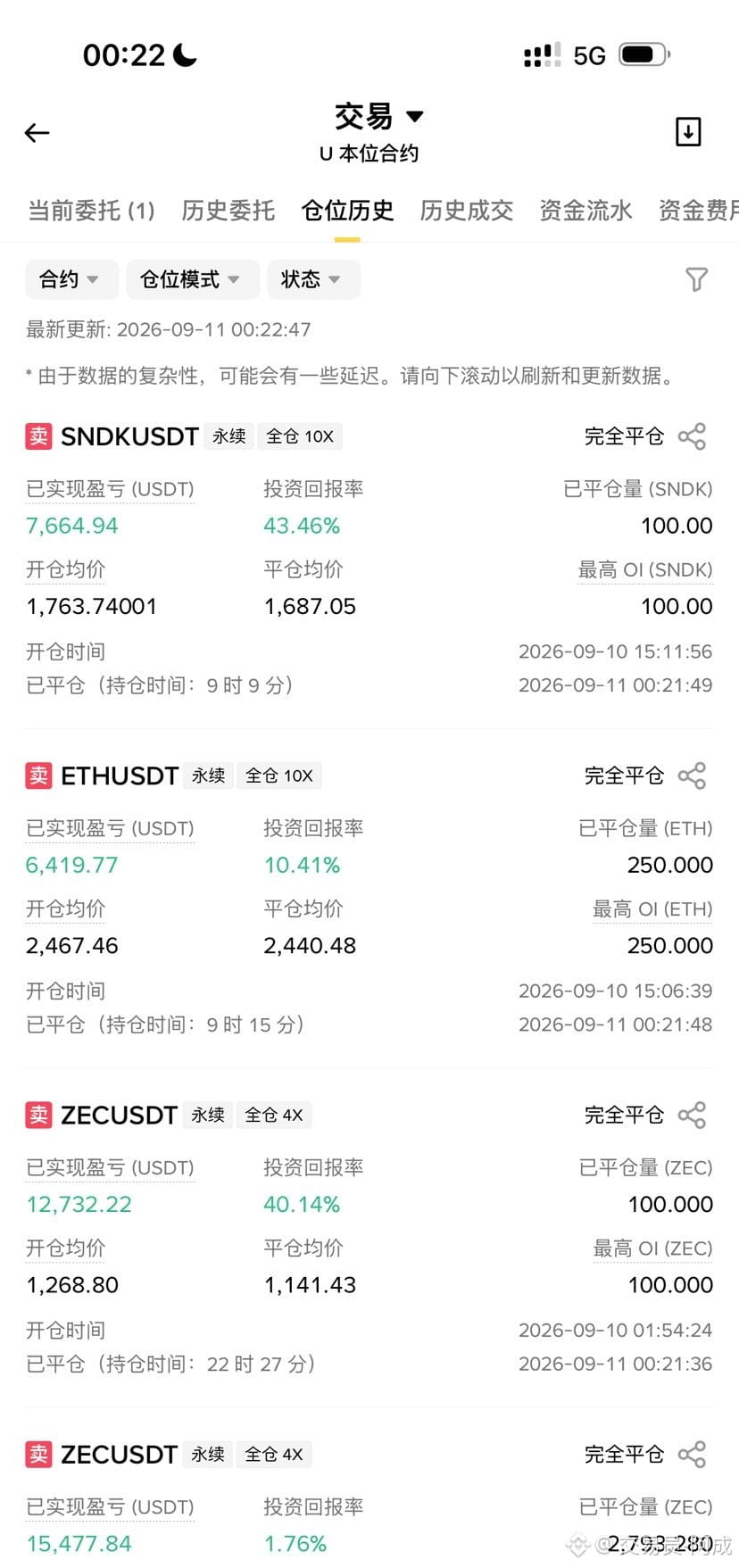
After trading crypto for so many years, I’ve found the dumbest method—and yet it’s the one that lets you actually get the meat: grind it out slowly, without rushing. First, let me talk about three things you must absolutely not do:
First, don’t rush in when prices are pumping. This sounds against human nature, but the truth is: real money is made when others are panicking and you reach out, and when others are going crazy and you pull back. If you can turn "buying when it’s falling" into your instinct, then you’ve truly entered the game.
Second, don’t press your order size. Pressing just means you think the direction is right, so you go all in hoping to double in one shot. But the main players will shake you out, poke in a few liquidations, and you’re gone. Even if your direction is right, it doesn’t matter if you can’t withstand those moves.
Third, never go all-in. Once you go all-in, you’re done: no money to average down when the market comes, and no ability to act when opportunities appear. This market never lacks opportunities, but for those who go all-in, the opportunity cost is the highest—they can only watch others.
Now, here are six short-line rules for day trading—each one is bought with real losses:
One: If consolidation happens at high levels, don’t rush to run—there’s usually still a new high. If consolidation happens at low levels, don’t rush to buy—there’s usually still a new low. Wait until the direction of the breakout is clear, then act. Don’t guess.
Two: Don’t trade during sideways range. Most people lose money because they can’t control their hands—they end up losing patience and principal together in the chop.
Three: Buy when the daily candle closes bearish; sell when it closes bullish. Following the mood is more accurate than making random guesses.
Four: If the drop is slow, the rebound is also slow. If the drop is fast, you may get a sharp snap-back. Once you understand the rhythm, you can catch opportunities.
Five: Build a position like a pyramid—add in batches, always keep a back hand.
Six: After a big surge or big crash, there will inevitably be consolidation. After consolidation, there will inevitably be a breakout. Don’t hold on to the highs too tightly when it’s time to sell; don’t rush to go all-in at the lows. Once the direction shows up, go when you should.
These rules look simple, but not many people can actually do them—I’ve lost enough that I finally became honest and followed them.
The market never lacks opportunities. What it lacks are people who can control their impulses, endure the wait, and still be alive. If you want to grind out the rhythm with me, come chat with me.
First, don’t rush in when prices are pumping. This sounds against human nature, but the truth is: real money is made when others are panicking and you reach out, and when others are going crazy and you pull back. If you can turn "buying when it’s falling" into your instinct, then you’ve truly entered the game.
Second, don’t press your order size. Pressing just means you think the direction is right, so you go all in hoping to double in one shot. But the main players will shake you out, poke in a few liquidations, and you’re gone. Even if your direction is right, it doesn’t matter if you can’t withstand those moves.
Third, never go all-in. Once you go all-in, you’re done: no money to average down when the market comes, and no ability to act when opportunities appear. This market never lacks opportunities, but for those who go all-in, the opportunity cost is the highest—they can only watch others.
Now, here are six short-line rules for day trading—each one is bought with real losses:
One: If consolidation happens at high levels, don’t rush to run—there’s usually still a new high. If consolidation happens at low levels, don’t rush to buy—there’s usually still a new low. Wait until the direction of the breakout is clear, then act. Don’t guess.
Two: Don’t trade during sideways range. Most people lose money because they can’t control their hands—they end up losing patience and principal together in the chop.
Three: Buy when the daily candle closes bearish; sell when it closes bullish. Following the mood is more accurate than making random guesses.
Four: If the drop is slow, the rebound is also slow. If the drop is fast, you may get a sharp snap-back. Once you understand the rhythm, you can catch opportunities.
Five: Build a position like a pyramid—add in batches, always keep a back hand.
Six: After a big surge or big crash, there will inevitably be consolidation. After consolidation, there will inevitably be a breakout. Don’t hold on to the highs too tightly when it’s time to sell; don’t rush to go all-in at the lows. Once the direction shows up, go when you should.
These rules look simple, but not many people can actually do them—I’ve lost enough that I finally became honest and followed them.
The market never lacks opportunities. What it lacks are people who can control their impulses, endure the wait, and still be alive. If you want to grind out the rhythm with me, come chat with me.