

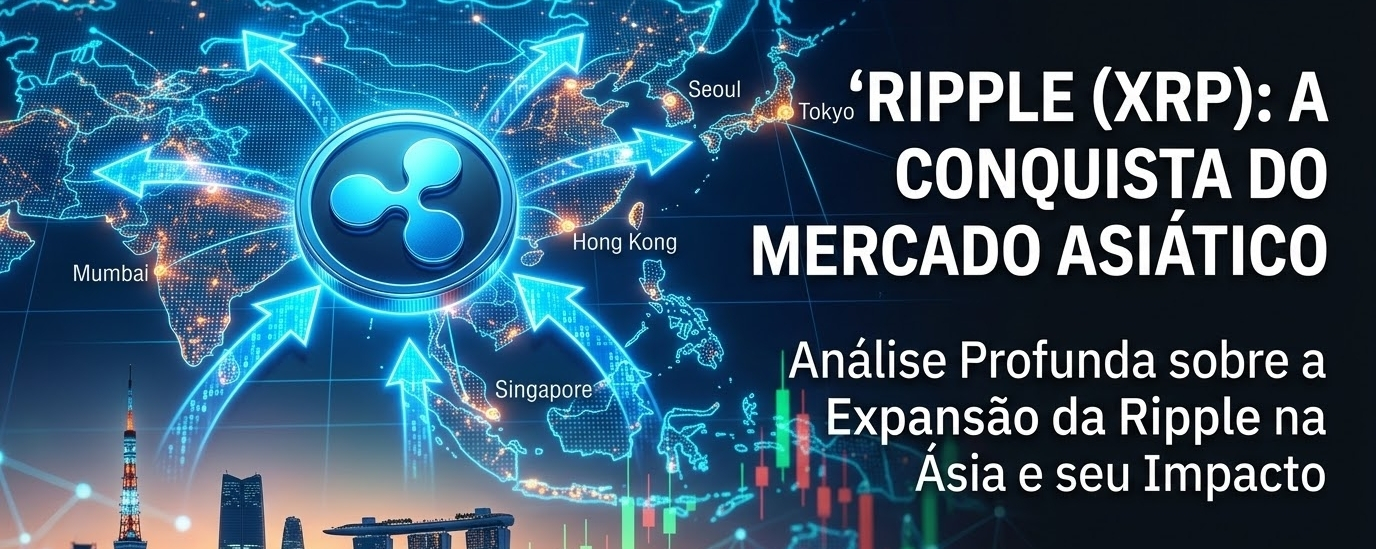

A Ripple continues to consolidate its global payments infrastructure across borders, and the recent expansion of its liquidity and payments solutions (including the advancement of RLUSD and optimizations to the Ripple Payments / ODL network) has redefined efficiency for financial hubs in Asia.
If you follow the thesis of the $XRP e of Ripple’s infrastructure, understanding the role of the Asian market is key. Here’s why this update directly impacts the region’s institutional partners:
1. Elimination of Pre-Funding (Nostro/Vostro)
Asia is home to some of the world’s largest global remittance corridors (with emphasis on Southeast Asia, Japan, and South Korea). For partner banks and fintechs:
* Before: It was necessary to keep millions of dollars sitting in international settlement accounts to ensure fast transfers.
* Now: With on-demand liquidity solutions (ODL) and hybrid institutional stablecoin rails, capital is released instantly, drastically reducing operating costs.
2. Regulatory Clarity and Institutional Adoption
While other markets faced regulatory ambiguity, countries like Singapore (via MAS) and Japan (via historical partnerships with SBI Holdings) paved the way for compliance:
* Institutional partners in Asia that bet early on the ecosystem are now seeing competitive scale.
* Integrating new settlement assets enables settlements in seconds, 24/7, bypassing the rigidity of the traditional SWIFT system.
3. Cost Reduction and Speed for the End Consumer
For high-frequency remittance corridors (such as Japan–Philippines or Singapore–Thailand):
* Lower transaction fees and the elimination of financial intermediaries create larger margins for institutions and significantly lower costs for those sending money abroad.
🔍 Conclusion and Market Thesis
Asia isn’t just another market for Ripple; it’s the global scale laboratory for real-world blockchain use in traditional finance (TradFi). Partners that opened the doors for Ripple in the East are reaping the rewards of a mature, scalable infrastructure ready for institutional volume.
💬 And you, what do you think? Will institutional adoption in Asia be the main liquidity trigger for the network in the coming months? Share your view in the comments!