The crude oil export volume from the Strait of Hormuz has actually returned to pre-war levels, but the oil price is still stuck above $100. Many people don’t understand why.
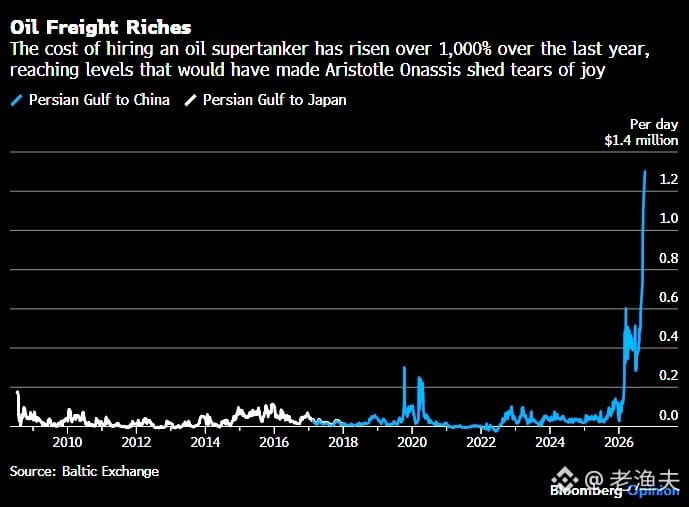
The answer is simple: shipping costs have exploded. Before the war, a single oil tanker making a run from the Persian Gulf would cost about $50,000 in charter rates. Now? $1.1 million. 22 times.
This is a typical example of “supply-chain cost pass-through”—crude production is fine, but the cost of transporting it to refineries has skyrocketed, and that ultimately shows up in the oil price. Premiums for insurance and war risk, costs from detours, and shipowners’ tight chartering decisions all stack up.
Something similar happened after the 2022 Russia–Ukraine conflict: the Black Sea Grain Corridor closed. Grain export volumes recovered afterward, but freight rates and insurance costs kept the landed price high. The market doesn’t just look at “production”; it also looks at “the landed cost.”
So today’s oil price isn’t really an OPEC production-cut problem—it’s a logistics bottleneck problem. With this kind of structural cost increase, it’s hard to reverse in the short term.
The answer is simple: shipping costs have exploded. Before the war, a single oil tanker making a run from the Persian Gulf would cost about $50,000 in charter rates. Now? $1.1 million. 22 times.
This is a typical example of “supply-chain cost pass-through”—crude production is fine, but the cost of transporting it to refineries has skyrocketed, and that ultimately shows up in the oil price. Premiums for insurance and war risk, costs from detours, and shipowners’ tight chartering decisions all stack up.
Something similar happened after the 2022 Russia–Ukraine conflict: the Black Sea Grain Corridor closed. Grain export volumes recovered afterward, but freight rates and insurance costs kept the landed price high. The market doesn’t just look at “production”; it also looks at “the landed cost.”
So today’s oil price isn’t really an OPEC production-cut problem—it’s a logistics bottleneck problem. With this kind of structural cost increase, it’s hard to reverse in the short term.