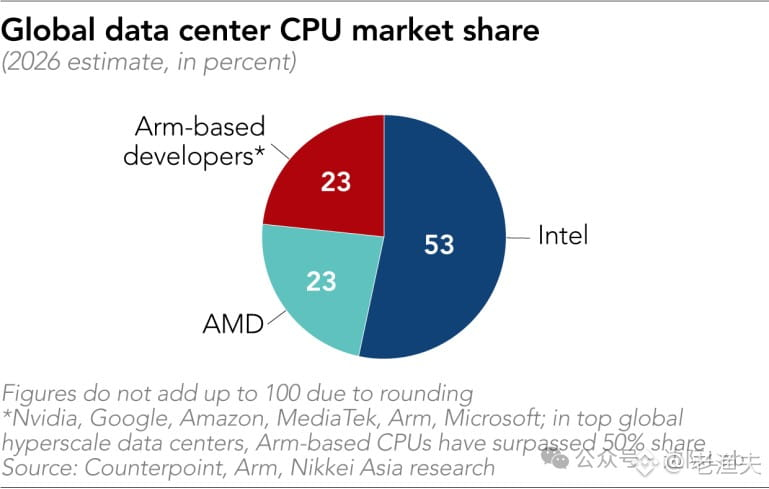
2026 data center CPU landscape is quite interesting—Intel as a whole can still hold 53%, with AMD and the Arm camp each at 23%. But the real story lies in the hyperscale segment: Arm adoption has already surpassed half.
This isn’t a debate over technical roadmaps; it’s about power reality. For big players like Meta, Google, and Amazon, choosing Arm isn’t about chasing trends—it’s because power efficiency directly determines how many more racks they can fit and whether they can keep the electricity bill under control. For AI data centers today, the biggest bottleneck isn’t chip supply—it’s grid capacity and cooling capability.
Intel can certainly hold its ground in the traditional enterprise market, but the fastest-growing slice of the pie is being re-cut. Once this kind of structural shift takes hold and builds momentum, the following ecosystem, software adaptation, and developer habits will all move with it. Old players will have to adapt to the new rules.
This isn’t a debate over technical roadmaps; it’s about power reality. For big players like Meta, Google, and Amazon, choosing Arm isn’t about chasing trends—it’s because power efficiency directly determines how many more racks they can fit and whether they can keep the electricity bill under control. For AI data centers today, the biggest bottleneck isn’t chip supply—it’s grid capacity and cooling capability.
Intel can certainly hold its ground in the traditional enterprise market, but the fastest-growing slice of the pie is being re-cut. Once this kind of structural shift takes hold and builds momentum, the following ecosystem, software adaptation, and developer habits will all move with it. Old players will have to adapt to the new rules.