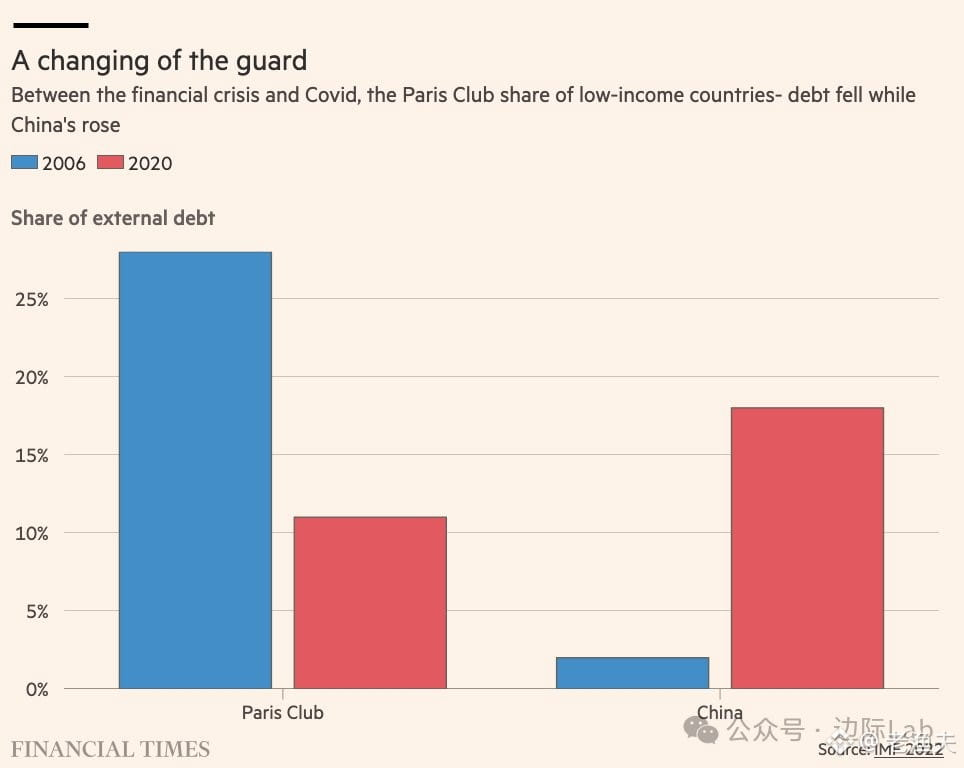
After looking at IMF data, over the past dozen-plus years from 2006 to 2020, China’s share of holding low-income countries’ external debt jumped from 2% to 18%, while the old-guard creditor nations in the Paris Club fell from 28% to 11%. This shift directly rendered the traditional sovereign-debt restructuring framework ineffective.
The reason is simple: as the largest bilateral creditor, China doesn’t like the whole debt haircut playbook. Instead, it prefers liquidity tools like maturity extensions, collateral release, and currency swaps. Naturally, the Paris Club’s old rules don’t work as well anymore.
What’s even more interesting is that many frontier-market countries’ fundamentals have actually been worsening, but their bond spreads have been pushed down to near historical lows. They can still issue new bonds or finance via total-return swaps—costly, but still manageable. So why restructure? Just keep dragging it out.
That’s the reality: creditors have changed, and so have the game rules. The failure of the traditional framework isn’t a bug—it’s a feature. The market is still providing these countries with financing opportunities, so restructuring will keep being postponed. Unless liquidity dries up completely, no one wants to sit down for a real haircut.
The logic behind the old debt workout approach doesn’t work as well in the new creditor landscape anymore.
The reason is simple: as the largest bilateral creditor, China doesn’t like the whole debt haircut playbook. Instead, it prefers liquidity tools like maturity extensions, collateral release, and currency swaps. Naturally, the Paris Club’s old rules don’t work as well anymore.
What’s even more interesting is that many frontier-market countries’ fundamentals have actually been worsening, but their bond spreads have been pushed down to near historical lows. They can still issue new bonds or finance via total-return swaps—costly, but still manageable. So why restructure? Just keep dragging it out.
That’s the reality: creditors have changed, and so have the game rules. The failure of the traditional framework isn’t a bug—it’s a feature. The market is still providing these countries with financing opportunities, so restructuring will keep being postponed. Unless liquidity dries up completely, no one wants to sit down for a real haircut.
The logic behind the old debt workout approach doesn’t work as well in the new creditor landscape anymore.