


#BitcoinDunyamiz
Cryptocurrency is a type of digital asset that uses cryptography and blockchain technology to record and verify transactions. Unlike traditional currencies issued by central banks, many 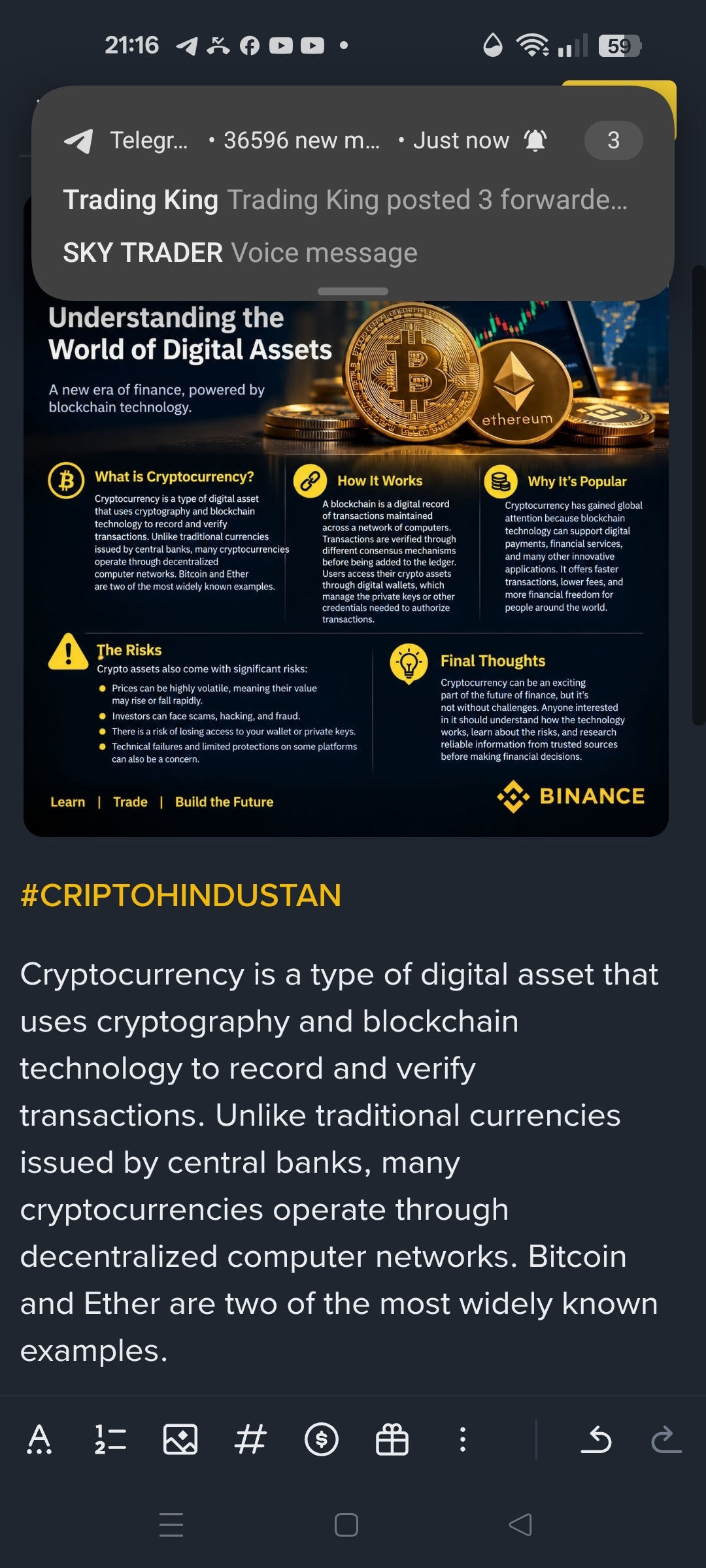 cryptocurrencies operate through decentralized computer networks. Bitcoin and Ether are two of the most widely known examples.
A blockchain can be described as a digital record of transactions maintained across a network of computers. Depending on the blockchain, transactions may be verified through different consensus mechanisms before being added to the ledger. Users generally access their crypto assets through digital wallets. These wallets manage the private keys or other credentials needed to authorize transactions.
Cryptocurrency has attracted global attention because blockchain technology can support digital payments and other applications. However, crypto assets also involve significant risks. Their prices can be highly volatile, meaning their value may rise or fall rapidly. Investors can also face risks involving scams, hacking, lost access credentials, technical failures, and limited protections on some platforms.
For these reasons, anyone interested in cryptocurrency should understand how the technology works and carefully research the risks before making financial decisions. Reliable information from regulators and established financial sources can help people make informed choices in this rapidly developing digital-asset sector.


