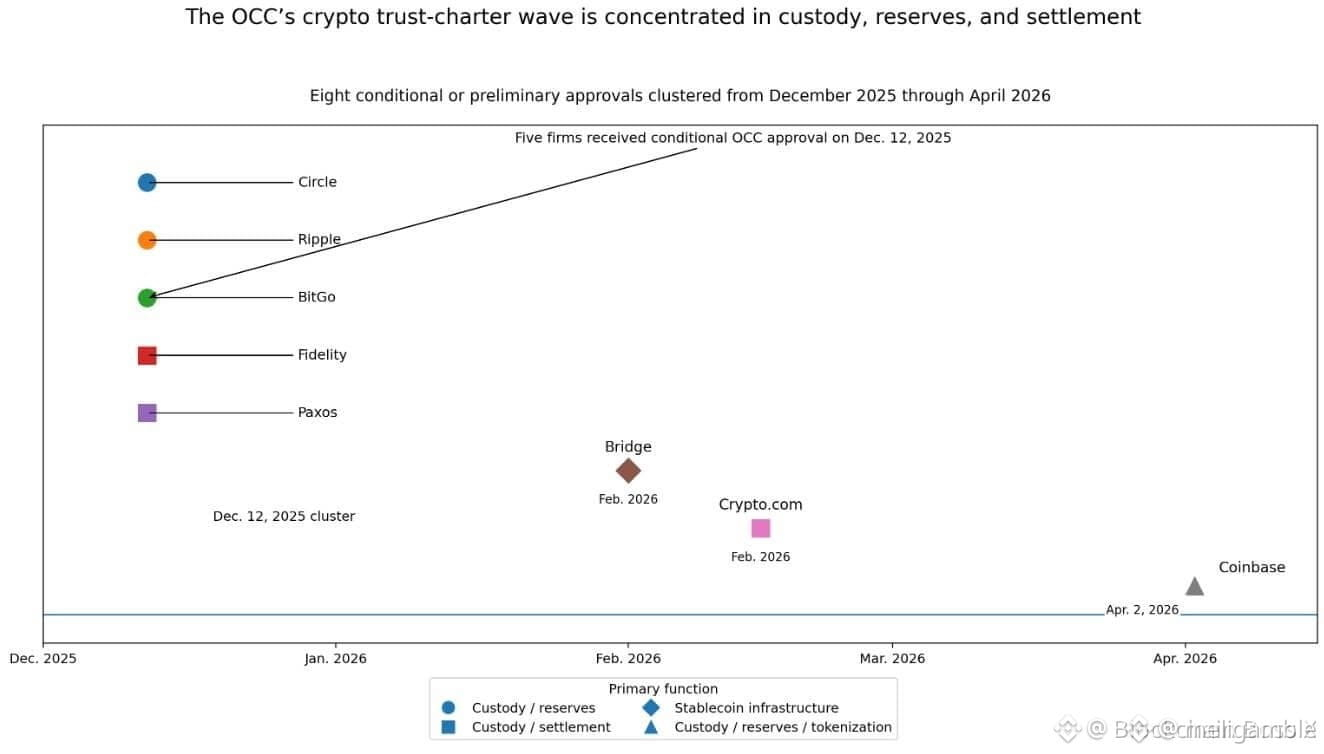
Traditional banks suing federal regulators over crypto charters sounds like standard Washington politics, but it might actually choke the institutional fiat on-ramps we take for granted.
Most people assume that once capital enters the ecosystem, liquidity is safe from legacy banking friction. In reality, when bank lobbies push back against federal crypto trust approvals, retail traders end up paying the price through sudden depegging panics and frozen off-ramps.
The Independent Community Bankers of America taking the OCC to court is a direct warning shot at crypto-native custody. If community banks successfully limit national trust charters, it creates a massive legal bottleneck for custody providers holding collateral behind $USDT and settlement networks like $ICP . Without clear federal bank oversight protections, the risk shifts back to fragmented state regulations, which historically led to localized liquidity crunches.
We already saw how vulnerable $BTC liquidity pools get when primary banking rails tighten up during market stress. When institutions face regulatory uncertainty at the federal charter level, they do not fight the banks; they simply pull their market-making capital until the dust settles. That means thinner order books, wider slippage, and sharper liquidation cascades across major pairs.
Do you think traditional banks will successfully block crypto charters, or is this just delayed adoption?
#ICBASuesOCCOverCryptoBankCharters #SECProposesCryptoCustodyRules
Most people assume that once capital enters the ecosystem, liquidity is safe from legacy banking friction. In reality, when bank lobbies push back against federal crypto trust approvals, retail traders end up paying the price through sudden depegging panics and frozen off-ramps.
The Independent Community Bankers of America taking the OCC to court is a direct warning shot at crypto-native custody. If community banks successfully limit national trust charters, it creates a massive legal bottleneck for custody providers holding collateral behind $USDT and settlement networks like $ICP . Without clear federal bank oversight protections, the risk shifts back to fragmented state regulations, which historically led to localized liquidity crunches.
We already saw how vulnerable $BTC liquidity pools get when primary banking rails tighten up during market stress. When institutions face regulatory uncertainty at the federal charter level, they do not fight the banks; they simply pull their market-making capital until the dust settles. That means thinner order books, wider slippage, and sharper liquidation cascades across major pairs.
Do you think traditional banks will successfully block crypto charters, or is this just delayed adoption?
#ICBASuesOCCOverCryptoBankCharters #SECProposesCryptoCustodyRules