

Web3 X先生
1.2k Posts
 LIVE
LIVEWeb3 X先生
Report
Block User
Web3 6年行业观察 | 行情 价格 走势 分析 | X:blockx8855 | 公众号:加密老丁 | 每日策略 热点解读
Frequent Trader
5.8 Months
31 Following
2.0K+ Followers
491 Liked
Posts
All
Quotes
Live
·
--
【The Winklevoss brothers have filed too—could a second Zcash ETF be on the way? 🔥💠】
Join Mr. X’s fan group chat on the homepage 🔥
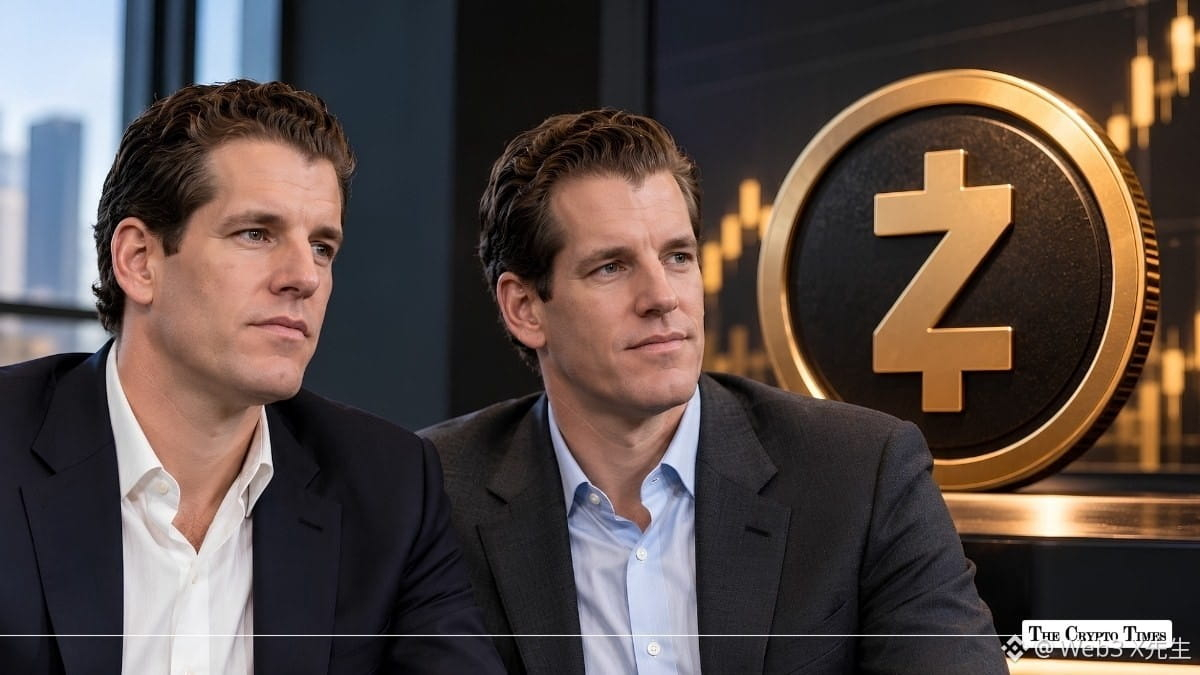
The Winklevoss brothers have filed for an ETF too—one targeting spot Zcash. It’s proposed to list on Nasdaq under the ticker WINK. This would be the second spot ZEC product in the U.S. The first was Grayscale’s ZCSH, which only launched on August 25. The brothers may be late to the game, but they’re not making a small move. 📄
The terms in the filing are pretty straightforward. The fund will hold ZEC directly in segregated cold wallets. The annual management fee is 0.25%, accrued daily in ZEC. An affiliated fund of the sponsor has also said it’s interested in subscribing for up to $100 million worth of shares. But that’s just an indication of interest, not a binding commitment to buy. 🧾
It’s also brought in a treasury company to lend its support. The company holds ZEC as part of its corporate reserves. The filing describes it as an ecosystem partner, with a role in helping holders vote and provide input on protocol upgrades. That ties token holders and the ETF together. 🤝
The risk disclosures are pretty blunt, too. The filing mentions a vulnerability discovered in late May—a flaw that could create fake ZEC out of thin air. An emergency patch was released in early June. There’s currently no evidence that it was exploited, but the filing says that can’t be proven cryptographically. ⚠️
The market reaction, meanwhile, was telling. After the filing was announced, ZEC returned to around $1,350, up about 3% in 24 hours. Its market cap is roughly $23 billion. That’s still more than halfway below its all-time high of $3,191. Grayscale’s fund had already surpassed $500 million in assets by early September. 🪙
The interesting part isn’t who came first or second. It’s that ETFs are bringing privacy coins into the mainstream. Institutions want a compliant channel, not a belief system. Once that channel opens, money will find its own way in. Privacy and regulation have always been at odds. This time, that tension has opened up a new path. 🚪
📌 A second spot ZEC ETF has been filed, widening the compliant channel for privacy assets.
How far do you think ZEC can go this time? Let’s talk in the comments.
【The Winklevoss brothers have filed too—could a second Zcash ETF be on the way? 🔥💠】
Join Mr. X’s fan group chat on the homepage 🔥
The Winklevoss brothers have filed for an ETF too—one targeting spot Zcash. It’s proposed to list on Nasdaq under the ticker WINK. This would be the second spot ZEC product in the U.S. The first was Grayscale’s ZCSH, which only launched on August 25. The brothers may be late to the game, but they’re not making a small move. 📄
The terms in the filing are pretty straightforward. The fund will hold ZEC directly in segregated cold wallets. The annual management fee is 0.25%, accrued daily in ZEC. An affiliated fund of the sponsor has also said it’s interested in subscribing for up to $100 million worth of shares. But that’s just an indication of interest, not a binding commitment to buy. 🧾
It’s also brought in a treasury company to lend its support. The company holds ZEC as part of its corporate reserves. The filing describes it as an ecosystem partner, with a role in helping holders vote and provide input on protocol upgrades. That ties token holders and the ETF together. 🤝
The risk disclosures are pretty blunt, too. The filing mentions a vulnerability discovered in late May—a flaw that could create fake ZEC out of thin air. An emergency patch was released in early June. There’s currently no evidence that it was exploited, but the filing says that can’t be proven cryptographically. ⚠️
The market reaction, meanwhile, was telling. After the filing was announced, ZEC returned to around $1,350, up about 3% in 24 hours. Its market cap is roughly $23 billion. That’s still more than halfway below its all-time high of $3,191. Grayscale’s fund had already surpassed $500 million in assets by early September. 🪙
The interesting part isn’t who came first or second. It’s that ETFs are bringing privacy coins into the mainstream. Institutions want a compliant channel, not a belief system. Once that channel opens, money will find its own way in. Privacy and regulation have always been at odds. This time, that tension has opened up a new path. 🚪
📌 A second spot ZEC ETF has been filed, widening the compliant channel for privacy assets.
How far do you think ZEC can go this time? Let’s talk in the comments.
Join Mr. X’s fan group chat on the homepage 🔥
The Winklevoss brothers have filed for an ETF too—one targeting spot Zcash. It’s proposed to list on Nasdaq under the ticker WINK. This would be the second spot ZEC product in the U.S. The first was Grayscale’s ZCSH, which only launched on August 25. The brothers may be late to the game, but they’re not making a small move. 📄
The terms in the filing are pretty straightforward. The fund will hold ZEC directly in segregated cold wallets. The annual management fee is 0.25%, accrued daily in ZEC. An affiliated fund of the sponsor has also said it’s interested in subscribing for up to $100 million worth of shares. But that’s just an indication of interest, not a binding commitment to buy. 🧾
It’s also brought in a treasury company to lend its support. The company holds ZEC as part of its corporate reserves. The filing describes it as an ecosystem partner, with a role in helping holders vote and provide input on protocol upgrades. That ties token holders and the ETF together. 🤝
The risk disclosures are pretty blunt, too. The filing mentions a vulnerability discovered in late May—a flaw that could create fake ZEC out of thin air. An emergency patch was released in early June. There’s currently no evidence that it was exploited, but the filing says that can’t be proven cryptographically. ⚠️
The market reaction, meanwhile, was telling. After the filing was announced, ZEC returned to around $1,350, up about 3% in 24 hours. Its market cap is roughly $23 billion. That’s still more than halfway below its all-time high of $3,191. Grayscale’s fund had already surpassed $500 million in assets by early September. 🪙
The interesting part isn’t who came first or second. It’s that ETFs are bringing privacy coins into the mainstream. Institutions want a compliant channel, not a belief system. Once that channel opens, money will find its own way in. Privacy and regulation have always been at odds. This time, that tension has opened up a new path. 🚪
📌 A second spot ZEC ETF has been filed, widening the compliant channel for privacy assets.
How far do you think ZEC can go this time? Let’s talk in the comments.
185
·
--
【Bitcoin ETFs see their first net outflow in October, at $90 million—but BlackRock is still buying 😱💰】
Join Mr. X’s fan chat from the homepage 🔥
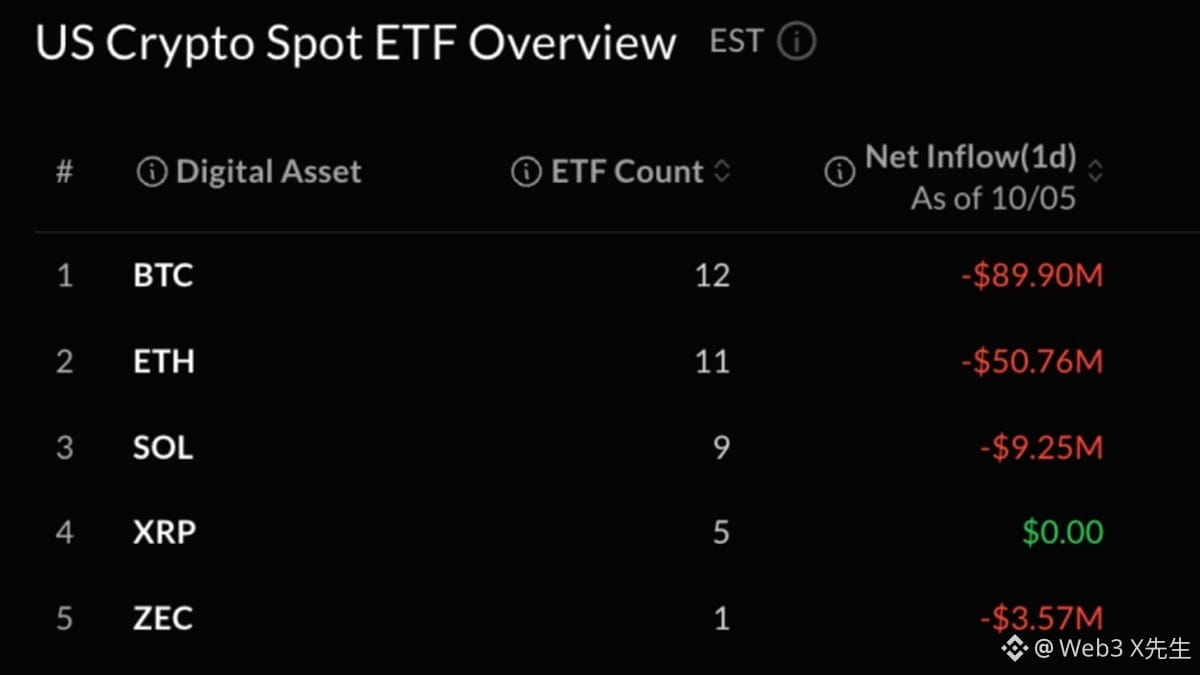
The market looked a little off right from the opening bell on Monday. U.S. spot Bitcoin ETFs saw $89.9 million in net outflows. It was the first time this month that money had pulled out. Last week, they were still logging net inflows for three weeks straight. The tide turned faster than expected. 📉
So who’s heading for the exits? ARK’s fund saw $85.21 million pulled out in a single day. Fidelity’s fund followed with $74.55 million in outflows. Those two were enough to turn the overall numbers negative. But here’s the interesting part: BlackRock didn’t follow suit. Its IBIT actually saw $69.85 million in net inflows. 💸
Ethereum ETFs looked even worse. ETH ETFs have now seen net outflows for five trading days in a row. On Monday alone, another $50.76 million flowed out. BlackRock’s ETHA saw $31.88 million withdrawn, while Fidelity’s FETH lost $18.88 million. Five full days, without a single meaningful wave of buying to catch the fall. 🥶
Smaller-coin ETFs weren’t spared either. Funds tied to SOL saw $9.25 million in outflows. ZEC products lost $3.57 million, and HYPE funds shed $2.71 million. ZEC’s net assets slid from above $1 billion to $780 million. The tide is going out faster than anywhere else. 📦
The only asset attracting inflows across the board was NEAR. Its ETF saw $539,000 in net inflows on Monday. Not a huge number, but the direction really stands out. Everyone else is pulling out, while it’s the only one seeing money come in. That kind of isolated buying often says the most. 👀
Still, there’s no need to rush to conclusions. Total assets in Bitcoin ETFs remain at $110.7 billion. Monday’s trading volume came to $2.18 billion. The money hasn’t left the market—it’s just become more selective. Buying is increasingly concentrated in the largest fund. The rest are left watching their liquidity drain away. 💡
📌 The money hasn’t all run off—it’s gone from “buying a basket” to “buying only the leader.”
Is this outflow just short-term repositioning, or have investors really changed direction? Let’s talk in the comments.
【Bitcoin ETFs see their first net outflow in October, at $90 million—but BlackRock is still buying 😱💰】
Join Mr. X’s fan chat from the homepage 🔥
The market looked a little off right from the opening bell on Monday. U.S. spot Bitcoin ETFs saw $89.9 million in net outflows. It was the first time this month that money had pulled out. Last week, they were still logging net inflows for three weeks straight. The tide turned faster than expected. 📉
So who’s heading for the exits? ARK’s fund saw $85.21 million pulled out in a single day. Fidelity’s fund followed with $74.55 million in outflows. Those two were enough to turn the overall numbers negative. But here’s the interesting part: BlackRock didn’t follow suit. Its IBIT actually saw $69.85 million in net inflows. 💸
Ethereum ETFs looked even worse. ETH ETFs have now seen net outflows for five trading days in a row. On Monday alone, another $50.76 million flowed out. BlackRock’s ETHA saw $31.88 million withdrawn, while Fidelity’s FETH lost $18.88 million. Five full days, without a single meaningful wave of buying to catch the fall. 🥶
Smaller-coin ETFs weren’t spared either. Funds tied to SOL saw $9.25 million in outflows. ZEC products lost $3.57 million, and HYPE funds shed $2.71 million. ZEC’s net assets slid from above $1 billion to $780 million. The tide is going out faster than anywhere else. 📦
The only asset attracting inflows across the board was NEAR. Its ETF saw $539,000 in net inflows on Monday. Not a huge number, but the direction really stands out. Everyone else is pulling out, while it’s the only one seeing money come in. That kind of isolated buying often says the most. 👀
Still, there’s no need to rush to conclusions. Total assets in Bitcoin ETFs remain at $110.7 billion. Monday’s trading volume came to $2.18 billion. The money hasn’t left the market—it’s just become more selective. Buying is increasingly concentrated in the largest fund. The rest are left watching their liquidity drain away. 💡
📌 The money hasn’t all run off—it’s gone from “buying a basket” to “buying only the leader.”
Is this outflow just short-term repositioning, or have investors really changed direction? Let’s talk in the comments.
Join Mr. X’s fan chat from the homepage 🔥
The market looked a little off right from the opening bell on Monday. U.S. spot Bitcoin ETFs saw $89.9 million in net outflows. It was the first time this month that money had pulled out. Last week, they were still logging net inflows for three weeks straight. The tide turned faster than expected. 📉
So who’s heading for the exits? ARK’s fund saw $85.21 million pulled out in a single day. Fidelity’s fund followed with $74.55 million in outflows. Those two were enough to turn the overall numbers negative. But here’s the interesting part: BlackRock didn’t follow suit. Its IBIT actually saw $69.85 million in net inflows. 💸
Ethereum ETFs looked even worse. ETH ETFs have now seen net outflows for five trading days in a row. On Monday alone, another $50.76 million flowed out. BlackRock’s ETHA saw $31.88 million withdrawn, while Fidelity’s FETH lost $18.88 million. Five full days, without a single meaningful wave of buying to catch the fall. 🥶
Smaller-coin ETFs weren’t spared either. Funds tied to SOL saw $9.25 million in outflows. ZEC products lost $3.57 million, and HYPE funds shed $2.71 million. ZEC’s net assets slid from above $1 billion to $780 million. The tide is going out faster than anywhere else. 📦
The only asset attracting inflows across the board was NEAR. Its ETF saw $539,000 in net inflows on Monday. Not a huge number, but the direction really stands out. Everyone else is pulling out, while it’s the only one seeing money come in. That kind of isolated buying often says the most. 👀
Still, there’s no need to rush to conclusions. Total assets in Bitcoin ETFs remain at $110.7 billion. Monday’s trading volume came to $2.18 billion. The money hasn’t left the market—it’s just become more selective. Buying is increasingly concentrated in the largest fund. The rest are left watching their liquidity drain away. 💡
📌 The money hasn’t all run off—it’s gone from “buying a basket” to “buying only the leader.”
Is this outflow just short-term repositioning, or have investors really changed direction? Let’s talk in the comments.
585
·
--
【The Bitcoin-hoarding king with a 52% annualized return is suddenly only buying scraps? 🔥💰】
Join Mr. X’s fan chat from the profile page 🔥
This week’s numbers have me a little baffled. They spent just $28.7 million buying Bitcoin, but splashed out $176.3 million buying back their own preferred shares. More than six times as much. The order in which they’re spending money is pretty telling. It seems the Bitcoin-hoarding king has hit pause for now. 🤔
Just the other day, Saylor posted on X, saying his company’s stock had an annualized return of 52%. Bitcoin itself was at 38%. Stocks, gold, real estate, and bonds were all left behind. He added that the future of capital belongs to digital assets. 📈
But the numbers on the books don’t lie. Last week, they bought just 334 bitcoins. Total holdings remain at 848,000, the largest in the world. They bought 7,218 in the third quarter, then sold 5,553. In and out, the net increase was only 1,666. Holdings grew by just 0.2% over the entire quarter. 💰
The second quarter was a different story. Back then, they went from 762,000 to 846,000. That was nearly 11% growth in a single quarter. Now it’s just 0.2%. A fiftyfold difference. Anyone looking at that gap would have to pause. 😅
It’s actually pretty clear where the money went. In the third quarter, they spent $1.38 billion buying back preferred shares. Just last week, they shelled out $177 million. And on October 28, they’re holding a special shareholder meeting to vote on changing the dividend payments for four preferred shares so they’re paid every business day. The pace has clearly changed. 🏦
Some people think this is a sign of maturity: secure the cost of financing first, then keep accumulating Bitcoin at a slower pace. Others are uneasy. If money for buying Bitcoin is taking a back seat to money for debt repayments, how many more years can that 38% annualized return hold up? Nobody dares answer that for them. ⚖️
📌 In a nutshell: They’re touting 52%, but for now they’re holding on to those preferred-share dividends.
So what do you think—is this a sign of stability, or is the Bitcoin-hoarding story starting to change? Let’s talk in the comments.
【The Bitcoin-hoarding king with a 52% annualized return is suddenly only buying scraps? 🔥💰】
Join Mr. X’s fan chat from the profile page 🔥
This week’s numbers have me a little baffled. They spent just $28.7 million buying Bitcoin, but splashed out $176.3 million buying back their own preferred shares. More than six times as much. The order in which they’re spending money is pretty telling. It seems the Bitcoin-hoarding king has hit pause for now. 🤔
Just the other day, Saylor posted on X, saying his company’s stock had an annualized return of 52%. Bitcoin itself was at 38%. Stocks, gold, real estate, and bonds were all left behind. He added that the future of capital belongs to digital assets. 📈
But the numbers on the books don’t lie. Last week, they bought just 334 bitcoins. Total holdings remain at 848,000, the largest in the world. They bought 7,218 in the third quarter, then sold 5,553. In and out, the net increase was only 1,666. Holdings grew by just 0.2% over the entire quarter. 💰
The second quarter was a different story. Back then, they went from 762,000 to 846,000. That was nearly 11% growth in a single quarter. Now it’s just 0.2%. A fiftyfold difference. Anyone looking at that gap would have to pause. 😅
It’s actually pretty clear where the money went. In the third quarter, they spent $1.38 billion buying back preferred shares. Just last week, they shelled out $177 million. And on October 28, they’re holding a special shareholder meeting to vote on changing the dividend payments for four preferred shares so they’re paid every business day. The pace has clearly changed. 🏦
Some people think this is a sign of maturity: secure the cost of financing first, then keep accumulating Bitcoin at a slower pace. Others are uneasy. If money for buying Bitcoin is taking a back seat to money for debt repayments, how many more years can that 38% annualized return hold up? Nobody dares answer that for them. ⚖️
📌 In a nutshell: They’re touting 52%, but for now they’re holding on to those preferred-share dividends.
So what do you think—is this a sign of stability, or is the Bitcoin-hoarding story starting to change? Let’s talk in the comments.
Join Mr. X’s fan chat from the profile page 🔥
This week’s numbers have me a little baffled. They spent just $28.7 million buying Bitcoin, but splashed out $176.3 million buying back their own preferred shares. More than six times as much. The order in which they’re spending money is pretty telling. It seems the Bitcoin-hoarding king has hit pause for now. 🤔
Just the other day, Saylor posted on X, saying his company’s stock had an annualized return of 52%. Bitcoin itself was at 38%. Stocks, gold, real estate, and bonds were all left behind. He added that the future of capital belongs to digital assets. 📈
But the numbers on the books don’t lie. Last week, they bought just 334 bitcoins. Total holdings remain at 848,000, the largest in the world. They bought 7,218 in the third quarter, then sold 5,553. In and out, the net increase was only 1,666. Holdings grew by just 0.2% over the entire quarter. 💰
The second quarter was a different story. Back then, they went from 762,000 to 846,000. That was nearly 11% growth in a single quarter. Now it’s just 0.2%. A fiftyfold difference. Anyone looking at that gap would have to pause. 😅
It’s actually pretty clear where the money went. In the third quarter, they spent $1.38 billion buying back preferred shares. Just last week, they shelled out $177 million. And on October 28, they’re holding a special shareholder meeting to vote on changing the dividend payments for four preferred shares so they’re paid every business day. The pace has clearly changed. 🏦
Some people think this is a sign of maturity: secure the cost of financing first, then keep accumulating Bitcoin at a slower pace. Others are uneasy. If money for buying Bitcoin is taking a back seat to money for debt repayments, how many more years can that 38% annualized return hold up? Nobody dares answer that for them. ⚖️
📌 In a nutshell: They’re touting 52%, but for now they’re holding on to those preferred-share dividends.
So what do you think—is this a sign of stability, or is the Bitcoin-hoarding story starting to change? Let’s talk in the comments.

158
·
--
【A stablecoin company is applying for a bank charter—but won’t take a cent in deposits? 🏦🌧️】
Group chat: [🔥 加入X先生的粉丝群聊](https://app.binance.com/uni-qr/MwYFhLo4)
A company that handles stablecoin payments is making a move. It has filed an application with the U.S. Office of the Comptroller of the Currency to open a trust bank in New York. It’s called Rain National Trust Bank, a wholly owned subsidiary. The parent company will continue to focus on payments. 🏦
If approved, the bank will do three things: hold digital assets and dollars for institutions, keep customers’ money separate from the bank’s own funds, and manage stablecoin reserves for regulated institutions. It will operate under the federal GENIUS Act. It can also issue and redeem its own dollar-backed stablecoin. 📄
It won’t take deposits or open accounts for individuals. It won’t make commercial loans, and it won’t have deposit insurance. Reserves can’t be pledged, lent out, or misused. Customer assets will always belong to customers—not count as the bank’s own liabilities. In short, it just wants the charter. 🚫
The person tapped to lead the new bank has also been chosen. The proposed president is Brandon Soto, who is still awaiting regulatory approval. His previous job was at Block’s industrial bank, where he served as chief financial officer. Before that, he held similar roles at other banks. 👔
The timing is intriguing. Three days ago, a community banking association sued the OCC, alleging that it had overstepped its authority in issuing charters. Now another stablecoin company is lining up. Rain’s partner serves millions of users. For now, it relies on state licenses and third-party custodians. ⚔️
The company’s chief put it plainly: institutions want a fiduciary overseen by federal regulators. A trust bank is the answer. It would also be subject to direct OCC examinations. Custody, reserves, and issuance—all under one roof. Whether the application gets approved is now up to regulators. ⏳
📌 No deposits, no loans, no deposit insurance—it really just wants a pass to operate.
Do you think a bank without those burdens will get approved?
#Rain
【A stablecoin company is applying for a bank charter—but won’t take a cent in deposits? 🏦🌧️】
Group chat: 🔥 加入X先生的粉丝群聊
A company that handles stablecoin payments is making a move. It has filed an application with the U.S. Office of the Comptroller of the Currency to open a trust bank in New York. It’s called Rain National Trust Bank, a wholly owned subsidiary. The parent company will continue to focus on payments. 🏦
If approved, the bank will do three things: hold digital assets and dollars for institutions, keep customers’ money separate from the bank’s own funds, and manage stablecoin reserves for regulated institutions. It will operate under the federal GENIUS Act. It can also issue and redeem its own dollar-backed stablecoin. 📄
It won’t take deposits or open accounts for individuals. It won’t make commercial loans, and it won’t have deposit insurance. Reserves can’t be pledged, lent out, or misused. Customer assets will always belong to customers—not count as the bank’s own liabilities. In short, it just wants the charter. 🚫
The person tapped to lead the new bank has also been chosen. The proposed president is Brandon Soto, who is still awaiting regulatory approval. His previous job was at Block’s industrial bank, where he served as chief financial officer. Before that, he held similar roles at other banks. 👔
The timing is intriguing. Three days ago, a community banking association sued the OCC, alleging that it had overstepped its authority in issuing charters. Now another stablecoin company is lining up. Rain’s partner serves millions of users. For now, it relies on state licenses and third-party custodians. ⚔️
The company’s chief put it plainly: institutions want a fiduciary overseen by federal regulators. A trust bank is the answer. It would also be subject to direct OCC examinations. Custody, reserves, and issuance—all under one roof. Whether the application gets approved is now up to regulators. ⏳
📌 No deposits, no loans, no deposit insurance—it really just wants a pass to operate.
Do you think a bank without those burdens will get approved?
#Rain
Group chat: 🔥 加入X先生的粉丝群聊
A company that handles stablecoin payments is making a move. It has filed an application with the U.S. Office of the Comptroller of the Currency to open a trust bank in New York. It’s called Rain National Trust Bank, a wholly owned subsidiary. The parent company will continue to focus on payments. 🏦
If approved, the bank will do three things: hold digital assets and dollars for institutions, keep customers’ money separate from the bank’s own funds, and manage stablecoin reserves for regulated institutions. It will operate under the federal GENIUS Act. It can also issue and redeem its own dollar-backed stablecoin. 📄
It won’t take deposits or open accounts for individuals. It won’t make commercial loans, and it won’t have deposit insurance. Reserves can’t be pledged, lent out, or misused. Customer assets will always belong to customers—not count as the bank’s own liabilities. In short, it just wants the charter. 🚫
The person tapped to lead the new bank has also been chosen. The proposed president is Brandon Soto, who is still awaiting regulatory approval. His previous job was at Block’s industrial bank, where he served as chief financial officer. Before that, he held similar roles at other banks. 👔
The timing is intriguing. Three days ago, a community banking association sued the OCC, alleging that it had overstepped its authority in issuing charters. Now another stablecoin company is lining up. Rain’s partner serves millions of users. For now, it relies on state licenses and third-party custodians. ⚔️
The company’s chief put it plainly: institutions want a fiduciary overseen by federal regulators. A trust bank is the answer. It would also be subject to direct OCC examinations. Custody, reserves, and issuance—all under one roof. Whether the application gets approved is now up to regulators. ⏳
📌 No deposits, no loans, no deposit insurance—it really just wants a pass to operate.
Do you think a bank without those burdens will get approved?
#Rain

33
·
--
【Grayscale adds a second custodian to its HYPE ETF. What are institutions in such a hurry for? 🔐🔥】
Group chat: [🚀 加入X先生的粉丝群聊](https://app.binance.com/uni-qr/MwYFhLo4)
Grayscale’s HYPE ETF has quietly taken another step. The product, ticker HYPG, is listed on Nasdaq. It has added a new custodian called BitGo. The custody agreement between the two was signed on September 30, but wasn’t disclosed until October 5. The original custodian, Anchorage, remains in place. 🏦
Why would a listed ETF need two custodians? The reasoning is simple: don’t keep all your assets in one place. The portion held by BitGo will be kept in a separate account, completely apart from BitGo’s own assets and those of its other clients. The filing spells out this requirement clearly. 🧱
The filing doesn’t say exactly how much HYPE will be moved over, or confirm whether any tokens have already been transferred. Grayscale will decide how much to allocate and when. This doesn’t look like a one-time, large-scale move. It’s more like setting up the channel in advance, then gradually moving assets into it later. 📄
Anchorage remains the primary custodian. None of the original arrangements have changed. This move simply adds another backup option. The filing also says nothing about changes to staking rules, so the ETF’s way of generating returns remains the same for now. What’s changing is the entire risk-management structure behind the scenes. 🏛️
Grayscale has long done more than just Bitcoin ETFs. It has put HYPE directly into a listed product designed to reflect HYPE’s value, including returns generated through staking. More and more firms are lining up to enter the altcoin ETF market. Custody, audits, and compliance are all foundational for institutions. 📈
For retail investors, this has nothing to do with whether prices go up or down tonight. But it offers a glimpse of what institutions are preparing to do next. The traditional financial players are seriously building out this path. Institutions are already creating compliant channels for popular tokens. Once those channels are ready, the money can flow in. Which altcoin ETF will be next? 🚀
📌 Institutions are getting custody in place first; the money will follow. 💰
What do you think? Let’s talk in the comments.
【Grayscale adds a second custodian to its HYPE ETF. What are institutions in such a hurry for? 🔐🔥】
Group chat: 🚀 加入X先生的粉丝群聊
Grayscale’s HYPE ETF has quietly taken another step. The product, ticker HYPG, is listed on Nasdaq. It has added a new custodian called BitGo. The custody agreement between the two was signed on September 30, but wasn’t disclosed until October 5. The original custodian, Anchorage, remains in place. 🏦
Why would a listed ETF need two custodians? The reasoning is simple: don’t keep all your assets in one place. The portion held by BitGo will be kept in a separate account, completely apart from BitGo’s own assets and those of its other clients. The filing spells out this requirement clearly. 🧱
The filing doesn’t say exactly how much HYPE will be moved over, or confirm whether any tokens have already been transferred. Grayscale will decide how much to allocate and when. This doesn’t look like a one-time, large-scale move. It’s more like setting up the channel in advance, then gradually moving assets into it later. 📄
Anchorage remains the primary custodian. None of the original arrangements have changed. This move simply adds another backup option. The filing also says nothing about changes to staking rules, so the ETF’s way of generating returns remains the same for now. What’s changing is the entire risk-management structure behind the scenes. 🏛️
Grayscale has long done more than just Bitcoin ETFs. It has put HYPE directly into a listed product designed to reflect HYPE’s value, including returns generated through staking. More and more firms are lining up to enter the altcoin ETF market. Custody, audits, and compliance are all foundational for institutions. 📈
For retail investors, this has nothing to do with whether prices go up or down tonight. But it offers a glimpse of what institutions are preparing to do next. The traditional financial players are seriously building out this path. Institutions are already creating compliant channels for popular tokens. Once those channels are ready, the money can flow in. Which altcoin ETF will be next? 🚀
📌 Institutions are getting custody in place first; the money will follow. 💰
What do you think? Let’s talk in the comments.
Group chat: 🚀 加入X先生的粉丝群聊
Grayscale’s HYPE ETF has quietly taken another step. The product, ticker HYPG, is listed on Nasdaq. It has added a new custodian called BitGo. The custody agreement between the two was signed on September 30, but wasn’t disclosed until October 5. The original custodian, Anchorage, remains in place. 🏦
Why would a listed ETF need two custodians? The reasoning is simple: don’t keep all your assets in one place. The portion held by BitGo will be kept in a separate account, completely apart from BitGo’s own assets and those of its other clients. The filing spells out this requirement clearly. 🧱
The filing doesn’t say exactly how much HYPE will be moved over, or confirm whether any tokens have already been transferred. Grayscale will decide how much to allocate and when. This doesn’t look like a one-time, large-scale move. It’s more like setting up the channel in advance, then gradually moving assets into it later. 📄
Anchorage remains the primary custodian. None of the original arrangements have changed. This move simply adds another backup option. The filing also says nothing about changes to staking rules, so the ETF’s way of generating returns remains the same for now. What’s changing is the entire risk-management structure behind the scenes. 🏛️
Grayscale has long done more than just Bitcoin ETFs. It has put HYPE directly into a listed product designed to reflect HYPE’s value, including returns generated through staking. More and more firms are lining up to enter the altcoin ETF market. Custody, audits, and compliance are all foundational for institutions. 📈
For retail investors, this has nothing to do with whether prices go up or down tonight. But it offers a glimpse of what institutions are preparing to do next. The traditional financial players are seriously building out this path. Institutions are already creating compliant channels for popular tokens. Once those channels are ready, the money can flow in. Which altcoin ETF will be next? 🚀
📌 Institutions are getting custody in place first; the money will follow. 💰
What do you think? Let’s talk in the comments.

212
·
--
【JPMorgan helped design it— is Solana bringing clearinghouses on-chain? 🏦🔥】
Group chat: [⚖️ 加入X先生的粉丝群聊跟进](https://app.binance.com/uni-qr/MwYFhLo4)
The Solana Foundation unveiled something new on Monday. Solana DvP is an open-source escrow program, and JPMorgan also helped design it. It aims to give financial institutions a unified standard interface for settling securities and payments in one coordinated process. Sounds highly technical, but it has a lot to do with how money moves. 🏦
Traditional delivery-versus-payment settlement is a hassle. It has to go through clearinghouses, depositories, and custodians. Completing the whole process can take several days. It’s common for funds to be tied up for a day or two, which means low efficiency and high capital costs. Big institutions have wanted to change this for a long time. ⏳
DvP compresses the whole process into a single transaction. The asset and payment settle together: either both go through, or neither does. That eliminates the counterparty risk in between. Settlement finality goes from days to seconds. That’s its biggest selling point. ⚡
The code is released under the MIT License, so anyone can reuse it. There’s no need for everyone to write their own custom contracts. It’s compatible with SPL and Token-2022, including pausable tokens and transfer hooks. It has also passed an independent third-party security audit. Privacy features are planned for later, too. 🔧
Big institutions have already been flocking to this chain. BlackRock launched a tokenized money market fund in August. One exchange is using xStocks to offer tokenized U.S. stocks. Solana has become a major hub for tokenized stocks. Now they want to standardize the settlement layer while they’re at it. Their ambition is plain to see. 📈
JPMorgan put it bluntly: open standards are exactly the foundation institutions need. The Foundation’s product lead also made a bold claim: finality in seconds, not days. The giants are quietly building the road. Do you think it will lead somewhere? 🚀
📌 When giants build the settlement layer, the question is whether new money will follow. 💰
What do you think? Join the discussion in the comments.
#SolanaDvP
【JPMorgan helped design it— is Solana bringing clearinghouses on-chain? 🏦🔥】
Group chat: ⚖️ 加入X先生的粉丝群聊跟进
The Solana Foundation unveiled something new on Monday. Solana DvP is an open-source escrow program, and JPMorgan also helped design it. It aims to give financial institutions a unified standard interface for settling securities and payments in one coordinated process. Sounds highly technical, but it has a lot to do with how money moves. 🏦
Traditional delivery-versus-payment settlement is a hassle. It has to go through clearinghouses, depositories, and custodians. Completing the whole process can take several days. It’s common for funds to be tied up for a day or two, which means low efficiency and high capital costs. Big institutions have wanted to change this for a long time. ⏳
DvP compresses the whole process into a single transaction. The asset and payment settle together: either both go through, or neither does. That eliminates the counterparty risk in between. Settlement finality goes from days to seconds. That’s its biggest selling point. ⚡
The code is released under the MIT License, so anyone can reuse it. There’s no need for everyone to write their own custom contracts. It’s compatible with SPL and Token-2022, including pausable tokens and transfer hooks. It has also passed an independent third-party security audit. Privacy features are planned for later, too. 🔧
Big institutions have already been flocking to this chain. BlackRock launched a tokenized money market fund in August. One exchange is using xStocks to offer tokenized U.S. stocks. Solana has become a major hub for tokenized stocks. Now they want to standardize the settlement layer while they’re at it. Their ambition is plain to see. 📈
JPMorgan put it bluntly: open standards are exactly the foundation institutions need. The Foundation’s product lead also made a bold claim: finality in seconds, not days. The giants are quietly building the road. Do you think it will lead somewhere? 🚀
📌 When giants build the settlement layer, the question is whether new money will follow. 💰
What do you think? Join the discussion in the comments.
#SolanaDvP
Group chat: ⚖️ 加入X先生的粉丝群聊跟进
The Solana Foundation unveiled something new on Monday. Solana DvP is an open-source escrow program, and JPMorgan also helped design it. It aims to give financial institutions a unified standard interface for settling securities and payments in one coordinated process. Sounds highly technical, but it has a lot to do with how money moves. 🏦
Traditional delivery-versus-payment settlement is a hassle. It has to go through clearinghouses, depositories, and custodians. Completing the whole process can take several days. It’s common for funds to be tied up for a day or two, which means low efficiency and high capital costs. Big institutions have wanted to change this for a long time. ⏳
DvP compresses the whole process into a single transaction. The asset and payment settle together: either both go through, or neither does. That eliminates the counterparty risk in between. Settlement finality goes from days to seconds. That’s its biggest selling point. ⚡
The code is released under the MIT License, so anyone can reuse it. There’s no need for everyone to write their own custom contracts. It’s compatible with SPL and Token-2022, including pausable tokens and transfer hooks. It has also passed an independent third-party security audit. Privacy features are planned for later, too. 🔧
Big institutions have already been flocking to this chain. BlackRock launched a tokenized money market fund in August. One exchange is using xStocks to offer tokenized U.S. stocks. Solana has become a major hub for tokenized stocks. Now they want to standardize the settlement layer while they’re at it. Their ambition is plain to see. 📈
JPMorgan put it bluntly: open standards are exactly the foundation institutions need. The Foundation’s product lead also made a bold claim: finality in seconds, not days. The giants are quietly building the road. Do you think it will lead somewhere? 🚀
📌 When giants build the settlement layer, the question is whether new money will follow. 💰
What do you think? Join the discussion in the comments.
#SolanaDvP

182
·
--
【U.S. regulators suddenly withdraw two rules—is self-custody about to get easier? 😱🔓】
Group chat: [⚖️ 加入X先生的粉丝群聊](https://app.binance.com/uni-qr/MwYFhLo4)
On Monday, the U.S. Treasury’s anti-money laundering agency issued a notice. Two crypto rules that had been in the works for years were suddenly withdrawn. One targeted self-custody wallets, the other mixers. The news spread through the crypto world, and the comments section quickly lit up. Many longtime users said privacy could finally breathe a sigh of relief. 🙌
First, the rule on mixers. It was proposed in October 2023 and would have subjected mixer services to strict oversight. Exchanges would also have had to report a huge amount of information. The other rule was proposed earlier, in December 2020. It focused on verifying and reporting transactions involving self-custody wallets. 📋
The official explanation this time is thought-provoking. The agency said these rules could scare off legitimate users and impose a massive reporting burden on institutions. So it decided to drop them. The notice also mentioned that rules should be better suited to real-world conditions. The tone was mild, but the implications are significant. ⚖️
This didn’t happen in isolation. On the same day, the CFTC announced it would make its own rules using the statutory authority it already has, because Congress’s market structure bill is stalled. Several agencies are now going their separate ways. The regulatory winds around crypto really do seem to be shifting quietly. 🧭
For everyday users, the signal is clear: scrutiny of people who custody their own assets is easing. Privacy tools are no longer being written off wholesale, either. But don’t pop the champagne just yet. Only proposed rules were withdrawn this time. The enforcement arm has never really let up. 🔍
Look at it another way: the winds can change very quickly. Rules withdrawn today could be brought back tomorrow. What the crypto world fears most is this kind of back-and-forth. The power to switch the rules on and off is still in someone else’s hands. No matter how private your wallet is, you still have to watch what they do. That’s what’s really worth thinking about. 💡
📌 In a nutshell: withdrawing rules doesn’t mean regulators are backing off. If you self-custody, you still need to stay vigilant.
Are your coins in your own wallet or on an exchange? Let’s talk in the comments.
#美联储10月维持利率概率升至82.3% #以太坊Q3涨70%流动性下降
【U.S. regulators suddenly withdraw two rules—is self-custody about to get easier? 😱🔓】
Group chat: ⚖️ 加入X先生的粉丝群聊
On Monday, the U.S. Treasury’s anti-money laundering agency issued a notice. Two crypto rules that had been in the works for years were suddenly withdrawn. One targeted self-custody wallets, the other mixers. The news spread through the crypto world, and the comments section quickly lit up. Many longtime users said privacy could finally breathe a sigh of relief. 🙌
First, the rule on mixers. It was proposed in October 2023 and would have subjected mixer services to strict oversight. Exchanges would also have had to report a huge amount of information. The other rule was proposed earlier, in December 2020. It focused on verifying and reporting transactions involving self-custody wallets. 📋
The official explanation this time is thought-provoking. The agency said these rules could scare off legitimate users and impose a massive reporting burden on institutions. So it decided to drop them. The notice also mentioned that rules should be better suited to real-world conditions. The tone was mild, but the implications are significant. ⚖️
This didn’t happen in isolation. On the same day, the CFTC announced it would make its own rules using the statutory authority it already has, because Congress’s market structure bill is stalled. Several agencies are now going their separate ways. The regulatory winds around crypto really do seem to be shifting quietly. 🧭
For everyday users, the signal is clear: scrutiny of people who custody their own assets is easing. Privacy tools are no longer being written off wholesale, either. But don’t pop the champagne just yet. Only proposed rules were withdrawn this time. The enforcement arm has never really let up. 🔍
Look at it another way: the winds can change very quickly. Rules withdrawn today could be brought back tomorrow. What the crypto world fears most is this kind of back-and-forth. The power to switch the rules on and off is still in someone else’s hands. No matter how private your wallet is, you still have to watch what they do. That’s what’s really worth thinking about. 💡
📌 In a nutshell: withdrawing rules doesn’t mean regulators are backing off. If you self-custody, you still need to stay vigilant.
Are your coins in your own wallet or on an exchange? Let’s talk in the comments.
#美联储10月维持利率概率升至82.3% #以太坊Q3涨70%流动性下降
Group chat: ⚖️ 加入X先生的粉丝群聊
On Monday, the U.S. Treasury’s anti-money laundering agency issued a notice. Two crypto rules that had been in the works for years were suddenly withdrawn. One targeted self-custody wallets, the other mixers. The news spread through the crypto world, and the comments section quickly lit up. Many longtime users said privacy could finally breathe a sigh of relief. 🙌
First, the rule on mixers. It was proposed in October 2023 and would have subjected mixer services to strict oversight. Exchanges would also have had to report a huge amount of information. The other rule was proposed earlier, in December 2020. It focused on verifying and reporting transactions involving self-custody wallets. 📋
The official explanation this time is thought-provoking. The agency said these rules could scare off legitimate users and impose a massive reporting burden on institutions. So it decided to drop them. The notice also mentioned that rules should be better suited to real-world conditions. The tone was mild, but the implications are significant. ⚖️
This didn’t happen in isolation. On the same day, the CFTC announced it would make its own rules using the statutory authority it already has, because Congress’s market structure bill is stalled. Several agencies are now going their separate ways. The regulatory winds around crypto really do seem to be shifting quietly. 🧭
For everyday users, the signal is clear: scrutiny of people who custody their own assets is easing. Privacy tools are no longer being written off wholesale, either. But don’t pop the champagne just yet. Only proposed rules were withdrawn this time. The enforcement arm has never really let up. 🔍
Look at it another way: the winds can change very quickly. Rules withdrawn today could be brought back tomorrow. What the crypto world fears most is this kind of back-and-forth. The power to switch the rules on and off is still in someone else’s hands. No matter how private your wallet is, you still have to watch what they do. That’s what’s really worth thinking about. 💡
📌 In a nutshell: withdrawing rules doesn’t mean regulators are backing off. If you self-custody, you still need to stay vigilant.
Are your coins in your own wallet or on an exchange? Let’s talk in the comments.
#美联储10月维持利率概率升至82.3% #以太坊Q3涨70%流动性下降

120
·
--
【U.S. Treasury yields top 5.34%, but the Nasdaq hits a new high? 😱🔥】
Group chat: [🌟 加入X先生的粉丝群聊](https://app.binance.com/uni-qr/MwYFhLo4)
Put these numbers together and none of it seems to add up. The 10-year Treasury yield climbed to 5.34%. The 30-year yield was even higher, nearing 5.7%. We haven’t seen levels like these in years. Normally, money would flow out of stocks and crypto and back into bonds. But this time, the opposite is happening. 📉
U.S. stocks didn’t fall on Monday—in fact, the Nasdaq rose 1%, closing at a record high. The S&P 500 was up 0.66%, just 0.3% below its August 13 peak. Nvidia, Microsoft, and Meta were the only stocks propping up the market. Most other stocks were under pressure. 📊
Oil prices were even more puzzling. WTI crude fell more than 2% that day, dropping to $89.29. The G7 agreed to release more than 100 million barrels of crude oil and diesel. Falling oil prices should ease inflation pressures a little. Yet bond yields kept climbing. The old rules aren’t working this time. 🛢️
Some analysts say inflation expectations are rising again. The September ISM services index fell from 55.4 to 54.9. New orders and employment data improved, but businesses reported rising costs. Add in fiscal troubles in France, and borrowing costs are being pushed higher around the world. 🔥
Meanwhile, the Fed’s moves this week are worth watching, too. Friday’s jobs report showed just 29,000 new jobs, far below the 90,000 expected. Markets still put the odds of the Fed holding rates steady in October at 80%. High interest rates and strong data are at odds with each other right now. ⏳
This matters a lot for crypto. Yields are this high, yet Bitcoin is still holding above $85,000. That suggests some investors simply don’t believe high rates can last. Either inflation can’t be contained, or more money will have to be pumped into the system later. Either way, hard assets have a case to make. 💰
📌 In a nutshell: Yields are at multi-year highs, but risk assets aren’t backing down—the market is betting on what comes next.
What do you think? At these levels, would you shift your portfolio toward bonds, or keep holding crypto?
#美联储10月维持利率概率升至82.3%
【U.S. Treasury yields top 5.34%, but the Nasdaq hits a new high? 😱🔥】
Group chat: 🌟 加入X先生的粉丝群聊
Put these numbers together and none of it seems to add up. The 10-year Treasury yield climbed to 5.34%. The 30-year yield was even higher, nearing 5.7%. We haven’t seen levels like these in years. Normally, money would flow out of stocks and crypto and back into bonds. But this time, the opposite is happening. 📉
U.S. stocks didn’t fall on Monday—in fact, the Nasdaq rose 1%, closing at a record high. The S&P 500 was up 0.66%, just 0.3% below its August 13 peak. Nvidia, Microsoft, and Meta were the only stocks propping up the market. Most other stocks were under pressure. 📊
Oil prices were even more puzzling. WTI crude fell more than 2% that day, dropping to $89.29. The G7 agreed to release more than 100 million barrels of crude oil and diesel. Falling oil prices should ease inflation pressures a little. Yet bond yields kept climbing. The old rules aren’t working this time. 🛢️
Some analysts say inflation expectations are rising again. The September ISM services index fell from 55.4 to 54.9. New orders and employment data improved, but businesses reported rising costs. Add in fiscal troubles in France, and borrowing costs are being pushed higher around the world. 🔥
Meanwhile, the Fed’s moves this week are worth watching, too. Friday’s jobs report showed just 29,000 new jobs, far below the 90,000 expected. Markets still put the odds of the Fed holding rates steady in October at 80%. High interest rates and strong data are at odds with each other right now. ⏳
This matters a lot for crypto. Yields are this high, yet Bitcoin is still holding above $85,000. That suggests some investors simply don’t believe high rates can last. Either inflation can’t be contained, or more money will have to be pumped into the system later. Either way, hard assets have a case to make. 💰
📌 In a nutshell: Yields are at multi-year highs, but risk assets aren’t backing down—the market is betting on what comes next.
What do you think? At these levels, would you shift your portfolio toward bonds, or keep holding crypto?
#美联储10月维持利率概率升至82.3%
Group chat: 🌟 加入X先生的粉丝群聊
Put these numbers together and none of it seems to add up. The 10-year Treasury yield climbed to 5.34%. The 30-year yield was even higher, nearing 5.7%. We haven’t seen levels like these in years. Normally, money would flow out of stocks and crypto and back into bonds. But this time, the opposite is happening. 📉
U.S. stocks didn’t fall on Monday—in fact, the Nasdaq rose 1%, closing at a record high. The S&P 500 was up 0.66%, just 0.3% below its August 13 peak. Nvidia, Microsoft, and Meta were the only stocks propping up the market. Most other stocks were under pressure. 📊
Oil prices were even more puzzling. WTI crude fell more than 2% that day, dropping to $89.29. The G7 agreed to release more than 100 million barrels of crude oil and diesel. Falling oil prices should ease inflation pressures a little. Yet bond yields kept climbing. The old rules aren’t working this time. 🛢️
Some analysts say inflation expectations are rising again. The September ISM services index fell from 55.4 to 54.9. New orders and employment data improved, but businesses reported rising costs. Add in fiscal troubles in France, and borrowing costs are being pushed higher around the world. 🔥
Meanwhile, the Fed’s moves this week are worth watching, too. Friday’s jobs report showed just 29,000 new jobs, far below the 90,000 expected. Markets still put the odds of the Fed holding rates steady in October at 80%. High interest rates and strong data are at odds with each other right now. ⏳
This matters a lot for crypto. Yields are this high, yet Bitcoin is still holding above $85,000. That suggests some investors simply don’t believe high rates can last. Either inflation can’t be contained, or more money will have to be pumped into the system later. Either way, hard assets have a case to make. 💰
📌 In a nutshell: Yields are at multi-year highs, but risk assets aren’t backing down—the market is betting on what comes next.
What do you think? At these levels, would you shift your portfolio toward bonds, or keep holding crypto?
#美联储10月维持利率概率升至82.3%
422
·
--
【CFTC writes its own rules for the first time—will leveraged trading be first in the crosshairs? ⚖️🔥】
Group chat: [🚀加入X先生粉丝群聊跟进监管动向](https://app.binance.com/uni-qr/MwYFhLo4)
The path through Congress hit a dead end in September. Regulators aren’t waiting—they’re writing the rules themselves. On October 5, the CFTC unveiled its first crypto framework. It’s not a final version; it’s an initial request for public comment. CFTC Chair Selig is personally backing it. He says the goal is to keep the U.S. the crypto capital of the world. ⚖️
This framework doesn’t cover every kind of crypto trading. It targets only trading with borrowed money: retail trades involving leverage, margin, or financing. In other words, the kind where you place a bigger order than your funds would normally allow. Buying crypto directly with cash isn’t included. The line is drawn pretty clearly. 💰
The CFTC also wants to create a new type of license, called a “crypto asset market.” It would sit under designated contract markets and be issued specifically to platforms offering this kind of trading. That would give leveraged trading an official status. The requirements and conditions haven’t been set yet. 🏛️
The rules are based on an old provision of the law: Section 2(c)(2)(D) of the Commodity Exchange Act. Once published in the Federal Register, there will be a 60-day public comment period. For now, they’re just asking for feedback—the rules won’t take effect immediately. A formal proposal and a vote will come later. Even in the best-case scenario, that’s still several months away. ⏳
The CLARITY Act failed to pass its vote on the 15th. It got only 49 votes in the Senate, 11 short of the 60 needed. With the bill stalled, the two agencies have to act on their own. The chair says they need to stop another FTX-style collapse before it happens—not wait until disaster strikes and then chase companies one by one. This time, they’re trying a different approach. 🚨
Spot market oversight is still unresolved. The SEC’s jurisdiction over securities is still in place, too. The same platform could end up under the watch of both agencies. Compliance costs will probably rise. Clear rules are better than vague ones, but don’t expect everything to change overnight. 🧭
📌 In a nutshell: U.S. regulation is shifting from “punish them after the fact” to “set the rules in advance,” with leveraged trading first in the frame.
Plenty of people are using leverage these days. Do you think these rules will protect traders or just create more hassle? Share your thoughts in the comments.
#CFTC
【CFTC writes its own rules for the first time—will leveraged trading be first in the crosshairs? ⚖️🔥】
Group chat: 🚀加入X先生粉丝群聊跟进监管动向
The path through Congress hit a dead end in September. Regulators aren’t waiting—they’re writing the rules themselves. On October 5, the CFTC unveiled its first crypto framework. It’s not a final version; it’s an initial request for public comment. CFTC Chair Selig is personally backing it. He says the goal is to keep the U.S. the crypto capital of the world. ⚖️
This framework doesn’t cover every kind of crypto trading. It targets only trading with borrowed money: retail trades involving leverage, margin, or financing. In other words, the kind where you place a bigger order than your funds would normally allow. Buying crypto directly with cash isn’t included. The line is drawn pretty clearly. 💰
The CFTC also wants to create a new type of license, called a “crypto asset market.” It would sit under designated contract markets and be issued specifically to platforms offering this kind of trading. That would give leveraged trading an official status. The requirements and conditions haven’t been set yet. 🏛️
The rules are based on an old provision of the law: Section 2(c)(2)(D) of the Commodity Exchange Act. Once published in the Federal Register, there will be a 60-day public comment period. For now, they’re just asking for feedback—the rules won’t take effect immediately. A formal proposal and a vote will come later. Even in the best-case scenario, that’s still several months away. ⏳
The CLARITY Act failed to pass its vote on the 15th. It got only 49 votes in the Senate, 11 short of the 60 needed. With the bill stalled, the two agencies have to act on their own. The chair says they need to stop another FTX-style collapse before it happens—not wait until disaster strikes and then chase companies one by one. This time, they’re trying a different approach. 🚨
Spot market oversight is still unresolved. The SEC’s jurisdiction over securities is still in place, too. The same platform could end up under the watch of both agencies. Compliance costs will probably rise. Clear rules are better than vague ones, but don’t expect everything to change overnight. 🧭
📌 In a nutshell: U.S. regulation is shifting from “punish them after the fact” to “set the rules in advance,” with leveraged trading first in the frame.
Plenty of people are using leverage these days. Do you think these rules will protect traders or just create more hassle? Share your thoughts in the comments.
#CFTC
Group chat: 🚀加入X先生粉丝群聊跟进监管动向
The path through Congress hit a dead end in September. Regulators aren’t waiting—they’re writing the rules themselves. On October 5, the CFTC unveiled its first crypto framework. It’s not a final version; it’s an initial request for public comment. CFTC Chair Selig is personally backing it. He says the goal is to keep the U.S. the crypto capital of the world. ⚖️
This framework doesn’t cover every kind of crypto trading. It targets only trading with borrowed money: retail trades involving leverage, margin, or financing. In other words, the kind where you place a bigger order than your funds would normally allow. Buying crypto directly with cash isn’t included. The line is drawn pretty clearly. 💰
The CFTC also wants to create a new type of license, called a “crypto asset market.” It would sit under designated contract markets and be issued specifically to platforms offering this kind of trading. That would give leveraged trading an official status. The requirements and conditions haven’t been set yet. 🏛️
The rules are based on an old provision of the law: Section 2(c)(2)(D) of the Commodity Exchange Act. Once published in the Federal Register, there will be a 60-day public comment period. For now, they’re just asking for feedback—the rules won’t take effect immediately. A formal proposal and a vote will come later. Even in the best-case scenario, that’s still several months away. ⏳
The CLARITY Act failed to pass its vote on the 15th. It got only 49 votes in the Senate, 11 short of the 60 needed. With the bill stalled, the two agencies have to act on their own. The chair says they need to stop another FTX-style collapse before it happens—not wait until disaster strikes and then chase companies one by one. This time, they’re trying a different approach. 🚨
Spot market oversight is still unresolved. The SEC’s jurisdiction over securities is still in place, too. The same platform could end up under the watch of both agencies. Compliance costs will probably rise. Clear rules are better than vague ones, but don’t expect everything to change overnight. 🧭
📌 In a nutshell: U.S. regulation is shifting from “punish them after the fact” to “set the rules in advance,” with leveraged trading first in the frame.
Plenty of people are using leverage these days. Do you think these rules will protect traders or just create more hassle? Share your thoughts in the comments.
#CFTC
38
·
--
【Hoarding Bitcoin brought a $20.9 billion paper gain in one quarter. Who can copy this play? 🚀🔥】
Group chat: [🚀 加入X先生的粉丝群聊](https://app.binance.com/uni-qr/MwYFhLo4)
This publicly traded company just released an earnings forecast. In the third quarter, it made an additional $20.9 billion on its Bitcoin holdings. Last quarter, those same coins were down $8.3 billion. From one quarter to the next, its books swung by nearly $30 billion. That number seems almost unreal. But it’s right there in the report. 🚀
The company is Strategy, often called MicroStrategy in Chinese-speaking circles. It’s the publicly traded company with the largest Bitcoin holdings in the world, holding a total of 848,000 bitcoins. When Bitcoin rises, its financial statements take off. When Bitcoin falls, it’s among the first to take a hit. 💼
This gain had absolutely nothing to do with selling coins. It didn’t sell a single one. In fact, in early October it bought another 334, at an average price of $85,839 each. That came to about $28.7 million in total. This was its third consecutive week of adding to its holdings. 🛒
The tax side is even more interesting. Previously, Bitcoin’s price had fallen below its purchase cost, leaving a $4.12 billion tax asset on its books. This quarter, the price rose back above cost, so that tax asset was released. Quarterly tax expenses fell from $6 billion to $1.88 billion. 🧾
Its average cost is about $75,441 per coin. Bitcoin is now hovering around $86,000, so overall its holdings are still in the black. That’s why it dares to keep buying and even buy back shares. Last week, it spent $176 million buying back STRC. It’s also paying a 12% dividend on its preferred stock. 🏦
For ordinary retail investors, the key point isn’t how much it made. It’s that this strategy is heavily dependent on Bitcoin’s price. When Bitcoin rises, the financial statements look good and financing is easier. When it falls, the books can turn against the company just as quickly. A Bitcoin hoard built up with borrowed money amplifies both the gains and the losses. That’s the part to be most cautious about. 😬
📌 That $20.9 billion paper gain came from Bitcoin’s price—not from its business.
Do you think financial reports propped up by Bitcoin prices are sustainable? Let’s discuss in the comments.
【Hoarding Bitcoin brought a $20.9 billion paper gain in one quarter. Who can copy this play? 🚀🔥】
Group chat: 🚀 加入X先生的粉丝群聊
This publicly traded company just released an earnings forecast. In the third quarter, it made an additional $20.9 billion on its Bitcoin holdings. Last quarter, those same coins were down $8.3 billion. From one quarter to the next, its books swung by nearly $30 billion. That number seems almost unreal. But it’s right there in the report. 🚀
The company is Strategy, often called MicroStrategy in Chinese-speaking circles. It’s the publicly traded company with the largest Bitcoin holdings in the world, holding a total of 848,000 bitcoins. When Bitcoin rises, its financial statements take off. When Bitcoin falls, it’s among the first to take a hit. 💼
This gain had absolutely nothing to do with selling coins. It didn’t sell a single one. In fact, in early October it bought another 334, at an average price of $85,839 each. That came to about $28.7 million in total. This was its third consecutive week of adding to its holdings. 🛒
The tax side is even more interesting. Previously, Bitcoin’s price had fallen below its purchase cost, leaving a $4.12 billion tax asset on its books. This quarter, the price rose back above cost, so that tax asset was released. Quarterly tax expenses fell from $6 billion to $1.88 billion. 🧾
Its average cost is about $75,441 per coin. Bitcoin is now hovering around $86,000, so overall its holdings are still in the black. That’s why it dares to keep buying and even buy back shares. Last week, it spent $176 million buying back STRC. It’s also paying a 12% dividend on its preferred stock. 🏦
For ordinary retail investors, the key point isn’t how much it made. It’s that this strategy is heavily dependent on Bitcoin’s price. When Bitcoin rises, the financial statements look good and financing is easier. When it falls, the books can turn against the company just as quickly. A Bitcoin hoard built up with borrowed money amplifies both the gains and the losses. That’s the part to be most cautious about. 😬
📌 That $20.9 billion paper gain came from Bitcoin’s price—not from its business.
Do you think financial reports propped up by Bitcoin prices are sustainable? Let’s discuss in the comments.
Group chat: 🚀 加入X先生的粉丝群聊
This publicly traded company just released an earnings forecast. In the third quarter, it made an additional $20.9 billion on its Bitcoin holdings. Last quarter, those same coins were down $8.3 billion. From one quarter to the next, its books swung by nearly $30 billion. That number seems almost unreal. But it’s right there in the report. 🚀
The company is Strategy, often called MicroStrategy in Chinese-speaking circles. It’s the publicly traded company with the largest Bitcoin holdings in the world, holding a total of 848,000 bitcoins. When Bitcoin rises, its financial statements take off. When Bitcoin falls, it’s among the first to take a hit. 💼
This gain had absolutely nothing to do with selling coins. It didn’t sell a single one. In fact, in early October it bought another 334, at an average price of $85,839 each. That came to about $28.7 million in total. This was its third consecutive week of adding to its holdings. 🛒
The tax side is even more interesting. Previously, Bitcoin’s price had fallen below its purchase cost, leaving a $4.12 billion tax asset on its books. This quarter, the price rose back above cost, so that tax asset was released. Quarterly tax expenses fell from $6 billion to $1.88 billion. 🧾
Its average cost is about $75,441 per coin. Bitcoin is now hovering around $86,000, so overall its holdings are still in the black. That’s why it dares to keep buying and even buy back shares. Last week, it spent $176 million buying back STRC. It’s also paying a 12% dividend on its preferred stock. 🏦
For ordinary retail investors, the key point isn’t how much it made. It’s that this strategy is heavily dependent on Bitcoin’s price. When Bitcoin rises, the financial statements look good and financing is easier. When it falls, the books can turn against the company just as quickly. A Bitcoin hoard built up with borrowed money amplifies both the gains and the losses. That’s the part to be most cautious about. 😬
📌 That $20.9 billion paper gain came from Bitcoin’s price—not from its business.
Do you think financial reports propped up by Bitcoin prices are sustainable? Let’s discuss in the comments.

327
·
--
【Sold 10,000 Bitcoin, then bought back 11,000. What’s this company up to? 🤔🔥】
Group chat: [🌟 加入X先生的粉丝群聊](https://app.binance.com/uni-qr/MwYFhLo4)
A Japanese publicly listed company just did something strange. It sold 10,000 Bitcoin it held, then turned around and bought back 11,000. It ended up with 1,000 more than before. The company is called Metaplanet. Its total holdings have now reached 44,000 Bitcoin. 🏢
The Bitcoin it sold went for an average of about 12.47 million yen per coin, bringing in a total of 124.7 billion yen in cash. That’s more than the company’s total debt. It also has about 122.3 billion yen in debt. In other words, selling those coins would have been enough to pay it all off at once. 💴
The Bitcoin it bought back cost an average of about 13.62 million yen per coin, for a total of around 149.9 billion yen. Essentially, it put the cash it had raised right back into Bitcoin. The company’s CEO says this isn’t simply about hoarding Bitcoin. He wants to build a Bitcoin financial platform. Its holdings have grown from 30,000 to 44,000 coins. 📈
So why sell first and buy later? Because rating agencies keep asking one question: Can you really turn the Bitcoin you’re holding into cash? This transaction was a direct answer. They converted Bitcoin into cash, then used that cash to buy back even more Bitcoin. They also recorded a tax asset worth around US$97 million. 🧾
The timing is interesting, too. The sale price was below their own average cost, which is around 15.55 million yen per coin. They sold at just 12.47 million. On paper, this transaction was a loss. In return, the company showed that lenders could keep lending to it. 🏦
What can retail investors learn from this? When big institutions buy Bitcoin, they’re no longer focused only on whether the price will rise or fall. They’re looking at whether they can cash out at any time, whether they can withstand debt pressures, and whether they can get through rating reviews. The rules of the crypto game really are changing. 🌊
📌 The books for 44,000 Bitcoin answer one question: “Can you sell it?”
Do you think selling first and buying later is smart or risky? Let’s discuss in the comments.
#metaplanet
【Sold 10,000 Bitcoin, then bought back 11,000. What’s this company up to? 🤔🔥】
Group chat: 🌟 加入X先生的粉丝群聊
A Japanese publicly listed company just did something strange. It sold 10,000 Bitcoin it held, then turned around and bought back 11,000. It ended up with 1,000 more than before. The company is called Metaplanet. Its total holdings have now reached 44,000 Bitcoin. 🏢
The Bitcoin it sold went for an average of about 12.47 million yen per coin, bringing in a total of 124.7 billion yen in cash. That’s more than the company’s total debt. It also has about 122.3 billion yen in debt. In other words, selling those coins would have been enough to pay it all off at once. 💴
The Bitcoin it bought back cost an average of about 13.62 million yen per coin, for a total of around 149.9 billion yen. Essentially, it put the cash it had raised right back into Bitcoin. The company’s CEO says this isn’t simply about hoarding Bitcoin. He wants to build a Bitcoin financial platform. Its holdings have grown from 30,000 to 44,000 coins. 📈
So why sell first and buy later? Because rating agencies keep asking one question: Can you really turn the Bitcoin you’re holding into cash? This transaction was a direct answer. They converted Bitcoin into cash, then used that cash to buy back even more Bitcoin. They also recorded a tax asset worth around US$97 million. 🧾
The timing is interesting, too. The sale price was below their own average cost, which is around 15.55 million yen per coin. They sold at just 12.47 million. On paper, this transaction was a loss. In return, the company showed that lenders could keep lending to it. 🏦
What can retail investors learn from this? When big institutions buy Bitcoin, they’re no longer focused only on whether the price will rise or fall. They’re looking at whether they can cash out at any time, whether they can withstand debt pressures, and whether they can get through rating reviews. The rules of the crypto game really are changing. 🌊
📌 The books for 44,000 Bitcoin answer one question: “Can you sell it?”
Do you think selling first and buying later is smart or risky? Let’s discuss in the comments.
#metaplanet
Group chat: 🌟 加入X先生的粉丝群聊
A Japanese publicly listed company just did something strange. It sold 10,000 Bitcoin it held, then turned around and bought back 11,000. It ended up with 1,000 more than before. The company is called Metaplanet. Its total holdings have now reached 44,000 Bitcoin. 🏢
The Bitcoin it sold went for an average of about 12.47 million yen per coin, bringing in a total of 124.7 billion yen in cash. That’s more than the company’s total debt. It also has about 122.3 billion yen in debt. In other words, selling those coins would have been enough to pay it all off at once. 💴
The Bitcoin it bought back cost an average of about 13.62 million yen per coin, for a total of around 149.9 billion yen. Essentially, it put the cash it had raised right back into Bitcoin. The company’s CEO says this isn’t simply about hoarding Bitcoin. He wants to build a Bitcoin financial platform. Its holdings have grown from 30,000 to 44,000 coins. 📈
So why sell first and buy later? Because rating agencies keep asking one question: Can you really turn the Bitcoin you’re holding into cash? This transaction was a direct answer. They converted Bitcoin into cash, then used that cash to buy back even more Bitcoin. They also recorded a tax asset worth around US$97 million. 🧾
The timing is interesting, too. The sale price was below their own average cost, which is around 15.55 million yen per coin. They sold at just 12.47 million. On paper, this transaction was a loss. In return, the company showed that lenders could keep lending to it. 🏦
What can retail investors learn from this? When big institutions buy Bitcoin, they’re no longer focused only on whether the price will rise or fall. They’re looking at whether they can cash out at any time, whether they can withstand debt pressures, and whether they can get through rating reviews. The rules of the crypto game really are changing. 🌊
📌 The books for 44,000 Bitcoin answer one question: “Can you sell it?”
Do you think selling first and buying later is smart or risky? Let’s discuss in the comments.
#metaplanet

1
264
·
--
Verified
【Bloomberg Terminal quietly adds on-chain market prices. Are institutions about to dive in? 🏦🔍】
Join Mr. X’s fan group chat on the homepage 🔥
The Bloomberg Terminal is a screen institutional traders keep their eyes on every day. Recently, a new market quote quietly appeared on that screen. It comes from an on-chain trading platform. Crypto, stocks, commodities, and forex—all in one place. These prices used to be available only on crypto-specific websites. Now they sit alongside quotes from traditional markets. 🖥️
The platform is called Hyperliquid. It offers on-chain perpetual contracts. Institutions don’t have to leave the interface they’re familiar with. Just enter the symbol WSL HYPE to pull it up. Bitcoin, Nvidia, and the S&P 500 all appear in the same column. Brent crude and the EUR/USD exchange rate can be compared there, too. 📈
Here’s the interesting part: you can’t place orders through this feature yet. You can only view prices; trades can’t be executed for now. But for institutions, simply being able to see the prices is already important. They can put them in the same table for comparison. That makes it easier to calculate capital requirements and set risk controls. Before, they had to build their own connections to access on-chain data. 🔍
Why are institutions starting to watch on-chain prices? Because those markets never close. When stock markets shut for the weekend, on-chain markets keep moving. Prices continue to change on holidays and in the middle of the night. Anyone looking to hedge or rebalance needs a reference price. That need is more pressing than many people think. 🌙
Here are some even more striking numbers. In September, its open interest topped $18 billion. At the end of August, that figure was only $13 billion. That’s an increase of about $5 billion in just a few weeks. HYPE was trading at just over $93. Its total market cap also climbed above $20.7 billion. 🐋
On-chain markets are undeniably volatile, though. There are no price limits, and liquidations happen automatically. Being able to see the prices doesn’t mean institutions are ready to move their positions over. The real turning point will come when they can actually place orders. For now, these quotes feel more like an opening act. You can see the prices, but you can’t touch the positions—yet. ⚠️
📌 Bloomberg Terminal now shows quotes for on-chain perpetual contracts, but orders can’t be placed yet.
Do you think institutions will start trading directly next?
【Bloomberg Terminal quietly adds on-chain market prices. Are institutions about to dive in? 🏦🔍】
Join Mr. X’s fan group chat on the homepage 🔥
The Bloomberg Terminal is a screen institutional traders keep their eyes on every day. Recently, a new market quote quietly appeared on that screen. It comes from an on-chain trading platform. Crypto, stocks, commodities, and forex—all in one place. These prices used to be available only on crypto-specific websites. Now they sit alongside quotes from traditional markets. 🖥️
The platform is called Hyperliquid. It offers on-chain perpetual contracts. Institutions don’t have to leave the interface they’re familiar with. Just enter the symbol WSL HYPE to pull it up. Bitcoin, Nvidia, and the S&P 500 all appear in the same column. Brent crude and the EUR/USD exchange rate can be compared there, too. 📈
Here’s the interesting part: you can’t place orders through this feature yet. You can only view prices; trades can’t be executed for now. But for institutions, simply being able to see the prices is already important. They can put them in the same table for comparison. That makes it easier to calculate capital requirements and set risk controls. Before, they had to build their own connections to access on-chain data. 🔍
Why are institutions starting to watch on-chain prices? Because those markets never close. When stock markets shut for the weekend, on-chain markets keep moving. Prices continue to change on holidays and in the middle of the night. Anyone looking to hedge or rebalance needs a reference price. That need is more pressing than many people think. 🌙
Here are some even more striking numbers. In September, its open interest topped $18 billion. At the end of August, that figure was only $13 billion. That’s an increase of about $5 billion in just a few weeks. HYPE was trading at just over $93. Its total market cap also climbed above $20.7 billion. 🐋
On-chain markets are undeniably volatile, though. There are no price limits, and liquidations happen automatically. Being able to see the prices doesn’t mean institutions are ready to move their positions over. The real turning point will come when they can actually place orders. For now, these quotes feel more like an opening act. You can see the prices, but you can’t touch the positions—yet. ⚠️
📌 Bloomberg Terminal now shows quotes for on-chain perpetual contracts, but orders can’t be placed yet.
Do you think institutions will start trading directly next?
Join Mr. X’s fan group chat on the homepage 🔥
The Bloomberg Terminal is a screen institutional traders keep their eyes on every day. Recently, a new market quote quietly appeared on that screen. It comes from an on-chain trading platform. Crypto, stocks, commodities, and forex—all in one place. These prices used to be available only on crypto-specific websites. Now they sit alongside quotes from traditional markets. 🖥️
The platform is called Hyperliquid. It offers on-chain perpetual contracts. Institutions don’t have to leave the interface they’re familiar with. Just enter the symbol WSL HYPE to pull it up. Bitcoin, Nvidia, and the S&P 500 all appear in the same column. Brent crude and the EUR/USD exchange rate can be compared there, too. 📈
Here’s the interesting part: you can’t place orders through this feature yet. You can only view prices; trades can’t be executed for now. But for institutions, simply being able to see the prices is already important. They can put them in the same table for comparison. That makes it easier to calculate capital requirements and set risk controls. Before, they had to build their own connections to access on-chain data. 🔍
Why are institutions starting to watch on-chain prices? Because those markets never close. When stock markets shut for the weekend, on-chain markets keep moving. Prices continue to change on holidays and in the middle of the night. Anyone looking to hedge or rebalance needs a reference price. That need is more pressing than many people think. 🌙
Here are some even more striking numbers. In September, its open interest topped $18 billion. At the end of August, that figure was only $13 billion. That’s an increase of about $5 billion in just a few weeks. HYPE was trading at just over $93. Its total market cap also climbed above $20.7 billion. 🐋
On-chain markets are undeniably volatile, though. There are no price limits, and liquidations happen automatically. Being able to see the prices doesn’t mean institutions are ready to move their positions over. The real turning point will come when they can actually place orders. For now, these quotes feel more like an opening act. You can see the prices, but you can’t touch the positions—yet. ⚠️
📌 Bloomberg Terminal now shows quotes for on-chain perpetual contracts, but orders can’t be placed yet.
Do you think institutions will start trading directly next?

288
·
--
【Bitcoin has drawn inflows for three straight weeks, while Ethereum has seen outflows for four days. Are investors switching sides within their own portfolio? 🔁💸】
Group chat: [🔥 现货ETF资金流向,进X先生粉丝群聊](https://app.binance.com/uni-qr/MwYFhLo4)
Last week’s spot ETF figures are finally in. Bitcoin funds recorded another $241 million in net inflows, marking their third consecutive week of inflows. The previous two weeks saw inflows of $2.4 billion and $6.2 million, respectively. Cumulative net inflows have now reached $57.8 billion. The figure isn’t explosive, but the trend is very steady.💰
Ethereum went in exactly the opposite direction. Net outflows reached $138 million last week, after $690 million in net inflows the week before. Money has flowed out for four consecutive days, with $37.4 million leaving in a single day. All the withdrawals came from products offered by two major fund managers. Sentiment can shift in an instant.🔄
The daily figures paint an even clearer picture. On October 2, Ethereum ETFs saw $37.4 million in net outflows. Not one of the nine funds recorded an inflow. BlackRock’s fund saw $20.1 million withdrawn, while Fidelity’s saw $17.3 million leave. The other seven simply sat still.🧊
They may be in the same sector, but the money is taking two different paths. Bitcoin funds have seen about $1.2 billion in net inflows year to date. Ethereum funds still have $13.8 billion in cumulative net inflows. The old money hasn’t left; the new money has just paused for now. The same institutions are making different choices at the same time.⚖️
Market sentiment is also gradually cooling. The Fear and Greed Index slipped from 74 to 70. It’s still in greed territory, but the heat has eased. Bitcoin is trading around $86,200, up 3.7% over the past week—a solid gain. Ethereum is at $2,727, with its weekly change roughly flat.🌡️
A quick look at a few smaller players: SOL funds took in $2.4 million last week, and XRP funds added $4.7 million. The amounts are small, but the direction is positive. Funds focused on less popular privacy coins, by contrast, shed nearly $94 million. This round, investors are clearly being selective.🍽️
📌 In a nutshell: Money is still flowing into Bitcoin, while Ethereum’s inflows have paused for now.
Are you adjusting your positions based on ETF flows? Share your thoughts in the comments.
#比特币现货ETF三季度净流入63.4亿美元
【Bitcoin has drawn inflows for three straight weeks, while Ethereum has seen outflows for four days. Are investors switching sides within their own portfolio? 🔁💸】
Group chat: 🔥 现货ETF资金流向,进X先生粉丝群聊
Last week’s spot ETF figures are finally in. Bitcoin funds recorded another $241 million in net inflows, marking their third consecutive week of inflows. The previous two weeks saw inflows of $2.4 billion and $6.2 million, respectively. Cumulative net inflows have now reached $57.8 billion. The figure isn’t explosive, but the trend is very steady.💰
Ethereum went in exactly the opposite direction. Net outflows reached $138 million last week, after $690 million in net inflows the week before. Money has flowed out for four consecutive days, with $37.4 million leaving in a single day. All the withdrawals came from products offered by two major fund managers. Sentiment can shift in an instant.🔄
The daily figures paint an even clearer picture. On October 2, Ethereum ETFs saw $37.4 million in net outflows. Not one of the nine funds recorded an inflow. BlackRock’s fund saw $20.1 million withdrawn, while Fidelity’s saw $17.3 million leave. The other seven simply sat still.🧊
They may be in the same sector, but the money is taking two different paths. Bitcoin funds have seen about $1.2 billion in net inflows year to date. Ethereum funds still have $13.8 billion in cumulative net inflows. The old money hasn’t left; the new money has just paused for now. The same institutions are making different choices at the same time.⚖️
Market sentiment is also gradually cooling. The Fear and Greed Index slipped from 74 to 70. It’s still in greed territory, but the heat has eased. Bitcoin is trading around $86,200, up 3.7% over the past week—a solid gain. Ethereum is at $2,727, with its weekly change roughly flat.🌡️
A quick look at a few smaller players: SOL funds took in $2.4 million last week, and XRP funds added $4.7 million. The amounts are small, but the direction is positive. Funds focused on less popular privacy coins, by contrast, shed nearly $94 million. This round, investors are clearly being selective.🍽️
📌 In a nutshell: Money is still flowing into Bitcoin, while Ethereum’s inflows have paused for now.
Are you adjusting your positions based on ETF flows? Share your thoughts in the comments.
#比特币现货ETF三季度净流入63.4亿美元
Group chat: 🔥 现货ETF资金流向,进X先生粉丝群聊
Last week’s spot ETF figures are finally in. Bitcoin funds recorded another $241 million in net inflows, marking their third consecutive week of inflows. The previous two weeks saw inflows of $2.4 billion and $6.2 million, respectively. Cumulative net inflows have now reached $57.8 billion. The figure isn’t explosive, but the trend is very steady.💰
Ethereum went in exactly the opposite direction. Net outflows reached $138 million last week, after $690 million in net inflows the week before. Money has flowed out for four consecutive days, with $37.4 million leaving in a single day. All the withdrawals came from products offered by two major fund managers. Sentiment can shift in an instant.🔄
The daily figures paint an even clearer picture. On October 2, Ethereum ETFs saw $37.4 million in net outflows. Not one of the nine funds recorded an inflow. BlackRock’s fund saw $20.1 million withdrawn, while Fidelity’s saw $17.3 million leave. The other seven simply sat still.🧊
They may be in the same sector, but the money is taking two different paths. Bitcoin funds have seen about $1.2 billion in net inflows year to date. Ethereum funds still have $13.8 billion in cumulative net inflows. The old money hasn’t left; the new money has just paused for now. The same institutions are making different choices at the same time.⚖️
Market sentiment is also gradually cooling. The Fear and Greed Index slipped from 74 to 70. It’s still in greed territory, but the heat has eased. Bitcoin is trading around $86,200, up 3.7% over the past week—a solid gain. Ethereum is at $2,727, with its weekly change roughly flat.🌡️
A quick look at a few smaller players: SOL funds took in $2.4 million last week, and XRP funds added $4.7 million. The amounts are small, but the direction is positive. Funds focused on less popular privacy coins, by contrast, shed nearly $94 million. This round, investors are clearly being selective.🍽️
📌 In a nutshell: Money is still flowing into Bitcoin, while Ethereum’s inflows have paused for now.
Are you adjusting your positions based on ETF flows? Share your thoughts in the comments.
#比特币现货ETF三季度净流入63.4亿美元

122
·
--
【1.45 million ETH waiting to enter the queue—25 days to get in? ⏳🔥】
Group chat: [🌟 加入X先生粉丝群聊跟进行情](https://app.binance.com/uni-qr/MwYFhLo4)
Ethereum is seeing a strange phenomenon right now. People looking to stake their ETH are lined up out the door. A whopping 1.458 million ETH is waiting in the queue. At the current rate, the wait is 25 days. The line stretches as far as the eye can see, and nobody wants to wait. But that’s the reality today. ⏳
The other queue isn’t idle either. Stakers looking to exit have 786,000 ETH lined up. Together, the two queues add up to more than 2 million ETH. Deposits and withdrawals are happening at the same time. The amount coming in is twice the amount going out. ETH is flowing in and out at once—it’s a surreal sight. 😵
Validators are lining up one by one, waiting to get to work. Just look back to early September, not so long ago. The entry queue stood at around 2 million ETH, with a wait of 35 days. Now the queue has shrunk, and the wait is 10 days shorter. But it’s still a substantial amount—the queues across the network are all long. 🐢
There’s a reason things are moving slowly. Ethereum limits the rate at which validators can enter and exit. The amount that can be processed each hour is fixed. There’s no way to cut in line. The longer the queue, the more the wait stretches out. The total amount staked across the network is about 43.6 million ETH. 🚦
There’s also a twist to this wave of exits. MetaMask unstaked a batch of validators that had been staking through Lido. The reason was a security incident involving its own infrastructure. The company said that neither the wallet nor user funds were affected. The validators completed their exit around October 7. 🛡️
Exiting isn’t the end of the story. Going through the exit, withdrawal, and restaking process can take up to 45 days. The reason is still that long entry queue. People holding stETH don’t need to do anything. The protocol will handle this portion automatically. 🧾
📌 In a nutshell: Those looking to enter face a 25-day wait, while those looking to exit are also stuck in a queue. The staking business is still crowded.
Would you lock up your funds for 25 days? Tell us what you think in the comments.
#以太坊验证者退出队列增392%
【1.45 million ETH waiting to enter the queue—25 days to get in? ⏳🔥】
Group chat: 🌟 加入X先生粉丝群聊跟进行情
Ethereum is seeing a strange phenomenon right now. People looking to stake their ETH are lined up out the door. A whopping 1.458 million ETH is waiting in the queue. At the current rate, the wait is 25 days. The line stretches as far as the eye can see, and nobody wants to wait. But that’s the reality today. ⏳
The other queue isn’t idle either. Stakers looking to exit have 786,000 ETH lined up. Together, the two queues add up to more than 2 million ETH. Deposits and withdrawals are happening at the same time. The amount coming in is twice the amount going out. ETH is flowing in and out at once—it’s a surreal sight. 😵
Validators are lining up one by one, waiting to get to work. Just look back to early September, not so long ago. The entry queue stood at around 2 million ETH, with a wait of 35 days. Now the queue has shrunk, and the wait is 10 days shorter. But it’s still a substantial amount—the queues across the network are all long. 🐢
There’s a reason things are moving slowly. Ethereum limits the rate at which validators can enter and exit. The amount that can be processed each hour is fixed. There’s no way to cut in line. The longer the queue, the more the wait stretches out. The total amount staked across the network is about 43.6 million ETH. 🚦
There’s also a twist to this wave of exits. MetaMask unstaked a batch of validators that had been staking through Lido. The reason was a security incident involving its own infrastructure. The company said that neither the wallet nor user funds were affected. The validators completed their exit around October 7. 🛡️
Exiting isn’t the end of the story. Going through the exit, withdrawal, and restaking process can take up to 45 days. The reason is still that long entry queue. People holding stETH don’t need to do anything. The protocol will handle this portion automatically. 🧾
📌 In a nutshell: Those looking to enter face a 25-day wait, while those looking to exit are also stuck in a queue. The staking business is still crowded.
Would you lock up your funds for 25 days? Tell us what you think in the comments.
#以太坊验证者退出队列增392%
Group chat: 🌟 加入X先生粉丝群聊跟进行情
Ethereum is seeing a strange phenomenon right now. People looking to stake their ETH are lined up out the door. A whopping 1.458 million ETH is waiting in the queue. At the current rate, the wait is 25 days. The line stretches as far as the eye can see, and nobody wants to wait. But that’s the reality today. ⏳
The other queue isn’t idle either. Stakers looking to exit have 786,000 ETH lined up. Together, the two queues add up to more than 2 million ETH. Deposits and withdrawals are happening at the same time. The amount coming in is twice the amount going out. ETH is flowing in and out at once—it’s a surreal sight. 😵
Validators are lining up one by one, waiting to get to work. Just look back to early September, not so long ago. The entry queue stood at around 2 million ETH, with a wait of 35 days. Now the queue has shrunk, and the wait is 10 days shorter. But it’s still a substantial amount—the queues across the network are all long. 🐢
There’s a reason things are moving slowly. Ethereum limits the rate at which validators can enter and exit. The amount that can be processed each hour is fixed. There’s no way to cut in line. The longer the queue, the more the wait stretches out. The total amount staked across the network is about 43.6 million ETH. 🚦
There’s also a twist to this wave of exits. MetaMask unstaked a batch of validators that had been staking through Lido. The reason was a security incident involving its own infrastructure. The company said that neither the wallet nor user funds were affected. The validators completed their exit around October 7. 🛡️
Exiting isn’t the end of the story. Going through the exit, withdrawal, and restaking process can take up to 45 days. The reason is still that long entry queue. People holding stETH don’t need to do anything. The protocol will handle this portion automatically. 🧾
📌 In a nutshell: Those looking to enter face a 25-day wait, while those looking to exit are also stuck in a queue. The staking business is still crowded.
Would you lock up your funds for 25 days? Tell us what you think in the comments.
#以太坊验证者退出队列增392%

177
·
--
【交易所被偷2.9亿,半年后只赔回1美分?😱💸】
Group chat: [🚀 加入X先生粉丝群聊跟进](https://app.binance.com/uni-qr/MwYFhLo4)
On Solana, there’s a derivatives exchange called Drift. On April 1, it was hacked and the stolen amount was confirmed to exceed $290 million. Investigators believe a North Korean hacking group was behind the attack. More than half a year later, the claims process has finally opened. 😱
The compensation rules look simple. For every $1 in loss, you get 1 DFX token. But now the redemption price is only $0.0104. That means for every $1 lost, you only get back 1 cent. Going from $290 million to 1 cent is quite a gap. The official statement also says this describes the mechanism, not a promise. 💸
The problem is that the pool is too small. At launch, the recovery pool had only $3.11 million. Meanwhile, the total supply of DFX is fixed at 299.5 million tokens. When you divide the pool by the total supply, the payout rate is left at just 1%. The denominator is too large and the numerator too small. 🧮
The pool isn’t dead, though. The rebuilt exchange was renamed Velocity. Every day, it sends part of its net income into the pool. For income up to $30,000, it allocates 60%. For the next $70,000, 70%. For amounts above $100,000, 90%. 📈
In addition, there are two external commitments. Tether will contribute up to $127.5 million. Strategic partners will add up to another $20 million. So far, about $9.2 million has been recovered and frozen funds have been secured. As these funds flow into the pool over time, the payout rate will rise. 🏦
Victims now have three options. Redeem directly to get back some USDT. Or sell it on the secondary market. You can also hold on and wait for the pool to grow slowly. Claims must be made using the same wallet address as the one on the day the incident happened. The channel will stay open until the New Year’s Day of 2028; anything after that expires and becomes invalid. ⏳
📌 Stolen $290 million—initially only $0.01 is paid back; the rest depends entirely on the income from the next two years.
If it were you, would you cut your losses and leave, or hold on and wait for the money to come back?
#Solana代币化股票9月交易量破44亿美元 #Drift黑客受害者启动索赔
【交易所被偷2.9亿,半年后只赔回1美分?😱💸】
Group chat: 🚀 加入X先生粉丝群聊跟进
On Solana, there’s a derivatives exchange called Drift. On April 1, it was hacked and the stolen amount was confirmed to exceed $290 million. Investigators believe a North Korean hacking group was behind the attack. More than half a year later, the claims process has finally opened. 😱
The compensation rules look simple. For every $1 in loss, you get 1 DFX token. But now the redemption price is only $0.0104. That means for every $1 lost, you only get back 1 cent. Going from $290 million to 1 cent is quite a gap. The official statement also says this describes the mechanism, not a promise. 💸
The problem is that the pool is too small. At launch, the recovery pool had only $3.11 million. Meanwhile, the total supply of DFX is fixed at 299.5 million tokens. When you divide the pool by the total supply, the payout rate is left at just 1%. The denominator is too large and the numerator too small. 🧮
The pool isn’t dead, though. The rebuilt exchange was renamed Velocity. Every day, it sends part of its net income into the pool. For income up to $30,000, it allocates 60%. For the next $70,000, 70%. For amounts above $100,000, 90%. 📈
In addition, there are two external commitments. Tether will contribute up to $127.5 million. Strategic partners will add up to another $20 million. So far, about $9.2 million has been recovered and frozen funds have been secured. As these funds flow into the pool over time, the payout rate will rise. 🏦
Victims now have three options. Redeem directly to get back some USDT. Or sell it on the secondary market. You can also hold on and wait for the pool to grow slowly. Claims must be made using the same wallet address as the one on the day the incident happened. The channel will stay open until the New Year’s Day of 2028; anything after that expires and becomes invalid. ⏳
📌 Stolen $290 million—initially only $0.01 is paid back; the rest depends entirely on the income from the next two years.
If it were you, would you cut your losses and leave, or hold on and wait for the money to come back?
#Solana代币化股票9月交易量破44亿美元 #Drift黑客受害者启动索赔
Group chat: 🚀 加入X先生粉丝群聊跟进
On Solana, there’s a derivatives exchange called Drift. On April 1, it was hacked and the stolen amount was confirmed to exceed $290 million. Investigators believe a North Korean hacking group was behind the attack. More than half a year later, the claims process has finally opened. 😱
The compensation rules look simple. For every $1 in loss, you get 1 DFX token. But now the redemption price is only $0.0104. That means for every $1 lost, you only get back 1 cent. Going from $290 million to 1 cent is quite a gap. The official statement also says this describes the mechanism, not a promise. 💸
The problem is that the pool is too small. At launch, the recovery pool had only $3.11 million. Meanwhile, the total supply of DFX is fixed at 299.5 million tokens. When you divide the pool by the total supply, the payout rate is left at just 1%. The denominator is too large and the numerator too small. 🧮
The pool isn’t dead, though. The rebuilt exchange was renamed Velocity. Every day, it sends part of its net income into the pool. For income up to $30,000, it allocates 60%. For the next $70,000, 70%. For amounts above $100,000, 90%. 📈
In addition, there are two external commitments. Tether will contribute up to $127.5 million. Strategic partners will add up to another $20 million. So far, about $9.2 million has been recovered and frozen funds have been secured. As these funds flow into the pool over time, the payout rate will rise. 🏦
Victims now have three options. Redeem directly to get back some USDT. Or sell it on the secondary market. You can also hold on and wait for the pool to grow slowly. Claims must be made using the same wallet address as the one on the day the incident happened. The channel will stay open until the New Year’s Day of 2028; anything after that expires and becomes invalid. ⏳
📌 Stolen $290 million—initially only $0.01 is paid back; the rest depends entirely on the income from the next two years.
If it were you, would you cut your losses and leave, or hold on and wait for the money to come back?
#Solana代币化股票9月交易量破44亿美元 #Drift黑客受害者启动索赔

1
754
·
--
【On-chain tokenized stocks: $4.4 billion in September volume—where did this money really come from?📈🔥】
Group chat: [🔥 加入X先生的粉丝群聊跟进](https://app.binance.com/uni-qr/MwYFhLo4)
This set of data may not have caught many people’s attention. In September, on-chain tokenized stocks recorded $4.4 billion in trading volume. This is the highest month on record. Buying U.S. stocks no longer requires a broker account. Just a few taps on your phone and you’re done. The money is quietly flowing onto the chain.📈
The main battlefield is the Solana network. Raydium is the busiest gateway. Orca also took a sizable share of orders. Together, these two platforms make up the bulk of the market. Year-to-date, cumulative volume has reached $12.4 billion. In Q3 alone, it captured 95% of share across the entire network. ⚡
Buying stocks is being moved onto the blockchain. On the U.S. side, exchanges are also racing to get in on this opportunity. Real stocks sit in custodial institutions. What you receive are tradable certificates. You can buy and sell 24 hours a day. The word “market closed” is becoming obsolete. 🌍
It’s not just retail traders playing this game. For years, Wall Street has been pushing tokenization—stocks, bonds, and funds all want to go on-chain. Giants like BlackRock have already jumped in for early trials. The total pool of on-chain assets keeps getting bigger. Stocks are just one piece of the puzzle. 🏦
But October is the real test. Is the $4.4 billion demand sustainable, or was it just a one-time surge? No one can answer that yet. The depth of on-chain stock trading still doesn’t match traditional brokerages. Slippage and liquidity are major weak points. Hype and genuine demand are two different things. ⚠️
Look at it another way: money is moving to on-chain stocks. Whoever gets this part running smoothly first will have the advantage. The $4.4 billion figure may only be the start. The imagination space for this track is far from small. Over the coming months, it’s worth keeping a close watch. 🚀
📌 One sentence: On-chain stock buying is no longer just a concept—$4.4 billion is only the first performance report delivered in September.
Would you consider buying U.S. stocks on-chain? Let’s chat in the comments.
#Solana代币化股票9月交易量破44亿美元
【On-chain tokenized stocks: $4.4 billion in September volume—where did this money really come from?📈🔥】
Group chat: 🔥 加入X先生的粉丝群聊跟进
This set of data may not have caught many people’s attention. In September, on-chain tokenized stocks recorded $4.4 billion in trading volume. This is the highest month on record. Buying U.S. stocks no longer requires a broker account. Just a few taps on your phone and you’re done. The money is quietly flowing onto the chain.📈
The main battlefield is the Solana network. Raydium is the busiest gateway. Orca also took a sizable share of orders. Together, these two platforms make up the bulk of the market. Year-to-date, cumulative volume has reached $12.4 billion. In Q3 alone, it captured 95% of share across the entire network. ⚡
Buying stocks is being moved onto the blockchain. On the U.S. side, exchanges are also racing to get in on this opportunity. Real stocks sit in custodial institutions. What you receive are tradable certificates. You can buy and sell 24 hours a day. The word “market closed” is becoming obsolete. 🌍
It’s not just retail traders playing this game. For years, Wall Street has been pushing tokenization—stocks, bonds, and funds all want to go on-chain. Giants like BlackRock have already jumped in for early trials. The total pool of on-chain assets keeps getting bigger. Stocks are just one piece of the puzzle. 🏦
But October is the real test. Is the $4.4 billion demand sustainable, or was it just a one-time surge? No one can answer that yet. The depth of on-chain stock trading still doesn’t match traditional brokerages. Slippage and liquidity are major weak points. Hype and genuine demand are two different things. ⚠️
Look at it another way: money is moving to on-chain stocks. Whoever gets this part running smoothly first will have the advantage. The $4.4 billion figure may only be the start. The imagination space for this track is far from small. Over the coming months, it’s worth keeping a close watch. 🚀
📌 One sentence: On-chain stock buying is no longer just a concept—$4.4 billion is only the first performance report delivered in September.
Would you consider buying U.S. stocks on-chain? Let’s chat in the comments.
#Solana代币化股票9月交易量破44亿美元
Group chat: 🔥 加入X先生的粉丝群聊跟进
This set of data may not have caught many people’s attention. In September, on-chain tokenized stocks recorded $4.4 billion in trading volume. This is the highest month on record. Buying U.S. stocks no longer requires a broker account. Just a few taps on your phone and you’re done. The money is quietly flowing onto the chain.📈
The main battlefield is the Solana network. Raydium is the busiest gateway. Orca also took a sizable share of orders. Together, these two platforms make up the bulk of the market. Year-to-date, cumulative volume has reached $12.4 billion. In Q3 alone, it captured 95% of share across the entire network. ⚡
Buying stocks is being moved onto the blockchain. On the U.S. side, exchanges are also racing to get in on this opportunity. Real stocks sit in custodial institutions. What you receive are tradable certificates. You can buy and sell 24 hours a day. The word “market closed” is becoming obsolete. 🌍
It’s not just retail traders playing this game. For years, Wall Street has been pushing tokenization—stocks, bonds, and funds all want to go on-chain. Giants like BlackRock have already jumped in for early trials. The total pool of on-chain assets keeps getting bigger. Stocks are just one piece of the puzzle. 🏦
But October is the real test. Is the $4.4 billion demand sustainable, or was it just a one-time surge? No one can answer that yet. The depth of on-chain stock trading still doesn’t match traditional brokerages. Slippage and liquidity are major weak points. Hype and genuine demand are two different things. ⚠️
Look at it another way: money is moving to on-chain stocks. Whoever gets this part running smoothly first will have the advantage. The $4.4 billion figure may only be the start. The imagination space for this track is far from small. Over the coming months, it’s worth keeping a close watch. 🚀
📌 One sentence: On-chain stock buying is no longer just a concept—$4.4 billion is only the first performance report delivered in September.
Would you consider buying U.S. stocks on-chain? Let’s chat in the comments.
#Solana代币化股票9月交易量破44亿美元
596
·
--
【The Bitcoin ETF buyers waited 9 months before finally breaking even—would you dare to chase after the 81.7k line? 📊💧】
Group chat: [🔥 加入X先生的粉丝群聊](https://app.binance.com/uni-qr/MwYFhLo4)
This set of numbers is incredibly satisfying to look at. Bitcoin ETF holders have finally surfaced. Their average cost is roughly $81.7k. BTC has been trading above $86k these days—first time back in the green. The last time was back in January this year. 💰
After spreading nine months of cost basis, the line was only just crossed. Analysts say this batch of people has finally made it back ashore. That’s not a small statement. People who’ve been trapped for too long love breaking even and running. These sell-side pressures have been weighing on the market for the entire year. 📉
Monday’s data was even more lively. Spot ETFs saw a net inflow of $998 million in a single day—its strongest day since October 2025. BlackRock’s IBIT contributed $381 million. ARKB added $289 million. Fidelity’s FBTC also brought in $238 million. 📈
Compare that for a sharper picture. During the week of September 18th, only $6.2 million was added—that was the lowest record in the 141-week period. Funding once went so cold it was practically frozen. Now, in just one day, it’s been replenished by a hundredfold. This kind of reversal is rare. 🔍
Of course, a small reminder: analysts say the money reported on Monday was actually bought on Friday. The next wave of bids will have to wait. Total ETF assets are about $110.1 billion, already accounting for 6.3% of Bitcoin’s market value. This line hasn’t held steady yet. 🧊
After breaking even, the playbook changes a bit. What used to be sell pressure could now turn into buying pressure. Cumulative net inflows have reached $56.16 billion. This pool can only get bigger. Next, it’s a question of who makes the first move. You and I are all watching this line. 🚀
📌 The $81.7k average cost has been reclaimed. The break-even sell pressure has loosened, and ETF money is queuing up again.
Has your Bitcoin ETF broken even? Let’s chat in the comments.
#比特币现货ETF三季度净流入63.4亿美元
【The Bitcoin ETF buyers waited 9 months before finally breaking even—would you dare to chase after the 81.7k line? 📊💧】
Group chat: 🔥 加入X先生的粉丝群聊
This set of numbers is incredibly satisfying to look at. Bitcoin ETF holders have finally surfaced. Their average cost is roughly $81.7k. BTC has been trading above $86k these days—first time back in the green. The last time was back in January this year. 💰
After spreading nine months of cost basis, the line was only just crossed. Analysts say this batch of people has finally made it back ashore. That’s not a small statement. People who’ve been trapped for too long love breaking even and running. These sell-side pressures have been weighing on the market for the entire year. 📉
Monday’s data was even more lively. Spot ETFs saw a net inflow of $998 million in a single day—its strongest day since October 2025. BlackRock’s IBIT contributed $381 million. ARKB added $289 million. Fidelity’s FBTC also brought in $238 million. 📈
Compare that for a sharper picture. During the week of September 18th, only $6.2 million was added—that was the lowest record in the 141-week period. Funding once went so cold it was practically frozen. Now, in just one day, it’s been replenished by a hundredfold. This kind of reversal is rare. 🔍
Of course, a small reminder: analysts say the money reported on Monday was actually bought on Friday. The next wave of bids will have to wait. Total ETF assets are about $110.1 billion, already accounting for 6.3% of Bitcoin’s market value. This line hasn’t held steady yet. 🧊
After breaking even, the playbook changes a bit. What used to be sell pressure could now turn into buying pressure. Cumulative net inflows have reached $56.16 billion. This pool can only get bigger. Next, it’s a question of who makes the first move. You and I are all watching this line. 🚀
📌 The $81.7k average cost has been reclaimed. The break-even sell pressure has loosened, and ETF money is queuing up again.
Has your Bitcoin ETF broken even? Let’s chat in the comments.
#比特币现货ETF三季度净流入63.4亿美元
Group chat: 🔥 加入X先生的粉丝群聊
This set of numbers is incredibly satisfying to look at. Bitcoin ETF holders have finally surfaced. Their average cost is roughly $81.7k. BTC has been trading above $86k these days—first time back in the green. The last time was back in January this year. 💰
After spreading nine months of cost basis, the line was only just crossed. Analysts say this batch of people has finally made it back ashore. That’s not a small statement. People who’ve been trapped for too long love breaking even and running. These sell-side pressures have been weighing on the market for the entire year. 📉
Monday’s data was even more lively. Spot ETFs saw a net inflow of $998 million in a single day—its strongest day since October 2025. BlackRock’s IBIT contributed $381 million. ARKB added $289 million. Fidelity’s FBTC also brought in $238 million. 📈
Compare that for a sharper picture. During the week of September 18th, only $6.2 million was added—that was the lowest record in the 141-week period. Funding once went so cold it was practically frozen. Now, in just one day, it’s been replenished by a hundredfold. This kind of reversal is rare. 🔍
Of course, a small reminder: analysts say the money reported on Monday was actually bought on Friday. The next wave of bids will have to wait. Total ETF assets are about $110.1 billion, already accounting for 6.3% of Bitcoin’s market value. This line hasn’t held steady yet. 🧊
After breaking even, the playbook changes a bit. What used to be sell pressure could now turn into buying pressure. Cumulative net inflows have reached $56.16 billion. This pool can only get bigger. Next, it’s a question of who makes the first move. You and I are all watching this line. 🚀
📌 The $81.7k average cost has been reclaimed. The break-even sell pressure has loosened, and ETF money is queuing up again.
Has your Bitcoin ETF broken even? Let’s chat in the comments.
#比特币现货ETF三季度净流入63.4亿美元

336
·
--
[BlackRock turns an entire portfolio into a single coin—are old-school funds going on-chain?🏦🔥]
Group chat: [🚀 加入X先生粉丝群聊跟进](https://app.binance.com/uni-qr/MwYFhLo4)
This time, the one making the move is BlackRock, and it’s not a small one. It created three model portfolio combinations at once. The names sound professional, but basically they’re three tiers: one focused on higher returns, one on steadier growth, and one specifically betting on high growth. Once you pick, the whole strategy gets compressed into a single token.🏦
What’s inside this coin isn’t actually that simple. There are stocks, bonds, and even Bitcoin funds. In the past, to assemble this kind of basket, you’d need multiple accounts. Buying and selling, fees and taxes—you can’t dodge any of it. Now you can just make the transfer on-chain and everything is settled. Even at midnight—no need to care what hours the doors are open.⏰
The actual “on-chain” work is handled by Ondo. BlackRock designs the entire portfolio. Ondo then turns it into an on-chain token. The two split the work, and the way it’s played changes. Previously, it was mostly just individual assets being moved on-chain. This time, the whole set of management actions gets packaged together too.🔗
How big is this market, really? There are some numbers: for model portfolio products, June saw around $980 billion. Tokenized real-world assets are only just touching $9 billion. That’s a difference of three entire orders of magnitude. So even if you move only a small slice over, it’s still significant. Tokenized stocks are currently the fastest-growing.📊
These tokens also have other uses. They can serve as collateral for on-chain lending, and they can be moved back and forth between wallets and platforms. Korea’s future assets and Japan’s SBI have already entered. Customers across Asia, Europe, and Australia can all get access. In the past, these only catered to big capital—ordinary people couldn’t touch them.🌏
But don’t get too excited yet. On-chain tokens don’t equal original shares. Redemption, compliance, and how taxes and fees are calculated are still unclear. When things get tense, liquidity will be a real test. If regulators’ interpretation shifts, the pace will slow down. BlackRock stepping in first is more like a trial run.⚖️
📌 One sentence: Tokenization is upgrading from selling single items to packaging an entire strategy.
Would you be willing to hand your money to a single token to manage? Let’s discuss in the comments.
[BlackRock turns an entire portfolio into a single coin—are old-school funds going on-chain?🏦🔥]
Group chat: 🚀 加入X先生粉丝群聊跟进
This time, the one making the move is BlackRock, and it’s not a small one. It created three model portfolio combinations at once. The names sound professional, but basically they’re three tiers: one focused on higher returns, one on steadier growth, and one specifically betting on high growth. Once you pick, the whole strategy gets compressed into a single token.🏦
What’s inside this coin isn’t actually that simple. There are stocks, bonds, and even Bitcoin funds. In the past, to assemble this kind of basket, you’d need multiple accounts. Buying and selling, fees and taxes—you can’t dodge any of it. Now you can just make the transfer on-chain and everything is settled. Even at midnight—no need to care what hours the doors are open.⏰
The actual “on-chain” work is handled by Ondo. BlackRock designs the entire portfolio. Ondo then turns it into an on-chain token. The two split the work, and the way it’s played changes. Previously, it was mostly just individual assets being moved on-chain. This time, the whole set of management actions gets packaged together too.🔗
How big is this market, really? There are some numbers: for model portfolio products, June saw around $980 billion. Tokenized real-world assets are only just touching $9 billion. That’s a difference of three entire orders of magnitude. So even if you move only a small slice over, it’s still significant. Tokenized stocks are currently the fastest-growing.📊
These tokens also have other uses. They can serve as collateral for on-chain lending, and they can be moved back and forth between wallets and platforms. Korea’s future assets and Japan’s SBI have already entered. Customers across Asia, Europe, and Australia can all get access. In the past, these only catered to big capital—ordinary people couldn’t touch them.🌏
But don’t get too excited yet. On-chain tokens don’t equal original shares. Redemption, compliance, and how taxes and fees are calculated are still unclear. When things get tense, liquidity will be a real test. If regulators’ interpretation shifts, the pace will slow down. BlackRock stepping in first is more like a trial run.⚖️
📌 One sentence: Tokenization is upgrading from selling single items to packaging an entire strategy.
Would you be willing to hand your money to a single token to manage? Let’s discuss in the comments.
Group chat: 🚀 加入X先生粉丝群聊跟进
This time, the one making the move is BlackRock, and it’s not a small one. It created three model portfolio combinations at once. The names sound professional, but basically they’re three tiers: one focused on higher returns, one on steadier growth, and one specifically betting on high growth. Once you pick, the whole strategy gets compressed into a single token.🏦
What’s inside this coin isn’t actually that simple. There are stocks, bonds, and even Bitcoin funds. In the past, to assemble this kind of basket, you’d need multiple accounts. Buying and selling, fees and taxes—you can’t dodge any of it. Now you can just make the transfer on-chain and everything is settled. Even at midnight—no need to care what hours the doors are open.⏰
The actual “on-chain” work is handled by Ondo. BlackRock designs the entire portfolio. Ondo then turns it into an on-chain token. The two split the work, and the way it’s played changes. Previously, it was mostly just individual assets being moved on-chain. This time, the whole set of management actions gets packaged together too.🔗
How big is this market, really? There are some numbers: for model portfolio products, June saw around $980 billion. Tokenized real-world assets are only just touching $9 billion. That’s a difference of three entire orders of magnitude. So even if you move only a small slice over, it’s still significant. Tokenized stocks are currently the fastest-growing.📊
These tokens also have other uses. They can serve as collateral for on-chain lending, and they can be moved back and forth between wallets and platforms. Korea’s future assets and Japan’s SBI have already entered. Customers across Asia, Europe, and Australia can all get access. In the past, these only catered to big capital—ordinary people couldn’t touch them.🌏
But don’t get too excited yet. On-chain tokens don’t equal original shares. Redemption, compliance, and how taxes and fees are calculated are still unclear. When things get tense, liquidity will be a real test. If regulators’ interpretation shifts, the pace will slow down. BlackRock stepping in first is more like a trial run.⚖️
📌 One sentence: Tokenization is upgrading from selling single items to packaging an entire strategy.
Would you be willing to hand your money to a single token to manage? Let’s discuss in the comments.
157
·
--
Verified
【Wall Street wants to give the frog coin PEPE an ETF—are the brokerage channels getting opened too? 🐸🔥】
Group chat: [🚀加入X先生的粉丝群聊跟进](https://app.binance.com/uni-qr/MwYFhLo4)
Canary has filed a new document again. This time, the main character is the frog coin PEPE. It’s not a contract, and it’s not a conceptual product. It’s real—someone intends to put the coin into a fund. Wall Street is opening a channel for a meme. Nobody would have dared think of this last year. 🐸
The filing was submitted on October 2nd. This is its second version of the filing. The fund plans to hold actual coins directly. Custody will be handled by BitGo Bank Trust. The listing venue is Cboe BZX. The issuer is Canary Capital from the United States. 🏦
Pricing uses a dedicated PEPE benchmark price. Creation and redemption are done in baskets of 10,000 shares. It can be done with cash or with coins. Since PEPE runs on the Ethereum chain, the fund can keep up to 5% of the ETH to cover fees. This money is only used for transfers and is not considered an investment. ⚙️
The document also mentions something eye-catching. The top ten wallets hold about 41% of the circulating supply. Many of them are exchange-proxy addresses, so this doesn’t completely equal a whale-driven monopoly. But once big holders move, liquidity on the order book gets tight. PEPE also has no release schedule sitting behind it. ⚠️
The issuer even acknowledges something themselves: PEPE doesn’t really have any practical use. Its price is mainly supported by the community and sentiment. These days it’s been trading around $0.0000043. Over the past seven days, it’s down 2.3%—no upside “price-boost” from any news. So this time, the bet is on the channel, not the hype. 📉
One ETF analyst directly weighed in. They said that a few months ago, nobody would have dared to launch a frog coin ETF. Now that they’re filing it, it’s a signal that the winter is over. But the filing hasn’t yet reached the point where it’s effective. The code and listing timeline are still empty. The initial version from April was basically a breadcrumb. 🤔
📌 In one sentence: The frog coin is moving into mainstream brokerage channels—the bet is on the channel, not the story.
Would you buy an ETF like this? Let’s discuss in the comments.
#Canary提交PEPE现货ETF修订S-1文件
【Wall Street wants to give the frog coin PEPE an ETF—are the brokerage channels getting opened too? 🐸🔥】
Group chat: 🚀加入X先生的粉丝群聊跟进
Canary has filed a new document again. This time, the main character is the frog coin PEPE. It’s not a contract, and it’s not a conceptual product. It’s real—someone intends to put the coin into a fund. Wall Street is opening a channel for a meme. Nobody would have dared think of this last year. 🐸
The filing was submitted on October 2nd. This is its second version of the filing. The fund plans to hold actual coins directly. Custody will be handled by BitGo Bank Trust. The listing venue is Cboe BZX. The issuer is Canary Capital from the United States. 🏦
Pricing uses a dedicated PEPE benchmark price. Creation and redemption are done in baskets of 10,000 shares. It can be done with cash or with coins. Since PEPE runs on the Ethereum chain, the fund can keep up to 5% of the ETH to cover fees. This money is only used for transfers and is not considered an investment. ⚙️
The document also mentions something eye-catching. The top ten wallets hold about 41% of the circulating supply. Many of them are exchange-proxy addresses, so this doesn’t completely equal a whale-driven monopoly. But once big holders move, liquidity on the order book gets tight. PEPE also has no release schedule sitting behind it. ⚠️
The issuer even acknowledges something themselves: PEPE doesn’t really have any practical use. Its price is mainly supported by the community and sentiment. These days it’s been trading around $0.0000043. Over the past seven days, it’s down 2.3%—no upside “price-boost” from any news. So this time, the bet is on the channel, not the hype. 📉
One ETF analyst directly weighed in. They said that a few months ago, nobody would have dared to launch a frog coin ETF. Now that they’re filing it, it’s a signal that the winter is over. But the filing hasn’t yet reached the point where it’s effective. The code and listing timeline are still empty. The initial version from April was basically a breadcrumb. 🤔
📌 In one sentence: The frog coin is moving into mainstream brokerage channels—the bet is on the channel, not the story.
Would you buy an ETF like this? Let’s discuss in the comments.
#Canary提交PEPE现货ETF修订S-1文件
Group chat: 🚀加入X先生的粉丝群聊跟进
Canary has filed a new document again. This time, the main character is the frog coin PEPE. It’s not a contract, and it’s not a conceptual product. It’s real—someone intends to put the coin into a fund. Wall Street is opening a channel for a meme. Nobody would have dared think of this last year. 🐸
The filing was submitted on October 2nd. This is its second version of the filing. The fund plans to hold actual coins directly. Custody will be handled by BitGo Bank Trust. The listing venue is Cboe BZX. The issuer is Canary Capital from the United States. 🏦
Pricing uses a dedicated PEPE benchmark price. Creation and redemption are done in baskets of 10,000 shares. It can be done with cash or with coins. Since PEPE runs on the Ethereum chain, the fund can keep up to 5% of the ETH to cover fees. This money is only used for transfers and is not considered an investment. ⚙️
The document also mentions something eye-catching. The top ten wallets hold about 41% of the circulating supply. Many of them are exchange-proxy addresses, so this doesn’t completely equal a whale-driven monopoly. But once big holders move, liquidity on the order book gets tight. PEPE also has no release schedule sitting behind it. ⚠️
The issuer even acknowledges something themselves: PEPE doesn’t really have any practical use. Its price is mainly supported by the community and sentiment. These days it’s been trading around $0.0000043. Over the past seven days, it’s down 2.3%—no upside “price-boost” from any news. So this time, the bet is on the channel, not the hype. 📉
One ETF analyst directly weighed in. They said that a few months ago, nobody would have dared to launch a frog coin ETF. Now that they’re filing it, it’s a signal that the winter is over. But the filing hasn’t yet reached the point where it’s effective. The code and listing timeline are still empty. The initial version from April was basically a breadcrumb. 🤔
📌 In one sentence: The frog coin is moving into mainstream brokerage channels—the bet is on the channel, not the story.
Would you buy an ETF like this? Let’s discuss in the comments.
#Canary提交PEPE现货ETF修订S-1文件

3
420
Log in to explore more content
Join global crypto users on Binance Square
⚡️ Get latest and useful information about crypto.
💬 Trusted by the world’s largest crypto exchange.
👍 Discover real insights from verified creators.
Email / Phone number