One thing I especially admire about New Zealanders doing AI is that they’re particularly down-to-earth.
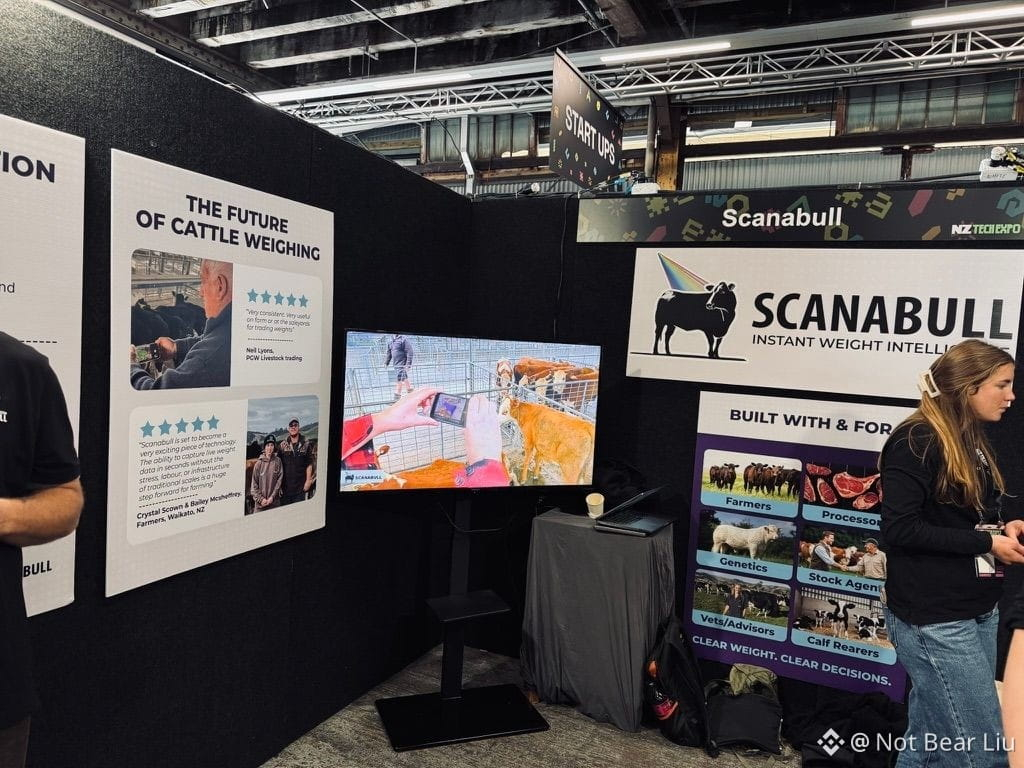
Last week I went to the NZ Tech Expo. The most fun startup team was using AI to weigh cattle—their product is called Scan a Bull. You just scan and it can estimate the weight, with an error of about 2–3 kilograms. The farm owners think it’s completely good enough. Later, when I looked through the exhibitor directory, I found that their CEO’s last name is Bull.
Someone said, “Why not use a weighing scale? It would be more accurate.”
The real situation is: if you raise cattle, you’ll understand. You can drive one cow to the scale—maybe you can even lead it along. But what if it’s 20 cows or 50 cows?
Use a photo-taking app anytime to monitor weight. It saves time, and you can always know what your assets are.
AI that solves real problems is the good kind of AI.
While people online argue every day about which model is the strongest, here someone is seriously researching how much a single cow weighs.
Last week I went to the NZ Tech Expo. The most fun startup team was using AI to weigh cattle—their product is called Scan a Bull. You just scan and it can estimate the weight, with an error of about 2–3 kilograms. The farm owners think it’s completely good enough. Later, when I looked through the exhibitor directory, I found that their CEO’s last name is Bull.
Someone said, “Why not use a weighing scale? It would be more accurate.”
The real situation is: if you raise cattle, you’ll understand. You can drive one cow to the scale—maybe you can even lead it along. But what if it’s 20 cows or 50 cows?
Use a photo-taking app anytime to monitor weight. It saves time, and you can always know what your assets are.
AI that solves real problems is the good kind of AI.
While people online argue every day about which model is the strongest, here someone is seriously researching how much a single cow weighs.