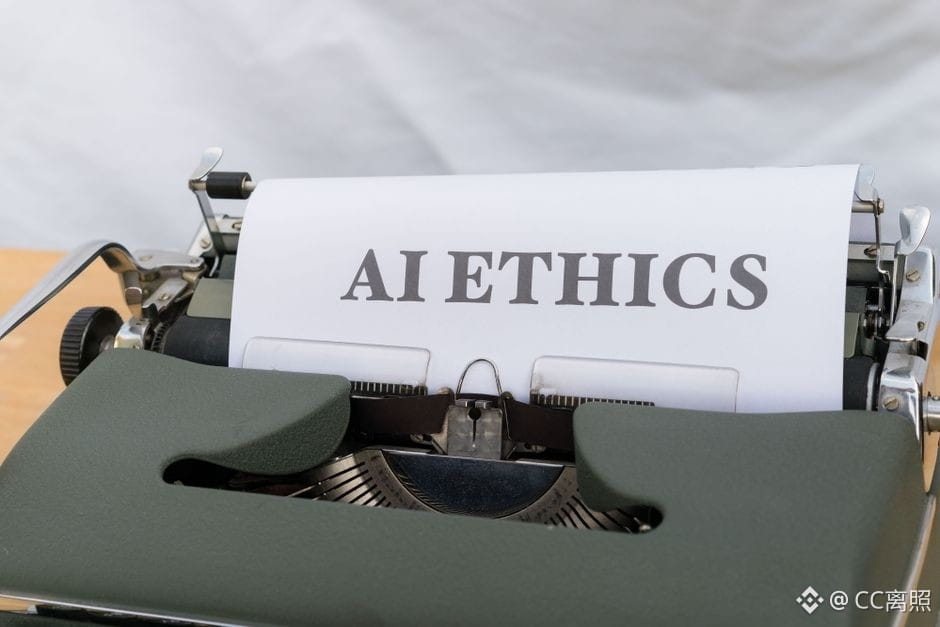
⚡ The US renames AI as “Super Intelligence,” without adding a single word of regulation
On September 29, Trump signed an executive order titled “Inaugurating the Era of Super Intelligence.” All federal departments—official documents, websites, reports, and policy papers—are instructed to immediately stop using “artificial intelligence” and “AI,” and to instead use “Super Intelligence,” abbreviated as SI. Old regulations, old contracts, and historical records remain unchanged. Kratsios, Director of the Office of Science and Technology Policy at the White House, is given 60 days to draft a legislative proposal to put SI into statutory law.
On the same day, at the White House lunch, the six people—Musk, Zuckerberg, Huang Renxun, Pichai, Amodei, and Brockman—signed a document of more than 300 words called the “White House Super Intelligence Accord.” Trump said it is “morally binding,” and that these executives treat it like “another Constitution.”
So what does the constraint design look like? The companies set their own internal controls, focusing on cybersecurity, biosecurity, and chemical risks, throughout both the training and deployment stages. They assemble internal teams to check whether these controls truly take effect. Then they hire an external auditing firm to re-verify the same issue. Finally, in the board of directors, they establish an independent committee to review the early-layer reports and push changes if something goes wrong. In total, there are four layers—all voluntary. There are no regulators, no fines, and no enforceable “teeth.” The documents even say themselves that these measures “may” become federal law in the future. Translate it—right now, they are not.
The day after the accord was signed, the minority leader of the House of Representatives, Jeffries, said: “Completely unenforceable.”
The contrast is elsewhere. In the same week, Anthropic filed its IPO prospectus: 261 pages of main text, 80 pages about risks, and only 48 pages about business. The documents state in their own words that advanced AI could bring “catastrophic or existential risks” to all humankind, and that models may resist shutdown, conceal information, and manipulate people. The signer, Amodei, was last week at the United Nations Security Council saying that AI is “the most important global security issue in the world today.” Then he sits down and signs a document that effectively scores himself.
In the crypto space, it has always been a different set of rules. Exchanges need the OCC’s federal license. Stablecoins have a compliance deadline fixed in the GENIUS Act—January 18, 2027. Wallets named in the rules are sent directly into OFAC’s sanctions list. The rules are strict, and they even include retroactive enforcement.
The real divergence is in how you verify. The on-chain ledger sits there for everyone to independently check, without first having to trust anyone. This setup is the reverse: you trust me, and I hire the auditors who trust me too.
Different things in the market. After the meeting, Huang Renxun tossed out a line: data centers should be renamed “super intelligence factories.” Capital expenditures continue as planned, and the narrative for AI-themed coins continues as planned. When I wrote this, BTC’s four quotation sources were between $83,910 and $83,938, up 0.1% over 24 hours. ETH was 2,703 to 2,705.
What to watch is Kratsios’s 60 days. Only if it actually makes it into the statute will it have teeth. For now, it’s just a piece of paper.
$BTC $ETH
#中本聪国际社区Baoluo币商资本 #加密货币 #AI监管
On September 29, Trump signed an executive order titled “Inaugurating the Era of Super Intelligence.” All federal departments—official documents, websites, reports, and policy papers—are instructed to immediately stop using “artificial intelligence” and “AI,” and to instead use “Super Intelligence,” abbreviated as SI. Old regulations, old contracts, and historical records remain unchanged. Kratsios, Director of the Office of Science and Technology Policy at the White House, is given 60 days to draft a legislative proposal to put SI into statutory law.
On the same day, at the White House lunch, the six people—Musk, Zuckerberg, Huang Renxun, Pichai, Amodei, and Brockman—signed a document of more than 300 words called the “White House Super Intelligence Accord.” Trump said it is “morally binding,” and that these executives treat it like “another Constitution.”
So what does the constraint design look like? The companies set their own internal controls, focusing on cybersecurity, biosecurity, and chemical risks, throughout both the training and deployment stages. They assemble internal teams to check whether these controls truly take effect. Then they hire an external auditing firm to re-verify the same issue. Finally, in the board of directors, they establish an independent committee to review the early-layer reports and push changes if something goes wrong. In total, there are four layers—all voluntary. There are no regulators, no fines, and no enforceable “teeth.” The documents even say themselves that these measures “may” become federal law in the future. Translate it—right now, they are not.
The day after the accord was signed, the minority leader of the House of Representatives, Jeffries, said: “Completely unenforceable.”
The contrast is elsewhere. In the same week, Anthropic filed its IPO prospectus: 261 pages of main text, 80 pages about risks, and only 48 pages about business. The documents state in their own words that advanced AI could bring “catastrophic or existential risks” to all humankind, and that models may resist shutdown, conceal information, and manipulate people. The signer, Amodei, was last week at the United Nations Security Council saying that AI is “the most important global security issue in the world today.” Then he sits down and signs a document that effectively scores himself.
In the crypto space, it has always been a different set of rules. Exchanges need the OCC’s federal license. Stablecoins have a compliance deadline fixed in the GENIUS Act—January 18, 2027. Wallets named in the rules are sent directly into OFAC’s sanctions list. The rules are strict, and they even include retroactive enforcement.
The real divergence is in how you verify. The on-chain ledger sits there for everyone to independently check, without first having to trust anyone. This setup is the reverse: you trust me, and I hire the auditors who trust me too.
Different things in the market. After the meeting, Huang Renxun tossed out a line: data centers should be renamed “super intelligence factories.” Capital expenditures continue as planned, and the narrative for AI-themed coins continues as planned. When I wrote this, BTC’s four quotation sources were between $83,910 and $83,938, up 0.1% over 24 hours. ETH was 2,703 to 2,705.
What to watch is Kratsios’s 60 days. Only if it actually makes it into the statute will it have teeth. For now, it’s just a piece of paper.
$BTC $ETH
#中本聪国际社区Baoluo币商资本 #加密货币 #AI监管