1. First, pull up the old accounts
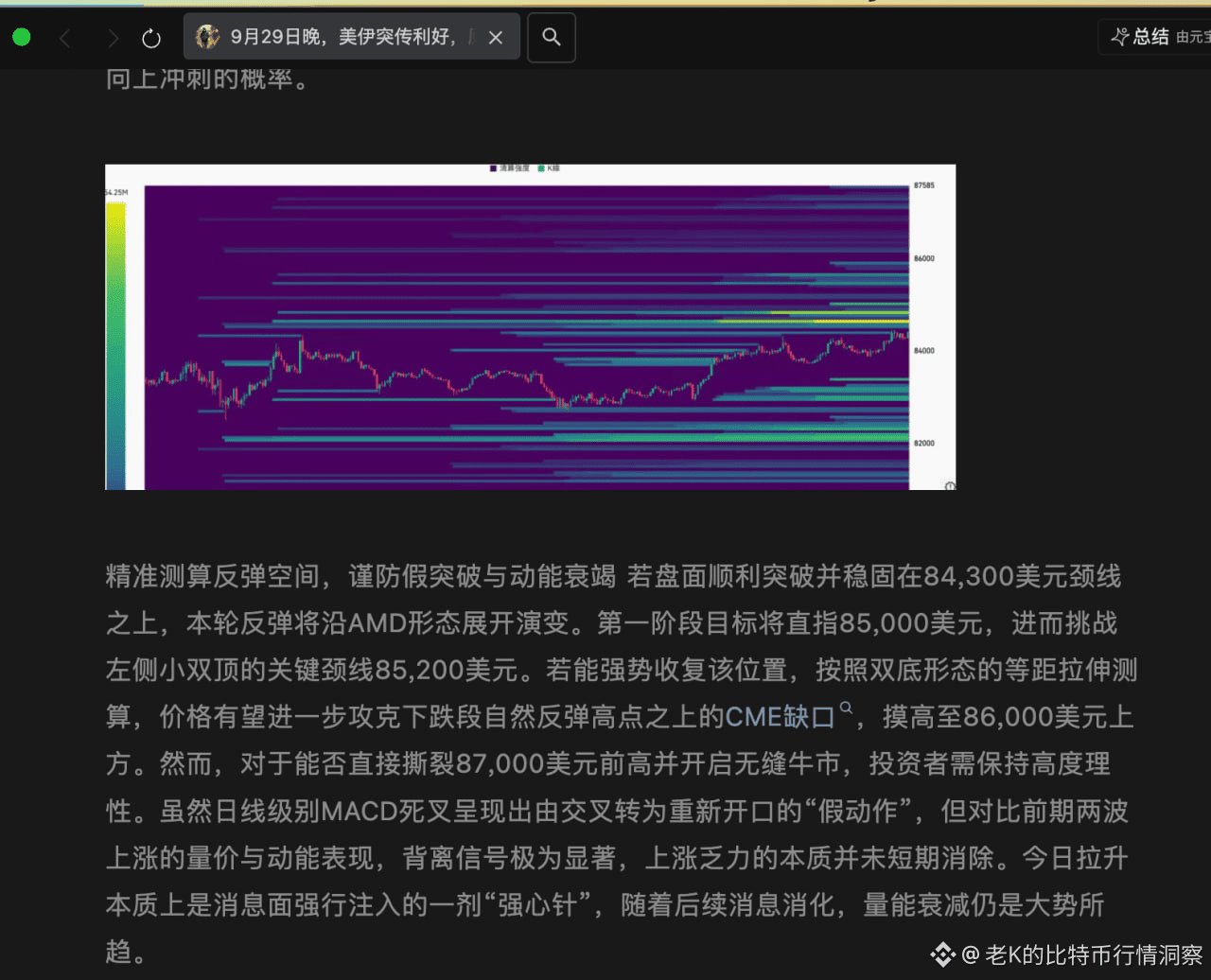
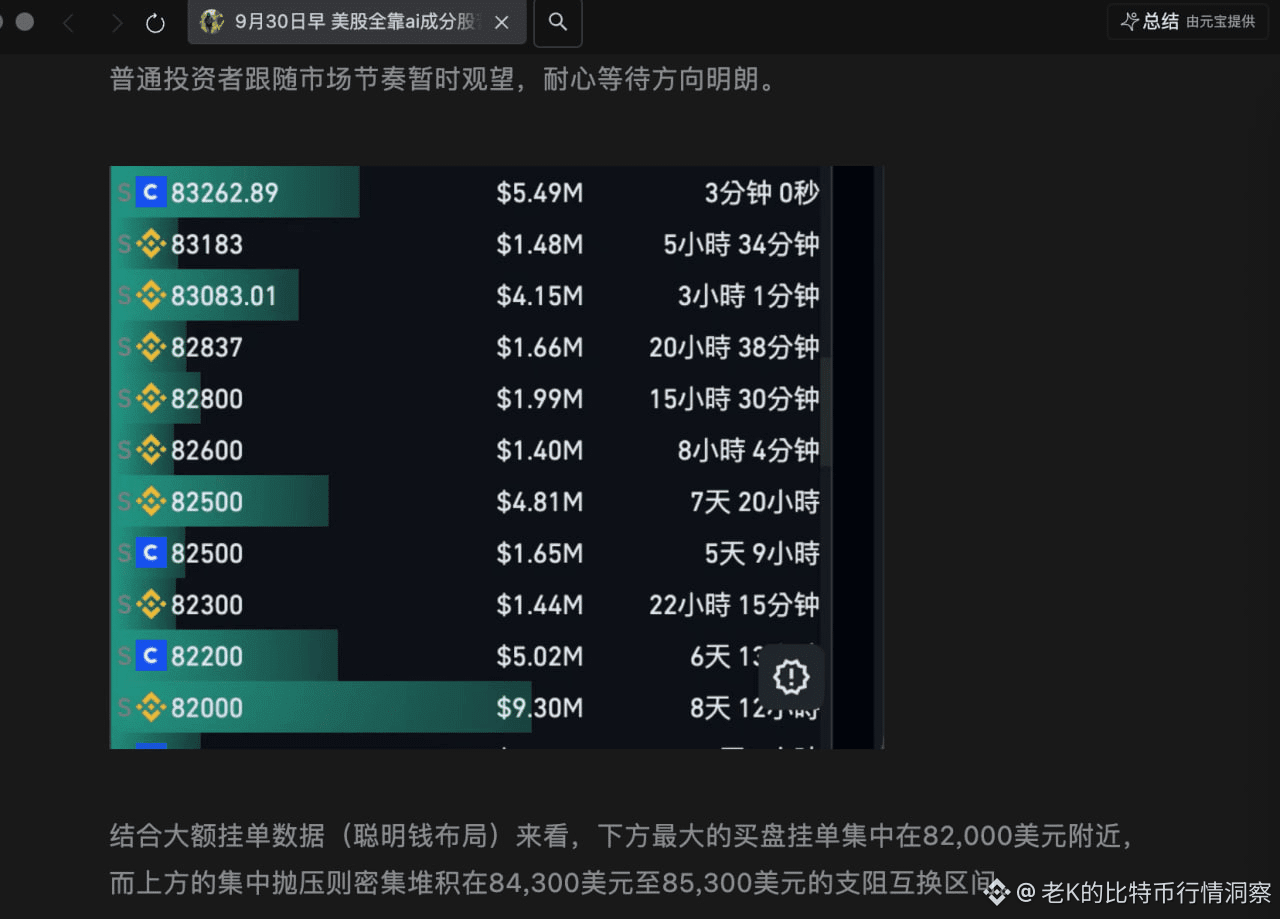
On the evening of September 29, I gave two numbers: first, when the market rebounds, look at 85,000; for a double-top neckline, 85,200. I reminded everyone about a potential false breakout and momentum exhaustion. In the morning of September 30, I went through the pending orders again: between 84,300 and 85,300 there were large sell orders stacked up; the real bid support below was lying at 82,000. Last night, the PCE came out. BTC moved from 84,300 to 85,200—touched about a hundred points up to 85,300—and then a long upper wick was used to smash it back down. These two judgments matched what the chart showed perfectly. So when I saw a large amount of spot sell orders appearing in the order book, I opened a short position with a small size. After the drop confirmed the trend, I found a natural rebound high point. Then at 84,700 I added more. I’ve already taken partial profit; the rest is just holding the position.
2. Why good news doesn’t seem to work
Two rounds of signals: one was the geopolitical positive from September 29, and the other was last night’s PCE. Each one was shorter-lived than the last. That stack of sell orders at 85,300 got cleared again, along with another batch of chase buyers. Right now, for BTC, good news can only buy you a long upper wick—it can’t bring real money.
3. Lock onto two key levels
82,800 is the short-term examination zone: if it holds sideways, then by moving sideways it digests the sell pressure; if it grinds back and wears through the buying support, it will pierce through. If it truly breaks, then the wall of bids at 82,000—the $9.3 million order that’s been hanging for 8 days—is the bulls’ real trump card. Friday’s Non-Farm Payrolls is the last variable.
4. Next, I’ll talk about three things
When to enter a short, when to add if 82,800 breaks, and what to do if it doesn’t grind through—video analysis today. $BTC
On the evening of September 29, I gave two numbers: first, when the market rebounds, look at 85,000; for a double-top neckline, 85,200. I reminded everyone about a potential false breakout and momentum exhaustion. In the morning of September 30, I went through the pending orders again: between 84,300 and 85,300 there were large sell orders stacked up; the real bid support below was lying at 82,000. Last night, the PCE came out. BTC moved from 84,300 to 85,200—touched about a hundred points up to 85,300—and then a long upper wick was used to smash it back down. These two judgments matched what the chart showed perfectly. So when I saw a large amount of spot sell orders appearing in the order book, I opened a short position with a small size. After the drop confirmed the trend, I found a natural rebound high point. Then at 84,700 I added more. I’ve already taken partial profit; the rest is just holding the position.
2. Why good news doesn’t seem to work
Two rounds of signals: one was the geopolitical positive from September 29, and the other was last night’s PCE. Each one was shorter-lived than the last. That stack of sell orders at 85,300 got cleared again, along with another batch of chase buyers. Right now, for BTC, good news can only buy you a long upper wick—it can’t bring real money.
3. Lock onto two key levels
82,800 is the short-term examination zone: if it holds sideways, then by moving sideways it digests the sell pressure; if it grinds back and wears through the buying support, it will pierce through. If it truly breaks, then the wall of bids at 82,000—the $9.3 million order that’s been hanging for 8 days—is the bulls’ real trump card. Friday’s Non-Farm Payrolls is the last variable.
4. Next, I’ll talk about three things
When to enter a short, when to add if 82,800 breaks, and what to do if it doesn’t grind through—video analysis today. $BTC