💬 FED: "There is no need for urgency."
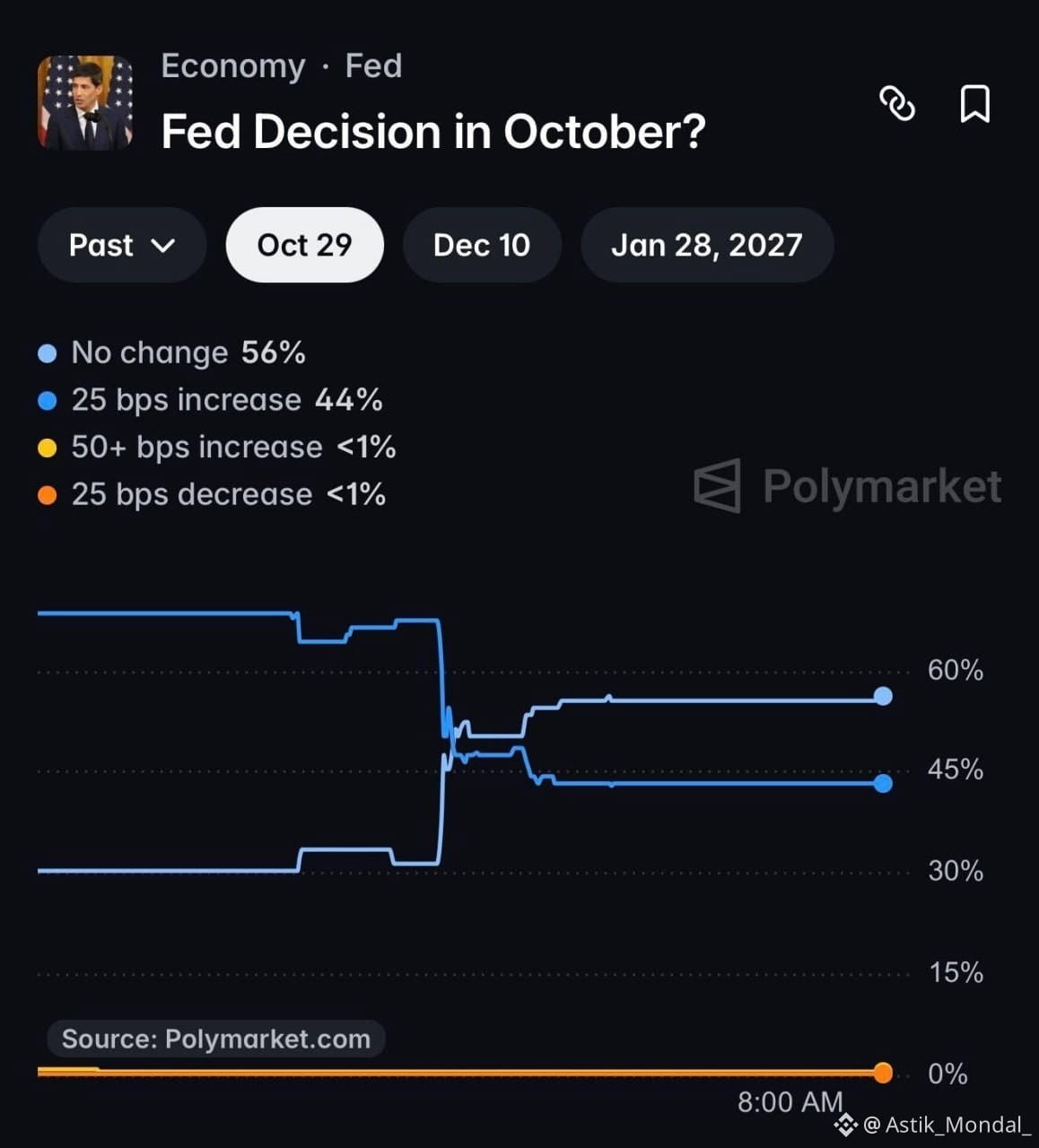
October rate hike odds just got cut nearly in half, from around 70% on Monday to roughly 50% by Tuesday afternoon, essentially a coin flip now, after New York Fed President John Williams spoke in Buffalo.
Williams is the vice chair of the FOMC and a permanent voting member, meaning his words routinely function as the Fed's real policy signal, more than any other regional president's.
His core message: "With the policy action we took at our September meeting, there is no need for urgency, and we have time to gather more information."
He didn't sound dovish across the board though. Inflation at 3.7% is, in his words, "unquestionably too high," even as he noted expectations remain well anchored. He pointed to housing services prices decelerating, and said there's no evidence the labor market itself is adding fresh inflationary pressure. Crucially, he said the Fed hasn't seen price shocks "spilling over into broader and more persistent inflation."
The catch: Williams didn't rule out more tightening. He still expects "one further upward adjustment... late this year," widely read as pointing to the Fed's December 9 meeting rather than October 28.
The market reaction was immediate. The 2-year Treasury yield dropped as odds repriced, while the 30-year, which had just touched its highest level since 2002, eased off intraday highs.
Translation: the Fed isn't done hiking. It's just telling markets not to expect the next one in three weeks.
#Fed #InterestRates #Williams #Economy #Markets
October rate hike odds just got cut nearly in half, from around 70% on Monday to roughly 50% by Tuesday afternoon, essentially a coin flip now, after New York Fed President John Williams spoke in Buffalo.
Williams is the vice chair of the FOMC and a permanent voting member, meaning his words routinely function as the Fed's real policy signal, more than any other regional president's.
His core message: "With the policy action we took at our September meeting, there is no need for urgency, and we have time to gather more information."
He didn't sound dovish across the board though. Inflation at 3.7% is, in his words, "unquestionably too high," even as he noted expectations remain well anchored. He pointed to housing services prices decelerating, and said there's no evidence the labor market itself is adding fresh inflationary pressure. Crucially, he said the Fed hasn't seen price shocks "spilling over into broader and more persistent inflation."
The catch: Williams didn't rule out more tightening. He still expects "one further upward adjustment... late this year," widely read as pointing to the Fed's December 9 meeting rather than October 28.
The market reaction was immediate. The 2-year Treasury yield dropped as odds repriced, while the 30-year, which had just touched its highest level since 2002, eased off intraday highs.
Translation: the Fed isn't done hiking. It's just telling markets not to expect the next one in three weeks.
#Fed #InterestRates #Williams #Economy #Markets