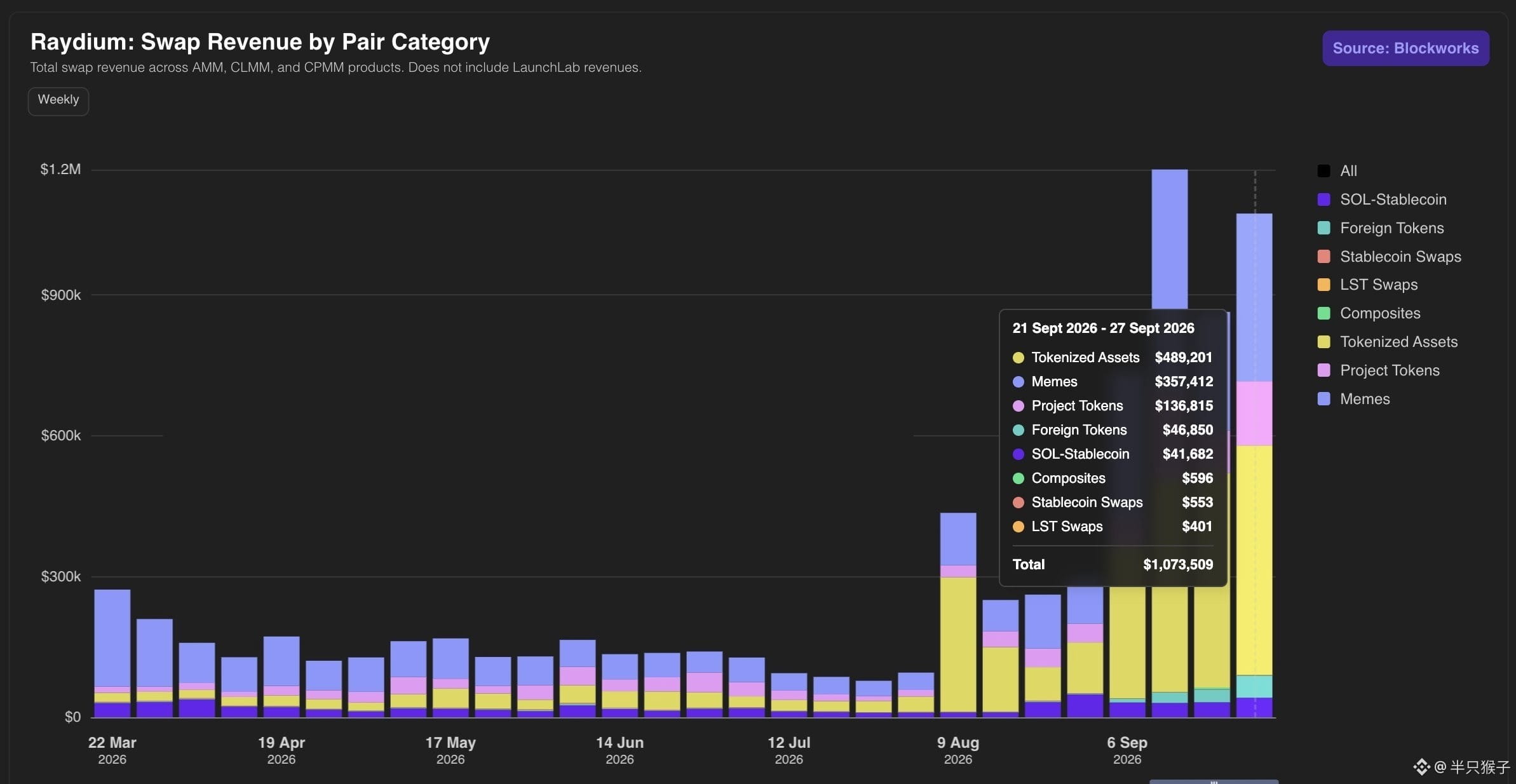
The biggest change in the crypto world is hidden in the revenue structure of $RAY
RAY is one of the largest DEXs in the Solana $SOL ecosystem. Changes in its revenue structure reflect the shift in transaction demand across the entire chain.
Let’s look at some data:
In the second quarter, tokenized assets accounted for 21% of Ray’s trading revenue.
In the third quarter, that figure rose to 46%.
In just one quarter, the share of revenue from tokenized assets jumped from 21% to 46%—more than doubled.
Why does this matter?
Tokenized assets are moving from a "marginal category" to a core source of DEX revenue.
This is not an exception on a single chain. Previously, $UNI ’s data also showed that tokenized stocks contributed 60% of its DEX trading volume. Of course, this is not that other assets are shrinking—it’s that tokenized assets are growing faster.
RAY is one of the largest DEXs in the Solana $SOL ecosystem. Changes in its revenue structure reflect the shift in transaction demand across the entire chain.
Let’s look at some data:
In the second quarter, tokenized assets accounted for 21% of Ray’s trading revenue.
In the third quarter, that figure rose to 46%.
In just one quarter, the share of revenue from tokenized assets jumped from 21% to 46%—more than doubled.
Why does this matter?
Tokenized assets are moving from a "marginal category" to a core source of DEX revenue.
This is not an exception on a single chain. Previously, $UNI ’s data also showed that tokenized stocks contributed 60% of its DEX trading volume. Of course, this is not that other assets are shrinking—it’s that tokenized assets are growing faster.