

长得帅不如跑的快1688
1.1k Posts

长得帅不如跑的快1688
Price is the surface — conviction wins the game. 13y in the trenches. Hard data, sharp calls, no shilling. I read the next move before the crowd. 📊
Open Trade

BNB Holder
Frequent Trader
7.5 Years
640 Following
21.5K+ Followers
6.1K+ Liked
Posts
Portfolio
All
Quotes
Live
长得帅不如跑的快1688
·
--
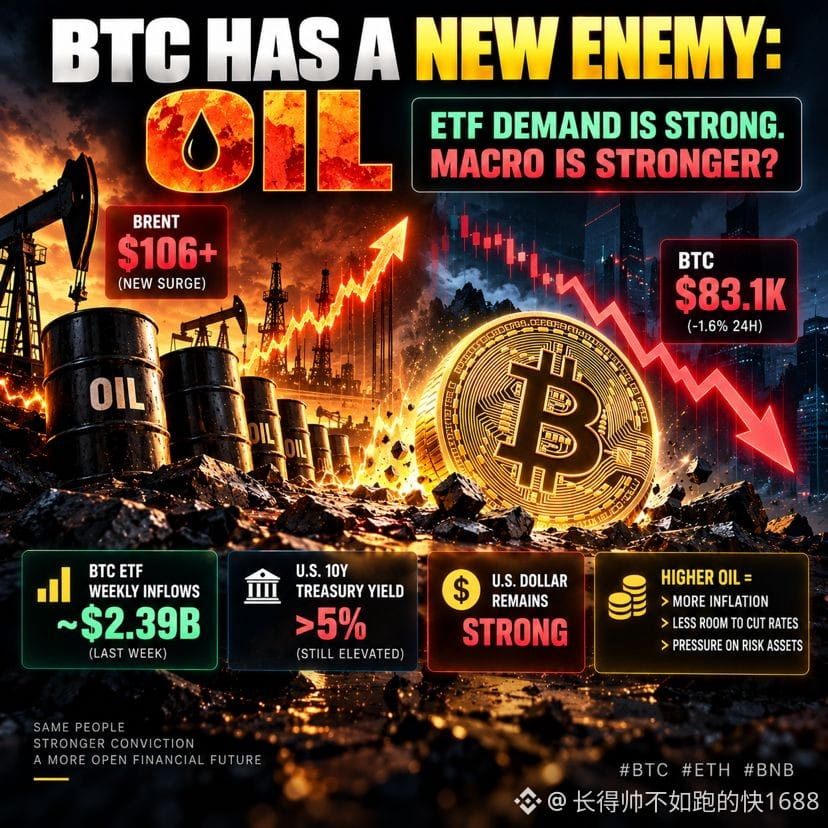
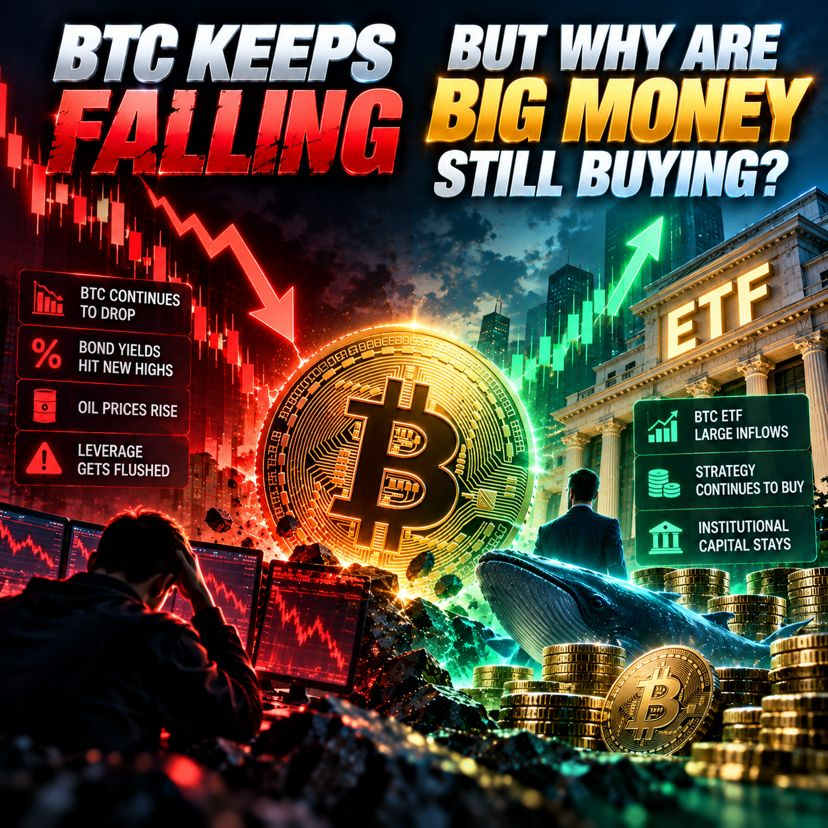
🚨 Bitcoin keeps falling.
But something doesn’t add up:
Price is weakening — big money isn’t leaving.
📉 BTC extends its losing streak
📈 Treasury yields surge
🛢️ Oil adds inflation pressure
💥 Leverage keeps getting flushed
Meanwhile:
💰 Spot BTC ETFs saw massive weekly inflows
🐋 Strategy bought more Bitcoin
🏦 Institutional capital remains active
That’s the real battle.
If institutions are wrong, the correction may have further to go.
But if institutional demand survives this macro pressure…
Maybe leverage is leaving — not conviction.
So forget today’s candle for a second.
The bigger question is:
Who’s still buying while everyone else is getting nervous?
🟢 INSTITUTIONS ARE ACCUMULATING
🔴 THE REAL DROP HASN’T STARTED
#BTC #ETH #BNB
But something doesn’t add up:
Price is weakening — big money isn’t leaving.
📉 BTC extends its losing streak
📈 Treasury yields surge
🛢️ Oil adds inflation pressure
💥 Leverage keeps getting flushed
Meanwhile:
💰 Spot BTC ETFs saw massive weekly inflows
🐋 Strategy bought more Bitcoin
🏦 Institutional capital remains active
That’s the real battle.
If institutions are wrong, the correction may have further to go.
But if institutional demand survives this macro pressure…
Maybe leverage is leaving — not conviction.
So forget today’s candle for a second.
The bigger question is:
Who’s still buying while everyone else is getting nervous?
🟢 INSTITUTIONS ARE ACCUMULATING
🔴 THE REAL DROP HASN’T STARTED
#BTC #ETH #BNB

长得帅不如跑的快1688
·
--
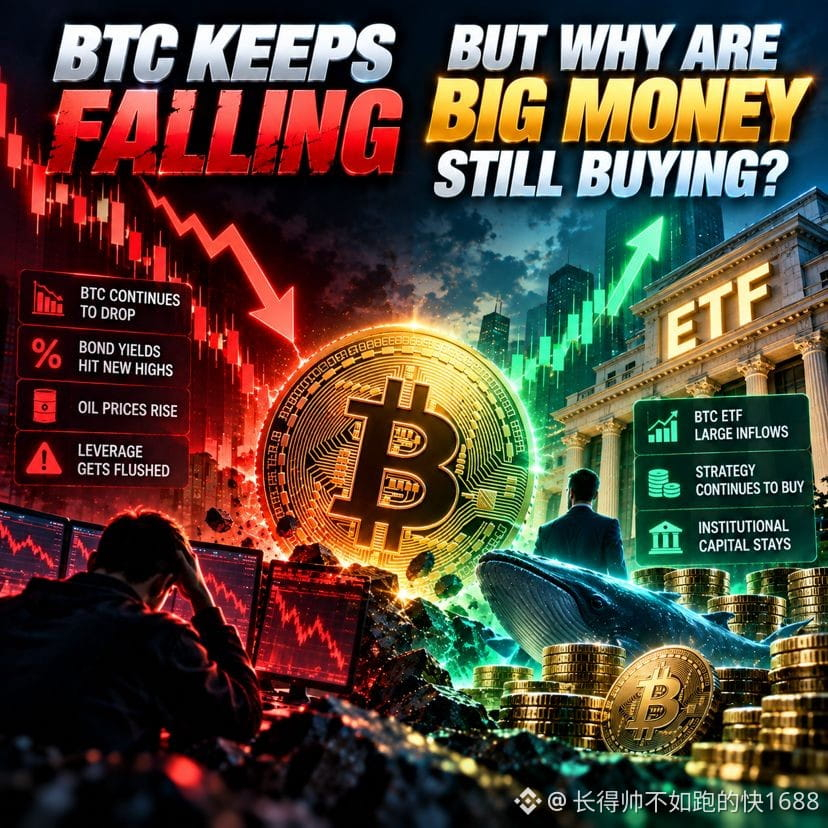
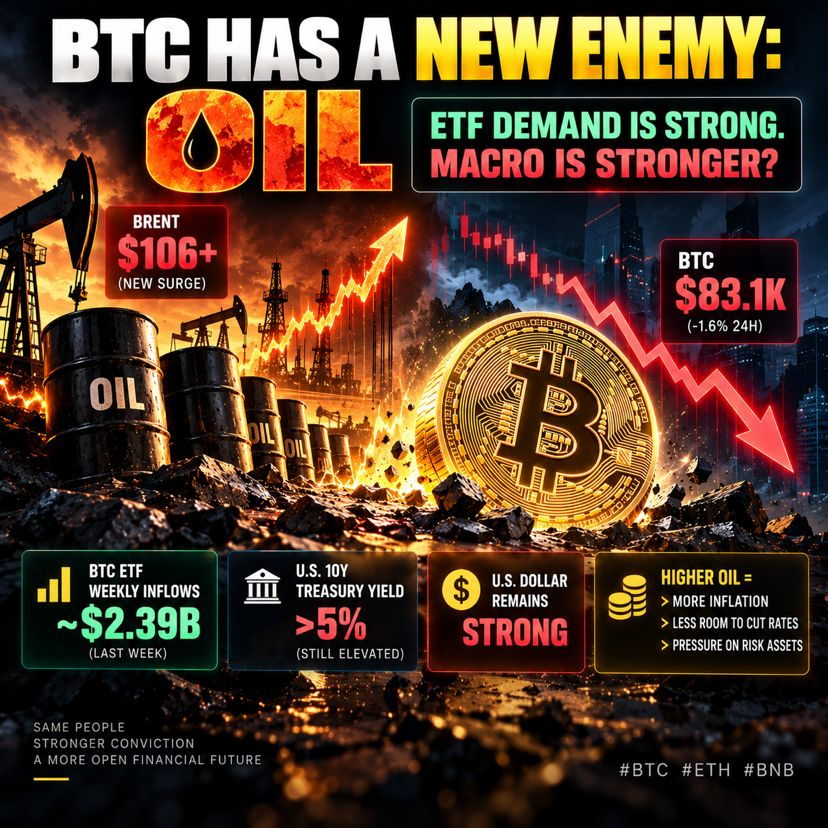
🚨 BITCOIN MAY HAVE A NEW ENEMY:
OIL.
Institutions were still buying last week.
💰 BTC ETF weekly inflows → ~$2.39B
🏦 Sept. 25 → ~$134.5M inflow
But now:
₿ BTC → ~$83.1K
🛢️ Brent → above $106
📈 Treasury yields → still above 5%
💵 Dollar → remains strong
That creates a fascinating conflict:
ETF DEMAND IS STRONG.
BUT MACRO MAY BE STRONGER.
Higher oil means:
🔥 More inflation pressure
🏦 Less room for rate cuts
📈 Higher-for-longer rates
₿ More pressure on risk assets
So the real question is no longer:
“Are ETFs still buying Bitcoin?”
It’s:
CAN ETF DEMAND OUTRUN MACRO PRESSURE?
If oil keeps climbing,
Bitcoin’s biggest opponent may not be sellers.
It may be:
INFLATION.
Now I’m watching:
🛢️ Brent $106+
📈 U.S. Treasury yields
💵 The dollar
💰 BTC ETF flows
₿ BTC $82K–$83K
👇 Your take?
ETF DEMAND WINS 🟢
or
MACRO PRESSURE WINS 🔴?
#BTC #ETH #BNB
OIL.
Institutions were still buying last week.
💰 BTC ETF weekly inflows → ~$2.39B
🏦 Sept. 25 → ~$134.5M inflow
But now:
₿ BTC → ~$83.1K
🛢️ Brent → above $106
📈 Treasury yields → still above 5%
💵 Dollar → remains strong
That creates a fascinating conflict:
ETF DEMAND IS STRONG.
BUT MACRO MAY BE STRONGER.
Higher oil means:
🔥 More inflation pressure
🏦 Less room for rate cuts
📈 Higher-for-longer rates
₿ More pressure on risk assets
So the real question is no longer:
“Are ETFs still buying Bitcoin?”
It’s:
CAN ETF DEMAND OUTRUN MACRO PRESSURE?
If oil keeps climbing,
Bitcoin’s biggest opponent may not be sellers.
It may be:
INFLATION.
Now I’m watching:
🛢️ Brent $106+
📈 U.S. Treasury yields
💵 The dollar
💰 BTC ETF flows
₿ BTC $82K–$83K
👇 Your take?
ETF DEMAND WINS 🟢
or
MACRO PRESSURE WINS 🔴?
#BTC #ETH #BNB

灼见Cryptosighted
·
--
🚨 Anthropic’s IPO filing—possibly the craziest document in the AI industry this year.
Anthropic, the company behind Claude, saw 2025 revenue of about $4.6 billion, up roughly 12-fold.
But what really sets the market on fire is another number:
The IPO valuation could exceed $2 trillion.
Meanwhile:
🚀 Revenue is growing about 12x year over year
💸 Operating losses still exceed $8 billion
🧠 Compute power and infrastructure spending keep skyrocketing
☁️ The scale of future cloud and infrastructure commitments is enormous
🏦 But Wall Street may still hand out a $2 trillion-level valuation
This means the capital markets aren’t really betting on how much Anthropic makes today.
They’re betting on—
Whether AI will ultimately become core infrastructure, just like the internet and electricity.
If Claude and AI Agents truly enter enterprise workflows, a $2 trillion deal could be trading the productivity revolution of the next decade.
But if AI revenue growth can’t keep up with compute costs, this could also become one of the most expensive growth stories in history.
So the real question isn’t:
“Is Anthropic too expensive?”
It’s:
Does AI really deserve to be a new $2 trillion giant?
🟢 AI new era / 🔴 valuation bubble
#BTC #ETH #BNB
Anthropic, the company behind Claude, saw 2025 revenue of about $4.6 billion, up roughly 12-fold.
But what really sets the market on fire is another number:
The IPO valuation could exceed $2 trillion.
Meanwhile:
🚀 Revenue is growing about 12x year over year
💸 Operating losses still exceed $8 billion
🧠 Compute power and infrastructure spending keep skyrocketing
☁️ The scale of future cloud and infrastructure commitments is enormous
🏦 But Wall Street may still hand out a $2 trillion-level valuation
This means the capital markets aren’t really betting on how much Anthropic makes today.
They’re betting on—
Whether AI will ultimately become core infrastructure, just like the internet and electricity.
If Claude and AI Agents truly enter enterprise workflows, a $2 trillion deal could be trading the productivity revolution of the next decade.
But if AI revenue growth can’t keep up with compute costs, this could also become one of the most expensive growth stories in history.
So the real question isn’t:
“Is Anthropic too expensive?”
It’s:
Does AI really deserve to be a new $2 trillion giant?
🟢 AI new era / 🔴 valuation bubble
#BTC #ETH #BNB

长得帅不如跑的快1688
·
--
🚨 BITCOIN MAY HAVE A NEW ENEMY:
OIL.
Institutions were still buying last week.
💰 BTC ETF weekly inflows → ~$2.39B
🏦 Sept. 25 → ~$134.5M inflow
But now:
₿ BTC → ~$83.1K
🛢️ Brent → above $106
📈 Treasury yields → still above 5%
💵 Dollar → remains strong
That creates a fascinating conflict:
ETF DEMAND IS STRONG.
BUT MACRO MAY BE STRONGER.
Higher oil means:
🔥 More inflation pressure
🏦 Less room for rate cuts
📈 Higher-for-longer rates
₿ More pressure on risk assets
So the real question is no longer:
“Are ETFs still buying Bitcoin?”
It’s:
CAN ETF DEMAND OUTRUN MACRO PRESSURE?
If oil keeps climbing,
Bitcoin’s biggest opponent may not be sellers.
It may be:
INFLATION.
Now I’m watching:
🛢️ Brent $106+
📈 U.S. Treasury yields
💵 The dollar
💰 BTC ETF flows
₿ BTC $82K–$83K
👇 Your take?
ETF DEMAND WINS 🟢
or
MACRO PRESSURE WINS 🔴?
#BTC #ETH #BNB
OIL.
Institutions were still buying last week.
💰 BTC ETF weekly inflows → ~$2.39B
🏦 Sept. 25 → ~$134.5M inflow
But now:
₿ BTC → ~$83.1K
🛢️ Brent → above $106
📈 Treasury yields → still above 5%
💵 Dollar → remains strong
That creates a fascinating conflict:
ETF DEMAND IS STRONG.
BUT MACRO MAY BE STRONGER.
Higher oil means:
🔥 More inflation pressure
🏦 Less room for rate cuts
📈 Higher-for-longer rates
₿ More pressure on risk assets
So the real question is no longer:
“Are ETFs still buying Bitcoin?”
It’s:
CAN ETF DEMAND OUTRUN MACRO PRESSURE?
If oil keeps climbing,
Bitcoin’s biggest opponent may not be sellers.
It may be:
INFLATION.
Now I’m watching:
🛢️ Brent $106+
📈 U.S. Treasury yields
💵 The dollar
💰 BTC ETF flows
₿ BTC $82K–$83K
👇 Your take?
ETF DEMAND WINS 🟢
or
MACRO PRESSURE WINS 🔴?
#BTC #ETH #BNB
长得帅不如跑的快1688
·
--
🚨 Bitcoin keeps falling.
But something doesn’t add up:
Price is weakening — big money isn’t leaving.
📉 BTC extends its losing streak
📈 Treasury yields surge
🛢️ Oil adds inflation pressure
💥 Leverage keeps getting flushed
Meanwhile:
💰 Spot BTC ETFs saw massive weekly inflows
🐋 Strategy bought more Bitcoin
🏦 Institutional capital remains active
That’s the real battle.
If institutions are wrong, the correction may have further to go.
But if institutional demand survives this macro pressure…
Maybe leverage is leaving — not conviction.
So forget today’s candle for a second.
The bigger question is:
Who’s still buying while everyone else is getting nervous?
🟢 INSTITUTIONS ARE ACCUMULATING
🔴 THE REAL DROP HASN’T STARTED
#BTC #ETH #BNB
But something doesn’t add up:
Price is weakening — big money isn’t leaving.
📉 BTC extends its losing streak
📈 Treasury yields surge
🛢️ Oil adds inflation pressure
💥 Leverage keeps getting flushed
Meanwhile:
💰 Spot BTC ETFs saw massive weekly inflows
🐋 Strategy bought more Bitcoin
🏦 Institutional capital remains active
That’s the real battle.
If institutions are wrong, the correction may have further to go.
But if institutional demand survives this macro pressure…
Maybe leverage is leaving — not conviction.
So forget today’s candle for a second.
The bigger question is:
Who’s still buying while everyone else is getting nervous?
🟢 INSTITUTIONS ARE ACCUMULATING
🔴 THE REAL DROP HASN’T STARTED
#BTC #ETH #BNB
长得帅不如跑的快1688
·
--
🚨 BITCOIN MAY HAVE A NEW ENEMY:
OIL.
Institutions were still buying last week.
💰 BTC ETF weekly inflows → ~$2.39B
🏦 Sept. 25 → ~$134.5M inflow
But now:
₿ BTC → ~$83.1K
🛢️ Brent → above $106
📈 Treasury yields → still above 5%
💵 Dollar → remains strong
That creates a fascinating conflict:
ETF DEMAND IS STRONG.
BUT MACRO MAY BE STRONGER.
Higher oil means:
🔥 More inflation pressure
🏦 Less room for rate cuts
📈 Higher-for-longer rates
₿ More pressure on risk assets
So the real question is no longer:
“Are ETFs still buying Bitcoin?”
It’s:
CAN ETF DEMAND OUTRUN MACRO PRESSURE?
If oil keeps climbing,
Bitcoin’s biggest opponent may not be sellers.
It may be:
INFLATION.
Now I’m watching:
🛢️ Brent $106+
📈 U.S. Treasury yields
💵 The dollar
💰 BTC ETF flows
₿ BTC $82K–$83K
👇 Your take?
ETF DEMAND WINS 🟢
or
MACRO PRESSURE WINS 🔴?
#BTC #ETH #BNB
OIL.
Institutions were still buying last week.
💰 BTC ETF weekly inflows → ~$2.39B
🏦 Sept. 25 → ~$134.5M inflow
But now:
₿ BTC → ~$83.1K
🛢️ Brent → above $106
📈 Treasury yields → still above 5%
💵 Dollar → remains strong
That creates a fascinating conflict:
ETF DEMAND IS STRONG.
BUT MACRO MAY BE STRONGER.
Higher oil means:
🔥 More inflation pressure
🏦 Less room for rate cuts
📈 Higher-for-longer rates
₿ More pressure on risk assets
So the real question is no longer:
“Are ETFs still buying Bitcoin?”
It’s:
CAN ETF DEMAND OUTRUN MACRO PRESSURE?
If oil keeps climbing,
Bitcoin’s biggest opponent may not be sellers.
It may be:
INFLATION.
Now I’m watching:
🛢️ Brent $106+
📈 U.S. Treasury yields
💵 The dollar
💰 BTC ETF flows
₿ BTC $82K–$83K
👇 Your take?
ETF DEMAND WINS 🟢
or
MACRO PRESSURE WINS 🔴?
#BTC #ETH #BNB


赛博新闻cyber news
·
--
【Cyber Bionic】 Goldman Sachs will invest $100 billion of government bond fund into the crypto institutional market
#Goldsachs100billionToLynq
Goldman’s FTIXX is the first external fund provided on Lynq, offering institutional digital asset companies a new way to access traditional government bond funds. Unlike BlackRock’s BUIDL and Franklin Templeton’s BENJI, FTIXX does not tokenize assets; instead, Lynq becomes a new distribution channel for existing funds. Lynq’s customers can place funds into FTIXX during trading intervals and earn yield until they need to move the funds elsewhere.$AVAX 👍👍👍👍👍😊😊😊😊😊😀😀😀😀
#Goldsachs100billionToLynq
Goldman’s FTIXX is the first external fund provided on Lynq, offering institutional digital asset companies a new way to access traditional government bond funds. Unlike BlackRock’s BUIDL and Franklin Templeton’s BENJI, FTIXX does not tokenize assets; instead, Lynq becomes a new distribution channel for existing funds. Lynq’s customers can place funds into FTIXX during trading intervals and earn yield until they need to move the funds elsewhere.$AVAX 👍👍👍👍👍😊😊😊😊😊😀😀😀😀

易琳Ten
·
--
BullishThe market shifts in an instant—messages and news keep coming one after another, and capital battles are becoming even more intense.
When the market is hot, be more alert to FOMO emotions. Don’t chase at the top blindly. Don’t go all-in with oversized positions. And don’t let leverage magnify greed.
The market is always full of opportunities. What’s truly scarce is capital, discipline, and patience.
Understand the logic of capital, manage your own position size, and wait for your trading opportunities.
Don’t go crazy because of a sudden surge, and don’t panic because of a steep drop. Protect your principal, steady your mindset, wait patiently, and align your actions with your knowledge.
May we stay clear-headed amid volatility, move forward steadily in the competition, with a consistently green account and long-term wins through compounding! 💰📈
When the market is hot, be more alert to FOMO emotions. Don’t chase at the top blindly. Don’t go all-in with oversized positions. And don’t let leverage magnify greed.
The market is always full of opportunities. What’s truly scarce is capital, discipline, and patience.
Understand the logic of capital, manage your own position size, and wait for your trading opportunities.
Don’t go crazy because of a sudden surge, and don’t panic because of a steep drop. Protect your principal, steady your mindset, wait patiently, and align your actions with your knowledge.
May we stay clear-headed amid volatility, move forward steadily in the competition, with a consistently green account and long-term wins through compounding! 💰📈

长得帅不如跑的快1688
·
--
🚨 Bitcoin keeps falling.
But something doesn’t add up:
Price is weakening — big money isn’t leaving.
📉 BTC extends its losing streak
📈 Treasury yields surge
🛢️ Oil adds inflation pressure
💥 Leverage keeps getting flushed
Meanwhile:
💰 Spot BTC ETFs saw massive weekly inflows
🐋 Strategy bought more Bitcoin
🏦 Institutional capital remains active
That’s the real battle.
If institutions are wrong, the correction may have further to go.
But if institutional demand survives this macro pressure…
Maybe leverage is leaving — not conviction.
So forget today’s candle for a second.
The bigger question is:
Who’s still buying while everyone else is getting nervous?
🟢 INSTITUTIONS ARE ACCUMULATING
🔴 THE REAL DROP HASN’T STARTED
#BTC #ETH #BNB
But something doesn’t add up:
Price is weakening — big money isn’t leaving.
📉 BTC extends its losing streak
📈 Treasury yields surge
🛢️ Oil adds inflation pressure
💥 Leverage keeps getting flushed
Meanwhile:
💰 Spot BTC ETFs saw massive weekly inflows
🐋 Strategy bought more Bitcoin
🏦 Institutional capital remains active
That’s the real battle.
If institutions are wrong, the correction may have further to go.
But if institutional demand survives this macro pressure…
Maybe leverage is leaving — not conviction.
So forget today’s candle for a second.
The bigger question is:
Who’s still buying while everyone else is getting nervous?
🟢 INSTITUTIONS ARE ACCUMULATING
🔴 THE REAL DROP HASN’T STARTED
#BTC #ETH #BNB

静静Amily
·
--
[Ended] 🎙️ 👍 Bitcoin (BTC) can still keep going—get in now! Otherwise Bitcoin will be bought up by MSTR!
5.4k listens

长得帅不如跑的快1688
·
--
🚨 Bitcoin keeps falling.
But something doesn’t add up:
Price is weakening — big money isn’t leaving.
📉 BTC extends its losing streak
📈 Treasury yields surge
🛢️ Oil adds inflation pressure
💥 Leverage keeps getting flushed
Meanwhile:
💰 Spot BTC ETFs saw massive weekly inflows
🐋 Strategy bought more Bitcoin
🏦 Institutional capital remains active
That’s the real battle.
If institutions are wrong, the correction may have further to go.
But if institutional demand survives this macro pressure…
Maybe leverage is leaving — not conviction.
So forget today’s candle for a second.
The bigger question is:
Who’s still buying while everyone else is getting nervous?
🟢 INSTITUTIONS ARE ACCUMULATING
🔴 THE REAL DROP HASN’T STARTED
#BTC #ETH #BNB
But something doesn’t add up:
Price is weakening — big money isn’t leaving.
📉 BTC extends its losing streak
📈 Treasury yields surge
🛢️ Oil adds inflation pressure
💥 Leverage keeps getting flushed
Meanwhile:
💰 Spot BTC ETFs saw massive weekly inflows
🐋 Strategy bought more Bitcoin
🏦 Institutional capital remains active
That’s the real battle.
If institutions are wrong, the correction may have further to go.
But if institutional demand survives this macro pressure…
Maybe leverage is leaving — not conviction.
So forget today’s candle for a second.
The bigger question is:
Who’s still buying while everyone else is getting nervous?
🟢 INSTITUTIONS ARE ACCUMULATING
🔴 THE REAL DROP HASN’T STARTED
#BTC #ETH #BNB
灼见Cryptosighted
·
--
🚨 BTC is seeing a continuous pullback, but there’s one signal that may be more important than price:
Leverage is cooling off fast.
Over the past week, BTC open interest has fallen noticeably, as a large number of highly leveraged positions are being flushed out by the market.
What does that mean?
📉 Price pullback, short-term sentiment cools down
💥 Long leverage continues to get cleared
🧹 Crowded positions begin to shrink
🔄 BTC’s market share dips, while capital is still looking for other opportunities
So this drop can be interpreted in two completely different ways:
🔴 The trend is weakening
🟢 The market is actively deleveraging to clear the way for the next move
The real key isn’t how much BTC drops today.
It’s this—after leverage comes down, will spot buying step back in?
If the price holds and open interest is no longer crazily piling up, this structure could actually be healthier than a “high-leverage blow-off.”
Do you think right now is:
🟢 A healthy shakeout / 🔴 A shift to a weakening trend?
#BTC #ETH #BNB
Leverage is cooling off fast.
Over the past week, BTC open interest has fallen noticeably, as a large number of highly leveraged positions are being flushed out by the market.
What does that mean?
📉 Price pullback, short-term sentiment cools down
💥 Long leverage continues to get cleared
🧹 Crowded positions begin to shrink
🔄 BTC’s market share dips, while capital is still looking for other opportunities
So this drop can be interpreted in two completely different ways:
🔴 The trend is weakening
🟢 The market is actively deleveraging to clear the way for the next move
The real key isn’t how much BTC drops today.
It’s this—after leverage comes down, will spot buying step back in?
If the price holds and open interest is no longer crazily piling up, this structure could actually be healthier than a “high-leverage blow-off.”
Do you think right now is:
🟢 A healthy shakeout / 🔴 A shift to a weakening trend?
#BTC #ETH #BNB


静姐168
·
--
Dawn breaks and we march unstoppable!
No need to borrow light—you are the radiance itself.
Dawn breaks, and we march unstoppable.
No need to borrow light — you are the radiance itself.
No need to borrow light—you are the radiance itself.
Dawn breaks, and we march unstoppable.
No need to borrow light — you are the radiance itself.


白鲨观点马来西亚
·
--
Today I chatted with an old coin friend. He said he’s been a bit lost lately.
If it’s up, I’m happy—but I still don’t feel secure, afraid it’ll drop back down again;
if it’s down, I feel panicky, wondering whether the bull market really has ended.
Up and down like this—sure, I haven’t earned less money, but I haven’t slept well either. I asked him: Why did you buy Bitcoin in the first place?
He thought for a long time and said: At first I found it interesting—decentralized, resistant to inflation, and maybe in the future it could replace fiat currency. After I bought it, though, I started watching the charts every day. When it went up I wanted to sell, when it went down I wanted to cut losses. Slowly, I forgot why I bought it in the first place.
Isn’t it like this for a lot of people?
When they come in, they all have belief—they think they’re value investors who will hold for three or five years.
Then once they’re in, if they don’t check the market for a day, they feel uncomfortable. When it rises they want to lock in profits, and when it dips they want to cut and run.
The most interesting thing about trading is right here:
You think you’re earning “knowledge money,”
but in the end you lose all “emotional money.”
You think you’re fighting the market,
but actually you’ve been wrestling with yourself the whole time.
So when you’re doing okay, ask yourself more often:
Why did I buy this coin in the first place?
How long do I plan to hold it?
What’s my goal?
Once you’ve thought it through,
you won’t be dragged around by daily ups and downs.
#BinanceSquare #BTC #交易心态 #investment mindset
If it’s up, I’m happy—but I still don’t feel secure, afraid it’ll drop back down again;
if it’s down, I feel panicky, wondering whether the bull market really has ended.
Up and down like this—sure, I haven’t earned less money, but I haven’t slept well either. I asked him: Why did you buy Bitcoin in the first place?
He thought for a long time and said: At first I found it interesting—decentralized, resistant to inflation, and maybe in the future it could replace fiat currency. After I bought it, though, I started watching the charts every day. When it went up I wanted to sell, when it went down I wanted to cut losses. Slowly, I forgot why I bought it in the first place.
Isn’t it like this for a lot of people?
When they come in, they all have belief—they think they’re value investors who will hold for three or five years.
Then once they’re in, if they don’t check the market for a day, they feel uncomfortable. When it rises they want to lock in profits, and when it dips they want to cut and run.
The most interesting thing about trading is right here:
You think you’re earning “knowledge money,”
but in the end you lose all “emotional money.”
You think you’re fighting the market,
but actually you’ve been wrestling with yourself the whole time.
So when you’re doing okay, ask yourself more often:
Why did I buy this coin in the first place?
How long do I plan to hold it?
What’s my goal?
Once you’ve thought it through,
you won’t be dragged around by daily ups and downs.
#BinanceSquare #BTC #交易心态 #investment mindset


Deepak_XBT
·
--
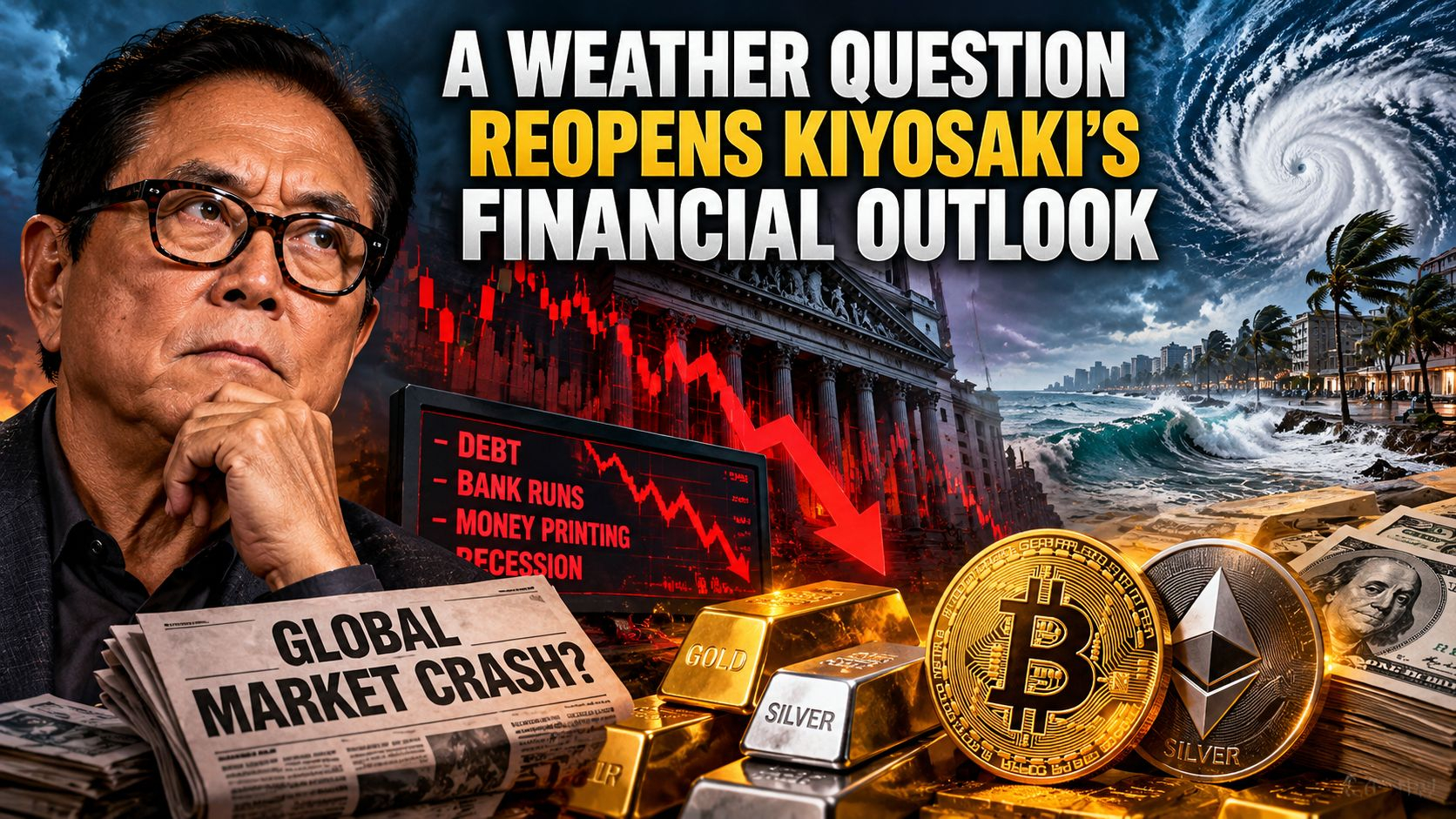
Robert Kiyosaki’s latest post got attention for an unusual reason: he connected America’s bad weather with a question about the country’s financial future.
But weather isn’t evidence of a financial crisis.
His broader warning is much more specific. Kiyosaki has argued that debt, market speculation, war and other pressures could trigger a major crash, followed by panic, bank runs and renewed money printing.
He has also predicted extreme future targets for Bitcoin, Ethereum, gold and silver—but those targets depend on his hypothetical crash scenario actually unfolding.
The interesting part isn’t whether one prediction sounds dramatic. It’s whether the sequence he describes actually happens: market stress → financial pressure → policy response → asset repricing.
#Binance
But weather isn’t evidence of a financial crisis.
His broader warning is much more specific. Kiyosaki has argued that debt, market speculation, war and other pressures could trigger a major crash, followed by panic, bank runs and renewed money printing.
He has also predicted extreme future targets for Bitcoin, Ethereum, gold and silver—but those targets depend on his hypothetical crash scenario actually unfolding.
The interesting part isn’t whether one prediction sounds dramatic. It’s whether the sequence he describes actually happens: market stress → financial pressure → policy response → asset repricing.
#Binance

生蚝哥Oyster
·
--
[Breaking News] Key Crypto Market Developments on September 28
Bitcoin has fallen back to the $83,000–$84,000 range, with both institutional buying and security incidents unfolding at the same time.
Key takeaways:
• US spot Bitcoin ETFs saw net inflows of approximately $2.4 billion last week; net inflows turned positive in 2026, reversing the prior net outflow of about $5.8 billion
• Strategy (formerly MicroStrategy) increased its holdings again this week, buying 1,665 BTC for about $143 million; total holdings rose to 847,600 BTC
• Bitget confirmed a hot-wallet theft incident involving approximately $387.5 million; withdrawals have been restored in phases. The attacker has moved nearly 5,000 BTC to begin laundering
• Overall market pressure: rising US Treasury yields + uncertainty around the Middle East situation. After pulling back from recent highs, BTC has entered a consolidation phase
One-sentence summary
Institutional capital is returning alongside security risks—near-term volatility is rising, but medium- to long-term demand signals remain intact.
Data as of September 28, 2026. The market involves risk; make independent decisions.
Bitcoin has fallen back to the $83,000–$84,000 range, with both institutional buying and security incidents unfolding at the same time.
Key takeaways:
• US spot Bitcoin ETFs saw net inflows of approximately $2.4 billion last week; net inflows turned positive in 2026, reversing the prior net outflow of about $5.8 billion
• Strategy (formerly MicroStrategy) increased its holdings again this week, buying 1,665 BTC for about $143 million; total holdings rose to 847,600 BTC
• Bitget confirmed a hot-wallet theft incident involving approximately $387.5 million; withdrawals have been restored in phases. The attacker has moved nearly 5,000 BTC to begin laundering
• Overall market pressure: rising US Treasury yields + uncertainty around the Middle East situation. After pulling back from recent highs, BTC has entered a consolidation phase
One-sentence summary
Institutional capital is returning alongside security risks—near-term volatility is rising, but medium- to long-term demand signals remain intact.
Data as of September 28, 2026. The market involves risk; make independent decisions.

Quoted content has been removed
Log in to explore more content