
$QNT QNT isn’t moving on a normal crypto narrative anymore. That’s the part I’m watching.
The interesting thing isn’t simply that Quant is getting attention. It’s where the infrastructure is showing up.
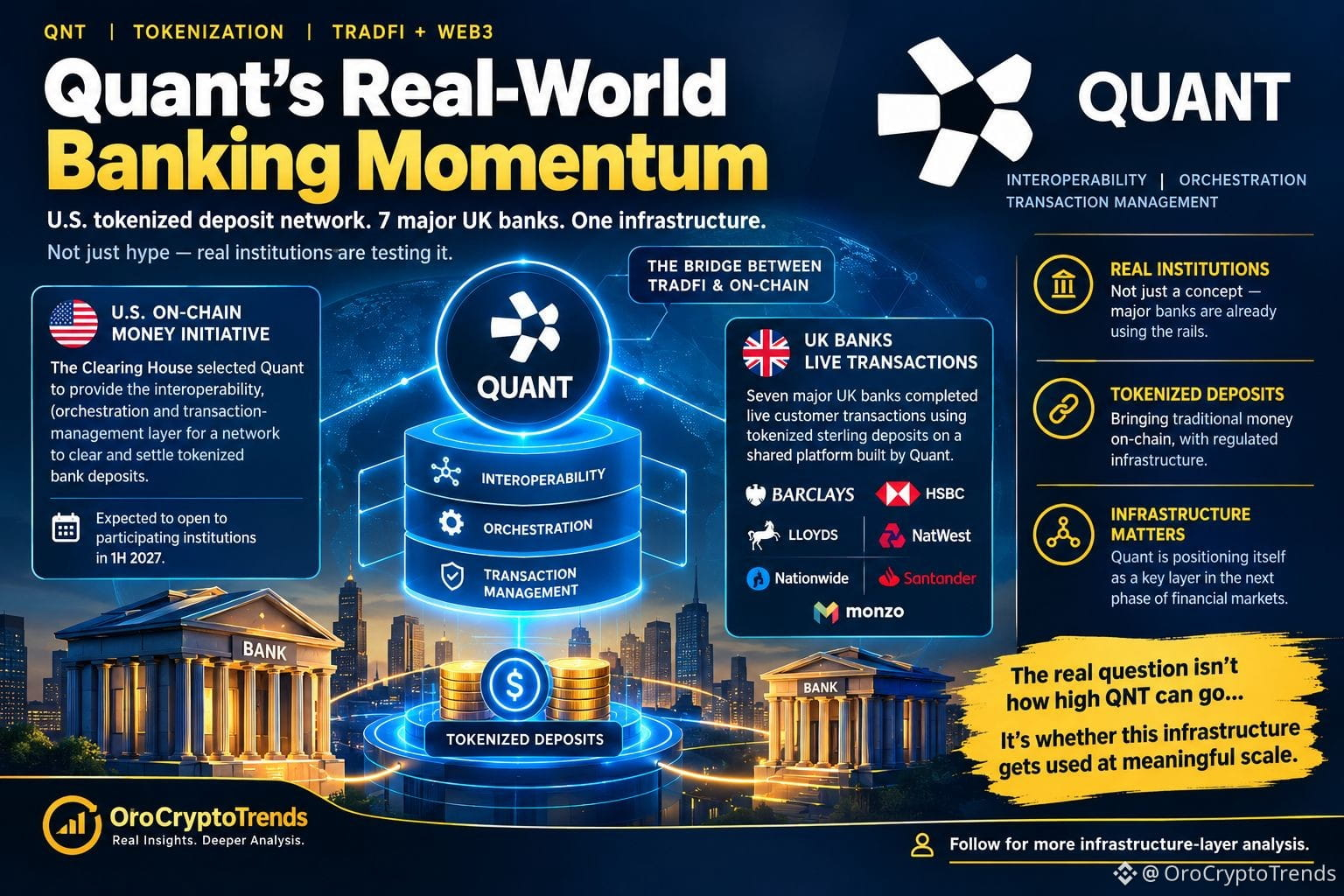
On September 24, The Clearing House selected Quant to provide the interoperability, orchestration and transaction-management layer for its U.S. On-Chain Money Initiative — a network designed to clear and settle tokenized bank deposits.
The network is expected to open to participating institutions in the first half of 2027.
The Clearing House
Then there’s the UK.
Seven major banks — including Barclays, HSBC, Lloyds, NatWest, Nationwide, Santander and Monzo — completed live customer transactions using tokenized sterling deposits on a shared platform built by Quant.
That changes the way I look at the QNT narrative.
This isn’t proof that QNT’s token value must keep rising. And it definitely doesn’t mean every tokenization project will automatically create demand for QNT.
But it does show something more concrete: Quant is becoming part of the plumbing being tested for regulated money moving on-chain.
Wait — maybe that’s the better story here.
The question isn’t “how high can QNT go?”
It’s whether this infrastructure gets used at meaningful scale.
Still trying to figure out what this actually changes.
The interesting thing isn’t simply that Quant is getting attention. It’s where the infrastructure is showing up.
On September 24, The Clearing House selected Quant to provide the interoperability, orchestration and transaction-management layer for its U.S. On-Chain Money Initiative — a network designed to clear and settle tokenized bank deposits.
The network is expected to open to participating institutions in the first half of 2027.
The Clearing House
Then there’s the UK.
Seven major banks — including Barclays, HSBC, Lloyds, NatWest, Nationwide, Santander and Monzo — completed live customer transactions using tokenized sterling deposits on a shared platform built by Quant.
That changes the way I look at the QNT narrative.
This isn’t proof that QNT’s token value must keep rising. And it definitely doesn’t mean every tokenization project will automatically create demand for QNT.
But it does show something more concrete: Quant is becoming part of the plumbing being tested for regulated money moving on-chain.
Wait — maybe that’s the better story here.
The question isn’t “how high can QNT go?”
It’s whether this infrastructure gets used at meaningful scale.
Still trying to figure out what this actually changes.