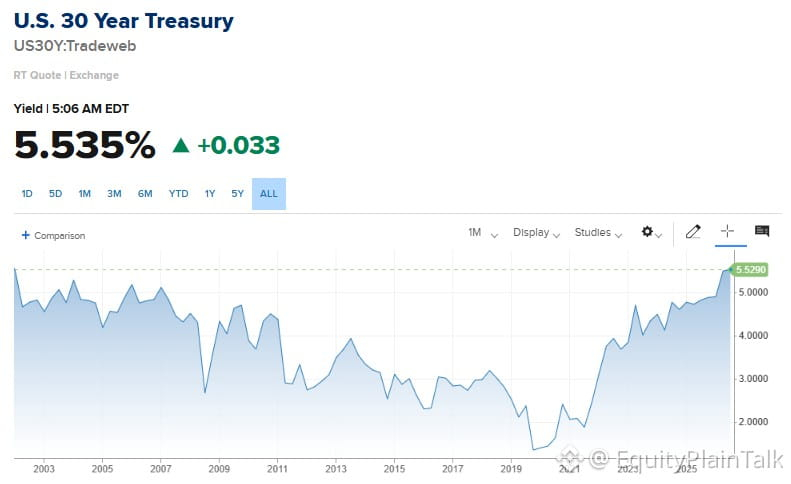
30-year Treasury yield just hit its highest level in over 22 years.
This matters because it directly affects mortgage rates, corporate borrowing costs, and how investors value stocks. When long-term rates spike like this, it pressures equity valuations—especially growth stocks that rely on cheap future cash flows.
Historically, sustained moves above 5% on the 30-year have coincided with major market repricing events. We're watching credit spreads, refinancing activity, and whether the Fed acknowledges this as a policy concern.
If you're holding rate-sensitive sectors like REITs or utilities, pay attention. If you're looking at bonds, this could be a generational entry point—or a signal that inflation expectations are resetting higher than the market hoped.
This matters because it directly affects mortgage rates, corporate borrowing costs, and how investors value stocks. When long-term rates spike like this, it pressures equity valuations—especially growth stocks that rely on cheap future cash flows.
Historically, sustained moves above 5% on the 30-year have coincided with major market repricing events. We're watching credit spreads, refinancing activity, and whether the Fed acknowledges this as a policy concern.
If you're holding rate-sensitive sectors like REITs or utilities, pay attention. If you're looking at bonds, this could be a generational entry point—or a signal that inflation expectations are resetting higher than the market hoped.