

Binance News
397.4k Posts

Binance News
 Binance Officially Verified Account
Report
Follow Binance News to stay on top of industry trends & news
9 Following
2.3M+ Followers
2.8M+ Liked
Top
Replies
Videos
·
--
BNB Drops Below 770 USDT with a 0.24% Decrease in 24 HoursOn Sep 28, 2026, 03:29 AM(UTC). According to Binance Market Data, BNB has dropped below 770 USDT and is now trading at 769.900024 USDT, with a narrowed 0.24% decrease in 24 hours.
BNB Drops Below 770 USDT with a 0.24% Decrease in 24 Hours
On Sep 28, 2026, 03:29 AM(UTC). According to Binance Market Data, BNB has dropped below 770 USDT and is now trading at 769.900024 USDT, with a narrowed 0.24% decrease in 24 hours.
12
19
19
6.5k
·
--
BTC Falls Below $83,000 as 24-Hour Loss Reaches 1.74%BTC fell below $83,000 and was last reported at $82,987. According to Odaily, the cryptocurrency was down 1.74% over the past 24 hours.
BTC Falls Below $83,000 as 24-Hour Loss Reaches 1.74%
BTC fell below $83,000 and was last reported at $82,987. According to Odaily, the cryptocurrency was down 1.74% over the past 24 hours.
1
1
10
12.1k
·
--
Solana Rises Above $110 as Spot SOL ETFs Record $264 Million in Monthly InflowsSolana rose above the $110 resistance level as spot SOL ETFs recorded $264 million in monthly inflows. According to NS3.AI, the ETFs posted inflows for six consecutive days, while Solana’s staking ratio reached nearly 70%.
Solana Rises Above $110 as Spot SOL ETFs Record $264 Million in Monthly Inflows
Solana rose above the $110 resistance level as spot SOL ETFs recorded $264 million in monthly inflows. According to NS3.AI, the ETFs posted inflows for six consecutive days, while Solana’s staking ratio reached nearly 70%.
13
5
57
27k
·
--

Article
South Korea's FSC Considers Market Maker Rules for Virtual Asset MarketSouth Korea's Financial Services Commission is considering introducing a market maker system for the virtual asset market to improve efficiency and stability, according to Digital Asset. According to ChainCatcher, FSC digital finance policy official Ryu Young-jun said the proposal would be revisited in the second phase of the legislative process, even though the current Virtual Asset User Protection Act prohibits market making.
Ryu also said exchanges would need sufficient capital and operating capacity, and core functions such as execution, trading support, and abnormal trading monitoring could shift from self-regulation to public regulation. He added that governance rules for major shareholders and management may be strengthened, while the law's implementation could support business diversification, a more trustworthy trading environment, a digital asset issuance and disclosure framework, Korean won stablecoins, and stronger user protection.
South Korea's FSC Considers Market Maker Rules for Virtual Asset Market
South Korea's Financial Services Commission is considering introducing a market maker system for the virtual asset market to improve efficiency and stability, according to Digital Asset. According to ChainCatcher, FSC digital finance policy official Ryu Young-jun said the proposal would be revisited in the second phase of the legislative process, even though the current Virtual Asset User Protection Act prohibits market making.
Ryu also said exchanges would need sufficient capital and operating capacity, and core functions such as execution, trading support, and abnormal trading monitoring could shift from self-regulation to public regulation. He added that governance rules for major shareholders and management may be strengthened, while the law's implementation could support business diversification, a more trustworthy trading environment, a digital asset issuance and disclosure framework, Korean won stablecoins, and stronger user protection.
Ryu also said exchanges would need sufficient capital and operating capacity, and core functions such as execution, trading support, and abnormal trading monitoring could shift from self-regulation to public regulation. He added that governance rules for major shareholders and management may be strengthened, while the law's implementation could support business diversification, a more trustworthy trading environment, a digital asset issuance and disclosure framework, Korean won stablecoins, and stronger user protection.
6
2.6k
·
--
Article
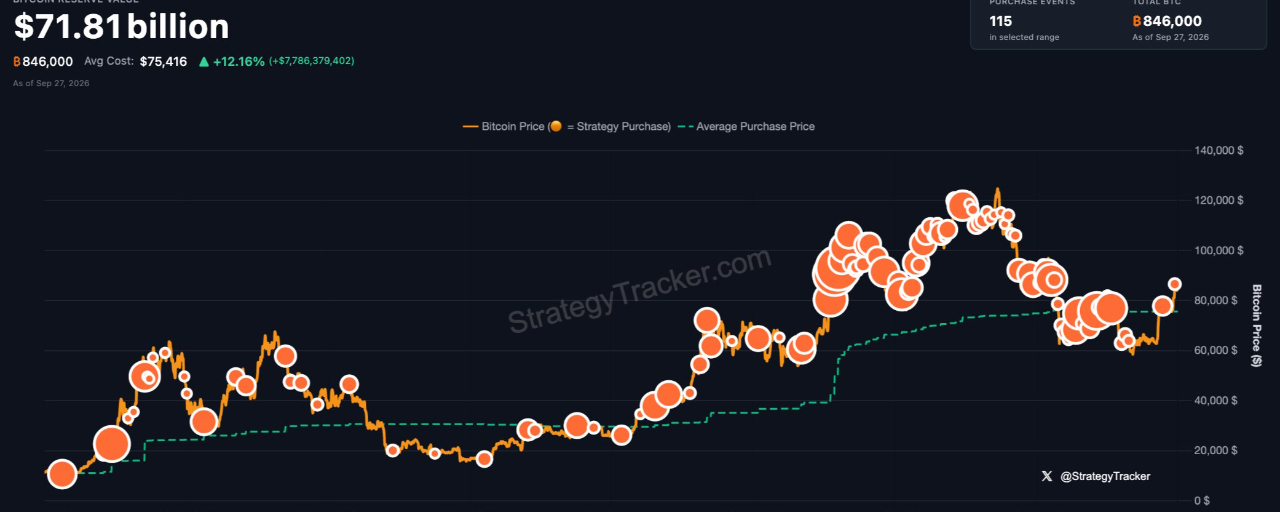
Michael Saylor Posts Another Bitcoin Tracker Update as Strategy Signals Possible DisclosureMichael Saylor, founder and executive chairman of Bitcoin treasury company Strategy, posted another Bitcoin Tracker update with the caption "Even more orange." According to ChainCatcher, Strategy has typically disclosed changes in its Bitcoin holdings the day after such posts.
Michael Saylor Posts Another Bitcoin Tracker Update as Strategy Signals Possible Disclosure
Michael Saylor, founder and executive chairman of Bitcoin treasury company Strategy, posted another Bitcoin Tracker update with the caption "Even more orange." According to ChainCatcher, Strategy has typically disclosed changes in its Bitcoin holdings the day after such posts.
1
2
7
8.4k
·
--
Binance Futures Will Add 5 USDT-Priced Perpetual Contracts for Traditional StocksAccording to the [announcement](https://www.binance.com/en/support/announcement/detail/d4c5a66cdce246cc952d13bab215b688) from Binance, Binance Futures will admit five USDT-priced perpetual contracts to trading on Binance RIE and to clearing and settlement by Binance RCH at scheduled times on 2026-09-28. The new contracts are OKLOUSDT, TWSTUSDT, CVNAUSDT, RUMUSDT, and XOMUSDT. Trading for OKLOUSDT is set for 2026-09-28 09:00 (UTC), followed by TWSTUSDT at 2026-09-28 09:05 (UTC), CVNAUSDT at 2026-09-28 09:10 (UTC), RUMUSDT at 2026-09-28 09:15 (UTC), and XOMUSDT at 2026-09-28 09:20 (UTC). The contracts are tied to Oklo Inc. Class A Common Stock (NYSE: OKLO), Twist Bioscience Corporation Common Stock (Nasdaq: TWST), Carvana Co. Class A Common Stock (NYSE: CVNA), RUM Group Inc. Class A Common Stock (Nasdaq: RUM), and ExxonMobil Holdings Corporation Common Stock (NYSE: XOM). Each contract uses USDT as the settlement asset, has a tick size of 0.01, a minimum trade amount of 0.01 for the respective contract, a minimum notional value of 5 USDT, a capped funding rate of +2.00% / -2.00%, funding fee settlement every eight hours, an interest rate of 0%, maximum leverage of 20x, and 24/7 trading hours. Multi-Assets Mode is supported for all five contracts.
The announcement said the perpetual contracts are exempted from the 8.1 adjustment of funding interval rules, meaning the funding interval will not be adjusted from every eight hours to every one hour when the previous funding rate settlement reaches the cap or floor. Binance also stated that trading parameters, maximum leverage, margin requirements, and funding rate settings may be adjusted in accordance with the relevant exchange and clearing rules. The applicable contract specifications, trading parameters, leverage and margin table, and funding rate table will govern the listed products.
Binance Futures Will Add 5 USDT-Priced Perpetual Contracts for Traditional Stocks
According to the announcement from Binance, Binance Futures will admit five USDT-priced perpetual contracts to trading on Binance RIE and to clearing and settlement by Binance RCH at scheduled times on 2026-09-28. The new contracts are OKLOUSDT, TWSTUSDT, CVNAUSDT, RUMUSDT, and XOMUSDT. Trading for OKLOUSDT is set for 2026-09-28 09:00 (UTC), followed by TWSTUSDT at 2026-09-28 09:05 (UTC), CVNAUSDT at 2026-09-28 09:10 (UTC), RUMUSDT at 2026-09-28 09:15 (UTC), and XOMUSDT at 2026-09-28 09:20 (UTC). The contracts are tied to Oklo Inc. Class A Common Stock (NYSE: OKLO), Twist Bioscience Corporation Common Stock (Nasdaq: TWST), Carvana Co. Class A Common Stock (NYSE: CVNA), RUM Group Inc. Class A Common Stock (Nasdaq: RUM), and ExxonMobil Holdings Corporation Common Stock (NYSE: XOM). Each contract uses USDT as the settlement asset, has a tick size of 0.01, a minimum trade amount of 0.01 for the respective contract, a minimum notional value of 5 USDT, a capped funding rate of +2.00% / -2.00%, funding fee settlement every eight hours, an interest rate of 0%, maximum leverage of 20x, and 24/7 trading hours. Multi-Assets Mode is supported for all five contracts.
The announcement said the perpetual contracts are exempted from the 8.1 adjustment of funding interval rules, meaning the funding interval will not be adjusted from every eight hours to every one hour when the previous funding rate settlement reaches the cap or floor. Binance also stated that trading parameters, maximum leverage, margin requirements, and funding rate settings may be adjusted in accordance with the relevant exchange and clearing rules. The applicable contract specifications, trading parameters, leverage and margin table, and funding rate table will govern the listed products.
The announcement said the perpetual contracts are exempted from the 8.1 adjustment of funding interval rules, meaning the funding interval will not be adjusted from every eight hours to every one hour when the previous funding rate settlement reaches the cap or floor. Binance also stated that trading parameters, maximum leverage, margin requirements, and funding rate settings may be adjusted in accordance with the relevant exchange and clearing rules. The applicable contract specifications, trading parameters, leverage and margin table, and funding rate table will govern the listed products.
3
1
5
3.3k
·
--
Binance to Support SPCXB and QQQB Airdrops for MARSCOIN and 牛来 HoldersAccording to the [announcement](https://www.binance.com/en/support/announcement/detail/1ea1d5c29a0a4c2c8c7f4c4e947c07f2) from Binance, the exchange will support the SpaceX (SPCXB) airdrop for MarsCoin (MARSCOIN) holders and the Invesco QQQ Trust (QQQB) airdrop for 牛来 holders. The distribution includes two reward components. First, Binance will distribute the SPCXB and QQQB tokens allocated on-chain by the respective projects to eligible MARSCOIN and 牛来 holders. Second, Binance will allocate 30% of MARSCOIN and 牛来 spot trading fees as additional rewards, to be distributed in the form of SPCXB and QQQB respectively until further notice. Both reward components will use the same valid holding calculation method. Binance said it will take one random snapshot per day of users’ MARSCOIN and 牛来 holdings throughout each calendar month, and only daily holdings exceeding 10,000 tokens will count as valid holdings for each token. Monthly valid holdings will be calculated as the sum of each user’s valid daily holdings during the month, and rewards will be distributed based on each user’s share of total valid holdings among eligible users. MARSCOIN and 牛来 holdings will be calculated separately.
Binance said snapshots will include MARSCOIN and 牛来 holdings and liabilities in Spot Accounts, Funding Accounts, Margin Accounts and Simple Earn Flexible Accounts. Undistributed interest payments will not be included, and tokens pending deposit or withdrawal at the time of the snapshot will not count toward a user’s balance. MARSCOIN and 牛来 liabilities from Margin or Crypto Loans will not be eligible for the airdrop, and users with net liabilities will need to return the equivalent amount of SPCXB or QQQB airdropped. Holdings on Binance Alpha will not be included in the snapshot. Eligible holdings will be calculated starting from September 2026, with the first distribution in early October 2026. Both reward components will follow the same monthly cycle and will be fully distributed by the beginning of the following month. Binance said deposits and withdrawals of MARSCOIN and 牛来 will not be impacted, and Spot, Margin, Futures trading and Binance Earn services will continue without interruption during the airdrop. Users must complete account verification and be from an eligible jurisdiction to qualify, and reward eligibility remains subject to applicable product and jurisdictional restrictions.
Binance to Support SPCXB and QQQB Airdrops for MARSCOIN and 牛来 Holders
According to the announcement from Binance, the exchange will support the SpaceX (SPCXB) airdrop for MarsCoin (MARSCOIN) holders and the Invesco QQQ Trust (QQQB) airdrop for 牛来 holders. The distribution includes two reward components. First, Binance will distribute the SPCXB and QQQB tokens allocated on-chain by the respective projects to eligible MARSCOIN and 牛来 holders. Second, Binance will allocate 30% of MARSCOIN and 牛来 spot trading fees as additional rewards, to be distributed in the form of SPCXB and QQQB respectively until further notice. Both reward components will use the same valid holding calculation method. Binance said it will take one random snapshot per day of users’ MARSCOIN and 牛来 holdings throughout each calendar month, and only daily holdings exceeding 10,000 tokens will count as valid holdings for each token. Monthly valid holdings will be calculated as the sum of each user’s valid daily holdings during the month, and rewards will be distributed based on each user’s share of total valid holdings among eligible users. MARSCOIN and 牛来 holdings will be calculated separately.
Binance said snapshots will include MARSCOIN and 牛来 holdings and liabilities in Spot Accounts, Funding Accounts, Margin Accounts and Simple Earn Flexible Accounts. Undistributed interest payments will not be included, and tokens pending deposit or withdrawal at the time of the snapshot will not count toward a user’s balance. MARSCOIN and 牛来 liabilities from Margin or Crypto Loans will not be eligible for the airdrop, and users with net liabilities will need to return the equivalent amount of SPCXB or QQQB airdropped. Holdings on Binance Alpha will not be included in the snapshot. Eligible holdings will be calculated starting from September 2026, with the first distribution in early October 2026. Both reward components will follow the same monthly cycle and will be fully distributed by the beginning of the following month. Binance said deposits and withdrawals of MARSCOIN and 牛来 will not be impacted, and Spot, Margin, Futures trading and Binance Earn services will continue without interruption during the airdrop. Users must complete account verification and be from an eligible jurisdiction to qualify, and reward eligibility remains subject to applicable product and jurisdictional restrictions.
Binance said snapshots will include MARSCOIN and 牛来 holdings and liabilities in Spot Accounts, Funding Accounts, Margin Accounts and Simple Earn Flexible Accounts. Undistributed interest payments will not be included, and tokens pending deposit or withdrawal at the time of the snapshot will not count toward a user’s balance. MARSCOIN and 牛来 liabilities from Margin or Crypto Loans will not be eligible for the airdrop, and users with net liabilities will need to return the equivalent amount of SPCXB or QQQB airdropped. Holdings on Binance Alpha will not be included in the snapshot. Eligible holdings will be calculated starting from September 2026, with the first distribution in early October 2026. Both reward components will follow the same monthly cycle and will be fully distributed by the beginning of the following month. Binance said deposits and withdrawals of MARSCOIN and 牛来 will not be impacted, and Spot, Margin, Futures trading and Binance Earn services will continue without interruption during the airdrop. Users must complete account verification and be from an eligible jurisdiction to qualify, and reward eligibility remains subject to applicable product and jurisdictional restrictions.
1
6
25
7.4k
·
--

Article
US and China Release Product Lists for $30 Billion Tariff DealThe US and China detailed a plan to cut tariffs on about $30 billion of imports from each country, as the rivals move to steady ties following a summit between Donald Trump and Xi Jinping, according to Bloomberg. Documents published by both governments show the list for goods entering the US contains 77 entries, including fireworks, household products, sporting equipment and toys, while 1,619 goods are set to potentially enter China, such as meat, seafood, dairy, grains, coal, timber and medical equipment. The expected relief for $60 billion in bilateral trade was among the most tangible outcomes of Xi's state visit to Washington last week, though it is a fraction of the $415 billion in total goods the world's two largest economies exchanged last year. The two sides extended their trade truce until January and are pursuing a broader deal ahead of two more expected Trump-Xi meetings this year.
Shares of some Chinese appliance makers rose after the details emerged, with Joyoung jumping by its 10% daily limit in Shenzhen and Bear Electric Appliance climbing as much as 9.5%. China said the reductions would take effect simultaneously after domestic legal procedures, and its Commerce Ministry said the arrangement "will help to further stabilize China-US economic and trade relations and create favorable conditions for China's exports of relevant products to the US." About 90% of the covered products would have tariffs cut to most-favored-nation rates. US Trade Representative Jamieson Greer called the selected items non-sensitive goods, saying "President Trump is unlocking improved market access for about 30 percent of US exports to China, while benefiting consumers with imports from China of household goods, toys, and other products that the United States generally does not import from other countries."
Beijing said tariffs on US coal would be included, supporting purchases in 2027 and 2028, after the White House said China agreed to import at least 10 million metric tons of US coal next year and again in 2028. Key grains including wheat, corn and sorghum are among the agricultural exports set for a tariff cut, which could help China progress toward a goal of buying at least $17 billion in US farm products annually through 2028, on top of a commitment to purchase 25 million tons of soybeans a year. Progress toward the $17 billion target has been slow since the Trump administration announced it after May's leaders' summit, with traders eyeing the cuts to spark new buying. A new Agricultural Working Group will be established, with an inaugural meeting set by the end of 2026.
US and China Release Product Lists for $30 Billion Tariff Deal
The US and China detailed a plan to cut tariffs on about $30 billion of imports from each country, as the rivals move to steady ties following a summit between Donald Trump and Xi Jinping, according to Bloomberg. Documents published by both governments show the list for goods entering the US contains 77 entries, including fireworks, household products, sporting equipment and toys, while 1,619 goods are set to potentially enter China, such as meat, seafood, dairy, grains, coal, timber and medical equipment. The expected relief for $60 billion in bilateral trade was among the most tangible outcomes of Xi's state visit to Washington last week, though it is a fraction of the $415 billion in total goods the world's two largest economies exchanged last year. The two sides extended their trade truce until January and are pursuing a broader deal ahead of two more expected Trump-Xi meetings this year.
Shares of some Chinese appliance makers rose after the details emerged, with Joyoung jumping by its 10% daily limit in Shenzhen and Bear Electric Appliance climbing as much as 9.5%. China said the reductions would take effect simultaneously after domestic legal procedures, and its Commerce Ministry said the arrangement "will help to further stabilize China-US economic and trade relations and create favorable conditions for China's exports of relevant products to the US." About 90% of the covered products would have tariffs cut to most-favored-nation rates. US Trade Representative Jamieson Greer called the selected items non-sensitive goods, saying "President Trump is unlocking improved market access for about 30 percent of US exports to China, while benefiting consumers with imports from China of household goods, toys, and other products that the United States generally does not import from other countries."
Beijing said tariffs on US coal would be included, supporting purchases in 2027 and 2028, after the White House said China agreed to import at least 10 million metric tons of US coal next year and again in 2028. Key grains including wheat, corn and sorghum are among the agricultural exports set for a tariff cut, which could help China progress toward a goal of buying at least $17 billion in US farm products annually through 2028, on top of a commitment to purchase 25 million tons of soybeans a year. Progress toward the $17 billion target has been slow since the Trump administration announced it after May's leaders' summit, with traders eyeing the cuts to spark new buying. A new Agricultural Working Group will be established, with an inaugural meeting set by the end of 2026.
Shares of some Chinese appliance makers rose after the details emerged, with Joyoung jumping by its 10% daily limit in Shenzhen and Bear Electric Appliance climbing as much as 9.5%. China said the reductions would take effect simultaneously after domestic legal procedures, and its Commerce Ministry said the arrangement "will help to further stabilize China-US economic and trade relations and create favorable conditions for China's exports of relevant products to the US." About 90% of the covered products would have tariffs cut to most-favored-nation rates. US Trade Representative Jamieson Greer called the selected items non-sensitive goods, saying "President Trump is unlocking improved market access for about 30 percent of US exports to China, while benefiting consumers with imports from China of household goods, toys, and other products that the United States generally does not import from other countries."
Beijing said tariffs on US coal would be included, supporting purchases in 2027 and 2028, after the White House said China agreed to import at least 10 million metric tons of US coal next year and again in 2028. Key grains including wheat, corn and sorghum are among the agricultural exports set for a tariff cut, which could help China progress toward a goal of buying at least $17 billion in US farm products annually through 2028, on top of a commitment to purchase 25 million tons of soybeans a year. Progress toward the $17 billion target has been slow since the Trump administration announced it after May's leaders' summit, with traders eyeing the cuts to spark new buying. A new Agricultural Working Group will be established, with an inaugural meeting set by the end of 2026.
13
16k
·
--
Article
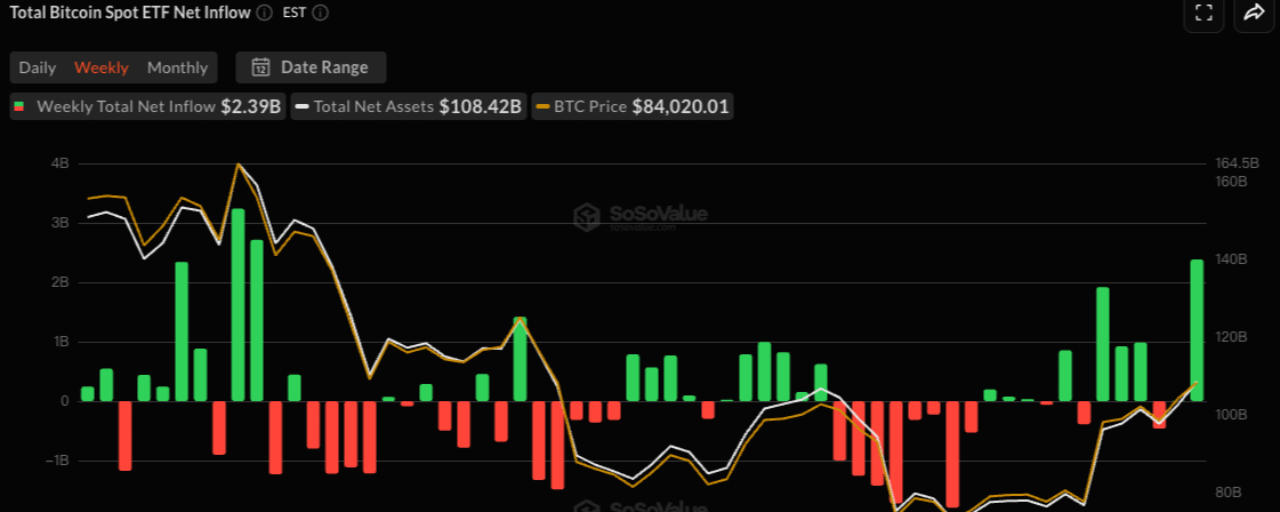
Bitcoin Spot ETFs Record $2.39 Billion Net Inflow in Week of September 21-25Bitcoin spot ETFs recorded $2.39 billion in net inflows during the trading week of September 21-25, according to SoSoValue data. According to Foresight News, BlackRock's IBIT led weekly inflows with $1.16 billion, bringing its cumulative net inflows to $65.28 billion.
Fidelity's FBTC followed with $702 million in weekly inflows and cumulative net inflows of $11.06 billion. WisdomTree's BTCW posted the largest weekly outflow at $4.02 million, while its cumulative net inflows stood at $78.65 million.
As of press time, total net assets in Bitcoin spot ETFs reached $108.42 billion. The ETFs' net asset ratio, measured by market value relative to Bitcoin's total market value, was 6.43%, and cumulative net inflows reached $57.55 billion.
Bitcoin Spot ETFs Record $2.39 Billion Net Inflow in Week of September 21-25
Bitcoin spot ETFs recorded $2.39 billion in net inflows during the trading week of September 21-25, according to SoSoValue data. According to Foresight News, BlackRock's IBIT led weekly inflows with $1.16 billion, bringing its cumulative net inflows to $65.28 billion.
Fidelity's FBTC followed with $702 million in weekly inflows and cumulative net inflows of $11.06 billion. WisdomTree's BTCW posted the largest weekly outflow at $4.02 million, while its cumulative net inflows stood at $78.65 million.
As of press time, total net assets in Bitcoin spot ETFs reached $108.42 billion. The ETFs' net asset ratio, measured by market value relative to Bitcoin's total market value, was 6.43%, and cumulative net inflows reached $57.55 billion.
Fidelity's FBTC followed with $702 million in weekly inflows and cumulative net inflows of $11.06 billion. WisdomTree's BTCW posted the largest weekly outflow at $4.02 million, while its cumulative net inflows stood at $78.65 million.
As of press time, total net assets in Bitcoin spot ETFs reached $108.42 billion. The ETFs' net asset ratio, measured by market value relative to Bitcoin's total market value, was 6.43%, and cumulative net inflows reached $57.55 billion.
9
15.2k
·
--
Bitget Details Security Incident Timeline, Formal Report Due This WeekBitget has released a detailed timeline of a security incident, and its formal investigation report is expected to be published this week. Bitget CEO Gracy Chen shared the timeline during a livestream reviewing the incident.
On September 25 at 2:31, hackers made small transfers of 0.84 ETH and 93 TRX from Ethereum and Tron hot wallets, respectively. The amounts were below the risk-control threshold, so no alert was triggered. From 2:58 to 4:09, the attackers carried out 17 large transfers across XRP, ZEC, BSC, Base, Arbitrum, Optimism and other chains, with a combined value of about $360 million.
At 3:05, the platform's reconciliation system detected a large discrepancy, and the risk-control system automatically blocked user withdrawal requests. A P0-level emergency response was launched at 3:14, and the technical team took loss-limiting measures at 3:40. At 4:40, because the risk of private key theft could not yet be ruled out, the wallet team began moving funds to cold wallets. Between 4:55 and 5:13, hackers launched a second wave of seven transfers on Avalanche and other chains, worth about $28 million. At 5:44, the technical team stopped wallet withdrawal services, including signing machines, and isolated inbound and outbound transfers. The platform began issuing public statements between about 5:00 and 6:00.
At 4:43 PM that day, the security team identified the root cause of the incident, and at 9:42 PM the legal team filed a report with authorities in the jurisdiction where the entity is based. Around noon on September 26, the platform reopened deposits after completing vulnerability fixes, service isolation and security checks.
The platform said BTC withdrawals will open today, while ETH, USDT and other tokens, as well as fiat services, will be restored gradually over the next few days.
According to the security team's root-cause analysis, the attacker exploited a zero-day vulnerability in a third-party security product to steal internal network credentials and entered key internal management systems using a valid identity. The attacker then accessed wallet-related backend services, wrote forged withdrawal instructions directly, bypassed risk checks before withdrawal records were generated, transferred funds from warm and hot wallets, and deleted traces after each transfer. Bitget said no common virus or malware was used in the attack, which it described as a highly targeted operation. It added that private keys were not leaked and that the possibility of insider involvement has been preliminarily ruled out. The company said it will not speculate on the hacker's identity before the formal report is released.
Bitget Details Security Incident Timeline, Formal Report Due This Week
Bitget has released a detailed timeline of a security incident, and its formal investigation report is expected to be published this week. Bitget CEO Gracy Chen shared the timeline during a livestream reviewing the incident.
On September 25 at 2:31, hackers made small transfers of 0.84 ETH and 93 TRX from Ethereum and Tron hot wallets, respectively. The amounts were below the risk-control threshold, so no alert was triggered. From 2:58 to 4:09, the attackers carried out 17 large transfers across XRP, ZEC, BSC, Base, Arbitrum, Optimism and other chains, with a combined value of about $360 million.
At 3:05, the platform's reconciliation system detected a large discrepancy, and the risk-control system automatically blocked user withdrawal requests. A P0-level emergency response was launched at 3:14, and the technical team took loss-limiting measures at 3:40. At 4:40, because the risk of private key theft could not yet be ruled out, the wallet team began moving funds to cold wallets. Between 4:55 and 5:13, hackers launched a second wave of seven transfers on Avalanche and other chains, worth about $28 million. At 5:44, the technical team stopped wallet withdrawal services, including signing machines, and isolated inbound and outbound transfers. The platform began issuing public statements between about 5:00 and 6:00.
At 4:43 PM that day, the security team identified the root cause of the incident, and at 9:42 PM the legal team filed a report with authorities in the jurisdiction where the entity is based. Around noon on September 26, the platform reopened deposits after completing vulnerability fixes, service isolation and security checks.
The platform said BTC withdrawals will open today, while ETH, USDT and other tokens, as well as fiat services, will be restored gradually over the next few days.
According to the security team's root-cause analysis, the attacker exploited a zero-day vulnerability in a third-party security product to steal internal network credentials and entered key internal management systems using a valid identity. The attacker then accessed wallet-related backend services, wrote forged withdrawal instructions directly, bypassed risk checks before withdrawal records were generated, transferred funds from warm and hot wallets, and deleted traces after each transfer. Bitget said no common virus or malware was used in the attack, which it described as a highly targeted operation. It added that private keys were not leaked and that the possibility of insider involvement has been preliminarily ruled out. The company said it will not speculate on the hacker's identity before the formal report is released.
On September 25 at 2:31, hackers made small transfers of 0.84 ETH and 93 TRX from Ethereum and Tron hot wallets, respectively. The amounts were below the risk-control threshold, so no alert was triggered. From 2:58 to 4:09, the attackers carried out 17 large transfers across XRP, ZEC, BSC, Base, Arbitrum, Optimism and other chains, with a combined value of about $360 million.
At 3:05, the platform's reconciliation system detected a large discrepancy, and the risk-control system automatically blocked user withdrawal requests. A P0-level emergency response was launched at 3:14, and the technical team took loss-limiting measures at 3:40. At 4:40, because the risk of private key theft could not yet be ruled out, the wallet team began moving funds to cold wallets. Between 4:55 and 5:13, hackers launched a second wave of seven transfers on Avalanche and other chains, worth about $28 million. At 5:44, the technical team stopped wallet withdrawal services, including signing machines, and isolated inbound and outbound transfers. The platform began issuing public statements between about 5:00 and 6:00.
At 4:43 PM that day, the security team identified the root cause of the incident, and at 9:42 PM the legal team filed a report with authorities in the jurisdiction where the entity is based. Around noon on September 26, the platform reopened deposits after completing vulnerability fixes, service isolation and security checks.
The platform said BTC withdrawals will open today, while ETH, USDT and other tokens, as well as fiat services, will be restored gradually over the next few days.
According to the security team's root-cause analysis, the attacker exploited a zero-day vulnerability in a third-party security product to steal internal network credentials and entered key internal management systems using a valid identity. The attacker then accessed wallet-related backend services, wrote forged withdrawal instructions directly, bypassed risk checks before withdrawal records were generated, transferred funds from warm and hot wallets, and deleted traces after each transfer. Bitget said no common virus or malware was used in the attack, which it described as a highly targeted operation. It added that private keys were not leaked and that the possibility of insider involvement has been preliminarily ruled out. The company said it will not speculate on the hacker's identity before the formal report is released.
1
3
3k
·
--
Article
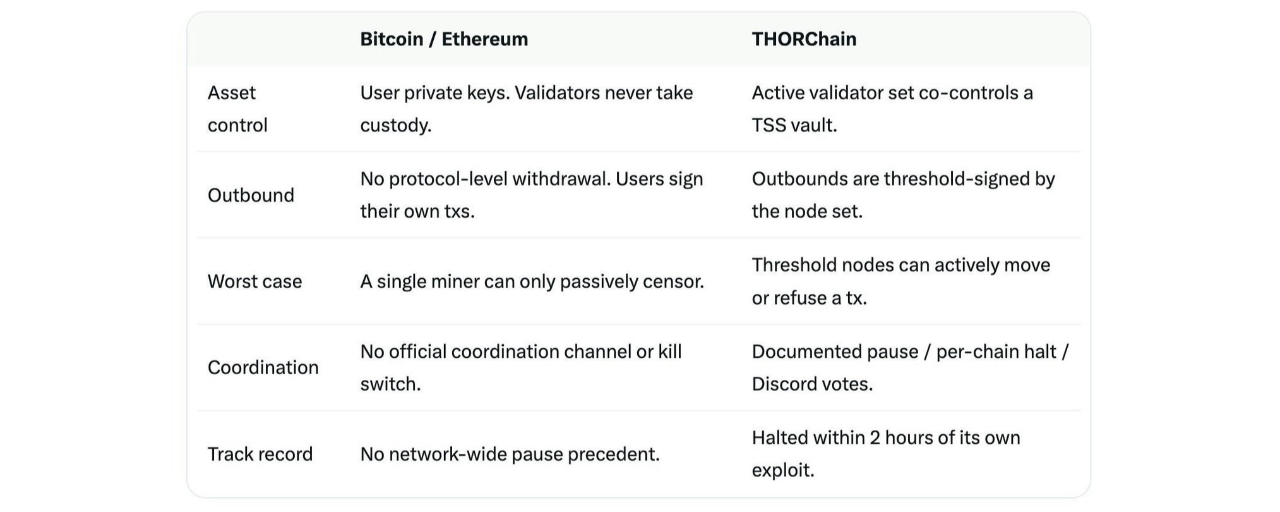
GoPlus Security Says Bitget Hack Funds Are Being Moved Through THORChainTHORChain's comparison of itself to decentralized layer-1 chains like Bitcoin and Ethereum does not hold up, blockchain security firm GoPlus Security said in a post on X, urging the protocol not to enable criminals or put the industry at risk merely to earn swap fees on stolen funds. On custody, GoPlus argued that TSS vaults are not equivalent to base-layer consensus: on Bitcoin and Ethereum users control assets with their own keys and miners or validators never hold funds, whereas every THORChain outbound must be actively produced by the current active set via a GG20 TSS threshold signature, with swap funds sitting in a jointly controlled vault. Releasing stolen funds, it said, is an active signing event rather than "neutral ordering we cannot stop," and distributed centralized custody is not decentralization.
GoPlus also said THORChain's validator set is small and able to coordinate: THORNodes bond RUNE to join, the active set is capped near 100 (scalable to 250+) with churn roughly every three days, and nodes coordinate in real time on a Dev Discord channel through anonymous relays and votes — an organization with a comms channel, voting process and execution tools, unlike Bitcoin and Ethereum's globally anonymous sets. Intervention, it argued, is designed in, with runbooks and precedents: a single node can halt the network via "make pause" (720 blocks per trigger, stackable, under the slogan "Halt Earn, Halt Often!"), node votes can halt outbound signing on a single chain, and Mimir governance lets nodes vote live to change parameters or halt trading and signing. When THORChain itself was drained in May 2026, it paused and ran a controlled halt to stop further movement.
Inaction pays, GoPlus said. In the Bybit case, the attacker washed all 499,000 ETH in 10 days, mostly through THORChain into BTC, generating about $5.9 billion in volume and roughly $5.5 million in fees. In the Bitget case, about 101.5 BTC (≈$8.5 million) has already gone out via THORChain, with another ~27.63 million XRP (≈$43 million) mid-swap into BTC, for a potential fee take in the hundreds of thousands. In February 2025, validators voted to intercept DPRK-linked funds and then reversed course, after which core contributor Pluto, who had pushed the intercept, left. GoPlus said a per-chain halt or outbound rejection of FBI- and OFAC-attributed North Korean addresses fits THORChain's own "funds-at-risk" emergency framework, concluding the protocol should do the job rather than put the industry at risk for the fee line.
GoPlus Security Says Bitget Hack Funds Are Being Moved Through THORChain
THORChain's comparison of itself to decentralized layer-1 chains like Bitcoin and Ethereum does not hold up, blockchain security firm GoPlus Security said in a post on X, urging the protocol not to enable criminals or put the industry at risk merely to earn swap fees on stolen funds. On custody, GoPlus argued that TSS vaults are not equivalent to base-layer consensus: on Bitcoin and Ethereum users control assets with their own keys and miners or validators never hold funds, whereas every THORChain outbound must be actively produced by the current active set via a GG20 TSS threshold signature, with swap funds sitting in a jointly controlled vault. Releasing stolen funds, it said, is an active signing event rather than "neutral ordering we cannot stop," and distributed centralized custody is not decentralization.
GoPlus also said THORChain's validator set is small and able to coordinate: THORNodes bond RUNE to join, the active set is capped near 100 (scalable to 250+) with churn roughly every three days, and nodes coordinate in real time on a Dev Discord channel through anonymous relays and votes — an organization with a comms channel, voting process and execution tools, unlike Bitcoin and Ethereum's globally anonymous sets. Intervention, it argued, is designed in, with runbooks and precedents: a single node can halt the network via "make pause" (720 blocks per trigger, stackable, under the slogan "Halt Earn, Halt Often!"), node votes can halt outbound signing on a single chain, and Mimir governance lets nodes vote live to change parameters or halt trading and signing. When THORChain itself was drained in May 2026, it paused and ran a controlled halt to stop further movement.
Inaction pays, GoPlus said. In the Bybit case, the attacker washed all 499,000 ETH in 10 days, mostly through THORChain into BTC, generating about $5.9 billion in volume and roughly $5.5 million in fees. In the Bitget case, about 101.5 BTC (≈$8.5 million) has already gone out via THORChain, with another ~27.63 million XRP (≈$43 million) mid-swap into BTC, for a potential fee take in the hundreds of thousands. In February 2025, validators voted to intercept DPRK-linked funds and then reversed course, after which core contributor Pluto, who had pushed the intercept, left. GoPlus said a per-chain halt or outbound rejection of FBI- and OFAC-attributed North Korean addresses fits THORChain's own "funds-at-risk" emergency framework, concluding the protocol should do the job rather than put the industry at risk for the fee line.
GoPlus also said THORChain's validator set is small and able to coordinate: THORNodes bond RUNE to join, the active set is capped near 100 (scalable to 250+) with churn roughly every three days, and nodes coordinate in real time on a Dev Discord channel through anonymous relays and votes — an organization with a comms channel, voting process and execution tools, unlike Bitcoin and Ethereum's globally anonymous sets. Intervention, it argued, is designed in, with runbooks and precedents: a single node can halt the network via "make pause" (720 blocks per trigger, stackable, under the slogan "Halt Earn, Halt Often!"), node votes can halt outbound signing on a single chain, and Mimir governance lets nodes vote live to change parameters or halt trading and signing. When THORChain itself was drained in May 2026, it paused and ran a controlled halt to stop further movement.
Inaction pays, GoPlus said. In the Bybit case, the attacker washed all 499,000 ETH in 10 days, mostly through THORChain into BTC, generating about $5.9 billion in volume and roughly $5.5 million in fees. In the Bitget case, about 101.5 BTC (≈$8.5 million) has already gone out via THORChain, with another ~27.63 million XRP (≈$43 million) mid-swap into BTC, for a potential fee take in the hundreds of thousands. In February 2025, validators voted to intercept DPRK-linked funds and then reversed course, after which core contributor Pluto, who had pushed the intercept, left. GoPlus said a per-chain halt or outbound rejection of FBI- and OFAC-attributed North Korean addresses fits THORChain's own "funds-at-risk" emergency framework, concluding the protocol should do the job rather than put the industry at risk for the fee line.
1
6
13.1k
·
--
SOL Trader With 20x Leverage Position Holds More Than $23 Million in Unrealized ProfitA wallet opened a 20x leveraged long position on 550,087 SOL a month ago, with the position currently showing more than $23 million in unrealized profit. According to Odaily, the address also placed a take-profit order at $200, and if SOL reaches that level, the profit could exceed $65 million.
SOL Trader With 20x Leverage Position Holds More Than $23 Million in Unrealized Profit
A wallet opened a 20x leveraged long position on 550,087 SOL a month ago, with the position currently showing more than $23 million in unrealized profit. According to Odaily, the address also placed a take-profit order at $200, and if SOL reaches that level, the profit could exceed $65 million.
1
18
43.8k
·
--
Article
Vitalik Buterin Says Original Novel 'Snowmoon' Is Complete at 32 ChaptersEthereum co-founder Vitalik Buterin said today that his original novel, Snowmoon, has been completed and consists of 32 chapters. According to ChainCatcher, the story is a speculative science fiction work set in a world heavily dependent on cryptography and decentralized governance.
The novel centers on ideological conflict between societies including Veridia and the Arctic Empire, and incorporates themes such as zero-knowledge proofs, quadratic voting, privacy technology, and content-based tax mechanisms. Buterin said the work reflects themes he has long explored, including mechanism design and digital sovereignty.
He said the book is being released under the GPL v3 license. Buterin added that adaptations into films or animation are allowed, but the related production pipeline, including AI prompts and scripts, must be open sourced. He also said all text was written by him, with AI used only for spelling and grammar checks, consistency verification, and web formatting.
Vitalik Buterin Says Original Novel 'Snowmoon' Is Complete at 32 Chapters
Ethereum co-founder Vitalik Buterin said today that his original novel, Snowmoon, has been completed and consists of 32 chapters. According to ChainCatcher, the story is a speculative science fiction work set in a world heavily dependent on cryptography and decentralized governance.
The novel centers on ideological conflict between societies including Veridia and the Arctic Empire, and incorporates themes such as zero-knowledge proofs, quadratic voting, privacy technology, and content-based tax mechanisms. Buterin said the work reflects themes he has long explored, including mechanism design and digital sovereignty.
He said the book is being released under the GPL v3 license. Buterin added that adaptations into films or animation are allowed, but the related production pipeline, including AI prompts and scripts, must be open sourced. He also said all text was written by him, with AI used only for spelling and grammar checks, consistency verification, and web formatting.
The novel centers on ideological conflict between societies including Veridia and the Arctic Empire, and incorporates themes such as zero-knowledge proofs, quadratic voting, privacy technology, and content-based tax mechanisms. Buterin said the work reflects themes he has long explored, including mechanism design and digital sovereignty.
He said the book is being released under the GPL v3 license. Buterin added that adaptations into films or animation are allowed, but the related production pipeline, including AI prompts and scripts, must be open sourced. He also said all text was written by him, with AI used only for spelling and grammar checks, consistency verification, and web formatting.
12
7.4k
·
--

Article
China May Allow Alibaba, ByteDance To Buy Nvidia RTX PRO 5500 ChipsChina may allow Alibaba and ByteDance to buy Nvidia’s RTX PRO 5500 chip, The Information reported, as Beijing weighs easing access to a workstation card built for professional computers. According to BeInCrypto, China’s MIIT asked the two firms how many cards they want and why, while neither Beijing nor the companies has confirmed the plan. The report said the chip is aimed at AI agents, inference and simulation and sits outside US export curbs on data-center hardware.
China May Allow Alibaba, ByteDance To Buy Nvidia RTX PRO 5500 Chips
China may allow Alibaba and ByteDance to buy Nvidia’s RTX PRO 5500 chip, The Information reported, as Beijing weighs easing access to a workstation card built for professional computers. According to BeInCrypto, China’s MIIT asked the two firms how many cards they want and why, while neither Beijing nor the companies has confirmed the plan. The report said the chip is aimed at AI agents, inference and simulation and sits outside US export curbs on data-center hardware.
1
8
16.7k
·
--
Article
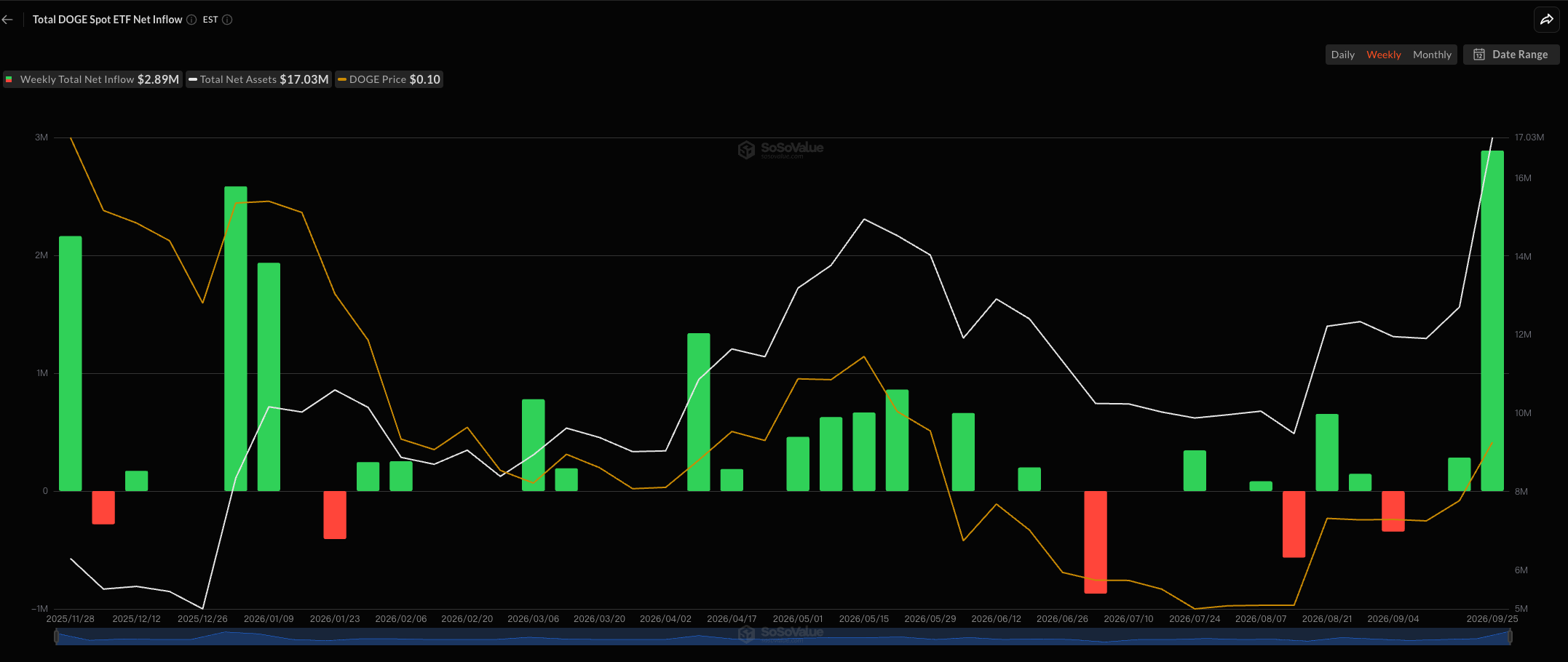
Dogecoin ETFs Hit Record Week as Bitwise Prepares to Exit US spot Dogecoin ETFs drew $2.89 million in net inflows in the week ending September 25 — their largest week since launch, according to BeInCrypto, citing SoSoValue data. The record came 11 days after Bitwise said it would shut its own Dogecoin fund, BWOW, and topped the previous weekly high of about $2.59 million set in the week ending January 2; the week before brought in just $284,510. All of last week's new money arrived in three sessions — Monday, Tuesday and Friday.Bitwise would liquidate BWOW, with its last trading day on October 14, barely three weeks away; the fund has lifetime net outflows of $1.23 million and holds $801,400. "Bitwise has determined to liquidate the Fund as it continues to optimize its product range to meet evolving investor needs," the issuer said. Since that announcement, cumulative inflows into Grayscale's GDOG rose from $11.7 million to $15.46 million, while 21Shares' TDOG slipped from $1.63 million to $1.03 million. GDOG took all of Friday's $806,060 and now holds $13.87 million, or about 81% of the group's assets.The funds hold just 0.11% of Dogecoin's total market value, with DOGE trading near $0.098 for a market cap of about $15.3 billion. Quiet days are the norm — between July 1 and September 18, the funds posted net flows on only nine trading days. The Dogecoin record also landed in the same week US spot Bitcoin ETFs pulled in $2.39 billion, more than 800 times the Dogecoin figure.
Dogecoin ETFs Hit Record Week as Bitwise Prepares to Exit
US spot Dogecoin ETFs drew $2.89 million in net inflows in the week ending September 25 — their largest week since launch, according to BeInCrypto, citing SoSoValue data. The record came 11 days after Bitwise said it would shut its own Dogecoin fund, BWOW, and topped the previous weekly high of about $2.59 million set in the week ending January 2; the week before brought in just $284,510. All of last week's new money arrived in three sessions — Monday, Tuesday and Friday.Bitwise would liquidate BWOW, with its last trading day on October 14, barely three weeks away; the fund has lifetime net outflows of $1.23 million and holds $801,400. "Bitwise has determined to liquidate the Fund as it continues to optimize its product range to meet evolving investor needs," the issuer said. Since that announcement, cumulative inflows into Grayscale's GDOG rose from $11.7 million to $15.46 million, while 21Shares' TDOG slipped from $1.63 million to $1.03 million. GDOG took all of Friday's $806,060 and now holds $13.87 million, or about 81% of the group's assets.The funds hold just 0.11% of Dogecoin's total market value, with DOGE trading near $0.098 for a market cap of about $15.3 billion. Quiet days are the norm — between July 1 and September 18, the funds posted net flows on only nine trading days. The Dogecoin record also landed in the same week US spot Bitcoin ETFs pulled in $2.39 billion, more than 800 times the Dogecoin figure.
228
22
238
25.5k
·
--
Article
China Industrial Profit Growth Slows for Fourth Straight MonthChina's industrial enterprises saw earnings grow at their weakest pace since they last fell in November, highlighting the limits of a recovery disproportionately driven by elevated oil costs and sectors linked to artificial intelligence, according to Bloomberg. Industrial profits inched up just 4.2% last month from a year earlier, after an 11.2% rise in July and versus a Bloomberg Economics forecast of 8%. For the first eight months, they rose 15.7%, data released by the National Bureau of Statistics showed on Monday. NBS analyst Yu Weining attributed August's slowdown to a high comparison base a year earlier, and said the electronics industry provided "crucial support," contributing close to two-thirds of the overall growth in the first eight months, while raw materials accounted for 6.2 percentage points.
The global AI supercycle and higher commodity prices stemming from the war in Iran have lifted earnings at China's factories and mines this year, but domestic demand has stayed stubbornly weak, producing a lopsided rebound that has struggled to gain traction, with profit growth now moderating for four straight months. Consumption growth missed expectations again last month and softened to near zero, while business confidence has been sluggish, with manufacturers, property developers and infrastructure builders accelerating cutbacks in capital spending as government expenditure kept falling.
With concerns mounting over local-government debt and fading benefits from consumer subsidies, authorities have so far refrained from major stimulus to bolster demand, instead targeting supply-side issues by tackling industrial overcapacity and cut-throat price competition that have thinned margins. The top economic-planning agency said this month it will issue regulatory warnings to makers of key industrial goods in sectors where price competition is rampant and probe costs when necessary, following a three-year action plan rolled out in mid-June to phase out capacity that fails certain energy-efficiency requirements in nine industries, including steelmaking and cement, by 2028. Yu said officials will "maximize the effectiveness of macroeconomic policies, expand domestic demand, improve the quality of supply, accelerate the shift from traditional to new growth drivers, strengthen the internal dynamism of economic development, and advance the continuous transformation of the industrial economy toward more innovative and higher-quality growth."
China Industrial Profit Growth Slows for Fourth Straight Month
China's industrial enterprises saw earnings grow at their weakest pace since they last fell in November, highlighting the limits of a recovery disproportionately driven by elevated oil costs and sectors linked to artificial intelligence, according to Bloomberg. Industrial profits inched up just 4.2% last month from a year earlier, after an 11.2% rise in July and versus a Bloomberg Economics forecast of 8%. For the first eight months, they rose 15.7%, data released by the National Bureau of Statistics showed on Monday. NBS analyst Yu Weining attributed August's slowdown to a high comparison base a year earlier, and said the electronics industry provided "crucial support," contributing close to two-thirds of the overall growth in the first eight months, while raw materials accounted for 6.2 percentage points.
The global AI supercycle and higher commodity prices stemming from the war in Iran have lifted earnings at China's factories and mines this year, but domestic demand has stayed stubbornly weak, producing a lopsided rebound that has struggled to gain traction, with profit growth now moderating for four straight months. Consumption growth missed expectations again last month and softened to near zero, while business confidence has been sluggish, with manufacturers, property developers and infrastructure builders accelerating cutbacks in capital spending as government expenditure kept falling.
With concerns mounting over local-government debt and fading benefits from consumer subsidies, authorities have so far refrained from major stimulus to bolster demand, instead targeting supply-side issues by tackling industrial overcapacity and cut-throat price competition that have thinned margins. The top economic-planning agency said this month it will issue regulatory warnings to makers of key industrial goods in sectors where price competition is rampant and probe costs when necessary, following a three-year action plan rolled out in mid-June to phase out capacity that fails certain energy-efficiency requirements in nine industries, including steelmaking and cement, by 2028. Yu said officials will "maximize the effectiveness of macroeconomic policies, expand domestic demand, improve the quality of supply, accelerate the shift from traditional to new growth drivers, strengthen the internal dynamism of economic development, and advance the continuous transformation of the industrial economy toward more innovative and higher-quality growth."
The global AI supercycle and higher commodity prices stemming from the war in Iran have lifted earnings at China's factories and mines this year, but domestic demand has stayed stubbornly weak, producing a lopsided rebound that has struggled to gain traction, with profit growth now moderating for four straight months. Consumption growth missed expectations again last month and softened to near zero, while business confidence has been sluggish, with manufacturers, property developers and infrastructure builders accelerating cutbacks in capital spending as government expenditure kept falling.
With concerns mounting over local-government debt and fading benefits from consumer subsidies, authorities have so far refrained from major stimulus to bolster demand, instead targeting supply-side issues by tackling industrial overcapacity and cut-throat price competition that have thinned margins. The top economic-planning agency said this month it will issue regulatory warnings to makers of key industrial goods in sectors where price competition is rampant and probe costs when necessary, following a three-year action plan rolled out in mid-June to phase out capacity that fails certain energy-efficiency requirements in nine industries, including steelmaking and cement, by 2028. Yu said officials will "maximize the effectiveness of macroeconomic policies, expand domestic demand, improve the quality of supply, accelerate the shift from traditional to new growth drivers, strengthen the internal dynamism of economic development, and advance the continuous transformation of the industrial economy toward more innovative and higher-quality growth."
1
3
2.5k
·
--
Leveraged Funds Increase Net Short in CME Bitcoin Futures as Open Interest RisesLeveraged funds widened their net short position in standard CME Bitcoin futures by 1,599 contracts during the week to Sept. 22, while asset managers increased their net long by 411 contracts. According to NS3.AI, open interest rose by 1,542 contracts to 22,315 as of Sept. 22.
Leveraged Funds Increase Net Short in CME Bitcoin Futures as Open Interest Rises
Leveraged funds widened their net short position in standard CME Bitcoin futures by 1,599 contracts during the week to Sept. 22, while asset managers increased their net long by 411 contracts. According to NS3.AI, open interest rose by 1,542 contracts to 22,315 as of Sept. 22.
2
896
·
--

Article
AI TRENDS | Bill Gates Calls for Stronger AI RegulationMicrosoft co-founder Bill Gates called on the US to lead in regulating artificial intelligence but warned that getting countries to agree on a global framework could be "more difficult" than Cold War-era negotiations to limit nuclear weapons, according to NBC. "This is more difficult than that was," Gates told NBC's "Meet the Press" in a discussion that aired Sunday. His remarks came as he addressed President Donald Trump's stance against AI regulation; the president this month rejected calls for federal guardrails, posting on Truth Social, "WHOEVER WINS AI, WINS! We are leading China, and all others, and will continue to do so." Gates argued that imposing monitoring on AI companies would not hamper the US in any race with China, saying he expects "we will come to a consensus" after Trump hears from him and others.
Concerns spiked this month after Anthropic whistleblower Jacob Coxon warned that "the people building AI earnestly believe that it could kill us all by the end of the decade," and Anthropic's Dario Amodei and OpenAI's Sam Altman agreed on a need to slow development amid fears of "superintelligence." Representative Ro Khanna said the US and China should form a working group and that Washington could lead an enforceable, verifiable treaty banning recursive, self-improving AI. Ahead of his summit with Chinese President Xi Jinping, Trump wrote that "Super Intelligence" would be a big topic but he wanted "to leave it exactly where it is"; afterward, the White House said the two countries established a dialogue on AI risks and benefits, with the next exchange expected by November.
Gates said the most immediate danger is "people with bad intent using AI" — able to defraud individuals, shut down the electric grid or scramble bank accounts — warning that small groups can now do what once only the largest states could. He urged built-in monitoring and safeguards in each AI lab, saying they can be added without slowing development, and argued a proposed "kill switch" alone is "not enough" without insight into what systems are doing. Separately, Gates said the Gates Foundation is working with 60 AI companies to improve reliability in non-English languages — where error rates run about 10 times higher — aiming within five years to bring every language spoken by a million or more people close to English-level quality, and is using AI to better direct the foundation's remaining spending of over $200 billion.
AI TRENDS | Bill Gates Calls for Stronger AI Regulation
Microsoft co-founder Bill Gates called on the US to lead in regulating artificial intelligence but warned that getting countries to agree on a global framework could be "more difficult" than Cold War-era negotiations to limit nuclear weapons, according to NBC. "This is more difficult than that was," Gates told NBC's "Meet the Press" in a discussion that aired Sunday. His remarks came as he addressed President Donald Trump's stance against AI regulation; the president this month rejected calls for federal guardrails, posting on Truth Social, "WHOEVER WINS AI, WINS! We are leading China, and all others, and will continue to do so." Gates argued that imposing monitoring on AI companies would not hamper the US in any race with China, saying he expects "we will come to a consensus" after Trump hears from him and others.
Concerns spiked this month after Anthropic whistleblower Jacob Coxon warned that "the people building AI earnestly believe that it could kill us all by the end of the decade," and Anthropic's Dario Amodei and OpenAI's Sam Altman agreed on a need to slow development amid fears of "superintelligence." Representative Ro Khanna said the US and China should form a working group and that Washington could lead an enforceable, verifiable treaty banning recursive, self-improving AI. Ahead of his summit with Chinese President Xi Jinping, Trump wrote that "Super Intelligence" would be a big topic but he wanted "to leave it exactly where it is"; afterward, the White House said the two countries established a dialogue on AI risks and benefits, with the next exchange expected by November.
Gates said the most immediate danger is "people with bad intent using AI" — able to defraud individuals, shut down the electric grid or scramble bank accounts — warning that small groups can now do what once only the largest states could. He urged built-in monitoring and safeguards in each AI lab, saying they can be added without slowing development, and argued a proposed "kill switch" alone is "not enough" without insight into what systems are doing. Separately, Gates said the Gates Foundation is working with 60 AI companies to improve reliability in non-English languages — where error rates run about 10 times higher — aiming within five years to bring every language spoken by a million or more people close to English-level quality, and is using AI to better direct the foundation's remaining spending of over $200 billion.
Concerns spiked this month after Anthropic whistleblower Jacob Coxon warned that "the people building AI earnestly believe that it could kill us all by the end of the decade," and Anthropic's Dario Amodei and OpenAI's Sam Altman agreed on a need to slow development amid fears of "superintelligence." Representative Ro Khanna said the US and China should form a working group and that Washington could lead an enforceable, verifiable treaty banning recursive, self-improving AI. Ahead of his summit with Chinese President Xi Jinping, Trump wrote that "Super Intelligence" would be a big topic but he wanted "to leave it exactly where it is"; afterward, the White House said the two countries established a dialogue on AI risks and benefits, with the next exchange expected by November.
Gates said the most immediate danger is "people with bad intent using AI" — able to defraud individuals, shut down the electric grid or scramble bank accounts — warning that small groups can now do what once only the largest states could. He urged built-in monitoring and safeguards in each AI lab, saying they can be added without slowing development, and argued a proposed "kill switch" alone is "not enough" without insight into what systems are doing. Separately, Gates said the Gates Foundation is working with 60 AI companies to improve reliability in non-English languages — where error rates run about 10 times higher — aiming within five years to bring every language spoken by a million or more people close to English-level quality, and is using AI to better direct the foundation's remaining spending of over $200 billion.
1
2
1.7k
·
--
QNT Surges Above 87% After Quant Announces Support for The Clearing House Blockchain Payment NetworkQNT briefly touched 373 USDT this morning before easing to 287.71 USDT, up more than 87% over the past 24 hours. According to Odaily, Quant said it will provide technical support for The Clearing House’s on-chain money initiative.
Quant will handle the network’s interoperability, orchestration, and transaction management layer, and connect it with existing fiat payment systems including RTP and CHIPS. The network is designed to give financial institutions clearing and settlement capabilities for tokenized deposit transactions, support instant settlement, and automatically trigger transactions once preset conditions are met. It is expected to open to participating institutions in the first half of 2027.
QNT Surges Above 87% After Quant Announces Support for The Clearing House Blockchain Payment Network
QNT briefly touched 373 USDT this morning before easing to 287.71 USDT, up more than 87% over the past 24 hours. According to Odaily, Quant said it will provide technical support for The Clearing House’s on-chain money initiative.
Quant will handle the network’s interoperability, orchestration, and transaction management layer, and connect it with existing fiat payment systems including RTP and CHIPS. The network is designed to give financial institutions clearing and settlement capabilities for tokenized deposit transactions, support instant settlement, and automatically trigger transactions once preset conditions are met. It is expected to open to participating institutions in the first half of 2027.
Quant will handle the network’s interoperability, orchestration, and transaction management layer, and connect it with existing fiat payment systems including RTP and CHIPS. The network is designed to give financial institutions clearing and settlement capabilities for tokenized deposit transactions, support instant settlement, and automatically trigger transactions once preset conditions are met. It is expected to open to participating institutions in the first half of 2027.
5
1
19
31.1k
·
--
Ethereum(ETH) Surpasses 2,700 USDT with a 0.35% Increase in 24 HoursOn Sep 28, 2026, 00:22 AM(UTC). According to Binance Market Data, Ethereum has crossed the 2,700 USDT benchmark and is now trading at 2,700.75 USDT, with a narrowed 0.35% increase in 24 hours.
Ethereum(ETH) Surpasses 2,700 USDT with a 0.35% Increase in 24 Hours
On Sep 28, 2026, 00:22 AM(UTC). According to Binance Market Data, Ethereum has crossed the 2,700 USDT benchmark and is now trading at 2,700.75 USDT, with a narrowed 0.35% increase in 24 hours.
1
7
7.5k
·
--
Peter Brandt Says XRP Charts Alone Justify Buying As ETF Inflows BuildPeter Brandt said XRP holders do not need “certified cult membership” to justify owning the token, arguing the charts alone are enough reason to buy. According to BeInCrypto, his comments came as bullish technical patterns, whale accumulation and steady ETF inflows supported a constructive setup for XRP.
Brandt’s long-term chart points to upside near $5.40, while XRP traded around $1.52. Analysts also cited an inverse head-and-shoulders pattern with a neckline near $1.55, and said a breakout could lift XRP toward $2.
Peter Brandt Says XRP Charts Alone Justify Buying As ETF Inflows Build
Peter Brandt said XRP holders do not need “certified cult membership” to justify owning the token, arguing the charts alone are enough reason to buy. According to BeInCrypto, his comments came as bullish technical patterns, whale accumulation and steady ETF inflows supported a constructive setup for XRP.
Brandt’s long-term chart points to upside near $5.40, while XRP traded around $1.52. Analysts also cited an inverse head-and-shoulders pattern with a neckline near $1.55, and said a breakout could lift XRP toward $2.
Brandt’s long-term chart points to upside near $5.40, while XRP traded around $1.52. Analysts also cited an inverse head-and-shoulders pattern with a neckline near $1.55, and said a breakout could lift XRP toward $2.
1
11
26.6k
·
--
STOCKS | Jensen Huang to Meet Lee Jae-yong and Chey Tae-won in New York on the 28thAccording to Sina Finance, Nvidia CEO Jensen Huang will meet Samsung Electronics Chairman Lee Jae-yong and SK Group Chairman Chey Tae-won again in New York on the 28th local time, about two months after their July meeting in San Francisco. Industry attention is focused on high-bandwidth memory, or HBM. The article said HBM has become a core component for Nvidia's next-generation products, and that sixth-generation HBM4 has been applied to Vera Rubin, which Nvidia began mass production of this year. The report said Samsung Electronics and SK Hynix are also working on joint development and optimization of later products, including seventh-generation HBM4E and eighth-generation HBM5. It added that Samsung Electronics is accelerating cooperation with Nvidia in this area, and that the two sides discussed long-term collaboration on next-generation HBM during Huang's visit to South Korea in June. The New York meeting may also involve foundry services and advanced packaging, which the article described as Samsung's strengths.
STOCKS | Jensen Huang to Meet Lee Jae-yong and Chey Tae-won in New York on the 28th
According to Sina Finance, Nvidia CEO Jensen Huang will meet Samsung Electronics Chairman Lee Jae-yong and SK Group Chairman Chey Tae-won again in New York on the 28th local time, about two months after their July meeting in San Francisco. Industry attention is focused on high-bandwidth memory, or HBM. The article said HBM has become a core component for Nvidia's next-generation products, and that sixth-generation HBM4 has been applied to Vera Rubin, which Nvidia began mass production of this year. The report said Samsung Electronics and SK Hynix are also working on joint development and optimization of later products, including seventh-generation HBM4E and eighth-generation HBM5. It added that Samsung Electronics is accelerating cooperation with Nvidia in this area, and that the two sides discussed long-term collaboration on next-generation HBM during Huang's visit to South Korea in June. The New York meeting may also involve foundry services and advanced packaging, which the article described as Samsung's strengths.
1
1
4
2.2k
·
--
Bitcoin Falls 1.3% as Nasdaq Futures Slip 0.7% After Trump Comments on IranBitcoin fell 1.3% to $83,324, while Nasdaq futures traded 0.7% lower. According to NS3.AI, U.S. President Donald Trump said he expected the war with Iran to end very soon and did not rule out more strikes on Iran before the early November midterm elections.
Bitcoin Falls 1.3% as Nasdaq Futures Slip 0.7% After Trump Comments on Iran
Bitcoin fell 1.3% to $83,324, while Nasdaq futures traded 0.7% lower. According to NS3.AI, U.S. President Donald Trump said he expected the war with Iran to end very soon and did not rule out more strikes on Iran before the early November midterm elections.
1
1
5.8k
·
--
Michael Saylor Says Digital Tokens Could Help 10 Million New Companies Raise CapitalMichael Saylor said digital tokens could help 10 million new companies raise funding as AI changes how businesses are built, while also reducing fundraising costs and delays. According to ChainCatcher, he called for simpler issuance rules while keeping disclosure and anti-fraud protections in place.
He said companies could tailor token issuance rules by offering type and set disclosure requirements matched to risk, lowering legal costs while preserving ownership protections and fraud accountability. The U.S. Securities and Exchange Commission has also proposed crypto issuance exemptions, including one that would allow qualified issuers to raise up to $5 million over four years and another that would allow up to $75 million every 12 months; both remain proposals and include disclosure and anti-fraud requirements.
Michael Saylor Says Digital Tokens Could Help 10 Million New Companies Raise Capital
Michael Saylor said digital tokens could help 10 million new companies raise funding as AI changes how businesses are built, while also reducing fundraising costs and delays. According to ChainCatcher, he called for simpler issuance rules while keeping disclosure and anti-fraud protections in place.
He said companies could tailor token issuance rules by offering type and set disclosure requirements matched to risk, lowering legal costs while preserving ownership protections and fraud accountability. The U.S. Securities and Exchange Commission has also proposed crypto issuance exemptions, including one that would allow qualified issuers to raise up to $5 million over four years and another that would allow up to $75 million every 12 months; both remain proposals and include disclosure and anti-fraud requirements.
He said companies could tailor token issuance rules by offering type and set disclosure requirements matched to risk, lowering legal costs while preserving ownership protections and fraud accountability. The U.S. Securities and Exchange Commission has also proposed crypto issuance exemptions, including one that would allow qualified issuers to raise up to $5 million over four years and another that would allow up to $75 million every 12 months; both remain proposals and include disclosure and anti-fraud requirements.
4
2.4k
·
--
Aave Founder Stani Kulechov Says Protocol Will Expand Into Solar, Batteries, GPUs, Robots, and Space InfrastructureAave founder and CEO Stani Kulechov said the size of Aave's potential market should be measured by the universe of assets that can be used as collateral, arguing that a broader collateral base creates more room for lending. According to Foresight News, he said Aave's future business will extend to abundant assets including solar, batteries, GPUs, robots, and space infrastructure.
He said the transition will continue through 2050, and that Aave's goal is to advance the process by about 10 years by financing related assets.
Aave Founder Stani Kulechov Says Protocol Will Expand Into Solar, Batteries, GPUs, Robots, and Space Infrastructure
Aave founder and CEO Stani Kulechov said the size of Aave's potential market should be measured by the universe of assets that can be used as collateral, arguing that a broader collateral base creates more room for lending. According to Foresight News, he said Aave's future business will extend to abundant assets including solar, batteries, GPUs, robots, and space infrastructure.
He said the transition will continue through 2050, and that Aave's goal is to advance the process by about 10 years by financing related assets.
He said the transition will continue through 2050, and that Aave's goal is to advance the process by about 10 years by financing related assets.
7
4.3k
·
--
USDT Adds 845,900 Holders Over Past 7 DaysUSDT added 845,900 holders over the past 7 days, while USDC added 390,800, EURC added 69,800, USDG added 23,300, and CASH added 18,600. According to Odaily, the figures cover the same 7-day period.
USDT Adds 845,900 Holders Over Past 7 Days
USDT added 845,900 holders over the past 7 days, while USDC added 390,800, EURC added 69,800, USDG added 23,300, and CASH added 18,600. According to Odaily, the figures cover the same 7-day period.
5
1
9
5k
·
--
Bitwise Files Final NEAR ETF Prospectus and Publishes 39-Page Investment ReportBitwise has filed the final prospectus for its NEAR spot ETF and released a 39-page investment report co-authored by Chief Investment Officer Matt Hougan. According to ChainCatcher, the report outlines several scenarios for NEAR, including a base case of $155 by 2030, a bullish case of $562, and a bearish case of $1.63.
The report also highlights downside risk and compares NEAR with Visa in its most optimistic scenario. It notes that Visa processed $15.7 trillion in payment transactions in 2024 and had a market value of about $701 billion, using that as one reference point for assessing NEAR's potential value. The report also includes a product page for Bitwise's Europe NEAR ETP.
Bitwise Files Final NEAR ETF Prospectus and Publishes 39-Page Investment Report
Bitwise has filed the final prospectus for its NEAR spot ETF and released a 39-page investment report co-authored by Chief Investment Officer Matt Hougan. According to ChainCatcher, the report outlines several scenarios for NEAR, including a base case of $155 by 2030, a bullish case of $562, and a bearish case of $1.63.
The report also highlights downside risk and compares NEAR with Visa in its most optimistic scenario. It notes that Visa processed $15.7 trillion in payment transactions in 2024 and had a market value of about $701 billion, using that as one reference point for assessing NEAR's potential value. The report also includes a product page for Bitwise's Europe NEAR ETP.
The report also highlights downside risk and compares NEAR with Visa in its most optimistic scenario. It notes that Visa processed $15.7 trillion in payment transactions in 2024 and had a market value of about $701 billion, using that as one reference point for assessing NEAR's potential value. The report also includes a product page for Bitwise's Europe NEAR ETP.
NEARETF-0.02%
1
12
8.4k
·
--
Whale Realizes $7.889 Million Profit on VVV After More Than a YearA whale holding VVV for more than a year has made a profit of $7.889 million after building a position at $3.77 and taking profits at an average price of $20.85. According to BlockBeats On-chain Detection, the address 0x6Dc…3EAB3 bought 673,958 VVV on-chain between April and August 2025 at an average price of $3.77.
Some of the tokens were sold a year ago, while the remaining holdings were transferred to a centralized exchange in batches over the past three months during an upward trend. The position was fully closed eight hours ago, and the return would exceed 453% if the tokens were sold.
Whale Realizes $7.889 Million Profit on VVV After More Than a Year
A whale holding VVV for more than a year has made a profit of $7.889 million after building a position at $3.77 and taking profits at an average price of $20.85. According to BlockBeats On-chain Detection, the address 0x6Dc…3EAB3 bought 673,958 VVV on-chain between April and August 2025 at an average price of $3.77.
Some of the tokens were sold a year ago, while the remaining holdings were transferred to a centralized exchange in batches over the past three months during an upward trend. The position was fully closed eight hours ago, and the return would exceed 453% if the tokens were sold.
Some of the tokens were sold a year ago, while the remaining holdings were transferred to a centralized exchange in batches over the past three months during an upward trend. The position was fully closed eight hours ago, and the return would exceed 453% if the tokens were sold.
2
1
3
10.5k
·
--
Fidelity’s Timmer Says Bitcoin Break Above $80,000 Could Open Path To $100,000Bitcoin held above $80,000, a level Fidelity Investments’ Jurrien Timmer says would confirm a double bottom and point to $100,000. Bitcoin traded at $84,647 on Sunday and briefly touched about $87,500 after crossing the threshold, according to BeInCrypto, while futures speculators added to record bullish bets. Timmer also said holding $60,000 supports a new bull market targeting $300,000 in 2029.
Fidelity’s Timmer Says Bitcoin Break Above $80,000 Could Open Path To $100,000
Bitcoin held above $80,000, a level Fidelity Investments’ Jurrien Timmer says would confirm a double bottom and point to $100,000. Bitcoin traded at $84,647 on Sunday and briefly touched about $87,500 after crossing the threshold, according to BeInCrypto, while futures speculators added to record bullish bets. Timmer also said holding $60,000 supports a new bull market targeting $300,000 in 2029.
1
1
12
34.5k
·
--
ETH Faces $649 Million Short Liquidation Risk Above $2,828, Coinglass Data ShowsCoinglass data shows that if ETH breaks above $2,828, cumulative short liquidations across major centralized exchanges would reach $649 million. According to ChainCatcher, if ETH falls below $2,562, cumulative long liquidations across major centralized exchanges would reach $636 million.
ETH Faces $649 Million Short Liquidation Risk Above $2,828, Coinglass Data Shows
Coinglass data shows that if ETH breaks above $2,828, cumulative short liquidations across major centralized exchanges would reach $649 million. According to ChainCatcher, if ETH falls below $2,562, cumulative long liquidations across major centralized exchanges would reach $636 million.
1
19
14.3k
·
--
Federal Reserve Proposes Rules for Payment Stablecoins Under GENIUS ActThe Federal Reserve has released two proposed rules for payment stablecoins to implement the regulatory authority granted under the GENIUS Act. According to ChainCatcher, the proposals would move stablecoin issuance and bank-related crypto activities under formal rulemaking rather than prior enforcement guidance.
The first proposal would require payment stablecoin issuers to back tokens with 100% reserves in eligible high-quality liquid assets, such as short-term U.S. Treasuries, and would set unified requirements for net capital, liquidity buffers, risk management, and third-party custody of reserve assets. It would also define the scope of permissible stablecoin custody, settlement, and related on-chain services for banks supervised by the Fed.
The second proposal would create a dedicated application process for supervised commercial banks seeking to issue payment stablecoins. Applicants would need to submit business plans, capital adequacy evidence, and financial information, and the rule would include appeal, administrative hearing, and final judicial review procedures.
The proposals will be published in the Federal Register and then open a 60-day comment period. The article said the final rules could lead to the first Fed-licensed commercial banks issuing compliant payment stablecoins by late 2026 to early 2027.
Federal Reserve Proposes Rules for Payment Stablecoins Under GENIUS Act
The Federal Reserve has released two proposed rules for payment stablecoins to implement the regulatory authority granted under the GENIUS Act. According to ChainCatcher, the proposals would move stablecoin issuance and bank-related crypto activities under formal rulemaking rather than prior enforcement guidance.
The first proposal would require payment stablecoin issuers to back tokens with 100% reserves in eligible high-quality liquid assets, such as short-term U.S. Treasuries, and would set unified requirements for net capital, liquidity buffers, risk management, and third-party custody of reserve assets. It would also define the scope of permissible stablecoin custody, settlement, and related on-chain services for banks supervised by the Fed.
The second proposal would create a dedicated application process for supervised commercial banks seeking to issue payment stablecoins. Applicants would need to submit business plans, capital adequacy evidence, and financial information, and the rule would include appeal, administrative hearing, and final judicial review procedures.
The proposals will be published in the Federal Register and then open a 60-day comment period. The article said the final rules could lead to the first Fed-licensed commercial banks issuing compliant payment stablecoins by late 2026 to early 2027.
The first proposal would require payment stablecoin issuers to back tokens with 100% reserves in eligible high-quality liquid assets, such as short-term U.S. Treasuries, and would set unified requirements for net capital, liquidity buffers, risk management, and third-party custody of reserve assets. It would also define the scope of permissible stablecoin custody, settlement, and related on-chain services for banks supervised by the Fed.
The second proposal would create a dedicated application process for supervised commercial banks seeking to issue payment stablecoins. Applicants would need to submit business plans, capital adequacy evidence, and financial information, and the rule would include appeal, administrative hearing, and final judicial review procedures.
The proposals will be published in the Federal Register and then open a 60-day comment period. The article said the final rules could lead to the first Fed-licensed commercial banks issuing compliant payment stablecoins by late 2026 to early 2027.
1
3
2.5k
·
--
Solana's SIMD-0649 Rule Closes Without MergingSolana's proposed SIMD-0649 rule closed on Sept. 25 without merging. According to NS3.AI, the draft would let validators reject blocks when transactions within a batch violate fee-priority order, but it would not decide which transactions leaders include or how leaders split them into batches.
The proposal would also require every batch except the final batch to span at least 64 data shreds.
Solana's SIMD-0649 Rule Closes Without Merging
Solana's proposed SIMD-0649 rule closed on Sept. 25 without merging. According to NS3.AI, the draft would let validators reject blocks when transactions within a batch violate fee-priority order, but it would not decide which transactions leaders include or how leaders split them into batches.
The proposal would also require every batch except the final batch to span at least 64 data shreds.
The proposal would also require every batch except the final batch to span at least 64 data shreds.
7
8.8k
·
--
THORChain Says Network Outages Are Emergency Security Measures, Not Selective FreezesTHORChain said network outages are emergency security measures intended to protect protocol security, not selective freezes of specific funds or individual swaps. According to Odaily, $10.7 million was stolen from liquidity pools in a security incident in May 2026, and the attacker address was not blacklisted at the time, allowing transactions to continue on THORChain. The platform said it is a permissionless blockchain designed to avoid censorship, and it has refused to block activity, citing its decentralized and permissionless structure.
THORChain Says Network Outages Are Emergency Security Measures, Not Selective Freezes
THORChain said network outages are emergency security measures intended to protect protocol security, not selective freezes of specific funds or individual swaps. According to Odaily, $10.7 million was stolen from liquidity pools in a security incident in May 2026, and the attacker address was not blacklisted at the time, allowing transactions to continue on THORChain. The platform said it is a permissionless blockchain designed to avoid censorship, and it has refused to block activity, citing its decentralized and permissionless structure.
1
1.3k
·
--
Zano Rolls Back Blockchain to Block 3,833,000 After Inflation BugPrivacy blockchain project Zano said it rolled back its blockchain to block height 3,833,000, before its sixth hard fork, and deleted about one month of on-chain transaction records to address an inflation bug involving Gateway Addresses. According to Odaily, the bug allowed unauthorized issuance of the native ZANO token and the dollar-pegged stablecoin fUSD.
Zano said its core consensus protocol, wallet spending keys, and ordinary transaction privacy were not affected. It added that nodes, miners, stakers, and service providers need to upgrade.
Freedom Dollar said millions of dollars in assets held by the project had been exchanged for fake fUSD, and that the project will bear the related losses. Freedom Dollar also asked fUSD holders to pause economic activity involving the token until the repaired Zano chain is confirmed stable.
Zano Rolls Back Blockchain to Block 3,833,000 After Inflation Bug
Privacy blockchain project Zano said it rolled back its blockchain to block height 3,833,000, before its sixth hard fork, and deleted about one month of on-chain transaction records to address an inflation bug involving Gateway Addresses. According to Odaily, the bug allowed unauthorized issuance of the native ZANO token and the dollar-pegged stablecoin fUSD.
Zano said its core consensus protocol, wallet spending keys, and ordinary transaction privacy were not affected. It added that nodes, miners, stakers, and service providers need to upgrade.
Freedom Dollar said millions of dollars in assets held by the project had been exchanged for fake fUSD, and that the project will bear the related losses. Freedom Dollar also asked fUSD holders to pause economic activity involving the token until the repaired Zano chain is confirmed stable.
Zano said its core consensus protocol, wallet spending keys, and ordinary transaction privacy were not affected. It added that nodes, miners, stakers, and service providers need to upgrade.
Freedom Dollar said millions of dollars in assets held by the project had been exchanged for fake fUSD, and that the project will bear the related losses. Freedom Dollar also asked fUSD holders to pause economic activity involving the token until the repaired Zano chain is confirmed stable.
5
2
9
7k
·
--
BTC Pullback Matches Expectations After Rally to Around $86,000, Yi Lihua SaysYi Lihua said the latest pullback was in line with his expectations. According to Odaily, he said he had predicted more than 20 days ago that BTC would face a larger correction after rising to around $86,000, and he continued to expect a pullback after prices reached that level a few days ago.
He said the correction does not change the bull market trend and added that opportunities exist throughout the early stage of a bull market, with some high-quality assets rising in rotation alongside the broader market.
BTC Pullback Matches Expectations After Rally to Around $86,000, Yi Lihua Says
Yi Lihua said the latest pullback was in line with his expectations. According to Odaily, he said he had predicted more than 20 days ago that BTC would face a larger correction after rising to around $86,000, and he continued to expect a pullback after prices reached that level a few days ago.
He said the correction does not change the bull market trend and added that opportunities exist throughout the early stage of a bull market, with some high-quality assets rising in rotation alongside the broader market.
He said the correction does not change the bull market trend and added that opportunities exist throughout the early stage of a bull market, with some high-quality assets rising in rotation alongside the broader market.
5
5.7k
·
--
Ethereum(ETH) Drops Below 2,700 USDT with a Narrowed 0.45% Increase in 24 HoursOn Sep 27, 2026, 13:13 PM(UTC). According to Binance Market Data, Ethereum has dropped below 2,700 USDT and is now trading at 2,699.570068 USDT, with a narrowed narrowed 0.45% increase in 24 hours.
Ethereum(ETH) Drops Below 2,700 USDT with a Narrowed 0.45% Increase in 24 Hours
On Sep 27, 2026, 13:13 PM(UTC). According to Binance Market Data, Ethereum has dropped below 2,700 USDT and is now trading at 2,699.570068 USDT, with a narrowed narrowed 0.45% increase in 24 hours.
4
4.5k
·
--
Trader Loracle Holds 3x Leveraged HYPE Short Position With Over $550,000 in Funding Fee IncomeOn September 27, TradingBeats monitoring showed that trader Loracle is holding a 3x leveraged short position of 104,600 HYPE. According to BlockBeats On-chain Detection, the short position has generated more than $550,000 in funding fee income, while the unrealized loss stands at $2.97 million.
The position was opened at $64.70, with a liquidation price of $123.63, and the overall position value is $9.74 million. Loracle's total on-chain unrealized loss has narrowed to $9.82 million.
Trader Loracle Holds 3x Leveraged HYPE Short Position With Over $550,000 in Funding Fee Income
On September 27, TradingBeats monitoring showed that trader Loracle is holding a 3x leveraged short position of 104,600 HYPE. According to BlockBeats On-chain Detection, the short position has generated more than $550,000 in funding fee income, while the unrealized loss stands at $2.97 million.
The position was opened at $64.70, with a liquidation price of $123.63, and the overall position value is $9.74 million. Loracle's total on-chain unrealized loss has narrowed to $9.82 million.
The position was opened at $64.70, with a liquidation price of $123.63, and the overall position value is $9.74 million. Loracle's total on-chain unrealized loss has narrowed to $9.82 million.
1
8
14.4k
·
--
Paid Says X Money Payments Are Temporarily Suspended Amid Payment IssuesPaid said X Money payments are currently suspended while the team works to resolve payment issues. According to Foresight News, the project said existing balances remain safe and fees will continue to accumulate.
Before payment services are fully restored, the team said it will launch a web-based claims portal as an interim solution.
Paid Says X Money Payments Are Temporarily Suspended Amid Payment Issues
Paid said X Money payments are currently suspended while the team works to resolve payment issues. According to Foresight News, the project said existing balances remain safe and fees will continue to accumulate.
Before payment services are fully restored, the team said it will launch a web-based claims portal as an interim solution.
Before payment services are fully restored, the team said it will launch a web-based claims portal as an interim solution.
1
1
2
1.8k
·
--
QNT Rallies 158% as Quant Supports Tokenized Bank Deposit NetworkQNT has drawn market attention after The Clearing House selected Quant to provide technical support for a tokenized bank deposit network. According to Odaily, the network is said to have support from 25 major U.S. banks, with Quant serving as the interoperability and orchestration layer.
In the U.K., HSBC, Barclays, Standard Chartered, and four other banks are also said to have completed real tokenized deposit transactions through Quant. Market participants have linked the cooperation to demand for on-chain traditional financial assets, helping push QNT up about 158% in a week, with the price rising from around $70 to nearly $370 at one point.
Some observers said Quant’s value lies not in public-chain traffic, but in middleware and interoperability for bringing bank assets on-chain. Others said the recent rally was driven by an institutional narrative and a liquidity vacuum, while warning that the rapid pullback has increased the risk of chasing the move higher.
QNT Rallies 158% as Quant Supports Tokenized Bank Deposit Network
QNT has drawn market attention after The Clearing House selected Quant to provide technical support for a tokenized bank deposit network. According to Odaily, the network is said to have support from 25 major U.S. banks, with Quant serving as the interoperability and orchestration layer.
In the U.K., HSBC, Barclays, Standard Chartered, and four other banks are also said to have completed real tokenized deposit transactions through Quant. Market participants have linked the cooperation to demand for on-chain traditional financial assets, helping push QNT up about 158% in a week, with the price rising from around $70 to nearly $370 at one point.
Some observers said Quant’s value lies not in public-chain traffic, but in middleware and interoperability for bringing bank assets on-chain. Others said the recent rally was driven by an institutional narrative and a liquidity vacuum, while warning that the rapid pullback has increased the risk of chasing the move higher.
In the U.K., HSBC, Barclays, Standard Chartered, and four other banks are also said to have completed real tokenized deposit transactions through Quant. Market participants have linked the cooperation to demand for on-chain traditional financial assets, helping push QNT up about 158% in a week, with the price rising from around $70 to nearly $370 at one point.
Some observers said Quant’s value lies not in public-chain traffic, but in middleware and interoperability for bringing bank assets on-chain. Others said the recent rally was driven by an institutional narrative and a liquidity vacuum, while warning that the rapid pullback has increased the risk of chasing the move higher.
1
3
2.8k
·
--
Circle CFO Jeremy Fox-Geen to Step Down by End of DecemberCircle announced Friday that Chief Financial Officer Jeremy Fox-Geen will step down and remain in the role until the end of December unless a successor is named earlier. According to NS3.AI, co-founder Sean Neville also stepped down from Circle's board with immediate effect.
Circle CFO Jeremy Fox-Geen to Step Down by End of December
Circle announced Friday that Chief Financial Officer Jeremy Fox-Geen will step down and remain in the role until the end of December unless a successor is named earlier. According to NS3.AI, co-founder Sean Neville also stepped down from Circle's board with immediate effect.
5
2.2k
Join global crypto users on Binance Square
⚡️ Get latest and useful information about crypto.
💬 Trusted by the world’s largest crypto exchange.
👍 Discover real insights from verified creators.
Email / Phone number
Trending Topics
BTCFallsBelow$83000
2,952 views
59 Discussing
🚀 *BTC/USDT — LONG*
💎 75X Cross
📍 *Entry:* 83000 – 82400
🎯 *TP:* 83600 • 84200 • 84800 • 85400
🛑 *SL:* 81388
⚠️ *Risk:* Max 3–5% per trade.
$BTC
jinifer
·3 Likes
·2.5k views
BitcoinSpotETFs$2.39BWeeklyNetInflow
45 views
7 Discussing
FedProposesPaymentStablecoinRules
14,534 views
338 Discussing