Yang Anze advocates that tech giants pay to use public data to train AI models
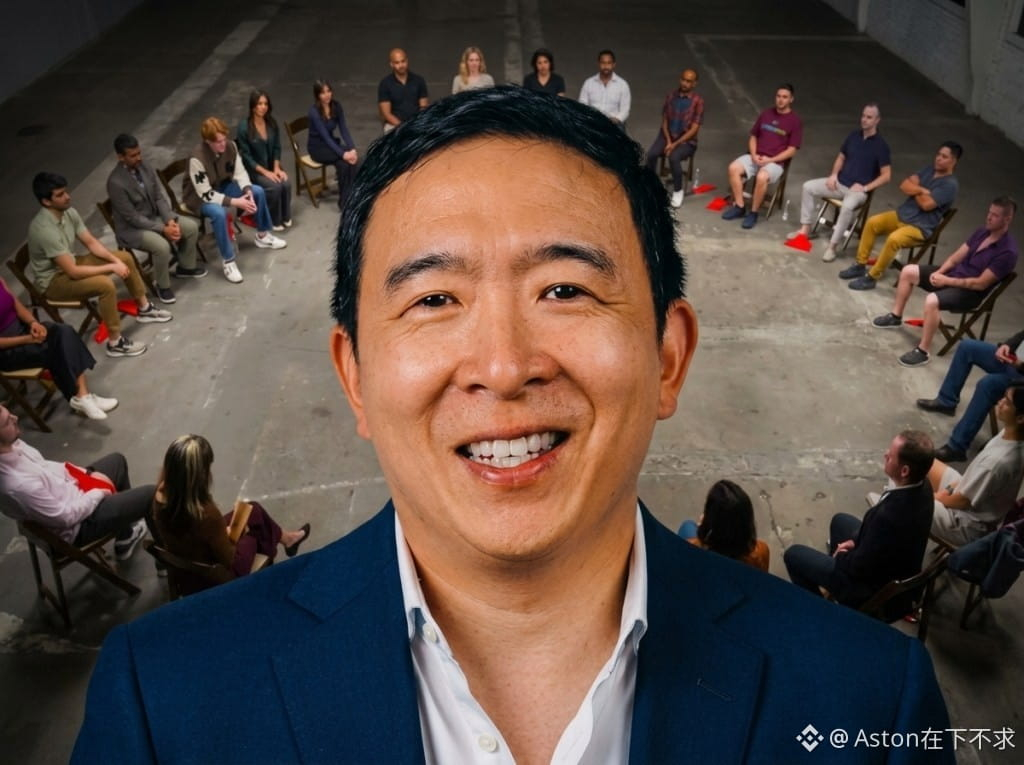
Yang Anze appeared on the Surrounded program with AI optimists for a logical debate. He believes AI will cause job losses and enable a winner-takes-all outcome for tech giants. He proposes a “data dividend” argument, saying that when tech companies use personal data, they should share profits with the content providers. In terms of policy, he puts forward a value-added tax reform, using taxation to capture excess profits from tech giants and build a healthier economic environment.
Yang Anze advocates tax reform to prevent AI from widening inequality
In the debate, Yang Anze pointed out that companies use data from the public without compensation, with yearly value reaching more than 300 billion US dollars, yet the public cannot get any share of the profits. As AI advances drive a wave of automation, it is accelerating pressure on job positions. Yang proposes the “Data Dividend” theory, arguing that content providers should receive a share of corporate profits. He also advocates introducing a value-added tax as a tax-policy tool to capture tech giants’ tax avoidance and excess profits, thereby building a reliable safety net for the economy.
Winner-takes-all for tech giants
The development of artificial intelligence is pushing a “winner-takes-all” market structure, with capital, data, and computing power highly concentrated in a small number of tech giants. Although AI lowers technical barriers, it is accelerating the reduction of white-collar roles in the middle layer—such as lawyers, accountants, and data analysts—leading to job polarization. Large enterprises train models with free data provided by the public to extract huge profits, while ordinary people do not share in the results. People’s capital then turns toward investing in AI servers and data centers. Companies may even stop hiring newcomers in order to reduce headcount, further driving up the hidden unemployment rate.
Universal Basic Income becomes the foundation for economic security
To address the pressure of labor-market transition, Yang consistently supports implementing “Universal Basic Income” and “data dividends.” He believes that personal data has enormous value in business. When tech companies use personal data and creative content to train AI models, they should pay corresponding licensing and profit-sharing. In policy terms, the approach could reference sovereign wealth funds or weighted-tech indices, allocating part of the proceeds to provide a universal basic dividend. People who receive dividends would then invest the money in local consumption, helping drive a regional economic feedback loop.
Paying by users is the only reasonable economic model
Yang shared a personal case. An AI company, in order to have its models learn from the books he wrote, paid him a licensing fee of 2,500 US dollars through a publisher. He argues that if every content creator received a similar licensing fee when their data is used to train AI models, that would be a fair and reasonable economic model.
Value-added tax as a tax tool to combat tax avoidance
Traditional corporate income tax is easy for tech giants to exploit through cross-border transfers or accounting manipulation, causing the tax base to leak. He advocates introducing a value-added tax so that each stage of value creation in digital services, ad clicks, and data transactions can be directly taxed, reducing companies’ ability to cut taxes. The funds raised through the value-added tax can be steadily injected into a universal basic income mechanism, turning the excess profits brought by AI into public goods and ensuring that society fairly shares the economic fruits of technological progress.
Key takeaways and summary notes in this article
AI development is accelerating the concentration of capital and data, forming a winner-takes-all situation that disrupts middle-class white-collar jobs and intensifies job polarization.
Companies are shifting investment away from physical office buildings to data centers. By freezing hiring and cutting workforce, unemployment rates rise.
Personal data is an important resource for training AI models. A data licensing and profit-sharing mechanism should be established to return tech giants’ profits to the providers.
He advocates rolling out Universal Basic Income, using data dividends and value-added tax as funding sources to provide basic economic security.
Traditional corporate income tax is difficult to prevent cross-border tax avoidance; a value-added tax should be introduced to tax at the stage of transaction value creation, channeling tech excess-profit cycles back into local economies.
This article Yang Anze advocates tech giants paying to use public data to train AI models first appeared in .
Yang Anze appeared on the Surrounded program with AI optimists for a logical debate. He believes AI will cause job losses and enable a winner-takes-all outcome for tech giants. He proposes a “data dividend” argument, saying that when tech companies use personal data, they should share profits with the content providers. In terms of policy, he puts forward a value-added tax reform, using taxation to capture excess profits from tech giants and build a healthier economic environment.
Yang Anze advocates tax reform to prevent AI from widening inequality
In the debate, Yang Anze pointed out that companies use data from the public without compensation, with yearly value reaching more than 300 billion US dollars, yet the public cannot get any share of the profits. As AI advances drive a wave of automation, it is accelerating pressure on job positions. Yang proposes the “Data Dividend” theory, arguing that content providers should receive a share of corporate profits. He also advocates introducing a value-added tax as a tax-policy tool to capture tech giants’ tax avoidance and excess profits, thereby building a reliable safety net for the economy.
Winner-takes-all for tech giants
The development of artificial intelligence is pushing a “winner-takes-all” market structure, with capital, data, and computing power highly concentrated in a small number of tech giants. Although AI lowers technical barriers, it is accelerating the reduction of white-collar roles in the middle layer—such as lawyers, accountants, and data analysts—leading to job polarization. Large enterprises train models with free data provided by the public to extract huge profits, while ordinary people do not share in the results. People’s capital then turns toward investing in AI servers and data centers. Companies may even stop hiring newcomers in order to reduce headcount, further driving up the hidden unemployment rate.
Universal Basic Income becomes the foundation for economic security
To address the pressure of labor-market transition, Yang consistently supports implementing “Universal Basic Income” and “data dividends.” He believes that personal data has enormous value in business. When tech companies use personal data and creative content to train AI models, they should pay corresponding licensing and profit-sharing. In policy terms, the approach could reference sovereign wealth funds or weighted-tech indices, allocating part of the proceeds to provide a universal basic dividend. People who receive dividends would then invest the money in local consumption, helping drive a regional economic feedback loop.
Paying by users is the only reasonable economic model
Yang shared a personal case. An AI company, in order to have its models learn from the books he wrote, paid him a licensing fee of 2,500 US dollars through a publisher. He argues that if every content creator received a similar licensing fee when their data is used to train AI models, that would be a fair and reasonable economic model.
Value-added tax as a tax tool to combat tax avoidance
Traditional corporate income tax is easy for tech giants to exploit through cross-border transfers or accounting manipulation, causing the tax base to leak. He advocates introducing a value-added tax so that each stage of value creation in digital services, ad clicks, and data transactions can be directly taxed, reducing companies’ ability to cut taxes. The funds raised through the value-added tax can be steadily injected into a universal basic income mechanism, turning the excess profits brought by AI into public goods and ensuring that society fairly shares the economic fruits of technological progress.
Key takeaways and summary notes in this article
AI development is accelerating the concentration of capital and data, forming a winner-takes-all situation that disrupts middle-class white-collar jobs and intensifies job polarization.
Companies are shifting investment away from physical office buildings to data centers. By freezing hiring and cutting workforce, unemployment rates rise.
Personal data is an important resource for training AI models. A data licensing and profit-sharing mechanism should be established to return tech giants’ profits to the providers.
He advocates rolling out Universal Basic Income, using data dividends and value-added tax as funding sources to provide basic economic security.
Traditional corporate income tax is difficult to prevent cross-border tax avoidance; a value-added tax should be introduced to tax at the stage of transaction value creation, channeling tech excess-profit cycles back into local economies.
This article Yang Anze advocates tech giants paying to use public data to train AI models first appeared in .