
超人不会飞2020
3.6k Posts

超人不会飞2020
 Square Verified+
Report
Block User
X:@super55668
Open Trade

BTC Holder
Frequent Trader
6.3 Years
653 Following
96.8K+ Followers
157.6K+ Liked
Posts
Portfolio
All
Quotes
Videos
Live
·
--
BTC has rebounded from $55,000 to above $61,000, and plenty of people are calling the bottom confirmed!
I think this looks more like a technical bounce driven by short covering and drying-up liquidity than a trend reversal.
First, how did this rally happen?
The Nasdaq took a beating last week, and BTC drifted lower along with it, even touching its lowest level since last September over the weekend. The sharp drop wiped out a ton of leveraged long positions. Once that leverage was flushed out, shorts closed their positions, and the price naturally bounced. This kind of rally tends to come and go quickly, especially with Europe and the US heading into holidays this week and liquidity already thin.
Next, the key variables to watch this week
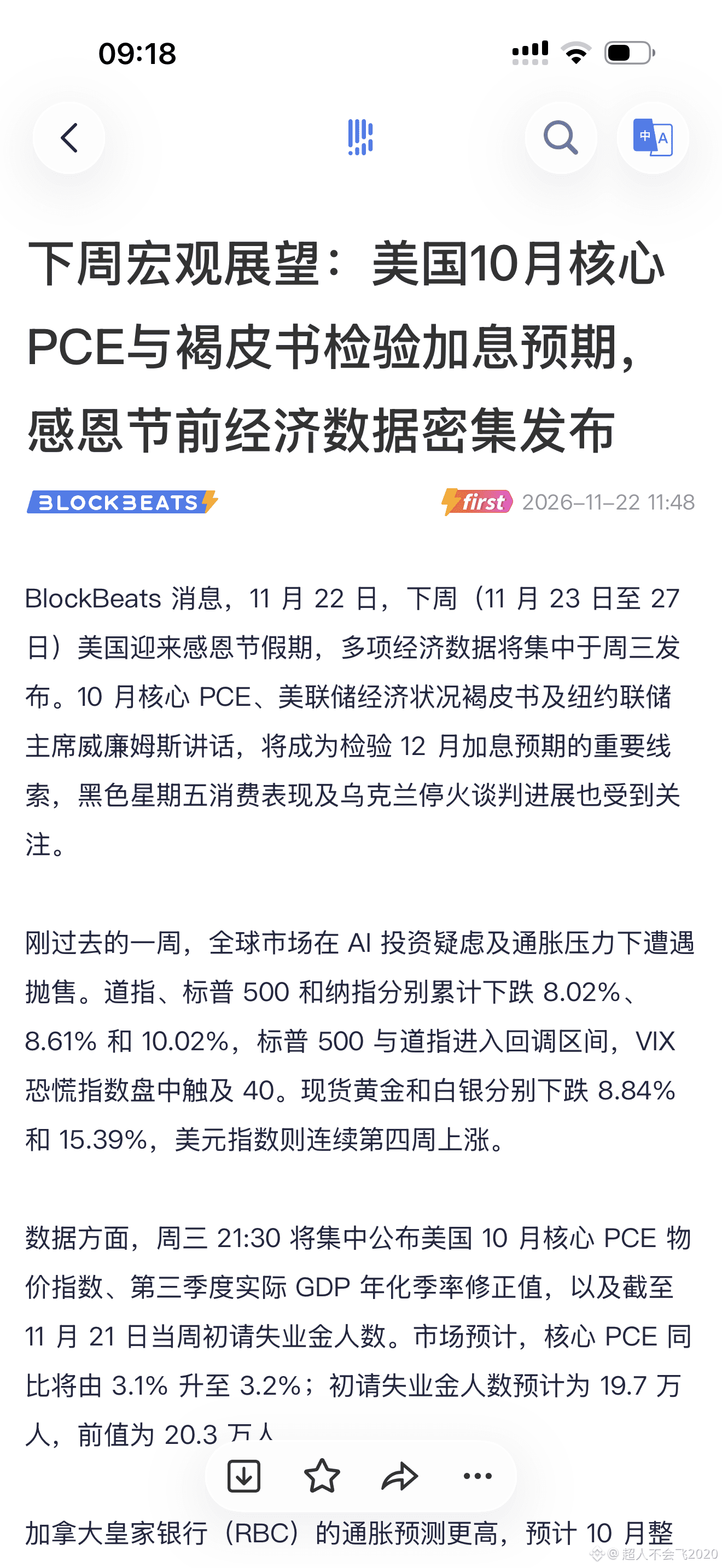
Wednesday’s PCE inflation and revised GDP data: If the numbers come in hot, expectations for higher interest rates will rise again, and Bitcoin may not hold up. If the data cools, risk assets may get some breathing room, but it’s still hard to see a sustained rally taking off right away.
Finally, there’s the liquidity issue
US markets are closed for Thanksgiving on Thursday and have a half-day session on Friday, with ETFs halting trading as well. Crypto markets never close, but with big-money players stepping away, volatility could increase. False rallies and breakouts are common during low-liquidity holiday periods.
There’s also the flow of funds
Spot ETFs saw more than $3 billion in net outflows in November. Institutions are still pulling out rather than buying the dip. If funds keep flowing out during the rebound, this rally will have very little substance.
So, my view is:
In the short term, BTC could reach $63,000–$65,000, but that would just be a recovery after an excessive drop, not the start of a new bull run.
For a trend reversal, we’d need to see:
BTC hold above $62,000, ETF flows turn positive, macro conditions signal rate cuts, and fear ease. None of these has happened yet.
#感恩节交易周开启,市场能否迎来修复性反弹?
25
1
54
61.2k
·
--
November 24 | Crypto Morning Briefing
Bitcoin rebounded along with U.S. stocks last night, rising before pulling back. It is currently fluctuating around $61,000. This rebound was mainly driven by short covering. The Fear & Greed Index remains in the extreme fear zone, and spot ETFs saw continued net outflows last week, leaving market sentiment fragile.
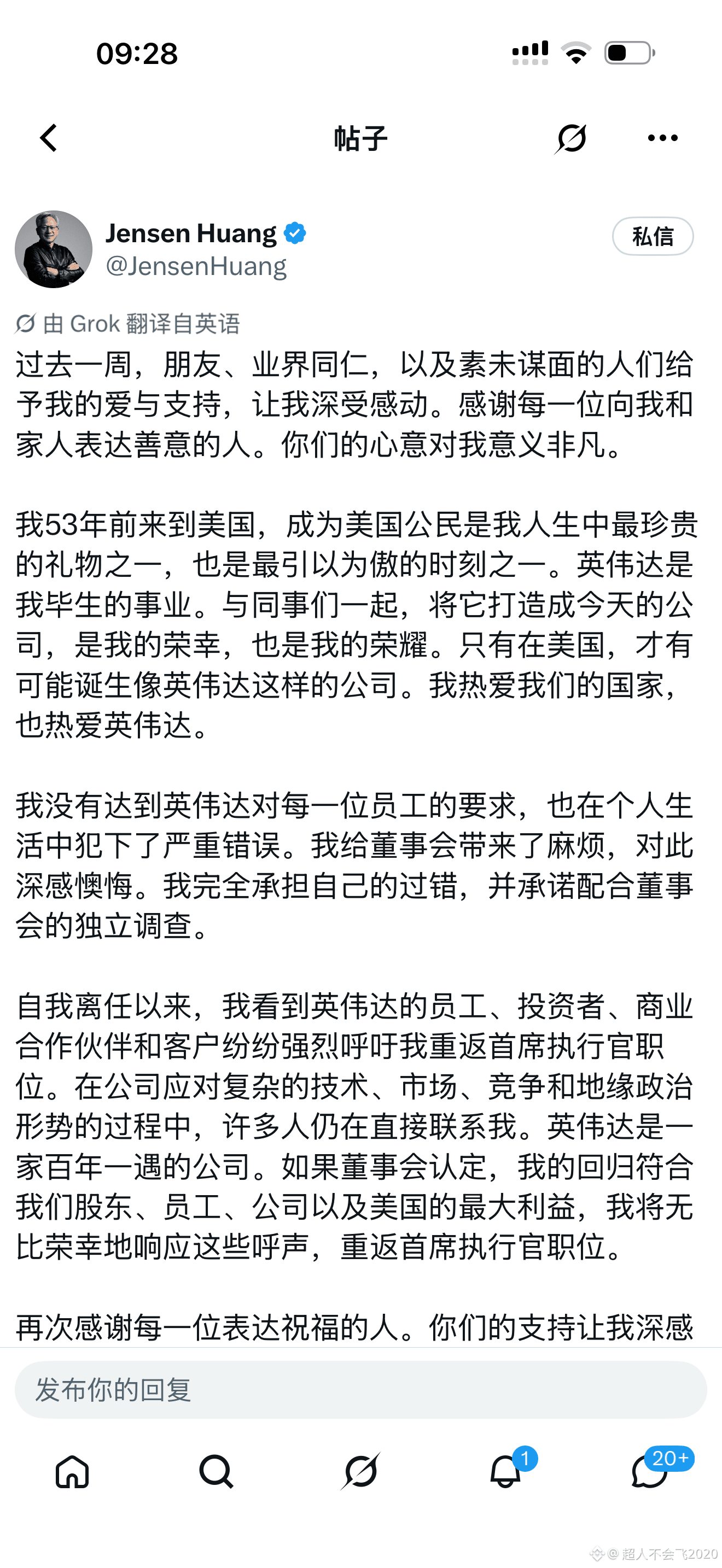
Key event: 11 days after Jensen Huang resigned, Nvidia’s board unanimously approved his return, with Trump publicly voicing his support. The news sent Nvidia shares up 31.5% at the close, adding nearly $1 trillion to its market cap in a single day. The Nasdaq surged, while mining stocks and crypto-related stocks rallied across the board, with IREN and MARA among the top gainers.
The market sees this as a confidence booster for the AI sector, though some believe this alone is not enough to reverse the trend, and that clearer signals of easing from the Federal Reserve are still needed.
Token unlock pressure today: MON and SOSO both have large token unlocks, which could weigh on altcoins. Don’t blindly chase prices higher.
Other news:
1. Strategy continues to accumulate BTC and buy back STRC. Refer to official announcements for its exact holdings and purchase amounts.
2. The cash costs of many publicly listed mining companies are now above current prices, and some mining facilities have begun converting their power and buildings into AI computing centers.
Also, keep an eye on Federal Reserve official Williams’ speech, Germany’s IFO data, and U.S. consumer confidence data today.
Overall, volatility remains high. A rebound has emerged, but the fundamentals of ETF outflows and weak sentiment have not changed. Both bulls and bears should avoid being too aggressive in the short term.
{future}(BTCUSDT)
November 24 | Crypto Morning Briefing
Bitcoin rebounded along with U.S. stocks last night, rising before pulling back. It is currently fluctuating around $61,000. This rebound was mainly driven by short covering. The Fear & Greed Index remains in the extreme fear zone, and spot ETFs saw continued net outflows last week, leaving market sentiment fragile.
Key event: 11 days after Jensen Huang resigned, Nvidia’s board unanimously approved his return, with Trump publicly voicing his support. The news sent Nvidia shares up 31.5% at the close, adding nearly $1 trillion to its market cap in a single day. The Nasdaq surged, while mining stocks and crypto-related stocks rallied across the board, with IREN and MARA among the top gainers.
The market sees this as a confidence booster for the AI sector, though some believe this alone is not enough to reverse the trend, and that clearer signals of easing from the Federal Reserve are still needed.
Token unlock pressure today: MON and SOSO both have large token unlocks, which could weigh on altcoins. Don’t blindly chase prices higher.
Other news:
1. Strategy continues to accumulate BTC and buy back STRC. Refer to official announcements for its exact holdings and purchase amounts.
2. The cash costs of many publicly listed mining companies are now above current prices, and some mining facilities have begun converting their power and buildings into AI computing centers.
Also, keep an eye on Federal Reserve official Williams’ speech, Germany’s IFO data, and U.S. consumer confidence data today.
Overall, volatility remains high. A rebound has emerged, but the fundamentals of ETF outflows and weak sentiment have not changed. Both bulls and bears should avoid being too aggressive in the short term.
3
2.7k
·
--
Niu Gulu Renxun makes a powerful comeback
#英伟达恢复黄仁勋CEO职务,市场吹响反攻号角
Niu Gulu Renxun makes a powerful comeback
#英伟达恢复黄仁勋CEO职务,市场吹响反攻号角
#英伟达恢复黄仁勋CEO职务,市场吹响反攻号角
1
4
1.2k
·
--
Superman 100U DCA BTC | Day 101
Keep dollar-cost averaging and patiently wait for the next opportunity. Then go all in to lower the average cost
If prices rise later, sell what I bought at the bottom two days ago first; if they fall, buy the dip
$BTC
Superman 100U DCA BTC | Day 101
Keep dollar-cost averaging and patiently wait for the next opportunity. Then go all in to lower the average cost
If prices rise later, sell what I bought at the bottom two days ago first; if they fall, buy the dip
$BTC
Keep dollar-cost averaging and patiently wait for the next opportunity. Then go all in to lower the average cost
If prices rise later, sell what I bought at the bottom two days ago first; if they fall, buy the dip
$BTC
4
1.2k
·
--
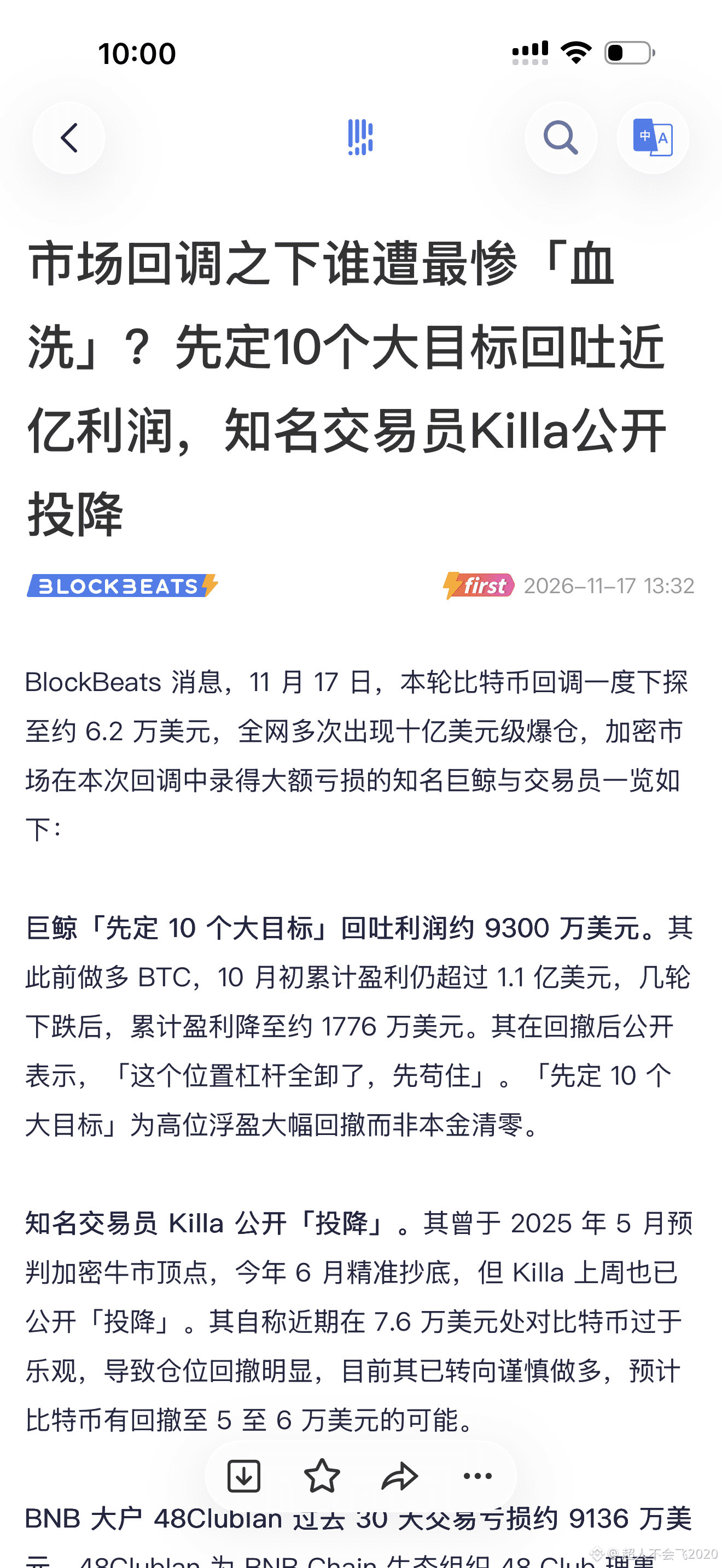
Bitcoin plunged from around $55,000 in a massive red candle, and the market instantly swung into extreme fear. Many people were saying the bear market was here.
Then it climbed back above $60,000, up nearly 9%!
Why the rise? Because quite a few whales quietly scooped up coins amid the panic.
Who’s buying? Let’s break it down:
First, Abraxas Capital and its Heka Funds. When Bitcoin fell below $60,000, they withdrew around 17,597 BTC directly from exchanges, worth over $1 billion, at an average price of $59,200.
Second, MSBT, the spot ETF under Morgan Stanley. It added nearly 800 BTC during the downturn, bringing its total holdings to 12,448 BTC. That’s real money flowing in through ETF subscriptions, showing that funds are using regulated channels to buy the dip.
Third, a well-known whale on Hyperliquid added leveraged long positions.
We also need to look at selling pressure.
During the same period, an address transferred more than 2,000 BTC to Binance, so potential selling pressure is there. But the dollar-denominated selling pressure represented by an equivalent amount of BTC is already considerably weaker than before.
Superman’s take:
Whale buying doesn’t mean a major bull run is about to begin. Macro liquidity, U.S. stocks, and ETF flows will still weigh on the market.
I’m more inclined to see this rebound as a recovery after panic selling was flushed out; the trend hasn’t fully reversed. So don’t blindly follow the whales. The key is to watch whether accumulation continues during any further pullbacks. Managing your own position is what really matters.
#多名巨鲸逢低买入,比特币回升突破6万美元

6
1
17
26.9k
·
--
11/23 Morning | Crypto Market Briefing
From last night through this morning, the market is still grinding out a bottom, and sentiment remains in extreme fear. BTC is hovering around $60,000. After dipping to around $55,000 at its low a couple of days ago, it rebounded, but trading volume was average and the recovery was not especially convincing.
A few notable developments:
1. Cumulative outflows from U.S. spot BTC ETFs have reached $3.47 billion in November, and BlackRock’s IBIT set a new record for its largest single-day outflow. Institutions are still reducing their positions. It’s not a full-scale capitulation, but there’s also no clear sign of inflows returning.
2. During this pullback, Abraxas Capital scooped up nearly $900 million worth of BTC (about 15,000 BTC), withdrawing it from Kraken and Binance. Someone is buying the dip, but not at a scale that can support the market yet.
3. The Ahr999 buy-the-dip indicator is still hovering around 0.27, having stayed below 0.3 for several days in a row and nearing the extreme lows seen around March 12, 2020. Historically, this level has coincided with market bottoms a few times, but this time it has lasted longer than during the previous two instances.
4. After the Chainflip hack, an on-chain message was sent to the hacker, offering to let them keep 10% as a bounty if they return the remaining 90%. The deadline is the 23rd. Following abnormal minting on Cyber, Upbit and Bithumb suspended deposits and withdrawals.
Key things to watch today:
Monad (MON) has its one-year anniversary unlock, with around 16 billion tokens—more than half of the current circulating supply—scheduled to unlock, likely in the morning UTC. Altcoins are facing considerable pressure.
On the macro front, Thanksgiving week is about to begin, U.S. stock markets will be closed, and PCE data is also due this week, so overall liquidity is likely to be quieter. Jiang Zhuoer also said earlier that the bear market may drag on for another 2–3 months, so don’t rush to expect a V-shaped recovery.
In short: fear is still here, and some are buying, but neither liquidity nor sentiment has turned around yet. Watch the unlock and the reaction before U.S. markets open today, and don’t get carried away.
{future}(BTCUSDT)
11/23 Morning | Crypto Market Briefing
From last night through this morning, the market is still grinding out a bottom, and sentiment remains in extreme fear. BTC is hovering around $60,000. After dipping to around $55,000 at its low a couple of days ago, it rebounded, but trading volume was average and the recovery was not especially convincing.
A few notable developments:
1. Cumulative outflows from U.S. spot BTC ETFs have reached $3.47 billion in November, and BlackRock’s IBIT set a new record for its largest single-day outflow. Institutions are still reducing their positions. It’s not a full-scale capitulation, but there’s also no clear sign of inflows returning.
2. During this pullback, Abraxas Capital scooped up nearly $900 million worth of BTC (about 15,000 BTC), withdrawing it from Kraken and Binance. Someone is buying the dip, but not at a scale that can support the market yet.
3. The Ahr999 buy-the-dip indicator is still hovering around 0.27, having stayed below 0.3 for several days in a row and nearing the extreme lows seen around March 12, 2020. Historically, this level has coincided with market bottoms a few times, but this time it has lasted longer than during the previous two instances.
4. After the Chainflip hack, an on-chain message was sent to the hacker, offering to let them keep 10% as a bounty if they return the remaining 90%. The deadline is the 23rd. Following abnormal minting on Cyber, Upbit and Bithumb suspended deposits and withdrawals.
Key things to watch today:
Monad (MON) has its one-year anniversary unlock, with around 16 billion tokens—more than half of the current circulating supply—scheduled to unlock, likely in the morning UTC. Altcoins are facing considerable pressure.
On the macro front, Thanksgiving week is about to begin, U.S. stock markets will be closed, and PCE data is also due this week, so overall liquidity is likely to be quieter. Jiang Zhuoer also said earlier that the bear market may drag on for another 2–3 months, so don’t rush to expect a V-shaped recovery.
In short: fear is still here, and some are buying, but neither liquidity nor sentiment has turned around yet. Watch the unlock and the reaction before U.S. markets open today, and don’t get carried away.
11
5.4k
·
--
Superman 100U BTC DCA | Day 100
Good evening 🫶 I spent the whole day out and about, and now my legs are aching. Here’s a little evening dose of tough love: Loving yourself is the beginning of a lifelong romance.
Girls, remember: before you try to please the world, please yourself 😂
It’s been 100 days of dollar-cost averaging, and here’s one little takeaway: rather than battling the ups and downs every day, let time take care of the volatility.
$BTC
6
6
1.7k
·
--
Superhuman 100U BTC DCA | Day 99
🎤 Ninety-nine Daughter Red, buried for eighteen winters
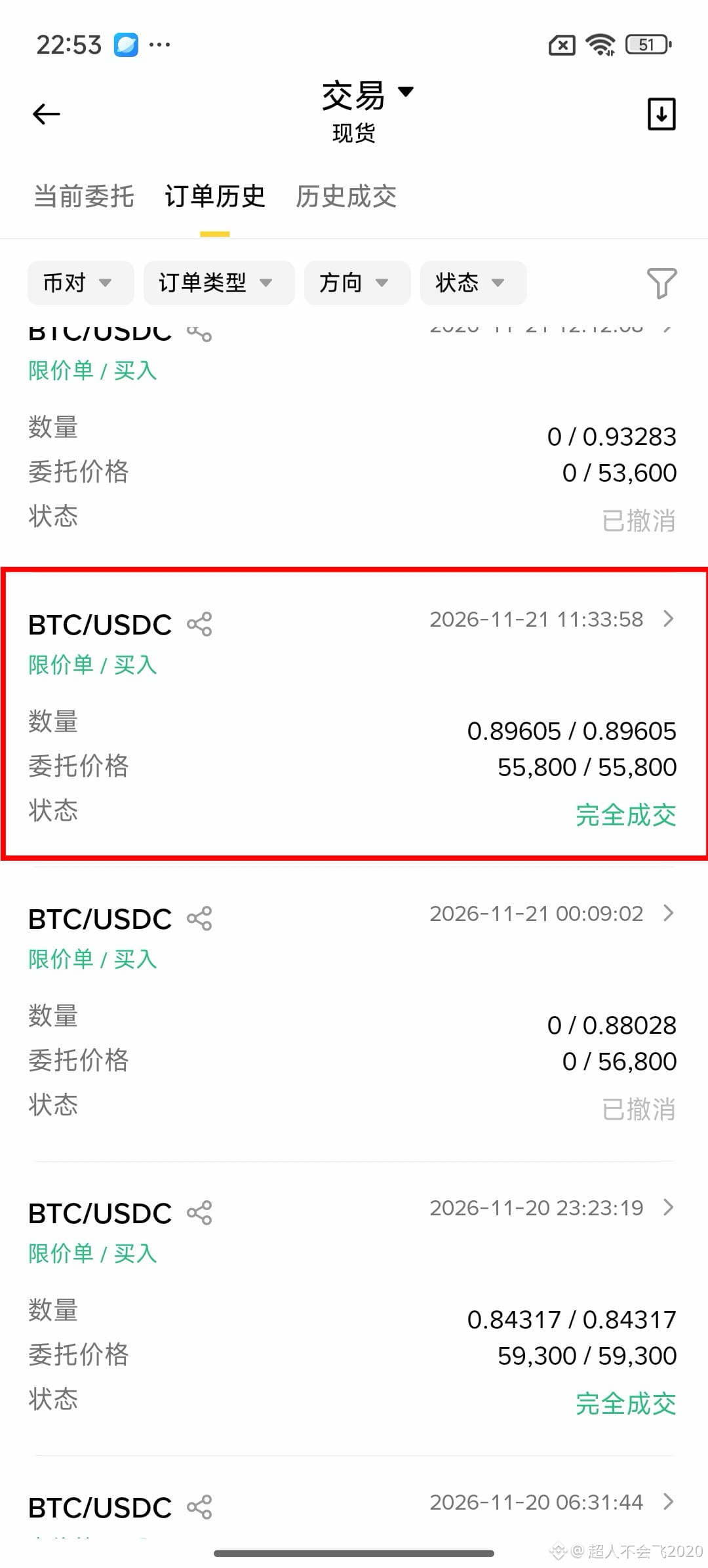
It’s day 99 of DCA, and I finally did something sensible: properly bought the dip at 55,800 😂 Sadly, I only placed an order for 50,000 U. I’ve noticed that the more discounted it gets, the less willing everyone is to buy. Do people just like paying more?
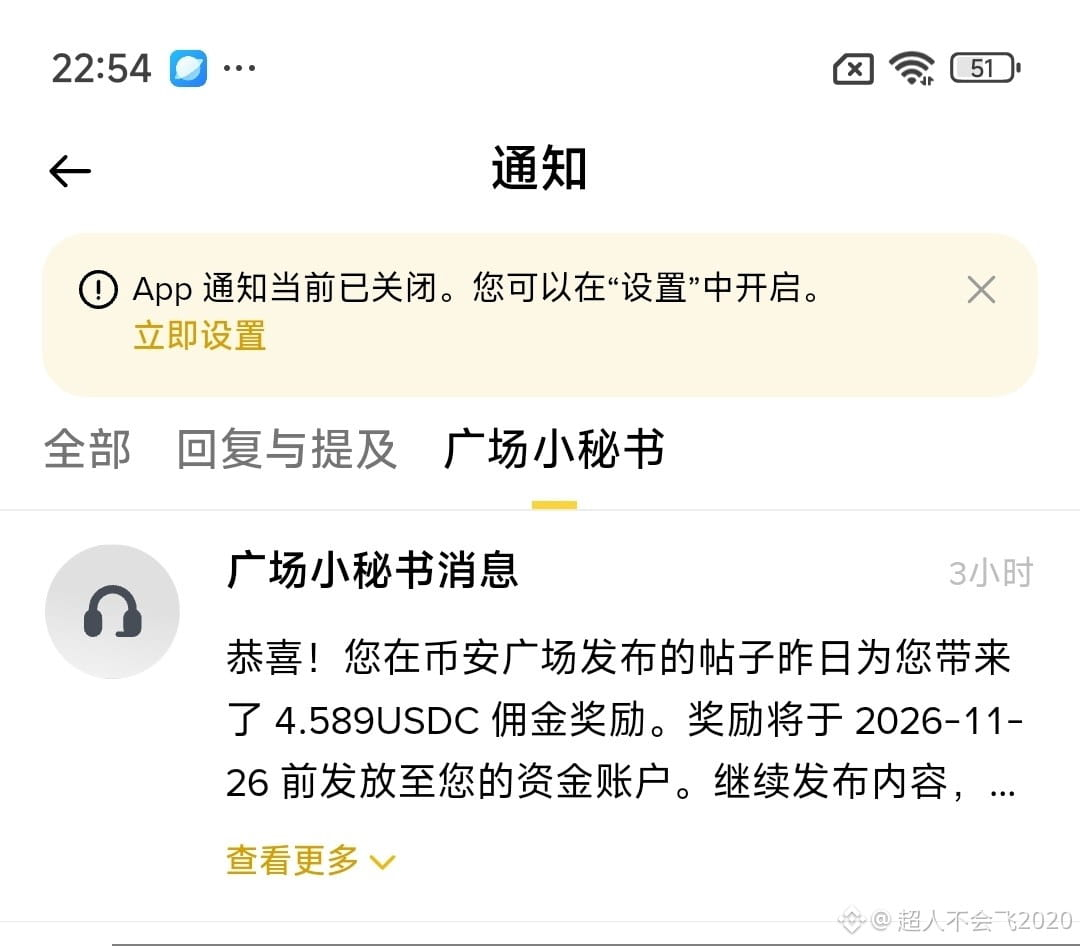
Also, I’ve mined my biggest “windfall” yet on the Square: 4.589 U 🙃 At this rate, I’ll have enough for a mantou again in no time!
$BTC
4
11
1.9k
·
--
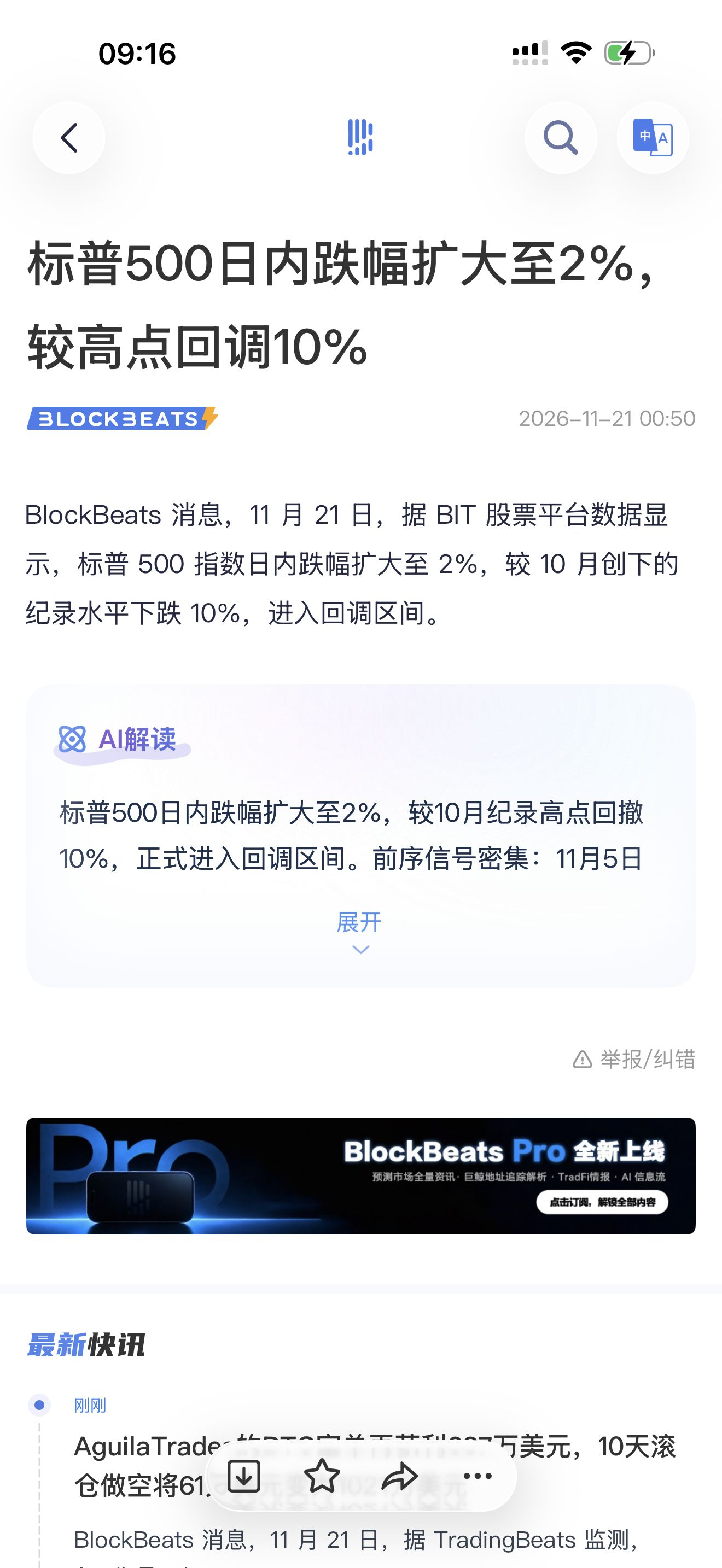
Last night, BTC hit a low of $57,778, its lowest level since July, and fell straight through $60,000.
BlackRock’s IBIT also saw its largest-ever single-day outflow, with $541 million withdrawn.
My take:
You can’t focus only on crypto, because global risk assets are all shrinking. U.S. AI stocks have crashed, Nvidia continues to slide, and newly listed Anthropic and SpaceX are both nearing their offering prices. The Nasdaq has plunged, gold and crude oil have weakened, and the market has started repricing expectations for the Fed’s December rate decision. Macro sentiment has clearly tightened. 😰
Against this backdrop, although Trump voiced support for crypto payments and criticized high interest rates, his comments still failed to prop up the market. Ethereum, Solana, and altcoins have all fallen more than BTC, showing that selling pressure is widespread and can’t be offset by a single positive catalyst.
BTC may find some stability in the short term, but don’t expect a quick V-shaped reversal. It will most likely bottom out through choppy trading. The key support level to watch is $58,500: if it holds and volume contracts, BTC could rebound to around $62,000. But if it breaks below that level on heavy volume, the next stop could be $53,700.
#比特币跌破6万美元,短期能否企稳反弹?
4
1
12
6.7k
·
--
Verified
Superman’s 100U BTC DCA | Day 98
U.S. stocks have been getting absolutely hammered. I really misread the market again!
I bought Nvidia at 156, and now it’s at 140. Sigh—the line between buying the dip and getting wiped out is razor-thin. Honestly, buying in around 150 was already pretty conservative, and even that left me stuck holding the bag~
Whether you’re investing or speculating, you need nerves of steel.
1
1
2.6k
·
--
Partly True
Nvidia’s latest drama feels awkward
Q3 revenue came in at 115.8 billion, with Q4 guidance of 130 billion—stunning numbers. But the stock just can’t hold up; it promptly broke below $150. The market is voting with its feet.
The core conflict isn’t Huang himself; it’s what the board is saying
At the earnings call, Harvey Jones stated emphatically that the board had “unanimously accepted the resignation and was not considering reinstatement.” Then Semafor reported that three of the ten directors were pushing for Huang to return. Three isn’t a majority, but the word “unanimously” has already fallen apart. When you make a definitive public statement but can’t contain internal disagreements, investors will wonder: if you can’t even manage your own board, why should I trust you to run a company on Nvidia’s scale?
Huang’s position, meanwhile, is very savvy: “If it’s in the best interests of shareholders, employees, and the company, I’d be willing to return.” It sounds conciliatory, but it puts the ball back in the board’s court without closing the door.
The successor situation is even more awkward: Arm’s Rene Haas is reportedly concerned that taking the top job “at a time like this would look like riding the calls for Huang’s return to power.” More than ten thousand people who signed the petition claim to be current employees. If someone takes the job now, can they really hold on to it?
TSMC’s actions are more telling than analysts’ words
Just a week after Huang stepped down, TSMC tightened customer credit, requiring cash upfront for orders beyond contracted amounts. TSMC is the company best positioned to understand the real demand for AI chips, and it had no reason to make a move at this particular moment. The fact that it did suggests it is reassessing whether Nvidia, without Jensen Huang, still deserves the same credit terms. Trust in a supply chain has always been built through people. When the people change, payment terms have to be renegotiated.
The business can stay steady in the short term, but the cracks will show over the next two or three quarters
I think there are two signals to watch closely:
Whether customers start asking to add “key person clauses” to contracts, and whether TSMC continues tightening payment terms. If both happen, this is no longer just a governance dispute—the entire ecosystem is repricing Nvidia.
At that point, whether there are three or five votes on the board won’t matter. $NVDAB
#英伟达董事会曝分歧,三名董事支持黄仁勋回归
2
1
13
17.5k
·
--
11.20 Morning Briefing
Bitcoin fell below 62,000 this morning and is now hovering around 61,980. The Fear and Greed Index is still at 10; extreme fear hasn’t let up. Prices have been sliding steadily since mid-November, and the weekly chart has already taken a pretty hard hit.
Spot Bitcoin ETFs continue to see outflows: on the 18th, they had another net outflow of over $300 million, with all 12 seeing no inflows. November’s cumulative outflows have now come close to $3 billion. Institutions really aren’t buying in right now, and liquidity is also drying up.
The biggest news is that Anthropic is going public today, priced at $83 a share and raising over $80 billion—the largest IPO in history. On-chain tokenized assets are also generating plenty of buzz, and CZ said they’d be available on BNB Chain on the first day. Some think this will divert money away from crypto, while others are hoping that, like after SpaceX went public, risk appetite will pick up and give the market a boost.
The Fed minutes were hawkish, and rate-hike expectations remain (some are even talking about 50 basis points). The dollar is strong, risk assets are broadly weak, and gold, silver, and copper are also getting hammered.
The market is still generally trending down, while AI and L2 tokens are holding up relatively better. Binance is still working to recover assets linked to the hack.
{future}(BTCUSDT)
11.20 Morning Briefing
Bitcoin fell below 62,000 this morning and is now hovering around 61,980. The Fear and Greed Index is still at 10; extreme fear hasn’t let up. Prices have been sliding steadily since mid-November, and the weekly chart has already taken a pretty hard hit.
Spot Bitcoin ETFs continue to see outflows: on the 18th, they had another net outflow of over $300 million, with all 12 seeing no inflows. November’s cumulative outflows have now come close to $3 billion. Institutions really aren’t buying in right now, and liquidity is also drying up.
The biggest news is that Anthropic is going public today, priced at $83 a share and raising over $80 billion—the largest IPO in history. On-chain tokenized assets are also generating plenty of buzz, and CZ said they’d be available on BNB Chain on the first day. Some think this will divert money away from crypto, while others are hoping that, like after SpaceX went public, risk appetite will pick up and give the market a boost.
The Fed minutes were hawkish, and rate-hike expectations remain (some are even talking about 50 basis points). The dollar is strong, risk assets are broadly weak, and gold, silver, and copper are also getting hammered.
The market is still generally trending down, while AI and L2 tokens are holding up relatively better. Binance is still working to recover assets linked to the hack.
5
10.8k
·
--
Superman 100U BTC DCA | Day 97
Good news! I managed to beg for another 1.13U today.
Bitcoin went up a little today, but everyone stay calm. Don’t act like you’ve never had a decent meal in your life 😂 Calm down, calm down, calm down. You’ve seen it all—don’t panic. After a big enough dip, it’ll always bounce back.
Good news! I managed to beg for another 1.13U today.
Bitcoin went up a little today, but everyone stay calm. Don’t act like you’ve never had a decent meal in your life 😂 Calm down, calm down, calm down. You’ve seen it all—don’t panic. After a big enough dip, it’ll always bounce back.
2
10
2k
·
--
Verified
What makes people trust an AI that handles on-chain transactions to get its calculations right? That’s the direct reason I started paying attention to @SpaceandTimeDB .
AI, asset tokenization, and DeFi may seem like different fields, but they share the same underlying need: results must be verifiable. That’s what Space and Time’s Proof of SQL is designed for. Queries and computations are performed by prover nodes, which also generate cryptographic proofs. Once an application receives the result, it can directly confirm that the computation was correctly based on the data—without having to rerun it itself.
This really resonates with me when it comes to farming airdrops and participating in DeFi reward campaigns. Anyone who’s taken part knows that after completing all the interactions, whether you actually get the reward is mostly up to the project team. If contributions and trading volumes could be publicly checked using verifiable proofs, at least people could verify them for themselves. There’d be far fewer complaints about backroom deals, and a little more trust.
Following that logic, the same applies when AI Agents analyze protocol campaigns. If fee records and historical data come with proofs after they’re retrieved, subsequent decisions have a clear basis instead of relying on an unsupported report.
That brings us to the role of $SXT : paying verification fees and supporting verifier security through staking. How data is stored, queried, and verified is the chain this token is embedded in—it hasn’t been artificially bolted on.
The public mainnet launched in May 2025, and in November, v2 added support for custom off-chain data tables, making it easier for institutions to connect their asset data and verify it. The Microsoft Fabric integration, joint sales partners, and Virtual Vaults for institutional lending all show that it’s moving toward enterprise use cases.
Of course, partnerships don’t equal real usage. Generating proofs has a cost, and it remains to be seen whether performance and latency can meet business demands. Whether the token can accrue value ultimately depends on developers continuing to integrate it.
What I’d most like to see is Proof of SQL becoming part of the everyday workflows of AI, tokenization, and DeFi—a verification layer that can be called on repeatedly, rather than something that remains at the demo stage. No matter how impressive the technology is, what matters in the end is whether anyone uses it.
#sxt $SXT @SpaceandTimeDB
What makes people trust an AI that handles on-chain transactions to get its calculations right? That’s the direct reason I started paying attention to @SpaceandTime .
AI, asset tokenization, and DeFi may seem like different fields, but they share the same underlying need: results must be verifiable. That’s what Space and Time’s Proof of SQL is designed for. Queries and computations are performed by prover nodes, which also generate cryptographic proofs. Once an application receives the result, it can directly confirm that the computation was correctly based on the data—without having to rerun it itself.
This really resonates with me when it comes to farming airdrops and participating in DeFi reward campaigns. Anyone who’s taken part knows that after completing all the interactions, whether you actually get the reward is mostly up to the project team. If contributions and trading volumes could be publicly checked using verifiable proofs, at least people could verify them for themselves. There’d be far fewer complaints about backroom deals, and a little more trust.
Following that logic, the same applies when AI Agents analyze protocol campaigns. If fee records and historical data come with proofs after they’re retrieved, subsequent decisions have a clear basis instead of relying on an unsupported report.
That brings us to the role of $SXT : paying verification fees and supporting verifier security through staking. How data is stored, queried, and verified is the chain this token is embedded in—it hasn’t been artificially bolted on.
The public mainnet launched in May 2025, and in November, v2 added support for custom off-chain data tables, making it easier for institutions to connect their asset data and verify it. The Microsoft Fabric integration, joint sales partners, and Virtual Vaults for institutional lending all show that it’s moving toward enterprise use cases.
Of course, partnerships don’t equal real usage. Generating proofs has a cost, and it remains to be seen whether performance and latency can meet business demands. Whether the token can accrue value ultimately depends on developers continuing to integrate it.
What I’d most like to see is Proof of SQL becoming part of the everyday workflows of AI, tokenization, and DeFi—a verification layer that can be called on repeatedly, rather than something that remains at the demo stage. No matter how impressive the technology is, what matters in the end is whether anyone uses it.
#sxt $SXT @SpaceandTime
8
5.9k
·
--
Yesterday, Nvidia’s third-quarter earnings absolutely crushed market expectations.
Q3 revenue came in at 115.8 billion, with data centers shouldering most of the load. Even more impressive, its Q4 guidance came in at 130 billion—and that’s assuming zero revenue from its China business. Interim CEO Kress also raised the full-year growth outlook, and Vera Rubin shipments are ramping up quickly.
The most interesting part was the earnings call.
Just after Jensen Huang said he’d be willing to return, the board laid its cards on the table: they’re not considering it for now and have already started looking for a new CEO. They’re making it pretty clear that the company is heading into the post-Jensen Huang era.
People had been asking whether AI was overheating. But look at the data: token prices are falling while usage is multiplying, and demand for compute is still booming. Naturally, the companies selling the picks and shovels are making a killing.
For crypto, the signal is pretty clear.
These results have steadied risk appetite for tech growth stocks, which is a positive for BTC and compute-related narratives. Sectors like decentralized compute and AI agents have a solid short-term case again.
Of course, there are still risks.
Gross margins are trending down, with rising memory prices and new-product ramp-ups squeezing profits. Geopolitical risks haven’t gone away either. Whether management can keep the strategy on track and avoid supply-chain disruptions are both things to watch.
But my own view is that there’s no sign yet of a peak in the AI capex cycle. Nvidia has beaten expectations again and again, and the orders are right there. Money flows toward a narrative, and the compute theme is still the main story. For now, don’t rush to turn bearish.
#英伟达财报大超预期,Q4营收展望1300亿美元 #黄仁勋能否复任CEO?英伟达董事会:暂不考虑
8
1.8k
·
--
11.20 Crypto Morning Briefing
Morning, everyone. The market is still weak.
BTC has been grinding back and forth between 62,000 and 64,000, briefly touching 62,500 last night. ETH fell below 1,800. The Fear & Greed Index is at 11, still in extreme fear territory. It has dropped by more than ten points over the past week and more than twenty over the past month.
Gold broke above 3,800, while silver fell 5%. Fed officials are taking a hawkish stance. Waller said the Fed should either raise rates by 50 basis points in December or signal that move in advance. The market has already priced in a 25-basis-point rate hike in December. The dollar is strengthening, putting pressure on high-risk assets across the board. Nvidia's earnings were impressive, and U.S. stock futures are holding up, but crypto hasn't followed suit—capital is flowing into AI stocks instead.
Glassnode says this sell-off is approaching a historical local bottom. The 62,000–66,000 range is a major accumulation zone; if it fails to hold, prices could fall further. Spot ETFs continue to see outflows, with a net outflow of 240 million on the 17th, marking several consecutive days of declines. A court has supported Binance's efforts to recover 45% of the stolen funds, which is a small positive.
The Coinbase CEO said this cycle's bottom may already be in. He also predicted that AI agents will account for 99.9% of trading volume in ten years—a very aggressive claim.
Interest in the Anthropic IPO remains high. Someone has taken a large short position on it via Hyperliquid, and there are plenty of rumors about capital being diverted. A few large holders have been buying the dip in ETH on-chain, but overall demand is weak, and the stablecoin supply continues to shrink.
The main pressures are rate-hike expectations and ETF outflows, while the AI rally is drawing capital away. 62,000 is a key short-term level; if it breaks, prices will likely head toward the low 50,000s. Fear is running high, and some people are starting to buy the dip, but the leverage hasn't been fully flushed out yet.
{future}(BTCUSDT)
11.20 Crypto Morning Briefing
Morning, everyone. The market is still weak.
BTC has been grinding back and forth between 62,000 and 64,000, briefly touching 62,500 last night. ETH fell below 1,800. The Fear & Greed Index is at 11, still in extreme fear territory. It has dropped by more than ten points over the past week and more than twenty over the past month.
Gold broke above 3,800, while silver fell 5%. Fed officials are taking a hawkish stance. Waller said the Fed should either raise rates by 50 basis points in December or signal that move in advance. The market has already priced in a 25-basis-point rate hike in December. The dollar is strengthening, putting pressure on high-risk assets across the board. Nvidia's earnings were impressive, and U.S. stock futures are holding up, but crypto hasn't followed suit—capital is flowing into AI stocks instead.
Glassnode says this sell-off is approaching a historical local bottom. The 62,000–66,000 range is a major accumulation zone; if it fails to hold, prices could fall further. Spot ETFs continue to see outflows, with a net outflow of 240 million on the 17th, marking several consecutive days of declines. A court has supported Binance's efforts to recover 45% of the stolen funds, which is a small positive.
The Coinbase CEO said this cycle's bottom may already be in. He also predicted that AI agents will account for 99.9% of trading volume in ten years—a very aggressive claim.
Interest in the Anthropic IPO remains high. Someone has taken a large short position on it via Hyperliquid, and there are plenty of rumors about capital being diverted. A few large holders have been buying the dip in ETH on-chain, but overall demand is weak, and the stablecoin supply continues to shrink.
The main pressures are rate-hike expectations and ETF outflows, while the AI rally is drawing capital away. 62,000 is a key short-term level; if it breaks, prices will likely head toward the low 50,000s. Fear is running high, and some people are starting to buy the dip, but the leverage hasn't been fully flushed out yet.
1
11
5k
·
--
Superman’s 100U BTC DCA | Day 96
The US stock market is falling so hard it’s making everyone nervous. Those of you already stuck holding the bag, let’s call each other idiots.
I’ve lost my shirt on US stocks. If you’re starting to buy today, it’s not too bad, but I’m not adding to my US stock positions for now. I’ll wait for a rebound and then sell everything.
Then I’ll wait for another pullback and buy back in once both Bitcoin and US stocks have finished correcting.
In this market, is anyone still making money? If so, you’re a damn legend.
1
5
1.6k
·
--
Today, November 18, Anthropic has finalized its IPO pricing. It will list on Nasdaq tomorrow under the ticker ANT.
Here’s my take.
1. Pricing
The offering range is $70 to $78, and market sentiment is clearly pushing toward a premium. At the top of the range, the valuation comes to $1.4 trillion. SpaceX just set the IPO record, and it could be broken tomorrow. This is no longer the usual unicorn play—it’s going straight for the biggest IPO in history.
2. I took a look at the prospectus, and the picture is decidedly mixed.
Revenue is undeniably surging: more than $33 billion in the first nine months, with annualized revenue reaching $81 billion in October. Claude’s expansion among enterprise customers and developers has exceeded expectations. That’s the strong side. But on the other hand, there are nearly $900 billion in commitments to computing infrastructure, with more than $70 billion set to be spent within a year. The money raised in this IPO, together with private funding from several major tech companies, is only enough to cover short-term needs. The funding gap is enormous. So this isn’t just a growth story—it’s high growth alongside limitless cash burn. If you buy in, you’re betting that its cash burn can outpace its ability to raise funds.
3. The impact on crypto
In the short term, some hot money will surely flow into compliant assets like ANT, which could cool crypto sentiment a bit. We’ll see that as soon as the market opens tomorrow.
In the long term, if the AI narrative is validated by real money in the public markets, projects focused on on-chain computing power and AI infrastructure could benefit. ANT’s performance will also recalibrate the market’s risk appetite for high-valuation growth stocks. That signal matters more than whether ANT itself goes up or down.
At the end of the day, AI has entered a capital-intensive computing arms race. It’s no longer about who tells the best story, but who can afford to burn money and withstand the pressure. Tomorrow, I’ll be watching three things closely: the opening premium, turnover, and what the major tech companies have to say. Once those three are clear, we should be able to tell whether this wave of AI IPOs is just an appetizer or the main course.
#Anthropic上市倒计时,AI投资热度迎来检验 #本周财报与宏观事件密集,市场再迎波动考验
7
15
7.6k
·
--
Superhuman 100U BTC DCA|Day 95
I almost forgot to DCA into Bitcoin because I was watching a mukbang 😂
Been so busy every day, stuffing my face with turkey noodles in mukbangs and watching time-travel revenge dramas
My pathetic tears are rolling down from the corners of my mouth 🤤
Superhuman 100U BTC DCA|Day 95
I almost forgot to DCA into Bitcoin because I was watching a mukbang 😂
Been so busy every day, stuffing my face with turkey noodles in mukbangs and watching time-travel revenge dramas
My pathetic tears are rolling down from the corners of my mouth 🤤
I almost forgot to DCA into Bitcoin because I was watching a mukbang 😂
Been so busy every day, stuffing my face with turkey noodles in mukbangs and watching time-travel revenge dramas
My pathetic tears are rolling down from the corners of my mouth 🤤
2
1
6
4.2k
·
--
Nvidia’s earnings after the bell, retail data, and the FOMC minutes are all landing in the same week. Can crypto stay out of the crossfire? Not likely.
First, Nvidia
Jensen Huang just resigned over a scandal and national security concerns, and the CFO is stepping in on an interim basis. Tomorrow morning’s call will be the first without Jensen at the helm. The market is watching not just this quarter’s numbers (guidance is expected to be around $108 billion, plus or minus 2%), but also whether next quarter’s outlook can shore up confidence.
On Monday, Waller mentioned that AI investment could fall short of expectations, weighing on stocks and the economy. The Nasdaq plunged 2.49% that day, semiconductor stocks sank 5.28%, and NVDA fell 4.12%. Options-implied volatility is now around 7%, suggesting everyone is bracing for a big move.
The macro picture
The odds of a 25-basis-point rate hike in December have climbed to 90%, and gold has fallen to a one-year low. Bitcoin is down just 0.65%, so it looks fairly resilient. But IBIT, Coinbase, and Strategy came under clear pressure during U.S. trading hours, spot ETFs have seen net outflows for seven consecutive days, and the Fear & Greed Index is still stuck at 10.
One more thing to keep an eye on:
The U.S. Department of Commerce has introduced an interim rule restricting companies from countries subject to restrictions from remotely accessing advanced chips. The threshold is around 750 H100s, meaning that almost any frontier-level training would require a license. Trump is meeting Xi on the 19th. Could this be used as a bargaining chip? Worth watching.
【My take】
This week will most likely be choppy, with a downward bias. The market has already priced in some of the bad news, so more bad news could be absorbed, while good news could trigger a rebound. Whether it lasts will depend on what Nvidia and the Fed say. Bitcoin is increasingly behaving like a high-beta tech stock, with a stronger correlation to the Nasdaq than any real independence of its own. Put simply, this week isn’t about who can predict the moves best—it’s about who can withstand the volatility.
#本周财报与宏观事件密集,市场再迎波动考验 #加密美股齐跌,下轮反弹的驱动力在哪?

1
15
24.4k
Log in to explore more content
Join global crypto users on Binance Square
⚡️ Get latest and useful information about crypto.
💬 Trusted by the world’s largest crypto exchange.
👍 Discover real insights from verified creators.
Email / Phone number
Trending Topics
Bitcoin'sReboundFadesBelow$60K
3,953 views
103 Discussing
#Bitcoin'sReboundFadesBelow$60K
$60K Is Not a Floor. Bitcoin Traders, Don't Get Trapped.
$BTC bounced to $64K, then the air came out. $60K is a coin flip, not a floor.
$BTC wicked down to ~$55.3K over the weekend, ripped back toward $64.5K, then sold off again. Now it's chopping around $60K, with a daily close near $60.6K and an intraday low at $59.4K.
That's not a reversal. It's a market catching its breath.
What I'm watching:
Sentiment: Split between fear and dip-buyers. Green candles are short, and nobody is defending them.
Exchange flows: Large $BTC withdrawals from exchanges below $60K point to long-term accumulation or custody. Useful context, but it's slow money. It doesn't stop short-term sellers from hitting every pop.
Resistance: Overhead supply is real. Price keeps stalling near ~$61.5K on the daily, while the $64.5K wick was rejected hard.
Higher targets: Above that, equilibrium sits around $70–72K, with the weekly trend line near ~$79.8K.
Support: $55–59K (weekly demand plus the $55.3K sweep low). A weekly close below this zone makes the structure uglier.
Relief bounce vs. confirmed reversal:
Bounce: Price rises into resistance while volume fades.
Reversal: A strong daily/weekly close above the $64.5K rejection high, expanding volume, and a clean hold on the retest.
We have none of that yet.
Until then, $60K is a magnet, and magnets whipsaw leveraged traders in both directions. Catching the bottom with high leverage here just pays the market to stop you out.
💡 Square Insight: No confirmation, no Futures FOMO. Use limit orders at levels you planned in advance, and split Spot buys (DCA) across the range so one wick doesn't decide your whole position.
❓ Are you accumulating Spot in the $55–60K zone, or waiting for a weekly close above $64.5K first?
NFA / DYOR.
#bitcoin $BTC
TuilaNamKy
·0 Likes
·150 views
NVIDIAReinstatesJensenHuangasCEO
226,342 views
1,577 Discussing
WillMarketsStageAThanksgivingReliefRally?
311,323 views
2,355 Discussing