
Nvidia’s latest drama feels awkward
Q3 revenue came in at 115.8 billion, with Q4 guidance of 130 billion—stunning numbers. But the stock just can’t hold up; it promptly broke below $150. The market is voting with its feet.
The core conflict isn’t Huang himself; it’s what the board is saying
At the earnings call, Harvey Jones stated emphatically that the board had “unanimously accepted the resignation and was not considering reinstatement.” Then Semafor reported that three of the ten directors were pushing for Huang to return. Three isn’t a majority, but the word “unanimously” has already fallen apart. When you make a definitive public statement but can’t contain internal disagreements, investors will wonder: if you can’t even manage your own board, why should I trust you to run a company on Nvidia’s scale?
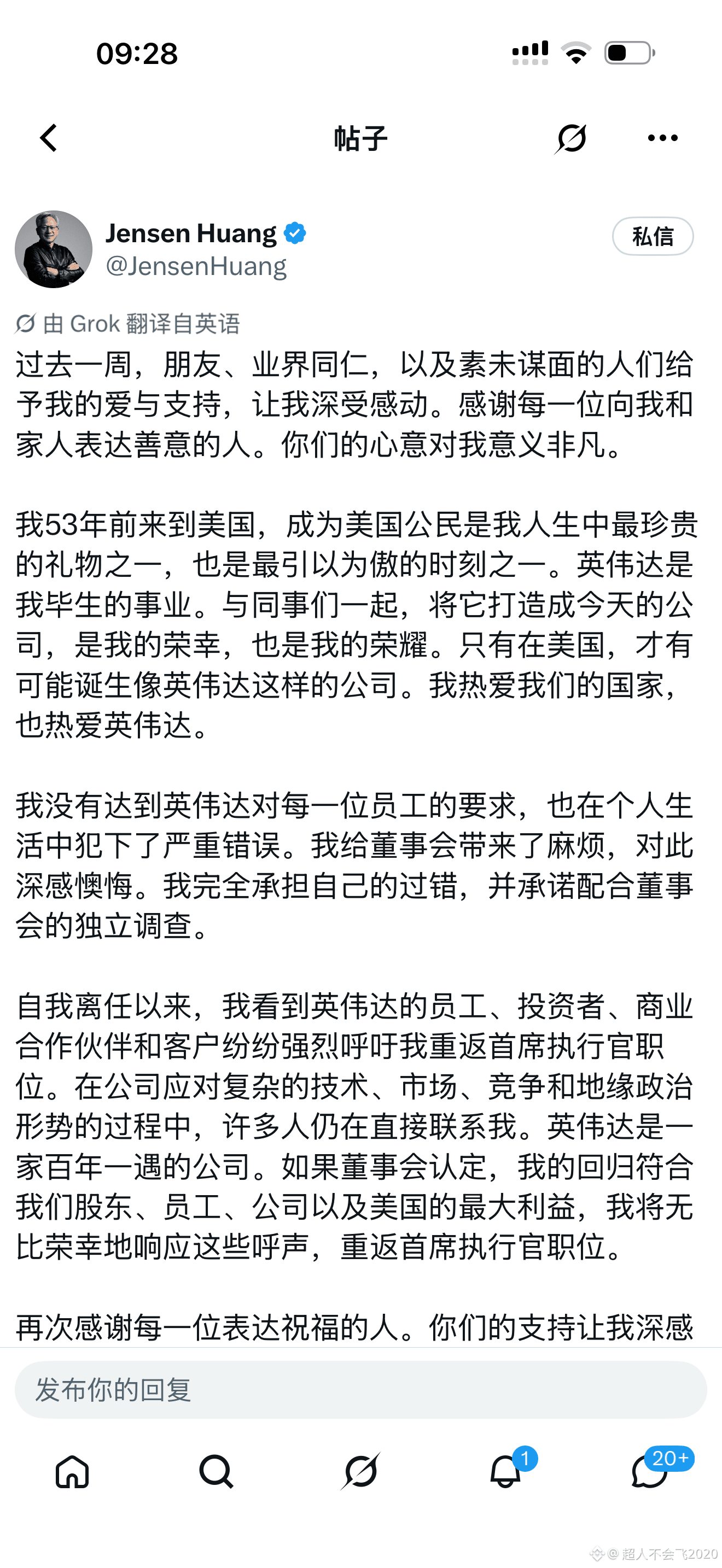
Huang’s position, meanwhile, is very savvy: “If it’s in the best interests of shareholders, employees, and the company, I’d be willing to return.” It sounds conciliatory, but it puts the ball back in the board’s court without closing the door.
The successor situation is even more awkward: Arm’s Rene Haas is reportedly concerned that taking the top job “at a time like this would look like riding the calls for Huang’s return to power.” More than ten thousand people who signed the petition claim to be current employees. If someone takes the job now, can they really hold on to it?
TSMC’s actions are more telling than analysts’ words
Just a week after Huang stepped down, TSMC tightened customer credit, requiring cash upfront for orders beyond contracted amounts. TSMC is the company best positioned to understand the real demand for AI chips, and it had no reason to make a move at this particular moment. The fact that it did suggests it is reassessing whether Nvidia, without Jensen Huang, still deserves the same credit terms. Trust in a supply chain has always been built through people. When the people change, payment terms have to be renegotiated.
The business can stay steady in the short term, but the cracks will show over the next two or three quarters
I think there are two signals to watch closely:
Whether customers start asking to add “key person clauses” to contracts, and whether TSMC continues tightening payment terms. If both happen, this is no longer just a governance dispute—the entire ecosystem is repricing Nvidia.
At that point, whether there are three or five votes on the board won’t matter. $NVDAB
#英伟达董事会曝分歧,三名董事支持黄仁勋回归