

Web3 X先生
1.1k Posts
 LIVE
LIVEWeb3 X先生
Report
Block User
Frequent Trader
5.5 Months
31 Following
2.0K+ Followers
472 Liked
Posts
All
Quotes
Live
·
--
【US-China cut $30 billion in tariffs—can risk assets turn around?🔥📈】
Join X Mr.’s fan group on the homepage🔥
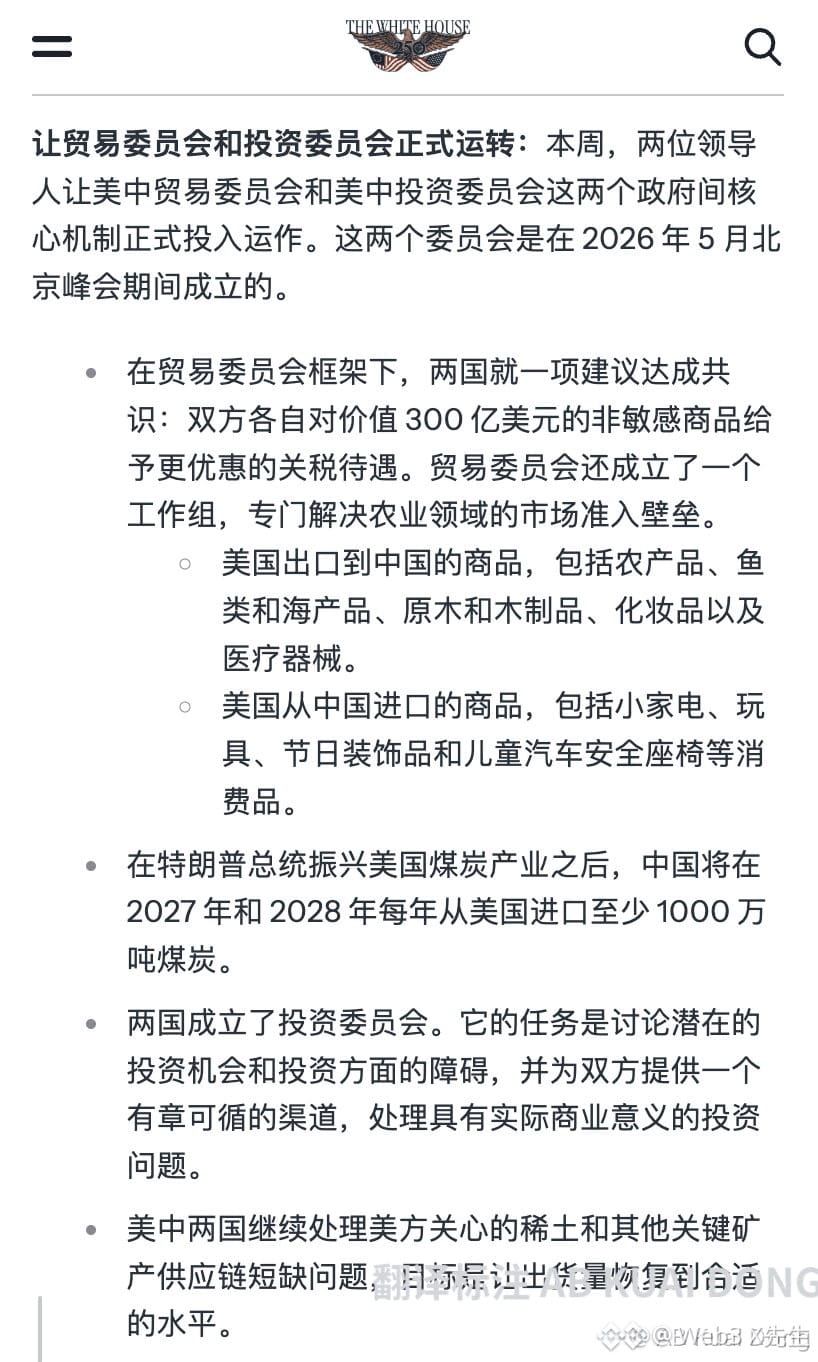
This weekend’s biggest news has no direct link to the crypto space. The US and China sat down and agreed to cut tariffs. They’re cutting the batch of goods worth $30 billion. They also, as a bonus, launched an AI dialogue mechanism. After over two years of nonstop tariff back-and-forth, this is the first time they’ve loosened their stance.🤝
Putting the numbers on the table makes it more intuitive. The size of this batch is $30 billion. Even the portion that was hit hardest by the tariff increases has been softened. The trade truce has also been extended by another two months. Officially, it’s described as “more favorable tariff treatment.” The market understands the subtext.📉
The biggest significance of this for the crypto market is sentiment. When trade calms down, global capital feels bolder about taking risks. Safe-haven assets like the dollar and gold ease first. Risk assets usually get the first smile. Bitcoin has been stuck around 84,000 for the past few weeks. What it’s missing is exactly this kind of external push.⚖️
Now let’s look at another set of even more interesting data. US spot Bitcoin ETFs saw inflows of $2.4 billion this week—its largest weekly inflow since October last year. This money is real, cold hard cash coming in. Yet the price is still hovering near 84,000 and not moving. There’s an obvious disconnect between buy pressure and price.📊
So the picture right now feels a bit strange. On one side, trade is easing. On the other, ETFs are being aggressively bought. But the price looks like it’s being held down by something. Some say it’s profit-taking ahead of year-end. Others say macro big money hasn’t shifted yet.🧐
My take is very simple. News at this scale won’t be fully digested in a single day. If tariffs loosen even a bit, market risk appetite rises a bit. Crypto is the kind of asset that’s most driven by sentiment. Next, just watch the capital flows and the main narrative—everything else is noise.🔍
📌 Tariffs loosen, risk appetite moves first—crypto will catch the wind.
In this wave, do you think Bitcoin can ride the momentum to surge? Let’s discuss in the comments.
【US-China cut $30 billion in tariffs—can risk assets turn around?🔥📈】
Join X Mr.’s fan group on the homepage🔥
This weekend’s biggest news has no direct link to the crypto space. The US and China sat down and agreed to cut tariffs. They’re cutting the batch of goods worth $30 billion. They also, as a bonus, launched an AI dialogue mechanism. After over two years of nonstop tariff back-and-forth, this is the first time they’ve loosened their stance.🤝
Putting the numbers on the table makes it more intuitive. The size of this batch is $30 billion. Even the portion that was hit hardest by the tariff increases has been softened. The trade truce has also been extended by another two months. Officially, it’s described as “more favorable tariff treatment.” The market understands the subtext.📉
The biggest significance of this for the crypto market is sentiment. When trade calms down, global capital feels bolder about taking risks. Safe-haven assets like the dollar and gold ease first. Risk assets usually get the first smile. Bitcoin has been stuck around 84,000 for the past few weeks. What it’s missing is exactly this kind of external push.⚖️
Now let’s look at another set of even more interesting data. US spot Bitcoin ETFs saw inflows of $2.4 billion this week—its largest weekly inflow since October last year. This money is real, cold hard cash coming in. Yet the price is still hovering near 84,000 and not moving. There’s an obvious disconnect between buy pressure and price.📊
So the picture right now feels a bit strange. On one side, trade is easing. On the other, ETFs are being aggressively bought. But the price looks like it’s being held down by something. Some say it’s profit-taking ahead of year-end. Others say macro big money hasn’t shifted yet.🧐
My take is very simple. News at this scale won’t be fully digested in a single day. If tariffs loosen even a bit, market risk appetite rises a bit. Crypto is the kind of asset that’s most driven by sentiment. Next, just watch the capital flows and the main narrative—everything else is noise.🔍
📌 Tariffs loosen, risk appetite moves first—crypto will catch the wind.
In this wave, do you think Bitcoin can ride the momentum to surge? Let’s discuss in the comments.
Join X Mr.’s fan group on the homepage🔥
This weekend’s biggest news has no direct link to the crypto space. The US and China sat down and agreed to cut tariffs. They’re cutting the batch of goods worth $30 billion. They also, as a bonus, launched an AI dialogue mechanism. After over two years of nonstop tariff back-and-forth, this is the first time they’ve loosened their stance.🤝
Putting the numbers on the table makes it more intuitive. The size of this batch is $30 billion. Even the portion that was hit hardest by the tariff increases has been softened. The trade truce has also been extended by another two months. Officially, it’s described as “more favorable tariff treatment.” The market understands the subtext.📉
The biggest significance of this for the crypto market is sentiment. When trade calms down, global capital feels bolder about taking risks. Safe-haven assets like the dollar and gold ease first. Risk assets usually get the first smile. Bitcoin has been stuck around 84,000 for the past few weeks. What it’s missing is exactly this kind of external push.⚖️
Now let’s look at another set of even more interesting data. US spot Bitcoin ETFs saw inflows of $2.4 billion this week—its largest weekly inflow since October last year. This money is real, cold hard cash coming in. Yet the price is still hovering near 84,000 and not moving. There’s an obvious disconnect between buy pressure and price.📊
So the picture right now feels a bit strange. On one side, trade is easing. On the other, ETFs are being aggressively bought. But the price looks like it’s being held down by something. Some say it’s profit-taking ahead of year-end. Others say macro big money hasn’t shifted yet.🧐
My take is very simple. News at this scale won’t be fully digested in a single day. If tariffs loosen even a bit, market risk appetite rises a bit. Crypto is the kind of asset that’s most driven by sentiment. Next, just watch the capital flows and the main narrative—everything else is noise.🔍
📌 Tariffs loosen, risk appetite moves first—crypto will catch the wind.
In this wave, do you think Bitcoin can ride the momentum to surge? Let’s discuss in the comments.
1
232
·
--
【Solana ETF pulled in $188 million in a week—just $11 million short of the all-time high 🔥🚀】
Join X先生’s fan group chat on the homepage 🔥
These data are pretty interesting. The US spot Solana ETF hit a new high again. This week’s net inflows were $188 million. It’s only $11 million away from the $199 million recorded in the first week after launch. The second-highest weekly performance in history. Money has been stacking up week after week. 📈
What’s really wild is what happened on September 25. That day alone saw net inflows of $86.67 million. It was the biggest single day since the Solana ETF launched. In one day, it absorbed nearly half of this week’s total inflow. The buying wasn’t creeping in gradually—it surged. This kind of pace is rarely seen in normal conditions. 💥
The cumulative numbers are rising too. As of September 26, cumulative net inflows reached $1.605 billion. Total net assets are now $1.964 billion. BlackRock’s BSOL pulled in $55.73 million in a single day. Grayscale’s GSOL also added $18.47 million. Real money is moving in. 🐋
On the other side, Bitcoin ETFs are still continuing to attract capital. Meanwhile, Solana quietly refreshed its own record. The same batch of institutions, walking on two legs at once. If BTC gets some allocation, SOL doesn’t want to be left out either. ETF fund flows move faster than the news. 🏦
Why choose Solana? It has plenty of on-chain stablecoins, fast transfers, and low fees. The story isn’t new, but the money acknowledges it. ETF subscriptions are straightforward spot buying, not just “bullish” talk. It’s money actually getting allocated in accounts. That’s a harder signal. 💧
Of course, some people are pouring cold water. SOL’s volatility is much higher than BTC’s. When the market turns, incoming money can turn around too. ETF buying is a slow-moving variable, while price is the fast-moving one. The two sides’ rhythms often don’t line up. Don’t just look at the week-long excitement. ⚠️
📌 One sentence: ETF money is being allocated across buckets, and SOL’s second battleground is already underway.
Will you chase SOL this time? Let’s chat in the comments.
【Solana ETF pulled in $188 million in a week—just $11 million short of the all-time high 🔥🚀】
Join X先生’s fan group chat on the homepage 🔥
These data are pretty interesting. The US spot Solana ETF hit a new high again. This week’s net inflows were $188 million. It’s only $11 million away from the $199 million recorded in the first week after launch. The second-highest weekly performance in history. Money has been stacking up week after week. 📈
What’s really wild is what happened on September 25. That day alone saw net inflows of $86.67 million. It was the biggest single day since the Solana ETF launched. In one day, it absorbed nearly half of this week’s total inflow. The buying wasn’t creeping in gradually—it surged. This kind of pace is rarely seen in normal conditions. 💥
The cumulative numbers are rising too. As of September 26, cumulative net inflows reached $1.605 billion. Total net assets are now $1.964 billion. BlackRock’s BSOL pulled in $55.73 million in a single day. Grayscale’s GSOL also added $18.47 million. Real money is moving in. 🐋
On the other side, Bitcoin ETFs are still continuing to attract capital. Meanwhile, Solana quietly refreshed its own record. The same batch of institutions, walking on two legs at once. If BTC gets some allocation, SOL doesn’t want to be left out either. ETF fund flows move faster than the news. 🏦
Why choose Solana? It has plenty of on-chain stablecoins, fast transfers, and low fees. The story isn’t new, but the money acknowledges it. ETF subscriptions are straightforward spot buying, not just “bullish” talk. It’s money actually getting allocated in accounts. That’s a harder signal. 💧
Of course, some people are pouring cold water. SOL’s volatility is much higher than BTC’s. When the market turns, incoming money can turn around too. ETF buying is a slow-moving variable, while price is the fast-moving one. The two sides’ rhythms often don’t line up. Don’t just look at the week-long excitement. ⚠️
📌 One sentence: ETF money is being allocated across buckets, and SOL’s second battleground is already underway.
Will you chase SOL this time? Let’s chat in the comments.
Join X先生’s fan group chat on the homepage 🔥
These data are pretty interesting. The US spot Solana ETF hit a new high again. This week’s net inflows were $188 million. It’s only $11 million away from the $199 million recorded in the first week after launch. The second-highest weekly performance in history. Money has been stacking up week after week. 📈
What’s really wild is what happened on September 25. That day alone saw net inflows of $86.67 million. It was the biggest single day since the Solana ETF launched. In one day, it absorbed nearly half of this week’s total inflow. The buying wasn’t creeping in gradually—it surged. This kind of pace is rarely seen in normal conditions. 💥
The cumulative numbers are rising too. As of September 26, cumulative net inflows reached $1.605 billion. Total net assets are now $1.964 billion. BlackRock’s BSOL pulled in $55.73 million in a single day. Grayscale’s GSOL also added $18.47 million. Real money is moving in. 🐋
On the other side, Bitcoin ETFs are still continuing to attract capital. Meanwhile, Solana quietly refreshed its own record. The same batch of institutions, walking on two legs at once. If BTC gets some allocation, SOL doesn’t want to be left out either. ETF fund flows move faster than the news. 🏦
Why choose Solana? It has plenty of on-chain stablecoins, fast transfers, and low fees. The story isn’t new, but the money acknowledges it. ETF subscriptions are straightforward spot buying, not just “bullish” talk. It’s money actually getting allocated in accounts. That’s a harder signal. 💧
Of course, some people are pouring cold water. SOL’s volatility is much higher than BTC’s. When the market turns, incoming money can turn around too. ETF buying is a slow-moving variable, while price is the fast-moving one. The two sides’ rhythms often don’t line up. Don’t just look at the week-long excitement. ⚠️
📌 One sentence: ETF money is being allocated across buckets, and SOL’s second battleground is already underway.
Will you chase SOL this time? Let’s chat in the comments.

427
·
--
[Grayscale Unveils a New Move: You Can Earn Yield Even Without Buying Zcash—Payments Every Two Weeks ⚡🔥]
Join Mr. X’s fan group on the homepage 🔥
Grayscale has submitted a new filing to regulators. This time, its target is Zcash. It wants to create an ETF specifically designed to capture yield. The name is the ZCSH High-Yield Fund. Filed on September 25, it has not been approved yet. The key point: it won’t hold the coins—only options. ⚡
The strategy is to buy call options and sell put options. Then, sell part of the call options to collect rent. The premiums are accumulated and paid out every two weeks. Out in the market, this approach is called a synthetic covered call. Sounds great on the surface, but the cost is hidden behind the scenes. If the underlying surges too hard, your upside can be capped. 💰
It’s not the same as the older ZCSH. The old product was delisted from the NYSE on August 25. What it holds is real ZEC. This month, its scale just crossed the $1 billion mark. It has nearly more than doubled within a month. Options contracts began trading only on September 8. 📊
The distribution plan does not specify a fixed yield rate. Grayscale says the amount and nature will change. In extreme cases, it may even return your own principal. Management fees, code, and the exchange are all left blank. The effective date is written as 75 days after approval goes into effect. Right now, it’s just a waiting game for regulatory clearance. 💸
Grayscale isn’t the only one doing this. BlackRock’s Bitcoin covered-call ETF is already running. It launched on Nasdaq in June. Zcash’s rise over the past two years has been absolutely wild—since the start of this year, it’s jumped nearly 28-fold. Privacy coins suddenly became hot commodities. 🚀
The problem is it can’t capture those big upside moves. If ZEC continues to surge, you only get a small portion. If ZEC truly drops, losses are fully on you. This is essentially exchanging upside potential for cash flow. There’s no such thing as a good deal that benefits both sides in the market. It sells not the coin, but volatility itself. ⚖️
📌 Grayscale is turning Zcash into a yield-capture tool—it feeds on volatility, not bullish momentum.
Would you buy a product that eats yield but not upside? Let’s discuss in the comments.
[Grayscale Unveils a New Move: You Can Earn Yield Even Without Buying Zcash—Payments Every Two Weeks ⚡🔥]
Join Mr. X’s fan group on the homepage 🔥
Grayscale has submitted a new filing to regulators. This time, its target is Zcash. It wants to create an ETF specifically designed to capture yield. The name is the ZCSH High-Yield Fund. Filed on September 25, it has not been approved yet. The key point: it won’t hold the coins—only options. ⚡
The strategy is to buy call options and sell put options. Then, sell part of the call options to collect rent. The premiums are accumulated and paid out every two weeks. Out in the market, this approach is called a synthetic covered call. Sounds great on the surface, but the cost is hidden behind the scenes. If the underlying surges too hard, your upside can be capped. 💰
It’s not the same as the older ZCSH. The old product was delisted from the NYSE on August 25. What it holds is real ZEC. This month, its scale just crossed the $1 billion mark. It has nearly more than doubled within a month. Options contracts began trading only on September 8. 📊
The distribution plan does not specify a fixed yield rate. Grayscale says the amount and nature will change. In extreme cases, it may even return your own principal. Management fees, code, and the exchange are all left blank. The effective date is written as 75 days after approval goes into effect. Right now, it’s just a waiting game for regulatory clearance. 💸
Grayscale isn’t the only one doing this. BlackRock’s Bitcoin covered-call ETF is already running. It launched on Nasdaq in June. Zcash’s rise over the past two years has been absolutely wild—since the start of this year, it’s jumped nearly 28-fold. Privacy coins suddenly became hot commodities. 🚀
The problem is it can’t capture those big upside moves. If ZEC continues to surge, you only get a small portion. If ZEC truly drops, losses are fully on you. This is essentially exchanging upside potential for cash flow. There’s no such thing as a good deal that benefits both sides in the market. It sells not the coin, but volatility itself. ⚖️
📌 Grayscale is turning Zcash into a yield-capture tool—it feeds on volatility, not bullish momentum.
Would you buy a product that eats yield but not upside? Let’s discuss in the comments.
Join Mr. X’s fan group on the homepage 🔥
Grayscale has submitted a new filing to regulators. This time, its target is Zcash. It wants to create an ETF specifically designed to capture yield. The name is the ZCSH High-Yield Fund. Filed on September 25, it has not been approved yet. The key point: it won’t hold the coins—only options. ⚡
The strategy is to buy call options and sell put options. Then, sell part of the call options to collect rent. The premiums are accumulated and paid out every two weeks. Out in the market, this approach is called a synthetic covered call. Sounds great on the surface, but the cost is hidden behind the scenes. If the underlying surges too hard, your upside can be capped. 💰
It’s not the same as the older ZCSH. The old product was delisted from the NYSE on August 25. What it holds is real ZEC. This month, its scale just crossed the $1 billion mark. It has nearly more than doubled within a month. Options contracts began trading only on September 8. 📊
The distribution plan does not specify a fixed yield rate. Grayscale says the amount and nature will change. In extreme cases, it may even return your own principal. Management fees, code, and the exchange are all left blank. The effective date is written as 75 days after approval goes into effect. Right now, it’s just a waiting game for regulatory clearance. 💸
Grayscale isn’t the only one doing this. BlackRock’s Bitcoin covered-call ETF is already running. It launched on Nasdaq in June. Zcash’s rise over the past two years has been absolutely wild—since the start of this year, it’s jumped nearly 28-fold. Privacy coins suddenly became hot commodities. 🚀
The problem is it can’t capture those big upside moves. If ZEC continues to surge, you only get a small portion. If ZEC truly drops, losses are fully on you. This is essentially exchanging upside potential for cash flow. There’s no such thing as a good deal that benefits both sides in the market. It sells not the coin, but volatility itself. ⚖️
📌 Grayscale is turning Zcash into a yield-capture tool—it feeds on volatility, not bullish momentum.
Would you buy a product that eats yield but not upside? Let’s discuss in the comments.

226
·
--
【BlackRock squeezes five ETFs into a single coin and sells it only to people outside the U.S.🏦🔥】
Join the X Mr. fan group chat on the homepage🔥
Five ETFs can now be compressed into one token. Previously, you had to buy separately and rebalance separately. BlackRock simply released three sets of portfolio “recipes.” On September 24, these recipes went live. Each one contains a full basket of assets. How to allocate, how often to rebalance—everything is hard-coded into the code.🪙
The division of labor in this deal is pretty subtle. BlackRock only provides the strategy and the model. The issuance, custody, and distribution all fall to Ondo. That means BlackRock doesn’t bear the responsibility for issuance. It’s clearly stated in the disclosure documents. If something goes wrong, you won’t be looking for BlackRock.🔍
There’s also a more glaring detail. The funds in the basket may be BlackRock’s own. Every time the portfolio is configured, it charges an additional management fee. The party designing the strategy is the same party collecting the fees. It’s not a violation—it's written plainly in the disclosure documents. It’s just that buyers usually can’t find that page.👀
The threshold is also interesting. These products are only sold to people outside the United States. U.S. investors can’t even get in the door. The official reasons given are compliance and licensing. But the ones that went overseas first are… U.S. giants. The order is increasingly intriguing the more you think about it.🌍
The real novelty is the form factor. One company wants to allocate a global mix of stocks, bonds, and Bitcoin. Previously you’d need to open multiple accounts and place multiple orders. Now you can mint a single token—everything is in there. You can also use it as collateral and plug it into DeFi. You can still trade it over the weekend.🔗
But weekend trading hides a trap. The token can be transferred, but the underlying stocks and ETFs cannot. When you sell on the weekend, there’s no real-time price for what’s underneath. Calculating net asset value and redemptions suddenly becomes hard. Liquidity also gets discounted accordingly. Convenient, yes—but the cost is real.🧊
📌 Five ETFs squeezed into one coin: BlackRock provides the strategy, Ondo absorbs the risk, and buyers are limited to those outside the U.S.
With this “one-coin-to-pack-an-entire-portfolio” approach, would you dare to jump in? Let’s talk in the comments.
【BlackRock squeezes five ETFs into a single coin and sells it only to people outside the U.S.🏦🔥】
Join the X Mr. fan group chat on the homepage🔥
Five ETFs can now be compressed into one token. Previously, you had to buy separately and rebalance separately. BlackRock simply released three sets of portfolio “recipes.” On September 24, these recipes went live. Each one contains a full basket of assets. How to allocate, how often to rebalance—everything is hard-coded into the code.🪙
The division of labor in this deal is pretty subtle. BlackRock only provides the strategy and the model. The issuance, custody, and distribution all fall to Ondo. That means BlackRock doesn’t bear the responsibility for issuance. It’s clearly stated in the disclosure documents. If something goes wrong, you won’t be looking for BlackRock.🔍
There’s also a more glaring detail. The funds in the basket may be BlackRock’s own. Every time the portfolio is configured, it charges an additional management fee. The party designing the strategy is the same party collecting the fees. It’s not a violation—it's written plainly in the disclosure documents. It’s just that buyers usually can’t find that page.👀
The threshold is also interesting. These products are only sold to people outside the United States. U.S. investors can’t even get in the door. The official reasons given are compliance and licensing. But the ones that went overseas first are… U.S. giants. The order is increasingly intriguing the more you think about it.🌍
The real novelty is the form factor. One company wants to allocate a global mix of stocks, bonds, and Bitcoin. Previously you’d need to open multiple accounts and place multiple orders. Now you can mint a single token—everything is in there. You can also use it as collateral and plug it into DeFi. You can still trade it over the weekend.🔗
But weekend trading hides a trap. The token can be transferred, but the underlying stocks and ETFs cannot. When you sell on the weekend, there’s no real-time price for what’s underneath. Calculating net asset value and redemptions suddenly becomes hard. Liquidity also gets discounted accordingly. Convenient, yes—but the cost is real.🧊
📌 Five ETFs squeezed into one coin: BlackRock provides the strategy, Ondo absorbs the risk, and buyers are limited to those outside the U.S.
With this “one-coin-to-pack-an-entire-portfolio” approach, would you dare to jump in? Let’s talk in the comments.
Join the X Mr. fan group chat on the homepage🔥
Five ETFs can now be compressed into one token. Previously, you had to buy separately and rebalance separately. BlackRock simply released three sets of portfolio “recipes.” On September 24, these recipes went live. Each one contains a full basket of assets. How to allocate, how often to rebalance—everything is hard-coded into the code.🪙
The division of labor in this deal is pretty subtle. BlackRock only provides the strategy and the model. The issuance, custody, and distribution all fall to Ondo. That means BlackRock doesn’t bear the responsibility for issuance. It’s clearly stated in the disclosure documents. If something goes wrong, you won’t be looking for BlackRock.🔍
There’s also a more glaring detail. The funds in the basket may be BlackRock’s own. Every time the portfolio is configured, it charges an additional management fee. The party designing the strategy is the same party collecting the fees. It’s not a violation—it's written plainly in the disclosure documents. It’s just that buyers usually can’t find that page.👀
The threshold is also interesting. These products are only sold to people outside the United States. U.S. investors can’t even get in the door. The official reasons given are compliance and licensing. But the ones that went overseas first are… U.S. giants. The order is increasingly intriguing the more you think about it.🌍
The real novelty is the form factor. One company wants to allocate a global mix of stocks, bonds, and Bitcoin. Previously you’d need to open multiple accounts and place multiple orders. Now you can mint a single token—everything is in there. You can also use it as collateral and plug it into DeFi. You can still trade it over the weekend.🔗
But weekend trading hides a trap. The token can be transferred, but the underlying stocks and ETFs cannot. When you sell on the weekend, there’s no real-time price for what’s underneath. Calculating net asset value and redemptions suddenly becomes hard. Liquidity also gets discounted accordingly. Convenient, yes—but the cost is real.🧊
📌 Five ETFs squeezed into one coin: BlackRock provides the strategy, Ondo absorbs the risk, and buyers are limited to those outside the U.S.
With this “one-coin-to-pack-an-entire-portfolio” approach, would you dare to jump in? Let’s talk in the comments.

292
·
--
【An ETF just got approved, this coin skyrocketed 26% in a day 🔥🚀】
Join the X先生 fan group chat from the homepage 🔥
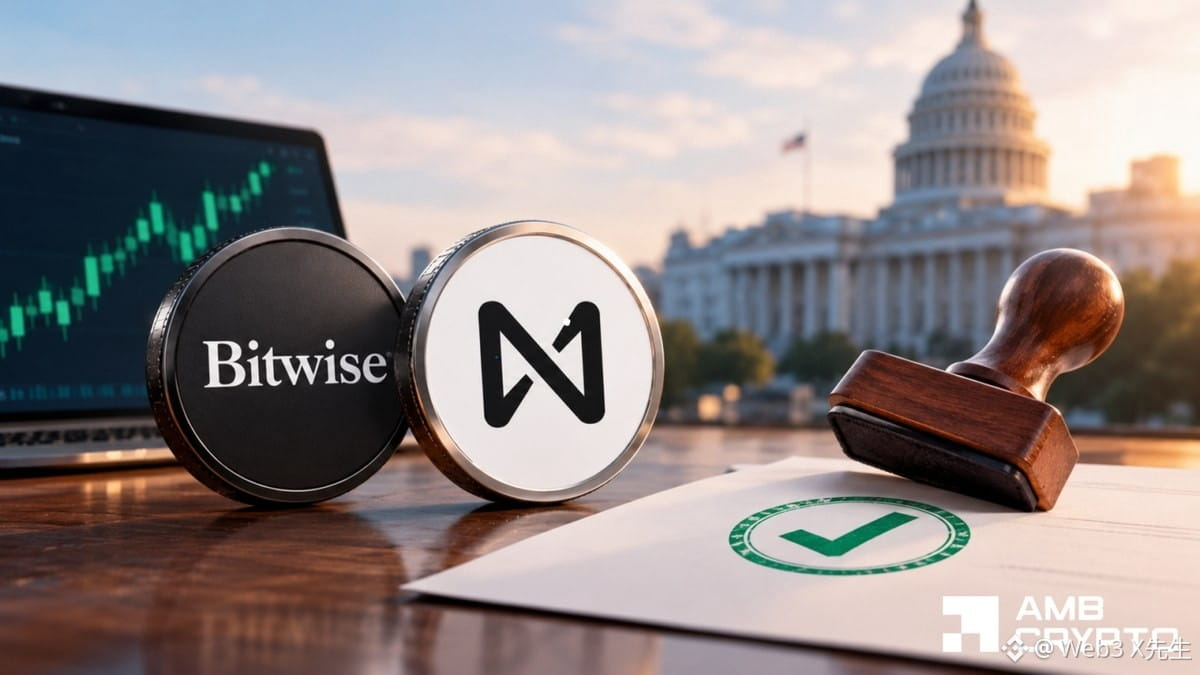
One ETF cleared the hurdle—so the coin price rose first. NEAR surged 17% in a day. Then it gained another 9% over the next 24 hours. Put together, that’s roughly a 26% jump. From the lows, it climbed back above $5. This rebound came fast.📈
The approved ETF comes from Bitwise. Its ticker is NRR, and it’s listed on NYSE Arca. Custody is handled by a US-licensed platform. The fund will also put the coins into staking. About 67% of the staking rewards will be kept by itself. The SEC hasn’t said whether it will fully take effect yet.🏦
Bitwise posted a message on its own account. It only said one line: “The future is very close.” Then it followed with a date: September 29. The prospectus also included a target price. The base-case benchmark for 2030 is $155. The most optimistic scenario is $562.😳
The rally isn’t just driven by headlines—on-chain data is moving too. Near Intents locking hit a new high. The scale reached $249 million. Since February, revenue has been used entirely for buybacks. On the base layer, 70% of trading fees are directly burned.🔥
But the price didn’t move in a straight line. The $5 level kept getting pressured from multiple sides. Someone quietly offloaded on Binance spot, selling 760,000 coins in a short time. RSI slipped from 66 down to 61. Resistance is stuck around $5.😅
The bulls vs. bears split is actually pretty significant. The optimists are watching the $8–$9 zone. The skeptics are still eyeing a dip toward $4.5. Once the ETF starts trading, it’ll be a new variable. Institutions that want exposure to altcoins will have another entry point. Next up: September 29.🚀
📌 An ETF’s “ticket in,” plus on-chain buybacks—NEAR up 26% in a day. We’ll see how it plays out on September 29.
At this point, do you dare to chase? Let’s chat in the comments.
【An ETF just got approved, this coin skyrocketed 26% in a day 🔥🚀】
Join the X先生 fan group chat from the homepage 🔥
One ETF cleared the hurdle—so the coin price rose first. NEAR surged 17% in a day. Then it gained another 9% over the next 24 hours. Put together, that’s roughly a 26% jump. From the lows, it climbed back above $5. This rebound came fast.📈
The approved ETF comes from Bitwise. Its ticker is NRR, and it’s listed on NYSE Arca. Custody is handled by a US-licensed platform. The fund will also put the coins into staking. About 67% of the staking rewards will be kept by itself. The SEC hasn’t said whether it will fully take effect yet.🏦
Bitwise posted a message on its own account. It only said one line: “The future is very close.” Then it followed with a date: September 29. The prospectus also included a target price. The base-case benchmark for 2030 is $155. The most optimistic scenario is $562.😳
The rally isn’t just driven by headlines—on-chain data is moving too. Near Intents locking hit a new high. The scale reached $249 million. Since February, revenue has been used entirely for buybacks. On the base layer, 70% of trading fees are directly burned.🔥
But the price didn’t move in a straight line. The $5 level kept getting pressured from multiple sides. Someone quietly offloaded on Binance spot, selling 760,000 coins in a short time. RSI slipped from 66 down to 61. Resistance is stuck around $5.😅
The bulls vs. bears split is actually pretty significant. The optimists are watching the $8–$9 zone. The skeptics are still eyeing a dip toward $4.5. Once the ETF starts trading, it’ll be a new variable. Institutions that want exposure to altcoins will have another entry point. Next up: September 29.🚀
📌 An ETF’s “ticket in,” plus on-chain buybacks—NEAR up 26% in a day. We’ll see how it plays out on September 29.
At this point, do you dare to chase? Let’s chat in the comments.
Join the X先生 fan group chat from the homepage 🔥
One ETF cleared the hurdle—so the coin price rose first. NEAR surged 17% in a day. Then it gained another 9% over the next 24 hours. Put together, that’s roughly a 26% jump. From the lows, it climbed back above $5. This rebound came fast.📈
The approved ETF comes from Bitwise. Its ticker is NRR, and it’s listed on NYSE Arca. Custody is handled by a US-licensed platform. The fund will also put the coins into staking. About 67% of the staking rewards will be kept by itself. The SEC hasn’t said whether it will fully take effect yet.🏦
Bitwise posted a message on its own account. It only said one line: “The future is very close.” Then it followed with a date: September 29. The prospectus also included a target price. The base-case benchmark for 2030 is $155. The most optimistic scenario is $562.😳
The rally isn’t just driven by headlines—on-chain data is moving too. Near Intents locking hit a new high. The scale reached $249 million. Since February, revenue has been used entirely for buybacks. On the base layer, 70% of trading fees are directly burned.🔥
But the price didn’t move in a straight line. The $5 level kept getting pressured from multiple sides. Someone quietly offloaded on Binance spot, selling 760,000 coins in a short time. RSI slipped from 66 down to 61. Resistance is stuck around $5.😅
The bulls vs. bears split is actually pretty significant. The optimists are watching the $8–$9 zone. The skeptics are still eyeing a dip toward $4.5. Once the ETF starts trading, it’ll be a new variable. Institutions that want exposure to altcoins will have another entry point. Next up: September 29.🚀
📌 An ETF’s “ticket in,” plus on-chain buybacks—NEAR up 26% in a day. We’ll see how it plays out on September 29.
At this point, do you dare to chase? Let’s chat in the comments.
397
·
--
【Circle Re-mints $500M USDC—Did the Money Actually Get Into the Market? 💵🔥】
Join X Mr.’s fan group chat on the homepage 🔥
The money is starting to move to Solana again. On September 25, Circle minted in two transactions. Each was 250 million tokens, totaling 500 million. There was only a gap of five and a half hours in between. This is already the fourth major minting in two days. 💵
One thing needs to be clarified first. USDC isn’t printed out of thin air. For every token minted, one US dollar has to be backed. In other words, someone first paid out $500 million, and only then did Circle release the coins on-chain. This isn’t “watered down liquidity”—it reflects real demand. 🏦
Where did this $500 million come from? The answer is hidden in Solana’s ledger. On the September 25 chain, the total stablecoin supply hit a new high—$17.3 billion in total. That’s $600 million more than the peak in August. On-chain USDC is about $8.4 billion, making it the largest stablecoin. 📈
And usage is growing too. The number of wallets holding USDC increased 15% over seven weeks—from 8.1 million to 9.3 million. Solana is now the third-largest stablecoin network. Ahead of it are Ethereum and Tron. The gap likely won’t be caught anytime soon. 🌐
But minting doesn’t mean the funds buy coins right away. Circle’s playbook is: mint first, control later. In August, Solana minted about 11 billion. However, net supply only increased by 600 million. Most got redeemed and burned, offsetting the rest. Don’t treat minting as a bullish signal. ⚠️
What really matters is where the funds flow. Will this $500 million just sit in the vault first, or will it go into exchanges and DeFi? By this year so far, minting has already reached 76 billion tokens. Solana’s USDC share is moving toward 10%. A year ago, it was only 3%. 🚀
📌 Minting expands supply—where the money goes is the real answer.
This $500 million—do you think it will head into DeFi first, or into exchanges? Let’s discuss in the comments.
【Circle Re-mints $500M USDC—Did the Money Actually Get Into the Market? 💵🔥】
Join X Mr.’s fan group chat on the homepage 🔥
The money is starting to move to Solana again. On September 25, Circle minted in two transactions. Each was 250 million tokens, totaling 500 million. There was only a gap of five and a half hours in between. This is already the fourth major minting in two days. 💵
One thing needs to be clarified first. USDC isn’t printed out of thin air. For every token minted, one US dollar has to be backed. In other words, someone first paid out $500 million, and only then did Circle release the coins on-chain. This isn’t “watered down liquidity”—it reflects real demand. 🏦
Where did this $500 million come from? The answer is hidden in Solana’s ledger. On the September 25 chain, the total stablecoin supply hit a new high—$17.3 billion in total. That’s $600 million more than the peak in August. On-chain USDC is about $8.4 billion, making it the largest stablecoin. 📈
And usage is growing too. The number of wallets holding USDC increased 15% over seven weeks—from 8.1 million to 9.3 million. Solana is now the third-largest stablecoin network. Ahead of it are Ethereum and Tron. The gap likely won’t be caught anytime soon. 🌐
But minting doesn’t mean the funds buy coins right away. Circle’s playbook is: mint first, control later. In August, Solana minted about 11 billion. However, net supply only increased by 600 million. Most got redeemed and burned, offsetting the rest. Don’t treat minting as a bullish signal. ⚠️
What really matters is where the funds flow. Will this $500 million just sit in the vault first, or will it go into exchanges and DeFi? By this year so far, minting has already reached 76 billion tokens. Solana’s USDC share is moving toward 10%. A year ago, it was only 3%. 🚀
📌 Minting expands supply—where the money goes is the real answer.
This $500 million—do you think it will head into DeFi first, or into exchanges? Let’s discuss in the comments.
Join X Mr.’s fan group chat on the homepage 🔥
The money is starting to move to Solana again. On September 25, Circle minted in two transactions. Each was 250 million tokens, totaling 500 million. There was only a gap of five and a half hours in between. This is already the fourth major minting in two days. 💵
One thing needs to be clarified first. USDC isn’t printed out of thin air. For every token minted, one US dollar has to be backed. In other words, someone first paid out $500 million, and only then did Circle release the coins on-chain. This isn’t “watered down liquidity”—it reflects real demand. 🏦
Where did this $500 million come from? The answer is hidden in Solana’s ledger. On the September 25 chain, the total stablecoin supply hit a new high—$17.3 billion in total. That’s $600 million more than the peak in August. On-chain USDC is about $8.4 billion, making it the largest stablecoin. 📈
And usage is growing too. The number of wallets holding USDC increased 15% over seven weeks—from 8.1 million to 9.3 million. Solana is now the third-largest stablecoin network. Ahead of it are Ethereum and Tron. The gap likely won’t be caught anytime soon. 🌐
But minting doesn’t mean the funds buy coins right away. Circle’s playbook is: mint first, control later. In August, Solana minted about 11 billion. However, net supply only increased by 600 million. Most got redeemed and burned, offsetting the rest. Don’t treat minting as a bullish signal. ⚠️
What really matters is where the funds flow. Will this $500 million just sit in the vault first, or will it go into exchanges and DeFi? By this year so far, minting has already reached 76 billion tokens. Solana’s USDC share is moving toward 10%. A year ago, it was only 3%. 🚀
📌 Minting expands supply—where the money goes is the real answer.
This $500 million—do you think it will head into DeFi first, or into exchanges? Let’s discuss in the comments.

183
·
--
【Brazil’s new rules take effect: wallets can’t move over $10,000 without prior reporting — exchanges must first notify authorities 😳🔥】
Come to the homepage and join Mr. X’s fan chat group 🔥
On September 24 alone, Brazil’s central bank issued two new rules. They are numbered 588 and 589, and will take effect on October 1. Markets have less than a week to prepare. This time, it’s not the money sitting in the exchange’s accounts they’re targeting. It’s the crypto in users’ own wallets. They even skipped the public consultation stage. ⚖️
Rule 588 is about declarations. As long as funds are transferred into or out of one’s own wallet, if the per-transaction amount hits up to $10,000, the licensed institution must report to COAF—that is, Brazil’s financial intelligence department. Exchanges are being forced to become informants. 📋
Rule 589 blocks the other end. Licensed institutions are forbidden from dealing with unlicensed peers. Overseas platforms, unapproved OTC desks—cut them all. Two rules, one in and one out: there’s someone guarding the entrance, and someone keeping records at the exit. It’s like gripping the whole channel in their hands. 🚰
Right now, there are about 120 crypto service providers in Brazil. Only five have actually applied for licenses. One has already been rejected. Startup capital must be at least 10 million reais. For small players, there’s basically no room to play. But this has long been Latin America’s largest crypto market. 🏦
Officially, the claim is to fill information gaps. They don’t ban withdrawals, and they don’t set a limit. But if reports pile up, what will it become? A list of addresses. Who bought what crypto, and who moved it—everything’s on there. After a while, the chain links itself together. 🔍
For ordinary holders, you likely won’t feel much in the short term. You don’t have to declare it yourself—institutions will report it for you. But once the threshold is set at $10,000, self-custody for large amounts is basically putting it on display. The quiet of cold wallets probably won’t be as quiet as before. Only when the rules really run will the differences show up. 🤔
📌 The regulator’s hand is reaching from exchanges to the doorstep of your wallet.
If you have large assets, will you keep them in your own wallet, or continue to leave them on the platform? Let’s discuss in the comments.
【Brazil’s new rules take effect: wallets can’t move over $10,000 without prior reporting — exchanges must first notify authorities 😳🔥】
Come to the homepage and join Mr. X’s fan chat group 🔥
On September 24 alone, Brazil’s central bank issued two new rules. They are numbered 588 and 589, and will take effect on October 1. Markets have less than a week to prepare. This time, it’s not the money sitting in the exchange’s accounts they’re targeting. It’s the crypto in users’ own wallets. They even skipped the public consultation stage. ⚖️
Rule 588 is about declarations. As long as funds are transferred into or out of one’s own wallet, if the per-transaction amount hits up to $10,000, the licensed institution must report to COAF—that is, Brazil’s financial intelligence department. Exchanges are being forced to become informants. 📋
Rule 589 blocks the other end. Licensed institutions are forbidden from dealing with unlicensed peers. Overseas platforms, unapproved OTC desks—cut them all. Two rules, one in and one out: there’s someone guarding the entrance, and someone keeping records at the exit. It’s like gripping the whole channel in their hands. 🚰
Right now, there are about 120 crypto service providers in Brazil. Only five have actually applied for licenses. One has already been rejected. Startup capital must be at least 10 million reais. For small players, there’s basically no room to play. But this has long been Latin America’s largest crypto market. 🏦
Officially, the claim is to fill information gaps. They don’t ban withdrawals, and they don’t set a limit. But if reports pile up, what will it become? A list of addresses. Who bought what crypto, and who moved it—everything’s on there. After a while, the chain links itself together. 🔍
For ordinary holders, you likely won’t feel much in the short term. You don’t have to declare it yourself—institutions will report it for you. But once the threshold is set at $10,000, self-custody for large amounts is basically putting it on display. The quiet of cold wallets probably won’t be as quiet as before. Only when the rules really run will the differences show up. 🤔
📌 The regulator’s hand is reaching from exchanges to the doorstep of your wallet.
If you have large assets, will you keep them in your own wallet, or continue to leave them on the platform? Let’s discuss in the comments.
Come to the homepage and join Mr. X’s fan chat group 🔥
On September 24 alone, Brazil’s central bank issued two new rules. They are numbered 588 and 589, and will take effect on October 1. Markets have less than a week to prepare. This time, it’s not the money sitting in the exchange’s accounts they’re targeting. It’s the crypto in users’ own wallets. They even skipped the public consultation stage. ⚖️
Rule 588 is about declarations. As long as funds are transferred into or out of one’s own wallet, if the per-transaction amount hits up to $10,000, the licensed institution must report to COAF—that is, Brazil’s financial intelligence department. Exchanges are being forced to become informants. 📋
Rule 589 blocks the other end. Licensed institutions are forbidden from dealing with unlicensed peers. Overseas platforms, unapproved OTC desks—cut them all. Two rules, one in and one out: there’s someone guarding the entrance, and someone keeping records at the exit. It’s like gripping the whole channel in their hands. 🚰
Right now, there are about 120 crypto service providers in Brazil. Only five have actually applied for licenses. One has already been rejected. Startup capital must be at least 10 million reais. For small players, there’s basically no room to play. But this has long been Latin America’s largest crypto market. 🏦
Officially, the claim is to fill information gaps. They don’t ban withdrawals, and they don’t set a limit. But if reports pile up, what will it become? A list of addresses. Who bought what crypto, and who moved it—everything’s on there. After a while, the chain links itself together. 🔍
For ordinary holders, you likely won’t feel much in the short term. You don’t have to declare it yourself—institutions will report it for you. But once the threshold is set at $10,000, self-custody for large amounts is basically putting it on display. The quiet of cold wallets probably won’t be as quiet as before. Only when the rules really run will the differences show up. 🤔
📌 The regulator’s hand is reaching from exchanges to the doorstep of your wallet.
If you have large assets, will you keep them in your own wallet, or continue to leave them on the platform? Let’s discuss in the comments.
89
·
--
【Neglected for eight years—an investment fund reached $1 billion in a month 😱🚀】
Join Mr. X’s fan group on the home page 🔥
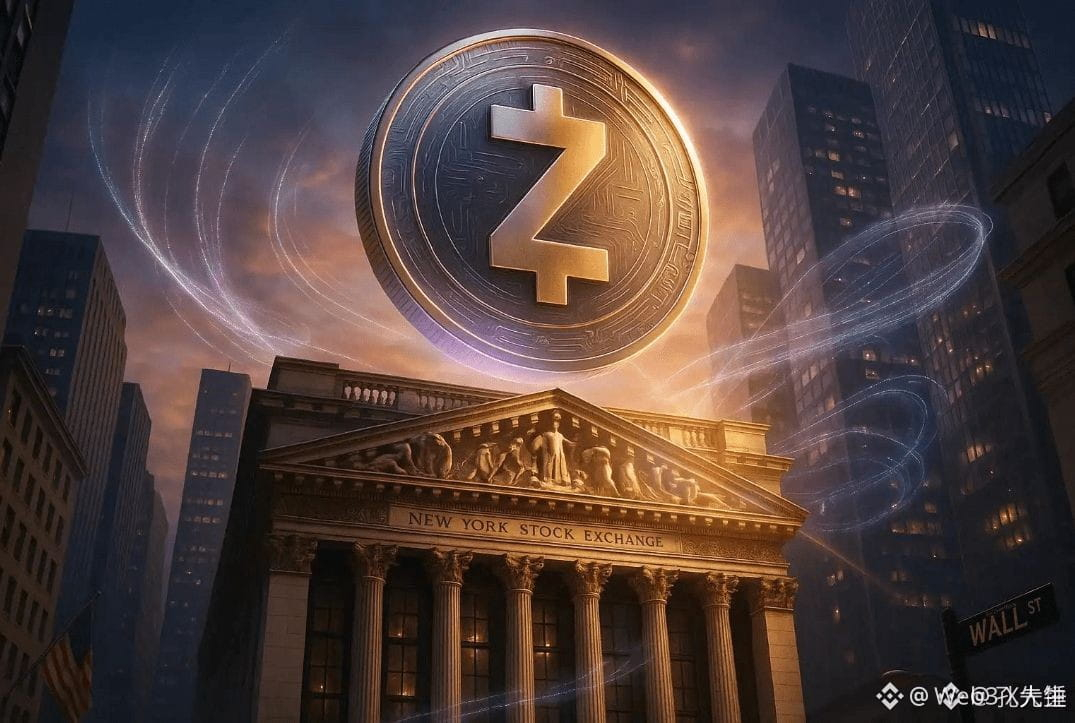
Yesterday, that Grayscale Zcash fund crossed the $1 billion mark.
The ticker is ZCSH, and it was only listed in New York at the end of August.
From start to finish, it was just a little over a month.
From zero to one billion in a month—that sounds pretty wild, right?
But once you break down the numbers, everything changes. 💵
First, let’s talk about what it actually bought.
ZCSH is the first spot Zcash fund in the United States.
The underlying coin is ZEC, which launched back in 2016.
For a full eight years, it just sat in the corner.
This year, it suddenly gathered steam—climbing by more than 2,800 points.
By late September, it even briefly touched $1,600. 📈
The problem lies in where that billion came from.
Some institutions have tallied it: less than 30% of the inflows came from subscriptions.
More than 70% came from the coin price rising on its own.
In plain terms, old holders were lifted by the market.
The money that truly comes in is not as much as it looks on the surface. 🔍
There’s also a detail that really stands out.
Last week, Grayscale announced a 3-for-1 stock split.
The purpose is straightforward: cut the price per share.
Retail investors can get in with just single-digit amounts.
And there were disclosures even in late September.
One person held 8.44% of the voting power. 👀
Across Europe, the door also opened at the same time.
21Shares launched an ETP for Zcash.
The locations are Paris and Amsterdam.
A U.S. fund and a European ETP—both opened their doors within a month.
That old privacy-coin story has been dusted off and retold once again.
This time, money and narrative are back in sync—hand in hand. 🌍
Sure, the hype is hype, but you have to judge the risks yourself.
This ZEC rally has been both fast and steep.
By late September, it fell more than 6 percentage points in a single day.
If you chase after it at the top, it’s easy to get stuck at the halfway point of the mountain.
Fund size is the result, not the reason for buying. ⚠️
📌 A $1 billion fund in one month—over 70% came from the rise, not from what was bought.
In this privacy-coin cycle, do you dare to chase it?
【Neglected for eight years—an investment fund reached $1 billion in a month 😱🚀】
Join Mr. X’s fan group on the home page 🔥
Yesterday, that Grayscale Zcash fund crossed the $1 billion mark.
The ticker is ZCSH, and it was only listed in New York at the end of August.
From start to finish, it was just a little over a month.
From zero to one billion in a month—that sounds pretty wild, right?
But once you break down the numbers, everything changes. 💵
First, let’s talk about what it actually bought.
ZCSH is the first spot Zcash fund in the United States.
The underlying coin is ZEC, which launched back in 2016.
For a full eight years, it just sat in the corner.
This year, it suddenly gathered steam—climbing by more than 2,800 points.
By late September, it even briefly touched $1,600. 📈
The problem lies in where that billion came from.
Some institutions have tallied it: less than 30% of the inflows came from subscriptions.
More than 70% came from the coin price rising on its own.
In plain terms, old holders were lifted by the market.
The money that truly comes in is not as much as it looks on the surface. 🔍
There’s also a detail that really stands out.
Last week, Grayscale announced a 3-for-1 stock split.
The purpose is straightforward: cut the price per share.
Retail investors can get in with just single-digit amounts.
And there were disclosures even in late September.
One person held 8.44% of the voting power. 👀
Across Europe, the door also opened at the same time.
21Shares launched an ETP for Zcash.
The locations are Paris and Amsterdam.
A U.S. fund and a European ETP—both opened their doors within a month.
That old privacy-coin story has been dusted off and retold once again.
This time, money and narrative are back in sync—hand in hand. 🌍
Sure, the hype is hype, but you have to judge the risks yourself.
This ZEC rally has been both fast and steep.
By late September, it fell more than 6 percentage points in a single day.
If you chase after it at the top, it’s easy to get stuck at the halfway point of the mountain.
Fund size is the result, not the reason for buying. ⚠️
📌 A $1 billion fund in one month—over 70% came from the rise, not from what was bought.
In this privacy-coin cycle, do you dare to chase it?
Join Mr. X’s fan group on the home page 🔥
Yesterday, that Grayscale Zcash fund crossed the $1 billion mark.
The ticker is ZCSH, and it was only listed in New York at the end of August.
From start to finish, it was just a little over a month.
From zero to one billion in a month—that sounds pretty wild, right?
But once you break down the numbers, everything changes. 💵
First, let’s talk about what it actually bought.
ZCSH is the first spot Zcash fund in the United States.
The underlying coin is ZEC, which launched back in 2016.
For a full eight years, it just sat in the corner.
This year, it suddenly gathered steam—climbing by more than 2,800 points.
By late September, it even briefly touched $1,600. 📈
The problem lies in where that billion came from.
Some institutions have tallied it: less than 30% of the inflows came from subscriptions.
More than 70% came from the coin price rising on its own.
In plain terms, old holders were lifted by the market.
The money that truly comes in is not as much as it looks on the surface. 🔍
There’s also a detail that really stands out.
Last week, Grayscale announced a 3-for-1 stock split.
The purpose is straightforward: cut the price per share.
Retail investors can get in with just single-digit amounts.
And there were disclosures even in late September.
One person held 8.44% of the voting power. 👀
Across Europe, the door also opened at the same time.
21Shares launched an ETP for Zcash.
The locations are Paris and Amsterdam.
A U.S. fund and a European ETP—both opened their doors within a month.
That old privacy-coin story has been dusted off and retold once again.
This time, money and narrative are back in sync—hand in hand. 🌍
Sure, the hype is hype, but you have to judge the risks yourself.
This ZEC rally has been both fast and steep.
By late September, it fell more than 6 percentage points in a single day.
If you chase after it at the top, it’s easy to get stuck at the halfway point of the mountain.
Fund size is the result, not the reason for buying. ⚠️
📌 A $1 billion fund in one month—over 70% came from the rise, not from what was bought.
In this privacy-coin cycle, do you dare to chase it?
287
·
--
【CFTC backs off—can $46 billion in tokenized assets enter the mainstream? 🔥🏛️】
Join X先生’s fan chat group on the homepage 🔥
These numbers are a bit intimidating. On-chain real-world assets have just reached $46 billion. Three months ago, almost nobody cared about it. Now every transaction is real money. Institutional hands have already reached in. 📈
On the same day, U.S. regulators spoke up. The CFTC updated its own common Q&A guidance, saying that registered firms can use customers’ funds to buy tokenized assets. The condition is that the rights and benefits provided by these tokens are the same as those in traditional assets. They’re also not opposed to using blockchain for record-keeping. 📜
It sounds gentle, but it carries serious weight. In the past, compliance-safe money didn’t dare touch on-chain assets—partly because of fear of crossing lines, and partly because of worry about being held accountable later. Now regulators have loosened the grip first. That half-open door for institutions has cracked open a little. This step moves faster than legislation. 🚪
And this timing is a bit uncanny. The Senate’s crypto bill didn’t get voted on last weekend. The market was originally waiting for legislation, but it can’t wait anymore. Some institutions have already said that clear rules won’t arrive until 2027. The CFTC simply makes its move first. Even the proposal submitted for review to the White House has already been filed. ⚡
Where exactly is the money piled up? Also fairly clear. Out of the $46 billion, funds account for $34.7 billion—an overwhelming 75.5%, the absolute main force. There are $7.7 billion in commodities, and only $3.5 billion in tokenized stocks. Still, bonds and funds lead the pack. 🏦
But don’t get excited yet. On-chain assets are still a niche business. The entire fund pool is on the scale of several trillion. This amount isn’t even a fraction of that. And the rules have only just drawn a line. When real money comes in, at least we’ll have to see next year. 🧐
📌 Regulators loosen first, so institutions dare to move in—$46 billion is just the opening act.
How far do you think tokenized funds can go? Let’s discuss in the comments.
【CFTC backs off—can $46 billion in tokenized assets enter the mainstream? 🔥🏛️】
Join X先生’s fan chat group on the homepage 🔥
These numbers are a bit intimidating. On-chain real-world assets have just reached $46 billion. Three months ago, almost nobody cared about it. Now every transaction is real money. Institutional hands have already reached in. 📈
On the same day, U.S. regulators spoke up. The CFTC updated its own common Q&A guidance, saying that registered firms can use customers’ funds to buy tokenized assets. The condition is that the rights and benefits provided by these tokens are the same as those in traditional assets. They’re also not opposed to using blockchain for record-keeping. 📜
It sounds gentle, but it carries serious weight. In the past, compliance-safe money didn’t dare touch on-chain assets—partly because of fear of crossing lines, and partly because of worry about being held accountable later. Now regulators have loosened the grip first. That half-open door for institutions has cracked open a little. This step moves faster than legislation. 🚪
And this timing is a bit uncanny. The Senate’s crypto bill didn’t get voted on last weekend. The market was originally waiting for legislation, but it can’t wait anymore. Some institutions have already said that clear rules won’t arrive until 2027. The CFTC simply makes its move first. Even the proposal submitted for review to the White House has already been filed. ⚡
Where exactly is the money piled up? Also fairly clear. Out of the $46 billion, funds account for $34.7 billion—an overwhelming 75.5%, the absolute main force. There are $7.7 billion in commodities, and only $3.5 billion in tokenized stocks. Still, bonds and funds lead the pack. 🏦
But don’t get excited yet. On-chain assets are still a niche business. The entire fund pool is on the scale of several trillion. This amount isn’t even a fraction of that. And the rules have only just drawn a line. When real money comes in, at least we’ll have to see next year. 🧐
📌 Regulators loosen first, so institutions dare to move in—$46 billion is just the opening act.
How far do you think tokenized funds can go? Let’s discuss in the comments.
Join X先生’s fan chat group on the homepage 🔥
These numbers are a bit intimidating. On-chain real-world assets have just reached $46 billion. Three months ago, almost nobody cared about it. Now every transaction is real money. Institutional hands have already reached in. 📈
On the same day, U.S. regulators spoke up. The CFTC updated its own common Q&A guidance, saying that registered firms can use customers’ funds to buy tokenized assets. The condition is that the rights and benefits provided by these tokens are the same as those in traditional assets. They’re also not opposed to using blockchain for record-keeping. 📜
It sounds gentle, but it carries serious weight. In the past, compliance-safe money didn’t dare touch on-chain assets—partly because of fear of crossing lines, and partly because of worry about being held accountable later. Now regulators have loosened the grip first. That half-open door for institutions has cracked open a little. This step moves faster than legislation. 🚪
And this timing is a bit uncanny. The Senate’s crypto bill didn’t get voted on last weekend. The market was originally waiting for legislation, but it can’t wait anymore. Some institutions have already said that clear rules won’t arrive until 2027. The CFTC simply makes its move first. Even the proposal submitted for review to the White House has already been filed. ⚡
Where exactly is the money piled up? Also fairly clear. Out of the $46 billion, funds account for $34.7 billion—an overwhelming 75.5%, the absolute main force. There are $7.7 billion in commodities, and only $3.5 billion in tokenized stocks. Still, bonds and funds lead the pack. 🏦
But don’t get excited yet. On-chain assets are still a niche business. The entire fund pool is on the scale of several trillion. This amount isn’t even a fraction of that. And the rules have only just drawn a line. When real money comes in, at least we’ll have to see next year. 🧐
📌 Regulators loosen first, so institutions dare to move in—$46 billion is just the opening act.
How far do you think tokenized funds can go? Let’s discuss in the comments.
47
·
--
[The U.S. Federal Reserve has set rules for stablecoins—banks must post collateral first 🔥🏦]
Join the X Mr. fan chat on the home page 🔥
The Federal Reserve is taking it seriously this time. On Thursday, it rolled out two proposals in one go. It lays down the rules for issuing stablecoins for banks. Reserves, capital, and the application process are all laid out in writing. In one sentence: if you want to issue a coin, you must post collateral first. 🏦
The reserve requirement is extremely strict. Every stablecoin must be backed by assets of equivalent value. Cash, Federal Reserve deposits, and short-term debt securities with maturities of within 93 days all qualify. Redemptions by users must be settled within two business days. That kind of “accounts don’t match the books” scheme from before is basically off the table. 💵
The capital requirements are tiered. For the first $20 billion, it’s 2%. The next $30 billion is 1.5% only. Anything above $50 billion drops to 1%. On top of that, it also factors in 25% of average annual income over a three-year period. If you miss the requirement at quarter-end, you must submit a remediation plan. If you still come up short the next quarter, you’ll face liquidation and redemptions. 📉
The harshest clause is on returns. The bill already prohibits interest payments by the issuer. Now the Federal Reserve has made it even clearer. As long as you send money to related parties and then they transfer it to users, the Fed will deem you to be paying interest improperly. If you want to argue back, you’ll need to spell it out in black and white. 🚫
The thresholds are also set. For state-level issuers without insurance, when the scale reaches $10 billion, they must fall under the Fed’s direct supervision. The public will have 60 days to submit comments. The latest the entire bill can take effect is January 18, 2027. That gives issuer institutions a little over a year, all in all. ⏳
What’s interesting is that the internal agreement is not fully unanimous. Governor Barr voted in favor, but raised concerns about the anti–money laundering provisions. He worries that the “material or systemic” threshold is too loose. If something really goes wrong, it may be hard to determine. 🕵️
📌 The Federal Reserve is pulling stablecoins out of the gray zone and into bank-style regulation. It wants to do business by operating like “deposits,” so it must first pass the capital and return gates.
After these rules take effect, how much of the stablecoin returns will still be left? Let’s discuss in the comments.
[The U.S. Federal Reserve has set rules for stablecoins—banks must post collateral first 🔥🏦]
Join the X Mr. fan chat on the home page 🔥
The Federal Reserve is taking it seriously this time. On Thursday, it rolled out two proposals in one go. It lays down the rules for issuing stablecoins for banks. Reserves, capital, and the application process are all laid out in writing. In one sentence: if you want to issue a coin, you must post collateral first. 🏦
The reserve requirement is extremely strict. Every stablecoin must be backed by assets of equivalent value. Cash, Federal Reserve deposits, and short-term debt securities with maturities of within 93 days all qualify. Redemptions by users must be settled within two business days. That kind of “accounts don’t match the books” scheme from before is basically off the table. 💵
The capital requirements are tiered. For the first $20 billion, it’s 2%. The next $30 billion is 1.5% only. Anything above $50 billion drops to 1%. On top of that, it also factors in 25% of average annual income over a three-year period. If you miss the requirement at quarter-end, you must submit a remediation plan. If you still come up short the next quarter, you’ll face liquidation and redemptions. 📉
The harshest clause is on returns. The bill already prohibits interest payments by the issuer. Now the Federal Reserve has made it even clearer. As long as you send money to related parties and then they transfer it to users, the Fed will deem you to be paying interest improperly. If you want to argue back, you’ll need to spell it out in black and white. 🚫
The thresholds are also set. For state-level issuers without insurance, when the scale reaches $10 billion, they must fall under the Fed’s direct supervision. The public will have 60 days to submit comments. The latest the entire bill can take effect is January 18, 2027. That gives issuer institutions a little over a year, all in all. ⏳
What’s interesting is that the internal agreement is not fully unanimous. Governor Barr voted in favor, but raised concerns about the anti–money laundering provisions. He worries that the “material or systemic” threshold is too loose. If something really goes wrong, it may be hard to determine. 🕵️
📌 The Federal Reserve is pulling stablecoins out of the gray zone and into bank-style regulation. It wants to do business by operating like “deposits,” so it must first pass the capital and return gates.
After these rules take effect, how much of the stablecoin returns will still be left? Let’s discuss in the comments.
Join the X Mr. fan chat on the home page 🔥
The Federal Reserve is taking it seriously this time. On Thursday, it rolled out two proposals in one go. It lays down the rules for issuing stablecoins for banks. Reserves, capital, and the application process are all laid out in writing. In one sentence: if you want to issue a coin, you must post collateral first. 🏦
The reserve requirement is extremely strict. Every stablecoin must be backed by assets of equivalent value. Cash, Federal Reserve deposits, and short-term debt securities with maturities of within 93 days all qualify. Redemptions by users must be settled within two business days. That kind of “accounts don’t match the books” scheme from before is basically off the table. 💵
The capital requirements are tiered. For the first $20 billion, it’s 2%. The next $30 billion is 1.5% only. Anything above $50 billion drops to 1%. On top of that, it also factors in 25% of average annual income over a three-year period. If you miss the requirement at quarter-end, you must submit a remediation plan. If you still come up short the next quarter, you’ll face liquidation and redemptions. 📉
The harshest clause is on returns. The bill already prohibits interest payments by the issuer. Now the Federal Reserve has made it even clearer. As long as you send money to related parties and then they transfer it to users, the Fed will deem you to be paying interest improperly. If you want to argue back, you’ll need to spell it out in black and white. 🚫
The thresholds are also set. For state-level issuers without insurance, when the scale reaches $10 billion, they must fall under the Fed’s direct supervision. The public will have 60 days to submit comments. The latest the entire bill can take effect is January 18, 2027. That gives issuer institutions a little over a year, all in all. ⏳
What’s interesting is that the internal agreement is not fully unanimous. Governor Barr voted in favor, but raised concerns about the anti–money laundering provisions. He worries that the “material or systemic” threshold is too loose. If something really goes wrong, it may be hard to determine. 🕵️
📌 The Federal Reserve is pulling stablecoins out of the gray zone and into bank-style regulation. It wants to do business by operating like “deposits,” so it must first pass the capital and return gates.
After these rules take effect, how much of the stablecoin returns will still be left? Let’s discuss in the comments.
1
6.4k
·
--
[Federal Reserve acts! Stablecoins can’t be “issued freely” anymore? 🔥]
[💬 稳定币监管进度,X先生粉丝群聊跟进](https://app.binance.com/uni-qr/MwYFhLo4)
U.S. stablecoin regulation has taken another big step forward.
On September 24, the Federal Reserve released two sets of regulatory proposals, officially advancing the implementation of the GENIUS Act.
In simple terms, the Fed is preparing to add a few “hard” requirements for stablecoin issuers: for every amount of stablecoins issued, there must be corresponding compliant reserve assets to provide 100% backing—such as highly liquid assets like short-term U.S. Treasury securities.
At the same time, issuers must also meet capital requirements and risk-management standards.
More importantly, banks may also officially get involved.
In this round, the Fed also proposed a specific application process that would allow banks under its supervision to apply to issue payment-type stablecoins through a subsidiary.
What does this mean?
When people discussed stablecoins before, they mostly thought of USDT and USDC.
But in the future, a new shift could emerge: traditional banks themselves may issue stablecoins, directly moving into on-chain payments and settlement.
And this proposal is already starting to touch on issues behind stablecoins—reserve custody, capital, and risk management, among others.
📌 So what’s truly worth watching isn’t just that the Fed has begun regulating stablecoins—it’s that the U.S. is gradually integrating stablecoins into the traditional financial system.
From crypto trading tools, to payments and settlement, and then to bank-issued stablecoins, stablecoins are becoming an increasingly formal financial infrastructure.
These are still only proposals at the moment. The Fed will open a 60-day public comment period, and the final rules may still be adjusted.
#美联储拟定银行发行支付稳定币规则
[Federal Reserve acts! Stablecoins can’t be “issued freely” anymore? 🔥]
💬 稳定币监管进度,X先生粉丝群聊跟进
U.S. stablecoin regulation has taken another big step forward.
On September 24, the Federal Reserve released two sets of regulatory proposals, officially advancing the implementation of the GENIUS Act.
In simple terms, the Fed is preparing to add a few “hard” requirements for stablecoin issuers: for every amount of stablecoins issued, there must be corresponding compliant reserve assets to provide 100% backing—such as highly liquid assets like short-term U.S. Treasury securities.
At the same time, issuers must also meet capital requirements and risk-management standards.
More importantly, banks may also officially get involved.
In this round, the Fed also proposed a specific application process that would allow banks under its supervision to apply to issue payment-type stablecoins through a subsidiary.
What does this mean?
When people discussed stablecoins before, they mostly thought of USDT and USDC.
But in the future, a new shift could emerge: traditional banks themselves may issue stablecoins, directly moving into on-chain payments and settlement.
And this proposal is already starting to touch on issues behind stablecoins—reserve custody, capital, and risk management, among others.
📌 So what’s truly worth watching isn’t just that the Fed has begun regulating stablecoins—it’s that the U.S. is gradually integrating stablecoins into the traditional financial system.
From crypto trading tools, to payments and settlement, and then to bank-issued stablecoins, stablecoins are becoming an increasingly formal financial infrastructure.
These are still only proposals at the moment. The Fed will open a 60-day public comment period, and the final rules may still be adjusted.
#美联储拟定银行发行支付稳定币规则
💬 稳定币监管进度,X先生粉丝群聊跟进
U.S. stablecoin regulation has taken another big step forward.
On September 24, the Federal Reserve released two sets of regulatory proposals, officially advancing the implementation of the GENIUS Act.
In simple terms, the Fed is preparing to add a few “hard” requirements for stablecoin issuers: for every amount of stablecoins issued, there must be corresponding compliant reserve assets to provide 100% backing—such as highly liquid assets like short-term U.S. Treasury securities.
At the same time, issuers must also meet capital requirements and risk-management standards.
More importantly, banks may also officially get involved.
In this round, the Fed also proposed a specific application process that would allow banks under its supervision to apply to issue payment-type stablecoins through a subsidiary.
What does this mean?
When people discussed stablecoins before, they mostly thought of USDT and USDC.
But in the future, a new shift could emerge: traditional banks themselves may issue stablecoins, directly moving into on-chain payments and settlement.
And this proposal is already starting to touch on issues behind stablecoins—reserve custody, capital, and risk management, among others.
📌 So what’s truly worth watching isn’t just that the Fed has begun regulating stablecoins—it’s that the U.S. is gradually integrating stablecoins into the traditional financial system.
From crypto trading tools, to payments and settlement, and then to bank-issued stablecoins, stablecoins are becoming an increasingly formal financial infrastructure.
These are still only proposals at the moment. The Fed will open a 60-day public comment period, and the final rules may still be adjusted.
#美联储拟定银行发行支付稳定币规则

77
·
--
【US Treasury yields surged to 5.2%, money is buying crypto—but the price won’t move 🔥😳】
Group chat: [🚀 加入X先生的粉丝群聊跟进行情](https://app.binance.com/uni-qr/MwYFhLo4)
Putting this data together feels really strange. The U.S. 10-year Treasury yield hit 5.2%. The 30-year settled at around 5.47%. This is the highest since 2004. On the same day, Bitcoin got stuck near 84,000. One is being drained at the highs, while the other just circles in place. 📉
By the old logic, with interest rates this high, money should rush into the bond market. But Bitcoin ETFs are still being bought. On September 24 alone, net inflows were $191 million. That means it’s been purchased for six straight trading days. Big money hasn’t left—it’s actually stepping in to buy more on the way down. The contrast is the most worth watching thing today. 💰
The whales’ actions are even more direct. In the past 96 hours, the giant whales scooped up 30,269 BTC. At current prices, that’s roughly $2.5 billion. At the same time, there’s also been a surge in withdrawals from exchanges. Daily net outflow hit 13,800 BTC. This is the largest single one since 2023. 🐋
With buying pressure this strong, why doesn’t the price move? Because there’s a wall overhead. The 87,000 level has failed to break through twice already. When it tries to go up, it gets slammed back down; when it dips, it’s caught immediately. Bulls are propping from below, bears are pressing from above. Both sides get stuck, and trading activity cools off first. 🧱
On the other side, the Fed hasn’t signaled any willingness to ease. Last week it raised rates by 25 basis points. The target range is now 3.75% to 4%. Officials say core inflation is still between 2.5% and 3%. The market is pricing a 69.7% chance of another rate hike in October. With bond yields this high, who would rush into taking risks? ⚡
There’s also something that’s being overlooked. The crypto bill is stuck in the Senate. A procedural vote failed 49 to 50—just one vote short. The finer details can only be written separately by the SEC and the CFTC. With this policy gap, nobody dares to place heavy bets. So this standoff isn’t without reason. 🕰️
📌 One-sentence summary: ETFs are buying, whales are accumulating, bonds are draining funds at high yields, and Bitcoin is caught in the middle waiting for a direction.
At 84,000, would you chase it?
【US Treasury yields surged to 5.2%, money is buying crypto—but the price won’t move 🔥😳】
Group chat: 🚀 加入X先生的粉丝群聊跟进行情
Putting this data together feels really strange. The U.S. 10-year Treasury yield hit 5.2%. The 30-year settled at around 5.47%. This is the highest since 2004. On the same day, Bitcoin got stuck near 84,000. One is being drained at the highs, while the other just circles in place. 📉
By the old logic, with interest rates this high, money should rush into the bond market. But Bitcoin ETFs are still being bought. On September 24 alone, net inflows were $191 million. That means it’s been purchased for six straight trading days. Big money hasn’t left—it’s actually stepping in to buy more on the way down. The contrast is the most worth watching thing today. 💰
The whales’ actions are even more direct. In the past 96 hours, the giant whales scooped up 30,269 BTC. At current prices, that’s roughly $2.5 billion. At the same time, there’s also been a surge in withdrawals from exchanges. Daily net outflow hit 13,800 BTC. This is the largest single one since 2023. 🐋
With buying pressure this strong, why doesn’t the price move? Because there’s a wall overhead. The 87,000 level has failed to break through twice already. When it tries to go up, it gets slammed back down; when it dips, it’s caught immediately. Bulls are propping from below, bears are pressing from above. Both sides get stuck, and trading activity cools off first. 🧱
On the other side, the Fed hasn’t signaled any willingness to ease. Last week it raised rates by 25 basis points. The target range is now 3.75% to 4%. Officials say core inflation is still between 2.5% and 3%. The market is pricing a 69.7% chance of another rate hike in October. With bond yields this high, who would rush into taking risks? ⚡
There’s also something that’s being overlooked. The crypto bill is stuck in the Senate. A procedural vote failed 49 to 50—just one vote short. The finer details can only be written separately by the SEC and the CFTC. With this policy gap, nobody dares to place heavy bets. So this standoff isn’t without reason. 🕰️
📌 One-sentence summary: ETFs are buying, whales are accumulating, bonds are draining funds at high yields, and Bitcoin is caught in the middle waiting for a direction.
At 84,000, would you chase it?
Group chat: 🚀 加入X先生的粉丝群聊跟进行情
Putting this data together feels really strange. The U.S. 10-year Treasury yield hit 5.2%. The 30-year settled at around 5.47%. This is the highest since 2004. On the same day, Bitcoin got stuck near 84,000. One is being drained at the highs, while the other just circles in place. 📉
By the old logic, with interest rates this high, money should rush into the bond market. But Bitcoin ETFs are still being bought. On September 24 alone, net inflows were $191 million. That means it’s been purchased for six straight trading days. Big money hasn’t left—it’s actually stepping in to buy more on the way down. The contrast is the most worth watching thing today. 💰
The whales’ actions are even more direct. In the past 96 hours, the giant whales scooped up 30,269 BTC. At current prices, that’s roughly $2.5 billion. At the same time, there’s also been a surge in withdrawals from exchanges. Daily net outflow hit 13,800 BTC. This is the largest single one since 2023. 🐋
With buying pressure this strong, why doesn’t the price move? Because there’s a wall overhead. The 87,000 level has failed to break through twice already. When it tries to go up, it gets slammed back down; when it dips, it’s caught immediately. Bulls are propping from below, bears are pressing from above. Both sides get stuck, and trading activity cools off first. 🧱
On the other side, the Fed hasn’t signaled any willingness to ease. Last week it raised rates by 25 basis points. The target range is now 3.75% to 4%. Officials say core inflation is still between 2.5% and 3%. The market is pricing a 69.7% chance of another rate hike in October. With bond yields this high, who would rush into taking risks? ⚡
There’s also something that’s being overlooked. The crypto bill is stuck in the Senate. A procedural vote failed 49 to 50—just one vote short. The finer details can only be written separately by the SEC and the CFTC. With this policy gap, nobody dares to place heavy bets. So this standoff isn’t without reason. 🕰️
📌 One-sentence summary: ETFs are buying, whales are accumulating, bonds are draining funds at high yields, and Bitcoin is caught in the middle waiting for a direction.
At 84,000, would you chase it?

189
·
--
【BTC ETF records net inflows for 6 consecutive days! $2.8B in funds are returning?🔥】
[🔥X先生粉丝群聊跟进现货ETF动向](https://app.binance.com/uni-qr/MwYFhLo4)
In this BTC rebound, another very important signal has appeared behind it—institutional funds are coming back.
The U.S. spot BTC ETF has recorded net inflows for 6 straight trading days, which is the longest consecutive inflow since last October.
More importantly, the recent scale of this inflow is not small.
In the previous five trading days alone, total inflows reached about $2.65B, and the latest day added another approximately $347M.
Among them, BlackRock’s IBIT and Fidelity’s FBTC remain the main sources of capital.
In simple terms: while the BTC price is rising, traditional financial capital is also continuing to buy through ETFs.📈
And this round of fund return is happening at a particularly interesting timing—after BTC reclaimed the $80,000 level, ETF investors overall have returned to a profitable territory again, and inflows have clearly accelerated.
The question is: if ETFs keep pulling in money continuously, does that mean BTC can keep rising next?
Not yet—you can’t make that call based on this alone.
Because inflows are one thing; whether they can be sustained is another. Especially now, as the U.S. dollar, Treasury yields, and expectations for Fed rate hikes are all heating up—the macro environment still faces pressure.
📌 So what’s truly worth watching right now isn’t just the BTC price, but whether ETF capital can keep maintaining net inflows.
If institutional funds continue to come back, the funding base behind this rebound will be even more worth paying attention to.
#比特币现货ETF净流入1.91亿美元
【BTC ETF records net inflows for 6 consecutive days! $2.8B in funds are returning?🔥】
🔥X先生粉丝群聊跟进现货ETF动向
In this BTC rebound, another very important signal has appeared behind it—institutional funds are coming back.
The U.S. spot BTC ETF has recorded net inflows for 6 straight trading days, which is the longest consecutive inflow since last October.
More importantly, the recent scale of this inflow is not small.
In the previous five trading days alone, total inflows reached about $2.65B, and the latest day added another approximately $347M.
Among them, BlackRock’s IBIT and Fidelity’s FBTC remain the main sources of capital.
In simple terms: while the BTC price is rising, traditional financial capital is also continuing to buy through ETFs.📈
And this round of fund return is happening at a particularly interesting timing—after BTC reclaimed the $80,000 level, ETF investors overall have returned to a profitable territory again, and inflows have clearly accelerated.
The question is: if ETFs keep pulling in money continuously, does that mean BTC can keep rising next?
Not yet—you can’t make that call based on this alone.
Because inflows are one thing; whether they can be sustained is another. Especially now, as the U.S. dollar, Treasury yields, and expectations for Fed rate hikes are all heating up—the macro environment still faces pressure.
📌 So what’s truly worth watching right now isn’t just the BTC price, but whether ETF capital can keep maintaining net inflows.
If institutional funds continue to come back, the funding base behind this rebound will be even more worth paying attention to.
#比特币现货ETF净流入1.91亿美元
🔥X先生粉丝群聊跟进现货ETF动向
In this BTC rebound, another very important signal has appeared behind it—institutional funds are coming back.
The U.S. spot BTC ETF has recorded net inflows for 6 straight trading days, which is the longest consecutive inflow since last October.
More importantly, the recent scale of this inflow is not small.
In the previous five trading days alone, total inflows reached about $2.65B, and the latest day added another approximately $347M.
Among them, BlackRock’s IBIT and Fidelity’s FBTC remain the main sources of capital.
In simple terms: while the BTC price is rising, traditional financial capital is also continuing to buy through ETFs.📈
And this round of fund return is happening at a particularly interesting timing—after BTC reclaimed the $80,000 level, ETF investors overall have returned to a profitable territory again, and inflows have clearly accelerated.
The question is: if ETFs keep pulling in money continuously, does that mean BTC can keep rising next?
Not yet—you can’t make that call based on this alone.
Because inflows are one thing; whether they can be sustained is another. Especially now, as the U.S. dollar, Treasury yields, and expectations for Fed rate hikes are all heating up—the macro environment still faces pressure.
📌 So what’s truly worth watching right now isn’t just the BTC price, but whether ETF capital can keep maintaining net inflows.
If institutional funds continue to come back, the funding base behind this rebound will be even more worth paying attention to.
#比特币现货ETF净流入1.91亿美元
224
·
--
【Binance just listed HYPE spot—three trading pairs, yet the price dropped nearly 5% first 🔥😱】
Group chat: [🔥 加入X先生的粉丝群聊](https://app.binance.com/uni-qr/MwYFhLo4)
Binance officially listed HYPE spot yesterday, opening three trading pairs at once: USDT, USDC, and Turkish lira. Listing fees are zero BNB. This coin used to only exist on Binance as a contract. It took more than a year to finally get spot trading. 🔔
What’s interesting is the price action right after it was listed: HYPE didn’t rise—rather, it fell nearly 5%. At one point during the day, it even dipped below $90. Many traders are treating this move as an exit window. The initial listing hype got swallowed up by this drop. Good news hits, then it gets sold—same old playbook again. 📉
Binance also added a Seed Tag to HYPE. This is a marker reserved for high-risk new projects. Before buying, you have to take a risk assessment. And you must redo it every 90 days. Both spot and leverage have to pass through this gate. Click in and you’ll find a risk notice. ⚠️
But its accounting numbers look solid. This platform’s revenue this year is $429 million, based on figures up to September 15. It ranks #1 on CoinGecko’s revenue chart. Daily trading volume has long been in the billions. Its market cap on the day was about $20.9 billion. 💰
So why can this on-chain platform make so much money? HYPE is backed by Hyperliquid. Its perpetual futures contracts are all matched on-chain. Users place orders directly with their own wallets. A portion of the fees flows back into the market. This model wipes out nearly every middle layer. 🧮
The contradiction is right there: fundamentals are improving, but the price is falling. The listing drew in liquidity, but it also dispersed chips. Withdrawals aren’t open until today. The real selling pressure will be visible tonight when withdrawals open. Let’s see the chart first. 🔍
📌 What the listing brings is traffic—not a buy point. Wait for the sell pressure after withdrawals
At what price are you planning to buy HYPE? Let’s discuss in the comments.
#币安将上市Hyperliquid(HYPE)
【Binance just listed HYPE spot—three trading pairs, yet the price dropped nearly 5% first 🔥😱】
Group chat: 🔥 加入X先生的粉丝群聊
Binance officially listed HYPE spot yesterday, opening three trading pairs at once: USDT, USDC, and Turkish lira. Listing fees are zero BNB. This coin used to only exist on Binance as a contract. It took more than a year to finally get spot trading. 🔔
What’s interesting is the price action right after it was listed: HYPE didn’t rise—rather, it fell nearly 5%. At one point during the day, it even dipped below $90. Many traders are treating this move as an exit window. The initial listing hype got swallowed up by this drop. Good news hits, then it gets sold—same old playbook again. 📉
Binance also added a Seed Tag to HYPE. This is a marker reserved for high-risk new projects. Before buying, you have to take a risk assessment. And you must redo it every 90 days. Both spot and leverage have to pass through this gate. Click in and you’ll find a risk notice. ⚠️
But its accounting numbers look solid. This platform’s revenue this year is $429 million, based on figures up to September 15. It ranks #1 on CoinGecko’s revenue chart. Daily trading volume has long been in the billions. Its market cap on the day was about $20.9 billion. 💰
So why can this on-chain platform make so much money? HYPE is backed by Hyperliquid. Its perpetual futures contracts are all matched on-chain. Users place orders directly with their own wallets. A portion of the fees flows back into the market. This model wipes out nearly every middle layer. 🧮
The contradiction is right there: fundamentals are improving, but the price is falling. The listing drew in liquidity, but it also dispersed chips. Withdrawals aren’t open until today. The real selling pressure will be visible tonight when withdrawals open. Let’s see the chart first. 🔍
📌 What the listing brings is traffic—not a buy point. Wait for the sell pressure after withdrawals
At what price are you planning to buy HYPE? Let’s discuss in the comments.
#币安将上市Hyperliquid(HYPE)
Group chat: 🔥 加入X先生的粉丝群聊
Binance officially listed HYPE spot yesterday, opening three trading pairs at once: USDT, USDC, and Turkish lira. Listing fees are zero BNB. This coin used to only exist on Binance as a contract. It took more than a year to finally get spot trading. 🔔
What’s interesting is the price action right after it was listed: HYPE didn’t rise—rather, it fell nearly 5%. At one point during the day, it even dipped below $90. Many traders are treating this move as an exit window. The initial listing hype got swallowed up by this drop. Good news hits, then it gets sold—same old playbook again. 📉
Binance also added a Seed Tag to HYPE. This is a marker reserved for high-risk new projects. Before buying, you have to take a risk assessment. And you must redo it every 90 days. Both spot and leverage have to pass through this gate. Click in and you’ll find a risk notice. ⚠️
But its accounting numbers look solid. This platform’s revenue this year is $429 million, based on figures up to September 15. It ranks #1 on CoinGecko’s revenue chart. Daily trading volume has long been in the billions. Its market cap on the day was about $20.9 billion. 💰
So why can this on-chain platform make so much money? HYPE is backed by Hyperliquid. Its perpetual futures contracts are all matched on-chain. Users place orders directly with their own wallets. A portion of the fees flows back into the market. This model wipes out nearly every middle layer. 🧮
The contradiction is right there: fundamentals are improving, but the price is falling. The listing drew in liquidity, but it also dispersed chips. Withdrawals aren’t open until today. The real selling pressure will be visible tonight when withdrawals open. Let’s see the chart first. 🔍
📌 What the listing brings is traffic—not a buy point. Wait for the sell pressure after withdrawals
At what price are you planning to buy HYPE? Let’s discuss in the comments.
#币安将上市Hyperliquid(HYPE)

156
·
--
【Bitcoin hits 87300 twice and gets pushed back, but the big banks keep buying for three straight days for 190 million1.9亿🔥📉
Group chat: [🔥 加入X先生的粉丝群聊跟进](https://app.binance.com/uni-qr/MwYFhLo4)
Bitcoin tried to break through 87300 twice this week. Both times it was smashed back. Today it was even more direct—down 3.3% and falling below 83,000. From the 21st-day high of 87401, it has dropped 5% over five days. A week ago, it was still above 87,000. It seems the bulls’ strength may really be gone.📉
But the money side is a completely different story. On September 21, the ETF brought in 999 million USD in a single day. This is the strongest day so far this year. On the 22nd, another 715 million came in. On the 23rd, 609 million again. Over four days total 2.31 billion USD, with not a single day of pause.💰
Morgan Stanley is the most unusual one. Its Bitcoin fund has been buying for three straight days. Over the three days, net inflows totaled 193 million USD. Yesterday it added another 32.4 million USD in one day. That day, it was the only buyer in the entire market. For a full 20 days, it had not a single day of net outflow.📈
These figures come from the on-chain platform Arkham. Its Bitcoin holdings have approached 776 million USD. The buying pace is steady—almost adding nearly every day. On one side, the price gets slammed back to 83,000. On the other, institutions keep picking up shares without missing a day. The spot where retail traders cut losses is exactly where the big banks are adding.🤔
The macro side isn’t helping either. The 10-year U.S. Treasury yield is above 5.13%, the highest since June 2007. The 30-year yield has touched 5.35%—the first time since 2004. With such a high risk-free rate, the money should be flowing into bonds.📊
Someone has calculated the cost for ETF buyers. The average is around 817,000 USD. Now the price is hovering near 83,000. Basically, it’s trading right along the cost line. Most people haven’t really made money. And institutions are buying even more as it drops.🪙
📌 While the price is falling, institutions are buying—this divergence is itself an opportunity.
At this level, are you chasing, or are you going to wait a little longer?
#比特币24小时跌3.3%失守83000美元 #比特币本周回落至约84600美元
【Bitcoin hits 87300 twice and gets pushed back, but the big banks keep buying for three straight days for 190 million1.9亿🔥📉
Group chat: 🔥 加入X先生的粉丝群聊跟进
Bitcoin tried to break through 87300 twice this week. Both times it was smashed back. Today it was even more direct—down 3.3% and falling below 83,000. From the 21st-day high of 87401, it has dropped 5% over five days. A week ago, it was still above 87,000. It seems the bulls’ strength may really be gone.📉
But the money side is a completely different story. On September 21, the ETF brought in 999 million USD in a single day. This is the strongest day so far this year. On the 22nd, another 715 million came in. On the 23rd, 609 million again. Over four days total 2.31 billion USD, with not a single day of pause.💰
Morgan Stanley is the most unusual one. Its Bitcoin fund has been buying for three straight days. Over the three days, net inflows totaled 193 million USD. Yesterday it added another 32.4 million USD in one day. That day, it was the only buyer in the entire market. For a full 20 days, it had not a single day of net outflow.📈
These figures come from the on-chain platform Arkham. Its Bitcoin holdings have approached 776 million USD. The buying pace is steady—almost adding nearly every day. On one side, the price gets slammed back to 83,000. On the other, institutions keep picking up shares without missing a day. The spot where retail traders cut losses is exactly where the big banks are adding.🤔
The macro side isn’t helping either. The 10-year U.S. Treasury yield is above 5.13%, the highest since June 2007. The 30-year yield has touched 5.35%—the first time since 2004. With such a high risk-free rate, the money should be flowing into bonds.📊
Someone has calculated the cost for ETF buyers. The average is around 817,000 USD. Now the price is hovering near 83,000. Basically, it’s trading right along the cost line. Most people haven’t really made money. And institutions are buying even more as it drops.🪙
📌 While the price is falling, institutions are buying—this divergence is itself an opportunity.
At this level, are you chasing, or are you going to wait a little longer?
#比特币24小时跌3.3%失守83000美元 #比特币本周回落至约84600美元
Group chat: 🔥 加入X先生的粉丝群聊跟进
Bitcoin tried to break through 87300 twice this week. Both times it was smashed back. Today it was even more direct—down 3.3% and falling below 83,000. From the 21st-day high of 87401, it has dropped 5% over five days. A week ago, it was still above 87,000. It seems the bulls’ strength may really be gone.📉
But the money side is a completely different story. On September 21, the ETF brought in 999 million USD in a single day. This is the strongest day so far this year. On the 22nd, another 715 million came in. On the 23rd, 609 million again. Over four days total 2.31 billion USD, with not a single day of pause.💰
Morgan Stanley is the most unusual one. Its Bitcoin fund has been buying for three straight days. Over the three days, net inflows totaled 193 million USD. Yesterday it added another 32.4 million USD in one day. That day, it was the only buyer in the entire market. For a full 20 days, it had not a single day of net outflow.📈
These figures come from the on-chain platform Arkham. Its Bitcoin holdings have approached 776 million USD. The buying pace is steady—almost adding nearly every day. On one side, the price gets slammed back to 83,000. On the other, institutions keep picking up shares without missing a day. The spot where retail traders cut losses is exactly where the big banks are adding.🤔
The macro side isn’t helping either. The 10-year U.S. Treasury yield is above 5.13%, the highest since June 2007. The 30-year yield has touched 5.35%—the first time since 2004. With such a high risk-free rate, the money should be flowing into bonds.📊
Someone has calculated the cost for ETF buyers. The average is around 817,000 USD. Now the price is hovering near 83,000. Basically, it’s trading right along the cost line. Most people haven’t really made money. And institutions are buying even more as it drops.🪙
📌 While the price is falling, institutions are buying—this divergence is itself an opportunity.
At this level, are you chasing, or are you going to wait a little longer?
#比特币24小时跌3.3%失守83000美元 #比特币本周回落至约84600美元
141
·
--
Verified
#美债10年期收益率创19年新高
【US Treasury yields hit a new 19-year high, the US stock market fell by 352 points, yet the money is running into the crypto market? 😱🔥】
[🔥 加入X先生的粉丝群聊随时跟进](https://app.binance.com/uni-qr/XP5J3ynH)
The yield on the US 10-year Treasury surged to 5.135%. The last time it was at this level was in 2007. After 19 years, borrowing has once again become more expensive. The yield on the 30-year Treasury also touched 5.35%. The yield on the 2-year Treasury climbed above 4.947%. This is the first time since May 2024. 📉
The trigger was a Purchasing Managers’ Index. The data suggests the economy is hotter than expected. Inflation pressure hasn’t eased—it’s expanding outward instead. The market changed its tune that day. The probability of a rate hike in October rose from 55% to over 66%. A Federal Reserve official said that the adjustment still needs to continue. 📊
This time, the stock market couldn’t hold up first. The Dow dropped 352 points in one day on Wednesday. The S&P 500 closed down 0.75%. The Nasdaq fell 1.13%. Meanwhile, Brent crude climbed to $103 per barrel. The fire of inflation added another bundle of kindling. 🛢️
What’s strange is right here: while US stocks are falling and the bond market is also dropping in sync, crypto is turning upward. Bitcoin is back above $87,000. Ethereum has also returned to above $2,700. Considering both are risk assets, they’re moving in completely opposite directions. 🚀
High interest rates should have suppressed all risk assets. But this time, they didn’t. Some say it’s money placing bets early. Others are wagering that inflation will be brought down first. Money doesn’t disappear out of thin air—it only moves to another place. Whichever story sounds tougher, the money goes there. 🤔
But don’t get ahead of yourself. If rates keep pushing higher, nobody will be comfortable. The probability of a rate hike jumped by 11 percentage points in a single day. That kind of speed shows the market is extremely tense. If there are two more hikes, the money will be repriced. Don’t only watch the upside. ⚠️
📌 In one sentence: The cost of borrowing is back to where it was 19 years ago—and the money is choosing harder assets.
At $87,000, do you think it can hold steady?
#比特币两度受阻87300美元
#美债10年期收益率创19年新高
【US Treasury yields hit a new 19-year high, the US stock market fell by 352 points, yet the money is running into the crypto market? 😱🔥】
🔥 加入X先生的粉丝群聊随时跟进
The yield on the US 10-year Treasury surged to 5.135%. The last time it was at this level was in 2007. After 19 years, borrowing has once again become more expensive. The yield on the 30-year Treasury also touched 5.35%. The yield on the 2-year Treasury climbed above 4.947%. This is the first time since May 2024. 📉
The trigger was a Purchasing Managers’ Index. The data suggests the economy is hotter than expected. Inflation pressure hasn’t eased—it’s expanding outward instead. The market changed its tune that day. The probability of a rate hike in October rose from 55% to over 66%. A Federal Reserve official said that the adjustment still needs to continue. 📊
This time, the stock market couldn’t hold up first. The Dow dropped 352 points in one day on Wednesday. The S&P 500 closed down 0.75%. The Nasdaq fell 1.13%. Meanwhile, Brent crude climbed to $103 per barrel. The fire of inflation added another bundle of kindling. 🛢️
What’s strange is right here: while US stocks are falling and the bond market is also dropping in sync, crypto is turning upward. Bitcoin is back above $87,000. Ethereum has also returned to above $2,700. Considering both are risk assets, they’re moving in completely opposite directions. 🚀
High interest rates should have suppressed all risk assets. But this time, they didn’t. Some say it’s money placing bets early. Others are wagering that inflation will be brought down first. Money doesn’t disappear out of thin air—it only moves to another place. Whichever story sounds tougher, the money goes there. 🤔
But don’t get ahead of yourself. If rates keep pushing higher, nobody will be comfortable. The probability of a rate hike jumped by 11 percentage points in a single day. That kind of speed shows the market is extremely tense. If there are two more hikes, the money will be repriced. Don’t only watch the upside. ⚠️
📌 In one sentence: The cost of borrowing is back to where it was 19 years ago—and the money is choosing harder assets.
At $87,000, do you think it can hold steady?
#比特币两度受阻87300美元
【US Treasury yields hit a new 19-year high, the US stock market fell by 352 points, yet the money is running into the crypto market? 😱🔥】
🔥 加入X先生的粉丝群聊随时跟进
The yield on the US 10-year Treasury surged to 5.135%. The last time it was at this level was in 2007. After 19 years, borrowing has once again become more expensive. The yield on the 30-year Treasury also touched 5.35%. The yield on the 2-year Treasury climbed above 4.947%. This is the first time since May 2024. 📉
The trigger was a Purchasing Managers’ Index. The data suggests the economy is hotter than expected. Inflation pressure hasn’t eased—it’s expanding outward instead. The market changed its tune that day. The probability of a rate hike in October rose from 55% to over 66%. A Federal Reserve official said that the adjustment still needs to continue. 📊
This time, the stock market couldn’t hold up first. The Dow dropped 352 points in one day on Wednesday. The S&P 500 closed down 0.75%. The Nasdaq fell 1.13%. Meanwhile, Brent crude climbed to $103 per barrel. The fire of inflation added another bundle of kindling. 🛢️
What’s strange is right here: while US stocks are falling and the bond market is also dropping in sync, crypto is turning upward. Bitcoin is back above $87,000. Ethereum has also returned to above $2,700. Considering both are risk assets, they’re moving in completely opposite directions. 🚀
High interest rates should have suppressed all risk assets. But this time, they didn’t. Some say it’s money placing bets early. Others are wagering that inflation will be brought down first. Money doesn’t disappear out of thin air—it only moves to another place. Whichever story sounds tougher, the money goes there. 🤔
But don’t get ahead of yourself. If rates keep pushing higher, nobody will be comfortable. The probability of a rate hike jumped by 11 percentage points in a single day. That kind of speed shows the market is extremely tense. If there are two more hikes, the money will be repriced. Don’t only watch the upside. ⚠️
📌 In one sentence: The cost of borrowing is back to where it was 19 years ago—and the money is choosing harder assets.
At $87,000, do you think it can hold steady?
#比特币两度受阻87300美元

381
·
--
【Money is going wild, but prices are retreating: Spot Bitcoin ETFs draw in $2.3B in four days 💸📉】
Group chat: [🔥 加入X先生的粉丝群聊跟进](https://app.binance.com/uni-qr/XP5J3ynH)
First, let’s look at a set of data with a huge contrast. The U.S. spot Bitcoin ETF has received more inflows again. Over the past four days, net inflows totaled about $2.31 billion. On September 21 alone, inflows reached $999 million—this is the highest single-day reading this year. The next two days were $715 million and $609 million, respectively. 💰
Money is coming in, but prices are falling. On September 21, Bitcoin briefly touched $87,401—that was a high point of more than eight months. The next day it surged to $87,300 again, but it couldn’t hold. On September 23, it dropped below $84,000. It fell by more than 2% in a single day. 📉
That night, leverage was liquidated first. In one hour, long positions were wiped out worth $237 million. In 24 hours, total liquidations across the whole market were about $440 million. More than 120,000 people were forced out of their positions. Most of what got liquidated were chasing longs. This isn’t institutions selling. 🧨
The evidence is hidden in the positioning. Open interest in futures fell from $61 billion to $57.7 billion. During the drop, leverage was being reduced. That suggests a bubble being squeezed—not an “offloading” sale. If it were a true distribution, spot would be dumped outward instead. That would be a different story. 🔍
And buyers didn’t stop. BlackRock’s IBIT was bought up for $350 million in a single day. Ethereum ETFs have stayed in the green for three straight days, totaling $162 million over three days. Solana’s ETF was also positive on the second day, with cumulative inflows of $1.471 billion. The average cost basis for institutions is estimated at $81,722. 🏦
What’s really pressuring the price is interest rates. The yield on the 10-year U.S. Treasury surged above 5.13%—the highest since 2007. The U.S. Dollar Index has also returned above 101. The probability of another rate hike in October is about 70%. Money is hiding in the risk-free interest rate. 🌍
📌 In one sentence: ETF money is the real buy-side demand—the thing falling is leverage, and what’s weighing on prices is interest rates.
Money is buying, prices are dropping—so which side are you betting on? Let’s chat in the comments.
#比特币现货ETF四日流入23.1亿美元 #比特币两度受阻87300美元
【Money is going wild, but prices are retreating: Spot Bitcoin ETFs draw in $2.3B in four days 💸📉】
Group chat: 🔥 加入X先生的粉丝群聊跟进
First, let’s look at a set of data with a huge contrast. The U.S. spot Bitcoin ETF has received more inflows again. Over the past four days, net inflows totaled about $2.31 billion. On September 21 alone, inflows reached $999 million—this is the highest single-day reading this year. The next two days were $715 million and $609 million, respectively. 💰
Money is coming in, but prices are falling. On September 21, Bitcoin briefly touched $87,401—that was a high point of more than eight months. The next day it surged to $87,300 again, but it couldn’t hold. On September 23, it dropped below $84,000. It fell by more than 2% in a single day. 📉
That night, leverage was liquidated first. In one hour, long positions were wiped out worth $237 million. In 24 hours, total liquidations across the whole market were about $440 million. More than 120,000 people were forced out of their positions. Most of what got liquidated were chasing longs. This isn’t institutions selling. 🧨
The evidence is hidden in the positioning. Open interest in futures fell from $61 billion to $57.7 billion. During the drop, leverage was being reduced. That suggests a bubble being squeezed—not an “offloading” sale. If it were a true distribution, spot would be dumped outward instead. That would be a different story. 🔍
And buyers didn’t stop. BlackRock’s IBIT was bought up for $350 million in a single day. Ethereum ETFs have stayed in the green for three straight days, totaling $162 million over three days. Solana’s ETF was also positive on the second day, with cumulative inflows of $1.471 billion. The average cost basis for institutions is estimated at $81,722. 🏦
What’s really pressuring the price is interest rates. The yield on the 10-year U.S. Treasury surged above 5.13%—the highest since 2007. The U.S. Dollar Index has also returned above 101. The probability of another rate hike in October is about 70%. Money is hiding in the risk-free interest rate. 🌍
📌 In one sentence: ETF money is the real buy-side demand—the thing falling is leverage, and what’s weighing on prices is interest rates.
Money is buying, prices are dropping—so which side are you betting on? Let’s chat in the comments.
#比特币现货ETF四日流入23.1亿美元 #比特币两度受阻87300美元
Group chat: 🔥 加入X先生的粉丝群聊跟进
First, let’s look at a set of data with a huge contrast. The U.S. spot Bitcoin ETF has received more inflows again. Over the past four days, net inflows totaled about $2.31 billion. On September 21 alone, inflows reached $999 million—this is the highest single-day reading this year. The next two days were $715 million and $609 million, respectively. 💰
Money is coming in, but prices are falling. On September 21, Bitcoin briefly touched $87,401—that was a high point of more than eight months. The next day it surged to $87,300 again, but it couldn’t hold. On September 23, it dropped below $84,000. It fell by more than 2% in a single day. 📉
That night, leverage was liquidated first. In one hour, long positions were wiped out worth $237 million. In 24 hours, total liquidations across the whole market were about $440 million. More than 120,000 people were forced out of their positions. Most of what got liquidated were chasing longs. This isn’t institutions selling. 🧨
The evidence is hidden in the positioning. Open interest in futures fell from $61 billion to $57.7 billion. During the drop, leverage was being reduced. That suggests a bubble being squeezed—not an “offloading” sale. If it were a true distribution, spot would be dumped outward instead. That would be a different story. 🔍
And buyers didn’t stop. BlackRock’s IBIT was bought up for $350 million in a single day. Ethereum ETFs have stayed in the green for three straight days, totaling $162 million over three days. Solana’s ETF was also positive on the second day, with cumulative inflows of $1.471 billion. The average cost basis for institutions is estimated at $81,722. 🏦
What’s really pressuring the price is interest rates. The yield on the 10-year U.S. Treasury surged above 5.13%—the highest since 2007. The U.S. Dollar Index has also returned above 101. The probability of another rate hike in October is about 70%. Money is hiding in the risk-free interest rate. 🌍
📌 In one sentence: ETF money is the real buy-side demand—the thing falling is leverage, and what’s weighing on prices is interest rates.
Money is buying, prices are dropping—so which side are you betting on? Let’s chat in the comments.
#比特币现货ETF四日流入23.1亿美元 #比特币两度受阻87300美元
BTC+1.20%
IBITETF-0.58%
219
·
--
Verified
【Is the #1 coin of decentralized exchanges also heading to the CME Group? 🏛️📊】
Group chat: [💬 加入X先生的粉丝群聊](https://app.binance.com/uni-qr/XP5J3ynH)
CME Group has made another move—this time it selected two familiar faces. On October 19, BCH and UNI will be added to its futures roster. Once regulators give the nod, they’ll go live. One is a veteran from the Bitcoin split in 2017. The other is the largest all-chain decentralized exchange. 📅
The contract specifications are written in great detail. For the standard contract, one lot is 250 BCH. For the smaller contract, one lot is 25 BCH. For UNI, the standard contract is 10,000 UNI per lot. The smaller contract is 1,000 UNI. Retail investors can get in—and institutions have room too. ⚙️
This isn’t the first time it has swept up altcoins. In April, it added Avalanche and Sui. In February, it took on ADA, Chainlink, and Stellar. With these new contracts, trading volume since the beginning of the year has already surpassed $1 billion. In the first half of the year, crypto futures and options averaged 279,800 contracts per day. Nominal trading volume reached $8.3 billion. 📈
Looking at the price action: BCH jumped more than 25% in a day to $338, with a market cap of $6.0 billion. UNI rose 5.5% to $9.28, with a market cap of $5.75 billion. Both are long-established coins. 💹
For a veteran futures exchange, this is a very clear play: package crypto assets into a regulated framework. Clearing and margin go through the old systems. Institutions can go long or short without even touching the wallets. Trades can happen 24 hours a day. 🏦
From another angle, this is also a form of validation for the crypto industry. The coins that make it onto CME’s platform are those that have been vetted. Pricing is no longer dictated only by small exchanges. There’s now another “benchmark.” Still, regulatory approval hasn’t been finalized yet—the date is set for October 19. ⚖️
📌 In one sentence: from Bitcoin Cash to Uniswap, CME is moving the crypto market’s pieces—one by one—into its regulated futures lineup.
With UNI already on the futures roster, are you still just treating it as a governance token? Let’s discuss in the comments.
【Is the #1 coin of decentralized exchanges also heading to the CME Group? 🏛️📊】
Group chat: 💬 加入X先生的粉丝群聊
CME Group has made another move—this time it selected two familiar faces. On October 19, BCH and UNI will be added to its futures roster. Once regulators give the nod, they’ll go live. One is a veteran from the Bitcoin split in 2017. The other is the largest all-chain decentralized exchange. 📅
The contract specifications are written in great detail. For the standard contract, one lot is 250 BCH. For the smaller contract, one lot is 25 BCH. For UNI, the standard contract is 10,000 UNI per lot. The smaller contract is 1,000 UNI. Retail investors can get in—and institutions have room too. ⚙️
This isn’t the first time it has swept up altcoins. In April, it added Avalanche and Sui. In February, it took on ADA, Chainlink, and Stellar. With these new contracts, trading volume since the beginning of the year has already surpassed $1 billion. In the first half of the year, crypto futures and options averaged 279,800 contracts per day. Nominal trading volume reached $8.3 billion. 📈
Looking at the price action: BCH jumped more than 25% in a day to $338, with a market cap of $6.0 billion. UNI rose 5.5% to $9.28, with a market cap of $5.75 billion. Both are long-established coins. 💹
For a veteran futures exchange, this is a very clear play: package crypto assets into a regulated framework. Clearing and margin go through the old systems. Institutions can go long or short without even touching the wallets. Trades can happen 24 hours a day. 🏦
From another angle, this is also a form of validation for the crypto industry. The coins that make it onto CME’s platform are those that have been vetted. Pricing is no longer dictated only by small exchanges. There’s now another “benchmark.” Still, regulatory approval hasn’t been finalized yet—the date is set for October 19. ⚖️
📌 In one sentence: from Bitcoin Cash to Uniswap, CME is moving the crypto market’s pieces—one by one—into its regulated futures lineup.
With UNI already on the futures roster, are you still just treating it as a governance token? Let’s discuss in the comments.
Group chat: 💬 加入X先生的粉丝群聊
CME Group has made another move—this time it selected two familiar faces. On October 19, BCH and UNI will be added to its futures roster. Once regulators give the nod, they’ll go live. One is a veteran from the Bitcoin split in 2017. The other is the largest all-chain decentralized exchange. 📅
The contract specifications are written in great detail. For the standard contract, one lot is 250 BCH. For the smaller contract, one lot is 25 BCH. For UNI, the standard contract is 10,000 UNI per lot. The smaller contract is 1,000 UNI. Retail investors can get in—and institutions have room too. ⚙️
This isn’t the first time it has swept up altcoins. In April, it added Avalanche and Sui. In February, it took on ADA, Chainlink, and Stellar. With these new contracts, trading volume since the beginning of the year has already surpassed $1 billion. In the first half of the year, crypto futures and options averaged 279,800 contracts per day. Nominal trading volume reached $8.3 billion. 📈
Looking at the price action: BCH jumped more than 25% in a day to $338, with a market cap of $6.0 billion. UNI rose 5.5% to $9.28, with a market cap of $5.75 billion. Both are long-established coins. 💹
For a veteran futures exchange, this is a very clear play: package crypto assets into a regulated framework. Clearing and margin go through the old systems. Institutions can go long or short without even touching the wallets. Trades can happen 24 hours a day. 🏦
From another angle, this is also a form of validation for the crypto industry. The coins that make it onto CME’s platform are those that have been vetted. Pricing is no longer dictated only by small exchanges. There’s now another “benchmark.” Still, regulatory approval hasn’t been finalized yet—the date is set for October 19. ⚖️
📌 In one sentence: from Bitcoin Cash to Uniswap, CME is moving the crypto market’s pieces—one by one—into its regulated futures lineup.
With UNI already on the futures roster, are you still just treating it as a governance token? Let’s discuss in the comments.

1
552
·
--
[Lost a Hardware Wallet Worth $114M, White-Hat Returns Only 52 Coins 😬🔍]
[👉 加入X先生粉丝群掌握币圈安全事件🔥](https://app.binance.com/uni-qr/XP5J3ynH)
A hardware wallet has always been treated as the safest place. Your private keys stay in your own hands—no one else can take them. But this week, that transfer poured a bucket of cold water on the belief. 52.37 bitcoins were packaged separately and sent to an address at a U.S. trust. It wasn’t returned to the owner; it was waiting for someone to come claim it. 😬
The story goes back to July. A batch of coins from cold-wallet users was drained. In the first wave, almost 500 wallets were emptied in just 25 minutes. That wave alone totaled 594 bitcoins. Then investigations kept expanding—up to as high as 1,816 bitcoins. At current prices, that’s close to $114 million. 💣
The problem came from a small bug in the firmware. When generating the mnemonic phrase, the wrong random number was used. Instead of using the hardware’s true randomness, a software algorithm was used. Once the randomness was weak, private keys could be computed offline. The hackers didn’t even need to touch your device. They could just run the program at home. 🔓
The official team released an emergency patch at the end of July. In early September, they pushed a new firmware version. The patch can seal the holes for future cases, but it can’t change the mnemonic phrases that were already generated. The old seed is still there, so the risk remains. You either move your coins with a new seed, or you keep shaking enough dice—50 times that year. 🎲
Fortunately, there’s still a group of white-hats on the blockchain. They swept the funds before the black-market crowd got to them, delivering them to a legally recognized trust in Wyoming. The victims can only get them back by submitting the address and proof. But to date, only 52 coins have been recovered—less than 3% of the total loss. 🕵️
A hardware wallet isn’t an insurance box. It just relocates the risk. When randomness goes bad, everything is basically paper-thin. What you should do now is check your own addresses. Generate a new seed on the old device as soon as possible. Don’t think it’s too much trouble—moving coins takes only an hour. 🛡️
📌 No matter how “hard” the hardware wallet is, it fears one bad random number
How long has it been since you changed your seed on your hardware wallet? Let’s chat in the comments.
[Lost a Hardware Wallet Worth $114M, White-Hat Returns Only 52 Coins 😬🔍]
👉 加入X先生粉丝群掌握币圈安全事件🔥
A hardware wallet has always been treated as the safest place. Your private keys stay in your own hands—no one else can take them. But this week, that transfer poured a bucket of cold water on the belief. 52.37 bitcoins were packaged separately and sent to an address at a U.S. trust. It wasn’t returned to the owner; it was waiting for someone to come claim it. 😬
The story goes back to July. A batch of coins from cold-wallet users was drained. In the first wave, almost 500 wallets were emptied in just 25 minutes. That wave alone totaled 594 bitcoins. Then investigations kept expanding—up to as high as 1,816 bitcoins. At current prices, that’s close to $114 million. 💣
The problem came from a small bug in the firmware. When generating the mnemonic phrase, the wrong random number was used. Instead of using the hardware’s true randomness, a software algorithm was used. Once the randomness was weak, private keys could be computed offline. The hackers didn’t even need to touch your device. They could just run the program at home. 🔓
The official team released an emergency patch at the end of July. In early September, they pushed a new firmware version. The patch can seal the holes for future cases, but it can’t change the mnemonic phrases that were already generated. The old seed is still there, so the risk remains. You either move your coins with a new seed, or you keep shaking enough dice—50 times that year. 🎲
Fortunately, there’s still a group of white-hats on the blockchain. They swept the funds before the black-market crowd got to them, delivering them to a legally recognized trust in Wyoming. The victims can only get them back by submitting the address and proof. But to date, only 52 coins have been recovered—less than 3% of the total loss. 🕵️
A hardware wallet isn’t an insurance box. It just relocates the risk. When randomness goes bad, everything is basically paper-thin. What you should do now is check your own addresses. Generate a new seed on the old device as soon as possible. Don’t think it’s too much trouble—moving coins takes only an hour. 🛡️
📌 No matter how “hard” the hardware wallet is, it fears one bad random number
How long has it been since you changed your seed on your hardware wallet? Let’s chat in the comments.
👉 加入X先生粉丝群掌握币圈安全事件🔥
A hardware wallet has always been treated as the safest place. Your private keys stay in your own hands—no one else can take them. But this week, that transfer poured a bucket of cold water on the belief. 52.37 bitcoins were packaged separately and sent to an address at a U.S. trust. It wasn’t returned to the owner; it was waiting for someone to come claim it. 😬
The story goes back to July. A batch of coins from cold-wallet users was drained. In the first wave, almost 500 wallets were emptied in just 25 minutes. That wave alone totaled 594 bitcoins. Then investigations kept expanding—up to as high as 1,816 bitcoins. At current prices, that’s close to $114 million. 💣
The problem came from a small bug in the firmware. When generating the mnemonic phrase, the wrong random number was used. Instead of using the hardware’s true randomness, a software algorithm was used. Once the randomness was weak, private keys could be computed offline. The hackers didn’t even need to touch your device. They could just run the program at home. 🔓
The official team released an emergency patch at the end of July. In early September, they pushed a new firmware version. The patch can seal the holes for future cases, but it can’t change the mnemonic phrases that were already generated. The old seed is still there, so the risk remains. You either move your coins with a new seed, or you keep shaking enough dice—50 times that year. 🎲
Fortunately, there’s still a group of white-hats on the blockchain. They swept the funds before the black-market crowd got to them, delivering them to a legally recognized trust in Wyoming. The victims can only get them back by submitting the address and proof. But to date, only 52 coins have been recovered—less than 3% of the total loss. 🕵️
A hardware wallet isn’t an insurance box. It just relocates the risk. When randomness goes bad, everything is basically paper-thin. What you should do now is check your own addresses. Generate a new seed on the old device as soon as possible. Don’t think it’s too much trouble—moving coins takes only an hour. 🛡️
📌 No matter how “hard” the hardware wallet is, it fears one bad random number
How long has it been since you changed your seed on your hardware wallet? Let’s chat in the comments.

219
Log in to explore more content
Join global crypto users on Binance Square
⚡️ Get latest and useful information about crypto.
💬 Trusted by the world’s largest crypto exchange.
👍 Discover real insights from verified creators.
Email / Phone number