📰 Why is the former SEC chair seeking to put zk-SNARKs in the spotlight? Why is KYC reform suddenly accelerating?
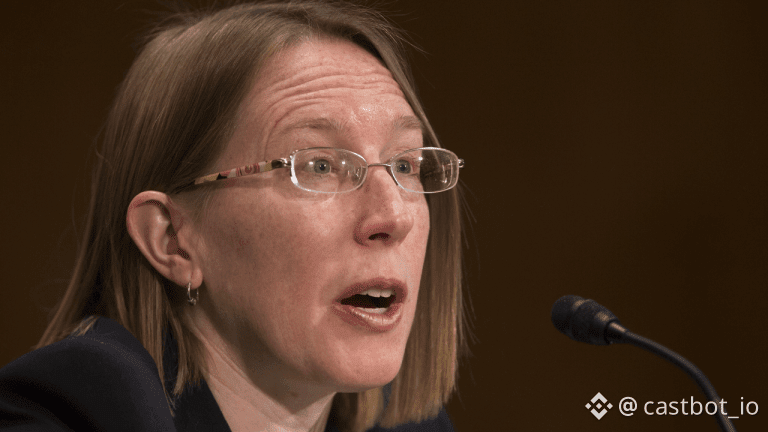
The former chair of the U.S. Securities and Exchange Commission (SEC), Hester Peirce, has publicly called for a revamp of the anti–money laundering (KYC) system, urging the use of privacy-computing technologies such as zero-knowledge proofs (zk-SNARKs) to replace traditional mandatory data collection. These remarks come from a departing regulatory official and may signal a subtle shift in the U.S. regulatory approach to privacy protection for cryptocurrencies.
Why is this news important?
Peirce’s proposal directly targets two major pain points in the current KYC system: first, the high compliance costs—according to industry estimates, global compliance costs have reached 0.2% of GDP; second, frequent data breaches with little tangible benefit—global financial institutions saw a 37% year-on-year surge in data breach incidents in the first half of 2025. The zero-knowledge proof technology principle of "proving with computation without exposing data" addresses both contradictions at once. While it has been mentioned before, coming from an incoming-to-exit former chair, its weight far exceeds typical industry suggestions.
Market impact
From a technical standpoint, if the SEC pushes for incorporating zk-SNARKs into the compliance framework, it could drive two types of market changes: first, a valuation re-assessment for privacy coins (such as ZEC and MATIC) after receiving regulatory endorsement; second, a policy tailwind period for projects centered on privacy computing (such as Arbitrum zkRollups). As for prices, currently at BTC $84,858.46 / ETH $2,707.8—if the proposal gains subsequent policy confirmation—it is expected to provide support. However, if regulators ultimately choose a compromise rather than fully accepting the idea, this assessment would be invalid.
Trading approach
From the perspective of technical feasibility, Ethereum already supports Layer2 scaling solutions in which roughly 40% of transactions are verified via zk-SNARKs. This means that at ETH $2,707.8, the price already implicitly reflects some policy-positive expectations. If regulatory reform can push mainstream exchanges to open more privacy-account options, it could boost the entire L2 market. But that logic would not hold if it breaks below the historical pressure level at ETH $2,707.8.
This article has no project sponsorship. The author does not hold any of the mentioned assets.
⚠️ This is not investment advice; forecasts are for reference only
#SEC
The former chair of the U.S. Securities and Exchange Commission (SEC), Hester Peirce, has publicly called for a revamp of the anti–money laundering (KYC) system, urging the use of privacy-computing technologies such as zero-knowledge proofs (zk-SNARKs) to replace traditional mandatory data collection. These remarks come from a departing regulatory official and may signal a subtle shift in the U.S. regulatory approach to privacy protection for cryptocurrencies.
Why is this news important?
Peirce’s proposal directly targets two major pain points in the current KYC system: first, the high compliance costs—according to industry estimates, global compliance costs have reached 0.2% of GDP; second, frequent data breaches with little tangible benefit—global financial institutions saw a 37% year-on-year surge in data breach incidents in the first half of 2025. The zero-knowledge proof technology principle of "proving with computation without exposing data" addresses both contradictions at once. While it has been mentioned before, coming from an incoming-to-exit former chair, its weight far exceeds typical industry suggestions.
Market impact
From a technical standpoint, if the SEC pushes for incorporating zk-SNARKs into the compliance framework, it could drive two types of market changes: first, a valuation re-assessment for privacy coins (such as ZEC and MATIC) after receiving regulatory endorsement; second, a policy tailwind period for projects centered on privacy computing (such as Arbitrum zkRollups). As for prices, currently at BTC $84,858.46 / ETH $2,707.8—if the proposal gains subsequent policy confirmation—it is expected to provide support. However, if regulators ultimately choose a compromise rather than fully accepting the idea, this assessment would be invalid.
Trading approach
From the perspective of technical feasibility, Ethereum already supports Layer2 scaling solutions in which roughly 40% of transactions are verified via zk-SNARKs. This means that at ETH $2,707.8, the price already implicitly reflects some policy-positive expectations. If regulatory reform can push mainstream exchanges to open more privacy-account options, it could boost the entire L2 market. But that logic would not hold if it breaks below the historical pressure level at ETH $2,707.8.
This article has no project sponsorship. The author does not hold any of the mentioned assets.
⚠️ This is not investment advice; forecasts are for reference only
#SEC