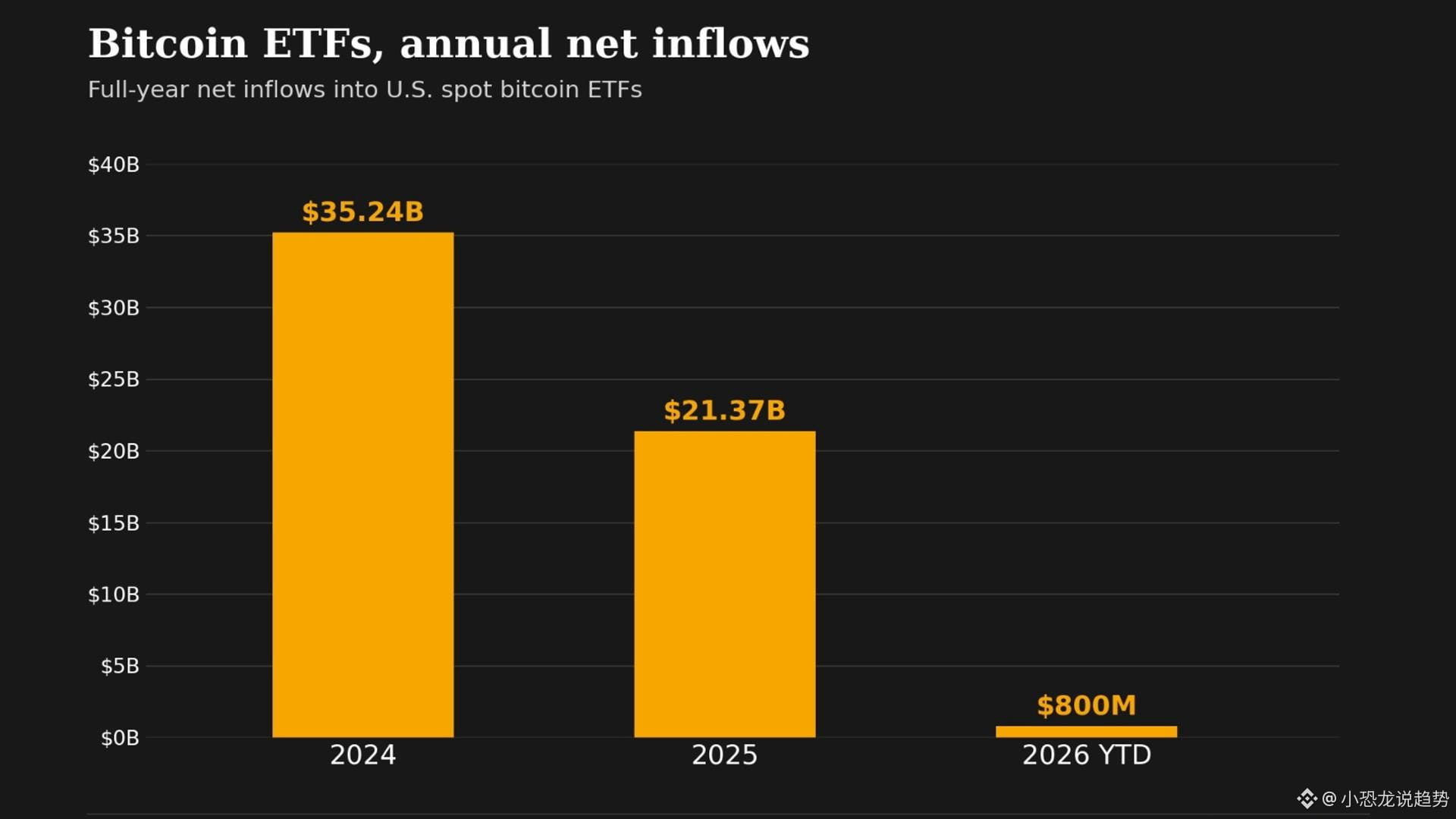
One week: $2.39 billion surged into U.S. spot Bitcoin ETFs, setting a new record for the highest net inflow in a single week in 2026.
🔄 进群一起分析行情
Two months ago, these funds were still net outflows of roughly $5.8 billion for the year; by this week, the 2026 books had been balanced, turning into about $800 million in net inflows. Bitcoin also held above $84,000 and delivered the second-best quarterly performance in history.
Let’s break this money down first. U.S. spot Bitcoin ETFs have recorded net inflows for seven straight trading days, with cumulative inflows nearing $3 billion; on September 24 alone, there was still a $191 million inflow, but compared with the previous days it clearly slowed down—marking a third consecutive day of deceleration. Stretch the timeline and it’s even clearer: around the days the CLARITY Act failed in the Senate, funds once fled in panic, pushing Bitcoin below $75,000; over the next two weeks, ETFs nearly made up for that lost ground. This year’s cumulative net inflow has flipped from negative to positive—that’s the toughest foundation of this rebound.
What’s truly worth paying attention to is where the money is going. In the same week, 93 of the CoinDesk 100 constituents rose; Quant surged by as much as 39% within 24 hours; the altcoin season index climbed to its highest level in more than three months. In other words, the ETF rebound isn’t staying in a single Bitcoin basket—it’s spilling outward along with risk appetite.
But don’t rush to call it a bull market. Interest rates are still tightening: the Fed raised rates to 3.75%–4.00% in September—the first hike since July 2023. Meanwhile, market expectations for another rate increase in October are heating up, and Treasury bond volatility has climbed to the highest level since March of this year. The most interesting divergence is in volatility: the bond market is nervous, but Bitcoin’s own volatility index is sitting at a low point for the year—suggesting this rally looks more like quietly topping up positions than a chaotic, emotion-driven scramble for risk.
My view: the return of ETF funds this time, at its core, is filling the hole created by lawmakers’ vote—more of a repair than the starting point of a brand-new cycle. What will ultimately determine how far the行情 can run isn’t how strong the single-week inflows are, but the outcome of the October policy meeting and whether Treasury yields can hold steady. If rate-hike expectations keep intensifying, the $84,000 level will likely be tested repeatedly; if not, only when ETF inflows and altcoin diffusion combine into a real force can a true reversal be on the table.
So here’s the question: do you think this is a reversal, or just another leg of the bounce? Let’s chat in the comments.
Every day, I’ll bring you the hot spots in Bitcoin ETF fund flows—not just to see what’s happening in the news, but to help you understand the logic and opportunities behind it 👀🚀
Click the profile picture to watch the livestream
🔄 进群一起分析行情
Two months ago, these funds were still net outflows of roughly $5.8 billion for the year; by this week, the 2026 books had been balanced, turning into about $800 million in net inflows. Bitcoin also held above $84,000 and delivered the second-best quarterly performance in history.
Let’s break this money down first. U.S. spot Bitcoin ETFs have recorded net inflows for seven straight trading days, with cumulative inflows nearing $3 billion; on September 24 alone, there was still a $191 million inflow, but compared with the previous days it clearly slowed down—marking a third consecutive day of deceleration. Stretch the timeline and it’s even clearer: around the days the CLARITY Act failed in the Senate, funds once fled in panic, pushing Bitcoin below $75,000; over the next two weeks, ETFs nearly made up for that lost ground. This year’s cumulative net inflow has flipped from negative to positive—that’s the toughest foundation of this rebound.
What’s truly worth paying attention to is where the money is going. In the same week, 93 of the CoinDesk 100 constituents rose; Quant surged by as much as 39% within 24 hours; the altcoin season index climbed to its highest level in more than three months. In other words, the ETF rebound isn’t staying in a single Bitcoin basket—it’s spilling outward along with risk appetite.
But don’t rush to call it a bull market. Interest rates are still tightening: the Fed raised rates to 3.75%–4.00% in September—the first hike since July 2023. Meanwhile, market expectations for another rate increase in October are heating up, and Treasury bond volatility has climbed to the highest level since March of this year. The most interesting divergence is in volatility: the bond market is nervous, but Bitcoin’s own volatility index is sitting at a low point for the year—suggesting this rally looks more like quietly topping up positions than a chaotic, emotion-driven scramble for risk.
My view: the return of ETF funds this time, at its core, is filling the hole created by lawmakers’ vote—more of a repair than the starting point of a brand-new cycle. What will ultimately determine how far the行情 can run isn’t how strong the single-week inflows are, but the outcome of the October policy meeting and whether Treasury yields can hold steady. If rate-hike expectations keep intensifying, the $84,000 level will likely be tested repeatedly; if not, only when ETF inflows and altcoin diffusion combine into a real force can a true reversal be on the table.
So here’s the question: do you think this is a reversal, or just another leg of the bounce? Let’s chat in the comments.
Every day, I’ll bring you the hot spots in Bitcoin ETF fund flows—not just to see what’s happening in the news, but to help you understand the logic and opportunities behind it 👀🚀
Click the profile picture to watch the livestream