
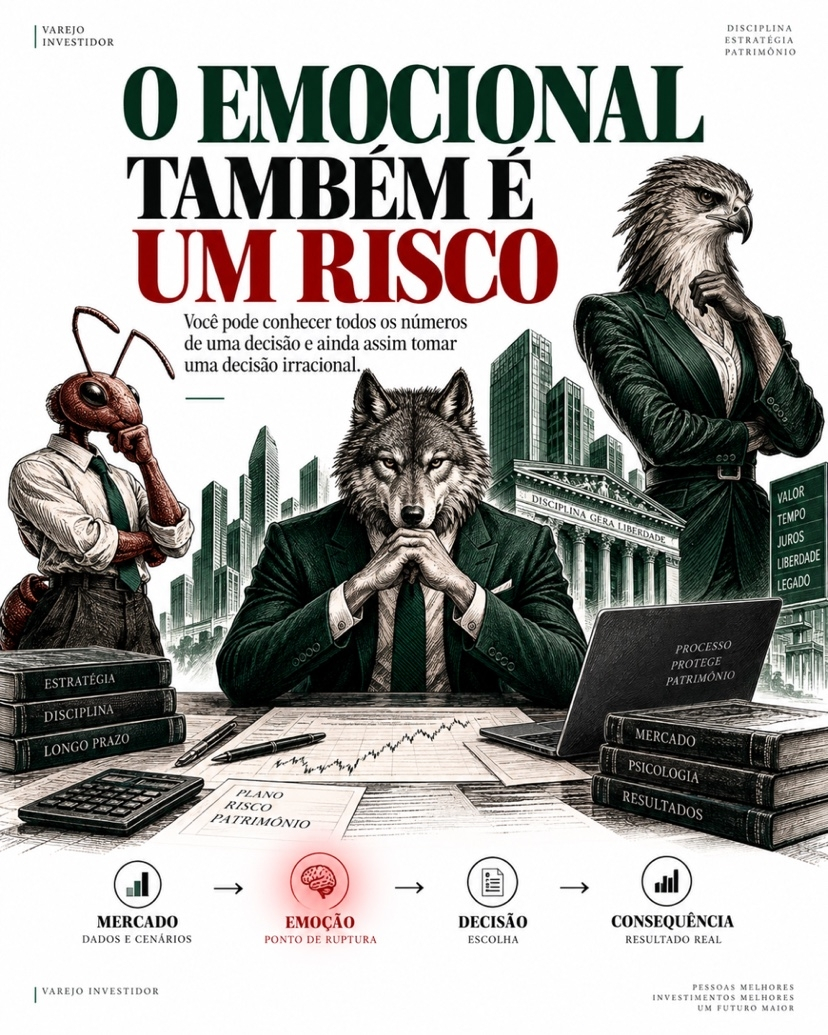
An investment decision may seem rational on paper and yet still be affected by emotion at the moment of execution.
Fear, greed, anxiety, and overconfidence can change the way a person reacts to market movements. The problem is not in feeling these emotions, but in allowing them to replace the analysis process.
Imagine an investor who has a defined strategy. After a sharp drop, he abandons the plan out of fear. Later, the market recovers and he returns out of euphoria. The initial analysis may even be correct, but the behavior along the way completely changes the outcome.
That’s why risk management also involves behavior.
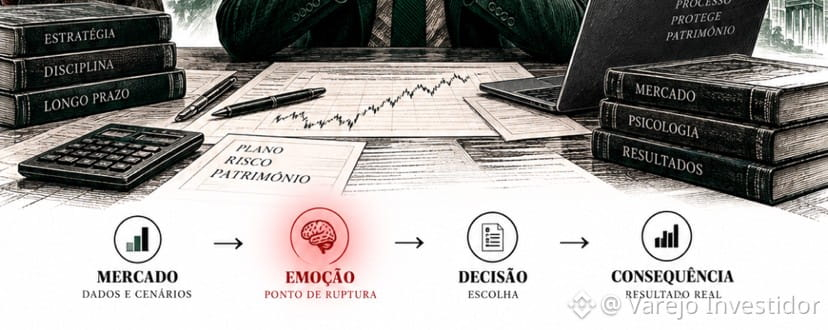
MARKET → EMOTION → DECISION → CONSEQUENCE
A well-defined process can help reduce impulsive decisions. Entry criteria, risk limits, diversification, time horizon, and follow-up rules make the decision less dependent on the emotional state of each moment.
Investing is not just about understanding numbers. It also involves understanding how decisions are made when the numbers change.
Explore the related assets below and track how these assets evolve in the market.
#PsicologiaTrading #trading #trader #EmocionesDelTrader