
Volatility is a way to observe the size of price or return fluctuations over time.
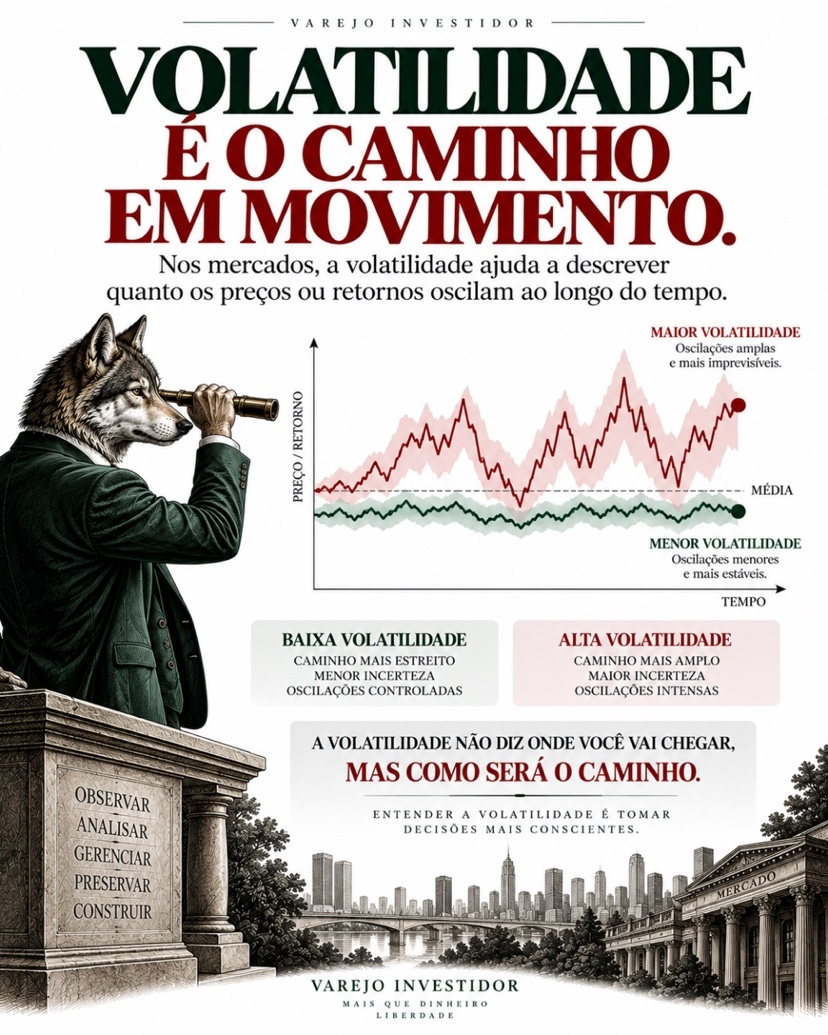
When the variations are small and stay close to a pattern, we have a lower-volatility environment. When movements become larger and more frequent, volatility increases.
This does not automatically mean that an asset will have a positive or negative return. Volatility mainly describes the magnitude of changes along the path.
Imagine two investments that end the period at the same level. One may have advanced in a relatively stable way. The other may have gone through sharp highs and lows before reaching the same point.
That’s why analyzing only the final result can hide important differences in the asset’s behavior.
A simple way to think about it is:
SMALL FLUCTUATIONS → LOWER VOLATILITY → MORE STABLE PATH
LARGE FLUCTUATIONS → HIGHER VOLATILITY → MORE UNCERTAIN PATH
Volatility is an important tool for understanding market behavior, assessing risks, and analyzing how different assets may behave within a portfolio.
Explore the assets related below and follow the evolution of these assets in the market.
#Trader #trading #economy #investimentos $QQQT.ETF
$UNI