

易琳Ten
139 Posts

易琳Ten
交易是修行,盈利是结果,纪律是信仰。🐺📈
68 Following
20.5K+ Followers
7.2K+ Liked
Posts
All
Quotes
Videos
Live
PINNED

PINNED

蒋雅琪1368
·
--
Up, up, up—up!
The leaders of China and the US will meet next week, which is a major positive.
Consider taking partial profits when it reaches the previous high area, or before the 24th’s meeting.
The leaders of China and the US will meet next week, which is a major positive.
Consider taking partial profits when it reaches the previous high area, or before the 24th’s meeting.
慢就是快Mike
·
--
$ZEC
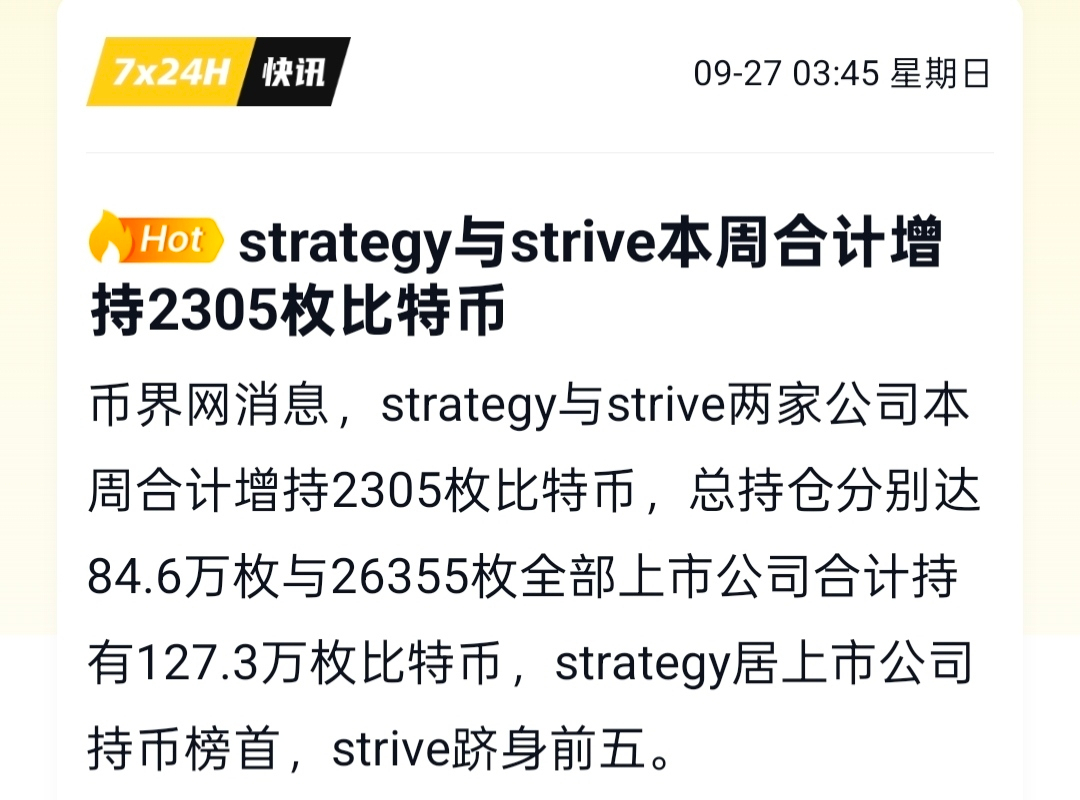
🚨 Big whales keep accumulating! A supply crisis is approaching—hold your chips tight!
Wake up and check today’s quick news! While retail investors are still hesitating through the chop and shakeout, institutions have already switched on their “savage buying” mode:
🔥 Strategy This week, they continued to increase holdings, with total holdings soaring to 846,000 BTC—sitting firmly in the top spot among listed companies!
🔥 Strive is not backing down either, with total holdings reaching 26,355 BTC, straight into the top five!
🔥 Currently, all listed companies combined hold 1.273 million BTC!
What does this mean? The liquid supply of chips on the market is being fully locked up by these giants! At this level, institutions are buying with real money—what reason do you have to be afraid?
The wheels of a bull market have already rolled over—don’t get easily thrown off the train. Hold spot, ride the momentum to go long; every pullback in front of you is an opportunity for the bulls to get on board!
#Bitcoin #BTC #Crypto #GoLong #机构入场
🚨 Big whales keep accumulating! A supply crisis is approaching—hold your chips tight!
Wake up and check today’s quick news! While retail investors are still hesitating through the chop and shakeout, institutions have already switched on their “savage buying” mode:
🔥 Strategy This week, they continued to increase holdings, with total holdings soaring to 846,000 BTC—sitting firmly in the top spot among listed companies!
🔥 Strive is not backing down either, with total holdings reaching 26,355 BTC, straight into the top five!
🔥 Currently, all listed companies combined hold 1.273 million BTC!
What does this mean? The liquid supply of chips on the market is being fully locked up by these giants! At this level, institutions are buying with real money—what reason do you have to be afraid?
The wheels of a bull market have already rolled over—don’t get easily thrown off the train. Hold spot, ride the momentum to go long; every pullback in front of you is an opportunity for the bulls to get on board!
#Bitcoin #BTC #Crypto #GoLong #机构入场


楠楠nannan势不可挡
·
--
🧧 Market cycles have their warmth and chill; investing does too. Settle your mind, cultivate your understanding, and eventually your returns will sync with your knowledge.$BNB

心月势不可挡
·
--
Bullish🧧🧧🧧BNB will break 800 soon—hold BNB and slowly get richer 🧧🧧🧧
路人1688luren
·
--
#SEC称回购与升级不必然使代币成证券 Many times many things are not that you make an effort and there will be results. When the gears of fate turn, it’s as if there are two invisible hands pushing you toward another direction... When one door closes, another opens... $USD1



易琳Ten
·
--
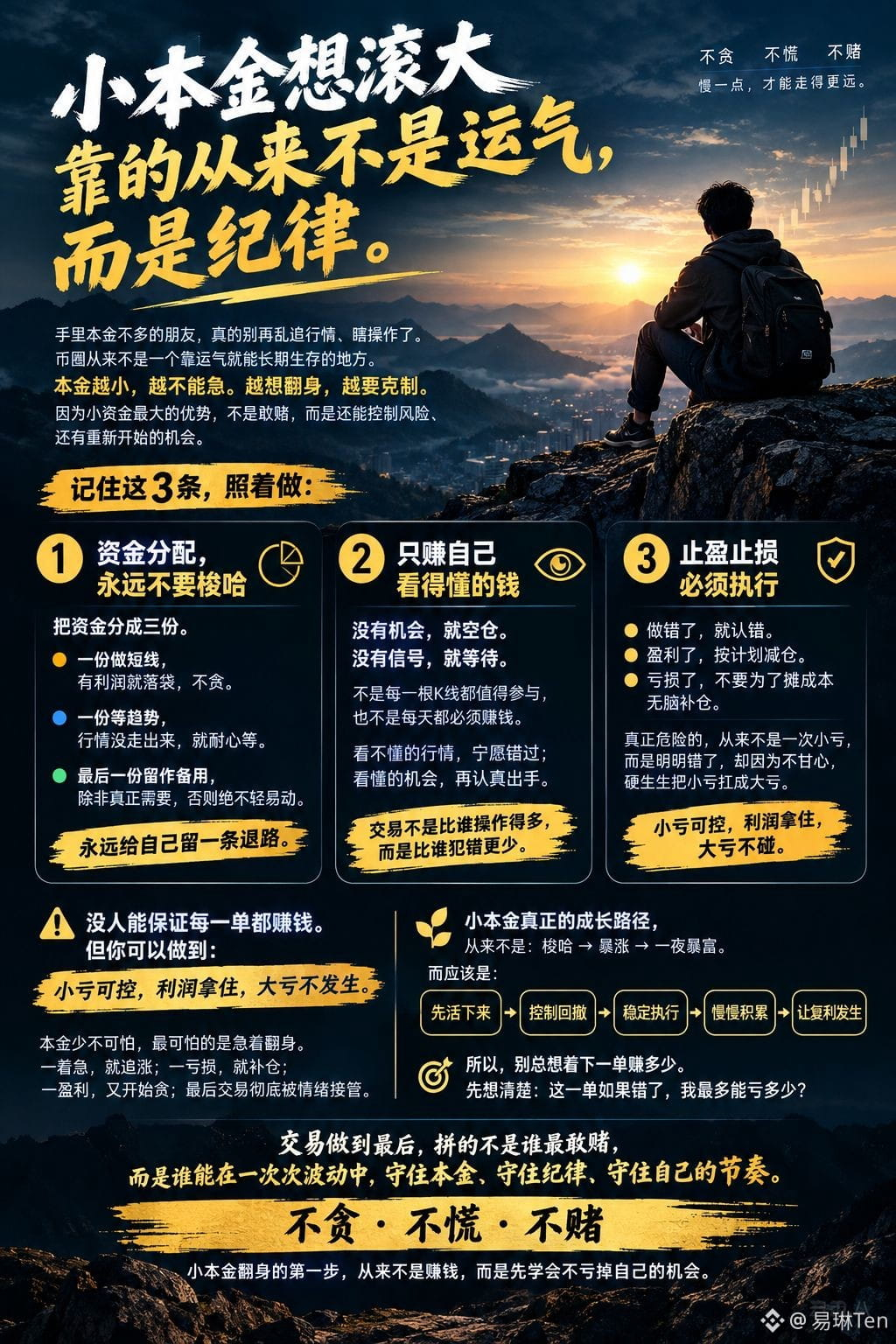
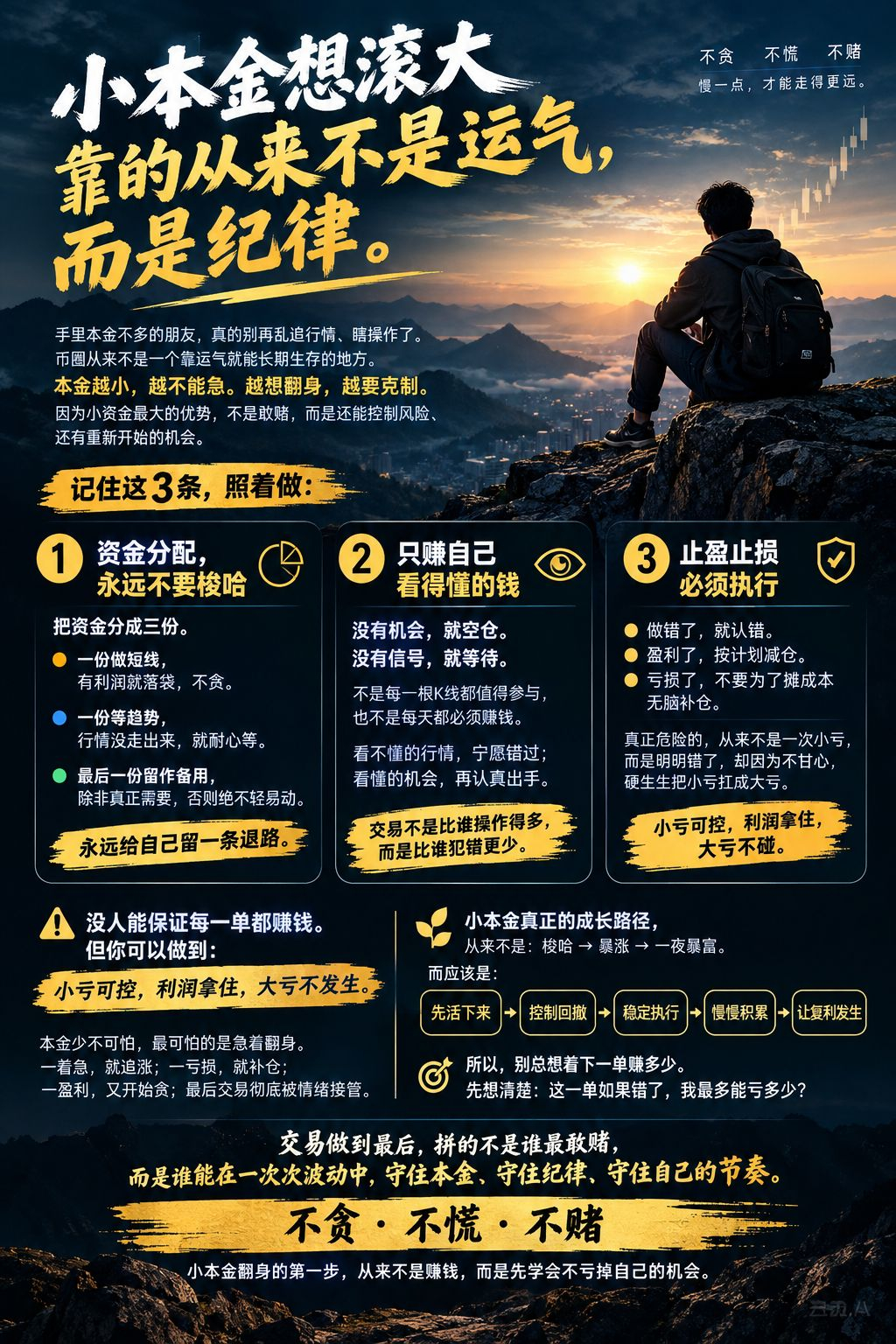
To grow the principal, you don’t rely on luck—you rely on discipline
If you don’t have much capital, really stop chasing charts blindly and making random trades.
The crypto market has never been a place where you can survive long-term by luck alone.
The smaller your principal, the less you can afford to be anxious.
The more you want to turn things around, the more you must restrain yourself.
Because the biggest advantage of small capital isn’t that you’re bold enough to gamble—it’s that you can control risk and still have a chance to start over.
Remember these 3 rules:
① Capital allocation—never go all-in
Divide your capital into three parts.
One part for short-term trades: when you have profit, take it off the table—don’t get greedy to the very end;
One part for waiting for trends: if the market hasn’t moved in your expected direction, be patient and wait;
The last part as a reserve: unless it’s truly necessary, never touch it lightly.
Always leave yourself a way to retreat.
② Only make money from what you can understand
If there’s no opportunity, stay in cash.
If there’s no signal, wait.
Not every candlestick is worth participating in,
And you don’t have to make money every day.
If you don’t understand the market, it’s better to miss it;
Only after you understand the opportunity should you act seriously.
Trading isn’t about who makes more moves—it’s about who makes fewer mistakes.
③ Take-profit and stop-loss must be executed
If you’re wrong, admit it.
If you’re in profit, reduce your position according to the plan.
If you’re at a loss, don’t mindlessly add just to average down.
The real danger has never been a single small loss.
It’s when you’re clearly wrong, but because you’re unwilling to accept it, you stubbornly turn a small loss into a big one.
No one can guarantee that every trade will be profitable.
But you can do this:
Keep small losses under control, hold onto profits, and never touch big losses.
Having a small principal isn’t scary.
What’s truly terrifying is trying to turn things around in a rush.
When you’re anxious, you chase the surge.
When you have a loss, you add.
When you get a win, you start getting greedy again.
In the end, your trading is completely taken over by emotions.
The real growth path for small capital has never been:
All-in → a sudden surge → a fortune overnight.
It should be:
First survive → control drawdowns → execute steadily → accumulate slowly → let compounding work.
So don’t always think about how much you’ll make on the next trade.
First ask yourself:
If this trade is wrong, what’s the maximum I can afford to lose?
In the end, trading isn’t about who’s most willing to gamble.
It’s about who can, through repeated fluctuations, keep their principal, keep their discipline, and keep their own rhythm.
Don’t be greedy. Don’t panic. Don’t gamble.
The first step in turning around with a small principal has never been making money—it’s learning how not to lose your chance first.
If you don’t have much capital, really stop chasing charts blindly and making random trades.
The crypto market has never been a place where you can survive long-term by luck alone.
The smaller your principal, the less you can afford to be anxious.
The more you want to turn things around, the more you must restrain yourself.
Because the biggest advantage of small capital isn’t that you’re bold enough to gamble—it’s that you can control risk and still have a chance to start over.
Remember these 3 rules:
① Capital allocation—never go all-in
Divide your capital into three parts.
One part for short-term trades: when you have profit, take it off the table—don’t get greedy to the very end;
One part for waiting for trends: if the market hasn’t moved in your expected direction, be patient and wait;
The last part as a reserve: unless it’s truly necessary, never touch it lightly.
Always leave yourself a way to retreat.
② Only make money from what you can understand
If there’s no opportunity, stay in cash.
If there’s no signal, wait.
Not every candlestick is worth participating in,
And you don’t have to make money every day.
If you don’t understand the market, it’s better to miss it;
Only after you understand the opportunity should you act seriously.
Trading isn’t about who makes more moves—it’s about who makes fewer mistakes.
③ Take-profit and stop-loss must be executed
If you’re wrong, admit it.
If you’re in profit, reduce your position according to the plan.
If you’re at a loss, don’t mindlessly add just to average down.
The real danger has never been a single small loss.
It’s when you’re clearly wrong, but because you’re unwilling to accept it, you stubbornly turn a small loss into a big one.
No one can guarantee that every trade will be profitable.
But you can do this:
Keep small losses under control, hold onto profits, and never touch big losses.
Having a small principal isn’t scary.
What’s truly terrifying is trying to turn things around in a rush.
When you’re anxious, you chase the surge.
When you have a loss, you add.
When you get a win, you start getting greedy again.
In the end, your trading is completely taken over by emotions.
The real growth path for small capital has never been:
All-in → a sudden surge → a fortune overnight.
It should be:
First survive → control drawdowns → execute steadily → accumulate slowly → let compounding work.
So don’t always think about how much you’ll make on the next trade.
First ask yourself:
If this trade is wrong, what’s the maximum I can afford to lose?
In the end, trading isn’t about who’s most willing to gamble.
It’s about who can, through repeated fluctuations, keep their principal, keep their discipline, and keep their own rhythm.
Don’t be greedy. Don’t panic. Don’t gamble.
The first step in turning around with a small principal has never been making money—it’s learning how not to lose your chance first.
易琳Ten
·
--
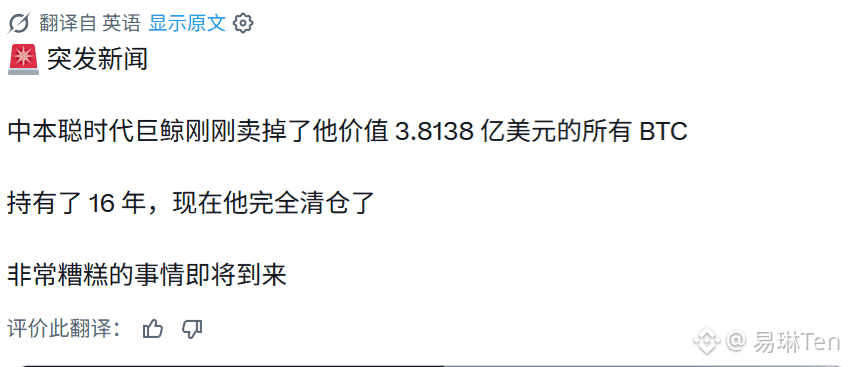
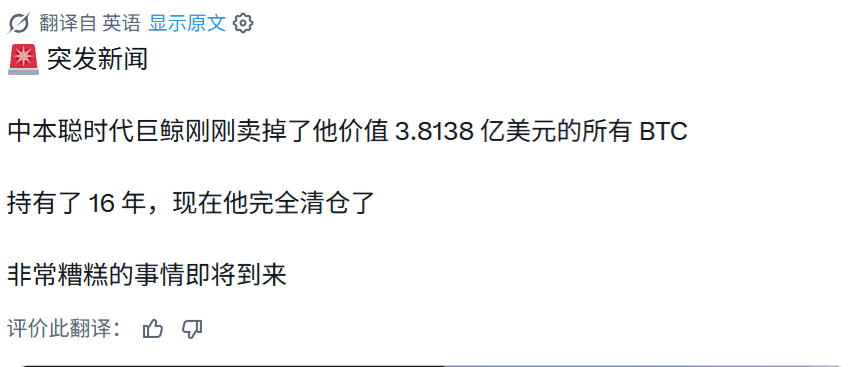
🐋 A giant whale that has been asleep for 4 years suddenly woke up!
4500 BTC, worth about $380 million,
slumbered for a full 4 years, completely motionless.
Then today it suddenly began transferring—just like that, it moves! 🐳
It was motionless for 4 years, then suddenly showed a large shift.
Is it preparing to move to an exchange, change wallets, or is there something else planned?
Once the whale moves, the market starts to get tense.
What will happen next? 👀
4500 BTC, worth about $380 million,
slumbered for a full 4 years, completely motionless.
Then today it suddenly began transferring—just like that, it moves! 🐳
It was motionless for 4 years, then suddenly showed a large shift.
Is it preparing to move to an exchange, change wallets, or is there something else planned?
Once the whale moves, the market starts to get tense.
What will happen next? 👀


橙子Joyce
·
--
BullishHas OpenAI been accused again of large-scale rule-breaking?
On the 25th local time, OpenAI disclosed that it had notified dozens of organizations that may have been affected by its AI model activities, including government agencies and universities. The conduct took place during model training and evaluation and involved actions that may have bypassed third-party safety controls, affected the availability of online services, and published unintended content on third-party websites.
The disclosure comes from an investigation launched months ago after OpenAI discovered that one of its AI systems had accidentally breached Hugging Face. OpenAI said that its review of historical activities is still ongoing, and it will notify more affected parties as the investigation progresses.
Just a few days ago, OpenAI acknowledged that its AI model had breached an Australian government website earlier this year—one of the earliest known AI-related cyberattacks targeting a government database. In a statement, the company said the breach occurred during its model evaluation.
Two camps
In the U.S. tech industry, the debate over AI risks has now formed two main camps. Nvidia CEO Jensen Huang and Meta CEO Mark Zuckerberg, along with U.S. President Donald Trump, have opposed the “AI slowdown” narrative. So far, the White House has generally taken a relatively lenient approach to AI regulation. Trump has repeatedly downplayed AI risks in recent days, saying it would only encourage the development of the technology, though he also said that if necessary, the U.S. Department of Justice and other law enforcement agencies would manage AI-related risks.
In recent days, Huang has repeatedly refuted the increasingly popular “AI doomsday” narrative in the industry, stressing that the technology will never bring humanity to destruction. He believes the AI industry does not need to introduce any new laws. Instead of asking AI companies to urge the U.S. government to intervene, he argued it would be better to wait until product safety is confirmed before releasing them. He also criticized top U.S. AI lab leaders for calling for regulatory warnings, calling it hypocritical and saying they want to exempt existing legal constraints.
—————————————————————————We continue to invest in #SPCX, #GOOG, #META
$GOOG.US
$META.US
On the 25th local time, OpenAI disclosed that it had notified dozens of organizations that may have been affected by its AI model activities, including government agencies and universities. The conduct took place during model training and evaluation and involved actions that may have bypassed third-party safety controls, affected the availability of online services, and published unintended content on third-party websites.
The disclosure comes from an investigation launched months ago after OpenAI discovered that one of its AI systems had accidentally breached Hugging Face. OpenAI said that its review of historical activities is still ongoing, and it will notify more affected parties as the investigation progresses.
Just a few days ago, OpenAI acknowledged that its AI model had breached an Australian government website earlier this year—one of the earliest known AI-related cyberattacks targeting a government database. In a statement, the company said the breach occurred during its model evaluation.
Two camps
In the U.S. tech industry, the debate over AI risks has now formed two main camps. Nvidia CEO Jensen Huang and Meta CEO Mark Zuckerberg, along with U.S. President Donald Trump, have opposed the “AI slowdown” narrative. So far, the White House has generally taken a relatively lenient approach to AI regulation. Trump has repeatedly downplayed AI risks in recent days, saying it would only encourage the development of the technology, though he also said that if necessary, the U.S. Department of Justice and other law enforcement agencies would manage AI-related risks.
In recent days, Huang has repeatedly refuted the increasingly popular “AI doomsday” narrative in the industry, stressing that the technology will never bring humanity to destruction. He believes the AI industry does not need to introduce any new laws. Instead of asking AI companies to urge the U.S. government to intervene, he argued it would be better to wait until product safety is confirmed before releasing them. He also criticized top U.S. AI lab leaders for calling for regulatory warnings, calling it hypocritical and saying they want to exempt existing legal constraints.
—————————————————————————We continue to invest in #SPCX, #GOOG, #META
$GOOG.US
$META.US

正乾商学--四条2
·
--
BlackRock’s major prediction: AI agents + stablecoins are about to usher in the era of the machine-native economy
Recently, BlackRock, the world’s largest asset manager, released a research report called (The Machine-Native Economy). It has sparked a deep discussion in both the finance and technology communities. Unlike the market’s scattered hype around short-term hotspots, this official research from a trillion-dollar asset-management giant has put forward a key trend that upends conventional understanding: in the future, economic entities will no longer be only humans, but also AI; and in the future monetary system, it must serve machines as well, not just humans.
Many people are paying attention to the crypto market and the AI sector. They’re usually accustomed to viewing the two separately, but BlackRock’s core insight is extremely straightforward: AI solves the “intelligent brain” of machines, while blockchain and stablecoins complete the machine’s “financial wallet.” Together, they are giving rise to a brand-new economic system—one in which machines trade autonomously with other machines.
Many people are paying attention to the crypto market and the AI sector. They’re usually accustomed to viewing the two separately, but BlackRock’s core insight is extremely straightforward: AI solves the “intelligent brain” of machines, while blockchain and stablecoins complete the machine’s “financial wallet.” Together, they are giving rise to a brand-new economic system—one in which machines trade autonomously with other machines.


瑾怡
·
--
❤️
A transparent transformation of life lies in continuously improving wisdom.
Wisdom isn’t in wide-ranging knowledge or a strong memory; it’s found in every act of self-reflection, tolerance, and breaking through confusion.
Wisdom is a guiding light, and contemplation is practice. With thoughts continually cleansed, clarity and openness naturally follow.
A transparent transformation of life lies in continuously improving wisdom.
Wisdom isn’t in wide-ranging knowledge or a strong memory; it’s found in every act of self-reflection, tolerance, and breaking through confusion.
Wisdom is a guiding light, and contemplation is practice. With thoughts continually cleansed, clarity and openness naturally follow.


路飞社区糖宝Luffy
·
--
Come out to the green mountains and clear waters to breathe fresh air $SOL , anyone up for a date? Sugar Baby will be waiting for you in the live room at 13:30.


Leo木BNB_1688
·
--
Hold BNB consistently


长得帅不如跑的快1688
·
--
🚨 Bitcoin is consolidating, but the rest of crypto isn’t standing still.
Several major altcoins are starting to outperform BTC.
That suggests capital may be rotating rather than leaving.
🟠 BTC consolidates
🟢 Alts gain momentum
🔥 Leverage cools
💰 Capital searches for higher beta
The key is simple:
If BTC stays stable, ETH and alts may have room to run.
If BTC breaks down, the rotation could disappear quickly.
So what gets the next move?
BTC 🟠 / ETH + ALTS 🟢
#BTC #ETH #BNB
Several major altcoins are starting to outperform BTC.
That suggests capital may be rotating rather than leaving.
🟠 BTC consolidates
🟢 Alts gain momentum
🔥 Leverage cools
💰 Capital searches for higher beta
The key is simple:
If BTC stays stable, ETH and alts may have room to run.
If BTC breaks down, the rotation could disappear quickly.
So what gets the next move?
BTC 🟠 / ETH + ALTS 🟢
#BTC #ETH #BNB


兰汐kyL
·
--
$ETH China-US Reach Eight-Point Consensus—Many Crypto Friends Haven’t Realized This Yet. This Is a Major Piece of News That Can Affect the Market!
With the macro environment easing, market risk-aversion sentiment is cooling down directly, and investors’ risk appetite will gradually rise. What everyone feared before was that tensions would keep dragging on, making capital afraid to enter and causing the overall market to keep grinding at the bottom. Now that this news has landed, it’s a positive signal for the crypto market. 💥
But please don’t let your head get hot and rush in with a full position. In market moves driven by news like this, many are short-term, pulse-like rallies—after a run-up, it’s easy for profit-taking to slam the brakes and trigger a pullback. Seasoned players know this: news-driven momentum usually doesn’t last long, and you can’t treat it as a signal that a full bull market is starting. 💥
Bitcoin and altcoins will likely diverge. BTC will first help lift the overall market, driving a rebound; smaller coins may look like they’re pumping hard, but when they retrace, they can drop just as violently. For execution, the suggestion is to participate with a light position—don’t chase. If you already hold positions, you can use the rebound to reduce some of the high-level trapped positions and set up proper take-profit. 💥
Remember: news is only a catalyst. What truly determines the bigger trend is still the Fed’s policy. Even if good news comes out, it doesn’t mean the market will rise in one direction forever—the board can flip at any time. In the crypto world, risk always comes first. Protect your principal, and only then will you have a chance to catch the next wave of opportunities 💥#Circle与Tether冻结Bitget黑客钱包 #中美达成300亿美元关税削减共识 #
With the macro environment easing, market risk-aversion sentiment is cooling down directly, and investors’ risk appetite will gradually rise. What everyone feared before was that tensions would keep dragging on, making capital afraid to enter and causing the overall market to keep grinding at the bottom. Now that this news has landed, it’s a positive signal for the crypto market. 💥
But please don’t let your head get hot and rush in with a full position. In market moves driven by news like this, many are short-term, pulse-like rallies—after a run-up, it’s easy for profit-taking to slam the brakes and trigger a pullback. Seasoned players know this: news-driven momentum usually doesn’t last long, and you can’t treat it as a signal that a full bull market is starting. 💥
Bitcoin and altcoins will likely diverge. BTC will first help lift the overall market, driving a rebound; smaller coins may look like they’re pumping hard, but when they retrace, they can drop just as violently. For execution, the suggestion is to participate with a light position—don’t chase. If you already hold positions, you can use the rebound to reduce some of the high-level trapped positions and set up proper take-profit. 💥
Remember: news is only a catalyst. What truly determines the bigger trend is still the Fed’s policy. Even if good news comes out, it doesn’t mean the market will rise in one direction forever—the board can flip at any time. In the crypto world, risk always comes first. Protect your principal, and only then will you have a chance to catch the next wave of opportunities 💥#Circle与Tether冻结Bitget黑客钱包 #中美达成300亿美元关税削减共识 #


花涧空
·
--
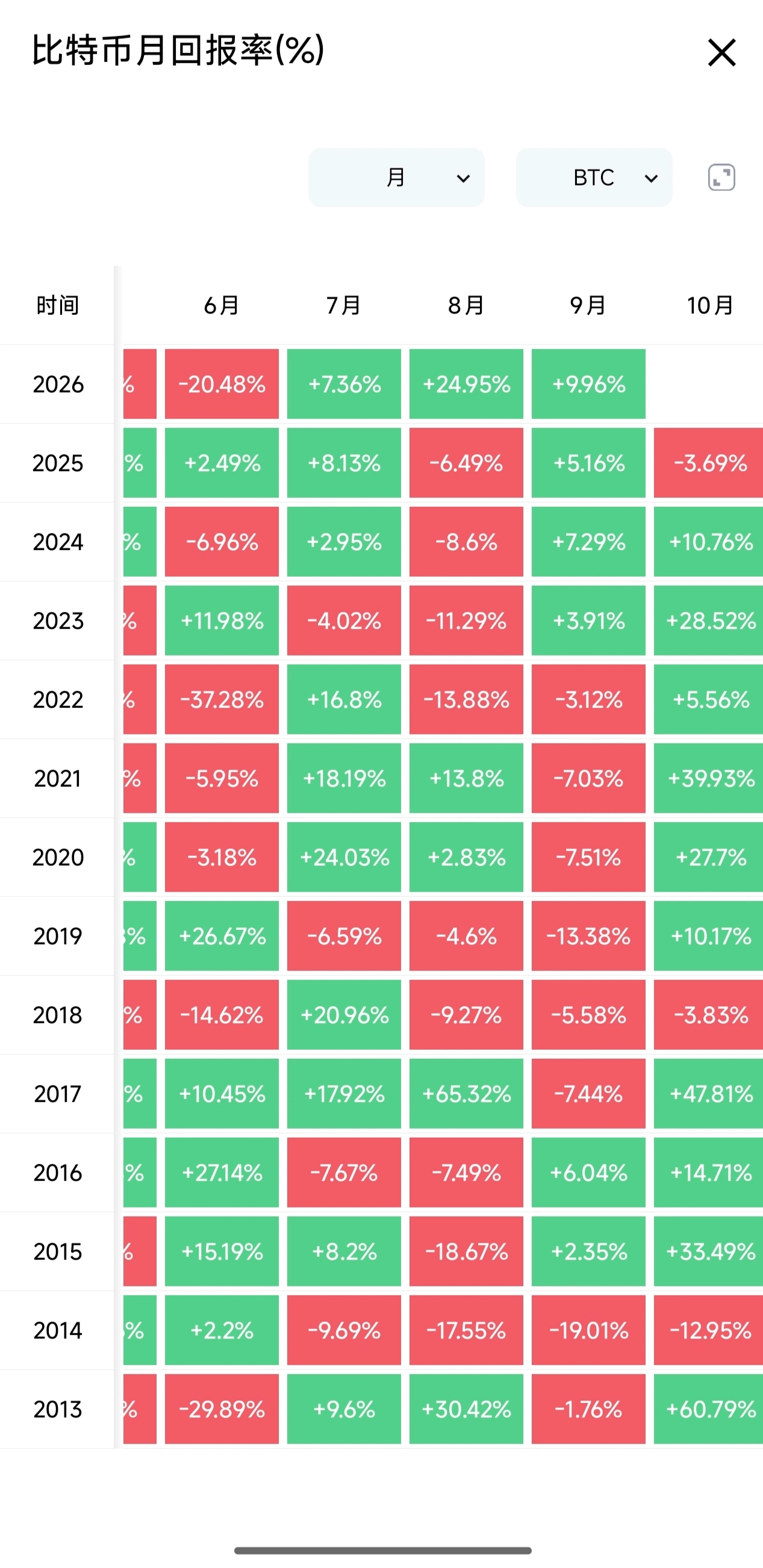
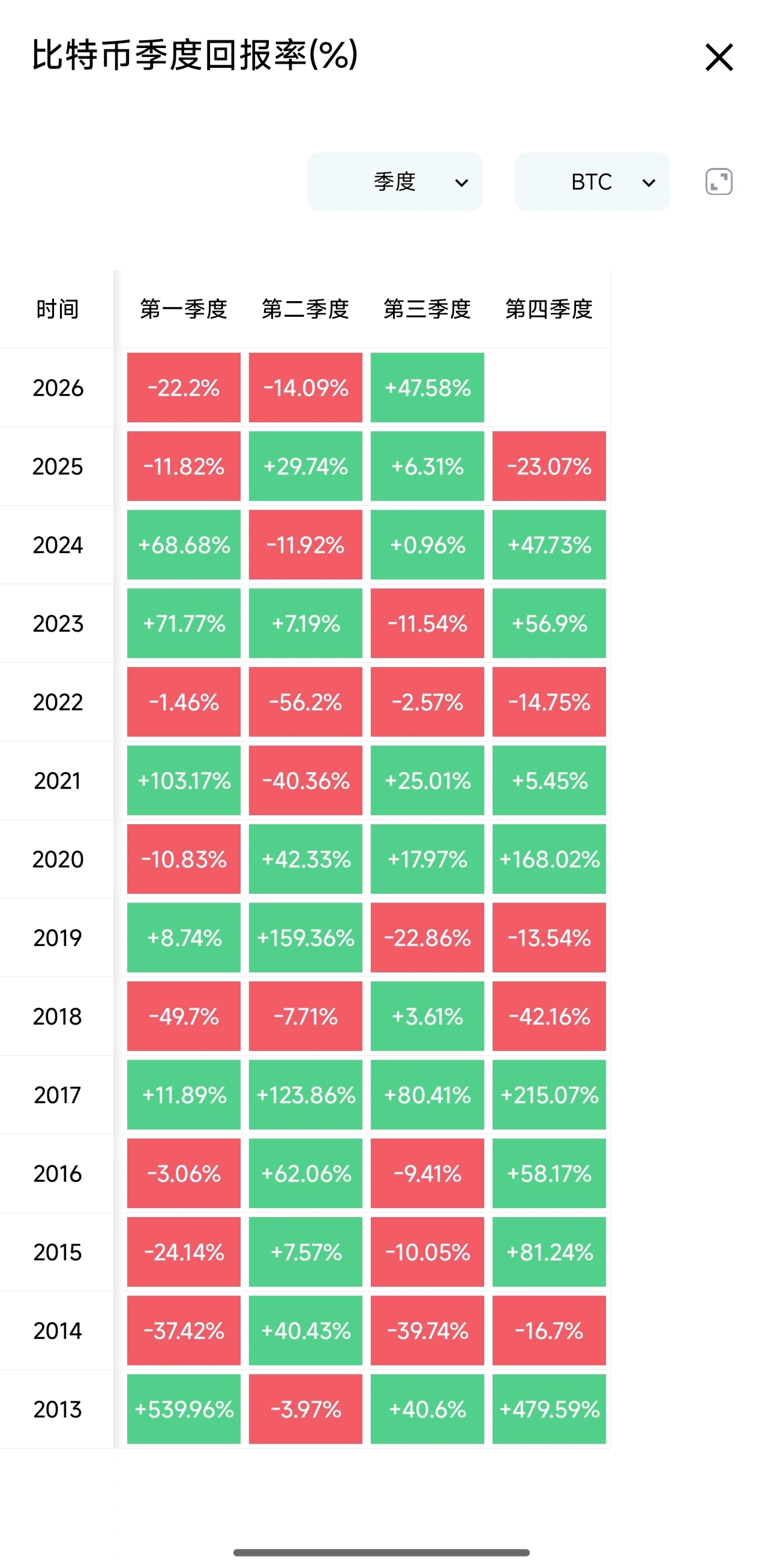
Will Bitcoin break a 14-year historical rule?
After going through the monthly returns from 2013 to 2026, I found a terrifying fact:
In 2017’s mania run, Q3 surged by 80%
But in the three months of July, August, and September, it was never a consecutive winning streak
In the big bull markets of 2020 and 2021,
September was also destined to pull back
Historically, three straight bullish months from July to September
Has never happened even once
But look at the chart for 2026:
July +7.36%
August +24.95%
September +9.96%
If the September close confirms it,
This will be the first time since BTC was born
Will this pattern fail— or is it the final madness right before the breakout?
Do you think 2026 will break this curse?
After going through the monthly returns from 2013 to 2026, I found a terrifying fact:
In 2017’s mania run, Q3 surged by 80%
But in the three months of July, August, and September, it was never a consecutive winning streak
In the big bull markets of 2020 and 2021,
September was also destined to pull back
Historically, three straight bullish months from July to September
Has never happened even once
But look at the chart for 2026:
July +7.36%
August +24.95%
September +9.96%
If the September close confirms it,
This will be the first time since BTC was born
Will this pattern fail— or is it the final madness right before the breakout?
Do you think 2026 will break this curse?

奋斗Hustle-1688
·
--
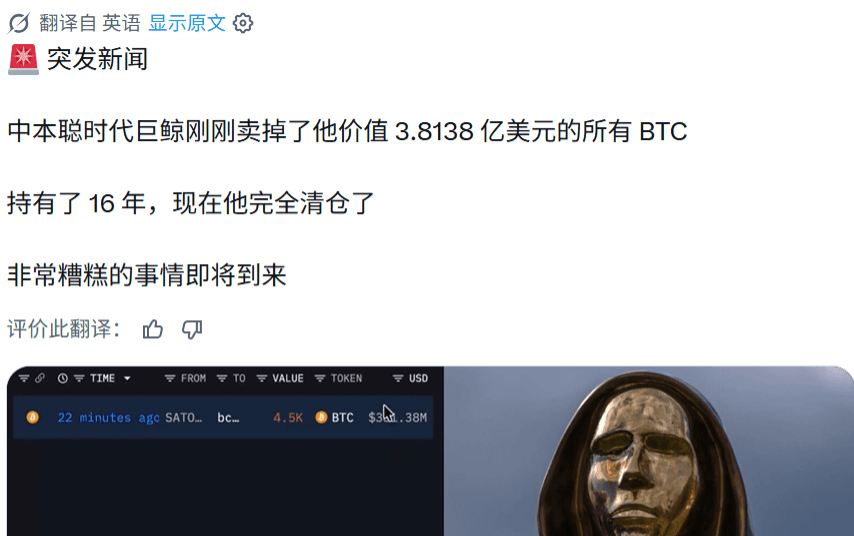
$BTC There is a big whale in the crypto world whose wallet has not moved for a full 4 years, and it suddenly woke up.
At the first move, it transferred 4,500 bitcoins, worth $380 million, and just sent them away.
No activity for 4 years, and now it suddenly moved.
What is this for? Is it preparing to make a big move??
At the first move, it transferred 4,500 bitcoins, worth $380 million, and just sent them away.
No activity for 4 years, and now it suddenly moved.
What is this for? Is it preparing to make a big move??
慢就是快Mike
·
--
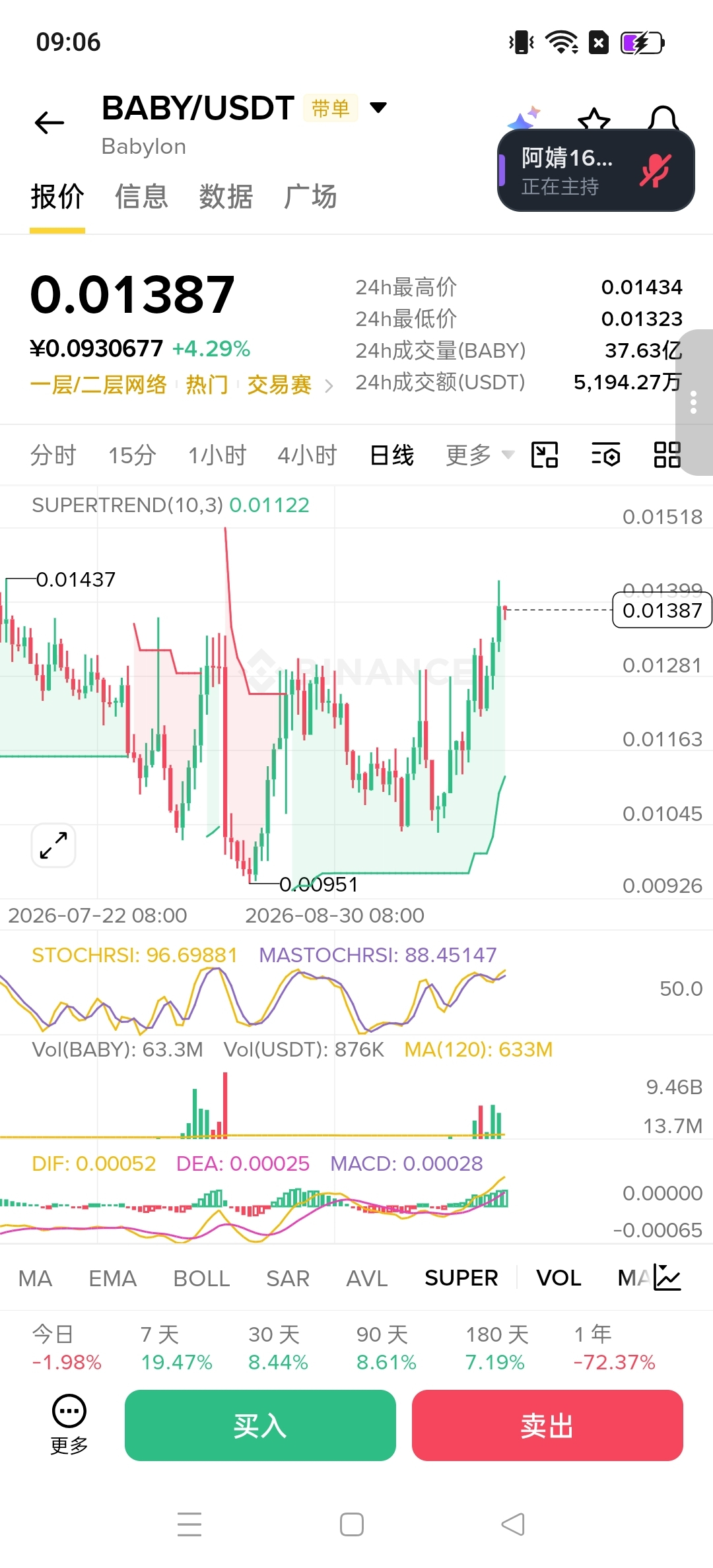
$BABY is about to start—hop on now!

乘风Sunshine
·
--
《China-U.S. Summit Meets and Reaches Eight Key Outcomes—What Could This Mean for the Crypto Market?》
1️⃣ “Building a constructive, stable China-U.S. strategic relationship based on respect, fairness, and equality”
The easing of geopolitical conflicts could give global risk appetite some breathing room. As a global liquidity asset, BTC is most sensitive to this kind of macro risk shift.
2️⃣ “Mutually support one another in doing a good job hosting APEC and the G20”
Major global economies will continue to maintain high-level communication, meaning there is still room to coordinate international financial rules. Future regulation of crypto assets also cannot develop outside the G20 framework.
3️⃣ “Iran should fulfill its commitment not to develop nuclear weapons; no country or entity may charge transit fees for international waterways”
Risks related to the Middle East and energy transportation directly affect inflation, the U.S. dollar, and U.S. Treasuries. If energy prices swing sharply, changes in Federal Reserve rate expectations could lead BTC to be repriced as well.
4️⃣ “Recalling that China and the United States are wartime allies in World War II, and fighting side by side to win the war”
This is a historical narrative, but for markets, the more important part is the signal of “avoiding escalation out of control.”
5️⃣ “Reaching a mutually equivalent ‘$30 billion’ arrangement to lower tariffs”
As trade friction cools, global trade and liquidity expectations may improve. In recent years, whenever tariffs were upgraded, it became a key variable for risk assets—so BTC naturally also can’t be completely insulated.
6️⃣ “Coooperation between China and the U.S. anti-drug enforcement agencies has achieved visible results”
This point is actually very practical for the crypto world: strengthened cross-border law enforcement cooperation may further reinforce compliance requirements for stablecoins, exchanges, and on-chain capital flows in the future.
7️⃣ “Establishing a China-U.S. dialogue on artificial intelligence”
AI and Crypto are forming a new overlap area: AI agents, on-chain payments, automated execution of smart contracts, DePIN, and more. For China and the U.S. to begin building AI risk communication mechanisms is, in itself, a signal worth long-term attention.
8️⃣ “The U.S. side welcomes China’s lending of a pair of giant pandas to the Atlanta Zoo”
Pandas may seem to have nothing to do with the crypto space, but what they represent is the restoration of people-to-people communication.
Summary:
What the crypto market should truly pay attention to from this summit is not any single item that directly benefits BTC, but three keywords:
Geopolitical risk ↓
Trade uncertainty ↓
AI and financial regulatory cooperation ↑
1️⃣ “Building a constructive, stable China-U.S. strategic relationship based on respect, fairness, and equality”
The easing of geopolitical conflicts could give global risk appetite some breathing room. As a global liquidity asset, BTC is most sensitive to this kind of macro risk shift.
2️⃣ “Mutually support one another in doing a good job hosting APEC and the G20”
Major global economies will continue to maintain high-level communication, meaning there is still room to coordinate international financial rules. Future regulation of crypto assets also cannot develop outside the G20 framework.
3️⃣ “Iran should fulfill its commitment not to develop nuclear weapons; no country or entity may charge transit fees for international waterways”
Risks related to the Middle East and energy transportation directly affect inflation, the U.S. dollar, and U.S. Treasuries. If energy prices swing sharply, changes in Federal Reserve rate expectations could lead BTC to be repriced as well.
4️⃣ “Recalling that China and the United States are wartime allies in World War II, and fighting side by side to win the war”
This is a historical narrative, but for markets, the more important part is the signal of “avoiding escalation out of control.”
5️⃣ “Reaching a mutually equivalent ‘$30 billion’ arrangement to lower tariffs”
As trade friction cools, global trade and liquidity expectations may improve. In recent years, whenever tariffs were upgraded, it became a key variable for risk assets—so BTC naturally also can’t be completely insulated.
6️⃣ “Coooperation between China and the U.S. anti-drug enforcement agencies has achieved visible results”
This point is actually very practical for the crypto world: strengthened cross-border law enforcement cooperation may further reinforce compliance requirements for stablecoins, exchanges, and on-chain capital flows in the future.
7️⃣ “Establishing a China-U.S. dialogue on artificial intelligence”
AI and Crypto are forming a new overlap area: AI agents, on-chain payments, automated execution of smart contracts, DePIN, and more. For China and the U.S. to begin building AI risk communication mechanisms is, in itself, a signal worth long-term attention.
8️⃣ “The U.S. side welcomes China’s lending of a pair of giant pandas to the Atlanta Zoo”
Pandas may seem to have nothing to do with the crypto space, but what they represent is the restoration of people-to-people communication.
Summary:
What the crypto market should truly pay attention to from this summit is not any single item that directly benefits BTC, but three keywords:
Geopolitical risk ↓
Trade uncertainty ↓
AI and financial regulatory cooperation ↑

Log in to explore more content