

小恐龙说趋势
386 Posts

小恐龙说趋势
Report
Block User
6 Following
2.0K+ Followers
2.2K+ Liked
Posts
All
Live
·
--
In a week, it surged nearly 500%—large transfers of over $1 million on Ethereum jumped from 1,202 to 7,113 transactions in a single burst, yet the price is stuck and hasn’t moved forward.
[💬 一起进群聊聊](https://app.binance.com/uni-qr/EXpjD4Vi)
In the same week, big-holder addresses collectively increased their holdings by over 320,000 ETH—worth about $864 million at the current price. Both the number of transfer transactions and the position balance are rising together, which usually isn’t the work of retail traders.
The data comes from crypto analyst Ali Charts’ on-chain analysis. He looks at two metrics together: first, the number of large transfers above $1 million—rising from 1,202 to 7,113 in a week, an increase of nearly 500%; second, the holdings balance of the large addresses, which increased by more than 320,000 ETH over the same period.
Here’s a bit of cold water: large transfers don’t equal buying. Exchanges consolidating funds, custodians rebalancing, and shifting positions between wallets can all inflate this number. What truly matters is the other side—the big holders’ balances rising in sync. When transfers and holdings move together, it indicates these coins haven’t left the chain; they’re staying on-chain.
But the price has a tough obstacle.
Ethereum is currently hovering right along a supply zone between $2,722 and $2,822. This range isn’t drawn arbitrarily: historically, roughly 13.3 million ETH have changed hands in this area, making the cluster of cost-basis “coin piles” extremely dense. That means every time price returns here, it collides with a batch of traders who got trapped there and are looking to break even and sell. A truly effective breakout above $2,822 would then open the next levels at $2,970 and $3,366; if it can’t get through, it will most likely continue to chop sideways or pull back.
My view: on-chain large addresses are accumulating, yet the price won’t budge in front of the supply wall—these two things are actually about the same thing: disagreement.
One side believes Ethereum is undervalued and collects coins before others react. The other side is made up of those trapped for months who only want to get back to even and leave. Whose force is stronger will depend on whether this week can push $2,822 back above and hold it.
For ordinary holders, the key here isn’t guessing direction—it’s whether, when this wall gets taken, the成交量 (trading volume) truly keeps up. Without a breakout supported by real spot volume, it’s probably just a quick needle poke.
Do you think this Ethereum run can smash straight through $2,822, or will it just grind under this wall for a few more weeks? Let’s discuss in the comments.
Click the avatar to watch the livestream
Every day, I’ll help you track crypto market hotspots—more than just watching what happens in the news, it’s about helping you understand the logic and opportunities behind it 👀🚀
In a week, it surged nearly 500%—large transfers of over $1 million on Ethereum jumped from 1,202 to 7,113 transactions in a single burst, yet the price is stuck and hasn’t moved forward.
💬 一起进群聊聊
In the same week, big-holder addresses collectively increased their holdings by over 320,000 ETH—worth about $864 million at the current price. Both the number of transfer transactions and the position balance are rising together, which usually isn’t the work of retail traders.
The data comes from crypto analyst Ali Charts’ on-chain analysis. He looks at two metrics together: first, the number of large transfers above $1 million—rising from 1,202 to 7,113 in a week, an increase of nearly 500%; second, the holdings balance of the large addresses, which increased by more than 320,000 ETH over the same period.
Here’s a bit of cold water: large transfers don’t equal buying. Exchanges consolidating funds, custodians rebalancing, and shifting positions between wallets can all inflate this number. What truly matters is the other side—the big holders’ balances rising in sync. When transfers and holdings move together, it indicates these coins haven’t left the chain; they’re staying on-chain.
But the price has a tough obstacle.
Ethereum is currently hovering right along a supply zone between $2,722 and $2,822. This range isn’t drawn arbitrarily: historically, roughly 13.3 million ETH have changed hands in this area, making the cluster of cost-basis “coin piles” extremely dense. That means every time price returns here, it collides with a batch of traders who got trapped there and are looking to break even and sell. A truly effective breakout above $2,822 would then open the next levels at $2,970 and $3,366; if it can’t get through, it will most likely continue to chop sideways or pull back.
My view: on-chain large addresses are accumulating, yet the price won’t budge in front of the supply wall—these two things are actually about the same thing: disagreement.
One side believes Ethereum is undervalued and collects coins before others react. The other side is made up of those trapped for months who only want to get back to even and leave. Whose force is stronger will depend on whether this week can push $2,822 back above and hold it.
For ordinary holders, the key here isn’t guessing direction—it’s whether, when this wall gets taken, the成交量 (trading volume) truly keeps up. Without a breakout supported by real spot volume, it’s probably just a quick needle poke.
Do you think this Ethereum run can smash straight through $2,822, or will it just grind under this wall for a few more weeks? Let’s discuss in the comments.
Click the avatar to watch the livestream
Every day, I’ll help you track crypto market hotspots—more than just watching what happens in the news, it’s about helping you understand the logic and opportunities behind it 👀🚀
💬 一起进群聊聊
In the same week, big-holder addresses collectively increased their holdings by over 320,000 ETH—worth about $864 million at the current price. Both the number of transfer transactions and the position balance are rising together, which usually isn’t the work of retail traders.
The data comes from crypto analyst Ali Charts’ on-chain analysis. He looks at two metrics together: first, the number of large transfers above $1 million—rising from 1,202 to 7,113 in a week, an increase of nearly 500%; second, the holdings balance of the large addresses, which increased by more than 320,000 ETH over the same period.
Here’s a bit of cold water: large transfers don’t equal buying. Exchanges consolidating funds, custodians rebalancing, and shifting positions between wallets can all inflate this number. What truly matters is the other side—the big holders’ balances rising in sync. When transfers and holdings move together, it indicates these coins haven’t left the chain; they’re staying on-chain.
But the price has a tough obstacle.
Ethereum is currently hovering right along a supply zone between $2,722 and $2,822. This range isn’t drawn arbitrarily: historically, roughly 13.3 million ETH have changed hands in this area, making the cluster of cost-basis “coin piles” extremely dense. That means every time price returns here, it collides with a batch of traders who got trapped there and are looking to break even and sell. A truly effective breakout above $2,822 would then open the next levels at $2,970 and $3,366; if it can’t get through, it will most likely continue to chop sideways or pull back.
My view: on-chain large addresses are accumulating, yet the price won’t budge in front of the supply wall—these two things are actually about the same thing: disagreement.
One side believes Ethereum is undervalued and collects coins before others react. The other side is made up of those trapped for months who only want to get back to even and leave. Whose force is stronger will depend on whether this week can push $2,822 back above and hold it.
For ordinary holders, the key here isn’t guessing direction—it’s whether, when this wall gets taken, the成交量 (trading volume) truly keeps up. Without a breakout supported by real spot volume, it’s probably just a quick needle poke.
Do you think this Ethereum run can smash straight through $2,822, or will it just grind under this wall for a few more weeks? Let’s discuss in the comments.
Click the avatar to watch the livestream
Every day, I’ll help you track crypto market hotspots—more than just watching what happens in the news, it’s about helping you understand the logic and opportunities behind it 👀🚀

121
·
--
53 token issuances on a single chain were siphoned off by the same group—about $18.43 million in total.
[💬 加入行情讨论群](https://app.binance.com/uni-qr/EXpjD4Vi)
On-chain analyst Wazz traced at least 53 new-coin launches on the Robinhood Chain, all of which ultimately flowed to the same “rug-pull syndicate,” totaling about $18.43 million extracted. Averaged out, each token was siphoned for roughly $350,000.
First, let’s spell out the playbook.
To prevent bots from “front-running,” these new-token subscription platforms charge a punitive “sniper tax” on buyers at the exact moment of opening. But the rules leave a loophole: whitelisted addresses are exempt from tax.
Wazz found that the creators of this batch of projects put their own string of wallets into the tax-free whitelist. Then they used those addresses to sweep at the lowest price at opening. After retail investors see the price rising and follow in, pushing the price higher, they then concentrate their sell-off, withdraw liquidity, and leave.
The same template was copied 53 times. At least 10 of the problematic projects came from the V2 version of the same new-token subscription platform.
Even more worth watching is the chain reaction.
The platform’s own token, PONS, also couldn’t hold up. Recently, over a 24-hour period it fell by about 10%. A whale converted 5.34 million PONS in batches into 1,315 ETH (about $3.6 million), exiting at a loss of about $578,000. Platform fee revenue dropped from a peak of about $11.24 million at the beginning of September to about $2.37 million—shrinking about 5x in 19 days. In the past day, only 440,000 PONS were burned, just 0.044% of the total; compared with the more than 1 million burned the day before, this is clearly lower volume.
Technically, PONS is trading right along the $0.55 support line. Resistance is around $0.95 above. If $0.55 breaks, downside opens up toward roughly $0.37.
My take: the real risk of new-token subscriptions has never been whether “this coin will pump,” but rather “who sets the rules.”
The whitelist that exempts the anti-sniper tax, the permission to remove liquidity at opening, the on/off switch for the tax rate… the authority to interpret these tools is entirely in the hands of the project team. The platform tries to stop bots, but the same mechanism ends up becoming a legitimate “early boarding right” for insiders.
The $18.43 million is what accumulated across 53 issuances. For a platform whose daily fee income is still on the order of millions of dollars, this loss isn’t even that big. That’s the most alarming part—retail money in the system is treated as fuel, not as participants.
Will you still go on-chain to participate in new-token subscriptions? Chat in the comments.
Click the avatar to watch the live stream
Every day, I’ll bring you attention to the crypto market’s hot topics—not just what happens, but help you understand the logic and opportunities behind it 👀🚀
53 token issuances on a single chain were siphoned off by the same group—about $18.43 million in total.
💬 加入行情讨论群
On-chain analyst Wazz traced at least 53 new-coin launches on the Robinhood Chain, all of which ultimately flowed to the same “rug-pull syndicate,” totaling about $18.43 million extracted. Averaged out, each token was siphoned for roughly $350,000.
First, let’s spell out the playbook.
To prevent bots from “front-running,” these new-token subscription platforms charge a punitive “sniper tax” on buyers at the exact moment of opening. But the rules leave a loophole: whitelisted addresses are exempt from tax.
Wazz found that the creators of this batch of projects put their own string of wallets into the tax-free whitelist. Then they used those addresses to sweep at the lowest price at opening. After retail investors see the price rising and follow in, pushing the price higher, they then concentrate their sell-off, withdraw liquidity, and leave.
The same template was copied 53 times. At least 10 of the problematic projects came from the V2 version of the same new-token subscription platform.
Even more worth watching is the chain reaction.
The platform’s own token, PONS, also couldn’t hold up. Recently, over a 24-hour period it fell by about 10%. A whale converted 5.34 million PONS in batches into 1,315 ETH (about $3.6 million), exiting at a loss of about $578,000. Platform fee revenue dropped from a peak of about $11.24 million at the beginning of September to about $2.37 million—shrinking about 5x in 19 days. In the past day, only 440,000 PONS were burned, just 0.044% of the total; compared with the more than 1 million burned the day before, this is clearly lower volume.
Technically, PONS is trading right along the $0.55 support line. Resistance is around $0.95 above. If $0.55 breaks, downside opens up toward roughly $0.37.
My take: the real risk of new-token subscriptions has never been whether “this coin will pump,” but rather “who sets the rules.”
The whitelist that exempts the anti-sniper tax, the permission to remove liquidity at opening, the on/off switch for the tax rate… the authority to interpret these tools is entirely in the hands of the project team. The platform tries to stop bots, but the same mechanism ends up becoming a legitimate “early boarding right” for insiders.
The $18.43 million is what accumulated across 53 issuances. For a platform whose daily fee income is still on the order of millions of dollars, this loss isn’t even that big. That’s the most alarming part—retail money in the system is treated as fuel, not as participants.
Will you still go on-chain to participate in new-token subscriptions? Chat in the comments.
Click the avatar to watch the live stream
Every day, I’ll bring you attention to the crypto market’s hot topics—not just what happens, but help you understand the logic and opportunities behind it 👀🚀
💬 加入行情讨论群
On-chain analyst Wazz traced at least 53 new-coin launches on the Robinhood Chain, all of which ultimately flowed to the same “rug-pull syndicate,” totaling about $18.43 million extracted. Averaged out, each token was siphoned for roughly $350,000.
First, let’s spell out the playbook.
To prevent bots from “front-running,” these new-token subscription platforms charge a punitive “sniper tax” on buyers at the exact moment of opening. But the rules leave a loophole: whitelisted addresses are exempt from tax.
Wazz found that the creators of this batch of projects put their own string of wallets into the tax-free whitelist. Then they used those addresses to sweep at the lowest price at opening. After retail investors see the price rising and follow in, pushing the price higher, they then concentrate their sell-off, withdraw liquidity, and leave.
The same template was copied 53 times. At least 10 of the problematic projects came from the V2 version of the same new-token subscription platform.
Even more worth watching is the chain reaction.
The platform’s own token, PONS, also couldn’t hold up. Recently, over a 24-hour period it fell by about 10%. A whale converted 5.34 million PONS in batches into 1,315 ETH (about $3.6 million), exiting at a loss of about $578,000. Platform fee revenue dropped from a peak of about $11.24 million at the beginning of September to about $2.37 million—shrinking about 5x in 19 days. In the past day, only 440,000 PONS were burned, just 0.044% of the total; compared with the more than 1 million burned the day before, this is clearly lower volume.
Technically, PONS is trading right along the $0.55 support line. Resistance is around $0.95 above. If $0.55 breaks, downside opens up toward roughly $0.37.
My take: the real risk of new-token subscriptions has never been whether “this coin will pump,” but rather “who sets the rules.”
The whitelist that exempts the anti-sniper tax, the permission to remove liquidity at opening, the on/off switch for the tax rate… the authority to interpret these tools is entirely in the hands of the project team. The platform tries to stop bots, but the same mechanism ends up becoming a legitimate “early boarding right” for insiders.
The $18.43 million is what accumulated across 53 issuances. For a platform whose daily fee income is still on the order of millions of dollars, this loss isn’t even that big. That’s the most alarming part—retail money in the system is treated as fuel, not as participants.
Will you still go on-chain to participate in new-token subscriptions? Chat in the comments.
Click the avatar to watch the live stream
Every day, I’ll bring you attention to the crypto market’s hot topics—not just what happens, but help you understand the logic and opportunities behind it 👀🚀

2
894
·
--
Verified
#bitwise提交near现货etf最终招股书
The NEAR spot ETF hasn’t officially started trading yet, but the coin price has already jumped 26% in two days: NEAR surged to a one-year high, leaving Bitcoin in the dust.
[🔄 加入行情讨论群](https://app.binance.com/uni-qr/EXpjD4Vi)
Bitwise’s NEAR spot ETF (ticker: NRR) has already obtained approval to be listed and traded on NYSE Arca, and the final registration statement (424B3) has also been posted on the SEC website. On social media, Bitwise only posted one line: “The future is near. 09/29/2026,” hinting that trading could begin as early as September 29. The same day the news broke, NEAR was lifted straight out of the pullback: up 17% on the day, another 9% over the next 24 hours, and roughly 26% cumulatively over two days—setting a one-year high. At the same time, Bitcoin rose by less than 1% over 24 hours.
What’s driving the gains isn’t only the ETF. The amount locked in Near Intents in the ecosystem has just refreshed to a new high of $249 million. Since February of this year, the protocol has used all of its revenue to conduct buybacks of NEAR in the open market—effectively pulling the circulating supply back every day. On top of that, the underlying protocol burns 70% of gas fees. And then there’s the custody setup: the ETF’s custodian is a U.S.-listed exchange, which in its terms will take NEAR to stake it, with roughly 67% of the staking rewards going to the custodian. So you get three pressures tightening at once: fresh money coming in while supply gets squeezed.
But the real question worth pondering is how big the disagreement is. In the prospectus Bitwise itself filed, the benchmark price for NEAR by 2030 is $155, with a bullish scenario of $562; the worst-case scenario is only $1.63. In the same document, the range differs by a factor of 344. And the reality right now is: NEAR’s current price is around $5.44. It gets pushed back once it hits $5.21; in the spot order book, about 760,000 coins were sold off, and the RSI also slipped from 66 down to 61.
My take: after SOL and Dogecoin, this batch of altcoin ETFs is really selling expectations of “the next asset to be added to mainstream portfolios.” Money comes first, and the product goes live later. That’s why this kind of momentum often arrives fast and also tends to be choppy and repeatable. What truly determines whether it can go the distance is whether there are sustained subscriptions after it lists—not just the approval.
Chat in the comments: Do you think this NEAR move is a real turnaround brought by the ETF, or is it once again “buy the expectation, sell the fact”? Do you still have any altcoins?
Click the profile picture to watch the live stream.
Every day, I’ll help you track the biggest crypto headlines and—more than just what happened—show you the logic and the opportunities behind it 👀🚀
#bitwise提交near现货etf最终招股书
The NEAR spot ETF hasn’t officially started trading yet, but the coin price has already jumped 26% in two days: NEAR surged to a one-year high, leaving Bitcoin in the dust.
🔄 加入行情讨论群
Bitwise’s NEAR spot ETF (ticker: NRR) has already obtained approval to be listed and traded on NYSE Arca, and the final registration statement (424B3) has also been posted on the SEC website. On social media, Bitwise only posted one line: “The future is near. 09/29/2026,” hinting that trading could begin as early as September 29. The same day the news broke, NEAR was lifted straight out of the pullback: up 17% on the day, another 9% over the next 24 hours, and roughly 26% cumulatively over two days—setting a one-year high. At the same time, Bitcoin rose by less than 1% over 24 hours.
What’s driving the gains isn’t only the ETF. The amount locked in Near Intents in the ecosystem has just refreshed to a new high of $249 million. Since February of this year, the protocol has used all of its revenue to conduct buybacks of NEAR in the open market—effectively pulling the circulating supply back every day. On top of that, the underlying protocol burns 70% of gas fees. And then there’s the custody setup: the ETF’s custodian is a U.S.-listed exchange, which in its terms will take NEAR to stake it, with roughly 67% of the staking rewards going to the custodian. So you get three pressures tightening at once: fresh money coming in while supply gets squeezed.
But the real question worth pondering is how big the disagreement is. In the prospectus Bitwise itself filed, the benchmark price for NEAR by 2030 is $155, with a bullish scenario of $562; the worst-case scenario is only $1.63. In the same document, the range differs by a factor of 344. And the reality right now is: NEAR’s current price is around $5.44. It gets pushed back once it hits $5.21; in the spot order book, about 760,000 coins were sold off, and the RSI also slipped from 66 down to 61.
My take: after SOL and Dogecoin, this batch of altcoin ETFs is really selling expectations of “the next asset to be added to mainstream portfolios.” Money comes first, and the product goes live later. That’s why this kind of momentum often arrives fast and also tends to be choppy and repeatable. What truly determines whether it can go the distance is whether there are sustained subscriptions after it lists—not just the approval.
Chat in the comments: Do you think this NEAR move is a real turnaround brought by the ETF, or is it once again “buy the expectation, sell the fact”? Do you still have any altcoins?
Click the profile picture to watch the live stream.
Every day, I’ll help you track the biggest crypto headlines and—more than just what happened—show you the logic and the opportunities behind it 👀🚀
The NEAR spot ETF hasn’t officially started trading yet, but the coin price has already jumped 26% in two days: NEAR surged to a one-year high, leaving Bitcoin in the dust.
🔄 加入行情讨论群
Bitwise’s NEAR spot ETF (ticker: NRR) has already obtained approval to be listed and traded on NYSE Arca, and the final registration statement (424B3) has also been posted on the SEC website. On social media, Bitwise only posted one line: “The future is near. 09/29/2026,” hinting that trading could begin as early as September 29. The same day the news broke, NEAR was lifted straight out of the pullback: up 17% on the day, another 9% over the next 24 hours, and roughly 26% cumulatively over two days—setting a one-year high. At the same time, Bitcoin rose by less than 1% over 24 hours.
What’s driving the gains isn’t only the ETF. The amount locked in Near Intents in the ecosystem has just refreshed to a new high of $249 million. Since February of this year, the protocol has used all of its revenue to conduct buybacks of NEAR in the open market—effectively pulling the circulating supply back every day. On top of that, the underlying protocol burns 70% of gas fees. And then there’s the custody setup: the ETF’s custodian is a U.S.-listed exchange, which in its terms will take NEAR to stake it, with roughly 67% of the staking rewards going to the custodian. So you get three pressures tightening at once: fresh money coming in while supply gets squeezed.
But the real question worth pondering is how big the disagreement is. In the prospectus Bitwise itself filed, the benchmark price for NEAR by 2030 is $155, with a bullish scenario of $562; the worst-case scenario is only $1.63. In the same document, the range differs by a factor of 344. And the reality right now is: NEAR’s current price is around $5.44. It gets pushed back once it hits $5.21; in the spot order book, about 760,000 coins were sold off, and the RSI also slipped from 66 down to 61.
My take: after SOL and Dogecoin, this batch of altcoin ETFs is really selling expectations of “the next asset to be added to mainstream portfolios.” Money comes first, and the product goes live later. That’s why this kind of momentum often arrives fast and also tends to be choppy and repeatable. What truly determines whether it can go the distance is whether there are sustained subscriptions after it lists—not just the approval.
Chat in the comments: Do you think this NEAR move is a real turnaround brought by the ETF, or is it once again “buy the expectation, sell the fact”? Do you still have any altcoins?
Click the profile picture to watch the live stream.
Every day, I’ll help you track the biggest crypto headlines and—more than just what happened—show you the logic and the opportunities behind it 👀🚀

2
678
·
--
#本周strategy与strive增持2305枚btc
Two weeks ago they burst out the door, seven days later they swept back $2.98 billion: institutions have filled the Bitcoin pothole.
[💰 一起进群看行情](https://app.binance.com/uni-qr/EXpjD4Vi)
U.S. spot Bitcoin ETFs have been experiencing net inflows for seven straight trading days, totaling about $2.98 billion. But on September 15 and 16—just two days ago—they were hit with a combined net outflow of $746 million right after the CLARITY Act failed in the Senate. In the same week, Bitcoin-accumulating firms Strategy and Strive continued to add to their positions, and Strive’s CEO also hinted in the latest remarks that they would keep buying.
First, let’s look at the ETF line—this reversal is the most straightforward. The strongest day within the seven days was September 21, when the single-day net inflow was close to $1 billion, the best day since October 2025. Just this one green candle pushed Bitcoin above the ETF average cost basis line of $81,722—an estimate provided by Bloomberg analyst James Seyffart. That means that from January of this year to now, ordinary investors buying the ETF are back in profit for the first time.
The yearly ledger is also flipping pages. On July 13, Bitcoin ETF net inflows for the year still needed another $5.69 billion to return to positive. By last Thursday, it had turned into net inflows of $886.8 million. Over a little more than two months, the swing exceeded $6.6 billion. Since their launch, cumulative net inflows reached $58 billion, with total net assets of about $108.4 billion. At the current Bitcoin price, that corresponds to roughly $84,000.
Now, let’s look at the accumulators. This week, Strategy and Strive together added another 2,305 Bitcoins. While the numbers aren’t earth-shattering, the direction is clear: ETFs are buying, and the listed companies are also buying—two legs moving together. The backdrop is that in mid-September, the Federal Reserve raised rates to 3.75%–4.00%, the first rate hike since July 2023. In theory, that should be a headwind for risk assets, yet the institutional bid hasn’t stopped.
My view is that this round’s real signal isn’t in the candlestick chart—it’s in who’s buying. Two weeks ago, the market feared a regulatory vacuum. CLARITY Act 49 to 50 didn’t pass, and in the days that followed the SEC and CFTC moved to write the rules on their own. The panic of “nobody is regulating” turned into a scramble to step in and manage it. Institutional action was fast; retail sentiment was still stuck in the decline from two weeks ago. That time lag is often the process of swapping hands and rotating positions.
Also, let’s pour some cold water: $2.98 billion sounds big, but total net inflows into ETFs for the full year of 2025 are $21.35 billion. To catch up, it would mean entering about $300 million per day at year-end. The current pace is workable, but there isn’t much room for error.
Do you think this is institutions putting real money in at the bottom, or is it a fake move ahead of another rebound before the next wave of rate-hike headwinds? Let’s discuss in the comments.
Click the profile photo to watch the live stream.
Every day, I’ll help you track crypto hot topics—not just what’s happening in the news, but also the logic and opportunities behind it 👀🚀
#本周strategy与strive增持2305枚btc
Two weeks ago they burst out the door, seven days later they swept back $2.98 billion: institutions have filled the Bitcoin pothole.
💰 一起进群看行情
U.S. spot Bitcoin ETFs have been experiencing net inflows for seven straight trading days, totaling about $2.98 billion. But on September 15 and 16—just two days ago—they were hit with a combined net outflow of $746 million right after the CLARITY Act failed in the Senate. In the same week, Bitcoin-accumulating firms Strategy and Strive continued to add to their positions, and Strive’s CEO also hinted in the latest remarks that they would keep buying.
First, let’s look at the ETF line—this reversal is the most straightforward. The strongest day within the seven days was September 21, when the single-day net inflow was close to $1 billion, the best day since October 2025. Just this one green candle pushed Bitcoin above the ETF average cost basis line of $81,722—an estimate provided by Bloomberg analyst James Seyffart. That means that from January of this year to now, ordinary investors buying the ETF are back in profit for the first time.
The yearly ledger is also flipping pages. On July 13, Bitcoin ETF net inflows for the year still needed another $5.69 billion to return to positive. By last Thursday, it had turned into net inflows of $886.8 million. Over a little more than two months, the swing exceeded $6.6 billion. Since their launch, cumulative net inflows reached $58 billion, with total net assets of about $108.4 billion. At the current Bitcoin price, that corresponds to roughly $84,000.
Now, let’s look at the accumulators. This week, Strategy and Strive together added another 2,305 Bitcoins. While the numbers aren’t earth-shattering, the direction is clear: ETFs are buying, and the listed companies are also buying—two legs moving together. The backdrop is that in mid-September, the Federal Reserve raised rates to 3.75%–4.00%, the first rate hike since July 2023. In theory, that should be a headwind for risk assets, yet the institutional bid hasn’t stopped.
My view is that this round’s real signal isn’t in the candlestick chart—it’s in who’s buying. Two weeks ago, the market feared a regulatory vacuum. CLARITY Act 49 to 50 didn’t pass, and in the days that followed the SEC and CFTC moved to write the rules on their own. The panic of “nobody is regulating” turned into a scramble to step in and manage it. Institutional action was fast; retail sentiment was still stuck in the decline from two weeks ago. That time lag is often the process of swapping hands and rotating positions.
Also, let’s pour some cold water: $2.98 billion sounds big, but total net inflows into ETFs for the full year of 2025 are $21.35 billion. To catch up, it would mean entering about $300 million per day at year-end. The current pace is workable, but there isn’t much room for error.
Do you think this is institutions putting real money in at the bottom, or is it a fake move ahead of another rebound before the next wave of rate-hike headwinds? Let’s discuss in the comments.
Click the profile photo to watch the live stream.
Every day, I’ll help you track crypto hot topics—not just what’s happening in the news, but also the logic and opportunities behind it 👀🚀
Two weeks ago they burst out the door, seven days later they swept back $2.98 billion: institutions have filled the Bitcoin pothole.
💰 一起进群看行情
U.S. spot Bitcoin ETFs have been experiencing net inflows for seven straight trading days, totaling about $2.98 billion. But on September 15 and 16—just two days ago—they were hit with a combined net outflow of $746 million right after the CLARITY Act failed in the Senate. In the same week, Bitcoin-accumulating firms Strategy and Strive continued to add to their positions, and Strive’s CEO also hinted in the latest remarks that they would keep buying.
First, let’s look at the ETF line—this reversal is the most straightforward. The strongest day within the seven days was September 21, when the single-day net inflow was close to $1 billion, the best day since October 2025. Just this one green candle pushed Bitcoin above the ETF average cost basis line of $81,722—an estimate provided by Bloomberg analyst James Seyffart. That means that from January of this year to now, ordinary investors buying the ETF are back in profit for the first time.
The yearly ledger is also flipping pages. On July 13, Bitcoin ETF net inflows for the year still needed another $5.69 billion to return to positive. By last Thursday, it had turned into net inflows of $886.8 million. Over a little more than two months, the swing exceeded $6.6 billion. Since their launch, cumulative net inflows reached $58 billion, with total net assets of about $108.4 billion. At the current Bitcoin price, that corresponds to roughly $84,000.
Now, let’s look at the accumulators. This week, Strategy and Strive together added another 2,305 Bitcoins. While the numbers aren’t earth-shattering, the direction is clear: ETFs are buying, and the listed companies are also buying—two legs moving together. The backdrop is that in mid-September, the Federal Reserve raised rates to 3.75%–4.00%, the first rate hike since July 2023. In theory, that should be a headwind for risk assets, yet the institutional bid hasn’t stopped.
My view is that this round’s real signal isn’t in the candlestick chart—it’s in who’s buying. Two weeks ago, the market feared a regulatory vacuum. CLARITY Act 49 to 50 didn’t pass, and in the days that followed the SEC and CFTC moved to write the rules on their own. The panic of “nobody is regulating” turned into a scramble to step in and manage it. Institutional action was fast; retail sentiment was still stuck in the decline from two weeks ago. That time lag is often the process of swapping hands and rotating positions.
Also, let’s pour some cold water: $2.98 billion sounds big, but total net inflows into ETFs for the full year of 2025 are $21.35 billion. To catch up, it would mean entering about $300 million per day at year-end. The current pace is workable, but there isn’t much room for error.
Do you think this is institutions putting real money in at the bottom, or is it a fake move ahead of another rebound before the next wave of rate-hike headwinds? Let’s discuss in the comments.
Click the profile photo to watch the live stream.
Every day, I’ll help you track crypto hot topics—not just what’s happening in the news, but also the logic and opportunities behind it 👀🚀

648
·
--
Verified
V God drew a line for Ethereum stretching to the year 2030: by then, it will probably still be called a blockchain, but the core kernel behind “everyone re-executes” will be completely replaced—reducing the final settlement time of a transfer to 8 to 32 seconds.
[📢 进群一起盯盘](https://app.binance.com/uni-qr/EXpjD4Vi)
On Sunday, Ethereum co-founder Vitalik Buterin published a long post titled “The cryptographic world computer,” outlining a technical path to 2030: transform Ethereum from a machine where “all nodes redundantly run the same batch of computations” into an architecture where “a small number of machines execute and produce mathematical proofs, while other machines verify them quickly.”
Where is it stuck today? Right now, every full verification node must redo the computations behind every transaction—for example, checking whether the sender has enough balance, and whether contracts execute according to the rules. This does prevent cheating, but the trade-off is: adding more machines won’t automatically increase throughput, because everyone is busy repeatedly checking the same set of things.
V God’s solution is cryptographic proofs. The executing machines do the work and attach a very short mathematical proof; other machines only need to verify that proof to confirm the rules were followed—far faster than re-computing everything themselves. He said developers had already thought about this idea a decade ago, but it couldn’t be made back then for one reason: the missing “verification” piece.
The privacy part is even more worth pondering. To check a wallet balance, you typically have to ask an external server about an address; the operator can then know which accounts you’re paying attention to, even if the transfer itself is privacy-preserving. The new proposal aims to hide these query requests, together with payment details and the account authorization rules.
The roadmap is also very clear: the Hegotá upgrade planned to go live next year will be the last “normal” fork—built with technologies that people who have been working on the network since 2015 can understand. After Hegotá, mathematical proofs, code-error checking tools, and post-quantum security will become Ethereum’s “main storyline.”
This isn’t an isolated case. Zcash has been doing something similar for a while: on Friday, about 4.9 million ZEC sat in its shield pool; on Sunday, the coin price was about $1,660, up roughly 15% over the week. Another team’s Shielded Bitcoin paper released on Thursday also plans to port this privacy design to Bitcoin. The contrast is that Bitcoin’s route today still emphasizes stability, while Ethereum has chosen to reconstruct the foundation itself.
My view: this isn’t a routine upgrade announcement—it’s a turning point in route selection. Ethereum is choosing the path of “verifiable computation”—if it can be made to work, throughput, costs, and privacy all improve; if it can’t, then hard problems first have to be solved, like proving being too expensive and parallel tasks getting in each other’s way. At present, Ethereum (ETH) is trading around $2,685, with a market cap of roughly $328.1 billion, and it’s basically flat over the past 24 hours. Bitcoin (BTC) is around $84,495, with a market cap of roughly $1.698 trillion. The market hasn’t priced in a premium for the 2030 story yet—it’s buying the present, not the vision.
Do you think Ethereum’s “proofs instead of re-execution” route is a real technological leap, or just another story told for 2030? Let’s discuss in the comments.
Click the avatar to watch the live stream
Every day, I’ll help you follow Ethereum and crypto tech hotspots—not just what’s happening in the news, but also the logic and opportunities behind it 👀🚀
V God drew a line for Ethereum stretching to the year 2030: by then, it will probably still be called a blockchain, but the core kernel behind “everyone re-executes” will be completely replaced—reducing the final settlement time of a transfer to 8 to 32 seconds.
📢 进群一起盯盘
On Sunday, Ethereum co-founder Vitalik Buterin published a long post titled “The cryptographic world computer,” outlining a technical path to 2030: transform Ethereum from a machine where “all nodes redundantly run the same batch of computations” into an architecture where “a small number of machines execute and produce mathematical proofs, while other machines verify them quickly.”
Where is it stuck today? Right now, every full verification node must redo the computations behind every transaction—for example, checking whether the sender has enough balance, and whether contracts execute according to the rules. This does prevent cheating, but the trade-off is: adding more machines won’t automatically increase throughput, because everyone is busy repeatedly checking the same set of things.
V God’s solution is cryptographic proofs. The executing machines do the work and attach a very short mathematical proof; other machines only need to verify that proof to confirm the rules were followed—far faster than re-computing everything themselves. He said developers had already thought about this idea a decade ago, but it couldn’t be made back then for one reason: the missing “verification” piece.
The privacy part is even more worth pondering. To check a wallet balance, you typically have to ask an external server about an address; the operator can then know which accounts you’re paying attention to, even if the transfer itself is privacy-preserving. The new proposal aims to hide these query requests, together with payment details and the account authorization rules.
The roadmap is also very clear: the Hegotá upgrade planned to go live next year will be the last “normal” fork—built with technologies that people who have been working on the network since 2015 can understand. After Hegotá, mathematical proofs, code-error checking tools, and post-quantum security will become Ethereum’s “main storyline.”
This isn’t an isolated case. Zcash has been doing something similar for a while: on Friday, about 4.9 million ZEC sat in its shield pool; on Sunday, the coin price was about $1,660, up roughly 15% over the week. Another team’s Shielded Bitcoin paper released on Thursday also plans to port this privacy design to Bitcoin. The contrast is that Bitcoin’s route today still emphasizes stability, while Ethereum has chosen to reconstruct the foundation itself.
My view: this isn’t a routine upgrade announcement—it’s a turning point in route selection. Ethereum is choosing the path of “verifiable computation”—if it can be made to work, throughput, costs, and privacy all improve; if it can’t, then hard problems first have to be solved, like proving being too expensive and parallel tasks getting in each other’s way. At present, Ethereum (ETH) is trading around $2,685, with a market cap of roughly $328.1 billion, and it’s basically flat over the past 24 hours. Bitcoin (BTC) is around $84,495, with a market cap of roughly $1.698 trillion. The market hasn’t priced in a premium for the 2030 story yet—it’s buying the present, not the vision.
Do you think Ethereum’s “proofs instead of re-execution” route is a real technological leap, or just another story told for 2030? Let’s discuss in the comments.
Click the avatar to watch the live stream
Every day, I’ll help you follow Ethereum and crypto tech hotspots—not just what’s happening in the news, but also the logic and opportunities behind it 👀🚀
📢 进群一起盯盘
On Sunday, Ethereum co-founder Vitalik Buterin published a long post titled “The cryptographic world computer,” outlining a technical path to 2030: transform Ethereum from a machine where “all nodes redundantly run the same batch of computations” into an architecture where “a small number of machines execute and produce mathematical proofs, while other machines verify them quickly.”
Where is it stuck today? Right now, every full verification node must redo the computations behind every transaction—for example, checking whether the sender has enough balance, and whether contracts execute according to the rules. This does prevent cheating, but the trade-off is: adding more machines won’t automatically increase throughput, because everyone is busy repeatedly checking the same set of things.
V God’s solution is cryptographic proofs. The executing machines do the work and attach a very short mathematical proof; other machines only need to verify that proof to confirm the rules were followed—far faster than re-computing everything themselves. He said developers had already thought about this idea a decade ago, but it couldn’t be made back then for one reason: the missing “verification” piece.
The privacy part is even more worth pondering. To check a wallet balance, you typically have to ask an external server about an address; the operator can then know which accounts you’re paying attention to, even if the transfer itself is privacy-preserving. The new proposal aims to hide these query requests, together with payment details and the account authorization rules.
The roadmap is also very clear: the Hegotá upgrade planned to go live next year will be the last “normal” fork—built with technologies that people who have been working on the network since 2015 can understand. After Hegotá, mathematical proofs, code-error checking tools, and post-quantum security will become Ethereum’s “main storyline.”
This isn’t an isolated case. Zcash has been doing something similar for a while: on Friday, about 4.9 million ZEC sat in its shield pool; on Sunday, the coin price was about $1,660, up roughly 15% over the week. Another team’s Shielded Bitcoin paper released on Thursday also plans to port this privacy design to Bitcoin. The contrast is that Bitcoin’s route today still emphasizes stability, while Ethereum has chosen to reconstruct the foundation itself.
My view: this isn’t a routine upgrade announcement—it’s a turning point in route selection. Ethereum is choosing the path of “verifiable computation”—if it can be made to work, throughput, costs, and privacy all improve; if it can’t, then hard problems first have to be solved, like proving being too expensive and parallel tasks getting in each other’s way. At present, Ethereum (ETH) is trading around $2,685, with a market cap of roughly $328.1 billion, and it’s basically flat over the past 24 hours. Bitcoin (BTC) is around $84,495, with a market cap of roughly $1.698 trillion. The market hasn’t priced in a premium for the 2030 story yet—it’s buying the present, not the vision.
Do you think Ethereum’s “proofs instead of re-execution” route is a real technological leap, or just another story told for 2030? Let’s discuss in the comments.
Click the avatar to watch the live stream
Every day, I’ll help you follow Ethereum and crypto tech hotspots—not just what’s happening in the news, but also the logic and opportunities behind it 👀🚀

936
·
--
#circle与tether冻结bitget黑客钱包
3.87 billion yuan stolen; in the end, only about $318,000 was frozen.
[💬 群里一起聊行情](https://app.binance.com/uni-qr/EXpjD4Vi)
On September 24, a large crypto exchange’s wallet system was breached, and about $387 million was transferred to an address controlled by the attacker. Circle and Tether later put the hacker’s wallet on a blacklist—yet only about $318,000 ended up being locked. What really sparked a controversy was something else: a decentralized protocol publicly refused to "freeze addresses".
First, let’s算清楚 the numbers.
Circle moved on Friday at 05:00 UTC, using the built-in freeze switch in the USDC contract to block 99,990 USDC. About seven hours later, Tether used a multisig to add the same address to the USDT blacklist, locking 218,023 USDT—totaling roughly $318,000, or only about 0.08% of the $387 million. The same wallet also still held about 170 ETH, untouched. On-chain tracking shows that other addresses related to the attacker hold more than 63,000 ETH, and no issuer has the authority to touch them.
The reason isn’t complicated: issuers can only freeze the tokens they themselves issued; they can’t freeze Ethereum itself. The hacker was faster—within minutes, they swapped the stablecoins for ETH and dispersed the funds into new wallets, turning the "freezable part" into the "part nobody can freeze".
Now for the online spat. THORChain claims it is "as decentralized and permissionless as Bitcoin and Ethereum," but publicly refused to provide exchange and cross-chain services for addresses where stolen funds would land. The CEO of the hacked exchange directly called out: "Decentralization is a design principle, not a shield to help known stolen funds run away." Another exchange founder questioned in return: THORChain’s assets are co-controlled by a TSS treasury run by selected validator nodes—once enough signatures are collected, they can move the funds. "Distributing the intermediary doesn’t mean there’s no intermediary." He also dug up old history: in May, THORChain’s treasury was stolen of about $10.7 million; it then directly hit the pause button, with the network down for roughly five weeks, before restarting on June 22. On-chain tracking platform MistTrack also delivered a jab: decentralization shouldn’t be used as a catch-all excuse.
My take: so-called "freezing" has never been a blockchain capability—it’s a switch that issuers embed in their contracts in advance. The assets that can be frozen are naturally limited. Once funds are moved into ETH or into a cross-chain protocol, they basically enter unowned territory. Conversely, if a decentralized protocol is asked to freeze addresses, it only has two options: either prove "we can actually centralize operations too," or carry the reputation of "opening the door for thieves." The hacked exchange has already offered a 5% bounty, and a user protection fund of over $464 million is standing by as backup.
So here’s the question: do you think a decentralized protocol should cooperate in freezing the addresses that received stolen funds? Let’s discuss in the comments.
Every day, follow me as we cover crypto security hotspots—not just what happens in the news, but also the logic and opportunities behind it 👀🚀
Click the profile picture to watch the livestream.
#circle与tether冻结bitget黑客钱包
3.87 billion yuan stolen; in the end, only about $318,000 was frozen.
💬 群里一起聊行情
On September 24, a large crypto exchange’s wallet system was breached, and about $387 million was transferred to an address controlled by the attacker. Circle and Tether later put the hacker’s wallet on a blacklist—yet only about $318,000 ended up being locked. What really sparked a controversy was something else: a decentralized protocol publicly refused to "freeze addresses".
First, let’s算清楚 the numbers.
Circle moved on Friday at 05:00 UTC, using the built-in freeze switch in the USDC contract to block 99,990 USDC. About seven hours later, Tether used a multisig to add the same address to the USDT blacklist, locking 218,023 USDT—totaling roughly $318,000, or only about 0.08% of the $387 million. The same wallet also still held about 170 ETH, untouched. On-chain tracking shows that other addresses related to the attacker hold more than 63,000 ETH, and no issuer has the authority to touch them.
The reason isn’t complicated: issuers can only freeze the tokens they themselves issued; they can’t freeze Ethereum itself. The hacker was faster—within minutes, they swapped the stablecoins for ETH and dispersed the funds into new wallets, turning the "freezable part" into the "part nobody can freeze".
Now for the online spat. THORChain claims it is "as decentralized and permissionless as Bitcoin and Ethereum," but publicly refused to provide exchange and cross-chain services for addresses where stolen funds would land. The CEO of the hacked exchange directly called out: "Decentralization is a design principle, not a shield to help known stolen funds run away." Another exchange founder questioned in return: THORChain’s assets are co-controlled by a TSS treasury run by selected validator nodes—once enough signatures are collected, they can move the funds. "Distributing the intermediary doesn’t mean there’s no intermediary." He also dug up old history: in May, THORChain’s treasury was stolen of about $10.7 million; it then directly hit the pause button, with the network down for roughly five weeks, before restarting on June 22. On-chain tracking platform MistTrack also delivered a jab: decentralization shouldn’t be used as a catch-all excuse.
My take: so-called "freezing" has never been a blockchain capability—it’s a switch that issuers embed in their contracts in advance. The assets that can be frozen are naturally limited. Once funds are moved into ETH or into a cross-chain protocol, they basically enter unowned territory. Conversely, if a decentralized protocol is asked to freeze addresses, it only has two options: either prove "we can actually centralize operations too," or carry the reputation of "opening the door for thieves." The hacked exchange has already offered a 5% bounty, and a user protection fund of over $464 million is standing by as backup.
So here’s the question: do you think a decentralized protocol should cooperate in freezing the addresses that received stolen funds? Let’s discuss in the comments.
Every day, follow me as we cover crypto security hotspots—not just what happens in the news, but also the logic and opportunities behind it 👀🚀
Click the profile picture to watch the livestream.
3.87 billion yuan stolen; in the end, only about $318,000 was frozen.
💬 群里一起聊行情
On September 24, a large crypto exchange’s wallet system was breached, and about $387 million was transferred to an address controlled by the attacker. Circle and Tether later put the hacker’s wallet on a blacklist—yet only about $318,000 ended up being locked. What really sparked a controversy was something else: a decentralized protocol publicly refused to "freeze addresses".
First, let’s算清楚 the numbers.
Circle moved on Friday at 05:00 UTC, using the built-in freeze switch in the USDC contract to block 99,990 USDC. About seven hours later, Tether used a multisig to add the same address to the USDT blacklist, locking 218,023 USDT—totaling roughly $318,000, or only about 0.08% of the $387 million. The same wallet also still held about 170 ETH, untouched. On-chain tracking shows that other addresses related to the attacker hold more than 63,000 ETH, and no issuer has the authority to touch them.
The reason isn’t complicated: issuers can only freeze the tokens they themselves issued; they can’t freeze Ethereum itself. The hacker was faster—within minutes, they swapped the stablecoins for ETH and dispersed the funds into new wallets, turning the "freezable part" into the "part nobody can freeze".
Now for the online spat. THORChain claims it is "as decentralized and permissionless as Bitcoin and Ethereum," but publicly refused to provide exchange and cross-chain services for addresses where stolen funds would land. The CEO of the hacked exchange directly called out: "Decentralization is a design principle, not a shield to help known stolen funds run away." Another exchange founder questioned in return: THORChain’s assets are co-controlled by a TSS treasury run by selected validator nodes—once enough signatures are collected, they can move the funds. "Distributing the intermediary doesn’t mean there’s no intermediary." He also dug up old history: in May, THORChain’s treasury was stolen of about $10.7 million; it then directly hit the pause button, with the network down for roughly five weeks, before restarting on June 22. On-chain tracking platform MistTrack also delivered a jab: decentralization shouldn’t be used as a catch-all excuse.
My take: so-called "freezing" has never been a blockchain capability—it’s a switch that issuers embed in their contracts in advance. The assets that can be frozen are naturally limited. Once funds are moved into ETH or into a cross-chain protocol, they basically enter unowned territory. Conversely, if a decentralized protocol is asked to freeze addresses, it only has two options: either prove "we can actually centralize operations too," or carry the reputation of "opening the door for thieves." The hacked exchange has already offered a 5% bounty, and a user protection fund of over $464 million is standing by as backup.
So here’s the question: do you think a decentralized protocol should cooperate in freezing the addresses that received stolen funds? Let’s discuss in the comments.
Every day, follow me as we cover crypto security hotspots—not just what happens in the news, but also the logic and opportunities behind it 👀🚀
Click the profile picture to watch the livestream.

2
613
·
--
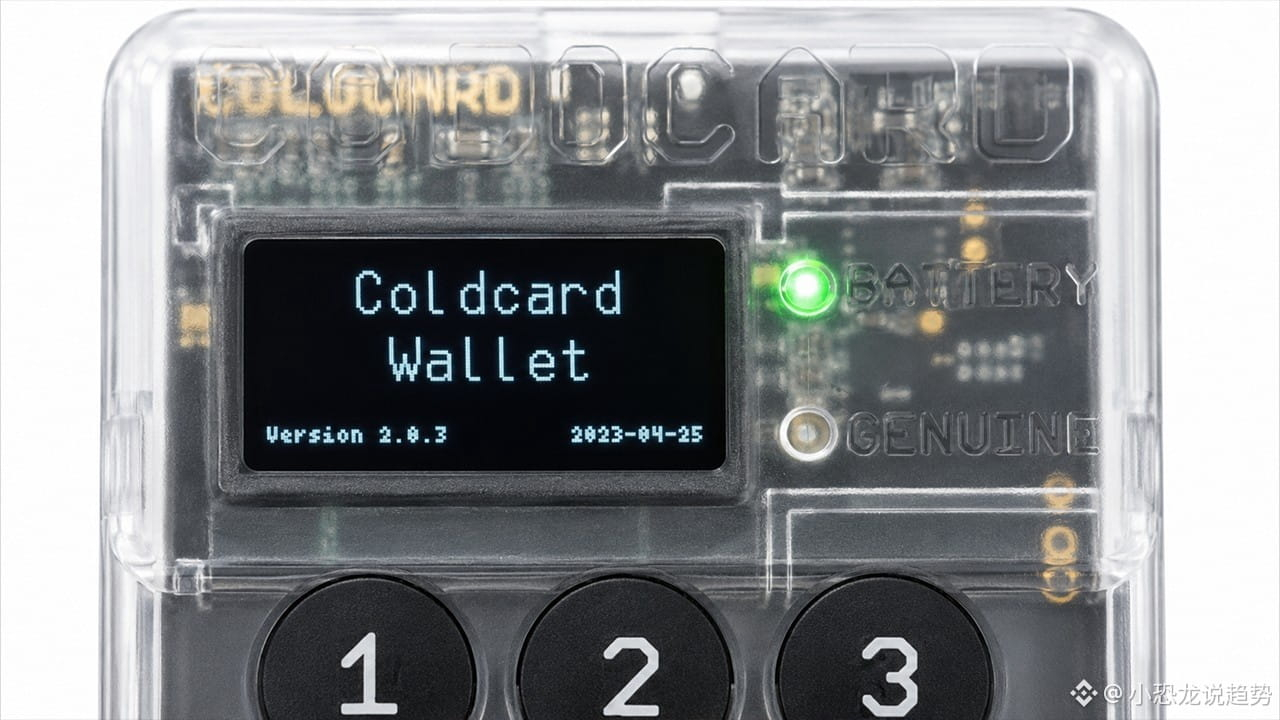
A firmware bug buried in 2021 hollowed out about 500 wallets and stole roughly 594 bitcoins—about $38 million at the time—during a 25-minute window on July 30. And this week, someone has actually gotten their coins back.
[💬 进群看盘面](https://app.binance.com/uni-qr/EXpjD4Vi)
Let’s start with this new development. On September 23, the Crypto Recovery Trust, a statutory trust in Wyoming, USA, announced that it has returned more than 20 bitcoins—about $1.7 million—to an original holder. The trust’s advisor comes from Steptoe’s national security practice, not from ordinary crypto-law firms.
Now let’s talk about how against common sense this whole incident is. The compromised device was a Coldcard hardware wallet, made by Canadian company Coinkite, long treated in the industry as a benchmark for cold storage. The problem wasn’t phishing, nor a computer-side Trojan, nor stolen backup paper: the wallet was already wrong the moment it generated the seed phrase. Instead of a hardware random number generator providing 128 bits of entropy, a macro definition was mistakenly written as 0, quietly falling back to a deterministic software algorithm—leaving actual randomness at only about 40 bits. In other words, those seed phrases were enumerable from the very first second of their “life.”
The attacker didn’t even need to touch your device. They computed all candidate seed phrases offline, then matched them against which addresses contained coins on-chain, and finally swept them all at once. Galaxy Research, an on-chain research firm, summarized the timeline: the core theft was completed in about 25 minutes (from 01:31 to 01:56 UTC on July 30). It was later linked to roughly 1,196 addresses, with up to 1,083 bitcoins stolen—worth nearly $70 million. By August 10, the stolen amount exceeded 2,000 bitcoins.
My take: the real informational value here isn’t in the “recovery,” but in the “recovery rate.” Out of more than 2,000 coins, only a bit over twenty were returned in full—less than one percent. Bitcoin’s irreversibility is its strongest promise and its hardest cost: once a private key is leaked, there’s no customer support on-chain—no freeze button either. This time, getting funds back didn’t rely on patching the protocol; it depended on off-chain legal tools involving a law firm and a trust, and most likely only worked for holders whose identities were clear and who were willing to cooperate.
A more practical takeaway for ordinary users: buying a hardware wallet isn’t a one-and-done solution. What truly determines the security boundary is how those 12 to 24 words are randomized—and that’s exactly the step users can’t see, and can’t easily verify themselves.
Do you think this trust crisis in hardware wallets will push people toward custody, or will it force manufacturers to make the “randomness” verifiable? Let me know in the comments.
Click the avatar to watch the livestream.
Every day, I’ll help you stay on top of the hottest topics in crypto security and hardware wallets—not just what happened in the news, but also the logic and opportunities behind it 👀🚀
A firmware bug buried in 2021 hollowed out about 500 wallets and stole roughly 594 bitcoins—about $38 million at the time—during a 25-minute window on July 30. And this week, someone has actually gotten their coins back.
💬 进群看盘面
Let’s start with this new development. On September 23, the Crypto Recovery Trust, a statutory trust in Wyoming, USA, announced that it has returned more than 20 bitcoins—about $1.7 million—to an original holder. The trust’s advisor comes from Steptoe’s national security practice, not from ordinary crypto-law firms.
Now let’s talk about how against common sense this whole incident is. The compromised device was a Coldcard hardware wallet, made by Canadian company Coinkite, long treated in the industry as a benchmark for cold storage. The problem wasn’t phishing, nor a computer-side Trojan, nor stolen backup paper: the wallet was already wrong the moment it generated the seed phrase. Instead of a hardware random number generator providing 128 bits of entropy, a macro definition was mistakenly written as 0, quietly falling back to a deterministic software algorithm—leaving actual randomness at only about 40 bits. In other words, those seed phrases were enumerable from the very first second of their “life.”
The attacker didn’t even need to touch your device. They computed all candidate seed phrases offline, then matched them against which addresses contained coins on-chain, and finally swept them all at once. Galaxy Research, an on-chain research firm, summarized the timeline: the core theft was completed in about 25 minutes (from 01:31 to 01:56 UTC on July 30). It was later linked to roughly 1,196 addresses, with up to 1,083 bitcoins stolen—worth nearly $70 million. By August 10, the stolen amount exceeded 2,000 bitcoins.
My take: the real informational value here isn’t in the “recovery,” but in the “recovery rate.” Out of more than 2,000 coins, only a bit over twenty were returned in full—less than one percent. Bitcoin’s irreversibility is its strongest promise and its hardest cost: once a private key is leaked, there’s no customer support on-chain—no freeze button either. This time, getting funds back didn’t rely on patching the protocol; it depended on off-chain legal tools involving a law firm and a trust, and most likely only worked for holders whose identities were clear and who were willing to cooperate.
A more practical takeaway for ordinary users: buying a hardware wallet isn’t a one-and-done solution. What truly determines the security boundary is how those 12 to 24 words are randomized—and that’s exactly the step users can’t see, and can’t easily verify themselves.
Do you think this trust crisis in hardware wallets will push people toward custody, or will it force manufacturers to make the “randomness” verifiable? Let me know in the comments.
Click the avatar to watch the livestream.
Every day, I’ll help you stay on top of the hottest topics in crypto security and hardware wallets—not just what happened in the news, but also the logic and opportunities behind it 👀🚀
💬 进群看盘面
Let’s start with this new development. On September 23, the Crypto Recovery Trust, a statutory trust in Wyoming, USA, announced that it has returned more than 20 bitcoins—about $1.7 million—to an original holder. The trust’s advisor comes from Steptoe’s national security practice, not from ordinary crypto-law firms.
Now let’s talk about how against common sense this whole incident is. The compromised device was a Coldcard hardware wallet, made by Canadian company Coinkite, long treated in the industry as a benchmark for cold storage. The problem wasn’t phishing, nor a computer-side Trojan, nor stolen backup paper: the wallet was already wrong the moment it generated the seed phrase. Instead of a hardware random number generator providing 128 bits of entropy, a macro definition was mistakenly written as 0, quietly falling back to a deterministic software algorithm—leaving actual randomness at only about 40 bits. In other words, those seed phrases were enumerable from the very first second of their “life.”
The attacker didn’t even need to touch your device. They computed all candidate seed phrases offline, then matched them against which addresses contained coins on-chain, and finally swept them all at once. Galaxy Research, an on-chain research firm, summarized the timeline: the core theft was completed in about 25 minutes (from 01:31 to 01:56 UTC on July 30). It was later linked to roughly 1,196 addresses, with up to 1,083 bitcoins stolen—worth nearly $70 million. By August 10, the stolen amount exceeded 2,000 bitcoins.
My take: the real informational value here isn’t in the “recovery,” but in the “recovery rate.” Out of more than 2,000 coins, only a bit over twenty were returned in full—less than one percent. Bitcoin’s irreversibility is its strongest promise and its hardest cost: once a private key is leaked, there’s no customer support on-chain—no freeze button either. This time, getting funds back didn’t rely on patching the protocol; it depended on off-chain legal tools involving a law firm and a trust, and most likely only worked for holders whose identities were clear and who were willing to cooperate.
A more practical takeaway for ordinary users: buying a hardware wallet isn’t a one-and-done solution. What truly determines the security boundary is how those 12 to 24 words are randomized—and that’s exactly the step users can’t see, and can’t easily verify themselves.
Do you think this trust crisis in hardware wallets will push people toward custody, or will it force manufacturers to make the “randomness” verifiable? Let me know in the comments.
Click the avatar to watch the livestream.
Every day, I’ll help you stay on top of the hottest topics in crypto security and hardware wallets—not just what happened in the news, but also the logic and opportunities behind it 👀🚀
2
1.1k
·
--
#circle与tether冻结bitget黑客钱包
$387.5 million was siphoned off, and the stablecoin issuer only managed to freeze $318,000 in the end.
[⚖️ 进群看每日策略](https://app.binance.com/uni-qr/EXpjD4Vi)
At 18:31 on September 24 (UTC), a globally top-tier exchange saw abnormal transfers begin from its hot wallet. The loss figure was revised from the initially reported $183 million to $351.6 million within 24 hours, and then to today’s $387.5 million—this is the biggest crypto theft of the year. The largest chunk was about 103 million XRP (worth about $157 million); the remaining assets were bridged away across at least 5 chains.
Most crucially, nobody stole any private keys. The exchange’s CEO said in a livestream and on a tweet that the attackers breached a backend system in the wallet infrastructure, forged transaction data, and tricked the platform’s own authorization process—allowing the system to treat the abnormal transfers as normal operations. Deposits and trading were normal throughout; only withdrawals were paused.
On-chain sleuth DCF GOD found clues earlier: a newly created wallet spent $19.67 million USDT0 within 6 minutes, buying 7,111 ETH at a price about 5% higher than the market rate, using UniswapX and 1inch Fusion. So far, the outflow of funds has stopped. The platform is still investigating in collaboration with Mandiant and SlowMist. The CEO said some IPs match the VPN choices typically used by a certain North Korean hacking group.
Now to the part about getting funds back. On Friday at 05:00 (UTC), Circle blacklisted an address marked “Exploiter 8.” It held only 170.47 ETH, 218,023 USDT, and 99,990 USDC—totaling about $318,000. Tether subsequently also froze this address. Other hacker addresses still hold more than 63,000 ETH—none of which any issuer can move. $318,000 divided by $387.5 million yields a recovery rate of 0.08%.
The real backstop is the platform itself: the exchange’s user protection fund is larger than $464 million. The CEO said it will fully cover this loss, and users’ account balances will not be affected. Back in 2023, the fund was only $300 million. Compared with the April Drift hack of $285 million, where the attacker used Circle’s own cross-chain tool to move about $232 million USDC from Solana to Ethereum, people like ZachXBT criticized Circle at the time for acting too slowly.
Translation: This attack didn’t require stealing private keys—it forged the “authorization” itself. The entire security narrative around cold wallets, multisig, and self-custody doesn’t hold up as a defense in the face of forged credentials. What’s worth remembering most is the ceiling on freezing capability: the stablecoin issuer can only freeze a thin layer of the stablecoin. After the CLARITY Act 49–50 failure, the U.S. has no unified federal rules. In the end, it isn’t regulation and it isn’t the issuer that backstops users—it’s how thick the protection fund is on the exchange’s assets-and-liabilities balance sheet.
When you choose a platform, do you look at the size of its protection fund and its reserve structure? Or do you assume that if something goes wrong, someone will cover it anyway? Chat in the comments.
Every day, we’ll bring you the latest crypto security hotspots—it's not just about what happened in the news; it’s about understanding the logic and the opportunities behind it 👀🚀
Click the profile picture to watch the livestream
#circle与tether冻结bitget黑客钱包
$387.5 million was siphoned off, and the stablecoin issuer only managed to freeze $318,000 in the end.
⚖️ 进群看每日策略
At 18:31 on September 24 (UTC), a globally top-tier exchange saw abnormal transfers begin from its hot wallet. The loss figure was revised from the initially reported $183 million to $351.6 million within 24 hours, and then to today’s $387.5 million—this is the biggest crypto theft of the year. The largest chunk was about 103 million XRP (worth about $157 million); the remaining assets were bridged away across at least 5 chains.
Most crucially, nobody stole any private keys. The exchange’s CEO said in a livestream and on a tweet that the attackers breached a backend system in the wallet infrastructure, forged transaction data, and tricked the platform’s own authorization process—allowing the system to treat the abnormal transfers as normal operations. Deposits and trading were normal throughout; only withdrawals were paused.
On-chain sleuth DCF GOD found clues earlier: a newly created wallet spent $19.67 million USDT0 within 6 minutes, buying 7,111 ETH at a price about 5% higher than the market rate, using UniswapX and 1inch Fusion. So far, the outflow of funds has stopped. The platform is still investigating in collaboration with Mandiant and SlowMist. The CEO said some IPs match the VPN choices typically used by a certain North Korean hacking group.
Now to the part about getting funds back. On Friday at 05:00 (UTC), Circle blacklisted an address marked “Exploiter 8.” It held only 170.47 ETH, 218,023 USDT, and 99,990 USDC—totaling about $318,000. Tether subsequently also froze this address. Other hacker addresses still hold more than 63,000 ETH—none of which any issuer can move. $318,000 divided by $387.5 million yields a recovery rate of 0.08%.
The real backstop is the platform itself: the exchange’s user protection fund is larger than $464 million. The CEO said it will fully cover this loss, and users’ account balances will not be affected. Back in 2023, the fund was only $300 million. Compared with the April Drift hack of $285 million, where the attacker used Circle’s own cross-chain tool to move about $232 million USDC from Solana to Ethereum, people like ZachXBT criticized Circle at the time for acting too slowly.
Translation: This attack didn’t require stealing private keys—it forged the “authorization” itself. The entire security narrative around cold wallets, multisig, and self-custody doesn’t hold up as a defense in the face of forged credentials. What’s worth remembering most is the ceiling on freezing capability: the stablecoin issuer can only freeze a thin layer of the stablecoin. After the CLARITY Act 49–50 failure, the U.S. has no unified federal rules. In the end, it isn’t regulation and it isn’t the issuer that backstops users—it’s how thick the protection fund is on the exchange’s assets-and-liabilities balance sheet.
When you choose a platform, do you look at the size of its protection fund and its reserve structure? Or do you assume that if something goes wrong, someone will cover it anyway? Chat in the comments.
Every day, we’ll bring you the latest crypto security hotspots—it's not just about what happened in the news; it’s about understanding the logic and the opportunities behind it 👀🚀
Click the profile picture to watch the livestream
$387.5 million was siphoned off, and the stablecoin issuer only managed to freeze $318,000 in the end.
⚖️ 进群看每日策略
At 18:31 on September 24 (UTC), a globally top-tier exchange saw abnormal transfers begin from its hot wallet. The loss figure was revised from the initially reported $183 million to $351.6 million within 24 hours, and then to today’s $387.5 million—this is the biggest crypto theft of the year. The largest chunk was about 103 million XRP (worth about $157 million); the remaining assets were bridged away across at least 5 chains.
Most crucially, nobody stole any private keys. The exchange’s CEO said in a livestream and on a tweet that the attackers breached a backend system in the wallet infrastructure, forged transaction data, and tricked the platform’s own authorization process—allowing the system to treat the abnormal transfers as normal operations. Deposits and trading were normal throughout; only withdrawals were paused.
On-chain sleuth DCF GOD found clues earlier: a newly created wallet spent $19.67 million USDT0 within 6 minutes, buying 7,111 ETH at a price about 5% higher than the market rate, using UniswapX and 1inch Fusion. So far, the outflow of funds has stopped. The platform is still investigating in collaboration with Mandiant and SlowMist. The CEO said some IPs match the VPN choices typically used by a certain North Korean hacking group.
Now to the part about getting funds back. On Friday at 05:00 (UTC), Circle blacklisted an address marked “Exploiter 8.” It held only 170.47 ETH, 218,023 USDT, and 99,990 USDC—totaling about $318,000. Tether subsequently also froze this address. Other hacker addresses still hold more than 63,000 ETH—none of which any issuer can move. $318,000 divided by $387.5 million yields a recovery rate of 0.08%.
The real backstop is the platform itself: the exchange’s user protection fund is larger than $464 million. The CEO said it will fully cover this loss, and users’ account balances will not be affected. Back in 2023, the fund was only $300 million. Compared with the April Drift hack of $285 million, where the attacker used Circle’s own cross-chain tool to move about $232 million USDC from Solana to Ethereum, people like ZachXBT criticized Circle at the time for acting too slowly.
Translation: This attack didn’t require stealing private keys—it forged the “authorization” itself. The entire security narrative around cold wallets, multisig, and self-custody doesn’t hold up as a defense in the face of forged credentials. What’s worth remembering most is the ceiling on freezing capability: the stablecoin issuer can only freeze a thin layer of the stablecoin. After the CLARITY Act 49–50 failure, the U.S. has no unified federal rules. In the end, it isn’t regulation and it isn’t the issuer that backstops users—it’s how thick the protection fund is on the exchange’s assets-and-liabilities balance sheet.
When you choose a platform, do you look at the size of its protection fund and its reserve structure? Or do you assume that if something goes wrong, someone will cover it anyway? Chat in the comments.
Every day, we’ll bring you the latest crypto security hotspots—it's not just about what happened in the news; it’s about understanding the logic and the opportunities behind it 👀🚀
Click the profile picture to watch the livestream

2
791
·
--
#coinmarketcap完成收购coinglass
1.15 billion people are watching prices, but only 5 million are keeping an eye on leverage—now these two numbers are in the hands of the same company.
[💥 进群一起分析行情](https://app.binance.com/uni-qr/EXpjD4Vi)
On September 25, data platform CoinMarketCap completed its acquisition of derivatives data platform CoinGlass. The deal value was not disclosed. CoinGlass covers 28 exchanges, with more than 2,500 types of contract products. It tracks open interest, funding rates, liquidations, long/short positions, options, and ETF fund flows. The brand, website, app, free tools, API, and pricing all remain unchanged. The team is also not folded into the parent company’s organization and continues to operate independently.
The difference in scale between the two sides is very clear. CoinGlass has more than 5 million monthly active users, and about 10,000 paid API customers. CoinMarketCap’s own disclosed monthly active user count is about 115 million. In other words, with the same set of leverage data, distribution has expanded from 5 million to over a hundred million people overnight. Back in April 2020, CoinMarketCap was already acquired by one of the world’s largest exchanges. This time, CoinGlass is entering the same kind of structure.
Why is it worth talking about? Because spot prices are shown to everyone, while leverage data is used by a small number of people. Derivatives account for the bulk of crypto trading volume. Open interest indicates how many positions are still in play; the funding rate is the thermometer for perpetual contract premiums/discounts; liquidation data directly marks where leverage gets force-closed. This kind of thing has happened for real once already this February: CoinGlass’s data showed that Hyperliquid, Aster, and Lighter fought each other on trading volume, open interest, and liquidation figures—directly triggering a “data war” around on-chain perpetual contracts. Whoever controls the data definition controls the narrative.
Put simply: the true value of this purchase isn’t adding one more page, but putting things that directly affect short-term volatility—like liquidation heatmaps and position distribution—into a larger distribution pipeline. There’s no downside for ordinary users in the short term; the free tools remain as they are. But it’s worth recognizing that as spot data, derivatives data, and liquidation data gradually consolidate under the same set of definitions, the market’s control over how to define “how hot leverage is” is also becoming centralized. Bitcoin’s market activity has never been just about price—behind it is who’s adding leverage and who—long or short—can’t hold out first.
When you check the market, do you look at open interest and funding rates too, or do you only watch the price chart? Let’s discuss in the comments.
Every day, I’ll help you keep up with the hottest topics in the crypto market—not just what’s happening in the news, but also how to understand the logic and opportunities behind it 👀🚀
Click the avatar to watch the live stream
#coinmarketcap完成收购coinglass
1.15 billion people are watching prices, but only 5 million are keeping an eye on leverage—now these two numbers are in the hands of the same company.
💥 进群一起分析行情
On September 25, data platform CoinMarketCap completed its acquisition of derivatives data platform CoinGlass. The deal value was not disclosed. CoinGlass covers 28 exchanges, with more than 2,500 types of contract products. It tracks open interest, funding rates, liquidations, long/short positions, options, and ETF fund flows. The brand, website, app, free tools, API, and pricing all remain unchanged. The team is also not folded into the parent company’s organization and continues to operate independently.
The difference in scale between the two sides is very clear. CoinGlass has more than 5 million monthly active users, and about 10,000 paid API customers. CoinMarketCap’s own disclosed monthly active user count is about 115 million. In other words, with the same set of leverage data, distribution has expanded from 5 million to over a hundred million people overnight. Back in April 2020, CoinMarketCap was already acquired by one of the world’s largest exchanges. This time, CoinGlass is entering the same kind of structure.
Why is it worth talking about? Because spot prices are shown to everyone, while leverage data is used by a small number of people. Derivatives account for the bulk of crypto trading volume. Open interest indicates how many positions are still in play; the funding rate is the thermometer for perpetual contract premiums/discounts; liquidation data directly marks where leverage gets force-closed. This kind of thing has happened for real once already this February: CoinGlass’s data showed that Hyperliquid, Aster, and Lighter fought each other on trading volume, open interest, and liquidation figures—directly triggering a “data war” around on-chain perpetual contracts. Whoever controls the data definition controls the narrative.
Put simply: the true value of this purchase isn’t adding one more page, but putting things that directly affect short-term volatility—like liquidation heatmaps and position distribution—into a larger distribution pipeline. There’s no downside for ordinary users in the short term; the free tools remain as they are. But it’s worth recognizing that as spot data, derivatives data, and liquidation data gradually consolidate under the same set of definitions, the market’s control over how to define “how hot leverage is” is also becoming centralized. Bitcoin’s market activity has never been just about price—behind it is who’s adding leverage and who—long or short—can’t hold out first.
When you check the market, do you look at open interest and funding rates too, or do you only watch the price chart? Let’s discuss in the comments.
Every day, I’ll help you keep up with the hottest topics in the crypto market—not just what’s happening in the news, but also how to understand the logic and opportunities behind it 👀🚀
Click the avatar to watch the live stream
1.15 billion people are watching prices, but only 5 million are keeping an eye on leverage—now these two numbers are in the hands of the same company.
💥 进群一起分析行情
On September 25, data platform CoinMarketCap completed its acquisition of derivatives data platform CoinGlass. The deal value was not disclosed. CoinGlass covers 28 exchanges, with more than 2,500 types of contract products. It tracks open interest, funding rates, liquidations, long/short positions, options, and ETF fund flows. The brand, website, app, free tools, API, and pricing all remain unchanged. The team is also not folded into the parent company’s organization and continues to operate independently.
The difference in scale between the two sides is very clear. CoinGlass has more than 5 million monthly active users, and about 10,000 paid API customers. CoinMarketCap’s own disclosed monthly active user count is about 115 million. In other words, with the same set of leverage data, distribution has expanded from 5 million to over a hundred million people overnight. Back in April 2020, CoinMarketCap was already acquired by one of the world’s largest exchanges. This time, CoinGlass is entering the same kind of structure.
Why is it worth talking about? Because spot prices are shown to everyone, while leverage data is used by a small number of people. Derivatives account for the bulk of crypto trading volume. Open interest indicates how many positions are still in play; the funding rate is the thermometer for perpetual contract premiums/discounts; liquidation data directly marks where leverage gets force-closed. This kind of thing has happened for real once already this February: CoinGlass’s data showed that Hyperliquid, Aster, and Lighter fought each other on trading volume, open interest, and liquidation figures—directly triggering a “data war” around on-chain perpetual contracts. Whoever controls the data definition controls the narrative.
Put simply: the true value of this purchase isn’t adding one more page, but putting things that directly affect short-term volatility—like liquidation heatmaps and position distribution—into a larger distribution pipeline. There’s no downside for ordinary users in the short term; the free tools remain as they are. But it’s worth recognizing that as spot data, derivatives data, and liquidation data gradually consolidate under the same set of definitions, the market’s control over how to define “how hot leverage is” is also becoming centralized. Bitcoin’s market activity has never been just about price—behind it is who’s adding leverage and who—long or short—can’t hold out first.
When you check the market, do you look at open interest and funding rates too, or do you only watch the price chart? Let’s discuss in the comments.
Every day, I’ll help you keep up with the hottest topics in the crypto market—not just what’s happening in the news, but also how to understand the logic and opportunities behind it 👀🚀
Click the avatar to watch the live stream

500
·
--
#比特币突破8万美元大关
[🔄 进群聊山寨币动态](https://app.binance.com/uni-qr/EXpjD4Vi)
Two years: Bitcoin is up 28%, while mid-cap altcoins are down 74%. If you held crypto assets for two years, the difference between those who bet on Bitcoin and those who bet on altcoins was more than 100 points—this isn’t a joke. It’s the most heartbreaking line item from Glassnode’s latest report based on on-chain data.
The report lays bare the backdrop of this cycle: Bitcoin has compounded upward throughout, while the mid-cap cohort has seen a “cut in half and then cut in half again” situation. Even Ethereum—the #2 coin—has basically gone nowhere over these two years. The familiar “altcoin season” rotation people used to know—funds moving from Bitcoin into smaller coins in the later stages of a bull market—didn’t happen this time. Money stayed locked at the top.
Leverage has also revealed the truth clearly: Bitcoin futures open interest is only about 2% of market cap, whereas speculative coins like PEPE account for around 24%. The bubble is stacked entirely in the highest-risk corner. Institutions have even “voted with their feet”: spot Bitcoin ETFs have accumulated net inflows of roughly $55.2 billion, while spot Ethereum ETFs have only about $13.1 billion—more than a 4x difference. Even Solana spot ETFs are just about $29.7 million.
Not until this week did Bitcoin break the $80,000 mark that the broader market was pulled up a little: crypto total market cap rose 4.6% in a day to around $2.85 trillion. Solana jumped about 10% in one day, and NEAR and Uniswap rose even more sharply. Some people have started asking—could altcoin season finally be back?
My take: don’t rush in to bottom-fish. The report’s date goes up to the close of Aug 23, but the direction is unmistakable—when money only flows to the highest-confidence places, “cheap” altcoins are often a trap. And when rotation eventually does happen, you’ll need to see sustained increases in trading volume for smaller coins—not just jump in because of a one-off squeeze rebound.
Do you think this altcoin season will return, or will it be only Bitcoin dominating from now on? Let’s discuss in the comments 👇
Every day, I’ll bring you Bitcoin headlines—not just what’s happening in the news, but also the logic and opportunities behind it 👀🚀
#比特币突破8万美元大关
🔄 进群聊山寨币动态
Two years: Bitcoin is up 28%, while mid-cap altcoins are down 74%. If you held crypto assets for two years, the difference between those who bet on Bitcoin and those who bet on altcoins was more than 100 points—this isn’t a joke. It’s the most heartbreaking line item from Glassnode’s latest report based on on-chain data.
The report lays bare the backdrop of this cycle: Bitcoin has compounded upward throughout, while the mid-cap cohort has seen a “cut in half and then cut in half again” situation. Even Ethereum—the #2 coin—has basically gone nowhere over these two years. The familiar “altcoin season” rotation people used to know—funds moving from Bitcoin into smaller coins in the later stages of a bull market—didn’t happen this time. Money stayed locked at the top.
Leverage has also revealed the truth clearly: Bitcoin futures open interest is only about 2% of market cap, whereas speculative coins like PEPE account for around 24%. The bubble is stacked entirely in the highest-risk corner. Institutions have even “voted with their feet”: spot Bitcoin ETFs have accumulated net inflows of roughly $55.2 billion, while spot Ethereum ETFs have only about $13.1 billion—more than a 4x difference. Even Solana spot ETFs are just about $29.7 million.
Not until this week did Bitcoin break the $80,000 mark that the broader market was pulled up a little: crypto total market cap rose 4.6% in a day to around $2.85 trillion. Solana jumped about 10% in one day, and NEAR and Uniswap rose even more sharply. Some people have started asking—could altcoin season finally be back?
My take: don’t rush in to bottom-fish. The report’s date goes up to the close of Aug 23, but the direction is unmistakable—when money only flows to the highest-confidence places, “cheap” altcoins are often a trap. And when rotation eventually does happen, you’ll need to see sustained increases in trading volume for smaller coins—not just jump in because of a one-off squeeze rebound.
Do you think this altcoin season will return, or will it be only Bitcoin dominating from now on? Let’s discuss in the comments 👇
Every day, I’ll bring you Bitcoin headlines—not just what’s happening in the news, but also the logic and opportunities behind it 👀🚀
🔄 进群聊山寨币动态
Two years: Bitcoin is up 28%, while mid-cap altcoins are down 74%. If you held crypto assets for two years, the difference between those who bet on Bitcoin and those who bet on altcoins was more than 100 points—this isn’t a joke. It’s the most heartbreaking line item from Glassnode’s latest report based on on-chain data.
The report lays bare the backdrop of this cycle: Bitcoin has compounded upward throughout, while the mid-cap cohort has seen a “cut in half and then cut in half again” situation. Even Ethereum—the #2 coin—has basically gone nowhere over these two years. The familiar “altcoin season” rotation people used to know—funds moving from Bitcoin into smaller coins in the later stages of a bull market—didn’t happen this time. Money stayed locked at the top.
Leverage has also revealed the truth clearly: Bitcoin futures open interest is only about 2% of market cap, whereas speculative coins like PEPE account for around 24%. The bubble is stacked entirely in the highest-risk corner. Institutions have even “voted with their feet”: spot Bitcoin ETFs have accumulated net inflows of roughly $55.2 billion, while spot Ethereum ETFs have only about $13.1 billion—more than a 4x difference. Even Solana spot ETFs are just about $29.7 million.
Not until this week did Bitcoin break the $80,000 mark that the broader market was pulled up a little: crypto total market cap rose 4.6% in a day to around $2.85 trillion. Solana jumped about 10% in one day, and NEAR and Uniswap rose even more sharply. Some people have started asking—could altcoin season finally be back?
My take: don’t rush in to bottom-fish. The report’s date goes up to the close of Aug 23, but the direction is unmistakable—when money only flows to the highest-confidence places, “cheap” altcoins are often a trap. And when rotation eventually does happen, you’ll need to see sustained increases in trading volume for smaller coins—not just jump in because of a one-off squeeze rebound.
Do you think this altcoin season will return, or will it be only Bitcoin dominating from now on? Let’s discuss in the comments 👇
Every day, I’ll bring you Bitcoin headlines—not just what’s happening in the news, but also the logic and opportunities behind it 👀🚀
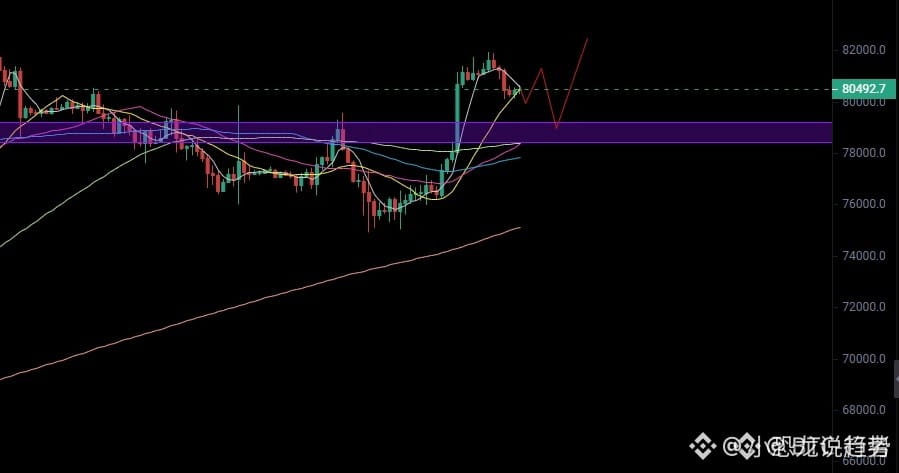
582
·
--
#比特币突破8万美元大关
[💥 清算数据群里实时更新](https://app.binance.com/uni-qr/EXpjD4Vi)
Everyone on the whole internet is betting on a crash, but even after a $571 million long liquidation, Bitcoin still wasn’t smashed lower. A week ago, nearly everyone agreed that the Fed’s rate hikes plus the CLARITY Act dying in the Senate would trigger a wave of brutal selling. But both “bad news” items have already landed—and Bitcoin hasn’t crashed. Instead, it has climbed back from $75,000 to above $80,000, step by step.
First, let’s see how dangerous it was that night. Before the vote on the evening of September 14, Bitcoin slid all the way down to around $75,000. After the Senate killed the CLARITY Act 49–50 on September 15, within 24 hours, long futures were liquidated for $571 million. U.S. crypto stocks fell as much as 10% intraday, then rebounded together again on Friday.
The most abnormal part is—nobody got trapped. Bitfinex’s head of derivatives, Jag Kooner, said that almost no traders had bet in advance that the bill would pass, so there wasn’t much positioning to unwind; the bad news was priced in early.
Behind this is Bitcoin fending off three rounds of shocks within a month: the Fed raised rates by 25 bps to 3.75%-4.00% (first time since July 2023), the CLARITY legislation failed, and $571 million in long liquidations occurred—yet the price wasn’t repriced lower.
My take: Nexo analyst Ilya Kalchev put it very plainly—what Bitcoin lacks right now is a “catalyst.” His key levels are: first, reclaim and hold above $77,950, then push toward $79,300 and $80,000. Only after breaking above $80,000 is the door open to $81,400. If it falls back below $75,000, the recovery could be in jeopardy.
Bitwise Chief Investment Officer Matt Hougan was even more direct: the U.S. still has a roughly two-and-a-half-year pro-crypto regulatory window. Even though the bill didn’t pass, it just “moves things around,” but Bitcoin’s fundamentals haven’t changed. Mati Greenspan even likened Bitcoin to a badger—living without relying on any government legislation.
So what is the market really waiting for? Some are betting that “smart money hasn’t entered yet.” Others are watching the employment report on October 2 and the CPI on October 14. The real tipping point is still whether Bitcoin can hold firm after breaking through the $80,000 mark.
Drop a comment—do you think this “crash that didn’t come” means the shorts aren’t in position yet, or is it a genuine reversal? Are there still people around you who dare to chase longs right now?
Every day, I’ll bring you coverage of the hottest topics in the crypto space—more than just what happens in the news, helping you understand the logic and the opportunities behind it 👀🚀
Click the profile picture to watch the live stream
#比特币突破8万美元大关
💥 清算数据群里实时更新
Everyone on the whole internet is betting on a crash, but even after a $571 million long liquidation, Bitcoin still wasn’t smashed lower. A week ago, nearly everyone agreed that the Fed’s rate hikes plus the CLARITY Act dying in the Senate would trigger a wave of brutal selling. But both “bad news” items have already landed—and Bitcoin hasn’t crashed. Instead, it has climbed back from $75,000 to above $80,000, step by step.
First, let’s see how dangerous it was that night. Before the vote on the evening of September 14, Bitcoin slid all the way down to around $75,000. After the Senate killed the CLARITY Act 49–50 on September 15, within 24 hours, long futures were liquidated for $571 million. U.S. crypto stocks fell as much as 10% intraday, then rebounded together again on Friday.
The most abnormal part is—nobody got trapped. Bitfinex’s head of derivatives, Jag Kooner, said that almost no traders had bet in advance that the bill would pass, so there wasn’t much positioning to unwind; the bad news was priced in early.
Behind this is Bitcoin fending off three rounds of shocks within a month: the Fed raised rates by 25 bps to 3.75%-4.00% (first time since July 2023), the CLARITY legislation failed, and $571 million in long liquidations occurred—yet the price wasn’t repriced lower.
My take: Nexo analyst Ilya Kalchev put it very plainly—what Bitcoin lacks right now is a “catalyst.” His key levels are: first, reclaim and hold above $77,950, then push toward $79,300 and $80,000. Only after breaking above $80,000 is the door open to $81,400. If it falls back below $75,000, the recovery could be in jeopardy.
Bitwise Chief Investment Officer Matt Hougan was even more direct: the U.S. still has a roughly two-and-a-half-year pro-crypto regulatory window. Even though the bill didn’t pass, it just “moves things around,” but Bitcoin’s fundamentals haven’t changed. Mati Greenspan even likened Bitcoin to a badger—living without relying on any government legislation.
So what is the market really waiting for? Some are betting that “smart money hasn’t entered yet.” Others are watching the employment report on October 2 and the CPI on October 14. The real tipping point is still whether Bitcoin can hold firm after breaking through the $80,000 mark.
Drop a comment—do you think this “crash that didn’t come” means the shorts aren’t in position yet, or is it a genuine reversal? Are there still people around you who dare to chase longs right now?
Every day, I’ll bring you coverage of the hottest topics in the crypto space—more than just what happens in the news, helping you understand the logic and the opportunities behind it 👀🚀
Click the profile picture to watch the live stream
💥 清算数据群里实时更新
Everyone on the whole internet is betting on a crash, but even after a $571 million long liquidation, Bitcoin still wasn’t smashed lower. A week ago, nearly everyone agreed that the Fed’s rate hikes plus the CLARITY Act dying in the Senate would trigger a wave of brutal selling. But both “bad news” items have already landed—and Bitcoin hasn’t crashed. Instead, it has climbed back from $75,000 to above $80,000, step by step.
First, let’s see how dangerous it was that night. Before the vote on the evening of September 14, Bitcoin slid all the way down to around $75,000. After the Senate killed the CLARITY Act 49–50 on September 15, within 24 hours, long futures were liquidated for $571 million. U.S. crypto stocks fell as much as 10% intraday, then rebounded together again on Friday.
The most abnormal part is—nobody got trapped. Bitfinex’s head of derivatives, Jag Kooner, said that almost no traders had bet in advance that the bill would pass, so there wasn’t much positioning to unwind; the bad news was priced in early.
Behind this is Bitcoin fending off three rounds of shocks within a month: the Fed raised rates by 25 bps to 3.75%-4.00% (first time since July 2023), the CLARITY legislation failed, and $571 million in long liquidations occurred—yet the price wasn’t repriced lower.
My take: Nexo analyst Ilya Kalchev put it very plainly—what Bitcoin lacks right now is a “catalyst.” His key levels are: first, reclaim and hold above $77,950, then push toward $79,300 and $80,000. Only after breaking above $80,000 is the door open to $81,400. If it falls back below $75,000, the recovery could be in jeopardy.
Bitwise Chief Investment Officer Matt Hougan was even more direct: the U.S. still has a roughly two-and-a-half-year pro-crypto regulatory window. Even though the bill didn’t pass, it just “moves things around,” but Bitcoin’s fundamentals haven’t changed. Mati Greenspan even likened Bitcoin to a badger—living without relying on any government legislation.
So what is the market really waiting for? Some are betting that “smart money hasn’t entered yet.” Others are watching the employment report on October 2 and the CPI on October 14. The real tipping point is still whether Bitcoin can hold firm after breaking through the $80,000 mark.
Drop a comment—do you think this “crash that didn’t come” means the shorts aren’t in position yet, or is it a genuine reversal? Are there still people around you who dare to chase longs right now?
Every day, I’ll bring you coverage of the hottest topics in the crypto space—more than just what happens in the news, helping you understand the logic and the opportunities behind it 👀🚀
Click the profile picture to watch the live stream
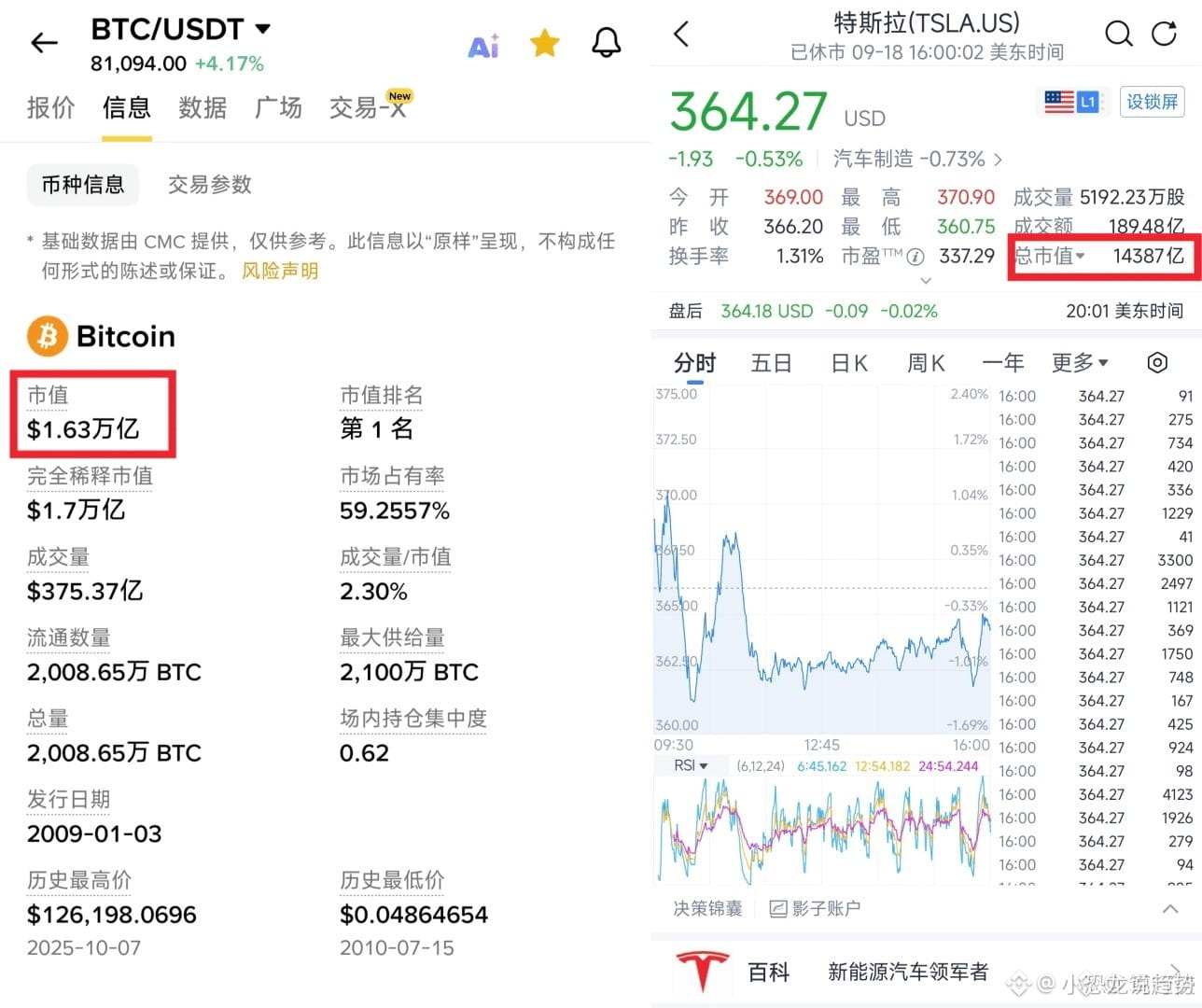
842
Log in to explore more content
Join global crypto users on Binance Square
⚡️ Get latest and useful information about crypto.
💬 Trusted by the world’s largest crypto exchange.
👍 Discover real insights from verified creators.
Email / Phone number
Trending Topics
BitwiseFilesFinalNEARSpotETFProspectus
81,653 views
1,362 Discussing
#bitwisefilesfinalnearspotetfprospectus
Can $NEAR REALLY reach $562 with an ETF approval? 🚀
The crypto market is buzzing as Bitwise files its final prospectus for a Spot NEAR ETF (Ticker: NRR on NYSE Arca)! 📊🔥
Is institutional money about to unleash the biggest pump in NEAR’s history? Analysts are throwing around mind-blowing price targets:
🎯 Intermediate Target: $155
🎯 2030 Long-Term Target: $562
💡 Let's do the math:
At $562, $NEAR would sit at roughly a $680 Billion market cap—putting it right up there with Ethereum's potential valuation. With NEAR leading the Chain Abstraction & AI crypto narrative, this might not be as crazy as it sounds!
With SEC regulations turning more crypto-friendly and Wall Street knocking on the door, are you Accumulating or Holding?
👇 Drop your realistic price prediction for $NEAR in the comments! 👇
#BitwiseFilesFinalNEARSpotETFProspectus #Altcoins #CryptoNews #ETF
Doomsday-Trader
·6 Likes
·3.7k views
BitgetHackerMoves$83MStolenXRP
31,670 views
159 Discussing
SOLSpotETFWeeklyInflow$188M
20,771 views
130 Discussing