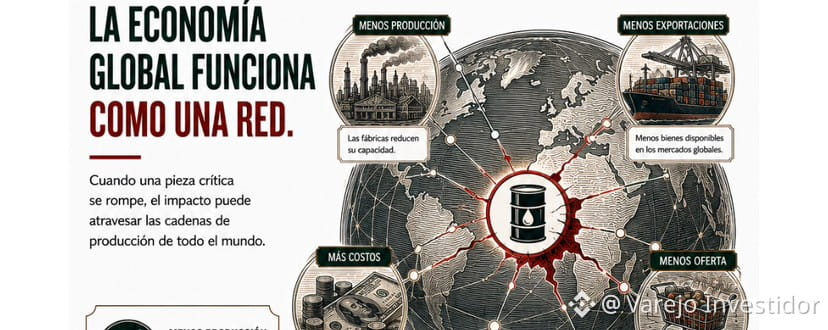

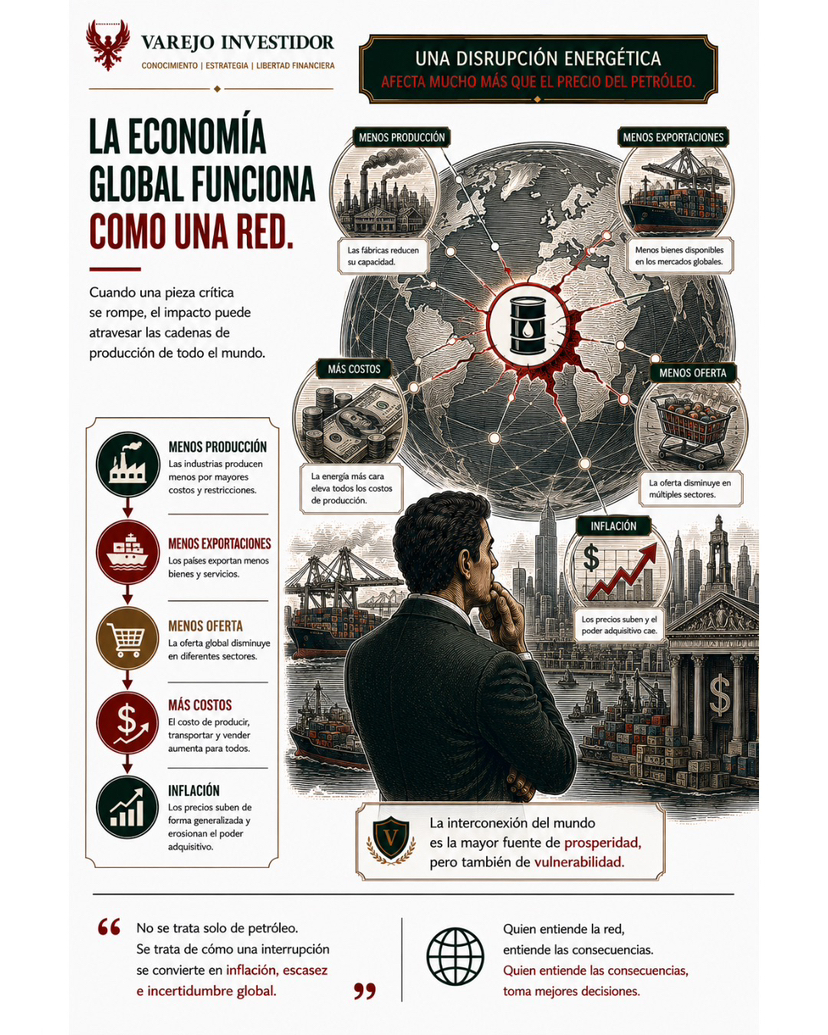
An interruption in the supply of energy does not only affect the oil market. It can spread throughout the economic chain through transportation, production, trade, prices, and consumption.
The experience of 2026 shows how quickly that transmission can happen. The IEA recorded a sharp decline in global oil supply during disruptions in the Middle East, along with refinery constraints and reduced availability of refined products.
The mechanism works in chain. Less available energy can raise fuel costs. Transportation becomes more expensive, industries face higher operating costs, and some companies may cut production. With lower supply of certain goods, pressure can reach the final prices.
The transmission is not limited to oil either. The IEA, the IMF, and the World Bank noted that the 2026 energy disruptions also affected gas markets, fertilizers, and other commodities, in addition to creating pressures on inflation and growth.
The relationship between energy and inflation has been documented historically. A World Bank study estimates that oil price shocks explained more than 38% of the variation in global inflation during the last five decades analyzed.
That is why studying energy requires looking beyond the barrel. The real question is to understand how a change in one point of the network can spread to many other sectors.
Explore the assets related to oil, gas, refining, transportation, and energy to track the main connections in this economic chain.
#oil #IranIsraelConflict #economy #finance