

Crises can increase demand for protection, but that does not necessarily mean gold will rise immediately.
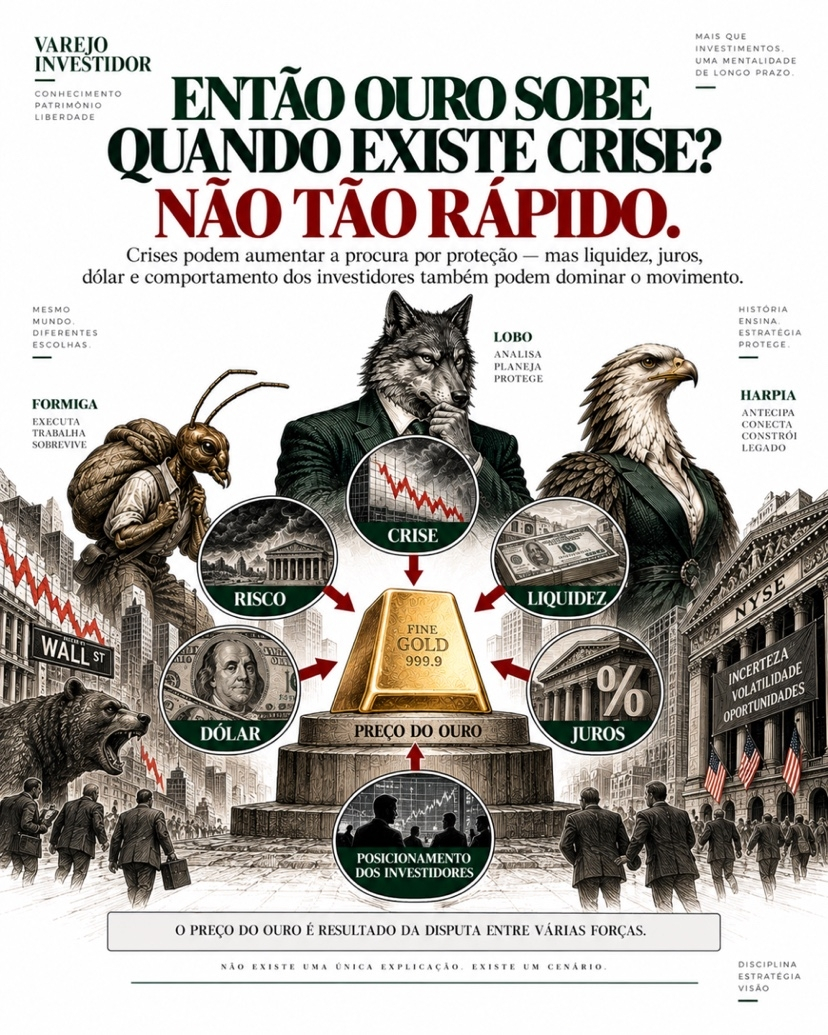
The price of the metal results from the interaction of several forces that can act simultaneously. During periods of stress, perceived risk may increase demand for assets considered defensive. However, the need for liquidity can also lead investors to sell positions to raise cash.
The dollar is another important variable. Since gold is traded internationally in U.S. dollars, changes in the American currency can affect its dynamics. Interest rates also come into play, because they change the opportunity cost of holding an asset that does not generate yield.
In addition, there is investor positioning. Expectations about inflation, monetary policy, economic growth, and future risks can trigger moves in gold even before a crisis reaches its peak.
Therefore, the relationship between crisis and gold should not be treated as an automatic rule. The same event can produce different effects depending on the liquidity available, the strength of the dollar, interest rates, and the behavior of market participants.
The most important question is not only “does gold rise when there is a crisis?”
What is it: which combination of forces is dominating the market at that moment?
Follow the related assets below to observe different forms of exposure to gold and the precious metals market.
#GOLD #money #XAUUSD #economy $XAUT
$NEMG.ETF