

橙子Joyce
444 Posts

橙子Joyce
 Square Verified+
十年以上美股市场投研策略|WEB3项目投研|十年以上投资BTC.ETH.BNB.SOL|贵金属投资策略黄金.白银.铜|中长期价值投资者|推特X:@Joyce88AI|✨星河社区联合创始人✨

SOL Holder
Frequent Trader
8.8 Years
843 Following
36.7K+ Followers
44.6K+ Liked
Posts
All
Quotes
Videos
Live
PINNED



METAUS-3.39%
NVDAUS+0.22%
SPCXUS+0.41%

慢就是快Mike
·
--
[Ended] 🎙️ Is the bull here yet, brothers!!!
5.5k listens

圣克斯Lucky1688
·
--
🧧🎁🌹🧧🎁🌹
September 27 Information Quick Review:
Miner sell pressure may ease: JPMorgan analysis says that the current Bitcoin price has returned to the production cost range of around $85,000. As some miners get through the period of cost inverted pressure, overall miner selling pressure may further ease.
The Fed advances new stablecoin rules under the GENIUS Act: The Federal Reserve has officially released two highly anticipated stablecoin rule proposals in connection with the GENIUS Act. The proposals enter a 60-day public comment period. The proposals require that payment stablecoins issued by regulated banks must be backed by fully compliant 1:1 reserves (supporting U.S. Treasuries, Federal Reserve deposits, etc.), must unconditionally satisfy user redemptions within 2 business days, and must establish standardized capital charging and anti-money-laundering review standards.
U.S. stocks officially become DeFi collateral: Lending giant Aave has achieved a milestone—users can now officially deposit tokenized U.S. stocks, including seven tokenized equities such as Apple, Nvidia, and Tesla, into the platform and use them as collateral to borrow USDC.
Scale and risk-control limits: According to the initial settings from risk-control provider LlamaRisk, the loan-to-value (LTV) ratio for this batch of tokenized stocks (supported by Coinbase) is controlled between 65% and 79%. The initial USDC borrowing limit is set at $21 million—an important step toward deeper integration between TradFi (traditional finance) and DeFi.
Bitget exchange suffers a security incident: Blockchain security monitoring shows that the exchange Bitget was hacked and a large amount of XRP was transferred out (worth about $83 million). Since the XRP ledger (XRPL) native architecture does not support directly freezing assets by a single issuing party, Ripple appears powerless in responding to such cross-chain hacker transfers, sparking heated community debate over freezing and security mechanisms for assets on specific chains.
Follow me—answer 1 to take away the $SOL 红包 (red packet)!
September 27 Information Quick Review:
Miner sell pressure may ease: JPMorgan analysis says that the current Bitcoin price has returned to the production cost range of around $85,000. As some miners get through the period of cost inverted pressure, overall miner selling pressure may further ease.
The Fed advances new stablecoin rules under the GENIUS Act: The Federal Reserve has officially released two highly anticipated stablecoin rule proposals in connection with the GENIUS Act. The proposals enter a 60-day public comment period. The proposals require that payment stablecoins issued by regulated banks must be backed by fully compliant 1:1 reserves (supporting U.S. Treasuries, Federal Reserve deposits, etc.), must unconditionally satisfy user redemptions within 2 business days, and must establish standardized capital charging and anti-money-laundering review standards.
U.S. stocks officially become DeFi collateral: Lending giant Aave has achieved a milestone—users can now officially deposit tokenized U.S. stocks, including seven tokenized equities such as Apple, Nvidia, and Tesla, into the platform and use them as collateral to borrow USDC.
Scale and risk-control limits: According to the initial settings from risk-control provider LlamaRisk, the loan-to-value (LTV) ratio for this batch of tokenized stocks (supported by Coinbase) is controlled between 65% and 79%. The initial USDC borrowing limit is set at $21 million—an important step toward deeper integration between TradFi (traditional finance) and DeFi.
Bitget exchange suffers a security incident: Blockchain security monitoring shows that the exchange Bitget was hacked and a large amount of XRP was transferred out (worth about $83 million). Since the XRP ledger (XRPL) native architecture does not support directly freezing assets by a single issuing party, Ripple appears powerless in responding to such cross-chain hacker transfers, sparking heated community debate over freezing and security mechanisms for assets on specific chains.
Follow me—answer 1 to take away the $SOL 红包 (red packet)!




静心1688
·
--
🎁Follow the reply to claim a red envelope🧧🧧🧧
#Circle与Tether冻结Bitget黑客钱包
#Circle与Tether冻结Bitget黑客钱包


美国大总统
·
--
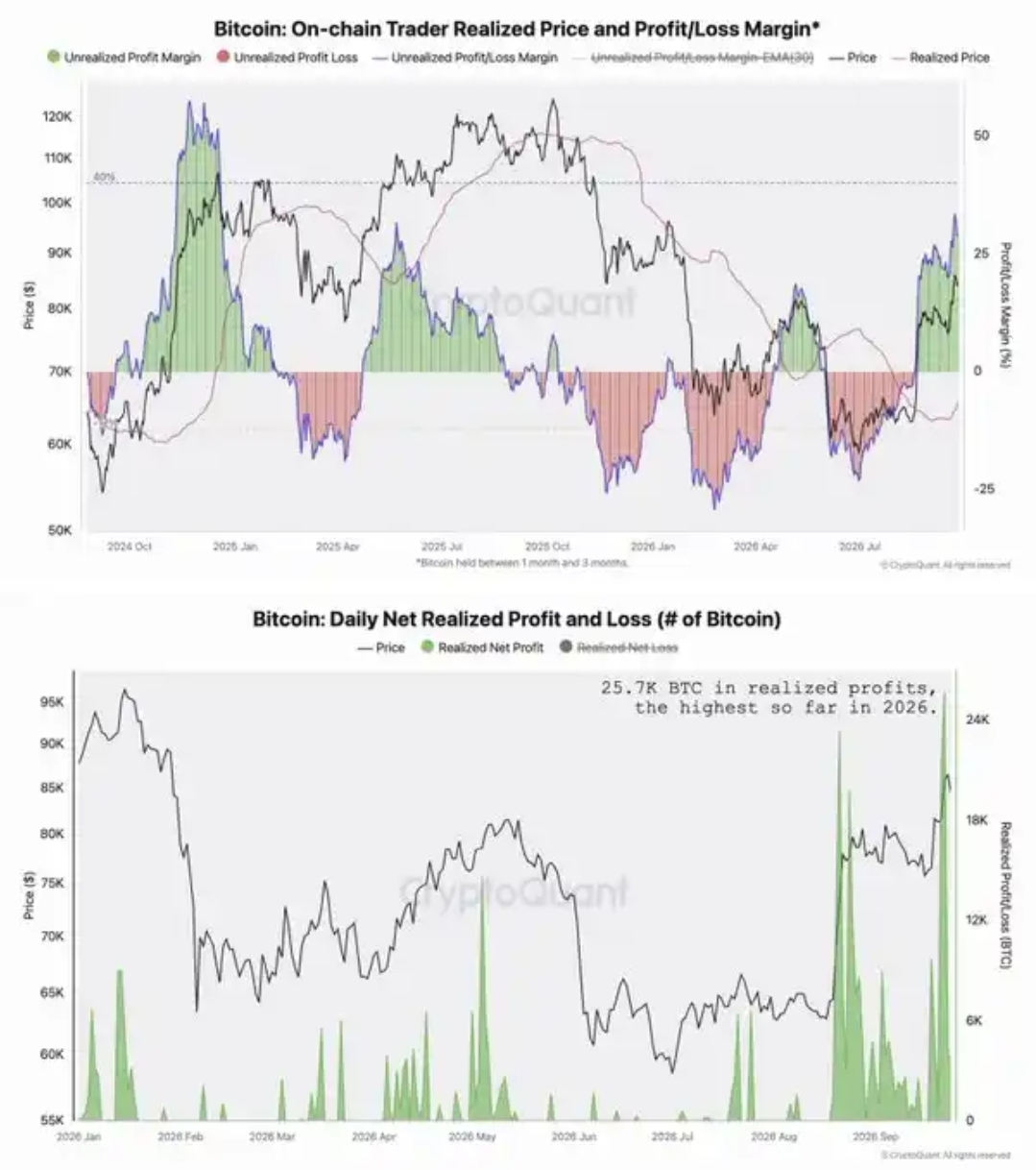
Bitcoin’s unrealized profit and profit-taking volumes are rising in tandem, and the market faces a pullback risk
On September 26, CryptoQuant research director Julio Moreno said that as Bitcoin has recently rallied, the market’s unrealized profit margin has risen to 33%, reaching the highest level since December 2024.
$ETH
Meanwhile, Bitcoin’s profit-taking volume has risen to 25,700 BTC, the highest level since 2026. Moreno believes that when the unrealized profit margin and the profit-taking volume rise together, it usually means the momentum of this rally is weakening and the market faces a pullback risk.
For reference only! Risk is your own responsibility!
Be ready to place your buy order and exit at any time!
On September 26, CryptoQuant research director Julio Moreno said that as Bitcoin has recently rallied, the market’s unrealized profit margin has risen to 33%, reaching the highest level since December 2024.
$ETH
Meanwhile, Bitcoin’s profit-taking volume has risen to 25,700 BTC, the highest level since 2026. Moreno believes that when the unrealized profit margin and the profit-taking volume rise together, it usually means the momentum of this rally is weakening and the market faces a pullback risk.
For reference only! Risk is your own responsibility!
Be ready to place your buy order and exit at any time!



长得帅不如跑的快1688
·
--
🚨 BTC IS QUIET.
But capital isn’t.
Bitcoin is still consolidating around $84K–$85K.
Yet something interesting is happening underneath the market:
CAPITAL IS BROADENING BEYOND BTC.
Q3 so far:
₿ BTC → ~+43.5%
Ξ ETH → ~+71%
And from Monday through Thursday:
💰 U.S. crypto ETF inflows → ~$3.04B
₿ Bitcoin → ~$2.25B
🔥 Beyond BTC → ~$793M
Ξ Ethereum → ~$603M
So here’s the real question:
IS CAPITAL ROTATING BEYOND BITCOIN?
In most crypto rallies,
money enters BTC first.
But the next stage matters more:
Does capital start spreading into ETH
and the broader crypto market?
Especially while:
📈 U.S. 10Y Treasury yields remain at 5.17%.
If that rotation continues despite high yields,
the market may be telling us something bigger.
Now I’m watching:
₿ BTC holding $84K
Ξ ETH relative strength
💰 Non-BTC ETF flows
🔥 Whether capital keeps broadening
👇 Your take?
ROTATION IS STARTING 🟢
or
BTC TAKES LIQUIDITY BACK 🔴?
#BTC #ETH #BNB
But capital isn’t.
Bitcoin is still consolidating around $84K–$85K.
Yet something interesting is happening underneath the market:
CAPITAL IS BROADENING BEYOND BTC.
Q3 so far:
₿ BTC → ~+43.5%
Ξ ETH → ~+71%
And from Monday through Thursday:
💰 U.S. crypto ETF inflows → ~$3.04B
₿ Bitcoin → ~$2.25B
🔥 Beyond BTC → ~$793M
Ξ Ethereum → ~$603M
So here’s the real question:
IS CAPITAL ROTATING BEYOND BITCOIN?
In most crypto rallies,
money enters BTC first.
But the next stage matters more:
Does capital start spreading into ETH
and the broader crypto market?
Especially while:
📈 U.S. 10Y Treasury yields remain at 5.17%.
If that rotation continues despite high yields,
the market may be telling us something bigger.
Now I’m watching:
₿ BTC holding $84K
Ξ ETH relative strength
💰 Non-BTC ETF flows
🔥 Whether capital keeps broadening
👇 Your take?
ROTATION IS STARTING 🟢
or
BTC TAKES LIQUIDITY BACK 🔴?
#BTC #ETH #BNB


DK短线复刻
·
--
Follow to reply and claim a red envelope 🎁


520龙行天下
·
--
Market news swells and ebbs, with the board seeing constant fluctuations✨. Hot topics flare up in rotation, temptations are endless, but missing the move is far luckier than losing money. Stay independent in your judgment—don’t let group sentiments pull you along. Reject FOMO and chase highs blindly. Stick to trading discipline, manage your position size, and strictly control risk. Trading is a game of knowledge and patience—keep your mindset steady and wait calmly for the opportunities that belong to you. Wishing everyone composure in both advances and retreats, and a consistently red account🧧

520龙行天下
·
--
[Ended] 🎙️ Improve yourself, stick to value investing, and DCA into BNB and SOL
9.6k listens

自由1688
·
--
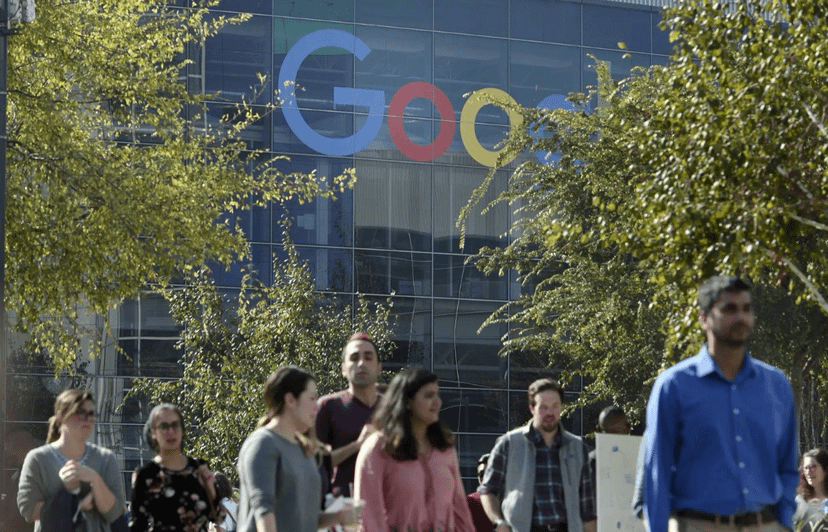
Google Employee Quits Over Worries About Superintelligent AI: Pursuing Powerful AI Is Irresponsible—Can’t Turn a Blind Eye
According to a report by Business Insider, a Google employee said he has resigned from the company, arguing that pursuing more powerful AI is “inherently irresponsible.” Robert O’Callahan, who previously worked at Google DeepMind, posted on X that his team is developing chips to make AI run faster and at lower cost, and that he believes AI has “progressed too fast.”
He shared a resignation letter on his personal blog and said he sent it to colleagues on Friday. In the letter, he wrote that he couldn’t “turn a blind eye” to the impact of his work, because doing so “is not something a person who follows Jesus should do.” In his blog bio, he describes himself as a Christian.
“This is not an easy decision. I like my coworkers and I like the work environment here, and being paid a generous salary to solve interesting problems has always been a great thing,” he wrote. “But our team’s ultimate goal is to reduce the cost of AI dramatically and significantly lower latency, and I don’t think that is good for the people currently living: I strongly believe the speed of AI progress is simply too fast (and I also have doubts about where it will ultimately lead).”
According to a report by Business Insider, a Google employee said he has resigned from the company, arguing that pursuing more powerful AI is “inherently irresponsible.” Robert O’Callahan, who previously worked at Google DeepMind, posted on X that his team is developing chips to make AI run faster and at lower cost, and that he believes AI has “progressed too fast.”
He shared a resignation letter on his personal blog and said he sent it to colleagues on Friday. In the letter, he wrote that he couldn’t “turn a blind eye” to the impact of his work, because doing so “is not something a person who follows Jesus should do.” In his blog bio, he describes himself as a Christian.
“This is not an easy decision. I like my coworkers and I like the work environment here, and being paid a generous salary to solve interesting problems has always been a great thing,” he wrote. “But our team’s ultimate goal is to reduce the cost of AI dramatically and significantly lower latency, and I don’t think that is good for the people currently living: I strongly believe the speed of AI progress is simply too fast (and I also have doubts about where it will ultimately lead).”


大鹤1688
·
--
To be honest, I watched it when I was little, but I forgot. Today is basically like the first time I’m watching it, haha...#1688
$AAPLB
$AAPLB


只会呐喊的尖刀手
·
--
So unbelievable... Did the giant whale awaken?
4,500 large pizzas, $380 million
And it all gets turned over like that?
This feels very ominous! $BTC
4,500 large pizzas, $380 million
And it all gets turned over like that?
This feels very ominous! $BTC


CJ_GraceWang1688
·
--
10u
🎁🎁🎁
$DOGE
#狗狗币ETF创上市来最大周流入
Can Dogecoin hold steady at 0.1 next week?
🎁🎁🎁
$DOGE
#狗狗币ETF创上市来最大周流入
Can Dogecoin hold steady at 0.1 next week?

花涧空
·
--
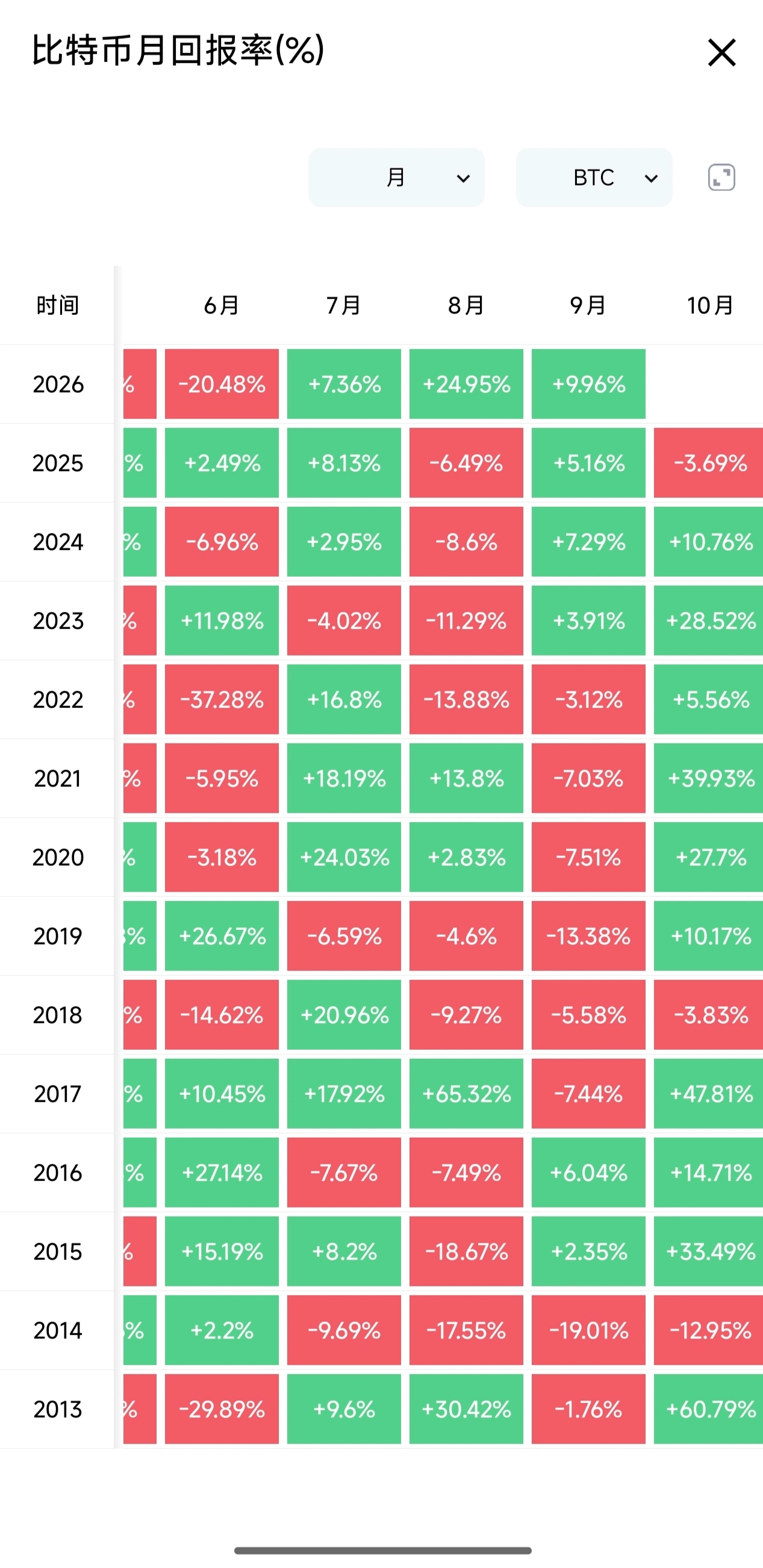
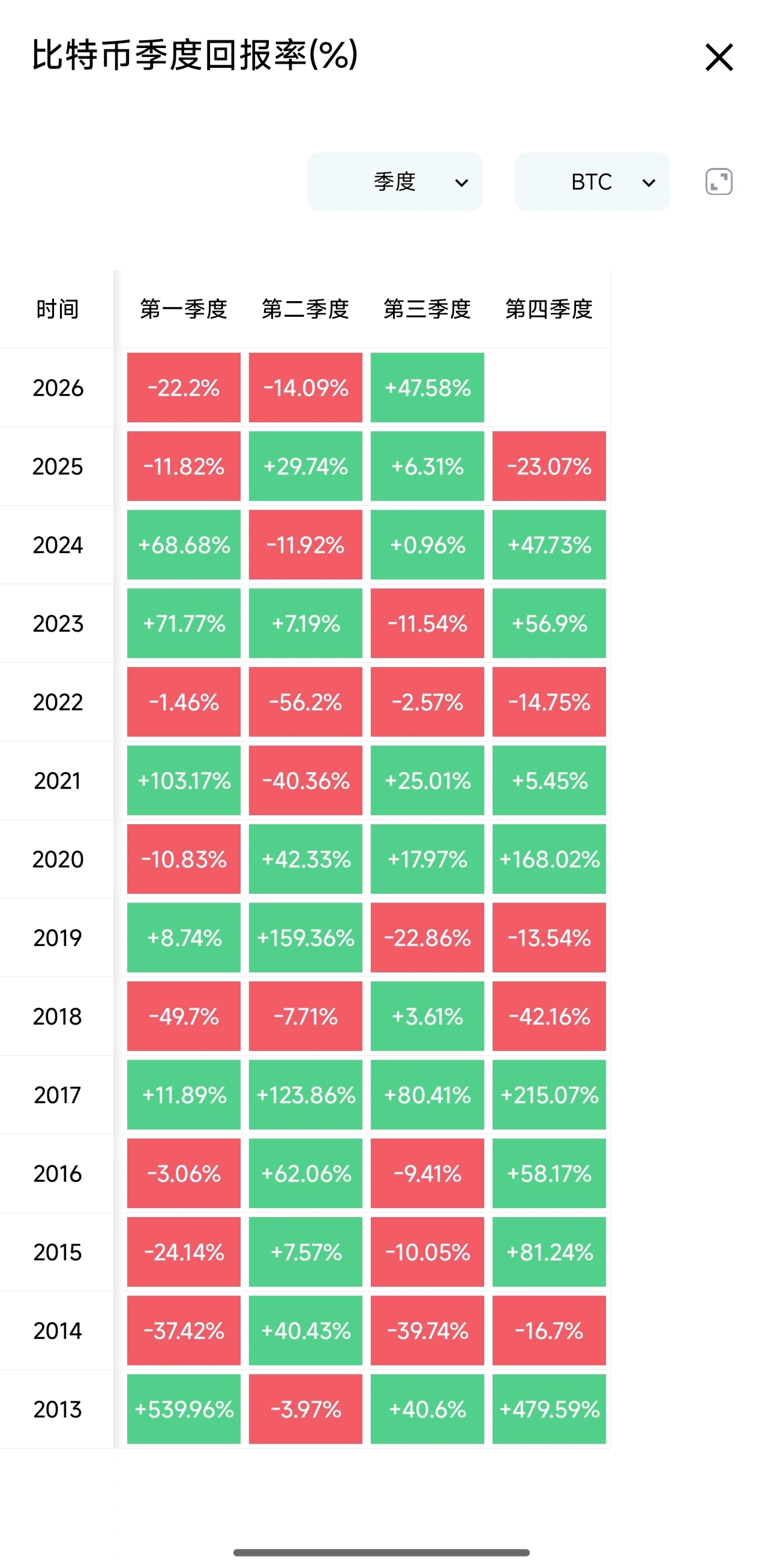
Will Bitcoin break a 14-year historical rule?
After going through the monthly returns from 2013 to 2026, I found a terrifying fact:
In 2017’s mania run, Q3 surged by 80%
But in the three months of July, August, and September, it was never a consecutive winning streak
In the big bull markets of 2020 and 2021,
September was also destined to pull back
Historically, three straight bullish months from July to September
Has never happened even once
But look at the chart for 2026:
July +7.36%
August +24.95%
September +9.96%
If the September close confirms it,
This will be the first time since BTC was born
Will this pattern fail— or is it the final madness right before the breakout?
Do you think 2026 will break this curse?
After going through the monthly returns from 2013 to 2026, I found a terrifying fact:
In 2017’s mania run, Q3 surged by 80%
But in the three months of July, August, and September, it was never a consecutive winning streak
In the big bull markets of 2020 and 2021,
September was also destined to pull back
Historically, three straight bullish months from July to September
Has never happened even once
But look at the chart for 2026:
July +7.36%
August +24.95%
September +9.96%
If the September close confirms it,
This will be the first time since BTC was born
Will this pattern fail— or is it the final madness right before the breakout?
Do you think 2026 will break this curse?
慢就是快Mike
·
--
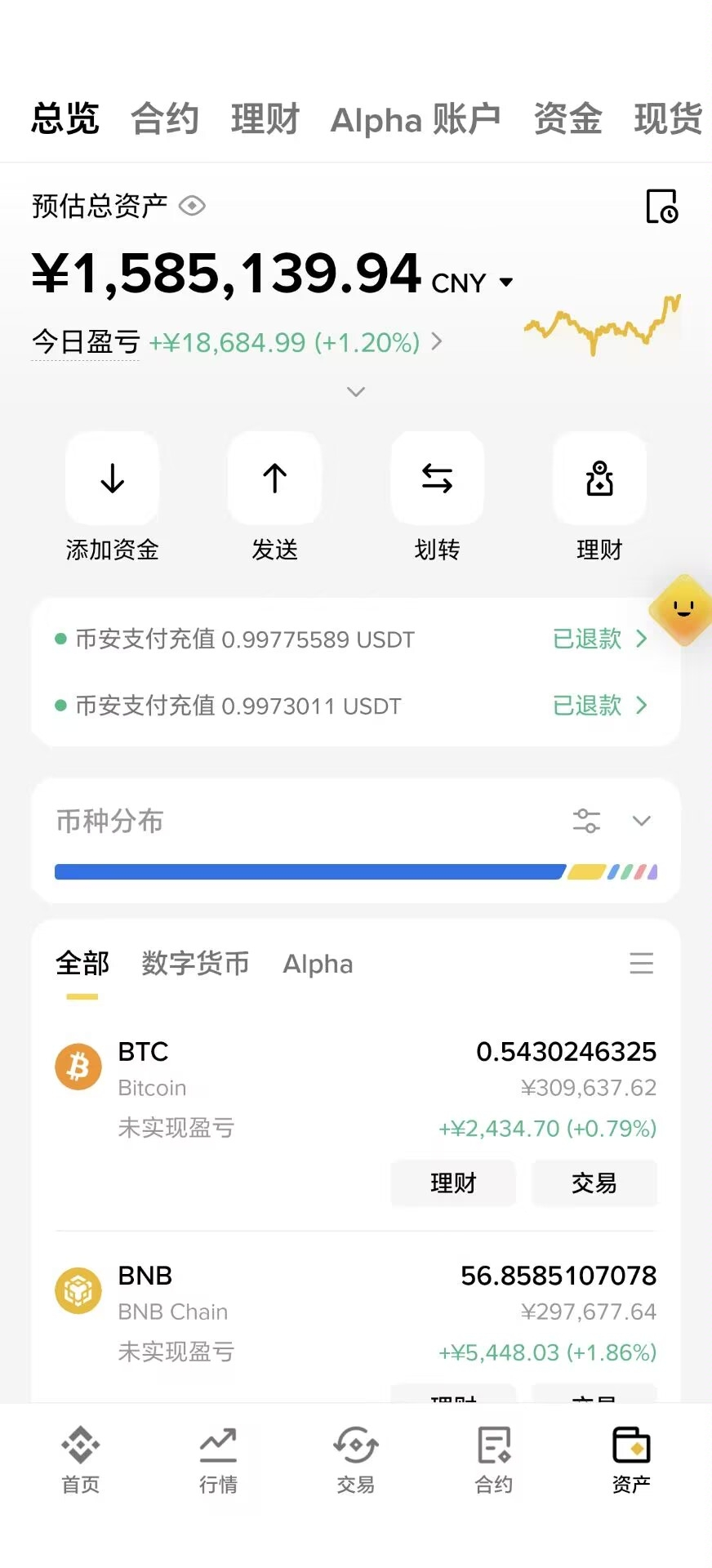
This account has been used for less than 3 months. It grew from 300,000 CNY to 1.6 million. Along the way, I also withdrew some money intermittently. The account’s followers have also surpassed 30k. The new account, within a week, reached the 30-day profit and transaction-volume Top rankings. Thank you to all the family members in the Square for your support. I’ll keep working hard, stay consistent with compounding, and be patient while waiting for the bull market. Be a friend of time!!!



生蚝哥Oyster
·
--
BullishMay everything go well for you today,
with a good mood, good health,
and gentle treatment from the people around you.
May life bring you a little extra delight.
Hang in there—you’ll get better bit by bit~
with a good mood, good health,
and gentle treatment from the people around you.
May life bring you a little extra delight.
Hang in there—you’ll get better bit by bit~

·
--
🎙️ 🎉2026 Furious Bull Market, the Trumpet Has Sounded—Markets Are All on the BSC Chain!! On November 1st, Musk will celebrate the birthday of the Martian dog Marvin. This on-chain momentum—be sure to catch it!
End
02 h 03 m 42 s
5.6k
45

心悦Joyce
·
--
BullishOver the past week, Meta’s personal AI agent Muse launched quickly and has already been adopted. This release is a major positive for Meta; Muse’s impressive performance once again proves that the tens of trillions in AI spending by major enterprises may ultimately pay off!
However, the scale of investment is simply too massive: even if AI fully delivers on market expectations—boosting the U.S. domestic product (GDP) in 2027 by 3%—the corresponding return would be only about $1 trillion. That gain may still be insufficient to cover the outlays. So the remaining return would have to be squeezed out elsewhere.
One common view is that AI will take over a large number of jobs. But with labor force growth still strong, this doesn’t seem to be happening. Another, more likely, view is that AI will trigger a dramatic reshaping of the economy: it will steal business from certain groups of companies, while routing those activities to other firms that are better positioned to use AI more effectively.
But for established companies that have previously been able to make steady profits without having to compete fiercely, this is a disaster.
We felt this clearly over the past week—especially on Tuesday. Stocks such as Planet Fitness and The New York Times Company fell because Muse makes it easier to cancel subscriptions. Charles Schwab and LPL Financial also declined, as they tend to leave less attentive customers’ cash in low-yield accounts, while Muse may move that money to higher-yield places. Tripadvisor and Booking Holdings faced similar pressure, since Muse can bypass these travel booking sites and lock in the best-value flights and hotels at the lowest prices.
The trade strategy of “go long on chips, short on software” was once used for hedging, but recently the semiconductor and software sectors have risen in tandem, and the strategy has failed. If more and more traditional individual stocks hit by AI are used to play the role of short hedges in an AI trade, their further declines could become a self-fulfilling prophecy.
————————————————————————We continue to invest in the following three companies
$META.US
$GOOGL.US
$SPCX.US
However, the scale of investment is simply too massive: even if AI fully delivers on market expectations—boosting the U.S. domestic product (GDP) in 2027 by 3%—the corresponding return would be only about $1 trillion. That gain may still be insufficient to cover the outlays. So the remaining return would have to be squeezed out elsewhere.
One common view is that AI will take over a large number of jobs. But with labor force growth still strong, this doesn’t seem to be happening. Another, more likely, view is that AI will trigger a dramatic reshaping of the economy: it will steal business from certain groups of companies, while routing those activities to other firms that are better positioned to use AI more effectively.
But for established companies that have previously been able to make steady profits without having to compete fiercely, this is a disaster.
We felt this clearly over the past week—especially on Tuesday. Stocks such as Planet Fitness and The New York Times Company fell because Muse makes it easier to cancel subscriptions. Charles Schwab and LPL Financial also declined, as they tend to leave less attentive customers’ cash in low-yield accounts, while Muse may move that money to higher-yield places. Tripadvisor and Booking Holdings faced similar pressure, since Muse can bypass these travel booking sites and lock in the best-value flights and hotels at the lowest prices.
The trade strategy of “go long on chips, short on software” was once used for hedging, but recently the semiconductor and software sectors have risen in tandem, and the strategy has failed. If more and more traditional individual stocks hit by AI are used to play the role of short hedges in an AI trade, their further declines could become a self-fulfilling prophecy.
————————————————————————We continue to invest in the following three companies
$META.US
$GOOGL.US
$SPCX.US

Log in to explore more content