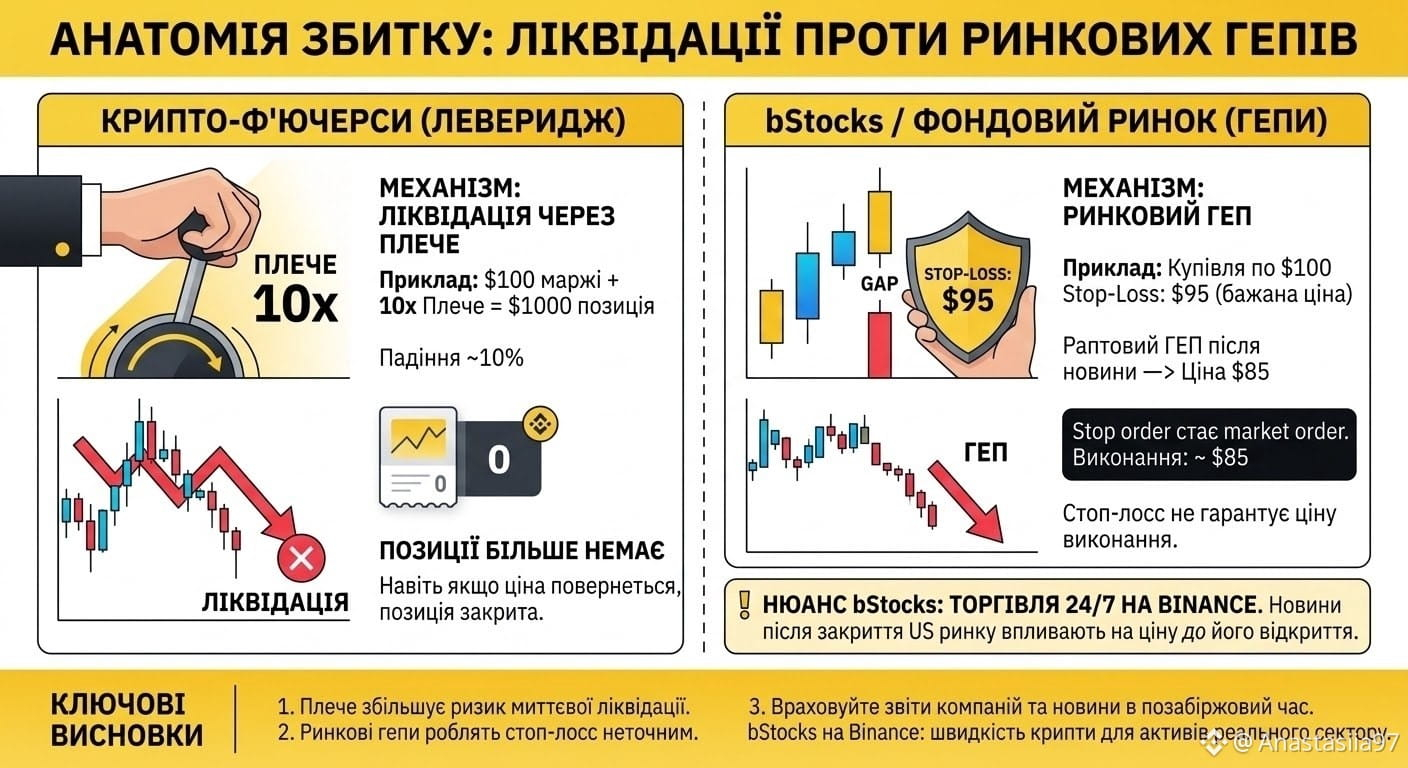
Anatomy of a Stop-Out: Liquidations vs. Gaps 📉
The mechanism of losses in crypto and the stock market is fundamentally different.
* Futures = Liquidation risk.
The main danger here is leverage. With 10x margin, a 10% price move against you will completely liquidate your position. Even if the price bounces back in a minute—your money is already gone.
* Stocks and bStocks = Gap risk.
You bought an asset at $100 and set a stop-loss at $95. But at night, the company released a bad report, and the next opening price is $85. Your stop-loss will close the position at $85, because the $95 price simply didn’t exist in the market. A stop-loss does not guarantee your exit price!
bStocks nuance: They trade on Binance 24/7. So any news on the weekend will affect their price even before traditional US exchanges open.
That’s why before opening a position, always check the companies’ reporting dates—not just look at the chart. Because “I set a stop” doesn’t mean you’re safe.
The mechanism of losses in crypto and the stock market is fundamentally different.
* Futures = Liquidation risk.
The main danger here is leverage. With 10x margin, a 10% price move against you will completely liquidate your position. Even if the price bounces back in a minute—your money is already gone.
* Stocks and bStocks = Gap risk.
You bought an asset at $100 and set a stop-loss at $95. But at night, the company released a bad report, and the next opening price is $85. Your stop-loss will close the position at $85, because the $95 price simply didn’t exist in the market. A stop-loss does not guarantee your exit price!
bStocks nuance: They trade on Binance 24/7. So any news on the weekend will affect their price even before traditional US exchanges open.
That’s why before opening a position, always check the companies’ reporting dates—not just look at the chart. Because “I set a stop” doesn’t mean you’re safe.