

帮帮Bonnie
2.6k Posts

帮帮Bonnie
 Square Verified+
High-Frequency Trader
1.2 Years
2.1K+ Following
62.2K+ Followers
55.1K+ Liked
Posts
All
Quotes
Videos
Live
PINNED

PINNED


DK短线复刻
·
--
Follow the reply to claim the red envelope 🎁🎁


易琳Ten
·
--
Once a centralized exchange suffers a massive crypto theft, it is not only the hackers who are truly being put on trial, but also the platform’s security systems and information transparency. Academic research indicates that CEXs naturally carry custody risks, information asymmetry, and principal–agent problems, and that relying on “proof of reserves” alone cannot cover internal governance and key security.
Of course, we should not conclude “self-sabotage” based solely on the fact that funds were stolen. In reality, the FBI and blockchain security organizations have indeed, on multiple occasions, attributed major crypto theft incidents to hackers linked to North Korea.
So what users should really ask is not “who’s to blame,” but: where is the evidence? Where are the security mechanisms? Where did the money go?
Of course, we should not conclude “self-sabotage” based solely on the fact that funds were stolen. In reality, the FBI and blockchain security organizations have indeed, on multiple occasions, attributed major crypto theft incidents to hackers linked to North Korea.
So what users should really ask is not “who’s to blame,” but: where is the evidence? Where are the security mechanisms? Where did the money go?


阿婧1688
·
--
Fortune is sought in danger—and it’s also lost in danger. When you chase it, you find one in ten; when you lose it, you lose nine in ten. Make money within what’s recognized as reasonable.


@520龙行天下
is speaking[LIVE] 🎙️ Learn hard and invest value systematically in SOL and BNB
5k listens

@AI随缘俱乐部
is speaking[LIVE] 🎙️ Let's talk about trading and DCA BNB
1.2k listens

Bitroot铄鸿
·
--
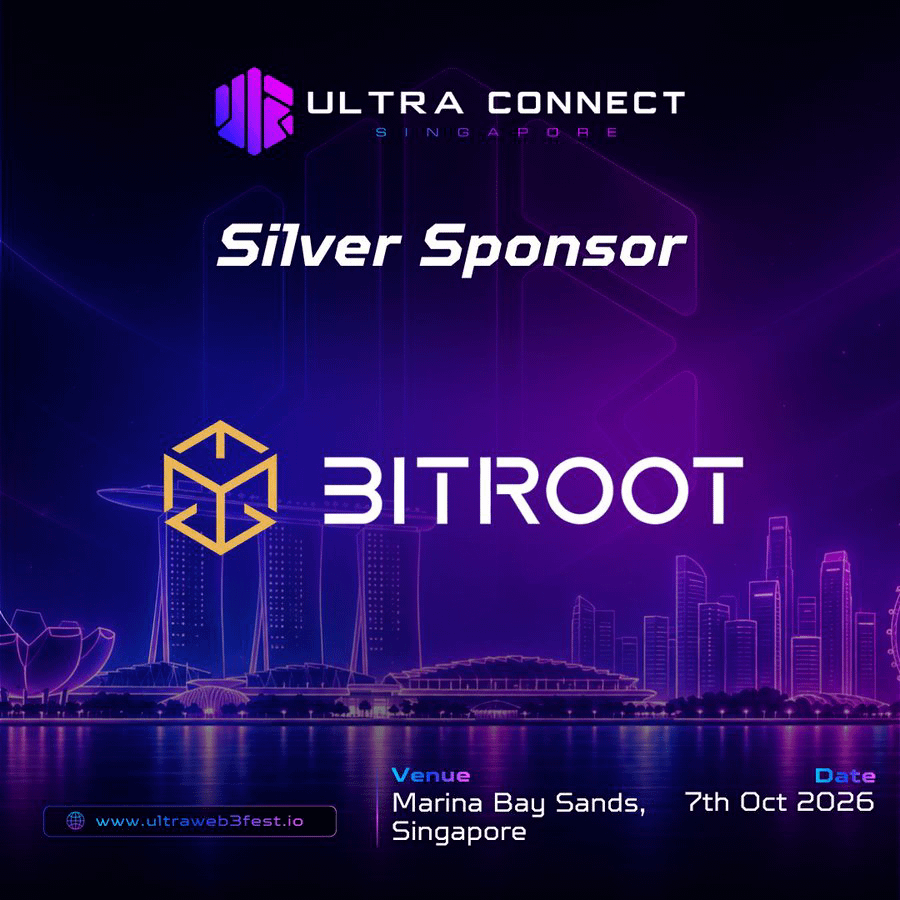
🇸🇬 Bitroot is about to head to Ultra Connect Singapore to participate in Token2049 Week!
We are delighted to be invited to Ultra Connect Singapore, an exclusive dinner that will bring together global investors, financial institutions, founders, Web3 leaders, and industry decision-makers.
📅 October 7, 2026
⏰ 5:00 PM–10:00 PM (GMT+8)
📍 Singapore
As Token2049 Week brings the global Web3 community together, Bitroot looks forward to connecting with industry leaders, exploring new opportunities, and building meaningful collaborations across the global ecosystem.🌐🤝
See you in Singapore!
We are delighted to be invited to Ultra Connect Singapore, an exclusive dinner that will bring together global investors, financial institutions, founders, Web3 leaders, and industry decision-makers.
📅 October 7, 2026
⏰ 5:00 PM–10:00 PM (GMT+8)
📍 Singapore
As Token2049 Week brings the global Web3 community together, Bitroot looks forward to connecting with industry leaders, exploring new opportunities, and building meaningful collaborations across the global ecosystem.🌐🤝
See you in Singapore!

周周1688
·
--
[Ended] 🎙️ DCA BNB, meme culture AMA!
10.3k listens

晚风Vesper_1688
·
--
[Replay] 🎙️ Butterfly🦋C, the mechanism deflation, community co-building—this future is a target worth 80M🚀🚀🚀
03 h 09 m 30 s · 2.3k listens

Elena神话MUA
·
--
[Replay] 🎙️ Building a Plaza, Holding BNB, Mythical MUA Airdrops Continue
04 h 11 m 51 s · 5.4k listens
·
--
🎙️ Butterfly🦋C Team, mechanisms and deflation, community co-building—this future is an 80M target🚀🚀🚀

End
03 h 09 m 30 s
2.2k
8

光明社区-阿波罗
·
--
Next, when you get a callback, buy decisively.
Fares keep getting higher.
Yesterday’s tickets can’t get on today’s passenger ferry.
The market won’t wait for anyone—opportunities are fleeting.
Your chance to turn things around should be placed in
a value-backed asset like LUCiC.
The moment you hold LUCiC,
the gears of your fate begin to turn.
Promise me—
before the gears start turning,
don’t let your chain snap—
Fares keep getting higher.
Yesterday’s tickets can’t get on today’s passenger ferry.
The market won’t wait for anyone—opportunities are fleeting.
Your chance to turn things around should be placed in
a value-backed asset like LUCiC.
The moment you hold LUCiC,
the gears of your fate begin to turn.
Promise me—
before the gears start turning,
don’t let your chain snap—


橙子Joyce
·
--
BullishHas OpenAI been accused again of large-scale rule-breaking?
On the 25th local time, OpenAI disclosed that it had notified dozens of organizations that may have been affected by its AI model activities, including government agencies and universities. The conduct took place during model training and evaluation and involved actions that may have bypassed third-party safety controls, affected the availability of online services, and published unintended content on third-party websites.
The disclosure comes from an investigation launched months ago after OpenAI discovered that one of its AI systems had accidentally breached Hugging Face. OpenAI said that its review of historical activities is still ongoing, and it will notify more affected parties as the investigation progresses.
Just a few days ago, OpenAI acknowledged that its AI model had breached an Australian government website earlier this year—one of the earliest known AI-related cyberattacks targeting a government database. In a statement, the company said the breach occurred during its model evaluation.
Two camps
In the U.S. tech industry, the debate over AI risks has now formed two main camps. Nvidia CEO Jensen Huang and Meta CEO Mark Zuckerberg, along with U.S. President Donald Trump, have opposed the “AI slowdown” narrative. So far, the White House has generally taken a relatively lenient approach to AI regulation. Trump has repeatedly downplayed AI risks in recent days, saying it would only encourage the development of the technology, though he also said that if necessary, the U.S. Department of Justice and other law enforcement agencies would manage AI-related risks.
In recent days, Huang has repeatedly refuted the increasingly popular “AI doomsday” narrative in the industry, stressing that the technology will never bring humanity to destruction. He believes the AI industry does not need to introduce any new laws. Instead of asking AI companies to urge the U.S. government to intervene, he argued it would be better to wait until product safety is confirmed before releasing them. He also criticized top U.S. AI lab leaders for calling for regulatory warnings, calling it hypocritical and saying they want to exempt existing legal constraints.
—————————————————————————We continue to invest in #SPCX, #GOOG, #META
$GOOG.US
$META.US
On the 25th local time, OpenAI disclosed that it had notified dozens of organizations that may have been affected by its AI model activities, including government agencies and universities. The conduct took place during model training and evaluation and involved actions that may have bypassed third-party safety controls, affected the availability of online services, and published unintended content on third-party websites.
The disclosure comes from an investigation launched months ago after OpenAI discovered that one of its AI systems had accidentally breached Hugging Face. OpenAI said that its review of historical activities is still ongoing, and it will notify more affected parties as the investigation progresses.
Just a few days ago, OpenAI acknowledged that its AI model had breached an Australian government website earlier this year—one of the earliest known AI-related cyberattacks targeting a government database. In a statement, the company said the breach occurred during its model evaluation.
Two camps
In the U.S. tech industry, the debate over AI risks has now formed two main camps. Nvidia CEO Jensen Huang and Meta CEO Mark Zuckerberg, along with U.S. President Donald Trump, have opposed the “AI slowdown” narrative. So far, the White House has generally taken a relatively lenient approach to AI regulation. Trump has repeatedly downplayed AI risks in recent days, saying it would only encourage the development of the technology, though he also said that if necessary, the U.S. Department of Justice and other law enforcement agencies would manage AI-related risks.
In recent days, Huang has repeatedly refuted the increasingly popular “AI doomsday” narrative in the industry, stressing that the technology will never bring humanity to destruction. He believes the AI industry does not need to introduce any new laws. Instead of asking AI companies to urge the U.S. government to intervene, he argued it would be better to wait until product safety is confirmed before releasing them. He also criticized top U.S. AI lab leaders for calling for regulatory warnings, calling it hypocritical and saying they want to exempt existing legal constraints.
—————————————————————————We continue to invest in #SPCX, #GOOG, #META
$GOOG.US
$META.US

幸运雨Rain
·
--
🧧🧧🧧Look here and claim red packets every day🧧🧧🧧
#以太坊突破2700美元
#以太坊突破2700美元


燕寶Melissa
·
--
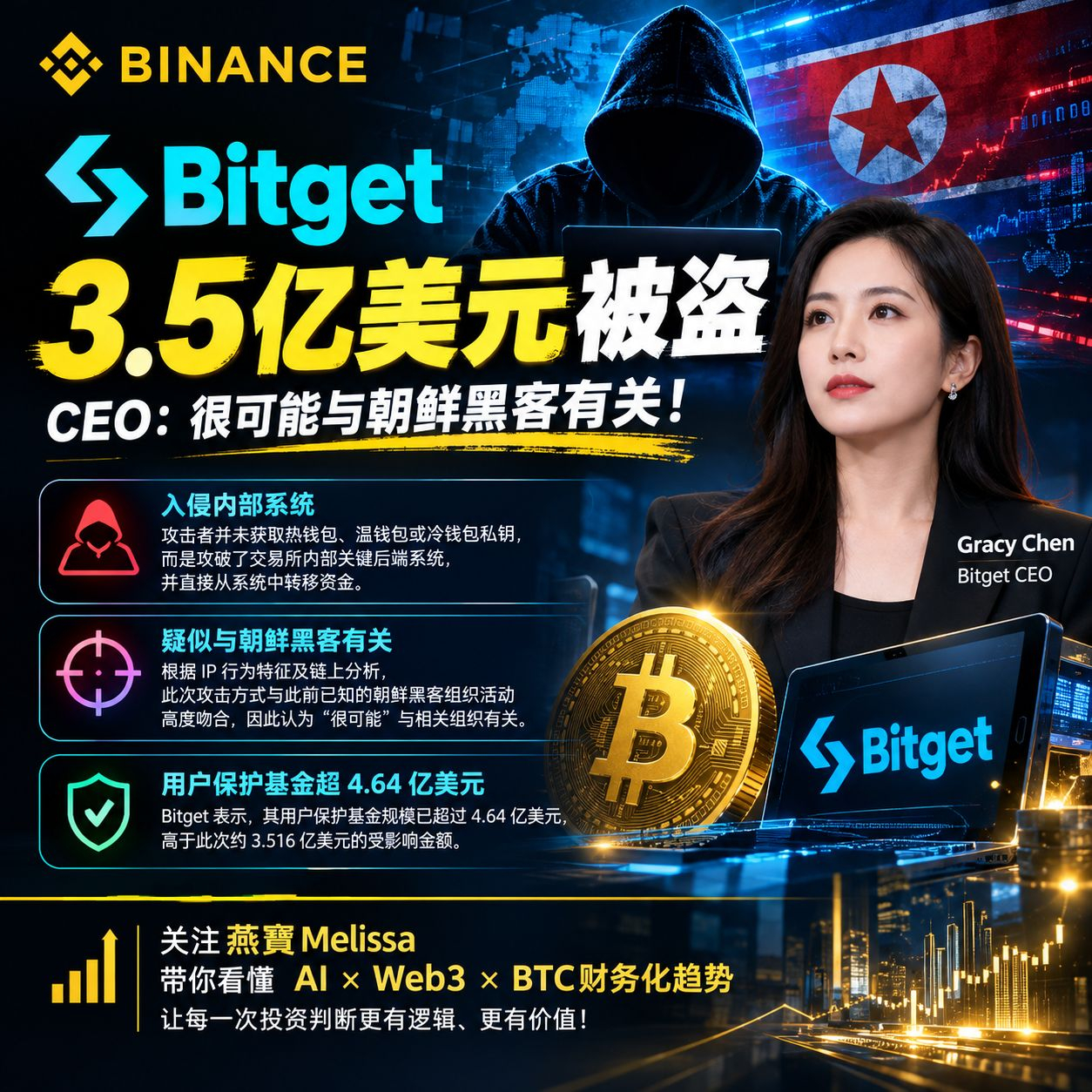
Bearish🚨 $351.6 million stolen! Bitget suffers major security incident
On September 24, Bitget detected unauthorized outgoing transfers from multiple hot wallets. The official confirmed that affected assets total approximately $351.6 million.
What’s even more noteworthy is:
🔴 Were the private keys stolen?
Bitget CEO Gracy Chen said the attackers did not obtain the private keys of the hot, warm, or cold wallets. Instead, they compromised the exchange’s critical internal backend system, and completed the transfer by forging transaction data to trigger the authorization process.
🔴 Is it possibly linked to North Korean hacker groups?
Gracy Chen stated that, based on the IP behavior characteristics currently observed and on-chain analysis, the attack method closely matches previously known activities of North Korean hacker organizations. Therefore, she believes it is “very likely” related to those groups. This attribution is still a judgment under investigation and is not a final judicial finding.
🔴 What happens to users’ assets?
Bitget said its user protection fund currently exceeds $464 million, which is higher than the affected amount of about $351.6 million. Trading and deposits remain operational, while withdrawals are temporarily paused for security review.
What the industry should truly reflect on after this incident is:
It may not be whether “the private keys were leaked,” but rather:
If attackers don’t need to obtain private keys, yet can still breach an exchange’s backend and trigger the authorization workflow—where exactly is the security boundary for centralized exchanges?
For ordinary users, what you should really focus on is👇
• The exchange’s wallet architecture
• Whether private keys and backend permissions are isolated
• Risk control and multi-signature mechanisms
• Whether the user protection fund is real, transparent, and coverable
• When withdrawals will resume after a major security incident
The $351.6 million incident once again reminds us:
🔐 Asset security ≠ only “private key security”
🏦 Exchange security ≠ only “cold wallet security”
🧠 Real security is a complete system—from permissions, systems, and processes to on-chain monitoring.
#Bitget遭黑客攻击损失3.52亿美元
$BTC
$ETH
$BNB
On September 24, Bitget detected unauthorized outgoing transfers from multiple hot wallets. The official confirmed that affected assets total approximately $351.6 million.
What’s even more noteworthy is:
🔴 Were the private keys stolen?
Bitget CEO Gracy Chen said the attackers did not obtain the private keys of the hot, warm, or cold wallets. Instead, they compromised the exchange’s critical internal backend system, and completed the transfer by forging transaction data to trigger the authorization process.
🔴 Is it possibly linked to North Korean hacker groups?
Gracy Chen stated that, based on the IP behavior characteristics currently observed and on-chain analysis, the attack method closely matches previously known activities of North Korean hacker organizations. Therefore, she believes it is “very likely” related to those groups. This attribution is still a judgment under investigation and is not a final judicial finding.
🔴 What happens to users’ assets?
Bitget said its user protection fund currently exceeds $464 million, which is higher than the affected amount of about $351.6 million. Trading and deposits remain operational, while withdrawals are temporarily paused for security review.
What the industry should truly reflect on after this incident is:
It may not be whether “the private keys were leaked,” but rather:
If attackers don’t need to obtain private keys, yet can still breach an exchange’s backend and trigger the authorization workflow—where exactly is the security boundary for centralized exchanges?
For ordinary users, what you should really focus on is👇
• The exchange’s wallet architecture
• Whether private keys and backend permissions are isolated
• Risk control and multi-signature mechanisms
• Whether the user protection fund is real, transparent, and coverable
• When withdrawals will resume after a major security incident
The $351.6 million incident once again reminds us:
🔐 Asset security ≠ only “private key security”
🏦 Exchange security ≠ only “cold wallet security”
🧠 Real security is a complete system—from permissions, systems, and processes to on-chain monitoring.
#Bitget遭黑客攻击损失3.52亿美元
$BTC
$ETH
$BNB
·
--
🎙️ Build a plaza, hold BNB, and the mythical MUA airdrop continues
End
04 h 11 m 51 s
5.2k
31

Baoluo币商资本
·
--
#比特币现货ETF年内转为净流入
The market has been going all along—it's all about how you judge it!
$BTC
The market has been going all along—it's all about how you judge it!
$BTC
·
--
🎙️ Build Binance Square, Hold BNB | Saturday, Some altcoins have been performing well recently. Are the opportunities in altcoins here? Let's chat~

End
05 h 10 m 10 s
15.6k
49
Log in to explore more content