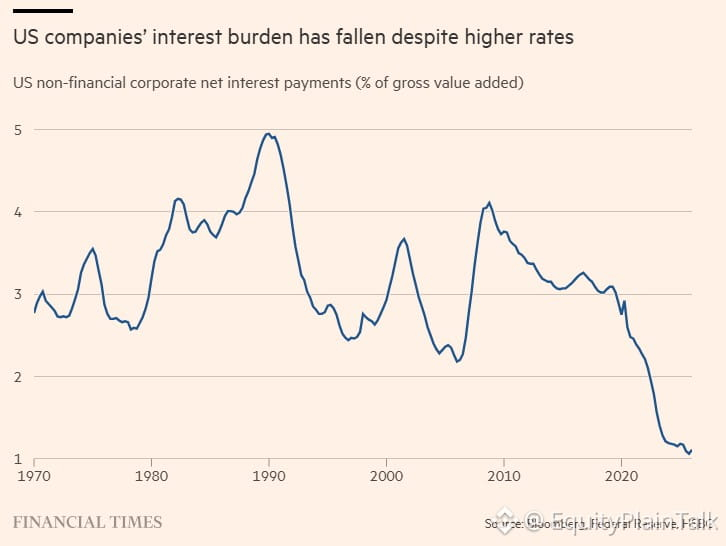
U.S. corporate debt servicing costs just hit historic lows despite rates being higher than pre-2020.
Why? Companies locked in cheap funding during the zero-rate era. Most investment-grade debt was issued at sub-4% coupons. Refinancing waves won't hit hard until 2026-2027.
This creates a cushion. Earnings aren't getting crushed by interest expenses. Free cash flow stays strong. Buybacks and dividends keep flowing.
But here's the flip side: when refinancing does come, spreads matter. If credit conditions tighten or recession hits, that's when the pain shows up. For now though, balance sheets are in better shape than the rate level suggests.
Market's pricing this in. Low debt burden = more room for equity upside if growth holds.
Why? Companies locked in cheap funding during the zero-rate era. Most investment-grade debt was issued at sub-4% coupons. Refinancing waves won't hit hard until 2026-2027.
This creates a cushion. Earnings aren't getting crushed by interest expenses. Free cash flow stays strong. Buybacks and dividends keep flowing.
But here's the flip side: when refinancing does come, spreads matter. If credit conditions tighten or recession hits, that's when the pain shows up. For now though, balance sheets are in better shape than the rate level suggests.
Market's pricing this in. Low debt burden = more room for equity upside if growth holds.