
Active buy/sell radar
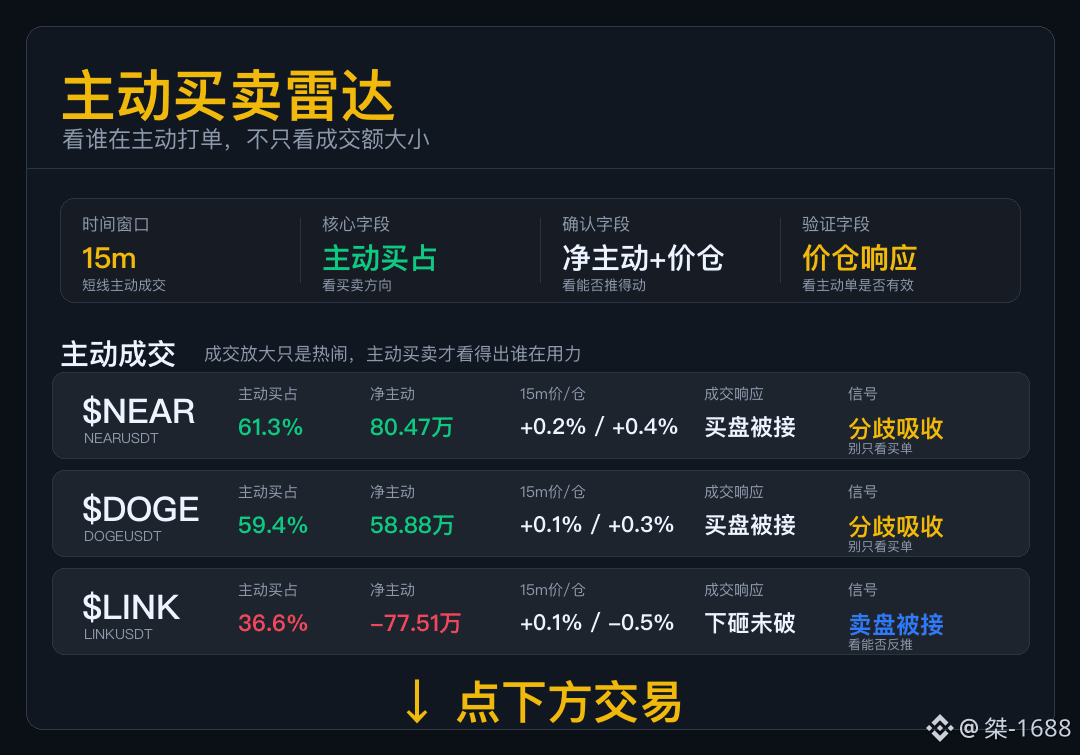
Don’t just look at the transaction value. Today, this set mainly looks at whether active orders can push the board.
In $NEAR , the buyer spent on trades, but it didn’t translate into movement in the spread. The cost-effectiveness of chasing the price is declining.
In $DOGE , there are buy orders, but the price wasn’t decisively lifted. First, treat it as a dispute-pattern trading range. Don’t directly treat active buying as a breakout.
In $LINK , the seller put in effort, but didn’t punch through the board. For the short term, look for range-bound absorption; don’t rush to handle it as a breakdown.
There are actions on both the buy and sell sides. Don’t make a combined judgment—check each price level to see whether it receives confirmation.
Don’t just look at the transaction value. Today, this set mainly looks at whether active orders can push the board.
In $NEAR , the buyer spent on trades, but it didn’t translate into movement in the spread. The cost-effectiveness of chasing the price is declining.
In $DOGE , there are buy orders, but the price wasn’t decisively lifted. First, treat it as a dispute-pattern trading range. Don’t directly treat active buying as a breakout.
In $LINK , the seller put in effort, but didn’t punch through the board. For the short term, look for range-bound absorption; don’t rush to handle it as a breakdown.
There are actions on both the buy and sell sides. Don’t make a combined judgment—check each price level to see whether it receives confirmation.