

Why do nine out of ten people involved in gray industries use iPhones?
Here’s a painfully honest question: if you lost your phone, what would you fear most?
What ordinary people fear are photos and chat logs, while some people fear their entire life. This leads to an interesting phenomenon: those who operate in the gray areas almost all use iPhones—not as a show of status, but to save their lives.
First, the data will self-destruct.
In iPhone settings there’s a “erase data” feature: if you enter the wrong password ten times in a row, all data is wiped with a single click. If your phone ends up in someone else’s hands, you only get ten attempts—guess wrong and everything is gone.
Want to open it up and read the chip? No chance. The iPhone’s encryption key and chip are locked together; if you pry them out and connect them to another device, what you read will just be gibberish.
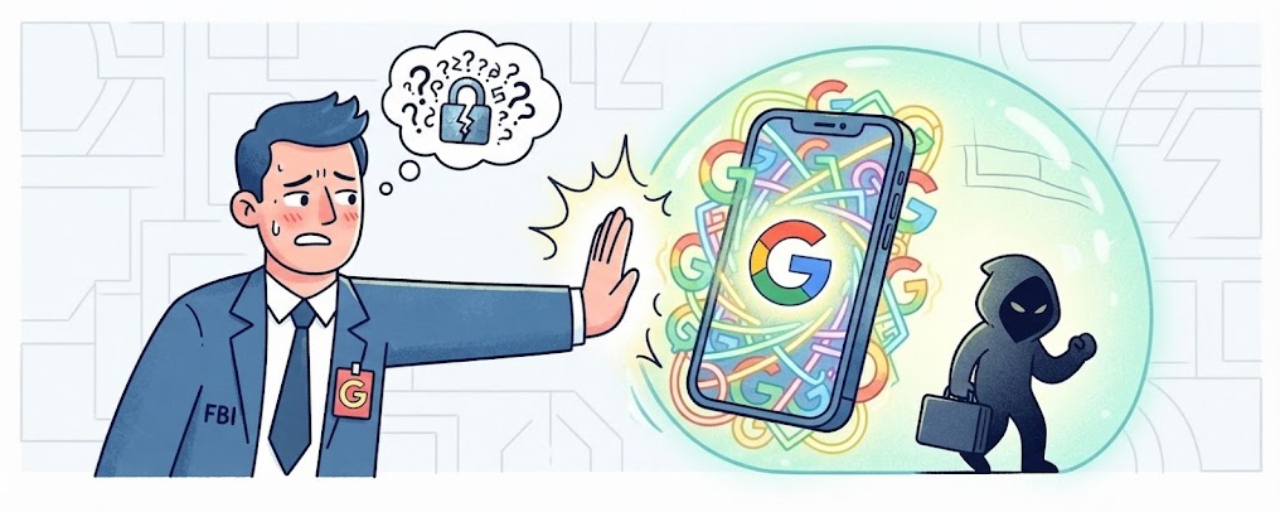
In 2016, the FBI wanted to unlock the iPhone of the shooter in a California case. They asked Apple for a backdoor, but Cook publicly refused. In the end, they spent millions of dollars to get it done through a third party. If even the FBI finds it troublesome, think about it.
Second, protection against threats from “within the group.” In the gray-industry world, tools are everywhere—it's very easy to tuck a Trojan into cracked plug-ins or software. There are millions of dollars’ worth of funds sitting on someone’s phone; the biggest fear is getting set up by their own people.
The tools in the gray industry are everywhere. It’s easy to insert a Trojan into a cracked plugin or hacked software. For people with hundreds of thousands or millions of transactions in their phones, the worst-case scenario is being trapped by someone from their own side.
iOS’s sandbox mechanism fixes exactly this. Each app lives in its own little room, with its own door locks. If A wants to peek at B’s data, it doesn’t even get a door to open. Even if it gets infected with malicious software, it can only spin around in that small room—it can’t touch your payment apps or your bank accounts.
Third, the system is hard to attack.
Android is open, so you can install apps just about anywhere, and vulnerabilities are relatively more common. iOS must pass App Store review, and there are additional protections at the foundation such as address randomization. If hackers want to exploit vulnerabilities, the difficulty multiplies several times.
Mainstream forensics tools on the market have consistently had a very low success rate when it comes to cracking new iPhones. iOS 18 also adds an idle restart—if you don’t touch the phone for four or five days, it automatically restarts. The data is re-encrypted, and forensics tools end up unable to do anything.
I’ve just heard of a case where someone’s phone was confiscated. The technicians spent several days working on it and were about to make progress, only for the phone to restart by itself—everything was for nothing.
So are iPhones suitable for people in the crypto world?
Yes. For people in the crypto world, their phone is like a vault—recovery phrases, private keys, and verification codes are all in there. Losing a single phone could mean losing everything. Hardware encryption helps you avoid losing your device; sandboxing protects against viruses; protections against cracking and brute force are real safeguards for crypto users.
But let’s say this: no matter how tough the shell is, it can’t stop people from self-sabotaging. You type the recovery phrase to a fake customer service agent yourself—no matter how secure the iPhone is, it can’t save you. Technology can protect the machine, but it can’t protect against a soft heart.
In the end, iPhone’s security mechanisms don’t care whether someone is a good person or a bad one. They protect everyone who takes their data seriously. Technology has no morality—only the user does.
How much in your phone is too risky to be leaked?