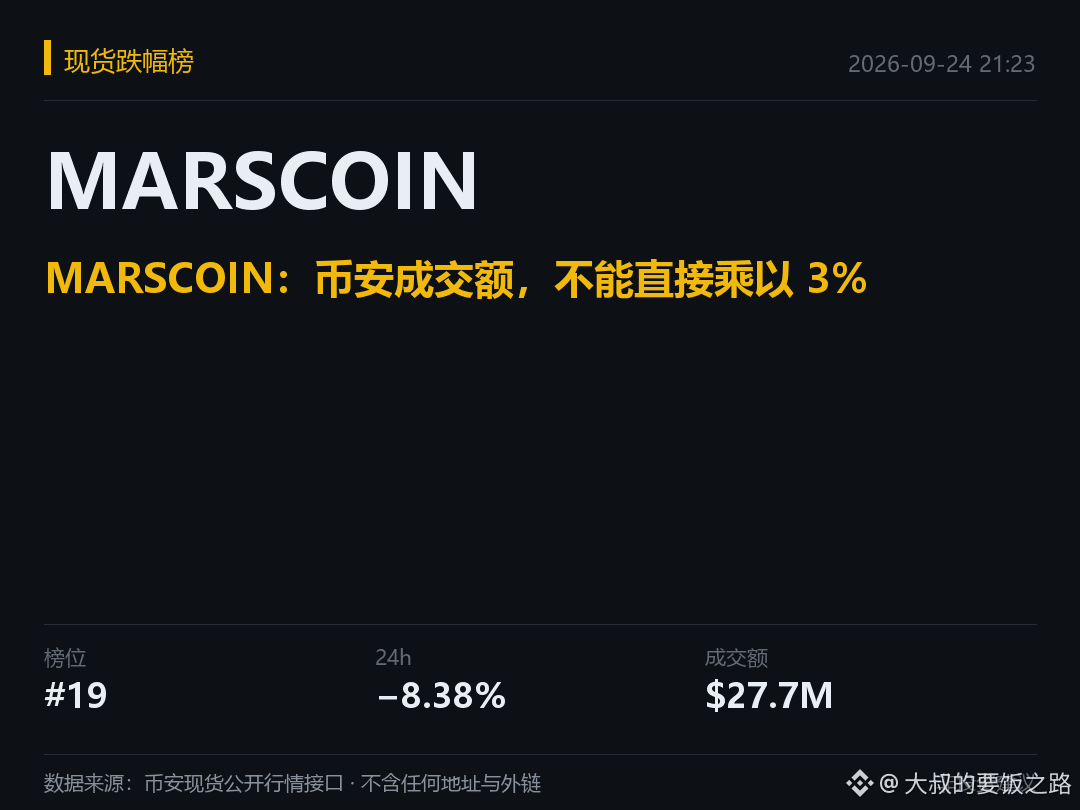
MARSCOIN: Binance trading volume cannot simply be multiplied by 3%
The 3% buy/sell tax on $MARSCOIN makes it easy for people to quickly calculate a “beautiful” reward size: multiply the exchange’s daily trading volume by 3%, as if all this money automatically goes into the distribution pool. The problem is in the first step—these two types of trades occur in different places.
Here, MARSCOIN is a token issued on the BNB Chain. The official website describes the on-chain transaction tax mechanism, and reading the contract on the day in question also confirms that the buy/sell tax parameters are both 300 basis points, i.e., 3%. But Binance spot matching happens first in the exchange’s order book/accounting, so you cannot assume that every turnover triggers that token’s on-chain tax logic.
As a result, the exchange’s trading looks very active, but it does not mean the reward pool receives money in the same proportion at the same time. To determine whether the rewards are sustainable, you should verify the on-chain trades that actually meet the taxation conditions, the process by which funds enter the reward system, and the rewards that were truly issued—rather than replacing these records with a single screenshot of an exchange price chart.
This time it landed on the biggest decliners list, and what’s worth dissecting is precisely this income misinterpretation. The tax rate has evidence, and the applicable scope must be clearly explained. As for where the “prize/reward” income comes from, simply focusing on the dividend promotional narrative can easily lead people to overestimate how much revenue is being counted.
Data source: Binance MARSCOIN/USDT spot; price: 0.1148 USDT; rolling 24-hour decline: 8.38%; trading volume for this pair: 27.7472 million USDT. Capture time: 2026-09-24 21:23:54 (Beijing time).
Source materials: MARSCOIN official website—buy/sell tax and reward information, consulted on 2026-09-24; two BSC public nodes—read-only queries for buy/sell tax parameters, 2026-09-24; using saved drafts from the same day.
This article is a compilation of publicly available information and personal viewpoints, and does not constitute any investment advice. The market snapshot is fixed at a specific time; trading volume is not equal to net fund inflow or outflow.
The 3% buy/sell tax on $MARSCOIN makes it easy for people to quickly calculate a “beautiful” reward size: multiply the exchange’s daily trading volume by 3%, as if all this money automatically goes into the distribution pool. The problem is in the first step—these two types of trades occur in different places.
Here, MARSCOIN is a token issued on the BNB Chain. The official website describes the on-chain transaction tax mechanism, and reading the contract on the day in question also confirms that the buy/sell tax parameters are both 300 basis points, i.e., 3%. But Binance spot matching happens first in the exchange’s order book/accounting, so you cannot assume that every turnover triggers that token’s on-chain tax logic.
As a result, the exchange’s trading looks very active, but it does not mean the reward pool receives money in the same proportion at the same time. To determine whether the rewards are sustainable, you should verify the on-chain trades that actually meet the taxation conditions, the process by which funds enter the reward system, and the rewards that were truly issued—rather than replacing these records with a single screenshot of an exchange price chart.
This time it landed on the biggest decliners list, and what’s worth dissecting is precisely this income misinterpretation. The tax rate has evidence, and the applicable scope must be clearly explained. As for where the “prize/reward” income comes from, simply focusing on the dividend promotional narrative can easily lead people to overestimate how much revenue is being counted.
Data source: Binance MARSCOIN/USDT spot; price: 0.1148 USDT; rolling 24-hour decline: 8.38%; trading volume for this pair: 27.7472 million USDT. Capture time: 2026-09-24 21:23:54 (Beijing time).
Source materials: MARSCOIN official website—buy/sell tax and reward information, consulted on 2026-09-24; two BSC public nodes—read-only queries for buy/sell tax parameters, 2026-09-24; using saved drafts from the same day.
This article is a compilation of publicly available information and personal viewpoints, and does not constitute any investment advice. The market snapshot is fixed at a specific time; trading volume is not equal to net fund inflow or outflow.