📰 Do miners have another knife? Why Solana’s compute optimization is only coming now?
The Solana development team has approved a proposal called SIMD-0112 that can reduce validator latency. This technology can speed up block propagation, but regular users won’t feel it directly. The good news is that this shows Solana is working to address performance bottlenecks, but it still hasn’t fully rolled out to the mainnet and will require future client versions to be usable.
Why is this news important?
Solana’s ace in the hole is speed, but that strength has long been undermined by high electricity costs and network congestion. This improvement is a core-layer optimization, and the underlying reason is that competition between networks is intensifying (ETH and Avalanche are also pushing hard). This isn’t superficial tuning—it’s an upgrade to the technical foundation. What does it mean? If successfully deployed, it could give Solana an extra breather of capital in the DeFi race. But why did developers only act now? Because until recently, their user base had only just started to stabilize.
Impact on the market
For BTC and ETH, this news is icing on the cake. ETH’s own Layer 2 development means congestion on Layer 1 isn’t as severe. And as for BTC, nobody seriously tries to compare it to Solana on speed. But the impact on SOL is real: in the short term, sentiment may be boosted, especially if test results exceed expectations. Historical reference? The 2009 LTC Lightning Network proposal—back then it was first proposed, and only rolled out years later.
Trading/analysis approach
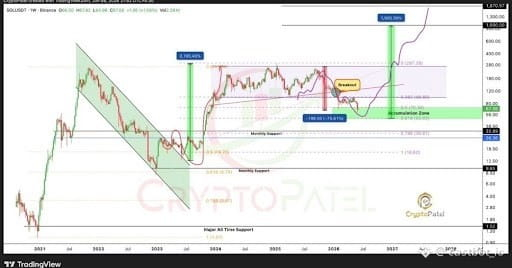
💡 This news helps SOL regain an advantage in terms of speed, but it won’t change the big trend in the short term. If SOL can hold its price above $116.36 in the next quarter, this technical positive could gain momentum. If it breaks below $116.36, it means the market simply doesn’t care whether it’s fast.
If the block confirmation time truly can be shortened by 20% after deployment, then this judgment is invalid.
This article has no project sponsorship, and the author does not hold any of the assets mentioned
$BTC $ETH #BTC #ETH
⚠️ Not investment advice; predictions are for reference only
$SOL
The Solana development team has approved a proposal called SIMD-0112 that can reduce validator latency. This technology can speed up block propagation, but regular users won’t feel it directly. The good news is that this shows Solana is working to address performance bottlenecks, but it still hasn’t fully rolled out to the mainnet and will require future client versions to be usable.
Why is this news important?
Solana’s ace in the hole is speed, but that strength has long been undermined by high electricity costs and network congestion. This improvement is a core-layer optimization, and the underlying reason is that competition between networks is intensifying (ETH and Avalanche are also pushing hard). This isn’t superficial tuning—it’s an upgrade to the technical foundation. What does it mean? If successfully deployed, it could give Solana an extra breather of capital in the DeFi race. But why did developers only act now? Because until recently, their user base had only just started to stabilize.
Impact on the market
For BTC and ETH, this news is icing on the cake. ETH’s own Layer 2 development means congestion on Layer 1 isn’t as severe. And as for BTC, nobody seriously tries to compare it to Solana on speed. But the impact on SOL is real: in the short term, sentiment may be boosted, especially if test results exceed expectations. Historical reference? The 2009 LTC Lightning Network proposal—back then it was first proposed, and only rolled out years later.
Trading/analysis approach
💡 This news helps SOL regain an advantage in terms of speed, but it won’t change the big trend in the short term. If SOL can hold its price above $116.36 in the next quarter, this technical positive could gain momentum. If it breaks below $116.36, it means the market simply doesn’t care whether it’s fast.
If the block confirmation time truly can be shortened by 20% after deployment, then this judgment is invalid.
This article has no project sponsorship, and the author does not hold any of the assets mentioned
$BTC $ETH #BTC #ETH
⚠️ Not investment advice; predictions are for reference only
$SOL