
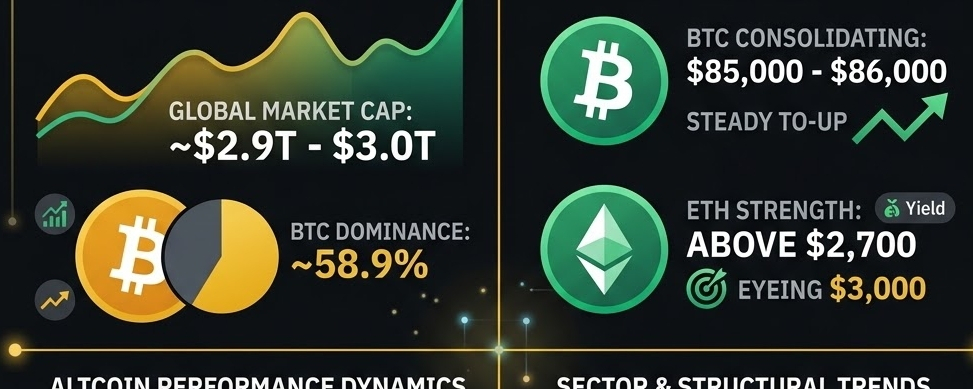

 Altcoins have evolved from mere speculative offshoots of Bitcoin into a dynamic asset class that defines the frontier of decentralized technology, utility, and market liquidity. While Bitcoin continues to serve as the market’s digital gold and primary reserve asset, altcoins—encompassing everything from major Layer 1 blockchains like Ethereum and Solana to niche DeFi tokens and memecoins—exhibit performance dynamics driven by unique technological adoption, speculative cycles, and macroeconomic tailwinds.
Market Dynamics and the "Altseason" Phenomenon
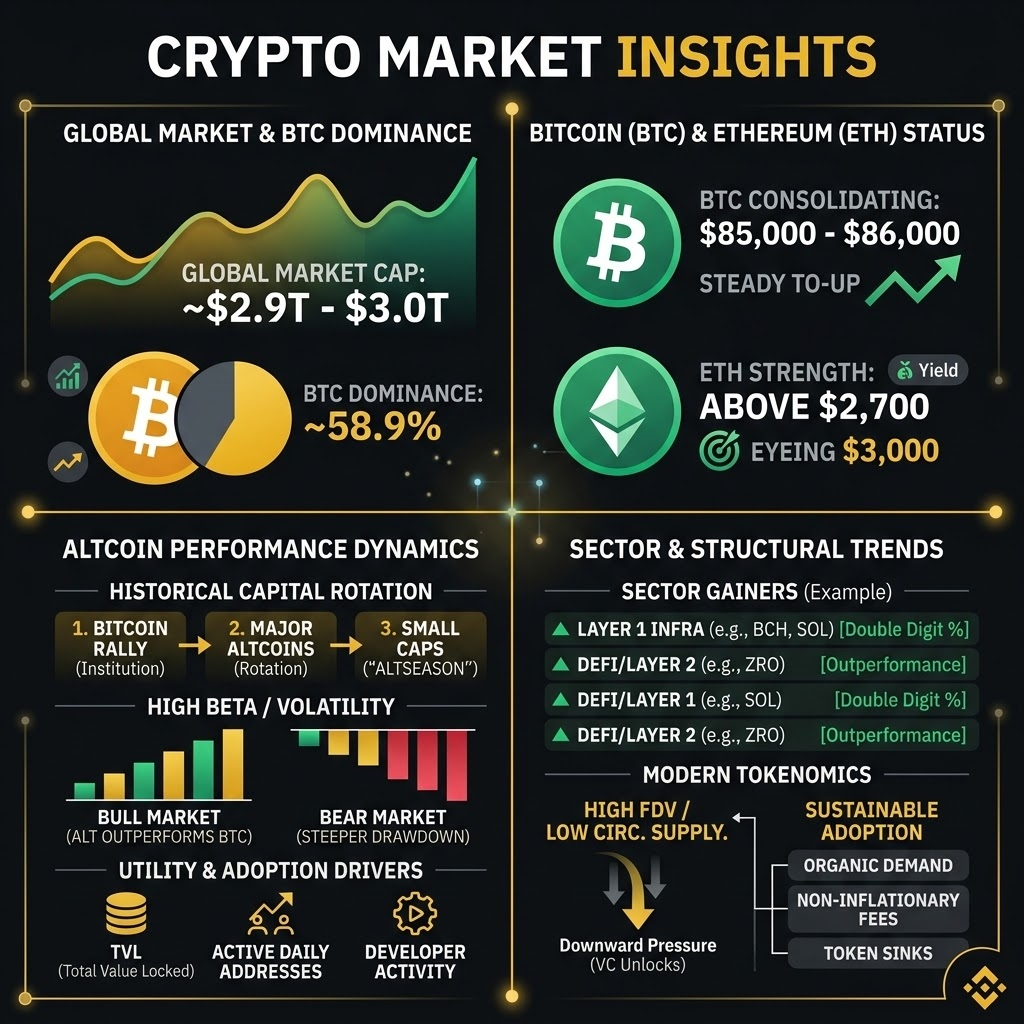
Altcoin performance is historically linked to Bitcoin’s price behavior and market dominance cycles. In typical market cycles, liquidity initially flows into Bitcoin as institutional and retail confidence builds. As Bitcoin reaches local peaks or enters periods of consolidation, capital rotates down the risk curve into major altcoins, and eventually into smaller-market-cap tokens—a phase commonly referred to as "altseason."
Key characteristics of altcoin performance during these cycles include:
* Higher Beta and Volatility: Altcoins generally carry a higher beta relative to Bitcoin. During bullish trends, they tend to outperform BTC significantly in percentage gains, but they also suffer steeper pullbacks—often 80% to 90%—during market downturns.
* Technology and Utility Drivers: Unlike Bitcoin’s store-of-value thesis, altcoin performance is often tied to ecosystem metrics such as Total Value Locked (TVL), active daily addresses, protocol revenue, and developer activity.
* Sector Dispersion: Altcoins do not perform as a monolithic asset class. Performance often diverges drastically across distinct sectors, such as Layer 1 and Layer 2 infrastructure, Decentralized Finance (DeFi), Real-World Asset (RWA) tokenization, Decentralized Physical Infrastructure Networks (DePIN), and Artificial Intelligence integration.
Structural Shift: High FDV vs. Organic Adoption
In recent market cycles, altcoin performance has faced structural challenges due to tokenomics and token distribution models. A prominent feature of many modern altcoin launches is the "High Fully Diluted Valuation (FDV), Low Initial Circulating Supply" structure.
This mechanism often leads to strong early performance driven by restricted floating supply, followed by long-term downward price pressure as venture capital unlocks and emissions enter circulation. Consequently, sustained outperformers are increasingly those protocols that demonstrate organic user demand, non-inflationary fee distribution, and strong token sinks rather than purely narrative-driven hype.
Conclusion
Altcoin performance reflects the high-risk, high-reward nature of early-stage financial technology. While the sector offers outsized return potential during capital rotation phases, long-term performance is increasingly dictated by real protocol utility, sustainable tokenomics, and institutional integration. As the digital asset market matures, the performance gap between token projects with genuine economic usage and purely speculative assets continues to widen.